


Likes
Comments
Share


@HanfConnoisseur
Follow
Week 1: Transition to Flowering
Welcome to the fifth weekly update of our cannabis cultivation journey in Germany! As we transition from the vegetative stage to the flowering stage, our strains—Pulp Friction, Cookies Haze, Eleven Roses, Poddy Mouth, Critical Lemon Kush, and OG Kush—are ready for the next phase of their growth.
Before entering the flowering stage, we took a few important steps to prepare the plants for optimal flowering.
Key Developments:
1. Pre-Flowering Preparation:
- The plants were defoliated to remove excess leaves and improve light penetration and airflow.
- Each plant was repositioned to ensure they have ample space and light exposure.
2. Growing Medium and Setup:
- The plants are grown in a mix of living soil, coco coir, perlite, and clay pebbles.
- The soil mix includes mycorrhizal fungi cultures to support healthy root development.
3. Watering and Nutrient System:
- The plants are watered from the bottom using an AutoPot system, which provides a consistent supply of nutrient solution.
- The pots are equipped with air domes connected to an air pump, delivering oxygen directly to the roots to enhance growth.
Steps Taken:
1. Defoliation and Positioning:
- Carefully removed excess fan leaves to improve light distribution and airflow within the canopy.
- Repositioned the plants to ensure each one has enough space to grow and receive adequate light.
2. Watering and Nutrient Management:
- Set up the AutoPot system to supply a balanced nutrient solution to the plants.
- Ensured the nutrient solution is appropriate for the flowering stage, with a focus on supporting bud development.
3. Air Domes and Oxygenation:
- Connected the air domes to an air pump to deliver oxygen to the root zone.
- Monitored the air pump to ensure consistent oxygen flow to the roots.
Next Steps:
- Monitor the plants closely for signs of flowering and adjust the light cycle to 12 hours on and 12 hours off to initiate and support flowering.
- Continue to observe the plants for any signs of nutrient deficiencies or excesses and adjust the feeding regimen as needed.
- Ensure the AutoPot system and air domes are functioning properly to maintain optimal hydration and oxygenation.
Stay tuned for next week’s update, where we’ll discuss the progress of the first week of flowering and any adjustments made to the care routine. Feel free to ask any questions or share your own experiences in the comments below!




Likes
8
Share


@Franz1234567
Follow
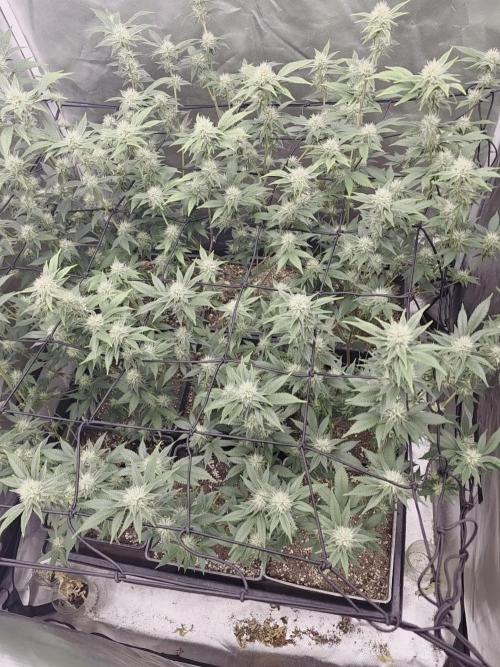
increasing nutrient doses, monitoring EC and pH doesn't bear fruit, I think. Training also takes its toll and the girls flourish.
We will continue to feed and observe...
Second half of week brings quite intensive growth. Continue with LST, because need light penetration and some leaves out with same purpose.
What does next days bring? I am exciting...


Likes
45
Share


@masterofsmeagol
Follow
8/21, 8/22 TOASTED TOFFY WAS TREATED WITH PLANT DOCTOR ON THE 22nd. It's been a few days of rainy dreary weather. This morning I went over and did some MORE defoliation on the toasted toffy trying to get all infected leaves off. I then used the rest of the k bicarb on the gmo in the middle. I haven't seen hardly any pm. So that seems to be working. However I don't want septoria to spread through my garden either. Hopfully the plant doctor will take care of the problem. If not I'll get something different. I can make a diy Dr. Zymes or I could just go to the store and buy something specific like trichodermia. The weather has been a fungus nirvana. The conditions couldn't have been anymore perfect for mold development. I'm super impressed with the k bicarb treating the pm. I took tons of pictures yesterday but I've been sick and couldn't upload them. I still need to sanitize and put my supports up. I'll keep this updated with what I'm doing.
UPDATE: AFTER UNCKES FUNERAL I WATERED THE SHERB PIE THAT I DIDNT LAST TIME AND THEN I FED. I DIDNT FEED THE TOASTED TOFFY DUE TO IT BEING TREATED WITH PLANT DOCTOR. EVERYTHING GOT A QRT THE 50GAL GOT MORE. TWO GALLONS TOTAL USED. I NOTÌCED SOME SLIGHT PM ON THE GMO IN THE MIDDLE. IT WOULD BE TIME TO TREAT AGAIN ANYWAY. I PLAN ON WATERING TOMORROW AND TREATING THIS PLANT AGAIN. IM HESITANT TO UsE PLANT DOCTOR (do to feeding tonight) RIGHT OFF SO ILL PROBABLY USE YHE K BICARD. IT WORKS GOOD. I SHOULDNT HAVE FED THAT PLANT SO I COULD APPLY THE PLANT DOCTOR INSTEAD. THAT SEEMS TO BE WORKING REALLY WELL. LAST TIME I USED IT WAS ON FUSARIUM AND THATS JUST A LOSING BATTLE. DID A QIICK VIDEO ILL UPLOAD TOMORROW.
8/23 I HAD A CRISIS SITUATION AND I FUCKED UP THE DIARY. I THINK I JUST DIDN'T RECORD WHAT I DID ON THIS DAY.
8/24 I checked the bags and they were heavy. I watered the sherb pie today as it missed the last watering. Everything but the toasted toffy got fed yesterday. I noticed some slight pm on the middle GMO that I've been treating with k bicarb. Just a couple leaves. Looks like a couple spots I missed. I was going to apply it again but I dodnt have time. I'll be back over soon and I'll treat it and do the defoliation needed. Maybe I'll even sanitize and get support up. Since I fed yesterday I don't want to use the plant doctor for a few more days. I'm thinking of treating everything with it. I need to read and see when the next application for toasted toffy is due. Things are really starting to flower. Once I get the work done I may add beastie bloom to my nute line up. I think I'll do another k-bicarb app on the plant with pm. It's doing a good job. Since the l bicarb I don't see any pm. I should've held off feeding it so I could've used plant doctor. I'm monitoring toasted toffy and if it keeps working good I'll treat everything preventatively.
WENT BACK OVER AROUND 11:30 BECAUSE IT HAD CLIMBED INTO THE UPPER 80'S. AS I SUSPECTED THE PLANTS NEEDED WATER. THEY COULDVE WAITED UNTIL TONIGHT BUT UNFORTUNATELY I HAvE TO DO THINGS WHEN IM ABLE TOO. EVERYTHING GOT A GALLON EXCEPT THE GMO IN THE MIDDLE IN THE 30, THAT GOT 1.5. SHERB PIE GOT IT YESTERDAY AND ISNT FLOWERING AS VIGEROUS SO IT USES LESS WATER. BEFORE WATERING I WENT THROUGH THE ENTIRE GARDEN AND DEFOLIATED WHAT NEEDED TO BE DEFOLIATED. I HAVE A FEW SMALL LIMBS I SHOULD PRUNE BUT THAT STUFF MAKES GOOD HASH MATERIAL AND ACTUALLY ADDS UP. I NOTICED A LITTLE BIT OF PM ON THE GMO I TREATED. Just a couple spots on a couple leaves and I removed them. I MIXED UP K BICARB AND ILL APPLY IN THE MORNING. I WANTED TO USE PLANT DOCTOR BUT SEEING THAT I FED ILL WAIT. ID LIKE TO GIVE THEM ALL PLANT DOCTOR AS A PREVENTATIVE. SUPPOSABLY IT STIMULATES AN IMMUNE RESPONSE WITHIN THE PLANT WHICH FIGHTS THE PATHOGENS THEN LEAVES POTASSIUM AND PHOSPHORUS BEHIND AFTER 4 DAYS FOR THE PLANT TO USE. I THINK ITS GETTING CLOSE TO TREATING THE TOASTED TOFFY AGAIN. ILL HAVE TO LOOK. I TOOK A VIDEO BUT ILL HAVE TO UPLOAD IT it.
8/25 I know the diary is fucked up. But I know I watered yesterday. Except the sherb pie. I didn't check the weight bit did a bunch of defoliation. I made another half gallon of k bicarb with a drop of dawn and sprayed all the gmos. I only saw a COUPLE spots with pm on them and I removed them. Still though I wanted to make sure it doesn't get out of control. I should've checked the weight of the sherb pie but I'm sure it's fine.. I took a video but I can't upload it yet.
WENT BACK OVER AROUND TWO. IT WAS A BLISTERING HOT DAY IN THE 80'S. THE BAGS WERE DRY. THEY HAD A LITTLE WRIGHT TO THEM AND MOST SOME LEAVES WERE PRAYING. SOME WERE STARTING TO DROOP THOUGH. I WATERED EVERYTHING A GALLON EXCEPT THE SHERB PIE I GOT THIS MORNING. I gave the gmo in the 30 1.5. THE EVENT HORIZON IN THE MIDDLE COULDVE WAITED UNTIL MORNING BUT AT LEAST I CAN KEEP TRACK OF IT EASIER THIS. MAYBE I SHOULD GIVE THE 50 MORE WATER AT A TIME. IM GETTING YELLOW LEAVES. I THINK ITS PROBABKY SENESCENCE. ITS ABOUT THE SAME TIME EVERY YEAR I START LOSING SOME LEAVES. IT SEEMS TO BE JUST THE SHERB PIE AND THE BIG ONE IN THE 50. THAT PLANT HAS QUARTER SIZE BUDS ON IT THOUGH. ITS AMAZIBG HOW MUCH THE WATER INTAKE CHANGES WHEN ITS 60 OR UPPER 50S WITH HIGH HUMIDITY TO WHEN ITS IN THE 80S ALMOST 90. I HOPE IM NOT WATERING TO OFTEN. ITS BEEN COLD AT NIGHT. IN THE 50S. THE EVENT HORIZON HAS TURNED A NICE PURPLE ON MANY LEAVES. THE GMO'S AND SHERB PIE ALSO ARE TURNING PURPLE AND OTHER FALL COLORS. I SAW WHAT LOOKED LIKE SEPTORIA SPOTS CRAWLING UP KY EVENT HORIZON IN THE BACK. IN GOING TO TREAT IT WITH PLANT DOCTOR TOMORROW.
8/26 Rainy day. I noticed some septoria on the toasted toffy climbing a bottom branch. But it is time to reapply plant doctor. I saw a couple spots on the event horizon and I treated it today with 1/4 gallon of 2tsp per gallon plant doctor. I sprayed the leaves then I used the rest on the soil. The k bicarb is still keeping any pm at bay. I haven't seen a spot. I hope the plant doctor helps the event hotlrizon. I'm not even sure if it has it but I want to be cautious. I'm thinking of treating them all with plant doctor. I'm also going to use beastie bloom on some of the more advanced plants. I wasn't expecting it to rain but it wasn't for at least a couple hours after I sprayed. I ran another support line across the cage. I need to lst both event horizons and defoliate the sherb pie. It's weird but it seems like EVERY day I go over the flowers are bigger! I see birds darting out when I approach. Maybe that's why i haven't been finding pillars. I found ONE hairy one this week trying to escape to the soil on a string. I got him though. We'll see how it goes. If not I have other options for treatments if needed. That plant in the 10 is HUGE. I'm suprised it got that big in 10gals! Trying to upload videos but they are LONG so I don't know if they

Likes
4
Share


@Ninjabuds
Follow
Fastbuds is really starting to make me a fan of autos man there plants grow so fast and so large in such a short amount of time it’s almost unreal. I fell a little behind on the nutrients that’s why the leaves are a little light but it’s coming back around. I have not grown a lot of autos but it seems they require larger amounts of nutrients than photo plants normally do
Likes
86
Share


@Tropicannibis_Todd
Follow
ALRIGHTY THEN
REMINDER I DO 2 UPDATES PER WEEK 👉WEEKLYROUNDUP👈 👉MIDWEEKLY UPDATE👈 Unless there's nothing to update
At this very moment , hint of Grape Crush Soda smells 😛 Which is awsome
49 days into flowering
We just hit week 10 and all is well , for the most part , I'm sure I'd be further ahead if it wasn't for the cal/Mag issues early in its development 😃 .......
👉 Baby Sister Plant #2 Is 8 weeks and coming along great 👈
rain water to be used entire growth👍 👉 NutriNPK NUTRIENTS IS USED FOR FEEDINGS 👈
Lights being readjusted and chart updated .........👍
I GOT MULTIPLE DIARIES ON THE GO 😱 please check them out 😎
👉IF ANYONE IS LOOKING FOR A PLACE TO HANGOUT VIA GROWDIARIES AND TALK GROWING AND JUST CHILL AND WHATEVER .....👈
👉I CREATED GROWDIARIES DISCORD SERVER !!!!!!!!!!!👈
LINK IS 👉
https://discord.gg/zQmTHkbejs
AND SEE HOW IT PLAYS OUT !!!!!!!
Likes
8
Share


@johnnybuds
Follow
Las plantas asimilaron bien el calcio y siguieron adelante, se realizó un trasplante en el día 20, de 300cc a 5lts airpot con solo coco, ahora solo queda esperar a empezar el lst💪💪💪


Likes
27
Share


@Sinistergrow702
Follow
Week two of flower is done and these girls are rocking hard .they have not slowed down stretching every day .feeding every 3 days 3 liters and they are loving it

Likes
5
Share


@UndergroundGrow861
Follow
Well it’s week 5. Week one of what I’m gonna call flower. I got 2 plants in full flower and the others are coming from begins fast. Dealt with a mag issue this past week got it straightened out. The banana purple punch plants just aren’t thriving like the rest in my tent. I’m gonna grow them again because I’m pretty positive it a me problem. The plants are doing awesome and these fast buds grow insanely fast. I’ve been creeping my light up every week. I’m at 60 percent on this evo 3. Gonna bump it up to 70 percent later when my light comes back on
Likes
11
Share


@Skinnytalls420
Follow
Day 33-13/01/22 they look really well I’m just trying to make space in my other tent so I can move half of them out and be more organised but I think this is the last week of veg!!!


Likes
3
Share


@djsalin
Follow
Added one gallon of water with 1 tsp of MaxiGro mixed in.
Topped/defoliated.
Fixed grow light, and replaced 3 dead LED chips with full spectrum LED chips.

Likes
32
Share


Likes
10
Share

@CrackinBeans
Follow
Well I'm a bit upset last week I ended up dropping my ph meter in a tank of nutes I was mixing and by the time I got it out the meter was junk. I was planning on flushing the crystal but had to wait another week for the meter.
I suppose the good thing to take from this was I found out why I was having issues with my plants. When the new ph meter came in I went to check my run off and my nutes that I had all ready mixed up. It turns out that my meter i had been using this whole grow was off by about -2-2.5 so this whole time I had been feeding the plants at around 3ph smfh. I cant believe they look how they do knowing what went on this whole time.
Fastbuds crystal meth is 3days into flush and i will be cutting it down this weekend most likely.
Mephisto hubbabubbasmelloscope is smelling like sweet sweet candy and is thick in resin
Bighead seeds freeze berry/ blueberry crumble has a dank pungent stank to it and also is frosty but larrfy
Big bomb is still growing thick and have bud sites everywhere
Now I'm ready for the next batch and ready to get dialed in!


Likes
38
Share


@Danger90946
Follow
Day 106 12/25/2021 being of a new week and this will be more than likely the last week this lady gets any nutrients thinking Wednesday. After that will start flush with collected rain water. After checking trichomes they were about 85% cloudy about 10% clear and 5% amber which is right where she should be since the end is coming fast.
Day 110 12/29/2021- Started flush today and will continue to just feed rain water until next Wednesday. Will cut her down next Friday 01/07/2022.
Likes
10
Share


@Cauli
Follow
Second Week in little Guavas Outdoor life.
Maybe it was not the best idea, to put her outside so soon. She grows very slowly – mainly because it's still too cold.
But at least she is a true outdoor hero and of course, small but beautiful 💚
Weather should be very good the next days, so let's see how she will speed up!
Likes
8
Share

@all_about_420
Follow
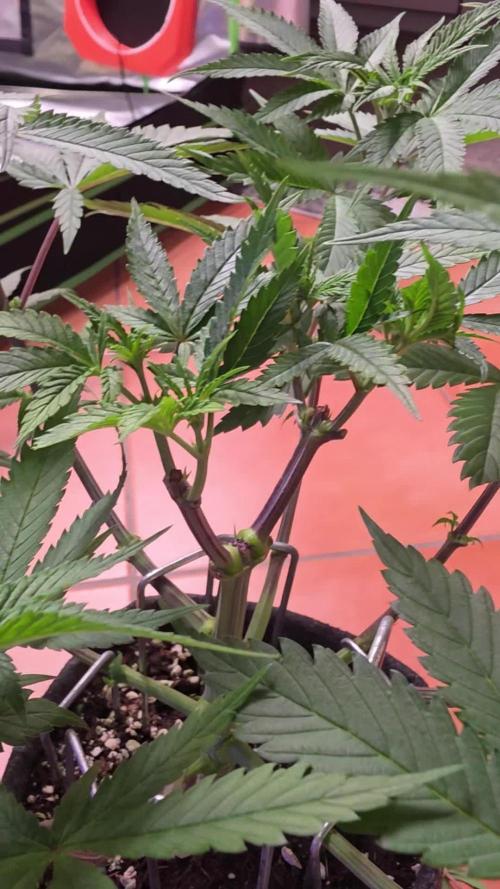
Die sechste Vegetationswoche markiert einen entscheidenden Meilenstein in der Formgebung der Tropicanna Poison F1 Fast Version. Zum Wochenstart erfolgte eine großzügige Entlaubung im unteren Drittel, um schwächere Mikrotriebe sowie überflüssiges Schattenlaub konsequent zu entfernen und die Energieversorgung gezielt in die oberen Hauptachsen zu lenken. Gleichzeitig wurden die dominierenden äußeren Triebspitzen getoppt und präzise auf ein einheitliches Höhenniveau gebracht, um ein absolut homogenes Blütendach zu formen.
Den krönenden Abschluss der Woche bildete das Umtopfen in den finalen 15-Liter-Stofftopf. Das Durchwurzelungsbild des bisherigen Substrats war hervorragend und spiegelte die unverminderte Vitalität dieser exzellenten Genetik aus dem Hause Sweet Seeds wider. Mit frischem Nährstoffpuffer, vergrößertem Wurzeltriebraum und einer perfekt ausbalancierten Struktur steht die rote Schönheit nun optimal vorbereitet da, um in Kürze die Blütephase einzuläuten.


Likes
24
Share


@Newbiegrower420
Follow
UPDATE: Day 1 of week 14- Thursday 19th Nov!!!!
Woop woop! We’re getting close, my magnifying lense arrived and I’ve got my first real good look at the trichomes.. All looking fairly cloudy with about 10-15% ambers coming through.
So as we’re super close now I’ve now started flushing. Not doing a run off as have been using Biobizz soil & Nutes. First flush is done and girls are looking happy. One lady seems to have really heavy colas as she’s struggling to stand up straight. So I’ve staked her to keep her more upright. Think she may bring the best yield of all four girls as it stands so far.
Final couple of weeks now, I can’t believe I’ve made it this far and really can’t wait to try my first home grown bud🍃
UPDATE: Day 2 of week 14 - Friday 20th Nov:
Had to water them early as the girls were very dry after their first flush.. I on average water them every 48 hrs, but they were ready after 36. Already noticing some slight discolouration on the leaves 🍁... Glad I didn’t jump the gun and chop them this week after seeing some amber trichomes..
A bit more LST as they had stretched a little. I’m short on lamp to plant distance but noticed what looked like a little leaf burn on one of the tallest nugs. So did what I could to bring the height of them down just a little 👌
UPDATE: Day 4 of week 14 - Sun 22nd Nov:
As soon as the lights went on today, more water seemed required at around 36hrs since the last flush. The girls seem to be loving it!
Buds do seem to be fattening up a little more each day and I think one girl is slight more ahead than the others as she has mostly orange pistils compared to the other three..
Still need to see more amber trichomes on all four ladies before they’re ready!
UPDATE: Day 5 of week 14 - Monday 23rd Nov:
Small amount of LST to keep the girls as even as poss.. Defo seeing some discolouration in the fan leaves now.. All but one of the four girls have nearly completely orange pistils now which are folding back in to the buds. But Trichomes need to be a little more amber before they’re ready.. The fourth lady however is slightly behind with less orange pistils, some white ones still to turn orange and trichomes are still a mix of milky and clear on the lower buds. When I topped this one it didn’t work as well as the others so she has one really massive cola and all the others are much smaller in comparison to the other three plants..
I think we’ve got a week to 10 days left roughly till harvest.
UPDATE: Day 6 of week 14 - Tuesday 24th Nov:
Another water flush again today.. All seems well, lower small buds still need a few more amber trichomes I think.. But gonna post a question on here to make sure.. Don’t wanna get this wrong.
Sooooooo close now and I’ll be seeing 🤩🤩🤩


