


Likes
Comments
Share


@Filiaes
Follow
09.06
After some research I think the lightly burn on the leaf tips came from to much light and not from nutrient burn. Anyway, I like how they developed the last week so I guess it wasn't super bad to reduce my scheme. I am now 4 weeks before harvest, I plan to flush the last week, so there is 3 weeks left of nutrients. For this week I will give them some boost with canna pk 13/14 and will remove hesi phospor for the scheme for this week. Tank was cleaned as always and new water with nutrients is prepared for the next week of bloom.


Likes
Comments
Share


@ThatGardnerLeo
Follow
Got some really nice explosive growth this past week, no transplant shock whatsoever and I ended up topping her for the first time, gonna give her a few days then will start LST

Likes
41
Share


@MadeInGermany
Follow
COMMENTED BY
MadeInGermany MadeInGermany 8 minutes ago
Flowering day 68
since clock change
to 12/12
Hey guys :-) .
It's so far, the lady is ripe and will be cut at the bottom end in the coming days and hung upside down in the drying tent :-) .
Next week there will be an extra update on how they are hanging.
Watering would be done twice this week with 1 l each (nutrients see table above)
Otherwise it was checked and everything was cleaned.
Have fun and stay healthy 💚🙏🏻
👇🏼👇🏼👇🏼👇🏼👇🏼👇🏼👇🏼👇🏼👇🏼👇🏼👇🏼👇🏼
You can buy this Nutrients at :
https://greenbuzzliquids.com/en/shop/
With the discount code: Made_in_Germany you get a discount of 15% on all products from an order value of 100 euros.
👇🏼👇🏼👇🏼👇🏼👇🏼👇🏼👇🏼👇🏼👇🏼👇🏼👇🏼👇🏼
You can buy this strain at :
https://www.exoticseed.eu/
Water 💧 💧💧
Osmosis water mixed with normal water (24 hours stale that the chlorine evaporates) to 0.2 EC. Add Cal / Mag to 0.4 Ec Ph with Organic Ph - to 5.8 - 6.5
MadeInGermany


Likes
19
Share


@adam_pawloski87
Follow
Let’s go day 72 from seed!!! Another great week it’s been , 2 Ogreberrys an brucy b been flushing for a week, an the 3 others will continue to get there normal feed of nutrients, they are just not quite ready so they will start getting flushed around next week!! Sweet sweet smell of Grapes And gooey frosty nugs is all I can really say, photos do no justice, some of the craziest fruitiest smelling buds I’ve ever had, Real High quality meds !! Hope you all enjoy an have an amazing productive day as well as a great week!! Peace love an positive vibes to all y’all Cheers 😶🌫️💨💨💨💨💨🤙🏻If there’s any questions, please ask!! 💚🙏🏻💯


Likes
4
Share

@Green_Zyphoria
Follow
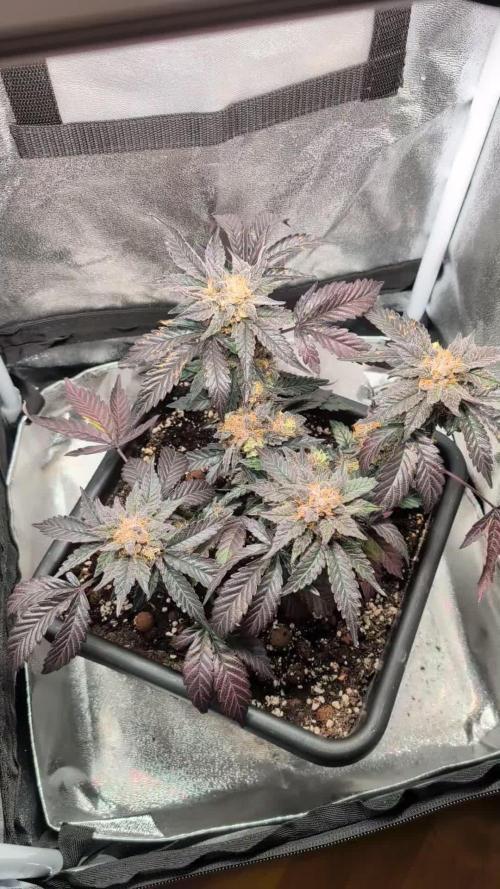
We’ve reached Day 56 of bloom. The Papayton #3 is showcasing a spectacular "black autumn" fade, with fan leaves turning a deep charcoal-violet, making the frost-covered buds stand out brilliantly. The resin production has hit its peak; the buds are incredibly sticky, feeling like superglue to the touch. Due to rising outdoor temperatures and tent peaks of 29°C, I’ve strategically dialed back the Sanlight to 80%. This preserves the sensitive terpenes and allows the lower flowers to ripen steadily without stressing the main colas.
Likes
7
Share


@Dargaville_Dukes
Follow
It has been another slow week for growth. I've been working to optimize the environment. This is my first indoor grow in Europe during winter and with this equipment. There are a lot of variables that I have to figure out. I've added an oil heater on a temperature controller and have been gradually raising temps over the last few days. I also think I underestimated how much moisture my soil mix retains and maybe I've had humidity in the tent a bit too high. Both seedlings look a bit waterlogged. To try and fix this I'll keep RH at 50% for the next few days and let the soil get properly dry before watering again. Hopefully this gets things back on track and there's some strong growth this week! 💪

Likes
120
Share


@Kitties_and_Colas
Follow
~_~_~_~_~_~_~_~_~_~_~_~_~_~_~_~_~_~_~_~_~_~_~_~_~_~_~_~_~_~_~_~_~_~_~_~_~_~_~_~_~_~_~_~_~_~_~_~_~_~_~_~_~_~_~_~_~_~_~_~_~_~_~_~_~_~_~_~_~_~_~_~_~_~_~_~_~_~_~_~_~_~_~_
12/20/21
🐱 The girls are behaving beautifully, color is uniform no issues whatsoever.. they do seem a little on the small side to me for week 6 but I might be staring too closely lol.. the new growth (at topping points) is approx. 1.5inch now. We cleaned bare the undersides of all plants (bottom 1/3) in preparation for flower..right or wrong we always start introducing mild bloom nutrients about a week before flower (I'd love to hear some opinions on this practice)..I think we'll start flower in week 8 but ultimately I'm going by the length of new growth, I'd like the new tops to be kinda long after their flowering stretch..thanks for reading if you made it this far and happy harvests everyone!!! ❤️💡🌱😽💨
~_~_~_~_~_~_~_~_~_~_~_~_~_~_~_~_~_~_~_~_~_~_~_~_~_~_~_~_~_~_~_~_~_~_~_~_~_~_~_~_~_~_~_~_~_~_~_~_~_~_~_~_~_~_~_~_~_~_~_~_~_~_~_~_~_~_~_~_~_~_~_~_~_~_~_~_~_~_~_~_~_~_~_
12/22/21
😽💨 decided to flip anyway lol, being a 10+week strain I worry about our current supply running dangerously low in that time.. these should look great after their stretch 👌
~_~_~_~_~_~_~_~_~_~_~_~_~_~_~_~_~_~_~_~_~_~_~_~_~_~_~_~_~_~_~_~_~_~_~_~_~_~_~_~_~_~_~_~_~_~_~_~_~_~_~_~_~_~_~_~_~_~_~_~_~_~_~_~_~_~_~_~_~_~_~_~_~_~_~_~_~_~_~_~_~_~_~

Likes
71
Share


@DogDoctorOfficial
Follow
Hey, everyone! Welcome back to another week of our Anesia pheno hunt journey! We're now in Week 4 of the flowering stage, and things are looking incredible.
Our Anesia ladies are thriving beautifully. Each strain is showcasing its unique characteristics, and the buds are starting to swell up nicely. The trichome production is in full swing, and the aroma in the garden is becoming more pronounced and delightful.
This week, we've made some adjustments to our nutrient regimen to ensure our plants get everything they need for optimal flower development. Here’s the current mix:
Regulator: Ensures strong and healthy growth.
CaMg-Boost: Provides essential calcium and magnesium.
Top Booster: Enhances bud development and density.
P-Boost: Provides phosphorus for strong flowers.
K-Boost: Added this week to support potassium needs for flowering.
TDS: Raised to 500 ppm.
pH: Maintained at 6.0.
Temperature: Steady at 21°C.
The combination of these nutrients is giving our plants exactly what they need to flourish during this critical phase.
Our garden is a vibrant display of life and growth. The canopy is filling out beautifully, and the light penetration is perfect, thanks to the awesome setup from Future of Grow LED. The plants are healthy, with strong stems and lush leaves, thanks to our meticulous care and the excellent products from Aptus Holland.
Exciting News!
We're thrilled to invite you all to check out our YouTube series, Welcome to the Green Oasis! Dive deep into our garden adventures, see the plants up close, and learn all the tips and tricks we use to achieve these results. Your support means the world to us, and we can't wait to share more of this journey with you!
Watch Episode 1 on YouTube and follow along for more updates!
Shout Outs:
Anesia Seeds: Thank you for the incredible genetics.
Aptus Holland: The best in organic and mineral-based nutrients.
Future of Grow: Your LED lights are making our garden shine.
Grow Diaries: The best place to document and share our progress.
Community: You all are amazing! Your support keeps us going.
Stay tuned, stay positive, and let's keep growing together!
Apricot Oreoz = AO
Zoomiez = Z
Future#1 = F
https://anesiaseeds.com/
Plant nutrition - Aptus Holland - https://aptus-holland.com
LED Photons - Future of Grow - https://www.thefuturofgrow.com/
Controls - Trol Master - https://www.trolmaster.eu/
Watering - Autopot - https://autopot.co.uk/
Tent - Mars Hydro - https://marshydro.eu/
Love and attention - Me, myself and i
As always thank you all for stopping by, for the love and for it all , this journey of mine wold just not be the same without you guys, the love and support is very much appreciated and i fell honored and blessed with you all in my life, With true love comes happiness. Always believe in your self and always do things expecting nothing and with an open heart , be a giver and the universe will give back to you in ways you could not even imagine so
More info, the ocasional give-away and exclusive updates from all my adventures can be found - links in the profile description
Friendly reminder all you see here is pure research and for educational purposes only
Growers Love To you All
Processing
Likes
10
Share


@PisBaked
Follow
Week 5.5 for PE, GSC (small one), & both GG's. Week 6 for everything else!
Everything looks great other than the one GSC.. What I thought was light burn is apparently nute burn.... Run off PPM is about 100ppm higher than the rest... Gave the whole crop a little flush, and gave them half strength feedings for 2 days. Obviously the burnt tips won't recover, but it doesn't seem to be getting worse. Right now she's at a whopping FOURTY EIGHT inches... She is the most developed, and has officially begun producing buds. Scent def. resembles GSC, no question at all.
Next best is the LSD25, growth is amazingly healthy, and is starting to form buds.
Everything else is doing great, but going at pretty normal speed compared to the LSD & GSC
Healthy white roots are exploding out the bottom of every pot; something I've never seen growing in soil.

Likes
21
Share


@Smokey89
Follow
So we are in week 2 of flower I ran out of Dutch pro and my hydro shop didn't have any in stock so I had to swap to canna 450ml A&B I've also added some bud blood.
So today I did some defoliation to anything below my scrog net and tucked some of the bigger fan leaves to expose the new bud sites. I also raised my light a few inches to allow the ladies to grow into it.
21/5/21
The girls are growing fast I did some defoliation 2 days ago and I had to repeat today
26/5/21
Took some fan leaves off that where blocking bud sites only a small handful needed to be removed, I gave them a feed ppm 946 ph 6.3, bud sites are looking nice and healthy I've got plenty of air flow throughout my tent, have yet to notice any aroma but still very early days.
That's all for now gays and gals happy growing and pleasant smoking ;)

Likes
62
Share


@nonick123
Follow
Día 71 (30/12) Christmas holidays. Only watering
Día 72 (31/12) He recibido mi nueva lampara Mars Hydro FC1500 EVO Led Grow Light (2024 NEW FC 1500-EVO Samsung LM301H 150W LED) - https://marshydro.eu/products/fc1500-evo-led-grow-lights/ - https://www.amazon.de/dp/B0CSSGN5D8?ref=myi_title_dp
Procedo a instalarla, de modo que tengo la tienda de 120x60 cm perfectamente cubierta con las DOS (2) lámparas FC1500 EVO
Es ideal tener dos lámparas, porque así puedo ajustar la distancia a la lampara en función de la altura de capa planta
Ajusto ambas lámparas al 75% de potencia (Total 225W), que es más que suficiente para cubrir el área de 120x60 cm
Día 73 (01/01) CBD Auto 20:1 #1 - Muestra una ligera deficiencia con algunas puntas de las hojas dobladas hacia arriba y clorosis... Creo que le voy a dar otra ración de BIO PK 5-8
OG Kush Auto - Está apilando cogollos de forma brutal. Increíble el olor y la cantidad de tricomas que está formando 😍
Día 74 (02/01) CBD Auto 20:1 #1 - Se empiezan a formar tricomas entre los incipientes cogollos
OG Kush Auto - Una pena que se haya intensificado la deficiencia de CalMag... en las hojas, porque los cogollos son gordos y densos, y cubiertos de tricomas
Día 75 (03/01) CBD Auto 20:1 #1 - Voy a darle un boost para las 4 semanas que le quedan hasta la cosecha con SILICIUM FLASH
Hago un pequeño agujero cerca del tallo, espolvoreo 25g de SILICIUM FLASH en el agujero, lo cubro de tierra.
Riego con una solución de 2g de BACTREX por litro de agua.
OG Kush Auto - Impresionante densidad de los cogollos que empieza a doblar las ramas 😍 La ventana de cosecha se acerca! 💥
Día 76 (04/01) CBD Auto 20:1 #1 - Investigando me doy cuenta de que lo que le pasa es quemadura de luz, ya que la parte externa de la planta sufre clorosis, y la parte interna (donde no alcanza la luz) está completamente verde
Ajusto la lampara sobre esta planta para 40 DLI
OG Kush Auto - Sigue poniendo los cogollos duros como rocas y muy llenos de tricomas! 😍💥
Día 77 (05/01) CBD Auto 20:1 #1 - On going
OG Kush Auto - Empieza la senescencia en las hojas de abanico, acelerada por la deficiencia de CalMag... que ha tenido.
💦Nutrients by Bio Tabs - www.biotabs.nl/en/
🌱Substrate PRO-MIX HP BACILLUS + MYCORRHIZAE - www.pthorticulture.com/en-us/products/pro-mix-hp-biofungicide-plus-mycorrhizae
"GDBT420" 15% DISCOUNT code for the BIOTABS Webshop https://biotabs.nl/en/shop/
With 2 x Mars Hydro FC1500 EVO Led Grow Light (2024 NEW FC 1500-EVO Samsung LM301H 150W LED) - https://marshydro.eu/products/fc1500-evo-led-grow-lights/ - https://www.amazon.de/dp/B0CSSGN5D8?ref=myi_title_dp
Likes
4
Share


@KannaGrowing
Follow
Ya estamos en plena floración y con las luminarias a max potencia... Evidentemente el aire acondicionado también está trabajando durante la fase de encendido.
Flowa-Bloom es la estrella de los nutrientes a incorporar, pero todos son importantes... Así que sigo la tabla de fertilización de JUJU Royal al pie de la letra.
Eso si, primero humedezco bien el sustrato con agua, para aprovechar bien la solución con los nutrientes y que no filtre por las macetas textiles.
Riego cada cuatro días.

Likes
50
Share


@D33jW
Follow
🌸 Runtz - Week 1 of Flowering 🌸
🌿 Genetics: Gelato x Zkittlez
⏳ Flowering time: 8–9 weeks
🔥 THC: Around 27%
🌈 Effects: A balanced mix of euphoric uplift and deep relaxation, perfect for both creative moments and evening chill.
🍬 Aroma and flavor: Sweet, fruity candy notes with tropical and creamy undertones.
This plant has completely stolen my heart! ❤️ The structure is absolutely stunning
- beautifully forming flowers and an abundance of side branches make this one truly special.
The way it's shaping up already has me excited for the weeks ahead!
The first week of flowering went perfectly under great conditions,
and I couldn’t be happier with how she looks at this stage.
At the start of the week, I performed lollipopping to ensure that lower branches,
where less light reaches, don’t take away energy from the top canopy.
Now, she can focus all her strength on producing some buds!
Grow Conditions (FLO Week 1):
🌞 Light schedule: 12/12
🌱 PPFD: 750 µmol/m²/s
💧 VPD: ~1.2 kPa
Let’s see what week 2 brings! 🚀🔥

Likes
8
Share

@GERGrowDesigns
Follow
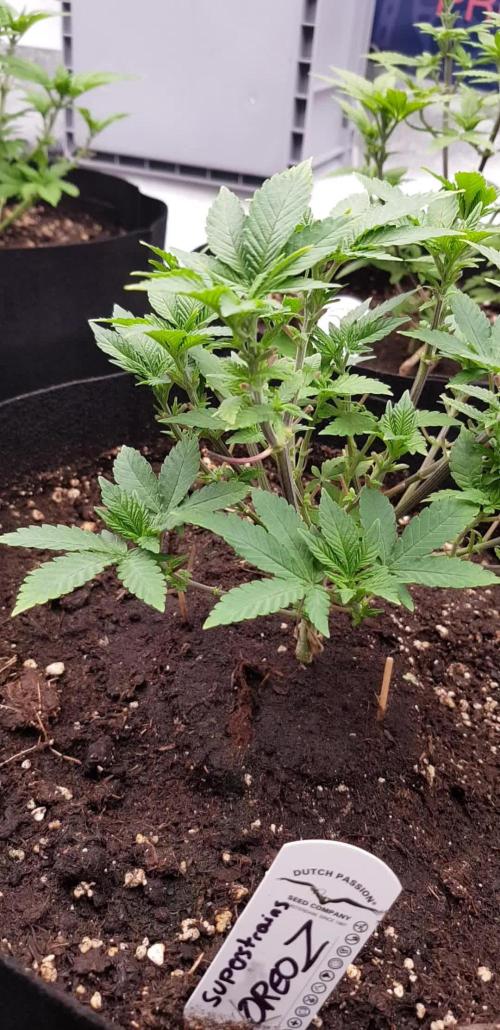
Welcome to Veg Week 5 of SuperStrains OreoZ
I'm excited to share my grow journey with you from my
SuperStrains Project . It's going to be an incredible ride, full of learning, growing, and connecting with fellow growers from all around the world!
For this Project , I’ve chosen the Feminized Photo Strain OreoZ:
Here’s what I’m working with:
• 🌱 Tent: 120x60x80
• 🧑🌾 Breeder Company: SuperStrains
• 💧 Humidity Range: 60
• ⏳ Flowering Time: 8-9 Weeks
• Strain Info: 22%THC
• 🌡️ Temperature: 26
• 🍵 Pot Size: 20
• Nutrient Brand: Hy-Pro
• ⚡ Lights : 600W x 2
A huge thank you to SuperStrains for allowing me to try my Best with this amazing collection from Photo Strains they managed to Sponsore side by side with theyre Hy-Pro Nutriets . Big thanks for supporting the grower community worldwide! Your genetics and passion speak for themselves!
I would truly appreciate every bit of feedback, help, questions, or discussions – and of course, your likes and interactions mean the world to me as I try to stand out in this exciting competition!
Let’s grow together – and don’t forget to stop by again to see the latest updates!
Happy growing!
Stay lifted and stay curious!
Peace & Buds!
Likes
37
Share

@Hempface86
Follow
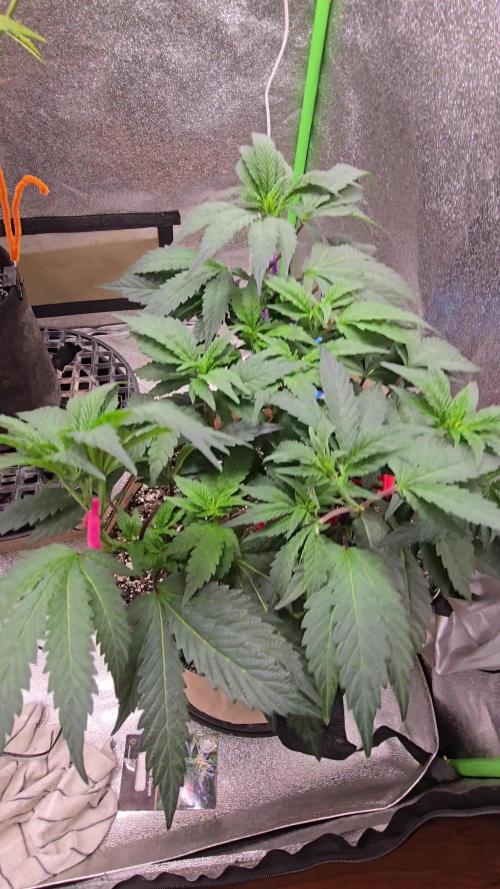
So as you can see, we have upgraded into a 5 gallon wide fabric pot and I'm going to give her another couple weeks to fill into her new home... i broke a couple of branches, definitely gave her silica to early on.. I'm not used to keeping plants in veg for this long... i do think when all said and done, she's gonna be a beast, so it'll be worth it... Thanks again @Grow4releaf!! Happy grown everybody God bless ✌️


Likes
80
Share


@Qlimax
Follow
👉Day43- buds getting fatter and fatter every day :) i can just watch nothing to do rly..:)
👉Day44-Did little deformation and changed 22h>21h lighting since i saw info abt this strain 20h is best they say..... Week or 2 and will change from 21h>20h sleping time so they can rest little bit loonger🤣🤣👍
👉Day45- spoted calcium deficiecy onley on the biggest plant od 3..or 4 leafes.... 😣😪 overall all is well :)
👉Day46-flowers start to smell rly rly nice!!! U can alredy smell that orange/citrus/sweet strong smell when u smell it closely💚🤗🤗🤗💚
👉Day47-2flowers had sings of heat strees(expected that!) so i change height of lap for 10cm,reorganize positions of flowers,so the lower buds are in the middle..... and change fann position, they also kinda stopped rising in to the high white&blue sky!! Height info:cca 85,cm 70cm,66cm,64cm,64cm and the farthest bud away from lamp is like 65cm 🤗👍
👉Day48-flowers flowering rly good :) little calcium deficiency..and did kinda big deformation .... nothing to do now anymore rly ......can just water them every 2days and wait :)🤗🤗
👉👉Have fun mates and be safe!!!😷🤣👍💚

Likes
10
Share


Likes
62
Share


@Wicked_Stix
Follow
The gutter hoe grow show powered by the VIPARSPECTRA XS2000 led is moving along. This ain't no side alley peep show! These girls might come from the gutter but they all have a shot of making it to the big stage. The side branches are starting to grow out and the pistils are starting to pop. The purple sunset roots are growing out of the drain. I'm sure most of these will prune themselves as the light gets to them. The crescendo is showing some signs of calcium deficiency after the organic calmag issue last week but I gave them some calimagic so I think she will stay happy now. I am really liking to simplicity of the gutter setup. I might be running a 3 row gutter setup next round if everything continues to run as smooth as it is. The show must go on!

Likes
13
Share

