The Grow Awards 2026 🏆
Likes
Comments
Share
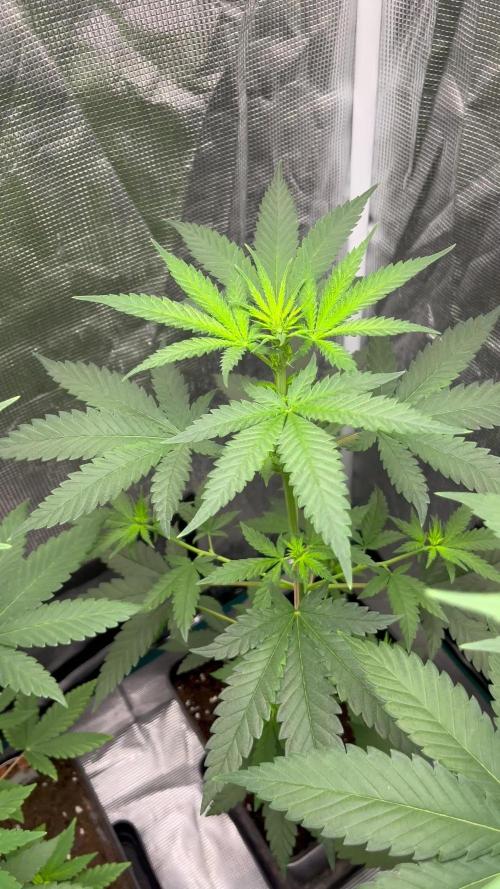
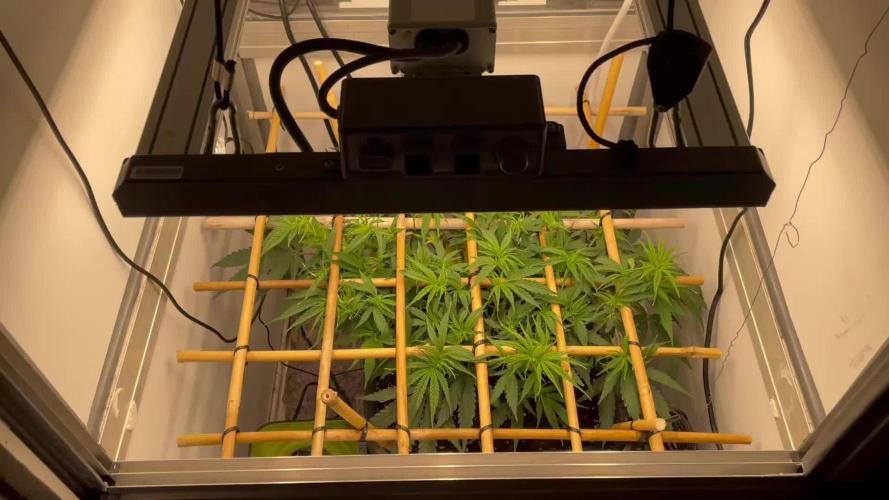
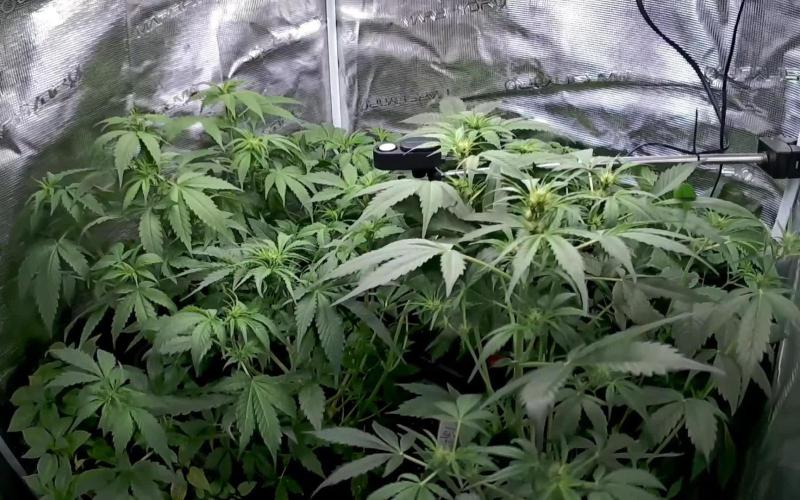
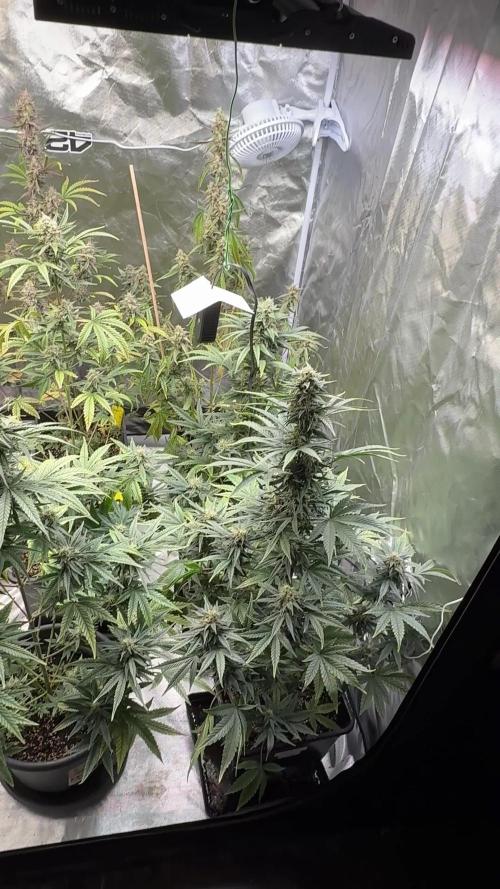
Hey Grow Diaries fam, Welcome back to another update on our PCR adventure! We're at Week 9, which marks Week 4 of the flowering stage, and things are getting exciting! Overview The PCRs are flourishing, and the transformation is nothing short of spectacular. The tent is buzzing with energy, and every day brings new developments. The buds are swelling beautifully, and the trichome production is off the charts. This week has been all about maintaining optimal conditions and ensuring our ladies get everything they need to reach their full potential. Environment and Conditions Tent: 3x3, cleaned and prepped from top to bottom to ensure a pristine environment. Lighting: ViparSpectra P2000, delivering a perfect spectrum for this stage of growth. The balanced PAR output and efficient energy use keep our girls happy and thriving. Watering: TDS at 410, pH 5.8, and water temperature at 21°C. This ensures the nutrients are perfectly balanced and readily available. Nutrient Regimen We’ve kept up with our Aptus Holland feeding schedule, and it's paying off big time. Here's the current mix: Nutritional Spray: Aptus Holland NutriSpray to keep those leaves lush and healthy. TopBooster: Replaced StartBooster with TopBooster to promote flower development. P-Boost: Added to the mix for that extra phosphorus kick, crucial for blooming. K-Boost: a must for them to go fat as we like. The results speak for themselves – lush green foliage and robust bud formation. Defoliation At the end of this week, we performed a mass defoliation. It's always a bit nerve-wracking, but the results are worth it. Removing excess leaves ensures better light penetration and airflow, reducing the risk of mold and pests. Plus, it allows the plant to focus its energy on bud production. And let me tell you, after the defoliation, the PCRs look sexy as ever with their long legs and sculpted structure! Clones Update Our clones are thriving, showing the longest and whitest roots I've ever seen. We treated them with a water mix that included K-Boost and Mycor Mix at 1 gram per liter. This combination has worked wonders, promoting vigorous root development and overall plant health. Reflections This week has been a testament to the importance of a clean environment and precise nutrient management. The PCRs are responding exceptionally well, and I couldn’t be more thrilled with their progress. We're well on our way to an incredible harvest, and I can't wait to see these beauties in full bloom. A huge shout out to: Aptus Holland: For the top-notch nutrients and constant support. You guys rock! Art Genetix: For creating such an incredible strain. The PCRs are truly something special. Grow Diaries Community: Your support and feedback are invaluable. Keep the positive vibes coming! Here’s to another fantastic week of growing! Stay positive, keep pushing forward, and enjoy every moment of this beautiful journey. Genetics - P.C.R. @Art_Genetix_Team https://artgenetix.world/ Nutricion @aptusholland https://aptus-holland.com/ LED Power @Lumatek and @viparspectra As always thank you all for stopping by , for the love and for it all, i fell blessed to have you all with me for one more love journey Thank you Thank you Thank you , you guys are great and have been amazing , thank you for everything ! #aptus #aptusplanttech #aptusgang #aptusfamily #aptustrueplantscience #inbalancewithnature #trueplantscience #dogdoctorofficial #growerslove
 With true love comes happiness , Always believe in your self and always do things expecting nothing and with an open heart , be a giver and the universe will give back to you in ways you could not even imagine so ! Growers love to you all
Likes
8
Share
Recently had a gnat issues from what I read it’s something you can run into using build a soil or growing organic so I got some neem oil to handle it it help a lot still have some but a ton less other than that this is where I am with these two everything seems okay so far
Likes
8
Share
The plant is starting to show signs of early bud sights, and producing large fan leafs as well as good healthy gassy smell
Likes
40
Share
Hi guys lost track of where i am now lol so we will run until there done lol I got a seprate dry tent now so makes my life easier. 1 purple startdawg lst 1 green startsawg lst 1 cheese lst 1 cheese oh natraul grown with polyploid 2 x pot noodle blueberry 1 x blueberry lst 3 x baby photo period big budha cheese. Leave me a comment let me know your thoughts so far.
Likes
45
Share
2nd net is up. Early bud formations are promising. holding up to the extremes pretty well, some leaves taking minor damage, but overall, she is holding up, gave her 1 night at 50F see how she would react, stressful. Not advised as it messes with her metabolism, but I want to see if it triggers any anthocyanin response. Love to see her purp up but no signs yet. My homework. Rubisco regeneration is intrinsically linked to nitrogen supply because Rubisco is a major sink for nitrogen in plants, typically accounting for 15% to over 25% of total leaf nitrogen. The regeneration phase itself consumes nitrogen through the synthesis of the Rubisco enzyme and associated proteins (like Rubisco activase), and overall nitrogen status heavily influences the efficiency of RuBP regeneration.Structural Component: Nitrogen is an essential building block for all proteins, and the sheer abundance of the Rubisco protein makes it the single largest storage of nitrogen in the leaf. Synthesis and Activity: Adequate nitrogen supply is crucial for the synthesis and maintenance of sufficient Rubisco enzyme and Rubisco activase (Rca), the regulatory protein responsible for maintaining Rubisco's active state. Nitrogen deficiency leads to a decrease in the content and activity of both Rubisco and Rca, which in turn limits the maximum carboxylation rate, Vmax, and the rate of RuBP regeneration Jmax, thus reducing overall photosynthetic capacity. Nitrogen Storage and Remobilization: Rubisco can act as a temporary nitrogen storage protein, which is degraded to remobilize nitrogen to other growing parts of the plant, especially under conditions of nitrogen deficiency or senescence. Nitrogen Use Efficiency (NUE): The allocation of nitrogen to Rubisco is a key determinant of a plant's photosynthetic nitrogen use efficiency (PNUE). In high-nitrogen conditions, plants may accumulate a surplus of Rubisco, which may not be fully activated, leading to a lower PNUE. Optimizing the amount and activity of Rubisco relative to nitrogen availability is a target for improving crop NUE. Photorespiration and Nitrogen Metabolism: Nitrogen metabolism is also linked to the photorespiration pathway (which competes with carboxylation at the Rubisco active site), particularly in the reassimilation of ammonia released during the process. To increase RuBisCO regeneration, which refers to the process of forming the CO2 acceptor molecule Ribulose-1,5-bisphosphate (RuBP) during photosynthesis, the primary methods involve optimizing the levels and activity of Rubisco activase (Rca) and enhancing the performance of other Calvin-Benson-Bassham (CBB) cycle enzymes. Biochemical and Environmental Approaches: Optimize Rubisco Activase (Rca) activity: Rca is a crucial chaperone protein that removes inhibitory sugar phosphates, such as CA1P (2-carboxy-D-arabinitol 1-phosphate), from the Rubisco active site, thus maintaining its catalytic competence. •Ensure optimal light conditions: Rca is light-activated via the chloroplast's redox status. Adequate light intensity ensures Rca can effectively maintain Rubisco in its active, carbamylated state. •Maintain optimal temperature: Rca is highly temperature-sensitive and can become unstable at moderately high temperatures (e.g., above 35°C/95F° in many C3 plants), which decreases its ability to activate Rubisco. Maintaining temperatures within the optimal range for a specific plant species is important. •Optimize Mg2+ concentration: Mg2+ is a key cofactor for both Rubisco carbamylation and Rca activity. In the light, Mg2+ concentration in the chloroplast stroma increases, promoting activation. •Manage ATP/ADP ratio: Rca activity depends on ATP hydrolysis and is inhibited by ADP. Conditions that maintain a high ATP/ADP ratio in the chloroplast stroma favor Rca activity. Enhance Calvin-Benson-Bassham (CBB) cycle enzyme activity: The overall rate of RuBP regeneration can be limited by other enzymes in the cycle. •Increase SBPase activity: Sedoheptulose-1,7-bisphosphatase (SBPase) is a key regulatory enzyme in the regeneration pathway, and increasing its activity can enhance RuBP regeneration and overall photosynthesis. •Optimize other enzymes: Overexpression of other CBB cycle enzymes such as fructose-1,6-bisphosphate aldolase (FBA) and triose phosphate isomerase (TPI) can also help to balance the metabolic flux and improve RuBP regeneration capacity. Magnesium ions, Mg2+, are specifically required for Rubisco activation because the cation plays a critical structural and chemical role in forming the active site: A specific lysine residue in the active site must be carbamylated by a CO2 molecule to activate the enzyme. The resulting negatively charged carbamyl group then facilitates the binding of the positively charged Mg2+ion. While other divalent metal ions like Mn2+ can bind to Rubisco, they alter the enzyme's substrate specificity and lead to dramatically lower activity or a higher rate of the non-productive oxygenation reaction compared to Mg2+, making them biologically unfavorable in the context of efficient carbon fixation. The concentration of Mg2+ in the chloroplast stroma naturally increases in the light due to ion potential balancing during ATP synthesis, providing a physiological mechanism to ensure the enzyme is activated when photosynthesis is possible. At the center of the porphyrin ring, nestled within its nitrogen atoms, is a Magnesium ion (Mg2+). This magnesium ion is crucial for the function of chlorophyll, and without it, the pigment cannot effectively capture and transfer light energy. Mg acts as a cofactor: Mg2+ binds to Rubisco after an activator CO2 molecule, forming a catalytically competent complex (Enzyme-CO2-Mg2+). High light + CO2) increases demand: Under high light (60 DLI is a very high intensity, potentially saturating) and high CO2, the plant's capacity for photosynthesis is high, and thus the demand for activated Rubisco and the necessary Mg2+ cofactor increases. Mg deficiency becomes limiting: If Mg2+ is deficient under these conditions, the higher levels of Rubisco and Rubisco activase produced cannot be fully activated, leading to lower photosynthetic rates and potential photo-oxidative damage. Optimal range: Studies show that adequate Mg2+ application can enhance Rubisco activation and stabilize net photosynthetic rates under stress conditions, but the required concentration is specific to the experimental setup. Monitoring is key: The most effective approach in a controlled environment is to monitor the plant's physiological responses e.g., leaf Mg2+ concentration, photosynthetic rate, Rubisco activation state, and adjust the nutrient solution/fertilizer to maintain adequate levels, rather than supplementing a fixed "extra" amount. In practice, this means ensuring that Mg2+ is not a limiting factor in the plant's standard nutrient solution when pushing the limits with high light and CO2. Applying Mg2+ through foliar spray is beneficial to Rubisco regeneration, particularly in alleviating the negative effects of magnesium (Mg) deficiency and high-temperature stress (HTS). While Mg can be leached from soil, within the plant it is considered a mobile nutrient, particularly in the phloem. Foliar-applied Mg is quickly absorbed by the leaves and can be translocate to other plant parts, including new growth and sink organs. Foliar application of: NATURES VERY OWN MgSO4 @ 15.0g L-1 in a spray bottle. Foliar sprays are often recommended as a rapid rescue measure for existing deficiencies or as a supplement during critical growth stages, when demand for Mg is high. Application in the early morning or late evening can improve absorption and prevent leaf burn. The starting point [of creativity] is curiosity: pondering why the default exists in the first place. We’re driven to question defaults when we experience vuja de, the opposite of déjà vu. Déjà vu occurs when we encounter something new, but it feels as if we’ve seen it before. Vuja de is the reverse—we face something familiar, but we see it with a fresh perspective that enables us to gain new insights into old problems. Come walk in the enchanted forest.
Likes
62
Share
Hey guys and welcome to start of Week 8! 🌻 Today is day 21 of flower so i went ahead and cut most of the plats Fanleaves off. It took a while but now the Airmovement is improved and the humidity should also be lower. I also hope I didn‘t stress them too much. From now on they will be reseaving less and less Nitrogen going forward. I hope the colours come through as well 🤞🏻 Thanks for following along and I will keep updating the progress. Happy growing 🍀
Likes
62
Share
@MeaCulpa
Follow
Happy new year! I switch to water in a week and then rinse for 2 weeks. Everything looks good so far. The only thing that worry me a little is the high humidity. In the small tent I have almost always under 50% humidity in the evening, In the large tent it is rarely below 60%-65%. Although my filter is supposed to make 243m³/h, my tent construction is probably too much for it. With 90% outside humidity since weeks, it's really a battle against windmills. I hope nothing gets moldy.
Likes
111
Share
She is looking good. Small but starting to catch up.
Likes
52
Share
@Any_Zenin
Follow
Tag 50: Gegossen 15% Topfvolumen, Wasser PH 6.5 + 1ml/L CalMag + 1g/L Green House Feeding Bio Enhancer = 2..7L NL pro Topf, anschließend noch einige Blätter entfernt. Tag 51: Nur ein paar Triebe und große Blätter runter gebogen. Der Duft wird intensiver und die Pflanzen haben ordentlich Wachstum was Größe und Blattmasse angeht. Gestern habe ich 2 Cannatrol bestellt ich hoffe die kommen bis zur Ernte an. Tag 52: Gegossen heute aus Zeitmangel nur 1,7L NL pro Topf, Wasser PH 6.5 + 1ml/L CalMag. Tag 53: Heute alle Pflanzen in ruhe gelassen. Tag 54: Gegossen wieder nur 1,7L NL pro Topf, Wasser PH6.5 + 1ml/L CalMag. Tag 55: Es kam heute ein neues Flexi Tray von Nutriculture an 1.50m x 1.50m damit konnte ich mein zu kleines Tray ersetzen und alle Pflanzen haben wieder genug platz. Tag 56: Blütetag 20, alle Pflanzen haben heute ihr Lollipopping bekommen und wurden zusätzlich im oberen Teil ein wenig entlaubt, dazu habe ich noch einige LST Drähte umgesetzt. Anschließend wurden alle Töpfe mit 1.7L NL gegossen, Wasser PH 6.5 + 1ml/L CalMag. Eine ganz gute Woche das einzige was ich nicht komplett weg kriege ist der meiner Meinung nach durchgehend vorhandene CalMag Mangel, vllt liegt es auch an der BioBizz Erde beim nächsten Run werde ich definitiv eine andere benutzen.
Processing
Likes
26
Share
Buenos días familia, volvemos con la cuarta semana de floración con nuestras skunk de zambezaseeds y hay que recalcar que esta variedad tiene una rápida floración, apostaría Que será lo primero que cortemos. El ph está controlado en 6.5 a partir de esta semana añadimos overdrive en nuestros riegos. Temperatura y humedad ideales para la Avanzada etapa de floración. Esta cepa es bastante resistente y Fácil de cultivar , os la recomendaría sobretodo a cultivadores novatos, y no tan novatos claro , ya que se valora mucho una floración rápida en indoor.
Likes
49
Share
@yan420
Follow
FERMAKOR BARREL MIX – BASE IN USE (Testing on the Fantasy Feast girl we pulled out of another diary https://growdiaries.com/diaries/274722-grow-journal-by-yan402 ) (FERMAKOR BASE SYSTEM KOH VERSION diary https://growdiaries.com/diaries/278391-grow-journal-by-yan402) (Urea & Micros on the way — first week running without them) 🍶💧🍶💧🍶💧🍶💧🍶 💧 30 L Barrel – Current Working Mix 🍶💧🍶💧🍶💧🍶💧🍶 Step 1 – Calcium Nitrate (Part A) 7 L warm water (~35–40 °C) → added 45 g Calcinit, stirred until fully clear. That’s the calcium + nitrogen backbone for the feed. Step 2 – FERMAKOR PK Base (Part B) 15 L water in the main barrel → added 30 ml FERMAKOR PK Concentrate, mixed well. This forms the main P + K part of the formula. Step 3 – Combine Solutions Slowly poured the Calcinit mix into the barrel while stirring — no reaction, still crystal clear. That confirms the mix is stable and precipitation-free. 🌿 Step 4 – FPJ / FFJ Batch Added 30 ml homemade FPJ (fish + veg batch) ≈ 1 ml/L. Color shifted to a light-amber tone — looks alive and active. 🍋 Step 5 – Citric Acid Balance Added 1 tsp citric acid after everything was blended to fine-tune pH and help chelate micros later on. 📦 Step 6 – Top Up & Check Filled to the 30 L mark with plain water → pH tested with drops, showing yellow-green — roughly 5.8 – 6.0 range. Nice clean look, stable smell, no residue. 💧 Current Base Ingredients (Active Mix) Warm Water ≈ 22 L total Calcinit 45 g → N + Ca foundation FERMAKOR PK Base 30 ml → P + K support Citric Acid 1 tsp → Chelation + pH balance FPJ / Fish Emulsion 30 ml → Organic enzyme booster Result: clean amber mix, mild and balanced. I’ll let this version run for a week before adding anything. 👀👀👀👀👀👀 Observations and changes 👀👀👀👀👀👀 27.10.25 VW27 noticed some min burnt tips so I decreased Calcium Nitrate 45 to → 40g, decided to add two more elements micros and Epsom salts just to make sure they got everything, Fetrilon Combi 1 (Micros): 0.5 g, Epsom salts: 8 g 28.10.25 VW27 she seems devoid of any deficiencies, seems ready for the flip to 12/12 02.11.25 VW27 girl is looking good so I decided to stop making daily videos and do a standard once a week update. 09.11.25 aVW28 7 days since flip,stretch in full swing, first pistils showing, leaf color deep and healthy. Slight tip burn early week → gone after pH stabilized. Feed stayed clear, no residue, roots clean and sweet-smelling, did what I hope is a last cleanup and pruning🎥 10.11.25 VW29 added Phosphoric acid pH down to the schedule for flowering stage. 14.11.25 FW1 FERMAKOR PK Micros 40 → 50 ml 23.11.25 FW2 got some burnt tips, observe and act accordingly in case it worsens, diluted by 25% for this week. 05.12.25 FW3 about 2 weeks ago Calcium Nitrate 35 g → 25 g, FERMAKOR PK Micros 50 ml → 60 ml 🌱💦🌱💦🌱💦🌱💦🌱💦🌱 🌿Day to day tasks & actions 🌿 🌱💦🌱💦🌱💦🌱💦🌱💦🌱 30.11.25 FW2 – Fed 5l of #1 → 2l runoff 01.12.25 FW3 – Fed 5l of #1 → 2l runoff 02.12.25 FW3 – Fed 5l of #1 → 2l runoff 03.12.25 FW3 – Fed 5l of #1 → 2l runoff 04.12.25 FW3 – Fed 5l of #1 → 2l runoff 05.12.25 FW3 – Fed 5l of #1 → 2l runoff 06.12.25 FW3 – Fed 5l of #1 → 2l runoff 07.12.25 FW3 – Fed 5l of #1 → 2l runoff 💧💦💧💦💧💦💧💦 🌱 Nutrients in 30 L #1 Veg – FERMAKOR 💧💦💧💦💧💦💧💦 Calcium Nitrate (Calcinit / Nitcal): 45 → 40 g → 35 g → 25 g = 1.50 g/L → 1.33 g/L → 1.17 g/L → 0.83 g/L = 207 ppm N / 253 ppm Ca → 184 / 225 → 161 / 197 → 115 / 141 PK Concentrate (FERMAKOR Base): 30 → 40 ml → 50 ml → 60 ml = 1.00 → 1.33 ml/L → 1.67 ml/L → 2.00 ml/L → balanced 1:1 P:K + light micros (from extract) Home-made FFJ/FPJ (Fish + Veg): 30 ml = 1.00 ml/L Epsom Salt (MgSO₄·7H₂O): 8 g = 0.27 g/L → ~26 ppm Mg + ~35 ppm S Fetrilon Combi 1 (Micros): 0.5 g = 0.017 g/L → Fe 0.7 ppm · Mn 0.7 ppm · Zn 0.3 ppm · Cu 0.3 ppm · B 0.1 ppm · Mo 0.02 ppm Phosphoric Acid (pH down) + Citric Acid (chelation): as needed → First set pH with phosphoric acid, then add a little citric only if you want extra chelation Target pH: 5.8 – 6.0 (drop test yellow-green) 📦 TOTAL: Liquids: 60 → 70 → 80 → 90 ml per 30 L = 2.00 → 2.33 → 2.67 → 3.00 ml/L Solids (CaNO₃ + Epsom + Fetrilon): 53.5 → 48.5 → 43.5 → 33.5 g per 30 L = 1.78 → 1.62 → 1.45 → 1.12 g/L 💧💦💧💦💧💦💧💦 YouTube Link: https://youtube.com/-m8h?si=A7x4Zlr2kj-_ga31
Likes
4
Share
@pzwags420
Follow
week 3 flower is going great. I increased my UVA lights to 8 hrs on. Gsc and Blueberry have decent bud-lets already on day 17. OG kush has preflowers. waiting on Blueberry muffin to show pre fowers should be soon. At the end of week 3 GSC and Blueberry are doing the best and starting to get more trichomes. Im waiting on OG kush And Blueberry Muffin to really get going!
Likes
91
Share
@Salokin
Follow
Hi Growmies, This was her last week of heavy feeding. I have already decreased the nutes for the coming week and will probably start flushing her the week after. So that she should be finished by the end of the contest pretty much. Regardless of her age the rootball has shrunk only a little bit. I have also taken her out of the scrog to enable the canopy to open up further and allow more light penetration for the maturation of the buds. This worked actually very well, as the weight of the buds pull the plant open. Thanks for stepping by and until next week!
Likes
23
Share
@Gram_Solo
Follow
Week 10 Ohhhh yehhhh! 👽👍 These runtz are firing with bud sites now! They are all in the flower tent this week with the Spiderfarmer sf4000 and dehumidifier locked in at 50% Few more weeks and these will be stacked. Got a lemony smell on a couple of them and can see some frost coming through too ❄️❄️❄️ Really need to invest in some new pots because the waste nutrient water coming through is too much dry pockets all over I think, used about 20litres on 5plants
Likes
62
Share
@balansa
Follow
i think mexican airlines is ready for flushing. i will flush her next week smell and aroma is wonderful nore like skunky. moby dick has 2-3 weeks left i think she has more sweet smell. i wanna tell you the smth i know that its unwrighten rule that u should not touch the plant before harvest but i smoked both and they are impressive ))))
Likes
5
Share
It’s about week 8! A few weeks into flower now. So far this is looking like the most successful indoor grow to date, but it is early of course. She’s filling the tent perfectly — flowering exactly at the right time — nice even canopy. These genetics have responded very well to scrogg. I am endlessly impressed by canuk genetics. She’s smelling stronger this week and buds are starting to form. Vertical growth is slowing down — some stretching still.
Likes
21
Share
***Week 6 Flower - October 24 to 30, 2020, Days 36 to 42********* Sorry gang....been really busy at work and life. Adding in some photos for now. More info coming...
Likes
9
Share
@EBPbyEVD
Follow
Hello everyone! 🌱 Today, I'm excited to introduce our new product – a test plant grow light from the GrowMAMO project. This lamp is the result of hard work by our team, and as an experienced grower and breeder, I will start testing it. Let's take a closer look at what makes this light unique. Technical Specifications: Power: 60W Main Spectrum: White light 4000K using Samsung LM301H EVO LEDs, which are 15% more efficient than the previous generation. Additional Spectra: Red spectrum 660nm (Samsung LH351H) and ultraviolet ranges 367nm, 385nm, 395nm, and 405nm (Seoul). Why these spectra are important: White Spectrum 4000K: Ideal for general plant lighting, it promotes photosynthesis and ensures steady growth. Red Spectrum 660nm: Stimulates flowering and fruiting, increasing yield. Ultraviolet Spectra: Enhance the production of protective compounds in plants, such as flavonoids and anthocyanins, improving their resilience and quality. Testing: We will be testing the light on seeds provided by my friends at Doctor's Choice. The strain is Diesel Fast F1 BX Regular. 🌿 You can find all the test results and more detailed information on my Grow Diaries page. I will regularly share updates and impressions with you, so stay tuned! I welcome your questions and comments. Let's make growing even better together! 🌟
Likes
2
Share
Привет садоводы ! Началась новая неделя сегодня я заменил питательный раствор на новый и сделал его немного покрепче все в пределах таблицы кормления теперь он в значении 700 ppm а PH также я держу в пределах 5,6 тот цветок ,что в земле после пересадки я пока не поливал растения выглядят хорошо ,но растут немного медленно а в общем вроде не плохо 😎