The Grow Awards 2026 🏆 







Likes
Comments
Share
@DarbGrowDiaries
Follow
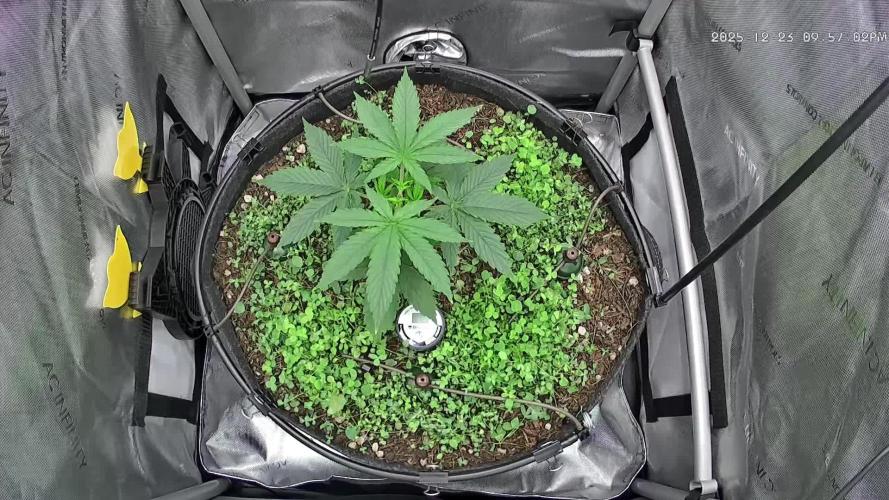
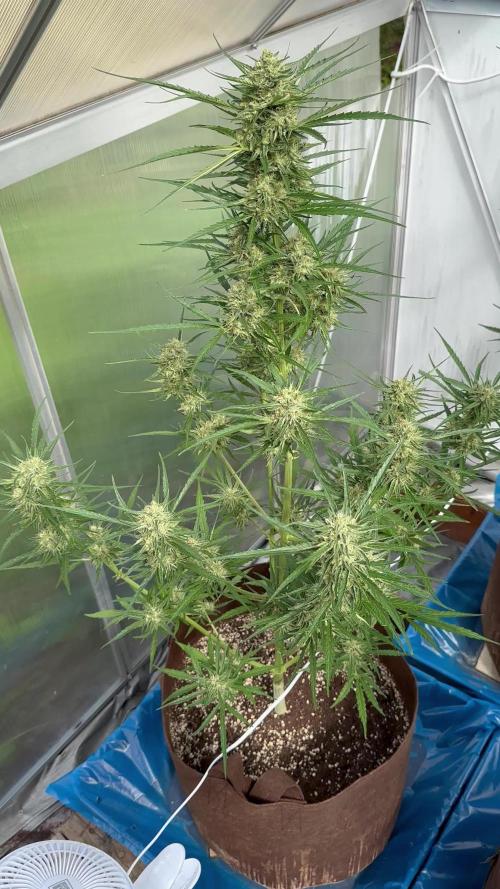
All 3 plants are different, the one at the back is as big as the other two.
One of the plants in the front is in a 9 liter airpot and developing quicker than the other two.
Also the buds are looking a bit different, very white on the bluecheese in the back.
This week I also started adding Acti-Vera and Bio-Heaven, hopefully they like it.
Not noticing anything unusual and I am glad I have the extra 20 cm to grow in hight in the new tent.
Day 46, switched to bigger lights SF-G3000, fits perfect in a 70x70 😇
Light at 60%, 40 CM from top.


Likes
7
Share
@Alvareas
Follow
Die Pflanze hat sich schön weiterentwickelt.
3 Tage nach dem toppen, waren die obersten Triebe soweit entwickelt, dass ich die obersten Sonnensegel entfernen konnte, da diese die untersten Triebe verdeckten.
4 Tage nach dem toppen, habe ich angefangen, mit LST-Clips, die Triebe nach außen und in die gewünschte Richtung, zu trainieren.
Am 6 Tag der Woche, habe ich begonnen, neue Triebe zu entfernen, jedoch die Sonnensegel der Triebe, lasse ich stehen.
Da ich die Triebe eh später entfernen würde, mache ich dies gleich am Anfang, somit muss die Pflanze keine Kraft auf diese Triebe verschwenden.
Am 7 Tag wurden die beiden obersten Triebe noch einmal getoppt.
Bis jetzt ist das Training aufgegangen.
Die Pflanze geht in die Breite und die Triebe liegen in etwa auf gleicher Höhe.
Erstaunlich finde ich, wie sehr die Pflanze, in Living Soil, auf zu viel Feuchtigkeit, reagiert.
Da ich ein Paar Trauermücken im Zelt und auf den Gelbtafeln gefunden habe, wollte ich mit Nematoden gegensteuern.
Deshalb habe ich 1 Liter, mit Nematoden, am Anfang der Woche gegossen.
Das Tensiometer hat 48 mbar angezeigt und ist im Verlauf der Woche, auf 91 mbar, langsam gestiegen.
Dies hat man im Verlauf der Woche, am neuen Wuchs, gesehen.
Es hat deutlich länger gedauert bis die Blätter von hell Grün auf dunkel Grün gewechselt sind.
Auch haben einige Blätter helle Spitzen und Ränder bekommen.
Die Luftfeuchtigkeit habe ich diese Woche noch einmal leicht gesenkt.
Die LED ist so weit entfernt, dass wir ca. 450 PPFD und einen DLI von ca. 25, hatten.
Die Parameter:
Controller Einstellung Tag: Advanced AI Luftfeuchtigkeit 57% - 67%
Controller Einstellung Nacht: Advanced AI Luftfeuchtigkeit 50% - 60%
Durchschnittliche Tagestemperatur: 26,2 Grad
Durchschnittliche Nachttemperatur: 23,1 Grad
Durchschnittliche Luftfeuchtigkeit Tag: 62,5%
Durchschnittliche Luftfeuchtigkeit Nacht: 57,3%
Durchschnittlicher VPD Tag: 1,1
Durchschnittlicher VPD Nacht: 1,0
LED Leistung: 20% = 95 Watt
Beleuchtungsdauer: 18 Stunden
Umluft: Stufe 1 oszillierend

Likes
19
Share
@Naujas
Follow
Amazing!!!!! a wonderful girl, she managed to keep herself so beautiful and strong :) she was not visited very often :) the house has a wonderful smell of tropical fruits :) Thanks to Dutch Passion for the opportunity :)

Likes
18
Share
@DaddyPrime
Follow
7/17 she is SUPER fucking frosty 😍💚 buds are filling out too. Cant wait to see her a couple weeks from now
7/21 she was getting super bushy so I defoliated alot of the bigger fan leaves

Likes
3
Share
@Seeds_growforgreen
Follow
Beautiful blooming Golf ball size..🏑⚾️
Nutrients Plagron on bloom is very very good. 👌
Alga Bloom 4ml/l 🍡🥜
Royal Sugar 1ml/l 🍭🍯
Green Sensation 1ml/l 🥦
Likes
17
Share
@Gordy
Follow
I took a ton of pictures this week. This plant is beautiful! The amount of crystals that she has produced in the last week is crazy. Overall the plant does't seem to be stretching much at all, and I hope that it doesn't seem too be too small.Considering this is a 10 week flower, I'm hoping that it should be a bit smaller than other plants that i'm seeing on here.
The smell has really increased this week. Just entering the room now you know that someone is growing in there. I do have a carbon filter going, but the smell seems to be coming more from the walls of the tent. Since this is my first grow, everything here is pretty cheap. Eventually I’ll upgrade to higher quality items.
I’m worrying that I’m watering wrong. Each week I water twice. Once with nutrients and once later in the week with just water. 4 liters of water each time. And giving all of the nutrients in that one feeding of 4l of water. Any feedback on if this is ok or if this is causing any harm to the plant would be appreciated.
I also seemed to solve the really high humidity issue this week. When watering in the past I wasn’t pouring it into the soil properly, and it was draining off to the side of the container, it would all run off and pool behind the plant and I wouldn’t realize. This week I took more time when watering and all water seems to have gone into the soil. Following the watering the humidity only seemed to get up to 63%. Previously it was around 74% for about 3 days. I think this is a win.
Goal harvest date is January 14th. Can’t wait!

Likes
Comments
Share
@Papabro2k
Follow
She smelly greet unfortunately I never took many pics she was a test run happy growing all I have not tried yet she is going into the curing process and I am not 100% sure of its sativa or indica


Processing
Likes
9
Share
@MG2009
Follow
04/28/2020
Week #8 of flowering begins will post more pics latter.
04/29/2020
Did some leaf removal had some powdery mildew on some leaves took infected leaves off, plus some for good measure. Drying out every day or two today she took one liter before run off. You can see in the video the colors? And sparkling buds?
04/30/2020
Day 50
I decided to take the top buds in pics , 47 grams wet.
It is a 9-12 week strain but I think she need a week or two? But we will see.
Likes
29
Share
@Reaper
Follow
day 15 (december 19)
start of week 3
roots everywhere plant starts to take of now, the hydro is slightly bigger then the soil plant
day 17:
the hydro plant made a new set of leaves in just 2 days!
day 19:
i cut off the lowest leaves of both plants. i do this because on any autoflower these leaves produce a stem that wastes a lot of energy on small nugs.
day 20: hydro plant got topped (3nodes)
day 21: soil plant got topped (3nodes)
same strategy with the topping, i do this early (i could pinch them off with my fingers) to reduce the time to recover. the plants bounce back like they didnt feel it and with the lowest leaf and small tiny stems cut off, these plants will produce 6 main stems with nice big and dense buds instead of a huge christmass tree with more leaves than bud.
Likes
38
Share
@Hempface86
Follow
Hello fellow growers I hope all is doing well today is day 41 and as you can see I have done some defoliation of the larger leaves.. my Lamb's bread won't be done for about 2 and 1/2 weeks and I'm waiting on that tent to transfer to put her in the flower.. next week I'm going to put her from the 1 gallon pot into a 3 gallon with mother Earth performance soil and flip her to flower and see what happens.. I'd love to keep your organic the whole way through but if need be I have what I need to bring her from any deficiencies that may come like not enough phosphorus or potassium which is more than likely what's going to end up happening .. I'm thinking of going the route of Roots organic soil with Roots organic terp tea bloom from now on with maybe some recharge once or twice if anybody has any thoughts or input or suggestions I would really appreciate it as I've only been growing for around 8 months now.. hope all is well with everyone and big shout out to seedsman for giving me the opportunity to run their genetics and show off what they have.. I have a couple more strange from them in the future to come that I am very excited for.. happy growing ✌️

Likes
12
Share
@Siriuz
Follow
Starting week 9
She is huge that's why we added extra LST to her big main stem so she could have support and hopefully gets more yield!
Day 57
She is doing very good
Full of trichomes
Cant wait to taste it
Day 58
Going hard on nutes
1900ppm
Then lots of light
Soon I'll be showing you pics of progress
Also she's 65cm or more since she's bended
Day 59
She's even better
No nutrient burnt
Everything is Good;
Continues to grow 20/4 schedule
Day 60 Hope you like the video
Day 61.62.63.
Sorry didn't have the time to take pics or bids but overall she's good
Defoliate a lil bit here and there yellow leaves and she's got more Buds around and finally fattening up
I will show you next week
Rh 60/70%
Was rainy outside for couple days
Temp hot 28/30 night and day was 32
Thank God we've got AC....


Likes
14
Share
@Reyden
Follow
Penso che questo seme non abbia ereditato il tratto autofiorente perché adesso ho appena spostato a 12/12 e dopo 25 e passa giorni la ragazza non è entrata nella fase di fioritura e non si è nemmeno allungata, invece LSD-25 è già con pistilli visibili e ha la forma sta salendo per allungarsi e formare i siti di fiori, vediamo se starà al passo delle Fast Flowering ma a questo punto non penso 😄💚🌱👋


Likes
22
Share
@Siriuz
Follow
And we are here now!
PPM is 450
Time to transplant this girl is at its 5th nod
Tomorrow I am going to place her
In a bigger pot probably get to record it
18/6 schedule
Using only floranova veggie and plain water
Nice mix super mega soil made by siriuz
#foxfarmnutrients
#generalhydroponics
Follow me at Instagram @cannagrowersiriuz
This red poison will rock