Likes
Comments
Share


@obeee
Follow
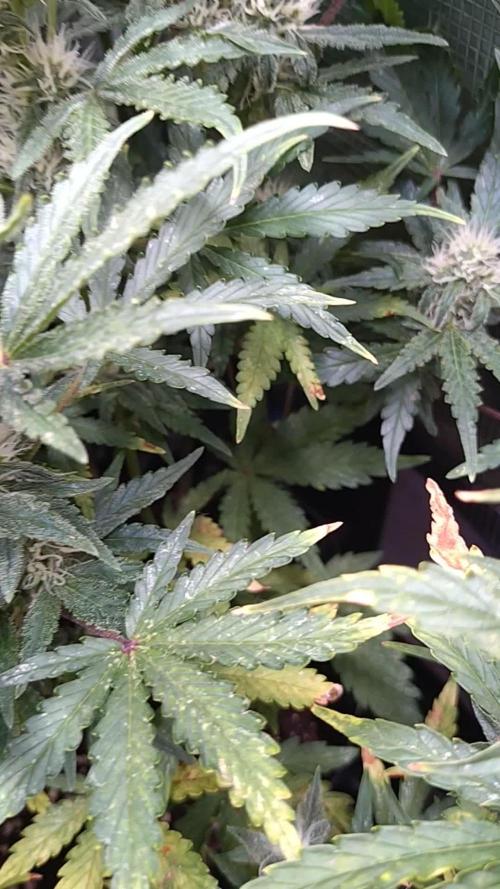
J'ai malheureusement du récolter cette variété tôt a cause de la mauvaise météo prévue sur les 15 jours suivants, faites attention si vous souhaitez réaliser cette plante en extérieur !
L'odeur est très intéressante et en vaut la peine !

Likes
43
Share


@DeepWaterGrower
Follow
[DAY 78] - 12/12/2022
- TS1000 40 cm distance - 100% dimmer: 144 watt;
- Light cycle 20/4;
- Height: 74 cm from clay (the other one is 83 cm from clay);
- 24° C - 60% RH during light - 19° C - 70% RH during night;
- EC 1.7- PH 5.9.
[DAY 79] - 13/12/2022
- 24° C - 60% RH during light - 19° C - 70% RH during night;
- EC 1.5- PH 5.9.
[DAY 80] - 14/12/2022
- 24° C - 65% RH during light - 19° C - 80% RH during night;
- EC 1.4 - PH 6.
[DAY 81] - 15/12/2022
- 22.5° C - 73% RH during light - 19° C - 80% RH during night;
- EC 1.4 - PH 6.1;
- Defoliation.
[DAY 82] - 16/12/2022
- 22.5° C - 70% RH during light - 20° C - 80% RH during night;
- EC 1.4 - PH 5.9;
- Pretty fine, some spots here and there on the leaves.
[DAY 83] - 17/12/2022
- 22.5° C - 70% RH during light - 20° C - 80% RH during night;
- FLUSH EC 0.3 for 24 h.
[DAY 84] - 18/12/2022
- 22.5° C - 70% RH during light - 20° C - 80% RH during night;
- EC 1 - PH 6.


Processing
Likes
52
Share


@CBD_Sweden
Follow
@MephistoGenetics,
Hi all the happy people here in GrowDiaries.
This is my second cultivation ever and it will be fun to try a bigger space than my closet grow.
First, I'm just going to say I'm done with the construction of my new growroom.
The room is 2.14 meters by 1.7 meters and has a ceiling height of 2 meters.
It provides a floor area of 3.6 square meters.
I use a 54 Watt Lightwawe T5 for germination and 2 Pcs 400 Watt HPS lamps.
I have a channel fan that replaces the room air about 40 times an hour to get a comfortable environment in the room, the air enters a fresh air intake from the outside.
The air is purified through a carbon filter to then leave the room to the rest of the basement.
Then I use that heat to heat the rest of the basement.
I will use 10 pcs 15 liter Autopots to grow with and a 100 liter water tank that supplies the pots of water and nutrition.
I will grow completely organically in soil and will watercure my buds to get the best possible medicine for me.
But there are no cultivation rooms to be displayed here, so I continue with what is most important.
I am very excited to see how the new growroom will work and how this Stilton Special will turn out.
Strain Name: Stilton Special F1
Genetic heritage - Sour Livers F3 x Northern Cheese Haze F3
Strain behaviour - Stilton grows well from the off, and develops into a stout but branchy specimine that leads to a fine yield of awesome flowers. She's not too stretchy but also is sizeable enough with good growth, to train and shape to your liking. Flowers develop pretty fast and grow to a good size, it may to advised to clear out some undergrowth and if needs be a very gentle defoliation mid-way through the grow, although leaf tucking may suffice well enough.The end product is of top shelf quality and she doesn't lack in yield either.Give your garden, nose, and body a treat and be sure to indulge in a slice of Stilton this year, You won't regret it.
Size - 50 - 70 cm
Structure - Medium height but bushy
Flower Density - 9/10
Indica/Sativa - 65/35
Cycle Time - 65 to 70 days from sprout
Yield - 90 to 140 grams as a single plant
Best Method for overall high yield - 9-12 per 1,2m x 1,2m sq in 10-15 Liter pots (Soil)
Aroma - Very strong, Cheesey/fruity/sour/spicey/ with a dash of coffee.
Taste - Dank berries
Effect - Good hybrid powerful but balanced effect
Medicinal Benefits - TBA
Best Grown - Indoor/Greenhouse
Cannabinoids - TBA
Extract information - Ideal extract candidate - High in resin, oil and terps.
--------------------------------------------------------------------------------------------------
2017-09-25. Week 5 starts. Added a video of the girls. Gave the girl water and nutrients. This girl is 24 cm high and have grown 7 cm in 7 days.
I flushed the girl yesterday with 40 liters of tap water. Im lowering the humidity in the room with a dehumidifier and try to have 50% air humidity.
----------------------------------------------------------------------------------------------------------------
2017-09-29. Installation of the New light rail in the grow room. Its Advanced star light V 5.0. Added a video of it.

Likes
5
Share


@jaygrams
Follow
08/12: Transplanted OBWand Do-si into 7 gal pots. Fed all of the ladies. Also bought a small pack of RAW bloom microbes and applied to plants for about 3 weeks till the package was done.


Likes
9
Share


@SeseGrows
Follow
Home Interior 90x90//
Do Si Dos 33 - Granja Barneys + Sour Diesel + Roadawg
//Semana 5//FLORACIÓN
- Grotek Nutrients.
- Lumatek LEC 315w+ 💎 .
LEC 315w —> 100%

Likes
17
Share


@Broedt
Follow
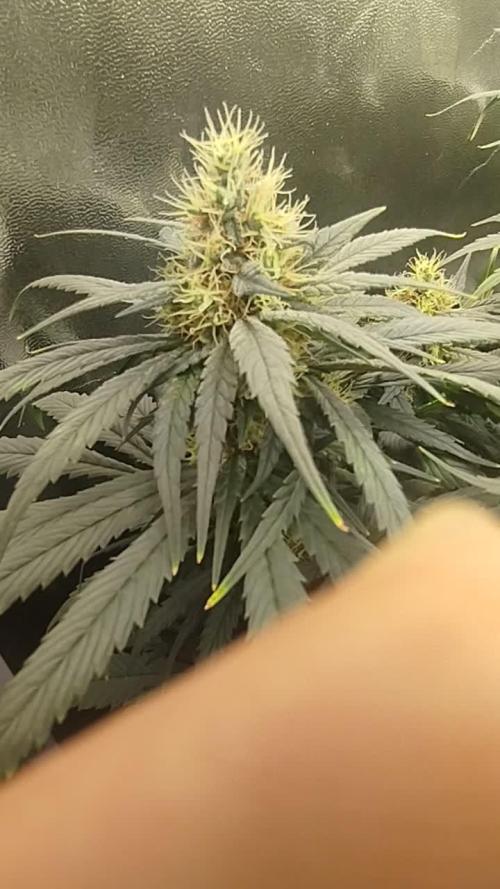
Day 78 of flowering
Stopped adding nutritions to the water after day 71. The plants started to get a bit shady after that, by shady I mean that they been hanging and slowly turning yellow, and getting some spots on the leaves.
I almost had an heart attack when i saw that one plant had during 30ish hours turned brown and dried all out - See the pictures. I couldn't see any mold or any thing, so i chopped the top of the plant off. None of the others had anything like this..
The buds are getting so fat that the plants are starting to have a hard time holding the weight pf the buds.
Im planing on harvesting during the next week.

Likes
Comments
Share


Likes
1
Share


@Weedwithwes
Follow
Starting to fade early haven’t feed anything but water and mostly let the drippers do the work on this run


Likes
23
Share


@Zuppler
Follow
Yoo, what’s crackin’ y’all? It’s Zuppler checkin’ back in with the week 4 veg report, comin’ to you from the land of dirt and sadness. Yo, we’re hittin’ the home stretch of veg, and these girls look like they’ve been pumpin’ iron or somethin’. Stalks thick as a palm trunk, leaves lookin’ like they tryin' to catch all the rays. Ain’t no stuntin’ goin’ on here – these ladies in full-on beast mode.
Still feedin’ that Advanced Nutrients on RO water, You know, that extra sauce to keep ‘em strong, gettin' rid of them lower leaves that ain’t doin’ much. Gotta make sure all the energy goes where it counts.
The roots gotta be massive by now – these girls takin' up water like a sponge in the swamp, but no signs of droop or deficiencies. The stretch is slowin’ down, but that’s all good. They’re lookin' sturdy, like they ready to handle whatever comes next. Just about time to flip the switch and let ‘em show us what they really got.
Zuppler out, peace!
Likes
2
Share

@Bendene
Follow
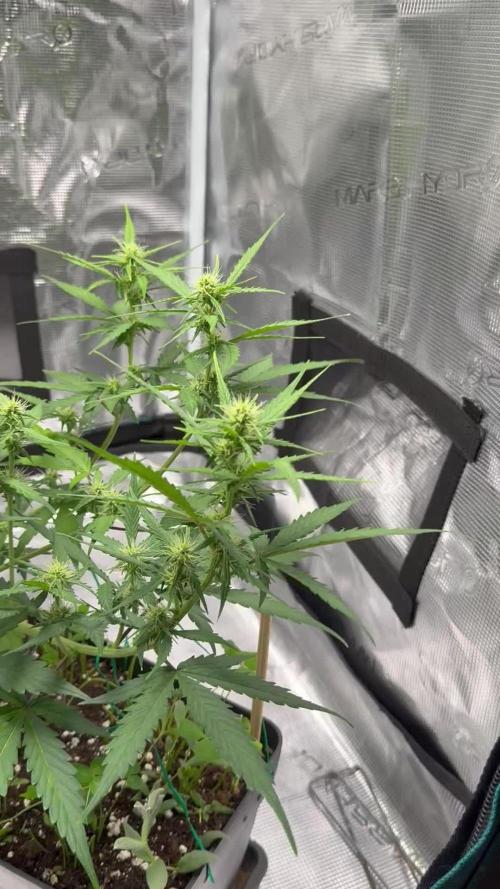
Half of week 6 was still in veg but now it switched into early bloom - I still expect a tiny bit of stretching.
The bud structure is great many little buds sites
Cylaxes are still at early development stage.
I have been collecting the clover leaves and leaves from defoliation and dried them out, blended them into fine powder- so the earth worms can feed on them.
Made a top soil mix ( used dried soil from the surface of the pot + powder leaves, one tea spoon of rizobacter and half tea spoon of mycorrhiza ) then I sealed with another layer of Light mix by Biobizz
Likes
Comments
Share


@SelfCultivationGrower
Follow
After this wild bushy stretch I had to do Late HST to keep them tops from burning

Likes
11
Share


@Inceptionist
Follow
Soo, I think I can start to call it the first week of flower. #2 definitely is showing a few white pistols, #1 is just starting her first set and I'm pretty sure #3 will shoot them out any day!
Also seems that removing the lowest two side branches of #1 was a huge success! She basically is the same hight as the others BUT I LST her a bit to expose the smallest side branches out of the three to more light! Also, I put a little elevation for her, so they stay the same high.
#3 is doing #3 things and continues to grow rapidly. Topping her was the right move I think.
I'm quite new to autoflowers (I mean pretty much in general but I had one random regular seed run before this but that's it) so I hope, I didn't call it too early but I'm positive:)
Also my new microscope and the Blumat drip irrigation system finally arrived. I heard it can be a bit tricky to get it running but once it runs, it should run like a charm. Very very excited for this since I'm planning on going living soil in the future, which should fit very well together.
Before installing the system, I removed the first set of true leaves of #1 and buried the wounds in soil. I hope she will build roots there.
With #2 I took scissors and scratched up the main stem and filled it up with soil. As well I hope for more root growth. #3 just got a little bit more soil without any extras because of the topping.
After doing all that, I watered with the BioEnhancer. I took 0,5g/l and around 1,5l in total.
Quite a lot of update for just one day haha. Flowerpower baby!
Didn't really have the time for further updates besides pictures. I did defoliate all 3 a little bit and keep fine tuning the Blumat. I think it's working quite well so far.
#3 has some little spots looking different but nothing major I feel. I'm more worried about #2. Her tips start to yellow up a little. I hope it's because she grew too fast into the lights and now where I pulled lights back up to 35cm, she will be fine again

Likes
34
Share


@Kynareth
Follow
Hola!!
Bienvenidos a esta nueva aventura.
En este diario cultivaré la genética de dición limitada del banco GB Strains bajo una luminaria LED de mars hydro, la sp 150, que da unos 140 watts de potencia nominal y en espectro completo. El armario será un trafika de 60x60 y el medio de cultivo 11L de coco en maceta de plástico blanco. El coco va a ser un ladrillo de ugro de 3L hidratado con agua a ph de 5'5 y sin recirculación del agua. La germinación será en papel y usaré el seedboster de plagron ya que he leido varios casos de problemas en la germinación de esta genética y únicamente tengo 3 semillas y me gustaría gastar solamente una.
Como novedad para los seguidores escribiré este diario en español, mi lengua nativa, dado que el banco de semillas GB Strains opera principalmente en España, y creo que también en Francia y me suena que Reino Unido, pero no estoy completamente seguro de eso y la idea es que sea lo más útil posible para otras personas. En cualquier caso recordad que en la parte izquierda de la página se pueden activar opciones de traducción a varios idiomas.
Sobre la genética remarcar que el banco indica unos porcentajes de thc de 30-33%e n condiciones óptimas con un uso recomendado medicinal y con efecto de relajación intensa. Si no tengo problemas durante el ciclo de cultivo y éste se desarrolla correctamente realizaré un análisis de cannabinoides al finalizar el secado y si este no fuera concluyente o diese valores de menos del 20% que es una desviación bastante sustancial, realizaré otro tras el curado para verificar. Hace bastante tiempo (años) que no cultivo una genética fotodependiente pero espero no tener ningún problema
Para los abonos utilizaré GHE/terra aquatica que ya he utilizado con muy buenos resultados (de momento) en mi primer intento con coco y añadiré también fulvic (o diamond nectar) de la misma casa
Germinaré la semilla una vez tenga montado el armario de cultivo en los próximos días o semanas. Tambioén grabaré todo el ciclo y crearé video timelapse global y semanal para apreciar reacciones de la planta a estímulos y seguir mejorando la técnica
La semilla ha germinado en 48 horas. La dejaré un poco más antes de moverla al jiffy de turba
Ha tardado pero finalmente ha germinado la semilla y ya está en el jiffy en el armario. He usado el agua sobrante de mojar el papel para germinar para alimentarla estos primeros días. Cuando muestre sus primeras hojas (no cotiledones) empezaré con el abonado. Finalmente será la serie flora de GHE, no la específica de coco.
Este es mi segundo intento con la genética, en el primero falló un programador de riego y generó problemas irrecuperables en la planta por lo que la deseché.

Likes
3
Share


@zenderman
Follow
27/2/26.day 22,fourth week started.
1-27/2.
2-28/2.
3-1/3.
4-2/3.
5-3/3.preflower.
6-4/3
Processing
Likes
96
Share


@The_Projexx
Follow
So this marks the beggning of week three veg for these fabulous lady's . One of them is still catching up to the other because she keeps deciding to do weird things haha . I'm starting my nutrient cycle this week to help them kick it into veg drive ! Thanks again for the support and love lady's and gents makes this grower feel loved haha remember to check out my diary's daily for updates !!!!!
-Happy Growing
Likes
141
Share


@bioaccessory
Follow
Как-то незаметно мы уже пересекли условный экватор, и пока всё ОК.
Очередная сломанная магистраль намекает от том, что пора прекратить подгибания, хоть экран до конца и не заполнен, как я планировал.
Включил боковой доствет, теперь у меня горят все лампы😎
В третий раз дал Delta9(повторно по листу).
На новых листочках появился первый "снежок"❄️
Собираюсь убрать всё лишнее, когда растишки остановятся в росте, а пока остаётся только ждать и наблюдать.
Спасибо, что заглянули, и будьте здоровы! 🙏
Продолжение следует ...😶

Likes
3
Share


@HUUDUUH
Follow
Aaaaaa.. 😮💨
So In love with my gurls!
First week flowering and they have stratched a lot!
Beautiful green, beautiful form.
So.. I had to buy a grow box for the ladies YES! I did it. We (Bia and I ♥️)
Becuz it was realy hard to control the light thing and the umidity lvl is worring me.
Full packed now. 🔥
No mistakes 🙌 No mistakes🙌
Likes
48
Share


@TheCannaProphet
Follow
~ WEDDING CHEESECAKE FAST FLOWER by FastBuds ~
Well fam, here we go again with another epic strain from FastBuds Fast Flowering stable. After having such tremendous success growing their Gorilla Cookies Fast Flower outdoors last year, I've decided to run another of their fast flowering strains outdoors this year... Wedding Cheesecake Fast Flower!
The best description of this awesome cultivar comes directly from my friends at FastBuds which is as follows:
"A delight for the mind and body: Wedding Cheesecake FF (Fast-Flowering) is a delicious strain that offers XXL yields in a 7-8 weeks flowering cycle. This terpene powerhouse produces loads and loads of mouth-watering vanilla-creamy-cookie-scented terps with hints of citrus and cinnamon. In addition to its delicious aromas, this variety grows very well in both indoor and outdoor setups, yielding up to 650 g/m2 without extra maintenance, making it the ideal strain for beginners as it allows you to maximize yields while minimizing work. This super-fast feminized photoperiod version offers upbeat and energetic yet deeply relaxing effects that are perfect for consumers looking for a heavily focused, motivating, and creative high. It’s the ideal strain for those needing that extra energy boost to start a busy day on the right foot.
Wedding Cheesecake FF boasts chunky, large-sized buds with a thick layer of silvery-white resin and bright orange hairs scattered all over: that just screams ‘quality’. The lime-green flowers sparkle with an array of hues ranging from dark to light green, to magenta and purple, and reek of a delicious aroma that’ll remind you of fresh store-bought cheesecake.
This is an XXL hybrid that grows extremely tall in height, reaching up to 3m with one huge main cola and multiple long side branches that can withstand enormous yields of up to 650 g/m2 with ease. Wedding Cheesecake FF is extremely resilient to the elements and can be grown in almost every climate as long as you’ve got the space and basics covered, making her an excellent choice for those looking for large-scale harvests with a quick turnaround time without much effort."
____________________________________________________________________________________________________________________________________________________________________________________________________________________________________________________________________________________________________________________________________________________________
The Setup:
This is going to be an outdoor grow, but I have started the Wedding Cheesecake FF indoors as our weather is still too cold to put her outside (nighttime temp's dipping regularly into the 30's℉).
The plan is simple... let her grow inside under a 19/5 light schedule until the nighttime temperatures stay above the mid 40's℉, at which point she'll be moved outside and transplanted into the soil which I have already setup and inoculated with beneficial microbes, and then let the fun begin!🤪💚
____________________________________________________________________________________________________________________________________________________________________________________________________________________________________________________________________________________________________________________________________________________________
Weekly Updates:
4/12- Here we go into the third week for the FastBuds Wedding Cheesecake Fast Flower and there's nothing but good news to report!
This little lady is basically on autopilot for now and all I'm really doing is making sure that I check her daily and water when needed with well water straight from the garden hose!
4/14- All is well with the Wedding Cheesecake FF. Because of the colder nights, her growth is not going to be as rapid right now compared to when nighttime temp's stay above the upper 50's to 60's℉, which is when she should really start to take off!
4/16- It rained yesterday and today, so Mother Nature took care of my watering for me!
4/18- There goes another week on the books for the FastBuds Wedding Cheesecake Fast Flower and I can't wait to see her take off with warmer weather that's not too far away! Hope to see you next week!
Thank you for checking out my diary, your positive comments and support make it all worthwhile! 💚Growers Love!💚😎🙏
Likes
64
Share


@MadeInGermany
Follow
Hi Guys :-) .
I haven't done a radical LST this week :-)
I'm going to do a radical topping this week :-)
The only reason is that they are otherwise too high for me because I only have about 40 days in the flower tent 😂.
Don't be shocked next week (it will look fatal).
Type:
Blue gelato 41 clone from mother (Barney's Farm)
☝️
Genetics: Blueberry] Thin Mint Girl Scout Cookies x Sunset Sherbert
👍
Vega lamp: 2 x Todogrow LED Quantum board 100 W.
💡
Flower lamp: 2 x Todogrow LED Cxb 3590 COB 3500 K 220 W.
💡 ☝️
earth:
Canna Terra Professional +
☝️
Fertilizer:
Canna Terra Vega, Canna Terra Terra Flores, Rizotonic, Cannazym, CANNA Boost, Pk 13/14, Canna Cal / Mag, Canna Ph - Grow, Canna Ph-Flores
☝️🌱
Water:
Osmosis water mixed with normal water (24 hours stale that the chlorine evaporates) to 0.2 EG. Add Cal / Mag to 0.4 Ec Ph with Organic Ph - to 6.0
💦 💧