The Grow Awards 2026 🏆 










Likes
Comments
Share
@Die_Growbox
Follow
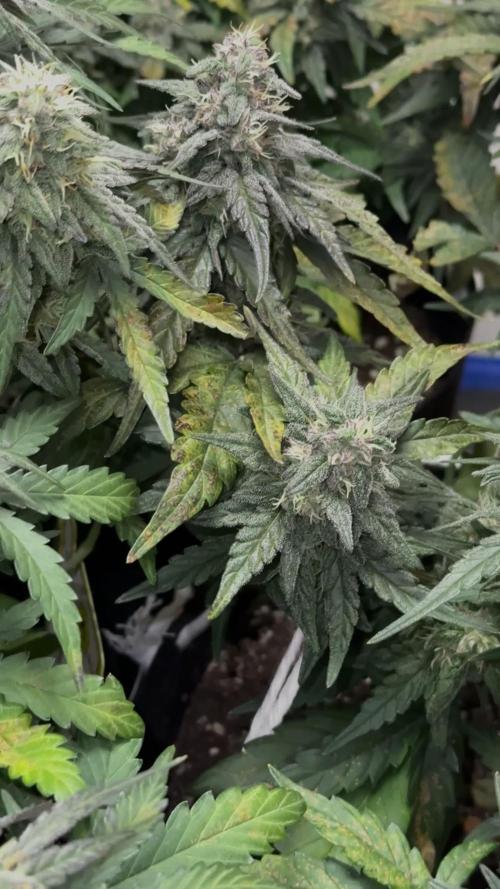
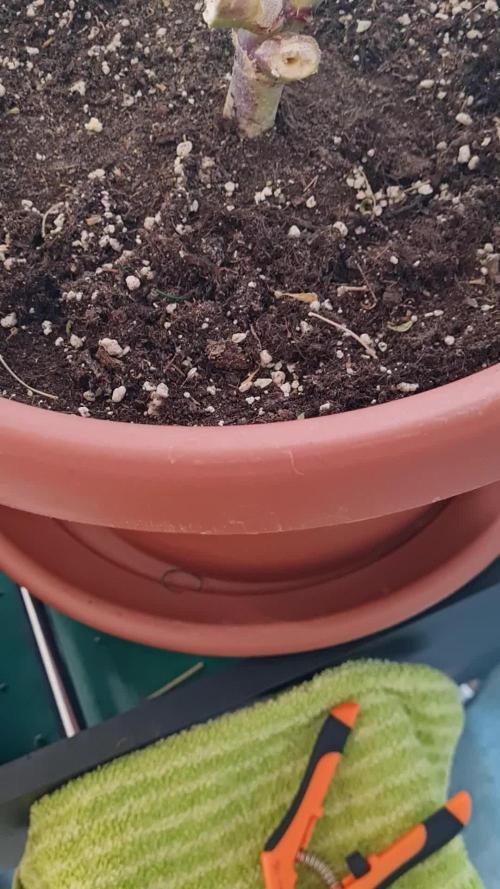
Nährstoffe bekomme ich nicht geregelt Blätter werden gelb von umtern nach oben gegossen wird nach gieß Plan von growers .ch mit Leitungswasser
Ph werde Erde 5,5-6,5
Da die Feuchtigkeit nicht gesenkt werden konnte sind jetzt nur noch 3 Pflanzen im Zelt

Likes
4
Share
@FourTwenty_Plants
Follow
Soooo im out of base nutes so the girls start to develope some nute deficiency but a package from Advanced is on the way to give them everything they need!
Already getting fatter and fatter im really really hyped for the outcome of this run.


Likes
22
Share
@Basementganja
Follow
I will be growing her again, as I feel like I let her down, by letting her PH drift so low..
Other than that, she grew beautifully, and fumes of potency as you gaze at her!
She yielded more than I expected! She's not that far below my previously lowest yielding plant! :)


Likes
58
Share
@GreenHouseLab
Follow
Results are starting to come in now, going to be Cake all the way to the end. Time to grab your popcorn and stay tuned in 🤡🎪
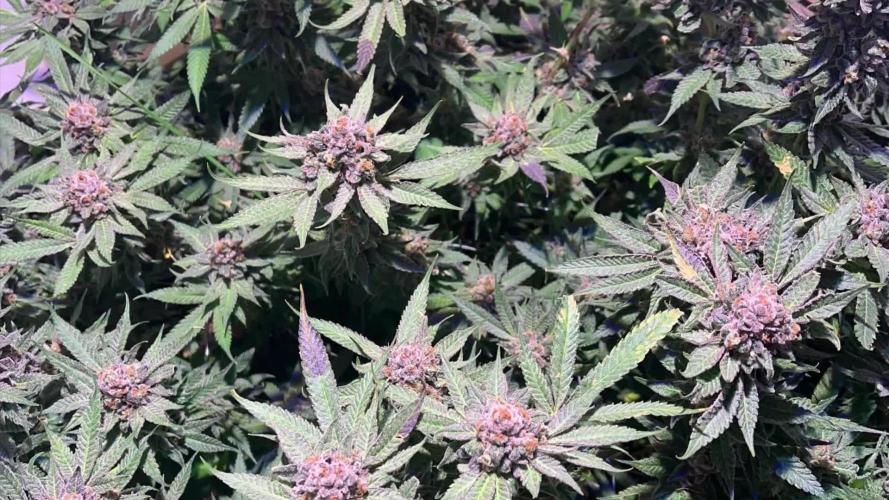
Short Phenos is Pure Michigan lean, obvious now with the purple starting to form from bud sites. Tall girl is Sugar Cane Pheno what a stake, huh!?
GHL out 🚀
Likes
10
Share
@Canna96
Follow
Hey now, hope everyone is having a great weekend. This week went great for the 5 mainlines. I got the final toppings completed for all the ladies, I got them done on the Sundae Driver and Red Hot Cookies on day 38, and the Durban Nights, Green Crack, and the Bubble Runtz topped on day 40 for the final time. At this point there is not much more training left to do, just some minor LST to try and keep all 8 tops per plant level, and some minor defoliation along the way. I am planning to Veg them for 1-2 weeks and flip to flower probably sometime in week 8 depending on how fast they grow. I do have them all on milk crates which are 10" each so I will place them on the floor and adjust the light power probably about the time I flip to flower to accommodate the stretch.
I am still feeding GH nutrients, silica, cal mag, and maxi grow. I will transition to flower nutrients approximately one week after flipping to flower. I have found that it is important to continue feeding plenty of Nitrogen through the stretch. The only way I would transition sooner is if I was running out of vertical space.
Still very pleased with the Spectrum X from Medic Grow. I am running her at 69% and the plants seem very happy and healthy. The heat and humidity are finally letting up in my region so it is nice to be able to open some windows and drop the temp outside the grow tent.
I hope everyone has a great weekend, Thanks for stopping by, Stay Safe and Blaze On!!! 💪
Website: https://medicgrow.com/
https://growdiaries.com/grower/medicgrowled

Likes
36
Share
@TerpTurtle
Follow
Took some clones & defoliated/lollipopped
I started building a veg tent and went with a 2x2 AC Infiniti equipped with the 4inch cloud line duct system
was a boring grow week.. ready for flower
Likes
4
Share
@Gorey
Follow
mid next week it will be the harvest, the trichoms are very milky. the smell is excellent. on the video in order: cbg, thc then cbd


Likes
3
Share
@MyLittleGarden
Follow
Blütewoche 9 – Ernte in Sicht?
Zeitraum: 17. Juli bis 24. Juli
Blütetag: 56 bis 63
So langsam geht's wirklich dem Ende entgegen, die neunte Blütewoche ist rum, und die Lady sieht einfach nur fantastisch aus! Die Buds sind richtig schön ausgereift, dick, harzig und verströmen einen herrlich fruchtig-süßen Duft. Es kribbelt schon in den Fingern – ich denke, bald ist es soweit.
Ich hab mir diese Woche regelmäßig die Trichome unter die Lupe genommen. Einige sind noch glasig, viele schon schön milchig, und vereinzelt zeigen sich auch die bernsteinfarbenen. Es sieht also sehr vielversprechend aus, aber ich warte vielleicht noch ein bis zwei Tage, um noch etwas mehr Reife rauszuholen. Heute checke ich sie nochmal gründlich und entscheide dann, ob geerntet wird oder ob ich ihr noch ein kleines bisschen Zeit gebe.
Was ich in der letzten Woche gemacht habe. Ich habe den Lichtzyklus nochmal angepasst. Vom 18. bis zum 21. Juli lief sie unter 11/13, danach hab ich auf 10/14 runtergeschaltet. Damit wollte ich ihr ganz klar signalisieren: „Es ist Zeit, fertig zu werden.“ Zusätzlich habe ich die Lampe nochmal um 10 cm höher gehängt, um die Lichtintensität etwas zu reduzieren und den Stress zum Ende hin minimal zu halten.
Gegossen habe ich übrigens nicht mehr. Man merkt deutlich, dass sie in der Endphase nicht mehr so viel Durst hat – das Substrat bleibt deutlich länger feucht.
Etwas Sorge hat mir die Luftfeuchtigkeit gemacht. Die war wetterbedingt ein wenig erhöht, lag aber mit 56–66 % noch im vertretbaren Bereich. Die Temperaturen waren nachts bei 22–25 °C, tagsüber bei 28–30 °C, also alles im grünen Bereich. Bisher sieht alles gut aus, keine Spur von Schimmel. Die Pflanze kommt mit den Bedingungen gut klar.
Jetzt steht also die finale Phase an. Die Ernte und das Trocknen. Auch das wird nochmal spannend, aber wenn das Wetter halbwegs stabil bleibt, sollte es gute Bedingungen dafür geben.
Das nächste Update kommt dann nach der Ernte, wenn die Buds getrocknet sind und ich ein erstes Fazit ziehen kann. Ich freu mich drauf!

Processing
Likes
62
Share
@DudeGrowsWeed
Follow
Week 2 and the girls are looking more yellow and funky than I like. I also think the Baox clones may have died. So far the plants looking the best are the Cherry, Blackberry (one of them) and the baby NYC Diesel. I'm pretty sure my soil is just way too hot. I tried flushing it through, but that just seemed to lead to general overwatering issues. I'm planning on transplanting to larger pots with more neutral soil this weekend and hope that will help straighten things out.


Likes
Comments
Share
@XanHalen
Follow
Dec 2:
Backed off the liquid weight, only giving 1x per week, rusty spots have stopped spreading I believe. Bulking going well, one girl drinks significantly faster due to her size. Prolly week 12 finishers. These are some frosty ass girls I cannot wait to smell the cure transformation.

Likes
20
Share
@Luv2Grow
Follow
Day 78 - Was just about to go ahead and chop today but decided against it and will give her till the weekend. She’s at about 25% amber so just about where I’d like her to be so just letting her completely dry out before chopping.
Day 79 - Just letting her go until the weekend when she’ll get chopped. Hopefully her being dried out gets her fattening up a bit before beforehand. She’s about 30% amber so thinking she’ll be right about 40-50% but chop day.

Likes
128
Share
@PapaNugs
Follow
The girls survived. Always the biggest stress in the beginning. Getting sprayed with water twice a day. Gonna do the first watering soon. Hoping for growth!

Processing
Likes
9
Share
@Goldenboy2020
Follow
Day 67 buds getting bigger and bigger. One plants is definitely can see nugs swelling and other starting to also. Prob has another two weeks I like a couch like high so wanna harvest little later.but have my jeweler loop to check teicroms. The smell is crazy a sweet and skunky smell.when you touch the nugs smell fruity sweet aroma.
Day 71 end of week 6. Everything seems to be going well. I know one plants will be ready before others just when is the questions. Got some good answers on grow questions so thinking at least a week. But I will keep checking trichromes. The look kind milky but not Ambers yet. Going to start flushing here on out.

Likes
9
Share
@Canadian
Follow
Looks like the plant is reaching its final weeks and has been doing great in my garden and is looking fantastic from now on pH water and calmag. looks Like it is within 1% of Amber so still a few days to go normally I will cut out all the fan leaf and a few Sugar Leaf then take down the entire plant and hanging upside down but because the place where I dry is the same tent but this time around I'm probably going to need to create a dry box cut them down into more manageable size because the other girls in my tent well take more than a few weeks I also can see how much of a difference does it make between hang them upside down and drying them like this thank you for reading I will continue to update have a happy grow

Likes
260
Share
@SlowpokeFuegobud
Follow
🐒 🍌 🌴🐒 🍌 🌴🐒 🍌 🌴🐒 🍌 🌴🐒 🍌 🌴🐒 🍌 🌴🐒 🍌 🌴
Welcome to week 6!! 😘
DAY 38
Watered with pH-ed water + humics + fastbuds + growzyme + bigfruits + vitalize 💧
DAY 40
Foliar spray with Nutrispray 💦
DAY 42
Watered with 1ml grow + 3ml bloom + 2ml roots + 3ml humic + 4ml growzyme + 3ml calmag + living organics topdressing 💧
FLOWERINGGGGG!!! 🌺 🌻 No joke, they all pre-flowered (all 4 strains) 4 days after receiving the valerian extract for the first time (also the much younger Donkey!!).
You can get the Fastbuds from Green Buzz, it contains valerian extract. 💚 🌹
Thanks, my growmies for visiting and reading and commenting, I love reading your comments! Mwah! 😘
Thank you, @Kannabia, for sponsoring this grow, aaaaand for the amazing gift pack! 😍 I hope to make you proud! 🧡
Special shouts out to my fantastic sponsor @GreenBuzzNutrients! Thank you for trusting me with your awesome products, I'm a longtime fan! 💚 🙏 Green + juicy growmie hugs to my Greenbuzzers!! 😘
Grower Love everybody!!!11 💚 💚💚💚💚💚💚💚
Wishes do come true, they just take a lot of time sometimes.. ✨
If you wish to try Green Buzz Nutrients, there's a 25% discount code hidden down there in the week comment somewhere.. 😎
__________________________________________________________________
https://www.kannabia.com/en/feminized-cannabis-seeds/monkey-grease
Monkey Grease
At Kannabia Seeds we have put all our effort into bringing out our own feminized Monkey Grease, a cross between Monkey Grease x White Widow, focusing above all on giving it its own personality in flavor and aroma (frankly unmistakable).
Its own personality
At Kannabia Seeds we have put all our effort into bringing out our own feminized Monkey Grease, a cross between Monkey Grease x White Widow, focusing above all on giving it its own personality in flavor and aroma (frankly unmistakable) and, of course, in Highly demanded characteristics, such as high resistance to diseases and pests, and adaptability to all types of growing conditions, making it close and easy to grow to the widest possible range of growers. The result is a really powerful and versatile indica-sativa marijuana seed, with a powerful relaxing effect, ideal for those moments when you want to disconnect from the madding crowd.
Cultivation of Monkey Grease
Which cultivation method would be most appropriate for this variety? Good question… and one that is easy to answer. Its versatility and adaptability make it a true all-rounder, with remarkably uniform results, whether you choose SOG, SCROG, hydroponics or guerrilla growing. Moreover, we invite you to experiment and play, varying the techniques from moment to moment, and to draw your own conclusions. We are convinced that in all cases, apart from minor variations, the results will always be optimal, giving remarkable yields and in a short time.
Attention should be paid to its high bud production, which can be fat, dense and heavy, although its sturdy branches are able to bear heavy loads without major problems. If you are a fan of extractions, our Monkey Grease is also optimal, given its high production of caramelised resin.
If it is already amazingly productive indoors, this variety excels on its own merits outdoors, where it can easily reach 200 cm in height, and can reach between 700 and 800 grams per plant.
It is therefore an easy and grateful plant, which demands little from its gardeners, making do with simple basic care, and with little or no propensity to develop diseases or mildew, or to attract pests (despite its striking aroma!).
Taste and effect of Monkey Grease
Our Monkey Grease stands out first and foremost because of its powerful, strong smell, which is hard to camouflage. A penetrating aroma that unfolds, in a balanced way, on the palate in the form of a wide range of spicy and sweet flavours, reminiscent of wild honey, nougat and cinnamon, and distant notes of milk chocolate. A delicious treat to be savoured calmly, without haste, as a preamble to its pleasant effect: extremely relaxing and narcotic, powerful, ideal for meditation and moments of introspection and meditation.
Don’t be in a hurry with Monkey Grease. It can be your perfect ally to treat those stress and anxiety problems, but for that you must let yourself go, surrender to its charms, especially if you are inexperienced.
________________________________________________________
Setup:
60x60x180 cm Zelsius
Greenception GC4 128W
4 Cluster OSRAM + CREE LEDs (380, 455, 630, 660, 720, 760nm)
6400k (cold-white to cover the basic load during the growth)
2100k (warm-white to cover the basic load during the blossom)
The module groups can be switched individual as follows:
⬤ Module I: growth 1x 32 watt
⬤ Module II: full spectrum: 2x32 watt
⬤ Module III: Bloom: 1x 32 watt
⬤ Module I is optimized for the growth phase. A relatively high amount of blue and white support a dense growth.
⬤ Module II suits for the growth as well as blooming phase. Optimal plant light full spectrum.
⬤ Module III is optimized for the bloom. A high portion of red and an additional infrared push.
Green Buzz Nutrients https://greenbuzzliquids.com/
❗ Use code GD42025 for generous 25% discount (for orders of minimum 75€) 💚
Plagron Growmix
Carbon Active Granulate 240cm³/h
tab water pH 8 - EC 0,25 with Calmag to 0,5
Advanced Hydroponics pH minus Grow + Bloom to pH 6.5 💧
🐒 🍌 🌴🐒 🍌 🌴🐒 🍌 🌴🐒 🍌 🌴🐒 🍌 🌴🐒 🍌 🌴🐒 🍌 🌴

Likes
10
Share
@CanadianFillmore
Follow
Start of week 5! Plants are doing great! Still some P & K deficiencies showing, but overall the bud development is phenomenal on the blueberries and is coming along nicely on the super lemon haze. I am still feeding an extra 2 liters to the Slh, this time at full dosage of part A & B, this seems to have helped with this past week (4). The blueberry are super sticky and smell amazing!

Likes
25
Share
@Gutismoke102
Follow
Wow look at her grow we are in the second week of her flowering stretch and she looks amazing. Smells good already omg super excited about this one ☝️🏽

Likes
4
Share
@Jaschkoo0
Follow
I will grow this plant again in a few days but this time without overfeeding.