


Likes
Comments
Share


@color
Follow
Se non fosse stato per la cima ammuffita, avrei fatto un bel risultato però per essere la prima esperienza d’oro, me ne ritengo soddisfatto, anche se so che ho un estremo potenziale

Processing
Likes
15
Share


@eldruida_lamota
Follow
Buenos días familia, increíble, sin palabras con esta variedad, lástima la lie y perdimos una a principio, pero estas 2 crazy cookies crecen una locura.
Ph controlado en 6,5 y una humedad por encima de 40% así que todo fenómeno.
Una cepa bastante fácil en sus primeras semanas.
Veremos próximamente como se forman nuestras flores familia

Likes
6
Share


@Mr_nugs_lover_David
Follow
Brutal genetic! Just like that BRUTAL. Tons of resin, super strong woody pimey smell, very beautiful strain to grow, beautiful indica leafs, I know that this is one of those indicas that once you smoke that dense smoke you won't be able to get up from the couch, very strong genetic, I'm so fortunate to have this lady in my garden man! Definitely want to grow her again next season and make a big nice bush.peace!✌️🙏❤️🌱👨🌾

Likes
4
Share


@lasonda
Follow
after this week I will check the status of the tricoms and accordingly I will start the flush with Advanced Nutrients product

Likes
12
Share


@yd_grows
Follow
Plantas transplantadas para potes de 1 L. A planta que está no pote maior vai ficar de mãe.
No transplante foi regada com Forth Enraizador 10ml/L até saturar.
Além disso foi feito o Topping nas 3 plantas.
Likes
27
Share


@Stigghiola
Follow
Questa settimana ho montato la lampada hps e l'ho spostata nella zona in cui le piante mi sembrano più pronte, i fiori stanno ingrossando sempre di più e dai filamenti arancioni sembrerebbe che stiano maturando, guardando con il microscopio i terpeni sono ancora trasparenti.
Aggiornamento 27 novembre, ho controllato i terpeni della black cream al microscopio e sembrano quasi pronti prossima settimana tolgo qualche cima delle 2 black cream che sono quasi pronte e lasciando i rami più bassi per che risultano ancora meno pronti rispetto ad alcuni.
Aggiornamento 28 Novembre : Le piante continuano a crescere costantemente le black cream sembrano sempre più pronte per il raccolto.
Aggiornamento 30 Novembre : Oggi ho deciso di raccogliere alcune cime di 2 black cream che erano belle pronte.


Likes
45
Share


@masterofsmeagol
Follow
7/3 Hot as fuck today. Japanese beetles were around. I killed a few. I'm going to have to go over and keep an eye on things. It reached 90° today for the majority of the day. I watered around 1pm as I noticed most of the bags were very light. I'm glad I held off on the BT. I've dealt with jpn beetles before so hopfully that won't be an issue. Things are getting big. It won't let me upload any pictures or the video I did. I may upload it to past week. Went back over at night and and plants looked dropy but it was after 7pm and they were just going to sleep.
7/4 Didn't take photos this morning. Found some jpn beetles. That's the damage I've been seeing. I went back over last night to hunt them but I only got two. There weren't any others. No biggie. I'll put some pics up from today after I get back
7/5 Didn't get a chance to check the plants out today. My intuition tingled around 1pm and I had just gotten home and I ran over to check them. They displayed minor signs of heat stress as seen in the pics (due to the super high humidity and 90° weather) and the bags were light. A few were REALLY light. I could see they needed water. I WATERED 4 1/2 GALLONS TO THE GARDEN. DO TO THE HIGH TENPS AND WINDS IVE HAD TO WATER THE LAST THREE DAYS IN A ROW. IVE SLOWLY STRARTED INCREASING VOLUME. I don't want to water until I get a shit ton of run off because I want to keep the nutes in my soil as long as possible. As you can see things are going great. Minor pests but notjing major. They're growing at a very rapid pace. I'll need to add another layer of supports soon and begin to LST some of these girls. I've got one seedling in a 10 gal and I'm pretty sure it's a feminized red runtz but it's in preflower and looks and SHOULD be a female but I haven't seen the white hair yet. Looks like a female preflower though. I do have one auto though in a 5 gallon tjats doing good too. I have a bunch of pics but the internet is too slow. I'll upload tomorrow. Started pouring around 6.
7/6 Poured sheet rain all night. After it had Bern super fucking hot and I watered my plants with 4 1/2 gallons. Oh well. If I didn't water we wouldn't have gotten the rain. The fabric bags makes watering easier. The wind will dry out the medium. We do have some rain in the forecast. A pallet fell over and knocked my 5 gal bucket with tje auto into a 10 gal seedling but it held the pallet up and didn't damage anything. Out of all the ways it coyldve landed it landed just right to not hurt anything. Everything is super healthy. I do have some random pest damage but it's minimal. I'll decide whether to use a spray or not. Didn't take pictures this morning. Was pressed for time.
7/7 Super hot even at 8a.m. Rained the majority of the day yesterday. Plants are getting HUGE. I'm going to have to build a second round of supports and should probably start some LSTing. They seem to like growing natural how they are (besides the original topping and FIMed. You can tell these are ALL very high % indicas. I'm seeing pistols spitting out everywhere. Event horizon and sherb cake seem to be in the lead. The seedlings have realky taken off. The one I put in the 50 has fan leaves the size of my hands.
7/8 Wow it has been extremely hot. It's going to be in the 90's again today. Checked my plants and it seems the GMOs seem to be using more water. Those bags were a little lighter. Seeing how there is no rain in for a few days I had to water. WATERED 3 1/2 GALLONS. LAST SEEDLING FINALLY SHOWED AS A FEMALE.
7/9 Bags are still heavy. Found ONE jpn beetle this morning. Plants seem to be bigger everytime I look.starying the stretch and spitting out some pistols. I took some pics of the pistles. I'll update
7/10 should've started a new week but I didn't. I'll make next week six days. Plants are starting ro stretch. Minor random pest damage but woth the heat they need lots of water. Noticed a couple dead interior leaves so I should probably go through everything and defoliate. I need to add another layer of supports as well.

Likes
28
Share

@Joni2017
Follow
Hello again, GrowDiaries family! 😎
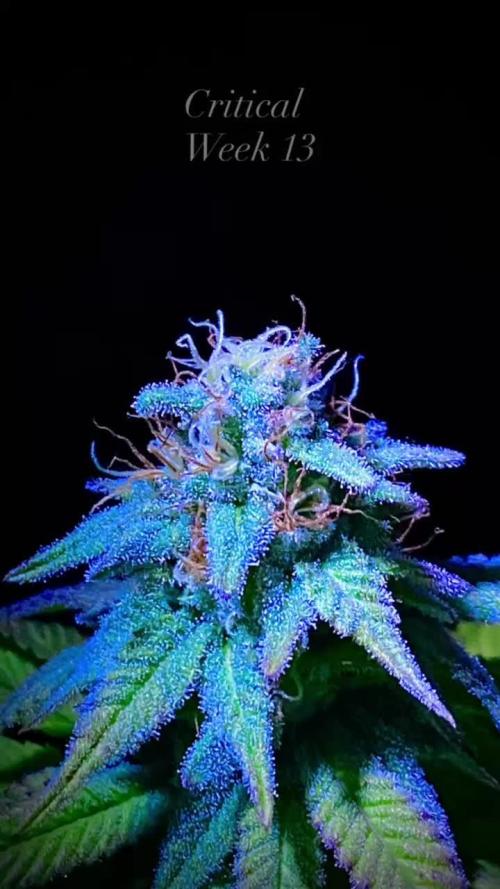
We’ve entered Week 13 and the Critical is reaching the finish line with incredible elegance. Autumn colors have taken over the leaves, a sign that the plant is moving its last reserves into the flowers.
📏 Measurements & Training
-Height: 40 cm. Solid and very heavy structure.
-Canopy Management: Airflow is perfect. The 12°C night temperature is helping the plant show off those spectacular autumn tones.
-Visual Check: I’ve checked the trichomes closely: they are finishing their transition from transparent to milky. No amber yet, which indicates we are right at the peak of THC production. The pistils (hairs), however, are showing advanced oxidation.
🌡️ Environment & Climate Challenges
-Temperature: Maintaining 12°C at night and 27°C during the day.
-The Strategy: I’m sticking with lukewarm water for watering. During this ripening phase, it’s vital that roots don't lock up due to the cold, ensuring the trichomes finish turning milky uniformly.
-Humidity (RH): Locked at 40%. With buds this dense, low humidity is my best insurance policy.
💧 Watering & Organic Strategy
-Nutrition: We are in the home stretch. This has been the last week of nutrients to prepare for the imminent root flush.
-Pest Control: The cinnamon barrier has been a resounding success. The substrate reaches the end of the cycle completely clean.
🌿 Flower & Resin Evolution
-Diamond shine! ❄️ The resin is now much more opaque and dense. The aroma is pungent and sweet, the typical fragrance of a Critical at its optimal point.
A huge thank you to all the growers who are following this diary and for all your support and comments! It's a pleasure to share this journey with such a great community. Happy growing to everyone! 😉👍
Likes
3
Share


@BedroomGrower
Follow
March 13: Now that there is more space in my SOG the two Cheese in advanced bloom will enjoy more direct light. Both plants have developed a long main cola and branches with large buds. The plant placed at the edge of the sog is over 140 cm high and has just begun to show the pistils. The Cheese that I'm growing under the LED lamp is a nice thriving bush and although I wanted it to finish its full cycle under the LED it is overhanging the other plants in the grow room and so once the last three are harvested I will move it under the HPS .
Likes
7
Share


@Cannibalgardens
Follow
Not a whole lot to report you guys she is happy healthy and finally starting to get bulky now ... This strain does produce rock hard buds inside and outside grows have been good for me with this strain .The whole plant minus a few buds will be made into hash with this one can't wait ..


Likes
7
Share


@Organic473
Follow
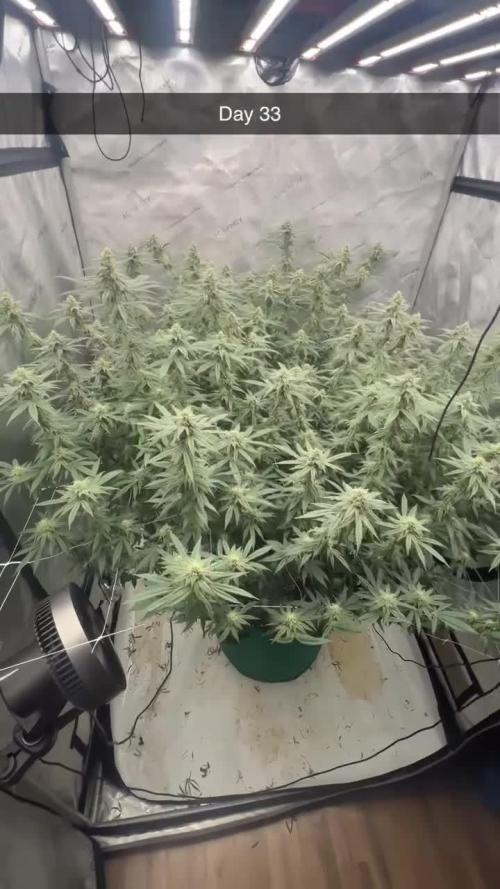
42 days in flower…more sunlight as Tropic of Cancer makes its way to the Caribbean 12/12.


Likes
26
Share


@TheCannaProphet
Follow
WEEK 5
8/16- Alrighty! Start of week five and all the ladies are in flower and starting to look sexy as hell! Even the Crystal Meth #2 in the SOHUM Living Soil that had a soil ph of 5.2-5.4 and 4.2 ph runoff on a 4 1/2 gallon flush of 7.7 ph water is doing well! I checked the ph on her soil this morning and she's at 6.4...PERFECT! I gave all the girls a drink of de-chlorinated water in the amount of 2 1/2g with 1 tsp CalMag+ added and ph'd to 6.9 split evenly between them.
8/17- Day 30- The girls are all really growing like crazy filling out their 10g fabric pots. I went through all of them today and, using the green horticultural wire LST'd the crap out of everyone! I know, I know....LST on Day 30??? I've LST'd this late before and had really good results so giving it a go this run. Gave all the girls a small drink as they were moist 2" down using 2 1/2g de-chlorinated water ph'd to 6.8 @ 75 deg. After I LST'd all the girls, I selectively tucked shade leaves and defoliated a couple here and there and also removed all the shitty little undergrowth down low on the main stalks. Can't believe the FastBuds Crystal Meth #2 came back from the edge of oblivion. I checked her medium(SOHUM Living Soil) ph which is still @ 6.4...whew! I think she's gonna do just fine, although not as good as her sister who's an obviously different phenotype.
8/18- Cranked up the HLG 650R's to max today. Now drawing 1300w at the wall-650w each and raised both lights to 42" high which is giving 800-1100 umols depending on what place on the canopy you check.
8/19- I administered the second dose of live Nematode's with the girls morning watering. I put the Nematodes in 2 1/2 gallons of de-chlorinated water ph'd to 6.8 @ 74 deg. and split it evenly between all eight pots. I tightened up the LST on all the girls to keep spreading them out and getting better light penetration into the lower canopy.
8/20- I started a batch of Compost Tea this morning- 4 cups worm castings, 1 cup of Alfalfa Meal, 1 cup Kelp Meal, 2 tbsp Bat Guano into 4 1/2 gallons of de-chlorinated water with a 6.9ph in which I added 5 tbsp of unsulphured molasses as a catalyst for the microbes. I'll brew this for 48 hours.
The ladies all were moist enough that I felt safe skipping the water for today, I'll give them a light watering tomorrow, then a heavy feed with the compost tea. I went through and tucked the heck out of leaves blocking bud sites from light (this is a chore as the girls are getting BUSHY as hell!) and removed a few scattered fan leaves that refused to be tucked and were really blocking light into the lower canopy....can't be having that, need the LIGHT!
8/21- Ladies were all looking very perky this morning and the FastBuds Crystal Meth and Purple Lemonade are both getting beautiful purple shades to them especially the FastBuds Crystal Meth #1 in Natures Living Soil Autoflower Concentrate, she's absolutely on FIRE although her node spacing is very wide. The #2 Crystal Meth in SOHUM that had the ph issue with her medium seems to have recovered after I flushed the shit out of her. She's behind her sister and definitely has a different structure than the #1 phenotype. The Purple Lemonade #1 & #2 are both flowering with #2 looking way better. The #1 Purple Lemonade has some thick kushy leaves and she's a short little biatch, in contrast to the #2 which is tall and lanky with wider node spacing. The #2 Purple Lemonade is having a little issue apparently with the nitrogen level in the medium as she's getting 'claw tips' on several of her leaves and judging by her dark green coloration, she's nitrogen rich right now. I'll keep an eye on her but don't think it's a big issue at this moment in time. The Seedsman Gelato OG in Natures Living Soil Autoflower Concentrate is getting bushy and has filled out the 10 gallon fabric pot. She's got a ton of bud sites and it's a struggle training to keep all the sites exposed to light. The #2 Gelato OG in SOHUM is doing about the same as her sister but she's not quite as tall. The Seedsman Zkittles #1 slowed down on her stretch and just decided to get bushy instead! She's still in pre-flower but is very healthy and will be getting it on very soon! Her 'Sin Twisters' Zkittles #2 & #3 are beautiful and in flower. The Zkittles 'twins' were previously the shortest plants in this run but have caught up and are as tall as the Zkittles #1 @ 14".
8/22- End of Week 4! The girls got Compost Tea ( 8.1 ph, 840 ppm and 1636 EC @ 78 deg.) for breakfast this morning along with a top dress on the six ladies growing in Natures Living Soil Autoflower Concentrate / Fox Farms Happy Frog mix. The two SOHUM pots with the Seedsman Gelato OG #2 and FastBuds Crystal Meth #2 got 4 tbsp of 2-8-4 slow release dry amendments by Down To Earth top dressed and worked in by hand. I gave them each 1/2 gallon of Compost Tea after top dressing to help water in the nutrients. I went through all the girls and tucked and gently spread their branches to continue to train them as they get ready to really start flowering. The FastBuds girls are getting MORE colorful each and every day and I can't wait to open the tent each morning to see them....BEAUTIFUL!!!

Likes
6
Share


@ChitownCannaChica
Follow
And she’s up and drying! Massive yield, piney earthy terps— perfect structure. Just a great plant all around! More to come

Likes
19
Share


@Naujas
Follow
everything turned out very well :) and it's only with 50w and with 40x40cm space :) It was an interesting journey with her, a slightly different cultivation and old mistakes were discovered :) the flowers are not dense, but they are really very, very sticky :) I'm happy:)


Likes
13
Share


@Omisan
Follow
"everything's gonna be allright" 😍
Hello my friends, here are my ladies in a fantastic bloom phase 😍 Canna Nutrient and Atami Soil works really good for my experience, i think i use the same for the next one because i'm shure is a winning solution 😍
On the buds, crystal are more and more and more day by day..the size is going on, from the morning to the evening i can see the difference between.
Amazing, i can't say nothing else.
give me your impressions, if u want 🙏
Green is the way..
The best for all,
Omisan

Likes
Comments
Share


@sjsbhvys
Follow
Conclusion Elevating your high is all about choosing the right products

Likes
23
Share


@adam_pawloski87
Follow
This week went very well! One will be getting cut an hung to dry while the rest finish up with one more week of flush ! These ladies are smelling so lovely I hope you all enjoy! Stay tuned for next week! Cheers 😤💨💨💨💨💨

