The Grow Awards 2026 🏆
Likes
Comments
Share
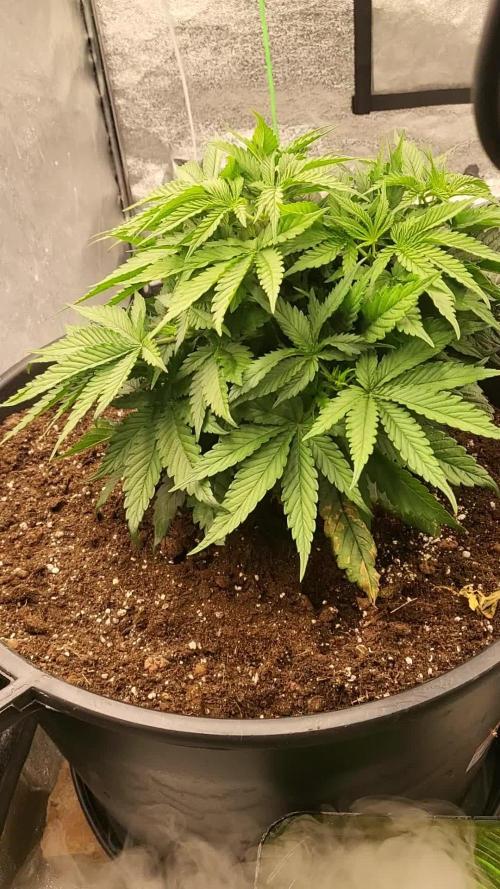
Grown out this week and got them ready for the early flower growth. Trimmed heavy and wired all branches away from each other. LST in full effect. Hoping it’s not too much trauma for them.. they proved me wrong. Bounced back with vigor and bright excitement! Eager to see these buds start forming 👀

Likes
1
Share
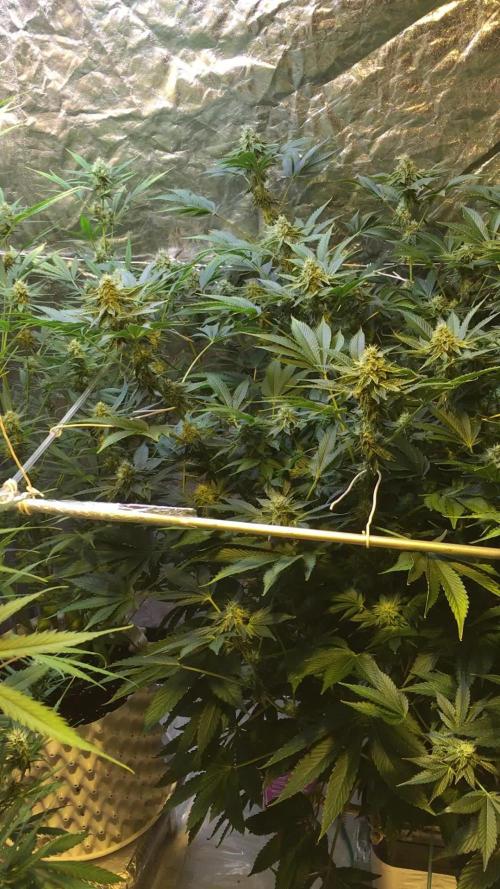
Week 7 for AK Triple Haze by SSSC She's been doing some flower bulking even though she's been in a darkish shed all week due to the rain😐 And as you can see by the pictures the top of the main cola is looking odd... well due to the high humidity/rain she developed some bud rot right on the top of the main cola😭After removing the damage & really having a look at her & all the other flowering plants it seems like it was the only spot thankgod... Will keep checking this plant for more bud rot development just in case i have to chop some more off, but the rain is over so the humidity should start dropping nicely hopefully that's the end of the troubles. She's fed water only because of @naturelivingsoil beast of autoflower soil mix, still doing its job nicely.
Likes
13
Share
This week was the girls last, they were lightly watered with zero nutrients and I carefully monitored humidity levels, insuring a clean finish. Overall I am stoked with the results, the smell is exquisite, sweet and floral, and the buds are fairly dense.
Likes
63
Share
@AsNoriu
Follow
Day 126. Really day 90 from seed, part of Control Garden. Amazing how they Bulk, 3 weeks of veg only, crazy strain ! If i ever wanted anything from this strain, she was like "Let's do it ! " 8 sisters were amazing, now i used last two biggest beans and those had no training, no light, nothing, but went into absolute overdrive smells amazing, branches hard to hold while trimming ... Love them, maybe this time taste will be better, different nutes used ... Its so funny to hear branches slowly bending and cracking under own weight with no support left ... Amazing sound for grower ;)) Control Garden is an absolute success even with Strawberries hermie part .. Cure day. 250 g total. Insane for 3 weeks veg, one cola lost to budrot, no direct light and early harvest which led to a bit airy Monster Bulk buds, she could make 150 easy without budrot and one more week of flower ... Will update on night shift ;) Day Unknown. Decided to try out finally last girls for diary records, but ... After a month of intense cure buds got angly/pyramid type forms ... ????? Any idea ? First two weeks moved at least twice a day.
Likes
2
Share
@Bobaloo
Follow
Hoping these do well all my seedlings went downhill fast Took 15 clones today at 6:30 am 🕰️ Best Time to Start Your Cloning & Defoliation Ritual 🌄 Ideal Window: Start between 6:30 AM and 10:30 AM ET This time aligns with: • Pisces Moon energy still strong • Cooler temps and higher plant hydration (better clone success) • Rising sun = energetic ascension (matches your “ascending leaf” flow) • Moon still waning = perfect for rooting
Likes
6
Share
@Spazmagi
Follow
12/8 - Today is the start of week 10. I actually changed the nutes on this girl yesterday (12/7) because I had some extra time. I tapered her down to 60% strength (down from 75% during the previous week) due to some pH drifting issues. I removed a few errant leaves, but for the most part haven't messed with her much over the last week. She is starting to pack on the trichomes and hopefully will be bulking up over the next week or two before ripening. Thanks for stopping by the garden, and, as always, Happy Growing!
Likes
110
Share
@Roberts
Follow
Mamba Negra was a very frosty, and smelly autoflower. Has been chopped, and hung to dry. Looks very promising to be some great smoke. We shall see. No contest winner, but got some good smoke out of it. PEV said they wanted to send me some more seeds to grow. We will see if they get back to me. After this beautiful plant, and Moby Dick auto is going monster size, check it out 🌱😁. I will work my way through some or all their autos. 🌱😏 Thank you Grow Diaries community for the likes, follows, and subscriptions on my YouTube channel. I appreciate your support. Happy Growing everyone 🌱🌱🌱🌱
Likes
18
Share
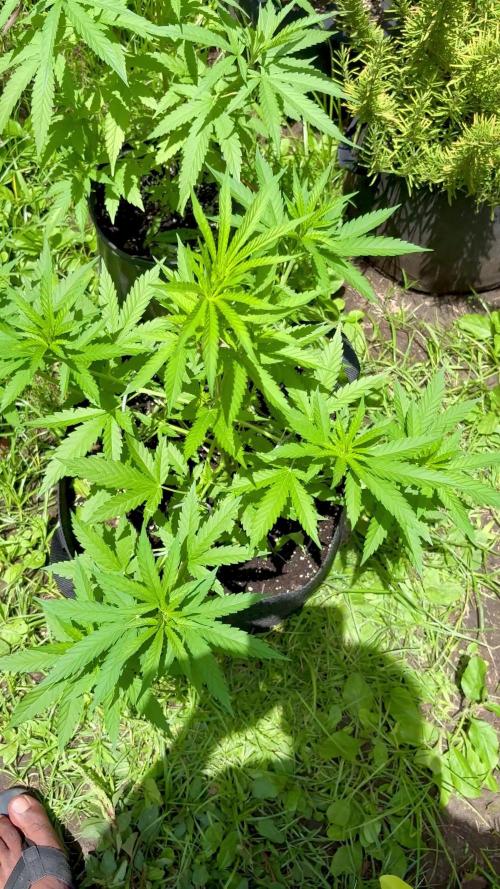
Moving along, no issues. Bring them outside around 10 am and back in around 8pm to put back under the blurples. Starting the early veg doses of nutrients with each feeding. I’m keeping the soil pretty dry in between watering.
Likes
47
Share
June 15: looks really good and will do second round of topping tomorrow. The last 30 days have been cooler than the historic average, and last year was way above average. So, she’s doing great despite cool weather. June 16: adjusted tie downs and watered with soluble seaweed extract. June 17: second round of topping to make 8 colas done this morning. Will do another round in a week or two to get the final 16 cola layout I want. June 20: released tie downs this morning. Looks really good on the last day of spring. Solstice and the photoperiods are right on schedule, unlike my two autos. Made second compost tea as shown in video. Key things are blackstrap molasses (sugar and trace metals), good compost, and I use coco coir for something for the bacteria to physically live on (substrate or matrix). #seedsman420growoff #seedsmanseeds
Likes
6
Share
🇩🇪 Ich war dann doch neugierig und hab mich dazu entschieden nach einer Woche einen Teil der restlichen Erde und den Rand vom Airpot zu entfernen um mal zu schauen wie sich die Wurzeln in dem Bereich machen. Und tatsächlich mehr oder wenige wie geplant und am Ende durch das verrutschen der Pflanzen oberhalb der Erde auch wie erwartet nicht ganz perfekt aber dennoch bin ich für den ersten Versuch sehr zufrieden. Auch wenn die Wurzel nicht von Fingerspitze zu Fingerspitze geht und sich der Stamm nicht mehr zur Seite sonder mehr nach oben verwachsen hat. Ist sie trotzdem sehr gelungen. Und kann sich die nächste Zeit erstmal wieder erholen und wird nur hier und da in Form gehalten. Happy growing💛✌️ 🇬🇧 I got curious and decided after a week to remove some of the remaining soil and the edge of the Airpot to see how the roots were doing in that area. And indeed, more or less as planned, and in the end, due to the plants shifting above the soil, it wasn't quite perfect, as expected, but I'm still very happy with it for the first attempt. Even though the root doesn't stretch from fingertip to fingertip and the stem has grown upwards instead of sideways, she still turned out very well and can now recover for a while and will only need occasional trimming. Happy growing! 💛✌️
Likes
3
Share
@BLAZED
Follow
Week 4 (8-7 to 14-7) 8-7 Temps: 20.7 to 26.1 degrees Humidity: 49% to 57% 9-7 Temps: 22.2 to 27.5 degrees Humidity: 52% to 65% 10-7 Temps: 22.8 to 27.4 degrees Humidity: 51% to 65% 11-7 Temps: 22.2 to 25.9 degrees Humidity: 47% to 56% 12-7 Temps: 19.9 to 25.9 degrees Humidity: 47% to 62% Watering: Both 1000 ml. 13-7 Temps: 19.9 to 25.1 degrees Humidity: 47% to 60% 14-7 Temps: 19.9 to 26.6 degrees Humidity: 45% to 60% Watering: Both 1000 ml. Today i topped both plants! Light set to 60% strength with a distance of 60 cm.
Likes
8
Share
@Tweak
Follow
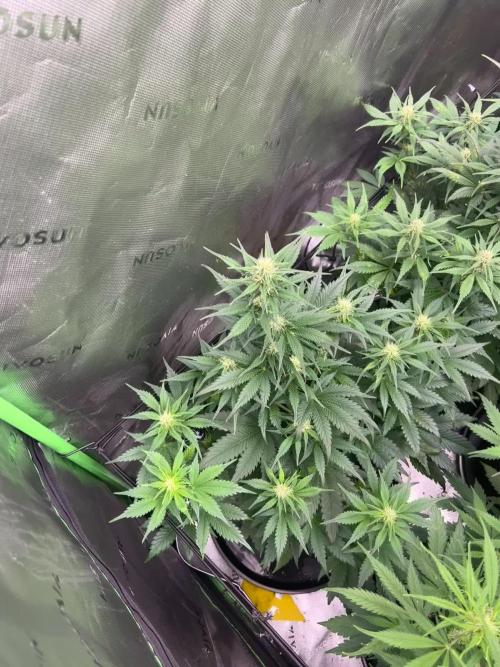
These clones are growing really fast. I have them in a tent enriched with CO2. I’ve been transitioning them to flower slowly (30 min shorter each day till I hit 12/12) I’ll be fully into the stretch next week as I hit 12/12 lighting schedule tomorrow. I built my soil with super soil concentrate so I’m only supplementing silica with silicic acid and a foliage misting with kelp extract. Other than that they get plain well water from me. I’m heading out of town for 5 days starting tomorrow so I’m excited to see the growth they put on in my absence.
Likes
13
Share
This week has been great.I'm glad that I was able to pull the plant when I needed to. The weather out here isn't always the best coming towards the end of October. How ever i handle it the best we can. What ive learned to do is wet trim before hang dry. Heres some phots of these glossing nugs. Iknkw ill lose a bitin water weight but im happy none the less. Fire 🔥 This has been a great grow, I learned a lot from Growing out here in new mexico. It was amazing to be able to train these plants 4 into one using training techniques. LST, HST, Defolation & topping all play a roll. It is fun to learn and sharpen my skills. I hope everyone enjoys my diary. Thank you so much Divine seeds. I appreciate the free seeds and the friendly community competition 👌 There's a lot of good growers outthere and I wanna learn from all. Much love ❤️ I'll be back with a smoke review soon
Processing
Likes
7
Share
@Kushizlez
Follow
Day 70-77 (Day 71) Not exactly sure why but node spacing on bbb 6&7 is super tight still. Their stems are also harder and less bendy, almost like they’re root bound. Bbb #5 in my veg tent is looking bizarre and I’m at a loss for what to do. I’ve been looking up and asking around about the leaf crinkle and no one seems to know what’s wrong. Trashing a pheno of this would hurt. It could be a keeper too as I don’t think the problem is genetic. It’s definitely root bound but that doesn’t cause contorted new growth like that. I’ve concluded that it’s my dense soil coupled with root bound issues, overwatering and high RH. (Day 72) Later tonight I’m going to give bbb 5 a bath tub flush until it’s reading 200ppms, drain it well and then transplant into a 3g pot with lightly amended soil. I’m also going to give it a light defoliation. I don’t mind stressing the shit out of this plant right now because I won’t be flipping for another week at least. With the small container it will run out of amended nutes mid flower so I will hit it with a few synthetic feedings around then to test out the smokabilty and taste compared to organic nutrients. I might as well give the rest a good defoliation on the rest of the plants too. I will try to get most of what is under the trellis. (Day 73) I definitely defoliated #7 waaay too much. Since it’s tucked away in the corner and a really bushy plant I can’t train it as well as the others. I cut most of the sucker branches and the majority of the lower fans. This should prevent the need to defoliate at all until week 3 of flower. (Day 74) I’ve been reading that higher temperatures with a high RH can affect growth big time. It could be what’s causing all the crinkling and twisting. And now that the plants are in very late veg they could probably benefit from a lower RH. When I was running my temps around 74-78F and 70% RH I was in the perfect range. Now that I’m around 82-86F with the same 70% RH that could be what’s causing it. Hotter air holds more moisture than cooler air and proper vpd at 84F is around 75-80%. I’m going to turn up the speed on my carbon filter and set my controller to 75%. If I don’t see a difference or it gets worse I will drop to 65 and go from there. (Day 76) I finally got the lights raised up another 4 inches or so. It’s not much but it should help reduce the intensity and stretch the nodes more. I’m starting to think the super tight node spacing and droopy/contorted growth has more to do with something I’ve been reading about called ‘soil compaction’. Apparently farmers often deal with compacted soil in fields from running tractors over it all day. When I potted the plants I gave them a good little jiggle to compact the soil down further so I could fit a bit more in the container. I think this could be the culprit as they don’t seem to be drying out evenly. Even the plants in my other room are not drying out like they should and it’s probably from compacting too. With the addition of rock dust and dry amendments the soil can become sandy/clay like and retain a lot more moisture. Wish I would have added a few more liters of perlite and packed the soil a bit looser. Either way I need to get this problem sorted ASAP before I get root rot. Earlier in the season when I overwatered, I stuck a fish tank air pump into the soil and it aerated the soil enough to prevent overwatering. The only reason I discontinued it is because it didn’t have much effect in the 1.7g pots. I just ordered a 36w 6 way fish tank pump that is way more powerful. It was 50 bucks and I’m willing to take a gamble on it. It seems to be my only option at the moment because I can’t just repot. Worst case scenario I can use it for brewing compost teas if it doesn’t work. I’m not sure how well this will work in a giant fabric pot but it’s worth a shot. I’ve heard of people supplementing additional air into raised garden beds with great results. I’m picking off some of the new auxiliary branches to try and widen the node spacing. Growth is definitely slow and stunted but no signs of deficiencies. I just thought of another theory on the node spacing... and the more I think about it, the more I think it’s the mystery problem. I’ve been foliar spraying with 1-1-1 VeloKelp at pretty high concentrations 2-3 times per week. I have heard in passing that kelp and seaweed can somehow reduce stretch. A quick google search reveals that Ascophyllum Nodosum Seaweed and other marine algae extracts contain large amounts of hormones and auxins that reduce plant height and stretch. *facepalm* Guess I’ll stop that for the rest of the cycle. As far as I know there is nothing I can really do but wait for the plant to use up all those excess hormones and nutes. The recent 0-0-15 seaweed extract and 1-0-3 kelp meal I bought is derived from the same kind as the velokelp. I guess I won’t use it again until week 3 or 4 in flower. Tight nodes are very useful in flower but aren’t desirable at all in when trying to scrog in veg. Especially when they’re like a half inch apart. It slows the shit out of a grow. Vietnamese and biker gangs in my area used to grow SOG style and use a synthetic PGR hormone (meant for bonsai trees) called ‘paclobutrazol’ that would make the weed rock hard dense so they wouldn’t have to pay people as much to trim it. I’ve heard that in recent years they have made the switch to using kelp extracts because paclo is getting harder find and is not meant for food crops let alone smokeable crops. I’m ashamed of it but I have smoked pounds of PGR weed long before I knew what a PGR was. 🤷‍♂️ (Day 77) One more theory. Ever since raising up the plants up onto that shelf the root zone is probably significantly warmer and the bottom of the pot (where most of the roots are) drys out way quicker. It’s possible that the warmer root zone could not be holding dissolved oxygen at the proper rate resulting in that over/underwatered look. Or it could be that I’m not watering enough at once to reach the bottom of the pot where the roots are and it’s indeed under watered. I’m going to water in a gallon when I get my new air pump and see if that makes any positive change. If I see the new air pump making a difference, I will flip on the 21st of April. If I don’t see a difference, I will carefully untangle the plants from the scrog net and remove the shelf. That extra foot should make a massive difference with ppfd and will cool down the roots significantly too. I’m thinking about grabbing a simple soil/compost thermometer to check the temp of the medium. Better safe than sorry. Rough week. Hopefully everything get smoothed out in the next little while before I flip.
Likes
16
Share
Seedling managing 93F 30%RH, around 20 DLI. Vpd is in the 3's. No I don't recommend. Signum Magnum. "A great sign appeared in the sky a woman clothed with the sun with the moon under her feet and on her head a crown of twelve stars. Sing ye to the Lord a new canticle: because He has done wonderful things. Glory to the Father, and to the Son, and to the Holy Spirit As it was in the beginning, and now, and ever shall be, world without end." The plant nutrient nitrogen exists in forms with both positive and negative charges. Ammonium (NH4+)(immobile in soil)(Cation) has a positive charge, while nitrate (NO3-) (highly mobile in soil)(Anion)has a negative charge. Nitrogen is unique among plant nutrients in that it can exist in both positively charged (ammonium, NH₄⁺) and negatively charged (nitrate, NO₃⁻) forms in the soil. This makes it a special nutrient. In that it is responsible for providing balance for reactionary trade offs when it comes to ph. Because ph itself in the medium will always slowly drift towards acidicity, such is nature. 80% of nitrogen should be nitrate and no more than 20% ammoniacal nitrogen. Ca, mg, and K are the big 3 cations related to soil composition, pH & base saturation. When nitrogen is in the form of ammonium, it can compete with calcium, magnesium, and potassium for absorption sites in the plant root. This competition can lead to a reduction in the uptake of these other essential nutrients. Nitrogen, particularly in its nitrate form (NO3-), can increase soil acidity, which can also affect the availability of calcium, magnesium, and potassium. The form of nitrogen applied (ammonium vs. nitrate) can influence its interactions with other nutrients. Ammonium nitrogen can have a more pronounced negative effect on the uptake of calcium, magnesium, and potassium compared to nitrate nitrogen. Common forms of ammonium nitrogen include ammonium ion (NH4+), urea, and ammonium compounds like ammonium nitrate, ammonium sulfate, and ammonium phosphate. Common forms of nitrate nitrogen include potassium nitrate (KNO3), sodium nitrate (NaNO3), calcium nitrate (Ca(NO3)2), and ammonium nitrate (NH4NO3). Phosphorus is an essential plant nutrient, and its availability in the soil is strongly linked to the presence of oxygen. Plants primarily absorb phosphorus as phosphate (PO4), and oxygen is a key component of this molecule. Furthermore, the availability of phosphorus in the soil can be impacted by factors like soil aeration and temperature, which in turn affect the oxygen supply to the roots. Phosphorus uptake in plants is most critical during the early stages of growth, particularly within the first few weeks of plant development. Young plants actively growing tissues have a high demand for phosphorus. They may absorb up to 75% of their total phosphorus requirements within the first few weeks of vegetative growth, with up to 51% of uptake happening overnight, primarily in the first few hours or early nightfall. ⑨Anaerobic root respiration, or respiration without oxygen, is detrimental to plants because it's less efficient and produces toxic byproducts, leading to reduced energy production, nutrient uptake issues, and ultimately, root damage and plant stress. ⑨Anaerobic respiration, unlike aerobic respiration, doesn't utilize oxygen as the final electron acceptor in the electron transport chain. This results in a significant drop in the amount of energy (ATP) produced, which is necessary for various plant functions, including growth, nutrient uptake, and maintenance of cellular processes. ⑨In the absence of oxygen, plants produce byproducts like ethanol and lactic acid during anaerobic fermentation. These byproducts can be toxic to the roots and inhibit their function, ⑨When oxygen is depleted in a medium, the pH tends to decrease (become more acidic) due to the production of metabolic byproducts. This is particularly relevant in biological systems where aerobic respiration relies on oxygen as the final electron acceptor. ⑨When oxygen is scarce, plants may switch to anaerobic respiration. This process produces carbon dioxide (CO2) as a byproduct. ⑨CO2 dissolves in water to form carbonic acid (H2CO3). This acid lowers the pH of the medium, making it more acidic. ⑨Anaerobic conditions can impair a plant's ability to regulate its internal pH, leading to a drop in cytoplasmic pH and potentially cellular acidosis. ⑨The change in pH can also affect the availability of certain nutrients to the plant, as pH influences the solubility of micronutrients like iron, manganese, zinc, copper, and boron. ⑨The lack of oxygen in the plant medium leads to a decrease in pH due to the production of carbon dioxide during anaerobic respiration and impaired pH regulation within the plant. In plant cells, cellular acidosis, a drop in the internal pH of the cytosol, is a significant stress response, particularly during conditions like flooding or hypoxia. This acidification can be triggered by a decrease in oxygen levels, leading to the production of metabolic byproducts like lactic acid and CO2. The plant's ability to tolerate and recover from these conditions depends on its cellular mechanisms to regulate pH and mitigate the effects of acidosis. When plants are subjected to low oxygen environments, such as those experienced during flooding, anaerobic metabolism, which produces lactic acid and ethanol, becomes the primary source of energy. This can lead to a build-up of these acidic metabolites in the cytosol, causing a drop in pH. OXYGEN Atomic oxygen (single oxygen atom, O) is the lightest form of oxygen, as it has the lowest mass of the oxygen molecules. Oxygen also exists as a diatomic molecule (O2) and an allotrope called ozone (O3), which have higher masses due to the number of oxygen atoms combined. Atomic Oxygen (O): This refers to a single oxygen atom, which is the most fundamental form of oxygen. Molecular Oxygen (O2): This is the common form of oxygen we breathe, consisting of two oxygen atoms bonded together. Ozone (O3): This is an allotrope of oxygen, meaning it's a different form of the same element, consisting of three oxygen atoms bonded together. Since atomic oxygen has the fewest oxygen atoms, it naturally has the lowest mass compared to O2 or O3. Ozone (O3) Lifespan: Ozone has a relatively long lifespan in the stratosphere, particularly at lower altitudes. For example, at 32 km in the middle latitudes during spring, ozone has a lifetime of about 2 months. Oxygen (O) Lifespan: Atomic oxygen, on the other hand, has a much shorter lifespan. At the same altitude, its lifetime is about 4/100ths of a second. Ozone-Oxygen Cycle: The ozone-oxygen cycle involves the rapid exchange between atomic oxygen (O) and ozone (O3). UV radiation can split molecular oxygen (O2) into atomic oxygen (O), which then reacts with O2 to form ozone (O3). Ozone can also be photolyzed by UV radiation, creating atomic oxygen again, which can then react with O3 to reform O2. Dominant Form: The partitioning of odd oxygen (Ox) between ozone and atomic oxygen favors ozone in the lower stratosphere. This means that a much larger proportion of odd oxygen exists as ozone than as atomic oxygen, especially in the lower stratosphere. Recombination: Atomic oxygen has a high energy and reactivity. When it encounters another oxygen atom, they can combine to form O2. This process releases energy, contributing to the heating of the atmosphere. Ozone Formation: Atomic oxygen can also react with molecular oxygen (O2) to form ozone (O3). Ozone plays a significant role in absorbing harmful UV radiation. Other Reactions: Atomic oxygen can react with various other molecules in the atmosphere, like nitrogen (N2), water (H2O), and carbon dioxide (CO2), forming different compounds. UV light below 240nm (peak 185nm) creates ozone (O₃) through a process called photolysis, where UV light breaks down dioxygen molecules (O₂) into single atomic oxygen atoms (O). These single oxygen atoms then react with other oxygen molecules to form ozone (O₃). Specifically, UV-C light with wavelengths shorter than 240 nm can cause this photolysis. UV light with wavelengths between 240-280 nm, (peak 254 nm) breaks down ozone (O₃) into dioxygen molecules (O₂) and atomic oxygen atoms (O). 280nm does not have the energy potential to break apart the stable bond of (O₂) into enough (O) to make (O₃) At ground level, atomic oxygen (single oxygen atoms) has a very short lifespan. This is because it's highly reactive and quickly combines with other molecules to form stable diatomic oxygen (O2) or other compounds. While the exact timeframe varies depending on the specific circumstances, its lifespan is typically measured in nanoseconds or picoseconds.
Likes
6
Share
@IQuSX
Follow
>>Sweet ZZ This specimen was dried under an ultraviolet lamp for 2 hours / day. So all the leaves that were left with conch evaporated! 40% of fresh - dry weight!
Likes
300
Share
@Ju_Bps
Follow
Hello growmies 👩‍🌾👨‍🌾🌲🌲, 👋 The babies growing good, finaly to transplant them 😁. Soil 2l pot Coco Ball Plagron Lightmix Previous leaves have been burned by the lamp, in the middle week a friend have been harvested, So I've setup the babies on the left side with light off, Since look really better and new leaves look healthy 💚 Starting Grow nutes 💧 Give water each 2/3 day And vaporise plant with water + Plagron Roots (1ml/l) 0.25 l Water + Roots + Grow (1 + 2 ml/l) 0.25 l Water + Roots + Grow (1 + 2.5 ml/l) 0.3 l Water + Roots + Grow (1 + 3 ml/l) PH@6 💡Mars Hydro - FC 3000 50% 80 cm Mars Hydro Fan kit Setting 8 Have a good week and see you next week 👋 Thanks community for follow, likes, comments, always a pleasure 👩‍🌾👨‍🌾❤️🌲 Mars Hydro - Smart FC3000 300W Samsung LM301B LED Grow Light💡💡 https://www.mars-hydro.com/fc-3000-samsung-lm301b-led-grow-light Mars Hydro - 6 Inch Inline Fan And Carbon Filter Combo With Thermostat Controller 💨💨 https://www.mars-hydro.com/6-inch-inline-duct-fan-and-carbon-filter-combo-with-thermostat-controller Fast Buds - Tropicana Cookies FF🌲🌲 https://2fast4buds.com/us/seeds/tropicana-cookies-fast-flowering