The Grow Awards 2026 🏆 






Likes
Comments
Share


Likes
38
Share
@gottagrowsometime
Follow
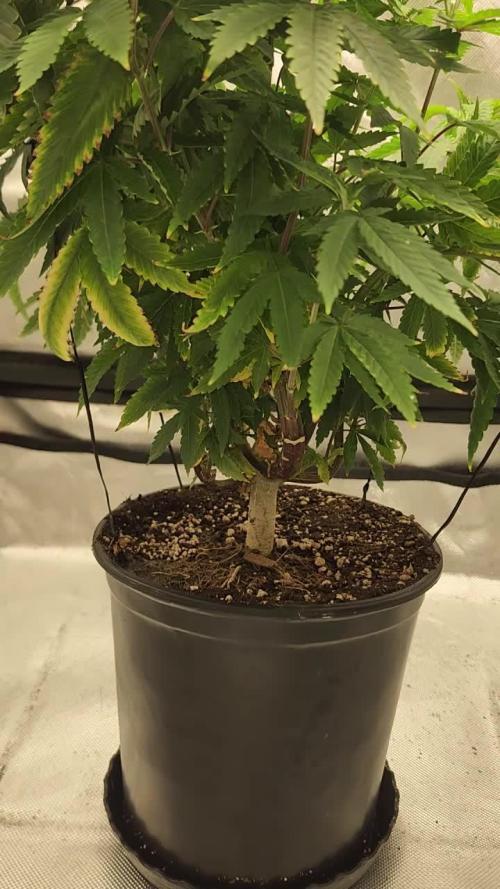
Coming along nicely. 4th week into flowering and she will surely finish fast. Buds are a little thin imo. But fattening is still a long ways before finishing. And I'll be adding higher part B of master bloom (as it has more pk). But still given a good NPK dose just not so much of pre-flower but more heavy flower npk. + bloom stim given 2x a week. And everything else is given weekly as stated above. 2npk 550 ppm feeds + 2 bloom booster & 1 of everything else. PH'ed between 6.6-6.8. Water 1.5L every 6 days or so plant takes in 800ml without spilling out a bit.
Happy with the performance of Xpert Nutrients and this been my 1st Fast-Flowering im liken 'em a lot. Lfg Fastbuds.
Thanks to all my sponsors, seed & Nutrient alike. And also for the inside rays. Much love SF/MH.
Thanks to all whom drop(ped) by. I appreciate it. Good Growing.
DISCOUNT CODE FOR XPERT NUTRIENTS
20% OFF CODE: GGST
XPERTNUTRIENTS.

Likes
16
Share
@Samsemilla
Follow
Die fünfte Woche startet mit einer (Teil-)Entlaubung, das Blätterdach ist wieder sehr dicht gewachsen.
Die Blätter bekommen wieder ein satteres grün.
Irgendwann innerhalb der nächsten Wochen sollten sie ihr Geschlecht zu erkennen geben, noch sind sie etwas schüchtern.
Ich sehe die ersten Anzeichen, kann es aber noch nicht klar deuten - abwarten und Tee trinken.
Ich habe dem Wassertank meines Autopot Systems einen Luftstein hinzugefügt.
Wird das einen großen Effekt bringen? - keine Ahnung.
Kann es schaden? - ich denke nicht.
So langsam zeigen sich die ersten weiblichen Vorblüten, ich kann aber noch nicht bei allen 13 Pflanzen mit Sicherheit das Geschlecht bestimmen.


Likes
54
Share
@Roberts
Follow
Has been a bad week for Gorilla Cookies. After further inspection I have discovered russet mites. I treated her with neem for 4 days. I then rinsed it off yesterday. I proceeded to lollipop the plant as well. Hopefully I have killed off the mites. Thank you Spider Farmer, and Pure Instinto Seeds. 🤜🏻🤛🏻🌱🌱🌱
Thank you grow diaries community for the 👇likes👇, follows, comments, and subscriptions on my YouTube channel👇. ❄️🌱🍻
Happy Growing 🌱🌱🌱
https://youtube.com/channel/UCAhN7yRzWLpcaRHhMIQ7X4g
Spider Farmer G300w: https://amzn.to/3S2zvsd
Spider Farmer 10X20 Heat Mat Kit - https://amz.fun/lsa0J
Spider Farmer Amazon Store: https://www.amazon.com/spiderfarmer
Spider Farmer Official Site: https://spider-farmer.com
Discount code: saveurcash (stackable)

Likes
14
Share
@JamieKnolliver
Follow
Einige Triebe wurden nun durch reiben und drücken umgeknickt(HST) weil sie aus dem Netz rausgewachsen ist und ich unbedingt das höhenwachstum eindämmen muss, da die Pflanze noch ihren Stretch machen wird und ich sonst keinen Abstand zur Lampe bekomme.
In der ersten Woche deutliche Veränderung des Wachstumbildes, die ersten weißen Härchen sind erkennbar.
Biobizz Bloom und TopMax werden ab jetzt auch hinzugefügt.
Likes
12
Share
@SSKNFbyHAZE
Follow
Throughout the week, I give compost tea, and fermented plant juice once each ^^
Hope you guys have a wonderful day today ^^v
*** Please Like, comment & share ***
Highly appreciated -----/-----<@

Likes
4
Share
@GREENPHOENIX6262
Follow
12/30 - Transplant will be completed by the end of the day - still running high humidity and high temps - Increased Myco/Silica/Nitro feeds - Heavy LST coming week . 😎😎😎😎😎😎😎😎
01/01 - First update of the year - if you are reading this, peace and prosperity to you and yours - Did not get a chance to transplant just yet, looking to transplant by the end of the week - So far this mother has been rocking out just fine - looking to pluck clones by mid Jan - Had a little PH burn on the tips - flushed for PH balance correction.
01/03 - Still have yet to transplant - working on increasing root mass volume before transplanting to minimize transplant shock - Myco and Nitrogen feeds have increased - She is being grown as a mother for cloning - slight leaf tip burn - minor flush to adjust burn - temps and humidity still running high - transplant will be completed by the end of the week.

Processing
Likes
1
Share
@Lifted
Follow
The first picture is from last week and the videos are from today. It's been 56 days in veg so far. I was going to switch to flowering next week but decided to hold off and let it spend more time in recovery. To keep the branches down I used a wire clothes hanger and paper clips.

Likes
148
Share
@BioBuds
Follow
An here we are. At the end of another cycle. The end of another year, and what a year it was. For Sunshine and me personally, it was a tough year, with our families sick on multiple occasions, life-threatening. We are very thankful for many things but most of all that all our parents are healthy again.
We wish your families are as fortunate in the coming year.
So we end this Gorilla's life with a swift cut of the scissors, after thanking her again for the companionship, the well-needed distraction, and all the love she has given me already.
I sometimes read that people won't go near their plants when they are angry or sad. Please do go to your plants when you are sad or angry!
They are millions of years old. They have been healers of animals and humans since they were around. Our emotions can not taint something so pure as the spirit of this plant.
She will heal us, give her life for us, sacrifice herself for our healing. She is all-powerful and all-knowing, there is nothing we mere humans can do, except disrespect her powers.
Bask in her glowing light, enjoy her soothing energy, her creative spark when you are in need of love, just don't smoke her at that time, for she will soothe you bit not give her treasures, she will seduce you.
Next to thanking Santa Maria for her healing, we would like to thank our friends here, all who shared their kind words, advice, and attention.
I had made a video to share my thanks on video, but every time I got very emotional. You guys have no idea how tough this year was.
The gorilla is real easy to clean and sticky and cristally. Its amazingly great to smoke!
So a special thanks to: @Sailormoonflowers for being a buddy to talk to, @JamMAKEcan for being there with ideas and always a lot of love, @Roberts for being an inspiration @Cannabeast and @LegendarySeedThumb for always checking out my grows, to all who I forgot who are always here to greet me! @Growdiaries for being an awesome site and community and last but not least: @MarsHydroLED for letting us try their SP-3000.
VERY HAPPY NEW YEAR XXX
We wish all of you freedom, love, happiness, but also the awareness to see many of us are still being repressed, with growing but also with our human rights.
Jah jah gave us life to live, so let us live brothers!
It is time the rastaman made a plan!
We are 99% loving people on this planet, we need no 1% to fuck it up with wars and strife.
We need to stop cooperating, peacefully resist. If you can buy local, ban exploiting multinationals.
Help your local businesses, help your neighbors, we need to wake up and stop funding this black stain on our planet.
Sell your stock in multinationals, invest in local businesses.
Buy local products, speak out when you get taxed higher than millionaires (and you are).
The day is coming my brothers and sisters. Soon a handful of CEO's will find out when billions are done with them.
For now thanks for everything!

Likes
2
Share
@Elguacho420
Follow
Buenas a tod@s... Bueno otra semanita más para estas niñas que están gigantes, en breve pasarán a floración y a seguir desarrollando, de momento va todo bien solamente unas puntas que marcan exceso de nutrientes, siempre colocando lo mínimo, pero bueno cosas q pasan, se las ve que van creciendo dentro del todo uniformemente... Ojalá siga todo bien como hasta ahora... Un saludo y buenos humos... 💨💨💨😎👍🏻
Likes
4
Share
@UKFieldNinja
Follow
Plants are comming up to finish, defoliated all fan leaf leaving sugar leaf only.
Plants given water only as plenty or residual nutes still in the soil.
Possiably going to harvest end of the week as new set are starting to stretch and need to be placed in the tent.
Likes
8
Share
@DeepRootsGrowTrees
Follow
Week #8 Baby Boom By Kannabia
Week #8 Dec.16th-23rd
Baby Boom this week she had stated to get trichomes on her buds and she's starting to get some density to her buds additionally she does have a slight hint of blueberries.

Likes
7
Share
@FourTwenty_Plants
Follow
Sooo I also harvested 1 out of the 2 Lemon Cherrys made some beautiful fresh frozen bubble out of her only got 15g out but I take it

Likes
18
Share
@DogDoctorOfficial
Follow
Hey fellow green thumbs! 🌿💚 It’s harvest time for our Auto Fat Pete’s Cookies from Super Sativa Seed Club! After an exciting journey, we’re thrilled to share the details of this unique plant’s final stage. Let’s dive into the harvest report!
🌟 Harvest Details:
Day 75: Harvest Day
• Harvest Date: Day 75
• Harvest Method: Our Auto Fat Pete’s Cookies was harvested yesterday. While the flowers turned out less dense than expected, the amazing smell has us super curious about the final product. 🌿🌸
• Preparation: Before hanging, we meticulously cleaned the plant, removing all leaves without trichomes to ensure a smooth drying process and to enhance the quality of the final product. 🌿✂️
Current Drying Process:
• Method: The entire plant is now hanging upside down to dry. This method helps maintain moisture levels within the buds, allowing for a slower and more even drying process. 🌿🔄
• Environment:
• Temperature: 18-22°C (65-72°F)
• Humidity: 50-60%
Maintaining these conditions is crucial for achieving a perfect dry and preserving the plant’s aromatic and flavorful profile. 🌡️💧
🌟 Plant and Bud Characteristics:
Auto Fat Pete’s Cookies:
• Bud Structure: The buds are not as dense as we’d hoped, but they are still sticky and resinous, showcasing a beautiful array of green hues with hints of purple and orange pistils.
• Aroma: The aroma is incredibly strong and delightful, filling the grow room with a sweet, cookie-like scent that hints at the strain’s name. 🌿🍪
• Trichomes: A generous layer of trichomes covers the buds, promising a flavorful and aromatic final product. 🌿✨
🌟 Care Tips:
• Drying Process: Patience is key. Allowing the plant to dry slowly will enhance the final quality, preserving both flavor and potency. Ensure good airflow around the hanging plant to prevent mold and mildew. 🌬️💧
• Trimming: Once the drying process is complete (typically 10-14 days), it will be time to trim the buds. This is where we’ll shape the final product and get it ready for curing. ✂️🌿
• Curing: After trimming, curing the buds in jars for at least 2-4 weeks will further enhance the flavor and smoothness. This final step is essential for achieving the best possible smoking experience. 🍁
🌟 Genetics Spotlight:
Auto Fat Pete’s Cookies:
• Characteristics: Known for its sweet and cookie-like aroma, this strain has shown remarkable aromatic qualities throughout the grow. Despite the less dense flowers, the strong scent and generous trichome coverage promise a high-quality final product.
• Harvest Expectations: Sweet, aromatic buds with a rich flavor profile. The slower drying process will ensure the best possible preservation of cannabinoids and terpenes.
🌍🌿 Fun Fact:
Did you know? 🌿✨ The aroma of a cannabis plant can be a strong indicator of its final flavor profile. Strains like Auto Fat Pete’s Cookies, with their unique and strong scents, often translate these aromas into delicious, flavorful buds.
For a detailed grow guide and to see this strain in action, head over to my YouTube channel! 🎥✨ I share tips, tricks, and in-depth reviews to help you get the best results from your grow. This week’s harvest has been particularly intriguing, and I’ll be explaining the reasons behind the less dense flowers in detail.
👉 Join me on YouTube Link in my profile 👈
🌟 Conclusion:
Harvesting Auto Fat Pete’s Cookies at Day 75 has been an interesting and rewarding experience. While the buds are not as dense as we hoped, the strong aroma and generous trichome coverage give us high hopes for the final product. With the plant now drying, we’re eagerly awaiting the final outcome.
Stay tuned for updates on the drying, trimming, and curing process, and get ready for a sweet and aromatic harvest!
Happy growing, and see you next time! 🌿💚✨
#SuperSativaSeedClub #HarvestReport #FatPetesCookies #PlantMagic #GardeningJoy #NatureLovers #PlantPower #InspireGrow #YouTubeJourney
Germination method 🌱 @thecannakan
Genetics @supersativaseedclub_official
Nutrition
@aptusholland 🌿
@aptus_world 🌎
@aptus_es 🌍
@aptusbrasil 🌱
@aptus_thailand 🌿
@aptus_portugal 🌳
@aptususa_official 🍀
@aptusplanttechnz 🌺
@aptusplanttechaus 🍃
Ambient controls🎮
@trolmaster.eu @trolmaster.eu.support @trolmaster.support @trolmaster.agro
Soil @promix_growers_eur @promix_cannabis
LED - @lumatekeu
Watering- @autopot_usa @autopot_global
Love and attention- @dogdoctorofficial
As always thank you all for stopping by, for the love and for it all , this journey of mine wold just not be the same without you guys, the love and support is very much appreciated and i fell honored and so joyful with you all in my life 🙏
With true love comes happiness 💚🙏 Always believe in your self and always do things expecting nothing and with an open heart , be a giver and the universe will give back to you in ways you could not even imagine so 💚
More info and complete updates from all my adventures can be found ⬆️link in the profile description ⬆️
Friendly reminder all you see here is pure research and for educational purposes only
💚Growers Love To you All 💚
Discount Codes :
@thecannakan DOGDOCTOR 15% off
@theneutralizer PORKIT7-DOGDOCTROSO 17% off
@kannabiaglobal DOGDOCTOR 30% off
@seedsmangenetics DOGDOCTOR 10%off
@terpyz.mutant.genetics DOCTOR 15% off


Likes
14
Share
@LazysHomegrow
Follow
The girls have recovered from the defol and are really filling out! 1 more week in the tub and then off to the flower tent.
I started spraying lost coast plant therapy this week as preventative measures. It's given the leaves a bit of a deeper green shine, but otherwise, the plants are looking great!

Likes
11
Share
@LowzGrowz
Follow
The Diary would NOT let me add all the weeks to Harvest Separate,
sooo,,
Harvest upload has 3 ish Weeks , N
The Smoke will have the last week and Harvest
Processing
Likes
15
Share
@CanadianFillmore
Follow
Week 8 for the OG Kush and blueberry. Week 6 on the feed schedule for the Super Lemon haze. Last week of feed for the OG's and blueberry. The OG's are super thick, sticky and stank so nice! The blueberry is very sticky, smell's nice but the buds are not as big as I expected them to be.

Likes
3
Share


Likes
Comments
Share
@MisterGroot420
Follow
Всем привет, на связи Мистер Грут, решил тут показать свои творения, возможно кому то будет интересно, такие гровы больше ради удовольствия, тут будет 3 сорта, сорт Partizan нету в списке и я не могу добавить
После суток замачивания, помещаю орешки на пророст, надеюсь будут живые
Очень рад, что все орехи дали корешок, помещаю их в шприцв 50мл, закрыв черной изолентой от проникновения света
