


Likes
Comments
Share


@sunshinegroww
Follow
Flushed for about 10 days so she faded nicely and off to drying room ,very heavy flowers covered with trichomes definitely will grow this shain

Likes
142
Share


@MadeInGermany
Follow
Hi everyone :-)
All women are still very healthy and look very nice :-).
Today, some space was cleared in the flower chamber, so both cuttings from Kosher Tangie Kush cut 3 cuttings and placed them in the flower chamber.
Next week there will be 3 places again, then the 3 blue cheeses will be added to the flower chamber.
Another week later, the rest of them come into the flower chamber.
The rest of them have now been topped once, even if it could get a little tight afterwards because the Kosher Tangie kush and the Blue Cheese were topped more often :-)
I wish you all a nice weekend and let it grow :-)


Likes
4
Share


@The_Projexx
Follow
Welcome to week 2 of flower on this lovely project! The ladies are stretching like crazy and it won't be long till we see some lovely flower tops starting!
Some really cool genetics featured this run by a really cool breeder Hidden Vault Genetics.
Genetic breakdown:
Banana Smoothie ( Banana Split x G.O.S )
Creamy Cereal Crunch ( Watermelon Z x G.O.S )
MacMelonz ( Mac Burger x Zour Watermelon )
Huge shouts go to both the breeder and @MarsHydroLED for the awesome gear they make! Huge huge shout out goes to all my followers and supporters you guys inspire me to become the best grower I can be!
Be sure to follow along for the latest updates cause this shows getting juicier by the day!
-The Projexx
Day#8F Put in net , trained down some of the taller plants. Plants are stretching along nicely.
Day#9F Plants bounced back from the scrog training very quickly. They're picking up the pace with stretching!
Day#10F Plants are just bursting in new growth, Creamy Cereal Crunch is getting huge!
Day#11F We got the start of cotton balls going!
Day#12F Pictures N/A. Ladies continue to explode in growth, defoliated some of the older leaves that aren't getting any light.
Day#13F The ladies continue their stretch! Creamy Cereal is absolutely beasting out!
Day#14F Cotton balls are getting bigger and bigger. Plants continue to stretch with minor signs of slowing down.
Recap: Things went extremely well this week , the plants absolutely exploded in growth and have developed cottons balls. With some time left on the stretching period and lots of time left overall on this grow I'm very excited to see the end results with these cool genetics.


Likes
7
Share


@starke
Follow
UPDATE - 24th of February 2020 - DRY WEIGHT & LOVE
32g total dry weight, after I gave them a very nice trim. They started curing in glass jars on 19/2/2020 and are currently only at 61%RH inside. I let them dry too long :( They felt really dry when I took them out, min. 2-3 earlier would've been better. Slowly bringing them back up in humidity. Adding Bovedas soon. Burping every day for couple of minutes.
Buds are small and dense, just like I remembered them. Also their smell is very familiar, hashy and strong. Getting better by the days. I dream of them becoming small hash balls, aaaaah 😍 Depending on how well they smoke (worried because of drying too long), I will make them into oils or press them into something.
I am happy with this grow and look forward growing her again, seeing an all new side to her. She has beautiful colors and hair, really surprised me with her beauty while trimming. I can't wait to try her properly cured and get to learn her whole taste spectrum with the low and slow dried buds. Some of them will be processed to oil and edibles. If I find time, I might document some more. Until then, happy growing everyone, peace 🙏
Tried 2 different drying methods:
1. Regular hang dry: For 10 days in small grow tent, darkness at 50% humidity & 20°C/68F - she was way too dry after all those days 😱
2. Low & Slow dry: after washing & hang-drying for 4 hours, she went into the fridge for 8 days in a paper bag, followed by several jar tests until she was at a steady 65% outside; She dried like this in the fridge for 8 days. I didn't trim her too much, since I want to preserve everything for oils.
Some details:
16. Nov. 2019 - 10. Feb. 2020 - 85 Days - Grown from Seed
Smell of Hash; Massive swolen calyxes; Lots of green leaves until the end.
Chop on 10. Feb 2020 - 266g (stem on)
Put in pot in Dry Tent Darkness for 48 hours.
(50% humidity & 20°C/68F)
Total wet - no trim - 266g
Total wet - slight trim - 244g
//Regular dry in tent - 50% humidity & 20°C/68F // 180g with little trim went in
Total dry - trim - 24g
//Low and slow dry in fridge // 46g went in paper bags in fridge (forgot one bud in the hang dry box)
Total dry - trim - 8g
Check 420magazine for “Low and Slow”-Dry. They are lovely.
Happy day to you all


Processing
Likes
42
Share

@MadeInGermany
Follow
Hey everyone 🙂.
Flowering day 1
Today the time was changed to 12/12 hours.
Actually, I only count the flowering days from the correct flowering, for the sake of simplicity I will count the days from the position :-).
Flowering day 2
Today both were poured with 1 L each and checked for their health.
Flowering day 3
Today the humidifier was filled and both plants were sprayed with Canna Cure.
They were also checked for their health as they did every day.
Flowering day 4
Today the whole tent was cleaned.
Flowering day 5
The humidifier was filled again and the plants were sprayed.
Flowering day 6
Today both were poured with 0.6 L and checked for health.
Flowering day 7
End of the week 😄. Both were checked for health. I hope you have a lot of fun with the update, stay healthy and let it grow 🙏🏻🌿
You can buy this Strain at :
https://sweetseeds.es/de/cream-caramel/
Type:
Cream Caramel
☝️🏼
Genetics:
Blue Black
x
Maple Leaf Indica
x
White Rhino
👍
Vega lamp:
2 x Todogrow Led
Quantum Board 100 W
💡
Bloom Lamp :
2 x Todogrow Led
Cxb 3590 COB 3500 K 205W
💡💡☝️🏼
Soil :
Canna Coco Professional +
☝️🏼
Fertilizer:
Green House Powder Feeding
☝️🏼🌱
Water:
Osmosis water mixed with normal water (24 hours stale that the chlorine evaporates) to 0.2 EC. Add Cal / Mag to 0.4 Ec Ph with Organic Ph - to 5.5 - 5.8 .
Likes
3
Share


@I_roll_my_own_420
Follow
Here we go, 4 days before harvest time. Last 2 days, light will be off. Cant wait to cut those ladies down :)

Likes
46
Share


@MrJones
Follow
OSS Sherbet Moonrocks
🔹⊱╮🔹╰⊰🔹 GROW Started 03.10.24 INFORMATION 🔹╰⊰´🔹⊱╮🔹
🌞Environment - Maintaining 80F and 65%Humidity
🌾Training - The girls are recovering from last week's Pruning and Defoliation,
⚱️2-Gallon 📊6.2 PH
💧 Feeding - Using Horti Bloom and Horti Cal 12-0-0
🌞Medic Grow Smart 8 760 Watts
🕷️ IPM - CannControl from Mammoth and Mosquito Bits as needed
🔹⊱╮🔹╰⊰🔹 PLANT UPDATES 🔹╰⊰´🔹⊱╮🔹
📝 Notes - I am still not getting the vertical growth that I want before I flip, so I changed my light cycle to 18/6 and will be doing another defoliation and pruning of a few side branching - remember, I am looking for tall plants with little horizontal growth.
Fertigation injects fertilizers into an irrigation system to supply dissolved nutrients to crops.
🗓️04.20.24 Today, I flipped the ladies into flower. I Have let them veg out as much as I feel the grow space can handle. I am sure there will be a bit of pruning and super cropping in the near future. These girls will grow untouched other than the 2x daily fertilization, but I am switching out the Horti-Grow with the Horti-Bloom, feeding at Hort-Bloom @ 2.7 GRMS Per Gal and Horti-Cal @ 2.5 GRMS Per Gal.
🗓️04.21.24 Today fed with Hort-Bloom @ 2.7 GRMS Per Gal, and Horti-Cal @ 2.5 GRMS Per Gal.
🗓️04.22.24 Today fed with Hort-Bloom @ 2.7 GRMS Per Gal, and Horti-Cal @ 2.5 GRMS Per Gal.
🗓️04.23.24 Today fed with Hort-Bloom @ 2.7 GRMS Per Gal, and Horti-Cal @ 2.5 GRMS Per Gal.
🗓️04.24.24 Today fed with Hort-Bloom @ 2.7 GRMS Per Gal, and Horti-Cal @ 2.5 GRMS Per Gal.
🗓️04.25.24 Today fed with Hort-Bloom @ 2.7 GRMS Per Gal, and Horti-Cal @ 2.5 GRMS Per Gal.
🗓️04.26.24 Today fed with Hort-Bloom @ 2.7 GRMS Per Gal, and Horti-Cal @ 2.5 GRMS Per Gal.
╰⊰🔹╰⊰´🔹⊱╮🔹╰⊰🔹╰⊰🔹STRAIN INFORMATION🔹⊱╮🔹╰⊰🔹╰⊰🔹╰⊰🔹⊱╮
Introducing our latest powerhouse, Sherbet Moonrocks, one of our strongest weed strains to date, setting a new bar for potency and effect. A combination of US genetics, Sherbet Cake, and Purple Moonbow create this potent sedative with THC levels above 30% that will take you to celestial bliss.
An exquisite terpene profile offers a tempting treat of sensational fruity tastes, flavors, and aromas that will seduce your mind and body and take you to a serene place of pure tranquility. Ocimene, Caryophyllene, and Limonene are the predominant terpenes; they produce an incredible array of sugary berry fruit flavors with floral hints and spicy undertones.
Growing these feminized seeds is effortless and straightforward regardless of your growing skills, and at harvest time, you will be generously rewarded. Plants will mature to a manageable height with a flowering period of 65 - 70 days and will develop thick, dense buds glossed in thick layers of THC resin crystals packed with indica power that will lure into a deep relaxation. Expect an indoor yield of 600 - 700 gr m2 and outdoor production of over 1 kilo per plant.


Likes
11
Share


@kauilmayel1996
Follow
Creo que me gustan mucho las semillas automáticas
no son plantas muy grandes pero si son rápidas y con buena pinta
El equipo de fast buds me sorprendió
buena genética
yo pensando que serían las más pequeñas y una gorila glue está con unos cogollos bastante chonchos y cristalinos
super feliz con mis pequeñas auto...
happy grow a todos!
Likes
3
Share


@Ninjabuds
Follow
Sticky Rice is still a little on the small side, but it has this awesome glossy shine to its leaves. I think it has the potential to really take off. Maybe it'll even live up to its name and produce some super sticky buds. We'll see!
Last week was awesome! I finally got around to giving all my plants a little upgrade – I repotted them into some bigger homes. They're all looking so happy and healthy now, it's crazy. I can't wait to see how much they grow this year!

Likes
46
Share


@Toastdtoast
Follow
This is actual week 11, day 78 from seed.. Grew like a champ, took the topping well, looking and smelling great! I'll let yall know how it smokes soon as I find out!

Likes
72
Share


@Roberts
Follow
Auto Maxi Gom is growing well this last week. She has moved more into a preflowering phase. Looks like she is getting ready to start stretching. She is looking really healthy. I am just a little on the heavy side for feeding. I am switching her to bloom nutrition on her next feeding. So I will have to guess the strength since this is the first time using Xpert in blooming. Vegging was about half the recommended dose as the chart listed for a coco grow. Everything is going really good. Thank you Xpert Nutrients, Seeds Mafia, and Medic Grow. 🤜🏻🤛🏻🌱🌱🌱
Thank you grow diaries community for the 👇likes👇, follows, comments, and subscriptions on my YouTube channel👇. ❄️🌱🍻
Happy Growing 🌱🌱🌱
https://youtube.com/channel/UCAhN7yRzWLpcaRHhMIQ7X4g
Likes
11
Share

@KobraCut
Follow
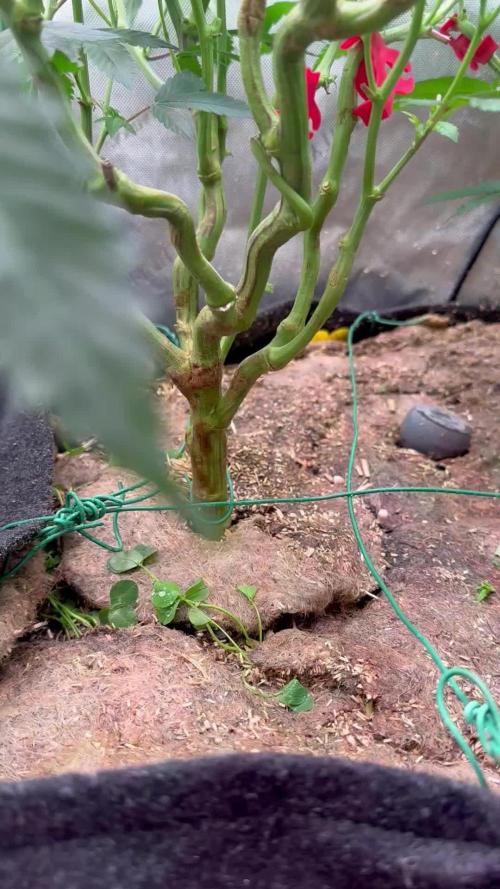
Musste Blätter entfernen , weil es viel zu viel wurde.
Bisher bei beiden Pflanzen noch kein starker Stretch.
Likes
35
Share

@MadeInGermany
Follow
Info:
Unfortunately, I had to find out that my account is used for fake pages in social media.
I am only active here on growdiaries.
I am not on facebook instagram twitter etc All accounts except this one are fake.
Have fun with the update.
Hey everyone 😀.
Another nice week goes by with a great development :-).
Today it was placed in the flower chamber with a time interval of 12/12 hours.
1 g of GHSC enhancer was added per liter of water.
The tent was completely cleaned and the humidifier was refilled.
I wish you all the best 🙏🏻
You can buy this Strain at :
https://www.zamnesia.com/de/3271-zamnesia-seeds-blue-dream-feminisiert.html
Type:
Blue Dream
☝️🏼
Genetics:
Blueberry x Haze
20% Indica / 80% Sativa
👍
Vega lamp:
2 x Todogrow Led
Quantum Board 100 W
💡
Bloom Lamp :
2 x Todogrow Led
Cxb 3590 COB 3500 K 205W
💡💡☝️🏼
Soil :
Canna Coco Professional +
☝️🏼
Fertilizer:
Green House Powder Feeding
☝️🏼🌱
Water:
Osmosis water mixed with normal water (24 hours stale that the chlorine evaporates) to 0.2 EC. Add Cal / Mag to 0.4 Ec Ph with Organic Ph - to 5.5 - 5.8 .

Likes
96
Share


@CBD_Sweden
Follow
The growing cycle it self worked out as expected, except that the pH-level was way off from where it should be, and I found out a bit too late. Because of this the outcome of the harvest didn't say much about the potential of this strain, but as soon as I got enough time and space, she will get a new chance to shine.
----------------------------------------------------------------------------------------------------------------------------------
2018-02-27.
This is my review / smoke report of this lovely cbd flower.
There are rock hard buds and almost no give at all, even in those smaller buds.
When you grind it the scent will appear more than just smelling on the buds.
It smells a little weak of grass, hay, pepper, some spicy and sweet.
The taste is grass, soil, pepper and exceedingly sweet fruit.
The effect is directly, the thc feeling above the eyes and in the forehead.
A little light ringing in the ears and a dry mouth.
After 10 minutes, the cbd kicks in and one feels that the neck and shoulders begin to relax and the feeling continues down over the back and chest down to the stomach.
A calm and well-being is found in the body.
After 15-20 minutes it is down in the legs.
But in a strange way, you also feel like doing something, or meeting some friends and just sitting and talking about fun things.
It is a very well-balanced strain and it fits in all sorts of contexts.
I also think it might be good for someone who needs something that makes you more social and dampens enough anxiety and rushing thoughts effectively.
I think this is a lovely strain and I highly recommend it to everyone but especially for more inexperienced people who want to soften with a pleasant medicine.
Likes
2
Share


@Do_it_Dan
Follow
Been a very productive week for this little lass, yeah she's stunded but she looks so healthy now, thanks for the advice on the light aswell @love_2_grow has actually helped immensely, happy growing and stay green ✌️ 💚 👌


Likes
100
Share


@AsNoriu
Follow
Day 111. First is ready, second week behind, third maybe even 3 weeks behind ....
Plus they are LEAFY ,!!!!
Trim jail ...
Wet trim for all of them - no doubts !!!
Day 115. Still hanging, slowly drying and result should be decent at the end ... A week more I guess, very humid in UK ...
Day 118. First trimmed - 175 g. Other is chopped ! One still grows ...
Day 136. Chop day for the last one !!! Long run ....
Happy Growing !!!
