Likes
Comments
Share
@Roberts
Follow
Grand Daddy Purple auto has germinated and sprouted. She does have some spots on first leaves. I might of got her wet on accident and left her under the light. I will watch if it continues. She had a light feed yesterday to help with keeping coco ph stable, and ready to thrive in. Beside the spots, everything is looking good. Thank you Medic Grow, and ILGM. 🤜🏻🤛🏻🌱🌱🌱 Thank you grow diaries community for the 👇likes👇, follows, comments, and subscriptions on my YouTube channel👇. ❄️🌱🍻 Happy Growing 🌱🌱🌱 https://youtube.com/channel/UCAhN7yRzWLpcaRHhMIQ7X4g
Likes
5
Share
Likes
17
Share
@MG2009
Follow
08/23/2023 Starting week 2 flowering AK #1 is now 17" tall AK #2 is now 12.5" tall Bruce Banner is 16" tall All going well no more bug issues fed a little bit of nitrogen this week in the form of (901 C release) 1/4 strength trying to push some Carbon on her, no more Nitrogen will be used after week 2 of flowering, only P-K will be from Fox Farms Big Bloom 0-0.5-0.7 mixed with Bio-Remedy Hope that they have more stretch in them but time will tell. Either way flower are exploding all over her! Going to give them some Fresh Aloe Vera water, there loaded with Amino acids other good stuff. 08/27/2022 Not sure if auto flower goes through different flowering stages, if they do phase one is fleeting first flush of pistils fading and fresh ones popping up everywhere . Bruce Banner is a resin monster even some bigger leaves getting resin rails.
Likes
3
Share
Bueno, ya empiezan a tocar las fotos guapas jajajajaja Les metí el corte este domingo pasado a todas para dejarlas listas para el engorde. Vamos a ver que tal.
Likes
3
Share
@Smev1337
Follow
now the buds start to get really fat/thicker, also the terp profile is on point really fruity 😋
Likes
5
Share
Eccoci qui... Tutto va per il meglio, questa settimana non ho applicato stress alla piccola, ma ho guardato l'evoluzione che ha avuto dando i nutrienti. Ora ha un odore davvero intenso ed uno strato di resina pauroso, vediamo come si riprende dalla defogliazione che ho fatto settimana scorsa. Seguiranno aggiornamenti, grazie a tutti per il supporto🔥🌲❤️
Likes
9
Share
G'day Farmers, Quite an eventful week, did a lot of training! we've still only got preflowers, but I suspect this week will be the last week of Veg. I hope she starts stretching soon, she's still very short... at the end of the week I moved her into my flower tent, The next week will be spend babying this girl, watching her reservoir like a hawk as I neglected that part this week. Check back next week to see if we're still vegging! My Flower lights: https://marshydro.eu/products/mars-hydro-ts-1000-led-grow-light/?ref=BelgianBudtender My Veg lights: https://marshydro.eu/products/mars-hydro-ts-600-led-grow-light/?ref=BelgianBudtender Coupon code BelgianBudtender for 3% off
Likes
96
Share
Sept 25th a.m. - fed ea. Congo and Natural Mystic 1/2 volume H2o/ Molasses mix; C 2.75L / NM 2.5L - fresh LST where needed - light survey showed an imbalance with taller autoflower in the mix. It was LST’d into a lower profile and moved deeper into the corner. Light distance for the Congo etc is now dialed-in after a bit of a shuffle. *** reminder Oct 8 is Lights-Out *** 36 hrs of darkness 26th - followed-up on yesterdays LST and put some actual direction on the Nat Mystic Branches. Its a tightly spaced unit but the branches are getting into some open air now. Look-out for what happens next 27th, - everything looks great this morning. Big feeds tonight if soil allows; 6.5L congo / 6L NM ** topping observation ** In an effort to produce a 16 cola plant using Topping methods, i am in the middle of a side by side topping experiment, and it does look like one method, Does has an advantage over the other! Waiting for each branch to grow past its first Node, and then produce a second Node, this will be the place to top, once the plant grows Past this 2nd node, on each branch. What results is that you only snip each branch Once, after the original Topping. 5 snips will produce 16 Tops. Allow each branch to grow past the 2nd node, then Top. It will produce 4 nodes naturally on each branch. Better overall spacing/symmetry The other significant feature of this response, is that the Durban Poison was a full week behind the Congo & N.M., and it has caught-up and Passed the progress of the natural mystic. Both of these plants (congo/nm) used the extra topping on the upper branch, and its required longer periods for the 4 bud-sites to develop per branch and extend away from the plant. It required more delicate fiddling than the (d)Urban Poison. **** - short video of the Tent uploaded this morning - no feed tonight, too moist 29th a.m. - soil said Go this morning; 6.5L h2o/nutes for the congo & 6L for the natural mystic - Collected details from N.M. & Congo run-off - pulled Northern Light express auto from the tent and replaced her with a 3.5 week old Green Mountain Grape. Move was done to help acclimatize to the cmh lite, ahead of Flower BONUS, you can actually see a bit of a droop on the Congo leaves… this mornings feed was 2 days overdue; the pot was actually lite & confirmed for me the condition of the soil is OK and not waterlogged. Pushed her a little bit towards a Drier Bottom since her last feed. Nice to see that as I crank it up - GMG has been super-cropped on the 28th, to help establish an even canopy - Slip, Snap, lost a Cola. Even though it was the runt, its gonna be missed 30th - OK, did a little homework last nite and the timing could not be better for me, with regards to Flushing 3 plants, ahead of the move into Flower. This stems from capturing some of the run-off after a bigger feed. What resulted is I found a high EC value on the Natural Mystic (3200) that indicates a build-up of Salts in the soil. The Volume 33% says its a bit much… i have been aggressive in my nutrient values but its been incremental. Regardless N.M. gets a quick bath to flush out this bit o History. Congo had less liquid come through but was still an elevated value (EC 2300) and will receive a Flush as well. ((d)URBAN POISON barely had any liquid come out. It will be flushed as well. Call it a tune-up, I’m in. * should anybody see something from those results that I’m missing or misinterpreted… Id be happy to hear about it. Please & Thanks pH probably has something to do with it too, but I don't care right now Effluent details: -Nat Myst released 2L out the bottom after being fed 6L : I’m going to reduce the volume of Water & Nutes fed, targeting 15% run-off. (5L next feed) -Congo released 600ml after 6.5L was fed; Which is a reasonable amount in active use; close to 10% - with height a constant issue in a tent, in my basement… i’m super happy with how low this whole grow has stayed through Veg. Kinda shocked actually… pic #23 - flushed Natural Mystic w/ 20 gallons water - (the little kids pool that I inflate, to flush-in… of course, sprouted a whole shitload of leaks in the Bottom when I was about 18 gallons in. And Yeh, the discharge hose on my electric pump DID COME OUT OF THE SINK DRAIN, 2x. I had water everywhere lol. Actually out in the garage taking care of things right now) Oct 1 - last day week 7 - re-applied the pins holding Nat Mystic in place. She is damp, Healthier & Hungry soon; target = 2 Meals b4 Lights-out. With Congo flush 100% happening… both Meal volumes tbd - been a busy week & things are about to change again. Learnings impact all the different grows. I’ve never flushed Mid-grow; and I’m liking-it !
Likes
3
Share
@Wiffz_CBD
Follow
.5tsp of Recharge added to self watering pots. Roughly.5tsp/1.5 gal I put her in with her clones for the last 13 days. Working on the time lapse from seed to now.
Likes
37
Share
8/19 Rained again last night. No damage but medium is drenched. The 9lb kush I've been struggling with seems to be improving. I spent a lot of time on her yesterday and at least an hour this morning defoliating and pruning her. New growth and flowers look promising. I'm cautiously optimistic. I defoliated what needed it. I needcto qpplyvorganocide again. I can see random signs of septoria leaf spot. I really have been off my fame lately. I'm back on it now. This week the garden will be rearranged and I'll pull that big GDP back and better support the blueberry for flower. That NYCSA is a beast. It's resilient as all hell and just continues getting bigger and fuller. Despite pr9blems in the garden this girl seems absolutely fine. At least I don't have that defeated feeling anymore. I've got flowers on a few different plants. I'll try to get a couple pictures. I may take rapacaps advice and add a cheap plastic roof for later flower. I'm not sure if the explosive flower growth is due to the liquid kool bloom but I think I'm going to switch back to tiger bloom as it works better with the other nutes. I'll jeep this updated but I've got work to do. 8/20 Well it Rained again last night. This is getting discouraging. Now my other 9lb kush has the bottom branch all droopy like there's a borer or something. Realistically with the temp swings and the weather I think it's a firm of root rot or pythiym damage which isn't good. I posted pictures of the stalks and would be grateful if anyone has any advice. I'm go8ng back down to look again for a borer hole but i didn't see one. What it looks like to me is that the petroleum jelly I put on the stalks (to battle ear wigs) seems to keep them moist or something inviting mold or fungus. I'm kind of at a loss. I don't really know where to go from here. I don't know if I should just replant the severely damaged plant away from the rest of the grow, bag it and get rid of it or leave it be and hope for the best. I certainly don't want anything spreading. I'm getting tigerbloom today as my plants still need to eat and I'm nervous about the liquid kool bloom. It's probably fine but still. I'll update after I put in more work and research more today. Any advice helps. UPDATE: No borer holes. The stalk looks fucking horrible. It's supposed to rain today. I'm going to give it one more day then I'll amputate that branch and get rid of the other plant if I don't see an improvement. Perhaps I'll plant it in the ground. Don't really know what to do. Family bar b que today so my options are limited. 8/21 FED TWO GALLONS TO THE GARDEN. ONLY USED .5TSP/GAL OF LIQUID KOOL BLOOM. Did not feed dieing plant. Back to super hot weather 80° at 9am. Did a lot of research last night. I also went to several commercial growers and asked advice. What I came up with was a fusarium infection of pythiym infection (Crown rot). I looked at all my stalks and they all have bark and are darker where I applied the petroleum jelly. I'm also NEVER using DE again. It fucking ridiculous amounts of water. Everyone swears by it bit it's not going in my garden again. Since use I can just watch water sit right on the GD soil. I tried to get some examples of what I'm talking about with the stems. I amputated that lowest bottom branch I trained (which was huge). I didn't have time to dispose of the other plant before my wife's doctor's appointment. I'll update when I go back over. I'm sure this won't help and may hurt but I used Bee Safe 3 in 1 on the wound and around the stalks of the plants I saw discoloration on. I didn't touch the NYCSA even though I see some discoloration. I may just be seeing things. That plant I'd super healthy and I don't want to risk losing it. It doesn't seem to have the stem rot like the others. At least I'm not the only one having problems. I hears some pretty bad stories. Still. I'm heart broken. I'll keep this updated after I go back over. FUCK. I MAY just go back to indoor. UPDATE: Got back from the appointment and the rest of the plant was all droopy just like the other 9lb kush (and the branch amputated). I wondered about that because other branches looked worse. I got the totally dead 9lb kush out and found some root rot. AFTER wheeling the bag out I found earwigs and other insects where the bag had been. Awesome. I used h202 to try to wipe down anything that looked Fingal in the stem. It sucks because it seems like that liquid kool bloom pushed them over the edge into flower. Cotton balls where there was nothing. So that's both my 9lb kush plants and the largest plant of the year the GDP that have all bit the dust. If you grow cannabis you know how I'm feeling. I KEEP TRY8NGVTO UPLOAD THE MINUTE VIDEO I TOOK BUT I CLICK ON SOMETHING ELSE AND IT DISAPPEARS. WIFI SLOW. HAVE TO WAIT FOR 5G 8/22 What do I say? Fusarium? Pythium? Stem rot? I'm going to have to get a tent to do some indoor to get the medicine I need for me and my wife. I took the last 9lb kush out and disposed of it. Well it's still in the bag. I'm hoping maybe it might come out of it (beyond hope and far away from the others (but I'm going to toss it today). This blows so hard. Flowers are just starting to develop. I like the liquid kool bloom. It seems to make flowers explode when there was none before. At least on the plants I have left. Actually even the dieing ones started flowering. I'm really concerned considering that one plant (at least) has septoria and every plant has that petroleum jelly on it. Cautio to people that use that. It seems thats where the rot started or is. In spots I spread the petroleum jelly. Anyway my NYCSA has the smallest amount of "funky looking stuff on the stem" so I'm hoping it will make it. Cotton balls starting to appear. If I lose the whole fucking crop I'm gonna go ape shit. UPDATE: Spoke with a few others and did more research. I removed my braces on the bottom of all the plants. It looks like the pjelly and the brace allowed for some type of contaminate. Other growers think I'm being too bleak. They think things will turn out okay. They are more knowledgeable about cannabis than me but I'm with these particular plants everyday. They're probably right and my anxiety is just getting g to me. It's scary seeing a healthy plant completely die in such a short time. After removing the other 9lb kush I could easily see extreme rootbound roots still too the size of the 1 gallon they came in. The bag was PACKED FULL of tight roots so they definitely made it down. The plant however just fell over when I pushed it. I had roughed it up a big before. Anyway I'm praying to the cannabis gods to not take what I have left. 8/23 Fucking pouring again. This sucks. I've gotten loads of advice and made another friend on here. I forgot my phone so I couldn't take pictures this morning. My spirits are up a little seeing that others are at least attempting to help. I'm headed to the grow shop after a night of research to grab supplies to battle this. I'll update later. EDIT: I picked up plant doctor at the grow shop. It was 50% off and I couldn't find anything with trichodermia. However, I've heard good things about this plant doctor. It's systemic and can be used as a root drench and a foliar spray. BIGGEST selling point for me is that it SPECIFICALLY lists fusarium, grey mold. Pythiym crown rot, black mold and all kinds of other shit. The thing that sucks is it's raining and it's not supposed to stop for a few days. That's going to make application more difficult. Oh well. I think I may do a root drench on the one plant that has a wilted bottom branch. I'll keep this updated. Thank you everyone who reached out. Especially growing grannies and my commercial buddy who is always here for me. However he has no experience with this so I'm kinda on my own here. EDIT: I couldn't find trichodermia and I don't have time to wait around and order. I found plant doctor which literally lists it treats all the possibly pathogens my issue could be. Even has a section for medical Marijuana. I did a root drench on the plant up front in the middle AND I did a foliar spray. Might as well get the septoria too. It's systemic but it gets in faster through the leaves I guess. It started sprinkling and I want to test this stuff out before I go ham with it. I did give some to the to other plants bit left my best AND THE TWO SMALLER ONES alone for now. I'm not seeing those issues on the NYCSA and I don't want to risk damaging it. I chose tge root drench as it's raining and the instructions for fusarium WAS a root drench. Thank you all for your help. I will close out tge question once I know it's figured out. Wish me luck. DID A SHORT VIDEO BUT WIFI IS SUPER SLOW SO I NEED TO WAIT TO UPLOAD IT. Went back over. Finished foliar spraying the other two and left the NYCSA and two Littles alone. Hopefully this works. I did I short video. Who knows if it uploads. UPDATE: Went back over and finished foliar spraying. Took a bunch of pictures and did a video but it didn't upload. I'm hoping this will do it. Plants actually look good. And they're flowering nicely! It's too bad I had to do a foliar bug this us supposed to combat PM and septoria as well. 8/24 It Rained last night but hasn't Rained today yet. It's supposed to and uts overcast. I'm really considering putting a roof on my grow (like rapacap suggested) for flower to decrease mold chances. Plants looked happy. I saw no negative effects from the Plant Doctor. I even sprayed a branch of the NYCSA and the stem and a little around tge roots. I finally feel like I can take a breath. I've been working so hard and worrying about losing g everything. I may have been able to save that 9lbkush but I don't think bit was worth taking the chance. The sun is peaking out now. My buddy at the grow shop called and set a side general hydroponics armor si 0-0-4 silica supplement cause it was 90% off. I pad like a buck sixty lol. I'll incorporate that next feed or water. Whatever comes first but it will be good to get it in the regimen. I was worried plant doctor might hurt but the girls seemed to kike it and I went ham on the worst plant. I mixed according to medical Marijuana guidelines on the label (Theres another label on the internet, it's not on this one, it's at the very bottom and just recommdations from commercial growers. I hope this stuff works. Things look better already though. That liquid kool bloom is the bees knees. That's making flowers pop up like crazy! I think I'll stick with it. I was going to use beastie bloom and cha ching later on (and still might) but I hate the lockout bullshit. I've done a bunch of videos but most don't get uploaded as i forget to upload when I leave and wifi is slow here. Anyway at least I've got a few good ones left and pleating the words of my commercial poll buddy, "barring anything catastrophic you should be fine. I know your anxiety gets the better of you sometimes." Couldn't be a truer statement. I'm still getting a tent and doing indoor though. I'm going to need to. 8/25 Did some slight defoliation. I think today I'm going to reorganize my grow space. Things are looking better though. Plants look healthier. Flower is on and they are going to beat hell. I'm glad I took a cutting from NY 9lb kush. I also took one from the NYCSA. THose are tge little ones. The 9lb kush is flowering pretty good. Too bad it's just on a 3 gal. The NYCSA us in a 10 gal grow bag though and is doing amazing. I still see septoria on the leaves. I'm sure I'll need to reapply plant doctor but thus far I'm impressed. Things LOOK better. I don't even remember the last time I watered. It Rained last night. Looks sunny today. I'm going to feed tomorrow. I want the soil to dry out though. We usually don't get consistent rain like this. It's a first for me. I'll update later if I get stuff done.still wondering if I should amputate that wilted branch or give it a bit. It's still attached right now. I'll get some sealant and do some more research.
Likes
10
Share
Omg the force is strong with this one!! Lol 😆😆
Likes
10
Share
@CreoWeed
Follow
The final result is acceptable, compared on how strong and good are the buds I am definitely satisfied...hopefully I still have some seeds of it 😂. That's all lads... Hope you enjoy the diary, any comments/question you might have, just drop it and I'll gladly answer. As always, stay tuned (with my others diaries) and stay high!
Processing
Likes
9
Share
@Hattrick
Follow
recovering from heart surgery, wanted to switch last weekend but was still in hospital. switched 0n 04/12 to flower. doing what i can when I can and with some luck all will work out
Likes
2
Share
Very sticky snd dense nuggets,tons of resin in this autoflowering strains, they are high quality, as you guys can see both wedding cakes auto by original sensible seeds have the exact same resin production, very frosty both, very sticky and big fat main colas with all the buds from the lower plant are also fat, dense and sticky, just a dream come true 💎 very good automatic strain, doesn't even looks like an auto, super sticky and a very pure and strong aroma, she's been fed with only organic dry amendments by guanokalong complete organics and seaweed powder and florganics that's how I prepared her soil. Thank you so much everybody hope you like another diary of frosty cookies 🍪🤤🍭🌸✌️💚❤️
Likes
4
Share
Likes
4
Share
Likes
1
Share
Remember that, however you are played, or by whom, your soul is in your keeping alone. Even though those who presume to play you be kings or men of power, when you stand before God, you cannot say, 'But I was told by others to do thus,' or that virtue was not convenient at the time. This will not suffice. Remember that. Day:18 84°F and 65% RH (VPD) for the vegetative stage. Approximately 1.15kPa(assuming leaf temperature is about 2°F cooler than the air), which falls right into the ideal vegetative sweet spot (0.8kPa to 1.2kPa). At 1.15kPa, plants can draw water and nutrients efficiently without risking stress or wilting. It keeps the leaf pores (stomata) open, allowing for ideal carbon dioxide intake and maximizing vegetative growth. VPD is determined by the leaf's temperature, not just the ambient air. Because leaves usually run 1° to 3°F cooler than room air under bright grow lights, my actual VPD will be slightly lower, closer to the 1.0kPa mark. As she transitions from vegetative growth to flowering, one can gradually lower the humidity (to around 45–60%) and drop temperatures slightly to prevent disease from settling inside dense buds when they appear. Night:6 At 70°F and 60% relative humidity, Vapor Pressure Deficit (VPD) is 0.86 kPa. This is right on the cusp of whats optimal for the vegetative stage. During the nighttime, plants generally close their stomata and undergo cellular respiration rather than photosynthesis. Transpiration slows to a near stop, making VPD less critical at night than during the day. However, maintaining a nighttime VPD between 0.8 and 1.0 kPa is highly beneficial in that it ensures the air is dry enough to prevent powdery mildew or bud rot, but moist enough to keep the plant from undergoing unnecessary stress. This range keeps the environment comfortable for cellular processes and prevents large atmospheric swings. Keeping it all flowing. (Not pushing them yet, these are photoperiods) The optimal soil (root zone) temperature for cellular root respiration and nutrient uptake in cannabis is between 68F & 72F This narrow range balances biological energy production (cellular respiration) with the dissolved oxygen levels in the soil, maximizing plant growth and health. Warmer soils hold significantly less dissolved oxygen. When soil temperature exceeds 74F oxygen depletion occurs, inhibiting cellular respiration almost entirely, At 68-72F root cells generate optimal adenosine triphosphate (ATP) via respiration to power root-tip elongation and the active transport of water and nutrients. Too Hot (Above 78F) Root respiration increases, demanding more oxygen, while the water's oxygen-carrying capacity drops. This creates a prime environment for anaerobic pathogens and Pythium (root rot). Too Cold (Below 60F) Root metabolism and cellular respiration slow to a crawl. This severely impairs nutrient and water absorption, leading to yellowing, wilting, and phosphorus deficiencies. A lot depends on whether it's automatic or photoperiod; with photoperiod, there is not as much of a need to push "hard" as the real countdown only begins once the flower is initiated. Automatics, on the other hand, the chronological "clock" begins ticking the moment the seed germinates. It is of critical importance that the seedling growth gets off to the races, understanding that early growth is like compound interest, which will pay off come harvest. This reality is why getting autoflowers "off to the races" early on yields such exponential benefits. The "compound interest" is directly related to the surface area of the leaves. Larger, faster-growing seedlings process more light and build bigger root networks early on, which translates into an explosion of vertical and lateral growth during their short vegetative window. The margins for error are so thin with autoflowers; this early-stage momentum depends on several critical practices. Seedlings exposed to increased atmospheric CO2 levels early in life will develop at an increased rate. To effectively "extend" or optimize the capacity of Photosystem II (PSII) for increased photosynthetic efficiency. In standard oxygenic photosynthesis, Photosystem II (PSII) is naturally limited to the red-light spectrum, peaking at 680nm. Extending its light-harvesting capacity past 700nm into the far-red region requires bypassing the natural limits of standard chlorophyll a. Adding 730 nm (far-red) LEDs alongside standard red/blue lights has been shown to increase canopy photosynthesis by 20–30% in several crops by acting synergistically with shorter wavelengths. However, the limitation is that excessive, pure IR/Far-red light (without accompanying red light) can trigger the "shade avoidance response," causing plants to grow tall, weak, and spindly rather than robust. Utilizing infrared light (specifically the 700-750 nm far-red range) is a viable method to boost photosynthetic efficiency. It acts as a bridge to allow PSII to utilize a broader spectrum of light, breaking the traditional 700 nm barrier. UVR8-mediated signaling (often in conjunction with CRY proteins) triggers protective mechanisms that maintain the stability of the photosynthetic apparatus (including LHCII and reaction center proteins), thus ensuring that the efficiency of Photosystem II remains higher in UV-B-exposed plants compared to plants lacking this receptor. ΦPSII indictates the rate of electron transfer from water to plastoquinone, which drives the production of ATP and NADPH. There is a close link between ΦPSII and the true rate of CO2 fixation (Φ*co2). ETR stands for Electron Transport Rate. It measures the speed at which electrons are moved through the thylakoid membranes in a plant's chloroplasts during the light-dependent reactions of photosynthesis. Infrared light (particularly Near-Infrared or NIR) improves cellular energy by interacting directly with the electron transport chain (ETC) in mitochondria. This process boosts adenosine triphosphate production, which acts as a metabolic coefficient multiplier by accelerating enzyme activity dramatically. Extend then multiply. Far-Red photons interact with plant photoreceptors to accelerate the plant’s biological "clock" or trigger a shade-avoidance response. Autoflowers don't use the plant's biological clock, although the IR will initiate a shade avoidance and make them stretchy. You can just add equal measures of 660nm-680nm to negate the shade avoidance effect. Replacing nights' "darkness" with a combination of IR+ and 660nm. Because autoflowers don't require a dark period to flower, many growers just blast them with light. 18/6 24/0. However, this ignores the plant's metabolic rhythms, where daytime photosynthesis (light reactions) must be perfectly balanced with nighttime carbon fixation and assimilation (Calvin cycle) to avoid bottlenecking plant development. Cellular respiration is a 24/7 process, but it can only function while the plant has the free oxidative capacity to do so. A 100% photosynthetically active leaf cannot perform cellular respiration. The viral trend of defoliation of every leaf that isn't "getting enough light" is of great detriment overall, putting 100% of the cellular respiratory "workload" and responsibility on the 0/4/6 hours of darkness in sub-optimal conditions for enzymatic activity. Photosynthesis captures nearly 100% of the initial energy as carbon, while cellular respiration is the process that unlocks 90% of that captured energy into usable ATP so the plant can use it. Respiration is considered roughly 30% to 40% efficient. It captures enough of the potential energy in glucose to synthesize around 30 to 38 ATP molecules per glucose molecule. The remaining 60% to 70% of the energy in the sugar is not captured in ATP; instead, it naturally escapes into the environment as heat, which helps regulate plant temperature. In plants, the primary enzymes of the Electron Transport Chain (ETC) and the ATP synthase complexes are typically adapted to function optimally in warmer temperatures (roughly 25°C to 35°C depending on the specific plant strain). As temperatures rise within this physiological range, molecular collisions increase, speeding up respiration and ATP production. The cannabis plant has a branched respiratory pathway. During heat or cold stress, plants activate Alternative Oxidase (AOX). AOX burns sugars to dissipate energy as heat rather than coupling it to ATP production. This pathway actually functions optimally at elevated temperatures to help protect the cell from the damaging build-up of Reactive Oxygen Species (ROS) during heat stress. Enzyme activity generally scales with heat; there is a strict biological limit. If canopy temperatures in a grow room exceed 40°C, the enzymes and their supporting lipid membranes lose stability. Not saying you need to go crazy, just optimize nights the same as we optimize days. Phosphorus is the driving force behind early seedling development. It acts as the "energy hub" of the plant, directly driving cell division, robust root growth, and the creation of DNA. Without an adequate, easily accessible supply early on, the plant's overall growth potential and final yield can suffer permanently. E=MC2 looks like a simple multiplication problem; it describes a fundamental physical truth: mass and energy are the same thing. The equation doesn't just calculate a value; it reveals that mass is effectively "congealed" energy. Energy is just numbers. Energy isn't a physical "substance" you can hold or touch. It is essentially an abstract, calculated number that we assign to a system to predict how it will change, interact, or move. A numerical label we attach to matter to track how it behaves. Because the universe runs on laws of symmetry (specifically, that the laws of physics don't change over time), a single global number must be conserved. We call that number "energy". We don't grow; we facilitate energy conversion. How well a seedling grows is essentially down to how much knowledge one can acquire to increase the level of conversion to occur. Applying knowledge effectively requires intuition, which comes from hands-on experience. A seasoned stoner learns to read subtle signs—like a slight change in leaf turgor (stiffness), subtle color shifts, or the specific texture of the soil—before a textbook diagnosis can be made. Ultimately, growing is the application of botanical science blended with active observation. Knowledge dictates your potential, but adaptability and attentiveness to the plant's immediate environment determine your results. 1.618 nature mathematically optimizes quantum energy transfer and light absorption efficiency within the photosynthetic machinery, as it naturally dictates energy scaling hierarchies and resonance dynamics. External vibration or electromagnetic wave that perfectly matches a plant's natural frequency directly influences plant growth. Low-frequency sound waves and targeted electromagnetic fields stimulate cellular processes and boost photosynthetic efficiency Does it produce better yields? How long is a piece of string? As long as you cut it. But isssss the juice worth the squeeze? The quantum framework of the IVM seems to think so. Good enough for the quantum firmware, good enough for the DNA software. Genetics are not dictated; they are expressed; the rate of that expression is dictated by the environment in which growth occurs. Quantum Coherence in Photosynthesis occurs When a photon of sunlight strikes a leaf, the energy it carries must travel to a reaction center to be converted into chemical energy. This process operates at nearly 100% efficiency. If the energy moved in a traditional "bunching" or random hopping manner, a large portion of it would be lost as heat. Instead, plants utilize quantum superposition. The energy particle (exciton) doesn't just take one path; it exists in a wave state and explores multiple pathways simultaneously. It essentially "chooses" the most efficient route to the reaction center simultaneously. Research shows that molecular vibrations and the specific network arrangements of chlorophyll molecules (like the naturally evolved Chlorophyll A & B ratios) actively protect against energy overflow, optimizing light capture across different light intensities. Enzymes are the biological catalysts that speed up chemical reactions within a plant's cells, allowing them to grow, metabolize, and repair. Rather than relying solely on the classical kinetic energy of molecules colliding, plants use quantum tunneling. Subatomic particles like electrons and protons (hydrogen ions) can literally "teleport" through energy barriers that they normally wouldn’t have the energy to climb over. This makes vital metabolic reactions happen far faster than classical physics could ever explain. Chloryphyll b has peak absorption at 460nm (Blue) and at 647nm(Red). If we take the blue peak wavelength 460nm and a UV-B, UVR8 peak absorption wavelength 285nm, Tryptophan-285 (W285) Sensing protein. 460/285=1.618 Φ If we take chlorypyhll b's Red absorption peak 647nm and a UV-A of 400nm, we get 647/400=1.618 Φ. "Structure of light". The cryptochrome photoreceptor (CRY) is a UV-A/blue light receptor that shares this dual sensitivity with several other biological structures and functions, including significant sequence similarity and a common evolutionary ancestor with DNA photolyase enzymes. These are light-activated enzymes that use blue/UV-A light to repair DNA damage caused by UV-B radiation in plants. Synergistic. But Shhh, it's a secret. Effective quantum efficiency of photosystem II, often denoted as ΦPSII, represents the proportion of light absorbed by Photosystem II (ΦPSII) that is actually used in photosynthetic electron transport. It is a key indicator of how efficiently a plant is using light for photosynthesis, as opposed to losing it as heat or fluorescence. ΦPSII (effective quantum yield of photosystem II) functions primarily as a "multiplier" (a coefficient of efficiency) rather than an additive factor when estimating the overall photosynthetic electron transport rate (ETR). Multipliers are considered far more beneficial than additions because they generate exponential growth, leverage existing resources to their full potential, and create sustainable, self-multiplying capacity, rather than just incremental, linear increases. This fascinating observation is rooted in the intersection of subatomic geometry, fractal scaling, and quantum dynamics. In specific molecular arrangements—such as in conjugated polymer networks or biomolecular architectures—the Golden Ratio (PHI) naturally dictates energy scaling hierarchies and resonance dynamics. Mathematically tied to the fine-structure constant, which defines the strength of the electromagnetic interaction. The Golden Ratio can be mapped geometrically as the Golden Angle (137.5 degrees) in atomic structures, linking the charge of the electron to fundamental quantum constants like Planck's constant. Electromagnetic. The Golden Angle (137.5): This angle is derived from the Golden Ratio (1.618). It is the smaller of two angles created when a circle is divided such that the ratio of the arcs equals the Golden Ratio.
Likes
5
Share
@Niam0R
Follow
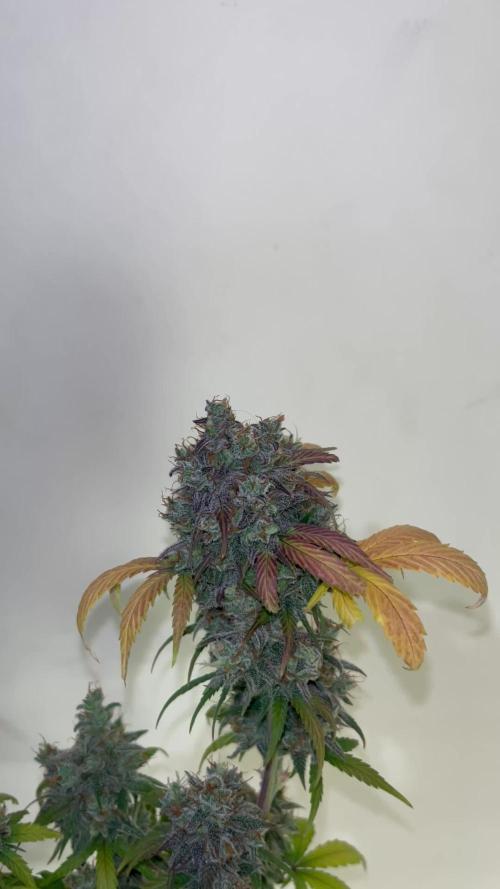
This girl are really healthy and she started her pre-flowering 💪💪🙌