The Grow Awards 2026 🏆
Likes
Comments
Share
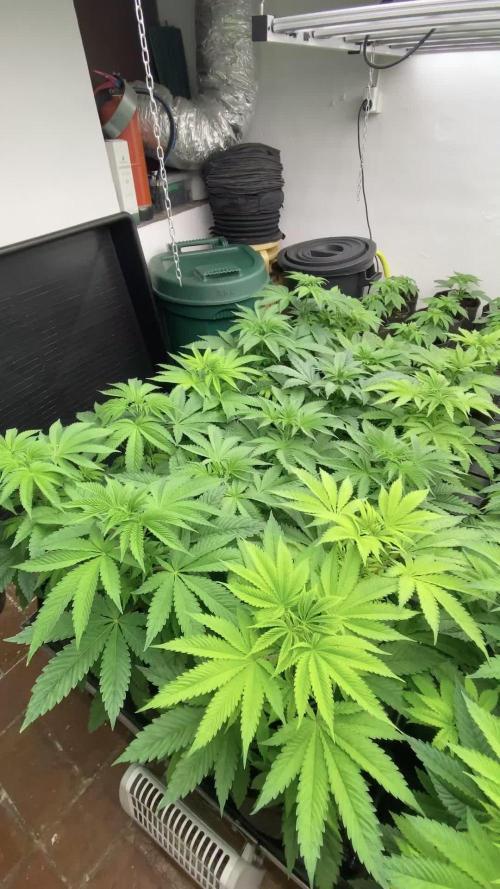
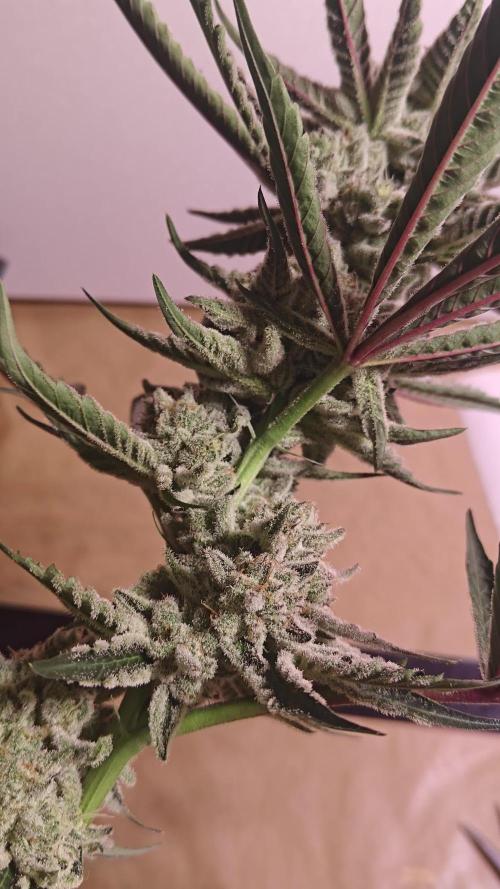
Week 6 flower and the girls seem to have recovered from last week’s neglect and light intensity, but I’m sure the end result will be affected. The leaves also got a bit beat up. Watered in the final top dressing and did another round of selective defoliation. Moved the tops around a bit to open up the lower bud sites.
Likes
29
Share
Sie kommt jetzt langsam, als der Würfel bis unten eine Wurzel hatte habe ich sie in den Becher gesetzt, die ersten Tage passierte nichts ich dachte ich hatte sie vermasselt… Allerdings sehe ich heute nach 4 Tagen wie sie sich zum Licht streckt :) Sie ist ca 10 cm & ich hoffe sie kommt weiterhin durch. Ich habe diese Woche kein enhancer benutzt. Bis nächste Woche :)
Likes
9
Share
@AustinRon
Follow
2 Week AC3Q - Seedling Ambassador Cartwright by IRIE Genetics (Clementine X Arise) X Arise ((Tangie X Lemon Skunk) X Arise) X Arise  Start of Week 2 - 16 July 2022 AC3Q 15:S:2:1 to 22 July 2022 AC3Q 22:S:2:7 Environment: EC Targets: # rel. | abs (rel + source) ECseedling: [0.4, 0.5] [ 0.7, 1.0] ECearlyveg: [ 1.1, 1.4] [ 1.4, 1.7] EClateveg: [ 1.2. 1.5] [ 1.5, 1.8] ECearlybloom: [ 1.1. 1.4] [ 1.4, 1.7] EClatebloom: [ 1.3, 1.6] [ 1.6, 1.9] ECripen: [ 0.9, 1.2] [ 1.2, 1.5] ECflush: [ 0.0, 0.0] - Seedling (Week 1-2) - Temp: 78-82°F - VPD: 0.85 ± 0.05 - Photoperiod: 18/6 - Light Strength Start: 200-300 PPFD - EC: 1.0 FertigationFoliarMonday: Solar Wind: [ 2.5, ml, 500, ml] Silica Skin: [ 1.25, ml, 500, ml] FertigationFoliarWednesday: CalMag Fuel: [ 2.5, ml, 500, ml] Lush Green: [ 1.25, ml, 500, ml] FertigationFoliarFriday: Solar Wind: [ 2.5, ml, 500, ml] Peak Bloom: [ 0.675, ml, 500, ml] # Cease Begininning Flower Week 5 Rooted Leaf: Primary: # Mix and store for week, not Primer A: [ 2, ml ] Primer B: [ 2, ml ] Silica Skin: [ 1, ml ] # Mix with Base AT Feeding AtFeeding: Root Anchor: [ 1, ml ] # Sprout Lush Green: [ 1, ml ] # at Seedling (3 Nodes) Cal Mag Fuel: [ 1, ml] Sat 16 July 2022 AC3Q 15:S:2:1 - Remaining Plants , 1,3 - 7 (6 Total)    #7 (The Last One) was a potential Lost-Cause - HOWEVER - Her damaged leaflets were praying this morning. It provided sufficient material for Sex Testing.; Sex Testing - [x] Form Filled Out - [x] Clip #3 - [x] Clip #4 - [x] Clip #5 - [x] Clip #6 - [x] Clip #1 - [x] Clip #7 - [x] Package assembled & Mailed (1400) - [x] Install Oscillating Fans (2) - I should have done this LAST WEEK - Wondering why we were growing floppy plants - NEED Light Mechainical (AirFlow) Stimulation to build STRONG MERISTEMS. #6 After Clip  - Mixed up Sat Night/Sunday’s nutes - Full Panel ~ EC: 1.0 Sun 17 July 2022 AC3Q 16:S:2:2 0800: 30 ml full 0.8 EC - Wow - Every time I open the tent after extended close - I’m arrested by the Size change in the leaves. Right now - I see hybrid Vigor! - Installed supports for two leaners, should be ready to come off Wed/Thus ec 0.3 0.4 ml a 0.4 EC + 0.1 0.4 ml b 0.7 EC + -.3 0.2 si 0.7 EC + 0.0 0.2 cm 0.8 EC + 0.1 0.2 lg 0.8 EC + 0.0 2130: 20 Ml Full 0.8 EC - [x] Add Fans to Cabinet for plant strength - [x] Removed supports from 1 & 4 (Flopping Meristem) - Took 6 hours w/ fan for them to stand up! Mon 18 July 2022 AC3Q 17:S:2:3 0900 - 30 Ml Full 0.8 EC 2030: Mixed up Fresh Full @ 1.05 ± 0.05 EC 2100: 30 ml Full Fertigation Tue 19 July 2022 AC3Q 18:S:2:4  0800:30 ml Full EC: 0.8 
 - [ ] Mix up 1.05 ± 0.05 EC FULL 2100 Mixed up Full - EC: 1.05 ± 0.05 Raised ppfd Wed 20 July 2022 AC3Q 19:S:2:5 o730 ec 1.0-1.1, 30 ml per adjusted fans Foliar: - lush green - calmat Thu 21 July 2022 AC3Q 20:S:2:6 - Though fixing’ to harvest - she could use a little water (500 ml) w a littl Rooted Leaf Resin Bloom Fri 22 July 2022 AC3Q 21:S:2:7 Foliar: Solar Rain
Likes
20
Share
Likes
12
Share
Ok so had a lot to do this week harvested the large critcial mass to which I got 6 n half 0z from one plant so happy with that i also had a few issues with enviroment mainting right temp and humidty as been a lil issue but think all is well now so there all now on the 7 week of flower think I may push these as far as I can to maximise yield potential overall a real good plant to grow had very few issues from start to finish a top strain a deffo keeper for the garden of mothers in my opinion
Likes
13
Share
She’s finally finished I’m so happy to have her. She smells like red starburst and zkittlez. She taste like she smells. I’m very happy how she turned out. Beautifully. Super sweet and right up my alley. Fastbuds hits it out of the park once again!
Processing
Likes
15
Share
@Dico29
Follow
They are starting to shoot some pistils. I added some random store fertilizer that is 1-4-7 and put it in the 3 gallon. I poured it in a water bottle and just eye balled it pretty slow and not for long. It seems to help
Likes
14
Share
@Radagast_
Follow
12.08. Runtz Day 72# Flowering Day 55# 10.08. 4 more plants harvested and put to dry, two ripe just the way I like them, two not quite yet, but I didn't want to risk them being destroyed by the caterpillars. The previous two dried and smoked lol There are 3 plants left on the site, they need about 7 to 10 more days, 2 days ago he was with them end of the 10th week. Stay High and Keep Growing!!!
Likes
29
Share
@olli0420
Follow
soo one was way more photogenic than the other 😅 also I know I put a lot of videos but I'm obsessed with this strain ok? it's amazing and I'm proud of me😁😁 oh and how DOPE is the timelapse? 🤯🔥🔥🔥🔥
Likes
27
Share
@D33jW
Follow
🚀🚀🚀 Let's fly to another weeK 🚀🚀🚀 🌸 Dozi ZoZi – Breed Bros 🌸 WE jump in to day 36D and also first flowering days 😍 Watering PH 6.7 Temp is around 27 and RH 65% and more in the night. There were small deficiencies on the lower leaves, so I give her a 2ml of CANNA terra Vega. BUT only one in this week 🙌 ALL is going well, she jumps in to flowering very nice. D38: She starts to look very nice. She likes a first watering with CANNA. I also give her a Soil Clean in the last day. D39: I changed a lamp distance to 25 cm I used white pins to point the tops in the right direction and give them better access to the light. AND make some new photos. THX for watching and until next time! 👊
Processing
Likes
15
Share
@AK1210
Follow
The tricombe production on this strain is ridiculous! It looks amazing under my microscope. The heads are mostly milky coloured so this may be finishing sooner than expected. The space in the tent is getting a bit tight so I'll be glad to have more room when this lady has done her thing.
Likes
34
Share
Start of week 4. This girl stretched an inch during week 3 and her bud sites continued to pack on size and take shape. She is very sticky to the touch and densely packed. I did some defoliation, so more light gets to the inner and lower nodes and buds.
Likes
19
Share
@Haoss
Follow
This beautiful girl has started to bloom actively, she receives 5 liters of food every day, she feels very well 💚
Likes
16
Share
This week made a few oopsies . I gave un-ph’d water to one of the plants “moving to fast” . Started defoliation during this week to attempt to redirect plant energy into establishing a full canopy since flowering has initiated. Whilst defoliating I broke a branch that had to be taped to save it. Humidity went out of whack when I stored 4 prepped 5 gal pots for transplant in the tent sooo I’ve got to buy a dehumidifier bc at one point all my plants fell out in a fit . STILL haven’t filled these pots out, & I’m kinda sure/unsure it’s time to re-amend the soil for flowering. I’m conflicting on waiting until beginning/middle of week 7 so I can flush week 11 & 12 . I think that covers it pretty well Week 5 in the 📚 📕 📖.
Likes
14
Share
@NSCanna
Follow
Had a bit of a cat-tastrophy this week. I left my tent open to go and fill a bucket of water, came back and zipped it up. What I didn't know is that the cat got in. Not 5 minutes later I can hear all sorts of shit moving around so I came in to find I had zipped him and and he went bonkers and bent almost every branch on the Skunk. So I had to do emergency tie jobs, but I ended up losing 2 medium colas and 1 small one. Could have been much worse if the skrog net wasn't there to stop them from snapping. Injuries look like bent plastic straws, so I'm going to be watching her closely to see if she herms from that massive amount of stress. Some of the pics have cat hair in them, thank the little brat. Anyway, Skunk is a 45-50 day finisher so I'm going another week and then she gets the chop. Lots of microscope videos today and finally found an amoeba. Also something moving in an egg...what is it? That's at 400x so I think it's a nematode egg based on what I found online. If you look closely at the super zoomed in trichome shot, you can see the reflections of other trichomes...just fucking epic.👏 All the food stops now, too much in the soil for her to start senescence. Nothing but water and FFJ now. New pistils are still coming in so who knows, maybe she'll keep going a few more weeks.
Likes
14
Share
Plants are doing well. the Psychosis is catching up I've taking a video of my room too show the inside a bit better. Noticing some issues with my room set up. The 2" air stones are making too much noise at random points of the day/week. I assume the stones move slightly and cause a rattle noise when the stone is at a certain angle *** ill update this week more today after I have been to the hydroponic shop to pick up a few things Having some issues with the 2"airstones. Due to screeching and rattling. The let the perfect amount of air out for my 19l pots but the noise isn't worth it. Here is and 18" air curtain. Super silent and works great. I bought 30" curtains too.. They let even more air out and form around the pot better 👍
Likes
52
Share
Lacewings seemed to have mostly killed themselves by flying into hot light fixtures. I may have left the UV on which was smart of me :) Done very little to combat if anything but make a sea of carcasses, on the bright side its good nutrition for the soil. Made a concoction of ethanol 70%, equal parts water, and cayenne pepper with a couple of squirts of dish soap. Took around an hour of good scrubbing the entire canopy. Worked a lot more effectively and way cheaper. Scorched earth right now, but it seems to have wiped them out almost entirely very pleased. Attempted a "Fudge I Missed" for the topping. So just time to wait and see how it goes. Question? If I attached a plant to two separate pots but it was connected by rootzone, one has a pH of 7.5 ish the other has 4.5. Would the Intelligence of the plant able to dictate each pot separately to uptake the nutrients best suited to pH or would it still try to draw nitrogen from a pot with a pH where nitrogen struggles to uptake? Food for stoner thought experiments! Another was on my mind. What happens when a plant gets too much light? Well, it burns and curls up leaves. That's the heat radiation, let's remove excess heat, now what? I've always read it's just bad, or not good, but when I look for an explanation on a deeper level it's just bad and you shouldn't do it. So I did. How much can a cannabis plant absorb, 40 moles in a day, ok I'll give it 60 moles. 80 nothing bad ever happened. The answer, finally. Oh great........more questions........ Reactive oxygen species (ROS) are molecules capable of independent existence, containing at least one oxygen atom and one or more unpaired electrons. "Sunlight is the essential source of energy for most photosynthetic organisms, yet sunlight in excess of the organism’s photosynthetic capacity can generate reactive oxygen species (ROS) that lead to cellular damage. To avoid damage, plants respond to high light (HL) by activating photophysical pathways that safely convert excess energy to heat, which is known as nonphotochemical quenching (NPQ) (Rochaix, 2014). While NPQ allows for healthy growth, it also limits the overall photosynthetic efficiency under many conditions. If NPQ were optimized for biomass, yields would improve dramatically, potentially by up to 30% (Kromdijk et al., 2016; Zhu et al., 2010). However, critical information to guide optimization is still lacking, including the molecular origin of NPQ and the mechanism of regulation." What I found most interesting was research pointing out that pH is linked to this defense mechanism. The organism can better facilitate "quenching" when oversaturated with light in a low pH. Now I Know during photosynthesis plants naturally produce exudates (chemicals that are secreted through their roots). Do they have the ability to alter pH themselves using these excretions? Or is that done by the beneficial bacteria? If I can prevent reactive oxygen species from causing damage by "too much light". The extra water needed to keep this level of burn cooled though, I must learn to crawl before I can run. Reactive oxygen species (ROS) are key signaling molecules that enable cells to rapidly respond to different stimuli. In plants, ROS plays a crucial role in abiotic and biotic stress sensing, integration of different environmental signals, and activation of stress-response networks, thus contributing to the establishment of defense mechanisms and plant resilience. Recent advances in the study of ROS signaling in plants include the identification of ROS receptors and key regulatory hubs that connect ROS signaling with other important stress-response signal transduction pathways and hormones, as well as new roles for ROS in organelle-to-organelle and cell-to-cell signaling. Our understanding of how ROS are regulated in cells by balancing production, scavenging, and transport has also increased. In this Review, we discuss these promising developments and how they might be used to increase plant resilience to environmental stress. Temperature stress is one of the major abiotic stresses that adversely affect agricultural productivity worldwide. Temperatures beyond a plant's physiological optimum can trigger significant physiological and biochemical perturbations, reducing plant growth and tolerance to stress. Improving a plant's tolerance to these temperature fluctuations requires a deep understanding of its responses to environmental change. To adapt to temperature fluctuations, plants tailor their acclimatory signal transduction events, specifically, cellular redox state, that are governed by plant hormones, reactive oxygen species (ROS) regulatory systems, and other molecular components. The role of ROS in plants as important signaling molecules during stress acclimation has recently been established. Here, hormone-triggered ROS produced by NADPH oxidases, feedback regulation, and integrated signaling events during temperature stress activate stress-response pathways and induce acclimation or defense mechanisms. At the other extreme, excess ROS accumulation, following temperature-induced oxidative stress, can have negative consequences on plant growth and stress acclimation. The excessive ROS is regulated by the ROS scavenging system, which subsequently promotes plant tolerance. All these signaling events, including crosstalk between hormones and ROS, modify the plant's transcriptomic, metabolomic, and biochemical states and promote plant acclimation, tolerance, and survival. Here, we provide a comprehensive review of the ROS, hormones, and their joint role in shaping a plant's responses to high and low temperatures, and we conclude by outlining hormone/ROS-regulated plant-responsive strategies for developing stress-tolerant crops to combat temperature changes. Onward upward for now. Next! Adenosine triphosphate (ATP) is an energy-carrying molecule known as "the energy currency of life" or "the fuel of life," because it's the universal energy source for all living cells.1 Every living organism consists of cells that rely on ATP for their energy needs. ATP is made by converting the food we eat into energy. It's an essential building block for all life forms. Without ATP, cells wouldn't have the fuel or power to perform functions necessary to stay alive, and they would eventually die. All forms of life rely on ATP to do the things they must do to survive.2 ATP is made of a nitrogen base (adenine) and a sugar molecule (ribose), which create adenosine, plus three phosphate molecules. If adenosine only has one phosphate molecule, it’s called adenosine monophosphate (AMP). If it has two phosphates, it’s called adenosine diphosphate (ADP). Although adenosine is a fundamental part of ATP, when it comes to providing energy to a cell and fueling cellular processes, the phosphate molecules are what really matter. The most energy-loaded composition for adenosine is ATP, which has three phosphates.3 ATP was first discovered in the 1920s. In 1929, Karl Lohmann—a German chemist studying muscle contractions—isolated what we now call adenosine triphosphate in a laboratory. At the time, Lohmann called ATP by a different name. It wasn't until a decade later, in 1939, that Nobel Prize–-winner Fritz Lipmann established that ATP is the universal carrier of energy in all living cells and coined the term "energy-rich phosphate bonds."45 Lipmann focused on phosphate bonds as the key to ATP being the universal energy source for all living cells, because adenosine triphosphate releases energy when one of its three phosphate bonds breaks off to form ADP. ATP is a high-energy molecule with three phosphate bonds; ADP is low-energy with only two phosphate bonds. The Twos and Threes of ATP and ADP Adenosine triphosphate (ATP) becomes adenosine diphosphate (ADP) when one of its three phosphate molecules breaks free and releases energy (“tri” means “three,” while “di” means “two”). Conversely, ADP becomes ATP when a phosphate molecule is added. As part of an ongoing energy cycle, ADP is constantly recycled back into ATP.3 Much like a rechargeable battery with a fluctuating state of charge, ATP represents a fully charged battery, and ADP represents a "low-power mode." Every time a fully charged ATP molecule loses a phosphate bond, it becomes ADP; energy is released via the process of ATP becoming ADP. On the flip side, when a phosphate bond is added, ADP becomes ATP. When ADP becomes ATP, what was previously a low-charged energy adenosine molecule (ADP) becomes fully charged ATP. This energy-creation and energy-depletion cycle happens time and time again, much like your smartphone battery can be recharged countless times during its lifespan. The human body uses molecules held in the fats, proteins, and carbohydrates we eat or drink as sources of energy to make ATP. This happens through a process called hydrolysis . After food is digested, it's synthesized into glucose, which is a form of sugar. Glucose is the main source of fuel that our cells' mitochondria use to convert caloric energy from food into ATP, which is an energy form that can be used by cells. ATP is made via a process called cellular respiration that occurs in the mitochondria of a cell. Mitochondria are tiny subunits within a cell that specialize in extracting energy from the foods we eat and converting it into ATP. Mitochondria can convert glucose into ATP via two different types of cellular respiration: Aerobic (with oxygen) Anaerobic (without oxygen) Aerobic cellular respiration transforms glucose into ATP in a three-step process, as follows: Step 1: Glycolysis Step 2: The Krebs cycle (also called the citric acid cycle) Step 3: Electron transport chain During glycolysis, glucose (i.e., sugar) from food sources is broken down into pyruvate molecules. This is followed by the Krebs cycle, which is an aerobic process that uses oxygen to finish breaking down sugar and harnesses energy into electron carriers that fuel the synthesis of ATP. Lastly, the electron transport chain (ETC) pumps positively charged protons that drive ATP production throughout the mitochondria’s inner membrane.2 ATP can also be produced without oxygen (i.e., anaerobic), which is something plants, algae, and some bacteria do by converting the energy held in sunlight into energy that can be used by a cell via photosynthesis. Anaerobic exercise means that your body is working out "without oxygen." Anaerobic glycolysis occurs in human cells when there isn't enough oxygen available during an anaerobic workout. If no oxygen is present during cellular respiration, pyruvate can't enter the Krebs cycle and is oxidized into lactic acid. In the absence of oxygen, lactic acid fermentation makes ATP anaerobically. The burning sensation you feel in your muscles when you're huffing and puffing during anaerobic high-intensity interval training (HIIT) that maxes out your aerobic capacity or during a strenuous weight-lifting workout is lactic acid, which is used to make ATP via anaerobic glycolysis. During aerobic exercise, mitochondria have enough oxygen to make ATP aerobically. However, when you're out of breath and your cells don’t have enough oxygen to perform cellular respiration aerobically, the process can still happen anaerobically, but it creates a temporary burning sensation in your skeletal muscles. Why ATP Is So Important? ATP is essential for life and makes it possible for us to do the things we do. Without ATP, cells wouldn't be able to use the energy held in food to fuel cellular processes, and an organism couldn't stay alive. As a real-world example, when a car runs out of gas and is parked on the side of the road, the only thing that will make the car drivable again is putting some gasoline back in the tank. For all living cells, ATP is like the gas in a car's fuel tank. Without ATP, cells wouldn't have a source of usable energy, and the organism would die. Eating a well-balanced diet and staying hydrated should give your body all the resources it needs to produce plenty of ATP. Although some athletes may slightly improve their performance by taking supplements or ergonomic aids designed to increase ATP production, it's debatable that oral adenosine triphosphate supplementation actually increases energy. An average cell in the human body uses about 10 million ATP molecules per second and can recycle all of its ATP in less than a minute. Over 24 hours, the human body turns over its weight in ATP. You can last weeks without food. You can last days without water. You can last minutes without oxygen. You can last 16 seconds at most without ATP. Food amounts to one-third of ATP production within the human body.
Likes
8
Share
These ladies were super easy to grow. I may have been a little heavy handed with one of them but she took it like a champ. Also of of the ladiea is maturing much faster and appears ready based on Trichomes. I started flushing both plants this week.
Likes
80
Share
@Qlimax
Follow
👉Day49- fixed some LST so plants had the max light possible and did defoliation,i noticated 2/5plants have toooons of tricones but rest 3 olmost nothing 😣....some new yelow leafs start to show on 1plant. Wil make video later today. 👉Day51 Got seeds today from 42fastbuds skittlers and blackbarry for next grow :D and got 4x gratis lemon skunk seedss(some new local breeder)😘😘💚❤️I think i will grow them same as this time same pots with 3xblackberry and 1xskittler 1xlemon skunk 🤝 👉Day53 plants looks good... on some still little calsium deficiency on 2 plants mostly,they are now cca.70cm main one 85cm. +Did the last defoliation and reorganizate them,noticated alot stigmas on buds turning orangeish..🧡 Changed the light from 21h>20h ligh ,owerall flowers flowring rly good all flowers got alot of tricones now,👍cant wait till harvest!!💚✂️💚🔬🧡🛏️🧡😂 👉👉Til next weeek mates!!!stay safe and have fun last days of booring 2020 :D