


Likes
Comments
Share


Likes
4
Share


@GLOrganics
Follow
Only sprayed twice during the cycle. I added natural predators to do the work. This time i did some Neem Oil through foliar spray

Likes
6
Share


@Kendoda
Follow
The fullgas was a strong plant all the way to the end. The buds are incredibly sweet , dense and sticky .

Likes
6
Share


@Greenline
Follow
Smell kind of strawberry champagne And sorbet. Super sweet And fruity.definitely 9 week. In week 5-7 start to put some weight on it but in 7-9 still put more and more 3 layer of trellis and they didn’t make it :))) all of them start to fall down. A little problems in veg cuz I was using organic guanokalong than I switched to mills (the best I think in the European market at least) they to great results. I was using them before, I was growing zkittlez than and same shit fucking great results,I definitely recommended mills full line. Try it and see for your self.I hope that post help you in a way other and you make an idea how that strain develops in flower. Oh yah she stretched till week 4-5 so be aware when you put them in flower. For ipm program I use atlantica full line all of them bio extracts and they make it. I was fighting with trips and you all know how hard is to fight with them. Not even 1 sign of trips after a few weeks of atlantica ipm. Anyway I definitely recommend this strain and I will grow again and again alongside with others for sure.

Likes
22
Share


@Albeginner420
Follow
I transplant in 11 liter pot and put the lady under the lumatek attis 300w for flowering. She's awesome, let's start the flowering stretch.
Processing
Likes
6
Share


@oP41No
Follow
I got a double scrog setup and I'm gonna let it grow into it. This is my first grow and I'm excited. General Hydroponics nutes (Flora series). Kingbrite QB 288 v3 from alibaba. I'm just gonna let her do her thing until about week 3.

Likes
13
Share


@dillande3
Follow
Hello, Day 56, Flower Phase , Gelat.OG, Final week of flower phase is started, Day 63 or week 9 I am planing to harvest the plant, Trichomes still cloudy but in some buds I can see slightly amber color on Trichomes, I ll ask a QUS before I do the harvest anyways.
PS there is BUD ROT Prob just seen it Yesterday 31-12-22 - Seeking answer for that grow QUS, Guys pls help Thanks. Pls check last Video for BUD Rot Problem. Thanks
Day 56 - 29/12/22
Day 58/59 - 31/12/22

Likes
12
Share


@Staffedition
Follow
Привет друзья. Моей растихе сегодня 119 дней
20.10 перевёл свет в режим 12/12
Начал применять LST технику на 19 дне и продалжаю применять её через день, а 18 августа добавил ДЕФОЛИЗАЦИЮ
С 20.08 ДЕФОЛИЗАЦИЮ делаю каждые 3,4 дня
С 20.08 LST технику делаю каждые 4.6 дней
На сегодняшний день влажность 54%
5.09.2023 заметил высокий Ph 7.9
С 48 дня Ph не ниже 5.8
На сегодняшний день Ph 6.0
Начал кормить с 60 дня Canna Terra Vega
PPM 870
Всем мира и добра!
Не забудь поставить лайк❤️, если понравилась как прошла неделя
И читайте наш TELEGRAM: https://t.me/smail_seeds
#Smail_Seeds 😀
Likes
11
Share


@Rob691
Follow
Plants are in dry pode since 8 days Now.
I decide to stop flowering besause a few yellow bananas start showing up. That was time.
By the way, I taste the fresh weed before making my decision and… damned, it’s a great one !!!!!
😁😁😁😳😳😳😎😎😎
Likes
35
Share


@Njaak
Follow
Added 2 videos on preparing a nutrient solution and pH balancing the solution.
This week saw aggressive topping (mid week 4) and some serious leaf damage. Not sure if the leaf damage is from the topping, nutrients, etc. I did a flush and solution swap, cleaned the air stone and inside of the jar etc. Built the trellis and started training. I'll cut away whatever trellis doesn't end up getting used once flowering starts.
Creepy Don Santa is watching this grow closely. That cat of his is trouble.

Processing
Likes
77
Share


@BipolarHellas
Follow
Hello world,
🇬🇷
the previous week was very good, the girls are growing outdoors in the sun and the weather has been perfect...Michelle is in flowering but this diary will be following the other two girls that are still in vegetative mode and will be for a long time...I don't know if I will be on time for the contest...anyway I love growing these girls so no worries...
======================================
WEEK 9: "PHOBIA"
☠️Day 57...💧watering day...every girl drunk 3 L of pure water, ph 6,3...Michelle has stopped stretching and her size is perfect for the closet in which she spends her dark hours...Angie has reached 85 cm and Lucy 78 cm...A problem that I see coming is them to become root bound...I can see tons of roots through the transparent pots already...I don't have the space and the pots to transplant them once more...So they will have to stay there...hope they will be fine with that...
☠️Day 58...Summer Solstice 🌞🌞🌞🌞
☠️Day 59...💧thirsty again...the weather will be rainy for a couple of days...I should be cautious and put them somewhere safe...meanwhile it's one of these days that I wanna destroy everything,burn the plants...that's my bipolar disorder...hopefully I will not do it,but it's kind of weird these days....I watch them,think they will never finish up and want to kill them...😤🤣
☠️Day 60...yesterday it rained a lot...the girls had a shower but they liked it...meanwhile I got a new job and I will be missing till late...have to ask my wife to put Michelle in the closet every afternoon...and that is tough...for my wife...
☠️Day 61...new job stopped...I will be home for now and take care of them...Angie is 95 cm tall and Lucy 93...
☠️Day 62...💧watering day...3 L of ph 6,3 water...they were thirsty...pots were very light weighed...
🌸🌸🌸🌸Today Michelle completes 3 weeks since light flip...she is flowering nicely...
Day 63...the week is over...I have Lucy and Angie who are like beasts on the balcony and Michelle who is in flowering...thanx for watching see u next week...☠️


Likes
18
Share


@Ageddd
Follow
Another cold week, we are having around 2ºC Minimum temperature, and its really cold at night( I mean, for Spain, because if some Nortern people hear this may be laughting at me hahaha)
But there is a range of hours when then sun hits directly the plant if its not cloudy, like 6h-8h, this if i dont have to roll out the awning, so the plant is protected when raining.
Did not feed the plant until past the middle of the week, because i ovserbed that the flowers were developing slowly as im accostummed, probably because of the low temperatures, so i decided to give her the last feeding and start the flush at the end of this week, because i felt the plant was like at least 2 weeks from proper harvest, and still developing the flowers with white hairs... Im looking for something narcotic with a nice Therpenoid Profile so the later the better in my opinion, but without passing he Ripper Line hahaha :)
So last feeding was like a fattening one... Higher Dose of nutrients for the plant, and later added some Micro Vita to the soil, 3grams, and until the end with water and some carbs in 1/2 irrigations ...
What amazed me is the strenght of this plant, surviving these really low temperatures, growing a little slowlier, but without problems or buds, amazing plant, as amazing as beautiful, im in love with the colours..
So i hope you enjoyed reading this week Growmmies :)
Have a nice week and dont forget to roll one ^^
Good vibezz.
Likes
2
Share

@Chucky324
Follow
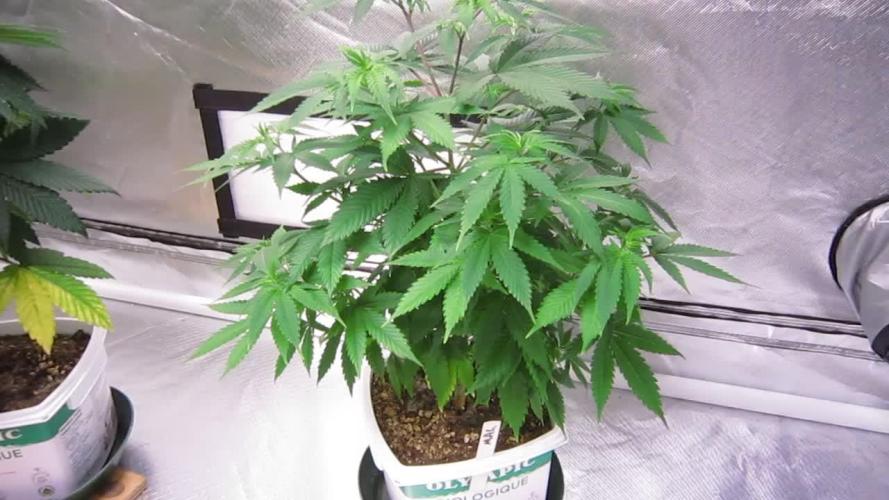
Hello. This is he end of week 7 and the beginning of week 8 of veg.
Gave her some powdered Cal-Mag with a 1/2 tsp of - www.wollamo.com
Check it out.
The plant is doing good, and is putting out lots of branches tips making her roundish.
Not much smell yet.
She's a bit dry... so I'll give her some water when I'm done here.
OK. Keep Growing Straight.
Chuck.
Likes
6
Share


@mikheil007
Follow
Vanilla Latte from Huboldt Seed Company seems to be very stron strain! others still going very well...


Likes
9
Share


@SolitudeCorners
Follow
Can't wait to blazeeee
Feeding💪
10/17 Water30L+Cleanse80ml+calmag@190ppm
Ph6.3
Ebb 10.42/11.32/12.26/13
Clone 11.35/12.21/13.05/14
Average runoff ec1.5
Keeper 300ml per pot
10/18 Water26L+Flawless90ml+calmag@300ppm
Ph6.3
Ebb 11.38/12.24/13.17
Average runoff ec1.2 ph6.5
Clone 12.38/13.56/15.20/16.10
Average runoff ec1.5 ppm750
10/19 Water26L+Cleanse80ml+calmag@200ppm
Ph6.3
Ebb 11.12/11.48/12.24
Average runoff ec1.4
Clone 11.50/12.12/12.37/13.37/14.40
Average runoff ec1.3 ph6.6
10/20 Water30L+Cleanse30ml+Calmag@190ppm
Ph6.4
Ebb11.42/12.22/13.20/14
Clone 12.40/13.20/14.20/14.45/15.15
Average runoff 1.2ec ph6.4-6.7
10/22 last light day
10/23 2 Pm Cut and hang
Plan 21day at 23temp 55rh
Processing
Likes
18
Share


@Manic
Follow
A few lower leafs have yellows and shriveled but other than that both of the gals are looking good and the smell is finally started to kick in a bit. No problems at all and totally satisfied with there growth in bud size. Looking forward to this week and compare the difference.


Likes
13
Share

@GERGrowDesigns
Follow
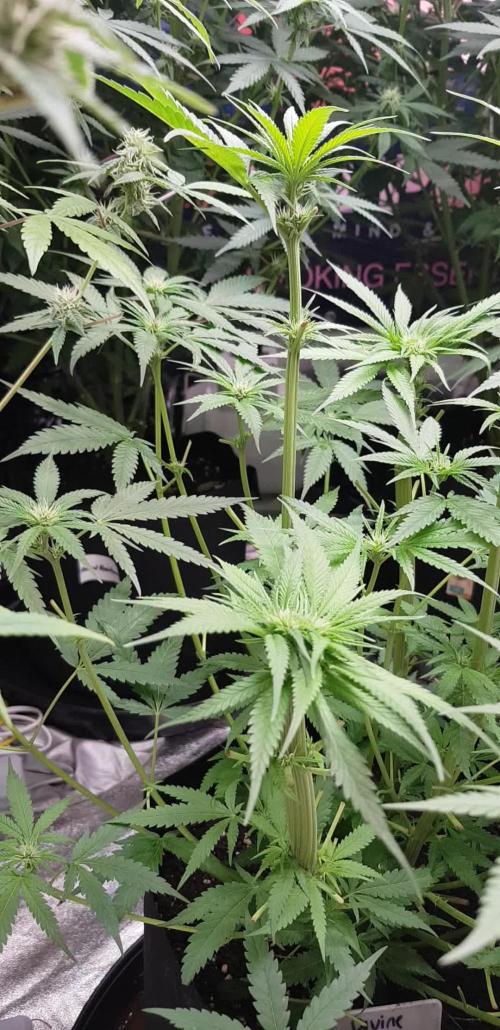
Welcome to Flower Week 2 of Divine Seeds Divine Rapier
I'm excited to share my grow journey with you from my
Sensi Seeds Project . It's going to be an incredible ride, full of learning, growing, and connecting with fellow growers from all around the world!
For this Project , I’ve chosen the Feminized Photo Strain Divine Rapier:
Here’s what I’m working with:
• 🌱 Tent: 120x60x80
• 🧑🌾 Breeder Company: Divine Seeds
• 💧Strain Info : 29%
• ⏳ Flowering Time: 6-7weeks

Likes
3
Share


@Ogfredd
Follow
Creo que falta poco. Cometí un error en unos riegos los cuales no verifique pH y bueno demostró carencia de calcio y magnesio por lo que creo
Likes
38
Share


@Ukfarmer420
Follow
Hi guys
Week 7 day 49 🌼 flower!
So last week the blue cheese recovered well with a emergency rinse now there all on a pk boost week starting today 😅 wish me luck.
Nugs are frosty and smell mental! The blue cheese smells like 2006. 💚
Cant wait for harvest.
Happy growing guys
