Likes
Comments
Share
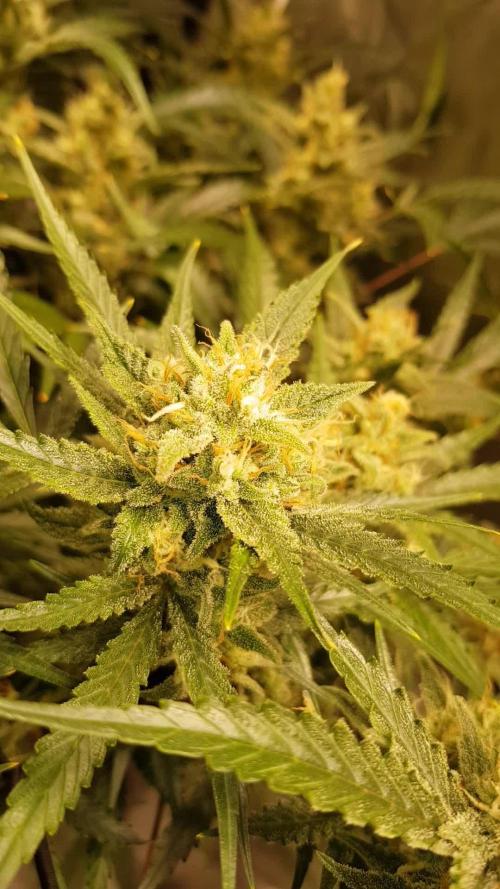
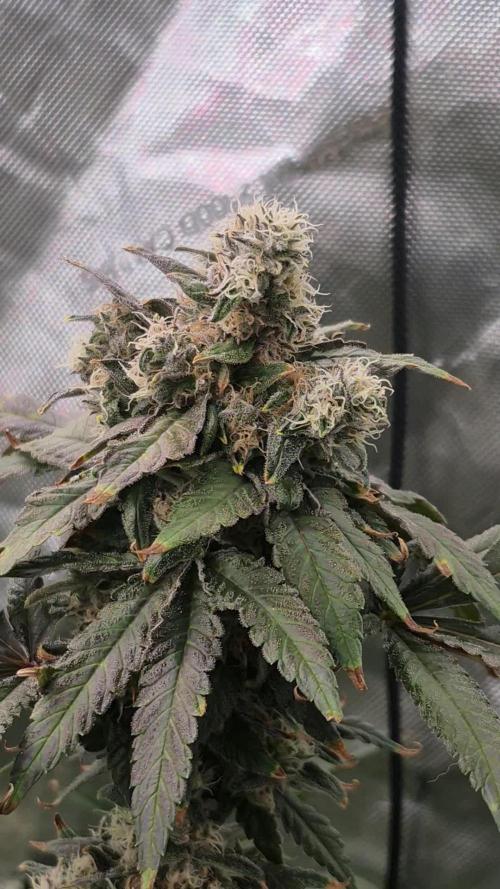
#seedsman420growoff and #SeedsmanSeeds 📆 Week 14, 27 July - 2 August 2024 27 July - 1 August - Observed and let the plant grow. 2 August - Turned light power down to 65%. 📑 Pineapple OG continues to swell and pack on resins! I’ve turned the light power down from 75% to 65% to help in maturing the plant. This brings the canopy’s DLI to about 40. The trichomes were checked this week (see pictures). Mostly milky in appearance, with few clear and amber. A good sign she is well into the finishing phase. Just a couple more weeks to go! 🍶 27 July, 1 Aug nutrient solution changed 🍽️ 27 July, 1 Aug feeding schedule updated 💧 Using reverse osmosis water with EC/TDS at 0 🐉 Nutrient Solution EC 1.8 at 74 degree F 🔆 Light power at 65%, DLI 40 canopy coverage at 12hrs 😤 Using General Hydroponics, HGC728040, Dual Diaphragm Air Pump, 320 GPH That is it for this week. Thanks for the look, read and stopping by.
Likes
13
Share
@tiasmaaa
Follow
topping for the second time, still one more topping and we'll stop stress them and just let them grow :)
Processing
Likes
20
Share
STRAWBERRY PIE AUTO (FASTBUDS) WEEK 2 Easy grow so far. She started to lean a little so I raised the light slightly. Only water at this point. Might start light veg nutes in the coming week.
Likes
3
Share
Buueno, pues seeguimos. Estoy viendo en esta y la Oreoz, algo de sobrefertilización, pero quizas muuy leve y mas posiblemente provocado a raiz de algun ligero bloqueo por el calor, que ya no consigo bajarle de los 30° el armario, pero bueno, en general no muestran sintomas de estres fuerte por calor asique guay. Las critical si están sobrefertilizadas 😅. En el proximo riego, a todas les haré el riego solo de agua con una dosis media del producto Flush, de la marca que sigo usando. En el siguiente algo de comida y ya en el siguiente enzym y de nuevo a los riegos normales, no por na, siento que aún quedará un mes minimo para empezar con los cortes. PD: IMPORTANTE, voy a poner datos que no solía poner por la "dificultad" entre muchas comillas ya que es dificultad por una situación especifica, de sacar y es que como antes comentaba, habían bloqueos y tal... Bien, he medido el agua de drenaje de cada planta. En esta los valores de ph estan mas o menos bien, un poco bajos, pero aceptables, peeero la EC era lejia viva! En esta planta el ph era de 6.07 y la EC era de 11.24 MILISIMENS! que no microsimens... Una toxicidad altísima! Muy similar a las otras 4. Básicamente mis riegos eran por lo general 2 a la semana, uno de fertilizantes base con el especifico de cada fase que toque, y el segundo riego era de encimas con normalmente calmag (fertilizante muuuy salino) y a eso le juntamos que normalmente los riegos eran justitos, normalmente no había drenaje, por lo que las sales en el sustrato se iban acumulando hasta estos puntos. Hoy, tras varios dias de dejar secar las macetas, incluso buscando un poco de estres hidrico, he metido un riego de 6L por maceta de agua con el producto Flush para hacer un arrastre y limpieza de sales, en esta ocasion los 6L han sido la medida perfecta para que drenase agua suficiente como para que estos niveles de ec bajen, y ademas en el plato pudiera medirlos y darme el resultado que he puesto anteriormente. Todo comenzó porque en la Kritical GB sentí un bloqueo de pk y la planta empezó a comerse sus hojas para conseguir magnesio, si llego a verlo como una carencia de magnesio o calcio la hubiera cagado atrozmente!
Likes
12
Share
Que pasa familia. Noticias buenas y malas, de 3 ejemplares, uno nos salió hermafrodita. Empezó a formar plátanos esta semana y al estar tirándolos en ramas distintas, cortamos por lo sano y ADIÓS. Quedan 2 subimos cantidad de comida, pegaron buen estirón, y las flores están formando sin problema alguno. Dejo muchas imágenes y vídeos de esta semana, y ya deducen ustedes.
Likes
7
Share
22.09.23- 84 день жизни замечательного растения ! Это финальная прямая 10 дней только вода , 4 из которых уже прошло )) 6 дней воды с пш, день засухи и харвест . Шишки очень нравятся , жду не дождусь когда попробую . Очень плотные и твердые. Для достижения большего количества трихом , за 2-3 дня буду царапать или раздваивать ствол в качестве эксперимента . 23.09.23-Продолжаю давать только чистую воду. Смотря на трахомы я вижу , что почти все облачные ! 6 дней до харвеста 26.09.23- 88 дней от прорастания Все еще получает только воду ! Сегодня я оборвал все веерные листья, чтобы растение получило стресс и выкинула трихомы. Завтра последний полив и 2 дня засухи перед харвестом . 28.09.23- 90 дней от всхода ! Вчера положил лед для лучшей выработки трихом и 1 день засухи 🙃
Likes
Comments
Share
@Kardo
Follow
Sie geht richtig in die Breite und bildet überall schöne grüne Köpfe sie sieht sehr gesund aus
Likes
55
Share
What's in the soil? What's not in the soil would be an easier question to answer. 16-18 DLI @ the minute. +++ as she grows. Probably not recommended, but to get to where it needs to be, I need to start now. Vegetative @1400ppm 0.8–1.2 kPa 80–86°F (26.7–30°C) 65–75%, LST Day 10, Fim'd Day 11 CEC (Cation Exchange Capacity): This is a measure of a soil's ability to hold and exchange positively charged nutrients, like calcium, magnesium, and potassium. Soils with high CEC (more clay and organic matter) have more negative charges that attract and hold these essential nutrients, preventing them from leaching away. Biochar is highly efficient at increasing cation exchange capacity (CEC) compared to many other amendments. Biochar's high CEC potential stems from its negatively charged functional groups, and studies show it can increase CEC by over 90%. Amendments like compost also increase CEC but are often more prone to rapid biodegradation, which can make biochar's effect more long-lasting. biochar acts as a long-lasting Cation Exchange Capacity (CEC) enhancer because its porous, carbon-rich structure provides sites for nutrients to bind to, effectively improving nutrient retention in soil without relying on the short-term benefits of fresh organic matter like compost or manure. Biochar's stability means these benefits last much longer than those from traditional organic amendments, making it a sustainable way to improve soil fertility, water retention, and structure over time. Needs to be charged first, similar to Coco, or it will immobilize cations, but at a much higher ratio. a high cation exchange capacity (CEC) results in a high buffer protection, meaning the soil can better resist changes in pH and nutrient availability. This is because a high CEC soil has more negatively charged sites to hold onto essential positively charged nutrients, like calcium and magnesium, and to buffer against acid ions, such as hydrogen. EC (Electrical Conductivity): This measures the amount of soluble salts in the soil. High EC levels indicate a high concentration of dissolved salts and can be a sign of potential salinity issues that can harm plants. The stored cations associated with a medium's cation exchange capacity (CEC) do not directly contribute to a real-time electrical conductivity (EC) reading. A real-time EC measurement reflects only the concentration of free, dissolved salt ions in the water solution within the medium. 98% of a plants nutrients comes directly from the water solution. 2% come directly from soil particles. CEC is a mediums storage capacity for cations. These stored cations do not contribute to a mediums EC directly. Electrical Conductivity (EC) does not measure salt ions adsorbed (stored) onto a Cation Exchange Capacity (CEC) site, as EC measures the conductivity of ions in solution within a soil or water sample, not those held on soil particles. A medium releases stored cations to water by ion exchange, where a new, more desirable ion from the water solution temporarily displaces the stored cation from the medium's surface, a process also seen in plants absorbing nutrients via mass flow. For example, in water softeners, sodium ions are released from resin beads to bond with the medium's surface, displacing calcium and magnesium ions which then enter the water. This same principle applies when plants take up nutrients from the soil solution: the cations are released from the soil particles into the water in response to a concentration equilibrium, and then moved to the root surface via mass flow. An example of ion exchange within the context of Cation Exchange Capacity (CEC) is a soil particle with a negative charge attracting and holding positively charged nutrient ions, like potassium (K+) or calcium (Ca2+), and then exchanging them for other positive ions present in the soil solution. For instance, a negatively charged clay particle in soil can hold a K+ ion and later release it to a plant's roots when a different cation, such as calcium (Ca2+), is abundant and replaces the potassium. This process of holding and swapping positively charged ions is fundamental to soil fertility, as it provides plants with essential nutrients. Negative charges on soil particles: Soil particles, particularly clay and organic matter, have negatively charged surfaces due to their chemical structure. Attraction of cations: These negative charges attract and hold positively charged ions, or cations, such as: Potassium (K+) Calcium (Ca2+) Magnesium (Mg2+) Sodium (Na+) Ammonium (NH4+) Plant roots excrete hydrogen ions (H+) through the action of proton pumps embedded in the root cell membranes, which use ATP (energy) to actively transport H+ ions from inside the root cell into the surrounding soil. This process lowers the pH of the soil, which helps to make certain mineral nutrients, such as iron, more available for uptake by the plant. Mechanism of H+ Excretion Proton Pumps: Root cells contain specialized proteins called proton pumps (H+-ATPases) in their cell membranes. Active Transport: These proton pumps use energy from ATP to actively move H+ ions from the cytoplasm of the root cell into the soil, against their concentration gradient. Role in pH Regulation: This active excretion of H+ is a major way plants regulate their internal cytoplasmic pH. Nutrient Availability: The resulting decrease in soil pH makes certain essential mineral nutrients, like iron, more soluble and available for the root cells to absorb. Ion Exchange: The H+ ions also displace positively charged mineral cations from the soil particles, making them available for uptake. Iron Uptake: In response to iron deficiency stress, plants enhance H+ excretion and reductant release to lower the pH and convert Fe3+ to the more available form Fe2+. The altered pH can influence the activity and composition of beneficial microbes in the soil. The H+ gradient created by the proton pumps can also be used for other vital cell functions, such as ATP synthesis and the transport of other solutes. The hydrogen ions (H+) excreted during photosynthesis come from the splitting of water molecules. This splitting, called photolysis, occurs in Photosystem II to replace the electrons used in the light-dependent reactions. The released hydrogen ions are then pumped into the thylakoid lumen, creating a proton gradient that drives ATP synthesis. Plants release hydrogen ions (H+) from their roots into the soil, a process that occurs in conjunction with nutrient uptake and photosynthesis. These H+ ions compete with mineral cations for the negatively charged sites on soil particles, a phenomenon known as cation exchange. By displacing beneficial mineral cations, the excreted H+ ions make these nutrients available for the plant to absorb, which can also lower the soil pH and indirectly affect its Cation Exchange Capacity (CEC) by altering the pool of exchangeable cations in the soil solution. Plants use proton (H+) exudation, driven by the H+-ATPase enzyme, to release H+ ions into the soil, creating a more acidic rhizosphere, which enhances nutrient availability and influences nutrient cycling processes. This acidification mobilizes insoluble nutrients like iron (Fe) by breaking them down, while also facilitating the activity of beneficial microbes involved in the nutrient cycle. Therefore, H+ exudation is a critical plant strategy for nutrient acquisition and management, allowing plants to improve their access to essential elements from the soil. A lack of water splitting during photosynthesis can affect iron uptake because the resulting energy imbalance disrupts the plant's ability to produce ATP and NADPH, which are crucial for overall photosynthetic energy conversion and can trigger a deficiency in iron homeostasis pathways. While photosynthesis uses hydrogen ions produced from water splitting for the Calvin cycle, not to create a hydrogen gas deficiency, the overall process is sensitive to nutrient availability, and iron is essential for chloroplast function. In photosynthesis, water is split to provide electrons to replace those lost in Photosystem II, which is triggered by light absorption. These electrons then travel along a transport chain to generate ATP (energy currency) and NADPH (reducing power). Carbon Fixation: The generated ATP and NADPH are then used to convert carbon dioxide into carbohydrates in the Calvin cycle. Impaired water splitting (via water in or out) breaks the chain reaction of photosynthesis. This leads to an imbalance in ATP and NADPH levels, which disrupts the Calvin cycle and overall energy production in the plant. Plants require a sufficient supply of essential mineral elements like iron for photosynthesis. Iron is vital for chlorophyll formation and plays a crucial role in electron transport within the chloroplasts. The complex relationship between nutrient status and photosynthesis is evident when iron deficiency can be reverted by depleting other micronutrients like manganese. This highlights how nutrient homeostasis influences photosynthetic function. A lack of adequate energy and reducing power from photosynthesis, which is directly linked to water splitting, can trigger complex adaptive responses in the plant's iron uptake and distribution systems. Plants possess receptors called transceptors that can directly detect specific nutrient concentrations in the soil or within the plant's tissues. These receptors trigger signaling pathways, sometimes involving calcium influx or changes in protein complex activity, that then influence nutrient uptake by the roots. Plants use this information to make long-term adjustments, such as Increasing root biomass to explore more soil for nutrients. Modifying metabolic pathways to make better use of available resources. Adjusting the rate of nutrient transport into the roots. That's why I keep a high EC. Abundance resonates Abundance.
Likes
18
Share
@BudMedic
Follow
Week 5 things are really filling out, 3 blue kings and GDP are stacking like Legos, fruity pebbles is continuing to get stickier and frontier. Gdp showing signs of yellowing. So might give a small nitro boost. And the girls we're thirsty a tad. Overall everything looking great!
Likes
13
Share
1 of the best autoflower I ever grew. Super stable genetics. Tones of super tasty buds. Definitely will grow again. Dry weight of 3 plants is 180 gr. Hard sticky buds with nice smell
Likes
4
Share
@Sators
Follow
Day 44 – Steady March into Flowering The journey continues! Although the weather remains inconsistent — with chilly mornings, bursts of afternoon sun, and cold nights — this lady refuses to be held back. She’s thriving confidently in her super soil blend, nourished solely with pH-balanced tap water, and showing no signs of slowing down. Her foliage has become lush and expansive, acting like solar panels eagerly soaking in every bit of light they can capture between the clouds. New growth is vigorous, and the pre-flowering signs are now clearly taking shape, promising a smooth transition into full bloom. The top node is beginning to stack, and those early pistils are spreading — a sure sign she’s enjoying her environment. Although nighttime temperatures have dipped, she’s been strong enough to remain outdoors under the open sky. To protect her from the sneaky slug patrol, I’ve elevated her above ground level — a small tactic, but one that keeps her canopy untouched and flourishing. There’s something uniquely rewarding about this outdoor grow — it’s low-cost, hands-on, and deeply satisfying. While indoor tents offer more control, nothing beats adapting to nature’s rhythm and still achieving such healthy development. Much credit goes to FastBuds.com for the genetics. This girl is showing impressive resilience, structure, and poise — exactly what you want in a CBD-dominant auto. Can’t wait to transform this harvest into some rich, therapeutic CBD oil. One step closer each day! Day 46 – Thriving Naturally Under Open Skies This lady continues to prove that sometimes, less is truly more. I’ve kept things as simple and natural as possible — no synthetic nutrients, no grow tents, no artificial stimulation. Just clean, pH-balanced tap water and a super soil blend I mixed myself months ago. The result? A strong, healthy, and surprisingly resilient plant that now towers confidently at over 60 cm and is embracing her flowering phase with grace. Yesterday brought a refreshing rainfall — and while some might worry about outdoor exposure, this girl clearly enjoyed every drop. Her leaves were glistening with energy this morning as the sun returned, and the vibrant growth is undeniable. It’s moments like these that remind me why I chose an outdoor grow: nature takes care of its own when we provide the right foundation. I’m hopeful that I’ll be able to keep her outside right through to harvest. With the summer sun still ahead, she’s got the best part of the season to stretch, stack, and swell those buds. Massive appreciation to FastBuds.com — the genetics are absolutely spot on for a low-maintenance grower like myself. Reliable, vigorous, and beautiful to watch evolve. No gimmicks. No stress. Just sun, soil, and the will to grow. Day 49 – Battle-Tested by Nature, Still Standing Tall What a wild few days it’s been! Heavy rain and strong winds put my lady through her first proper trial. At one point she even took a tumble from her pedestal and bent slightly under the pressure. But if there’s one thing that’s become crystal clear — Fast Buds genetics are made of iron. 💪 Despite the rough weather, she’s bounced back beautifully. Today the skies have cleared, and the sunshine has returned — and so has her posture. Her leaves are once again reaching outward with confidence, showing no signs of stress or damage. It’s moments like these that make outdoor cultivation so rewarding. There’s no hiding from the elements out here — it’s all about adaptability, resilience, and harmony with nature. My growing technique remains deliberately minimalistic: no artificial feeds, no grow tents, no special shelters — just pure rain, sunlight, and my homemade super soil blend. The goal is to let nature take the lead, and so far, she’s doing a brilliant job. If you’re thinking of trying an outdoor grow and want something straightforward yet satisfying, I can’t recommend FastBuds.com genetics enough. They’ve created a line that genuinely thrives even under less-than-ideal conditions. We’ve now passed the 7-week mark, and I’m more convinced than ever that this grow will finish strong, under open skies — just the way I envisioned. 🌿☀️
Likes
2
Share
@800peace
Follow
Scored some solution grade organic fertilizers and blasted my plants. I fed solution grade langbeinite (0-0-21.5) and loaded with sulfur and magnesium. I found some liquid bone meal (0-12-0) and loaded with calcium. Another new nute is solution grade azomite, aka the a-z of minerals... it is the ash from an ancient volcano mixed with an ancient ocean water in Utah. I’ll feed those new nutes once per week as they’re kinda hot. Otherwise everything is the same as previous weeks.
Likes
13
Share
Gracias al equipo de AnesiaSeeds, Marshydro, XpertNutrients y Trolmaster sin ellos esto no sería posible. 💐🍁 Oracle Octane: Oracle Octane es una cepa altamente potente y con un alto contenido de THC elaborada a partir de una Blackberry Octane seleccionada, excepcionalmente rica en THC y aromática, y de la pesada Blackberry Oracle, inédita, de nuestro propio acervo genético. El desarrollo de esta carismática e impresionante variedad abarcó 8 generaciones y un enorme esfuerzo de cría. La variedad tiene un sabor intenso e inolvidable que recuerda a bayas dulces y limones frescos. Las plantas a partir de semillas crecen increíblemente hermosas y sus hojas y cogollos a menudo desarrollan tonos de rojo, morado intenso e incluso casi negro. Esta cepa vigorosa y ligeramente índica dominante tiene un tiempo de floración de unas 9 semanas, produce hojas grandes y alcanza una altura de unos 120-130 cm en el interior. 🌻🚀 Consigue aqui tus semillas: https://anesiaseeds.com/product/oracle-octane/ 💡TS-3000 + TS-1000: se usaran dos de las lámparas de la serie TS de Marshydro, para cubrir todas las necesidades de las plantas durante el ciclo de cultivo, uso las dos lámparas en floracion para llegar a toda la carpa de 1.50 x 1.50 x 1.80. https://marshydro.eu/products/mars-hydro-ts-3000-led-grow-light/ 🏠 : Marshydro 1.50 x 1.50 x 1.80, carpa 100% estanca con ventanas laterales para llegar a todos los lugares durante el grow https://marshydro.eu/products/diy-150x150x200cm-grow-tent-kit 🌬️💨 Marshydro 6inch + filtro carbon para evitar olores indeseables. https://marshydro.eu/products/ifresh-smart-6inch-filter-kits/ 💻 Trolmaster Tent-X TCS-1 como controlador de luz, optimiza tu cultivo con la última tecnología del mercado, desde donde puedes controlar todos los parametros. https://www.trolmaster.com/Products/Details/TCS-1 🍣🍦🌴 Xpert Nutrients es una empresa especializada en la producción y comercialización de fertilizantes líquidos y tierras, que garantizan excelentes cosechas y un crecimiento activo para sus plantas durante todas las fases de cultivo. Consigue aqui tus Nutrientes: https://xpertnutrients.com/es/shop/ 📆 Semana 9: He visto algo de moho en la cola principal, he eliminado ese cogollo y la he sacado a la luz del sol hasta que esté lista. El engorde de los cogollos está prácticamente terminado y solo falta que maduren un poco antes de ser cosechada. Gran trabajo por parte de mis colaboradores, estoy bastante contento con este grow, el próximo tendré más atención en la etapa de crecimiento, la cual es muy importante si quiero obtener una cosecha de calidad. A partir de ahora agua hasta el fin.
Likes
9
Share
Semana de lavado y finalizamos este cultivo. Muy contento con esta cepa la cantidad de cogollo es mas que adecuada y la de tricomas creo que se ve a simple vista. Y el olor es bastante fuerte. En la siguiente entrada os mostrare el resultado en seco de esta maravilla
Likes
8
Share
@Hydronaut
Follow
First set of leaves were a bit light and what appears as some decent tip burn? Bucket was running hot on week two, but left it alone. She’s happy now that she’s starting to get the munchies. Most of the growth is looking decent. I’m going to top above the fourth node, and take the lower branches leaving 6 main branches to train. She’s topped but it looks like I will end up with 8 branches to play with. I may remove the bottom two?
Likes
11
Share
@Suchy329
Follow
Leuft alles super ich bin sehr zufrieden Ich hoffe das die nächste Woche genau so gut wird
Likes
23
Share
Hallo zusammen 🤙. Habe sie heute geerntet. Wir hören uns in 3 Wochen mit dem Erntebericht Rabattcode für den BIOTABS-Webshop https://biotabs.nl/en/shop/ GDBT420, damit erhalten Sie 15 Prozent