





@Ultraviolet
Follow
What's in the soil? What's not in the soil would be an easier question to answer. 16-18 DLI @ the minute. +++ as she grows.
Probably not recommended, but to get to where it needs to be, I need to start now.
Vegetative @1400ppm 0.8–1.2 kPa 80–86°F (26.7–30°C) 65–75%, LST Day 10, Fim'd Day 11
CEC (Cation Exchange Capacity):
This is a measure of a soil's ability to hold and exchange positively charged nutrients, like calcium, magnesium, and potassium. Soils with high CEC (more clay and organic matter) have more negative charges that attract and hold these essential nutrients, preventing them from leaching away.
Biochar is highly efficient at increasing cation exchange capacity (CEC) compared to many other amendments. Biochar's high CEC potential stems from its negatively charged functional groups, and studies show it can increase CEC by over 90%. Amendments like compost also increase CEC but are often more prone to rapid biodegradation, which can make biochar's effect more long-lasting. biochar acts as a long-lasting Cation Exchange Capacity (CEC) enhancer because its porous, carbon-rich structure provides sites for nutrients to bind to, effectively improving nutrient retention in soil without relying on the short-term benefits of fresh organic matter like compost or manure. Biochar's stability means these benefits last much longer than those from traditional organic amendments, making it a sustainable way to improve soil fertility, water retention, and structure over time. Needs to be charged first, similar to Coco, or it will immobilize cations, but at a much higher ratio.
a high cation exchange capacity (CEC) results in a high buffer protection, meaning the soil can better resist changes in pH and nutrient availability. This is because a high CEC soil has more negatively charged sites to hold onto essential positively charged nutrients, like calcium and magnesium, and to buffer against acid ions, such as hydrogen.
EC (Electrical Conductivity):
This measures the amount of soluble salts in the soil. High EC levels indicate a high concentration of dissolved salts and can be a sign of potential salinity issues that can harm plants.
The stored cations associated with a medium's cation exchange capacity (CEC) do not directly contribute to a real-time electrical conductivity (EC) reading. A real-time EC measurement reflects only the concentration of free, dissolved salt ions in the water solution within the medium.
98% of a plants nutrients comes directly from the water solution.
2% come directly from soil particles.
CEC is a mediums storage capacity for cations. These stored cations do not contribute to a mediums EC directly.
Electrical Conductivity (EC) does not measure salt ions adsorbed (stored) onto a Cation Exchange Capacity (CEC) site, as EC measures the conductivity of ions in solution within a soil or water sample, not those held on soil particles.
A medium releases stored cations to water by ion exchange, where a new, more desirable ion from the water solution temporarily displaces the stored cation from the medium's surface, a process also seen in plants absorbing nutrients via mass flow. For example, in water softeners, sodium ions are released from resin beads to bond with the medium's surface, displacing calcium and magnesium ions which then enter the water. This same principle applies when plants take up nutrients from the soil solution: the cations are released from the soil particles into the water in response to a concentration equilibrium, and then moved to the root surface via mass flow.
An example of ion exchange within the context of Cation Exchange Capacity (CEC) is a soil particle with a negative charge attracting and holding positively charged nutrient ions, like potassium (K+) or calcium (Ca2+), and then exchanging them for other positive ions present in the soil solution. For instance, a negatively charged clay particle in soil can hold a K+ ion and later release it to a plant's roots when a different cation, such as calcium (Ca2+), is abundant and replaces the potassium. This process of holding and swapping positively charged ions is fundamental to soil fertility, as it provides plants with essential nutrients.
Negative charges on soil particles: Soil particles, particularly clay and organic matter, have negatively charged surfaces due to their chemical structure.
Attraction of cations: These negative charges attract and hold positively charged ions, or cations, such as:
Potassium (K+)
Calcium (Ca2+)
Magnesium (Mg2+)
Sodium (Na+)
Ammonium (NH4+)
Plant roots excrete hydrogen ions (H+) through the action of proton pumps embedded in the root cell membranes, which use ATP (energy) to actively transport H+ ions from inside the root cell into the surrounding soil. This process lowers the pH of the soil, which helps to make certain mineral nutrients, such as iron, more available for uptake by the plant.
Mechanism of H+ Excretion
Proton Pumps: Root cells contain specialized proteins called proton pumps (H+-ATPases) in their cell membranes.
Active Transport: These proton pumps use energy from ATP to actively move H+ ions from the cytoplasm of the root cell into the soil, against their concentration gradient.
Role in pH Regulation: This active excretion of H+ is a major way plants regulate their internal cytoplasmic pH.
Nutrient Availability: The resulting decrease in soil pH makes certain essential mineral nutrients, like iron, more soluble and available for the root cells to absorb.
Ion Exchange: The H+ ions also displace positively charged mineral cations from the soil particles, making them available for uptake.
Iron Uptake: In response to iron deficiency stress, plants enhance H+ excretion and reductant release to lower the pH and convert Fe3+ to the more available form Fe2+. The altered pH can influence the activity and composition of beneficial microbes in the soil. The H+ gradient created by the proton pumps can also be used for other vital cell functions, such as ATP synthesis and the transport of other solutes. The hydrogen ions (H+) excreted during photosynthesis come from the splitting of water molecules. This splitting, called photolysis, occurs in Photosystem II to replace the electrons used in the light-dependent reactions. The released hydrogen ions are then pumped into the thylakoid lumen, creating a proton gradient that drives ATP synthesis.
Plants release hydrogen ions (H+) from their roots into the soil, a process that occurs in conjunction with nutrient uptake and photosynthesis. These H+ ions compete with mineral cations for the negatively charged sites on soil particles, a phenomenon known as cation exchange. By displacing beneficial mineral cations, the excreted H+ ions make these nutrients available for the plant to absorb, which can also lower the soil pH and indirectly affect its Cation Exchange Capacity (CEC) by altering the pool of exchangeable cations in the soil solution.
Plants use proton (H+) exudation, driven by the H+-ATPase enzyme, to release H+ ions into the soil, creating a more acidic rhizosphere, which enhances nutrient availability and influences nutrient cycling processes. This acidification mobilizes insoluble nutrients like iron (Fe) by breaking them down, while also facilitating the activity of beneficial microbes involved in the nutrient cycle. Therefore, H+ exudation is a critical plant strategy for nutrient acquisition and management, allowing plants to improve their access to essential elements from the soil.
A lack of water splitting during photosynthesis can affect iron uptake because the resulting energy imbalance disrupts the plant's ability to produce ATP and NADPH, which are crucial for overall photosynthetic energy conversion and can trigger a deficiency in iron homeostasis pathways. While photosynthesis uses hydrogen ions produced from water splitting for the Calvin cycle, not to create a hydrogen gas deficiency, the overall process is sensitive to nutrient availability, and iron is essential for chloroplast function.
In photosynthesis, water is split to provide electrons to replace those lost in Photosystem II, which is triggered by light absorption. These electrons then travel along a transport chain to generate ATP (energy currency) and NADPH (reducing power). Carbon Fixation: The generated ATP and NADPH are then used to convert carbon dioxide into carbohydrates in the Calvin cycle. Impaired water splitting (via water in or out) breaks the chain reaction of photosynthesis. This leads to an imbalance in ATP and NADPH levels, which disrupts the Calvin cycle and overall energy production in the plant. Plants require a sufficient supply of essential mineral elements like iron for photosynthesis. Iron is vital for chlorophyll formation and plays a crucial role in electron transport within the chloroplasts. The complex relationship between nutrient status and photosynthesis is evident when iron deficiency can be reverted by depleting other micronutrients like manganese. This highlights how nutrient homeostasis influences photosynthetic function. A lack of adequate energy and reducing power from photosynthesis, which is directly linked to water splitting, can trigger complex adaptive responses in the plant's iron uptake and distribution systems.
Plants possess receptors called transceptors that can directly detect specific nutrient concentrations in the soil or within the plant's tissues. These receptors trigger signaling pathways, sometimes involving calcium influx or changes in protein complex activity, that then influence nutrient uptake by the roots. Plants use this information to make long-term adjustments, such as Increasing root biomass to explore more soil for nutrients. Modifying metabolic pathways to make better use of available resources. Adjusting the rate of nutrient transport into the roots. That's why I keep a high EC. Abundance resonates Abundance.


@CBD_Sweden
Follow
Hi all the happy people here in GrowDiaries.
This is my second cultivation ever and it will be fun to try a bigger space than my closet grows
First, I'm just going to say I'm done with the construction of my new growroom.
I put some pictures on the construction here in week one.
The room is 2.14 meters by 1.7 meters and has a ceiling height of 2 meters.
It provides a floor area of 3.6 square meters.
I use a 54 Watt Lightwawe T5 for germination and 2 Pcs 400 Watt HPS lamps.
I have a channel fan that replaces the room air about 40 times an hour to get a comfortable theme in the room, the air enters a fresh air intake from the outside.
The air is purified through a carbon filter to then leave the room to the rest of the basement.
Then I use that heat to heat the rest of the basement.
I will use 8 pcs 15 liter Autopots to grow with and a 100 liter water tank that supplies the pots of water and nutrition.
I will grow completely organically in soil and will watercure my buds to get the best possible medicine for me.
But there are no cultivation rooms to be displayed here, so I continue with what is most important.
I am very excited to see how the new growroom will work and how this CBD Fast Eddy plant from Royal queen seeds will turn out.
CBD Fast Eddy Automatic is combining Cheese x Juanita la Lagrimosa x Ruderalis, Fast Eddy is a rapid growing, flavourful, and CBD-rich auto strain that goes from seed to harvest in 8-9 weeks, produce generous yields, and induce a clear, mellow, and most importantly, functional high.
THC: 9%
CBD: High
Yield Indoor : 400 - 450 gr/m2
Yield Outdoor: 80 - 130 gr/plant
Height Indoor: 60 - 100 cm
Height Outdoor: 80 - 120 cm
Flowering: 6 - 7 weeks
Harvest month: 8-9 weeks after sprouting
Genetic Background: Cheese x Juanita la Lagrimosa x Ruderalis
Type: Sa 50% In 40% Ru 10%
Effect: Clear, Painrelief
Climate: Mild
-----------------------------------------------------------------------
2017-10-01. New week, the girl has stop growing in hight and starting to frost and stack up. Added movie and pics.
----------------------------------------------------------------------------------------------------------------
2017-10-06. Added some closeup pics.


shorts_status_processing


@Terp_Djiny
Follow
Today i flip the light. 12/12 for the bloom.
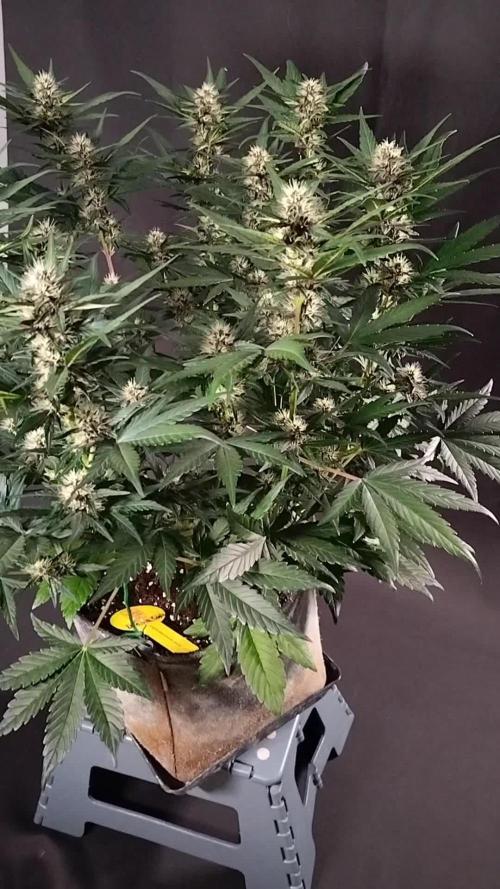
The bright appearance of the leaves and the slightly reddened stems indicate a nutrient deficit. In this case I would say nitrogen. But I have exaggerated a bit with my fertilizer use. Accordingly, I flushed the plants today. The measured pH was 4.8. I think I slightly salted the floor. Let's see if they recover.
Day 73: On the detail photo you can see very well how the stem turns slightly reddish and the stems on the leaves as well.
Day 74: The plants look better than a few days ago. They are now growing visibly from day to day. Timely flushing saved a lot, I hope.
Day 77: Last day of the first week of flower. It was a strange week. But they still grow.



@Nickeluring
Follow
They are growing well. Lemon Cherry Cookies flowers fast. Guava and Apricot have done some good stretching.Their lengths are now:
Lemon Cherry Cookies: 53 cm
Apricot: 54 cm
Guava: 40 cm
I have defoliated all a fair bit. LCC is starting to spread a lovely smell. She is also turning purple.
I have some problems with heat. Some days it's 34 degrees in the tent.


@MonsieurDeLaRuche
Follow
D83 F36: Hello everyone! I apologize for the quality of the photos, I really have a shitty phone! Apart from that everything is going well! The plants are growing very well, still no signs of deficiency.
I started cooling the box at night 2 days ago and the colors are already appearing!
I upgraded my LED panel to 600w F33, I was sure I was correct with 400 but I noticed that the flowers were not developing correctly
The smells are really incredible, more and more marked! I have a little crush on the code red #1, a smell of strawberry candy, cream and syrup.
the white runtz x Hollywood is very very special too! a very runtz smell, with a very marked smell of marinated ginger and lemongrass! very special, it's also the one that makes the biggest heads, incredible
I did a big defoliation (schwazzing) a few days ago and they recovered very well.
I moved the plants again, I'll put the locations below.
I will apply tco F40
in my flowering TCO, I put:
- kelp hydrolysate
- epsom salt
- bat guano
- mealworm guana
- castor bean shell ash
- palm ash
- vermicompost
- blackstrap molasses
- elycitor
-Yeasts Saccharomyces Cerevisiae
Bottom right: Papaya Bang Bang #1
Bottom middle: LA Vanilla cake #2
Bottom left: Papaya bang bang #2
middle right: cherry gar see ya #4 clone
middle: white runtz x Hollywood
middle left: code red #2
Top right: Code red #1
Top middle: B-45
Top left: LA Vanilla Cake #1


@adam_pawloski87
Follow
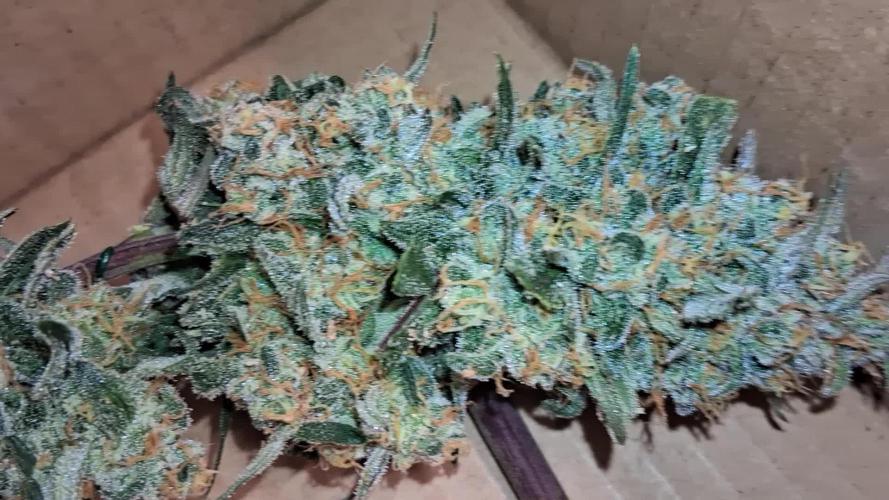
Over all was an amazing grow, super sticky dense nugs with smell of berries, highly recommended for everyone!!


@BlaKX
Follow
Die Ernte war relativ einfach da sie wenig Blätter ausgebildet hat und mehr Blüten Masse!
Viel länger hätte sie auch nicht mehr stehen lassen können da die Blüten Masse bei der dicke schlecht Belüftung in der mitte hat und mir das schimmel Risiko zu hoch ist .


@JohnnyBlaz3
Follow
Now that was a great week indeed. she has really spread out nicely being held down with some yoyos. will be transplanting the ladies in the next day or 2 here and then flower in about 10-14 days is my guess. They are a little smaller then usualy for this time, maybe a week behind but i think i messed up on the calibration schedule again damnit. I swear you can not calibreate you ph tester too much, do it every 3-4 weeks is my reccomendation. I think the ph maybe a little low, i'm not postive 100% on the issue but dont really matter, she is very healthy




@ChachoGreenCrown
Follow
Buena cosecha, nos costo un poco mantener la alimentación ya que con 1.6 Ec pedían más , les subimos algo en las últimas semanas y dio resultado. El panel.es muy potente les mete mucha carga lumínica.
Estas GELATO-K han ofrecido varios fenotipo con sabores muy dispares.. aún así todos bastante buenos.
Ha sido un buen aprendizaje. Gracias a todos los que pasan a visitar mi perfil. En breves volvemos con más! Saludos



@DreadyTheBready
Follow
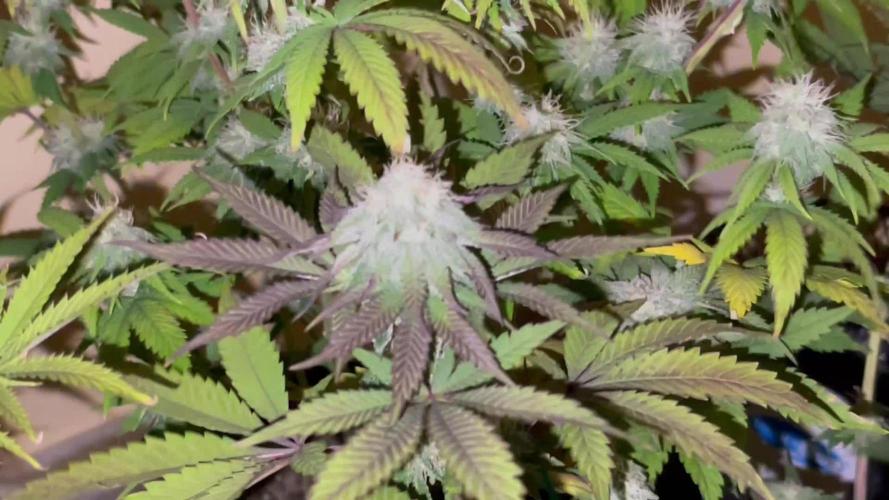
These girls have been screaming for a feeding for a while and the snow storm has my orders of Dr earth bloom & all purpose delayed. Overdid it with my attempt at lollipoping that girl in the front & I feel as though I’ve removed too many fan leaves in general across the board. Less is more sometimes. All 3 Cheese danish x chem rsv phenos are putting off odors that fill my house with the smell of sweet bread/ fresh pastries with a really gassy filling (like bear claws stuffed with chemicals & gas) & the Dirty bird tester is so frosty & stinky I’m sad it’s going to produce so little. It smells like a nailsalon, like straight up acetone & acrylic with sweet floral air freshener being sprayed on over it. Think flower scented nail polish remover. I also pollinated the sole Apple burger female before culling the male. I thought I had properly misted her before I reintroduced her to the tent but it seems some of the other plants in the tent are forming 1-2 seeds each. Avoidable mistake but a learning moment & I am not upset because I will have a chance to grow some interesting crosses.


@BB_UK
Follow
Took a while to get there but OMG little note quick! So I started her in a 1 litre pot and stuck her on top of a 1.5L Pepsi bottle with the top chopped off! And she yielded heavily for that amount of soil a whopping! 224.63 wet weight so can’t wait to see what she holds dry because them buds were like boulders! So dense! I will be back to document her dry weight and then a couple of weeks later with the update on the smoke report! But I know it’s going to be so loud! She has deep pungent aromas like gassy and sweet! She’s going to be a powerhouse! She was a little over as today a banana developed but that just tells me “well done” timing just right! She’s a little long for my taste of auto but I do suggest anyone grow her she’s amazing! In the end!


@Minuteman_Organics
Follow
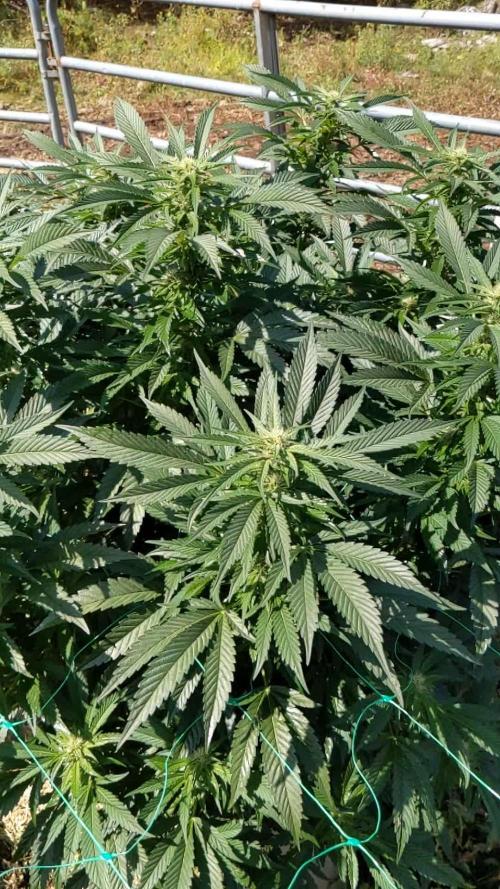
Another great week with perfect weather. Been spraying BT still about once every 5-7 days. Haven't seen any signs of caterpillar droppings so that's a plus. My bud releases are sticking around and fighting the good fight. Only pest I'm seeing that is starting to building up is grasshopper.


@eezeegrow
Follow
Babies are growing soooo fast. Very happy about this strain! Can't wait for a tasting session... 😉

shorts_status_processing


@Hydrus
Follow
all other plants go into sleep mode after around 18 hours of light, FastBerry still craves light.lol
can't wait to taste her, if i can curb my drug addiction, it may survive until the flowering phase.lol
ehhmm, who is an addict and who is doing it just for fun?haha


@Mr_nugs_lover_David
Follow
The all 5 seedlings are looking fantastic and very healthy, onenof them its a little too small I think but let's see what happens, stay tuned to see how this 5 dina cookies perform! 💛💚❤️🔝👨🌾
