


@Diips
Follow
The Sweet Cheese have been building up frost already and we are only in the start of bloom.
wicked citrus sour candy smell, i cant wait to taste it!
Orange Apricot Glue also starting to become frosty, but is taking is time to go to full bloom, gonna be big, when she for real starts blooming.
gave both plants a dose of Calmag, due to some rust spots appearingz


@syoung
Follow
So i started my nutrient feed for the 15 plants, while plant 16 just sticks to plain water or i might just give her some ph water this week. Also foliar sprayed the girls and they seem to be loving it




@Ultraviolet_
Follow
"You will know them by their fruits"
46-47 days from germination, she fills the canopy herself, and the apical dominance is broken.
It's not all about the amount of light, but the ratio too, as this will dictate growth through the ratio of phytohormones. In order for correct bud development, there needs to be a correct ratio of RGB. Different wavelengths have different penetration depths. When one grows using top-down lighting, only the entire canopy is limited to 2-3 layers of leaf, meaning there will only be correct bud development in those layers, regardless of getting 45DLI.
The biomass potential of a plant is linked to root mass. Generally, when a plant reaches its maximum biomass, you can help to chop off parts of the plant that are in less than efficient areas of the plant (low light). So that it can create new biomass growing towards the light.
Strength is the maximum potential, and power is the rate of conversion. You can have the biggest veg period of 18 weeks, and it means nothing, as soon as you start flower, the chronological clock starts ticking, the only metric that matters to bud size is how much energy you convert each cycle, not by how long it took you to build the framework.
Each leaf is like a satellite receiver attached to an antenna called a stem; each leaf removed lowers the energetic potential of conversion.
Not saying you cannot defoliate for a reason, only that you should have one, and at the right time. Don't defoliate 30+% on autoflowers or 4 weeks into the flower period and expect an increase in yields; it doesn't work like that. There is certainly room for dictating growth patterns and clearing out overcrowded nodes, but it needs to be done in veg because once that timer starts and buds start growing, it's all just energy conversion. Most grows I barely defoliate at all in a 4x4 because with side lighting, turning a 2d canopy penetration into a 3d, even lower buds are 90% the quality and density of top ones. The rate of photosynthesis and the ultimate density of lower buds aren't just about the sheer number of photons PPFD. The specific ratio of R:G:B dictates canopy penetration and drives different photochemical reactions. The Electron Transport Rate (ETR) measures the speed at which electrons are driven through Photosystem II (PSII) during photosynthesis. The ratio of Red, Green, and Blue (RGB) light heavily dictates this rate.
Plant leaves continuously perform cellular respiration regardless of the time of day, using energy and oxygen to fuel essential metabolic maintenance. If you over-defoliate, the remaining canopy may be unable to produce enough net sugars during the day to offset the constant respiratory demands of the plant. Must balance fixation with assimilation; there's no point in capturing 45 DLI if you only convert 20% every cycle due to an extreme lack of respiratory capacity to perform cellular oxidative phosphorylation.
A crinkle-cut French fry has more surface area. When it cooks, it has a higher capacity for energy transfer/conversion, which is what makes it slightly crispier than a regular straight-cut French fry when it comes out of the oven.
You can have a 4x4 canopy or a 4x4x4 canopy. Oversimplified, but you get the idea, yes, we know that side lights are not as effective at absorption from the sides or underneath, but it's not about DLI, it's never been just about efficiency, it's about the penetration ratios of RGB that drive ETR of/photosynthesis and trigger correct bud development. The size of each bud is its own ability to perform the ETR required for its own personal growth, and bud development is dictated by the ratio of RGB. It drives localized growth and acts as a regulatory switch for that development. Turgor pressure is another very important factor in understanding if you want big buds, for it is the "steam engine" that dictates the rate of bud expansion. Simply, never going to happen playing it safe metabolically at ambient 75F.
Because buds have less chlorophyll, they do not suffer from the same photosynthetic shutdown that over-exposed, light-stressed leaves do. They can soak up direct light energy to swell in density and size. Their tolerance to intense light is heavily limited by the temperature and humidity, but if you can control those temps and keep the rot away, buds have a much, much higher tolerance to high light than leaves. Beneficial to hammer with high light before trichomes appear. Balancing this with trichome maturity is key for rich terpene and flavonoid profiles, want it just right, somewhere in the middle, not too much, not too little. Find cannabis plants can defoliate themselves come harvest, given the right signals. Every last ounce of potential is recycled into buds by the plant itself (senseceance), given you can keep the level of conversion high enough to prompt a need to do so.
Get the canopy @ optimal PPFD range, 45-55DLI, then let the plant "stretch" the stems into a "PPFD range much higher, one that leaves don't like to grow in, but buds thrive in. What is optimal for a bud is different than what is optimal for a leaf photosynthetically. Genes provide the blueprint, but the environment dictates how, when, and if those genes are expressed. Must first signal the condition to increase the expression you want to exist through stress and response, cause and effect. A well-buffered CEC medium prevents extreme nutrient swings, allowing plants to maximize their dedicated genetic expression.
A plant is either genetically expressing "growing" or "recycling" genes based on its nutrient starvation level in the medium. Constantly toggling between "growing" and "recycling" hormonal states creates a futile cycle that wastes valuable metabolic energy. Plants rely on sophisticated biochemical switches to manage this trade-off, and prevent rapid fluctuations that disrupt that balance.
This energy inefficiency is a recognized biological challenge. Plants avoid this costly "flip-flopping" by using hierarchical master regulators (like the TOR and SnRK1 protein kinases) that act as strict molecular switches. These networks enforce cellular commitment to either growth or survival, preventing mixed signals.
This is something that was missing from previous grows.
Under nutrient-rich conditions, TOR promotes protein synthesis, cell division, and structural expansion.
Under starvation, TOR is inhibited and SnRK1 is activated. This triggers autophagy—where the plant breaks down old macromolecules and organelles to scavenge and reallocate essential nutrients to critical sinks.
"What's the point in flushing?"
The core idea behind a PK booster is to deliver a massive, concentrated surge of P&K exactly when buds are swelling in conjunction with a N starvation. Because these are short, targeted windows, the nutrients must be highly bioavailable so the plant can process them immediately. As soon as you go "organic," that's out the window. Much slower release, uncontrolled, very difficult to "spike". to cause the ratio that will initiate a response.
High-volume PK spikes rely strictly on the immediate uptake capabilities of mineral fertilisers. Making it far less efficient in organic/living soil setups.
When you use organic nutrients, it changes the dynamic with which the plant delivers and trades its nutrients; organic is always releasing new nutrients into the immediate EC. This prevents a lot of autophagic responses from occurring due to a constant stream of new nutrients into the immediate medium's EC. This can prevent nutrient starvation signalling.
PK boost is essentially just N starvation, triggering an autophagic response. Concentrated ratio of P&K while tapering off the Nitrogen base. To the plant, the sudden drop in Nitrogen registers as a severe environmental stressor—essentially, the beginning of starvation protocols. She aggressively strips nutrients and proteins from older leaves and vegetative structures and shuttles them directly to the developing flowers and fruit. Ta daaa. Call it a PK booster and sell it. Nothing to do with the P and K itself, it's the ratio immediately available in the medium triggering a nutrient recycling mechanism within the plant itself; all the "booster" sells is the trigger to the signal.
Very difficult to initiate a response when organic nutes are doing their thing. It takes 4x5x more water significantly to leach or wash ammonia out than it does nitrates. This alone will prevent flushing from having its normal impact.
I'll be manipulating the C:N ratio in the medium instead. One autophagic response has multiple potential signal triggers. Nutrient starvation is not an option. Well, it is, just it's going to be manipulated Nitrogen starvation through Excess Carbon, instead of starving the medium entirely(EC).


@PapaNugs
Follow
An exciting week again training this girl. Was spacing her out throughout the week using the low stress ties. As you can tell did a lot of defoliation and some minor lollipopping. Getting rid of the lower growth that'll be larf.
Watering every day right now. Added the AC Infinity self watering device to this girl. Because of that and how much she stretched, I'm a little close to my lights. I've spaced out the clips as far as I can to raise it up but I'm just outta room. It shouldn't negatively effect the plants with this much space but still not ideal. If I run into any issues I'll turn the lights down to 80%.
At 100% power
Here are the lights details:
Medic Grow Mini Sun-2 150W LED
Model: MN150-022
Spectrum mode: V1
Efficacy: 2.8 umol/J
Thanks for stopping by!
You can find the light on Grow Diaries:
https://growdiaries.com/grow-lights/medic-grow/mini-sun-2-150-watts
You can find the light on Medic Grow's website:
https://medicgrow.com/


shorts_status_processing


@CanadianFillmore
Follow
Start of week 8 (week 7 feed for the super Lemon Haze, she's going one extra week in total (9)) th blueberries are packing on serious weight, size and stickiness, while also smelling dank as hell! The Super Lemon Haze is still nutrient hungry, I continue to feed her extra each week and she's packing on serious weight and size now as she goes into the last 2 weeks of her grow. Overall the last week 7 was great and the plants are looking good, approaching the end.


@el_cultivito_colombia
Follow
Semana 1 (18/7/22 - 24/7/22)
Se preparo una solucion de Mills Start R:
- PPM : 100
-pH : 5.8
Se submergio cubos de roca de lana dentro de la soulcion.
Cada semilla que se germinara se paso a un cubo de roca de lana y se mantuvo sin luz.
Cuando las plantulas salian del cubo, se pasaron a otra bandeja de germinacion con domo de humedad bajo una luz T5.


@Cannajo
Follow
Plant continues to show growth , slow and steady but maybe it will bust with growth one day, but otherwise I noticed to leaves kind of twisting and curling and such not sure why I barely water them to keep from being overwatered because I noticed the soil does retain water a LOT plan to transplant them in coco coir 50/50 mix fox farm cream of the crop but till then they will remain in Fox farm ocean forest( maybe the soil is overloaded with nutes for this strain) 😬(and me amending not making it any better)


@STAYINGONMYMAINCBATORUNTWO
Follow
Was a bit worried in the first weeks of flower as the buds formed early but... i was left with the most densest of buds literally hard like arnie in his terminator days lol! I didn’t quite get the amount I expected but defiantly enough! Will defo grow again!
After time went on she developed so much frost literally like diamonds 💎
Resistance was very strong on this one too and drank so much more than the rest had to be smart with watering! I’m the end the result was as intended can’t wait for the next couple of weeks for the flavour to really come out but as of now really reminds me of skittles as you can taste the sweetness but also that cake 🍰 comes right through too and this is before a full cure. Happy growing buddies I say this one is a top one to grow!
Added a few photos since cure! These buds are dense and colorful and fruity! Tastes like it smells until you get a lovely bit of cake come through! Heaven!
High is full body literally one point I felt it in my feet rose to my chest!


@LonelyStonerz
Follow
What does this yellowing indicate? Maybe im overwatering? The soil has been hot for the entire grow but never yellowed on the bud leaves.. Decided to take off the budz hanging off the edges of the pot for samples 40g wet, 22g dried and now curing. smoke report coming soon.


@JOE_S_GARDEN
Follow
I saw a fly in the tent about 10 days ago. The larvae of these flies feed on the roots of the plant.
I first watered it with diluted hydrogen peroxide. then i flushed.
now the ladies are fine. 🤓🌱🤓👍👍


@715creeks
Follow
I'm not sure what to do with this plant now, it seems to be more leaf than bud and there doesn't seem to be any coming.
it's probably time to cut my losses with this one?

shorts_status_processing


@Ju_Bps
Follow
Hello growmies 👩🌾👨🌾🌲🌲,
👋 No more burning this week, using nutes again.
Buds start to bump and are more and more frosty ❄️❄️
💪 Will do a big defoliation next week ✂️✂️
💧 Give water each 2/3 day
2 l Water Only
2 l Water + Bloom + Green Sensation + Sugar Royal (3 + 1 + 1 ml/l)
PH @6
💡Mars Hydro - FC 3000
50% 13 cm
Mars Hydro Fan kit
Setting 8
Have a good week and see you next week 👋
Thanks community for follow, likes, comments, always a pleasure 👩🌾👨🌾❤️🌲
Mars Hydro - Smart FC3000 300W Samsung LM301B LED Grow Light💡💡
https://www.mars-hydro.com/fc-3000-samsung-lm301b-led-grow-light
Mars Hydro - 6 Inch Inline Fan And Carbon Filter Combo With Thermostat Controller 💨💨
https://www.mars-hydro.com/6-inch-inline-duct-fan-and-carbon-filter-combo-with-thermostat-controller
Fast Buds - Gorilla Cookies FF🌲🌲
https://2fast4buds.com/us/seeds/gorilla-cookies-fast-flowering


@Zurban_Poison
Follow
my ardent hello to everyone!))
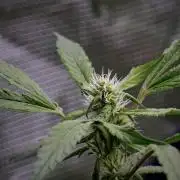
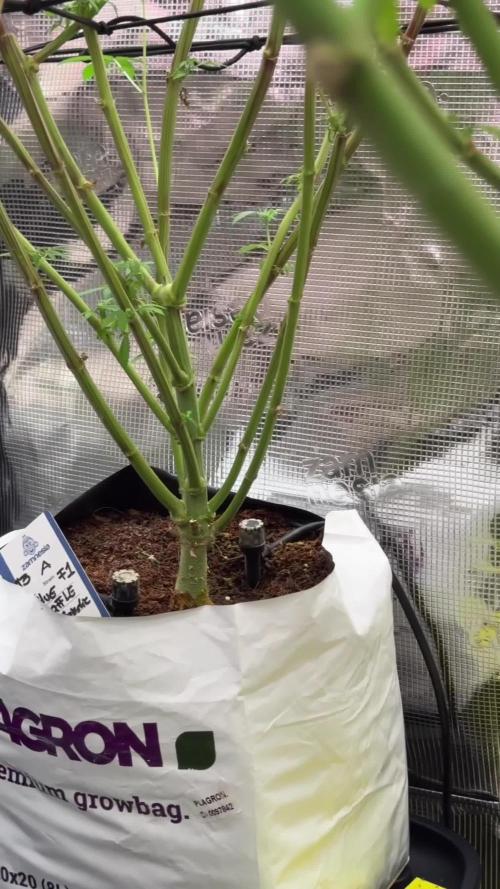
I generally have a weakness for color) and I am especially fascinated by varieties that change color. I really like this visual effect. I had to try to display it in the photo .. (a rather difficult task to convey the entire spectrum of color in the photo) the foxes began to change color not from the surface, but from the back side) and the color very slowly appears on the surface of the leaves .. I imagine what it will become in a few weeks ...



@DogDoctorOfficial
Follow
💙 Project Blue Tent – Week 11
💙 Blue Waffle F1 – Pheno B
🌸 Same Room. Same Conditions. Another Beautiful Expression.
Hello everyone, and welcome back to another chapter inside Project Blue Tent! 💙🌱
And once again...
I'm looking at these girls and thinking:
How can four plants look this similar?
😂💙
If you've been following Project Blue Tent, you'll know that we're documenting four individual plants from seed to harvest, each with her own dedicated diary.
All four share the same tent.
The same lighting.
The same irrigation.
The same reservoir.
The same nutrition.
The same environmental conditions.
The same cultivation philosophy.
And yet...
each one gets her own chapter.
Today it's time to give the spotlight to Blue Waffle F1 – Pheno B.
And honestly?
She's looking absolutely beautiful.
🌿 PHENO B – LET HER SHINE
Pheno B has reached approximately 145 cm and has developed a fantastic flowering structure.
At this stage, there isn't really a lot I want to change.
And that's actually a good thing.
The big work has already been done.
The long vegetative period gave us the structure.
The topping and training shaped the plant.
The first SCROG organized the canopy.
The aggressive flowering stretch forced us to rethink the vertical space.
The major defoliation opened the plant.
The second SCROG gave the flowering branches additional support.
The ventilation system was moved outside the tent.
The LEDs were raised.
The airflow was improved.
And now...
we're watching all of those decisions come together.
The plant is doing exactly what we wanted her to do.
Grow.
Flower.
Develop.
And increasingly...
FROST.
😂💙🌸
🌸 THE FROST IS GETTING SERIOUS
I have to say this because the photographs really don't need much explanation.
The frost levels are beautiful.
The flowers are becoming increasingly covered in trichomes, and every week the close-up photographs seem to reveal more.
This is the part of the grow where you start looking at the plants differently.
Earlier, we were looking at structure.
Now we're looking at flowers.
And those flowers are beginning to tell us their own story.
The density.
The development.
The resin production.
The structure.
The way the flowers are forming along the branches.
Everything is becoming much more interesting.
And Pheno B is absolutely shining.
💙🌸
🌿 THE TOPPING AND STRUCTURE – LOOK AT THAT OPENING
Another thing I'm really happy with this week is the structure created by the topping and training.
When you look closely at Pheno B, you can really see how the plant opened up.
The main structure divided beautifully.
The branches spread through the available space.
And the flowering sites are now positioned throughout that structure rather than all trying to occupy the exact same vertical point.
This is one of those things that can be difficult to appreciate when you're doing the training weeks earlier.
At the time, you're making cuts.
Moving branches.
Supporting growth.
Trying to imagine what the plant will eventually become.
Then several weeks later...
you look at the flowering plant and suddenly understand why you did it.
And that's exactly what I'm seeing now.
The structure is there.
The opening is there.
The flowering sites are there.
And the plant is filling that framework beautifully.
🕸️ THE X-CROSS – KEEPING THE STRUCTURE WORKING
The support system is also doing exactly what we wanted.
The second SCROG remains in place, helping organize and support the upper flowering structure.
And with the way we've arranged the support through the canopy, we've created that X-cross structure that helps distribute and organize the flowering branches.
The idea isn't to keep forcing the plant into a new shape.
That stage is behind us.
Now the structure simply needs to support what the plant has already built.
And looking at Pheno B...
I'd say it's doing a damn good job.
😂💙
The branches are supported.
The flowers have room.
The canopy is organized.
And we can actually see through the plant.
That's exactly where I want to be at this stage.
💡 UNDER-CANOPY LIGHTING – NOW PART OF THE SYSTEM
The LumiFlora under-canopy lighting is also now fully integrated into the room.
We're using the 150W full-spectrum LumiFlora fixtures underneath the canopy to provide supplemental light to the lower flowering structure.
The main LEDs continue doing the primary work from above.
The LumiFlora units are simply giving the lower portions of these very tall plants another source of light.
And with plants reaching approximately 145 cm, this makes a lot of sense to me.
The canopy is no longer a flat surface.
It's a three-dimensional structure.
There are upper flowers.
Middle flowers.
Lower flowers.
Interior branches.
And naturally, not all of those areas receive the same amount of light from above.
So instead of constantly removing more foliage to chase light penetration...
we're experimenting with bringing light into the lower part of the plant.
And now?
We watch.
That's the fun part.
😂💡🌸
🌿 TWO LIGHT SOURCES. ONE VERY LARGE CANOPY.
The interesting thing about this setup is that we're effectively looking at the plant from both directions.
The main fixtures illuminate from above.
The LumiFlora fixtures supplement from below.
And the plant sits right between those two lighting environments.
I'm particularly interested in seeing how the lower flowering sites continue developing as we move deeper into flowering.
We're not making any promises about what the additional lighting will achieve.
We're documenting it.
We're watching.
We're comparing.
And we're letting the plants tell us what happens.
That's the whole point of Project Blue Tent.
🔬 SAME ROOM – SAME CONDITIONS – DIFFERENT DIARY
And this brings me to something I've been thinking about a lot during this project.
People often use the word "genetics" when talking about individual plants.
And obviously, genetics are involved in every plant.
But I personally like using the word:
"Cultivar."
Why?
Because we're looking at cultivated plant varieties.
We're not simply talking about an abstract collection of genes.
We're talking about plants that have been selected, developed and cultivated as a particular variety.
And here we're working with Blue Waffle F1 cultivars.
So throughout these diaries, when I talk about Pheno A, Pheno B and the other girls as individual cultivars, that's what I'm referring to.
And honestly...
the uniformity we're seeing makes this distinction particularly interesting.
Because look at them.
😂💙
Same environment.
Same reservoir.
Same feeding.
Same irrigation.
Same lighting.
Same training philosophy.
And yet we're getting remarkably similar expressions.
That's one of the things that makes these F1 plants so fascinating to observe.
And if you already know all of this...
beautiful.
You know.
😂
If you didn't...
hopefully you learned something today.
And that's never a bad thing.
I love learning.
So I don't think there's ever too much useful information.
🌸 F1 UNIFORMITY – THEY REALLY DO LOOK LIKE SISTERS
This is probably one of the most impressive things about this whole project.
The plants are beginning to look almost like copies of one another.
Different individual plants.
Different diaries.
But under the same conditions...
the similarities are incredible.
Similar height.
Similar flowering structure.
Similar development.
Similar response to the training.
Similar response to the defoliation.
And now...
similar frost.
😂💙🌸
Of course, we're still documenting them individually because the subtle differences are exactly what become interesting over time.
Maybe those differences will become more obvious as flowering progresses.
Maybe one will develop a slightly different structure.
Maybe one will finish earlier.
Maybe one will produce a different flower shape.
Maybe the differences will become much more obvious closer to harvest.
Or maybe...
they'll continue looking like sisters all the way to the end.
That's what we're here to discover.
🌬️ AIRFLOW – THE SYSTEM IS WORKING
The airflow arrangement remains unchanged.
We've got movement above and below the canopy, keeping the air circulating throughout this large flowering structure.
And that's particularly important now that the canopy is so developed.
The previous defoliation opened the plant.
The additional airflow helps take advantage of that space.
The lower portion of the plant isn't being ignored.
And the under-canopy lighting is working inside that same environment.
Everything has a role.
Light.
Air.
Structure.
Irrigation.
Nutrition.
And observation.
Nothing needs to be dramatic.
It simply needs to work.
💧 THEY'RE DRINKING BEAUTIFULLY
Another thing I'm very happy with is how these girls are drinking.
They're consuming well.
The irrigation is keeping up.
And the plants are showing us that they're comfortable with the current setup.
The reservoir remains shared.
The feeding remains shared.
The irrigation remains shared.
And yet Pheno B continues developing beautifully.
This is exactly why having a consistent system is so valuable for this experiment.
When all four plants receive the same inputs, we get a much more interesting opportunity to observe how the individual cultivars respond.
⚗️ SAME RESERVOIR – SAME NUTRITION
The nutrition remains unchanged.
We're continuing with:
PLAGRON Hydro A — 2.2 ml/L
PLAGRON Hydro B — 2.2 ml/L
PLAGRON Hydro Roots — 1 ml/L
PLAGRON Power Buds — 1 ml/L
pH adjustment as required
No need to start changing things simply because another week has arrived.
The plants are happy.
They're drinking.
They're flowering.
They're producing frost.
So we continue.
Consistency is part of the experiment too.
And honestly...
when the plants look this good, I'm not interested in fixing something that isn't broken.
😂💙
🌸 THE PREVIOUS DEFOILATION IS NOW A DISTANT MEMORY
It's also interesting to look at Pheno B now and remember what she looked like immediately after the major defoliation.
At the time, there was a dramatic difference.
A lot of foliage had been removed.
The structure became much more open.
And then we had to wait.
That's the difficult part.
You make the decision.
You do the work.
And then...
you leave the plant alone.
Now we're seeing the result.
The plant has continued growing.
The flowers have developed.
The structure has filled out.
And the flowering sites are clearly visible.
The plant didn't need us to keep interfering.
She simply needed time.
🌿 SOMETIMES DOING NOTHING IS DOING SOMETHING
This is probably one of the biggest lessons from this stage of Project Blue Tent.
There's a temptation in cultivation to constantly do something.
Adjust something.
Move something.
Change something.
Feed something.
Cut something.
Measure something.
😂
But sometimes...
the plants don't need another intervention.
They need stability.
They need time.
They need the environment to remain consistent.
And they need us to have enough discipline to leave them alone.
That's where we are now.
The structure is built.
The support is installed.
The lighting is established.
The airflow is working.
The irrigation is working.
The nutrition is stable.
So...
let her do her thing.
🌸 CURRENT GROW CONDITIONS
🌸 Flowering: Week 11
📏 Height: approximately 145 cm
💡 Light schedule: 12/12
☀️ Day temperature: 28°C
🌙 Night temperature: 27°C
💧 Relative humidity: 63%
⚗️ pH: 6.01
⚡ EC: approximately 2.24 mS/cm
🌡️ Solution temperature: 24.9°C
🌱 Substrate temperature: 24°C
🌬️ CO₂: approximately 666 ppm
💦 Watering: approximately 1.6 L per plant / 24h
? Pot size: 8 L
NUTRIENT RECIPE
PLAGRON Hydro A — 2.2 ml/L
PLAGRON Hydro B — 2.2 ml/L
PLAGRON Hydro Roots — 1 ml/L
PLAGRON Power Buds — 1 ml/L
PLAGRON pH Plus — 0.03 ml/L
PLAGRON pH Minus — 0.03 ml/L
💡 UNDER-CANOPY LIGHTING
2 × LumiFlora 150W Full Spectrum
🌸 THE FLOWERS ARE TAKING OVER
This is where the story becomes really exciting.
For weeks, we were talking about the plant.
Now we're talking about the flowers.
And Pheno B is giving us plenty to talk about.
The flowering sites are developing beautifully throughout the structure.
The branches are carrying them well.
The frost is becoming increasingly obvious.
And the entire plant has that unmistakable look of a flowering plant entering a very interesting stage.
The close-up photographs really show it.
The trichomes are becoming more visible.
The flowers are becoming more defined.
And the whole plant is starting to sparkle.
💙🌸
🔭 WHAT I'M WATCHING NOW
At this point, my list is actually pretty simple.
I'm watching the flowers.
I'm watching the frost.
I'm watching the lower canopy under the LumiFlora lighting.
I'm watching the structure.
I'm watching how the second SCROG continues supporting the branches.
I'm watching how much the plants continue to drink.
And I'm watching the four cultivars develop under exactly the same conditions.
That's it.
No major intervention.
No unnecessary changes.
Just observation.
Because right now...
the plants are doing exactly what we want.
🌿 WHAT WILL THE FUTURE BRING?
And this is the part where I honestly don't know.
We have a beautiful flowering structure.
We have impressive uniformity.
We have increasing frost.
We have healthy development.
We have stable environmental conditions.
And we have four incredibly interesting F1 cultivars sharing the same environment.
But what happens next?
That's the exciting part.
Will the flowers continue stacking at this rate?
Will the frost become even heavier?
Will the subtle differences between the cultivars become more obvious?
Will the lower flowering sites respond noticeably to the supplemental lighting?
And what will Pheno B look like when she reaches maturity?
I have no idea.
😂💙
And I absolutely love that.
Because if we already knew the ending...
what would be the fun of documenting the journey?
💙 FINAL THOUGHTS – SAME ROOM, BEAUTIFUL RESULT
So...
Week 11.
Same tent.
Same room.
Same reservoir.
Same irrigation.
Same nutrition.
Same lighting from above.
Same environmental conditions.
And yet...
another beautiful individual story.
Blue Waffle F1 Pheno B is looking fantastic.
She's approximately 145 cm tall.
Her structure is beautifully opened from the topping and training.
The flowering branches are supported by the second SCROG.
The canopy is receiving airflow from above and below.
The LumiFlora under-canopy lighting is now helping illuminate the lower flowering structure.
She's drinking beautifully.
She's flowering beautifully.
And the frost...
Oh my God.
😂💙🌸
The frost is becoming ridiculous.
And that's exactly the kind of problem I like having.
😂
The most interesting part for me, though, is seeing how similar these F1 cultivars are behaving.
Four individual plants.
One controlled environment.
And remarkably consistent results.
That doesn't mean every plant will finish identically.
It doesn't mean there aren't individual differences.
That's exactly why we're documenting them separately.
But right now...
they're giving us a fascinating look at just how uniform these plants can be under consistent conditions.
And that's something I want to keep watching.
We're not going to force the story.
We're not going to chase numbers.
We're not going to keep changing things just so we have something to write about.
We're going to let the plants write the next chapter.
And Pheno B?
She's writing a beautiful one.
💙🌸🌿
The structure is ready.
The support is ready.
The lighting is ready.
The airflow is ready.
The irrigation is ready.
The nutrition is ready.
Now...
we wait.
We watch.
We learn.
And we enjoy the show.
Let's see what the future has waiting for this beautiful girl.
Because if she keeps going like this...
I have a feeling we're going to have some very special flowers to photograph.
😂💙🌸
🙏 A HUGE THANK YOU
A huge thank you once again to Zamnesia for making Project Blue Tent possible and for giving us the opportunity to explore these beautiful Blue Waffle F1 cultivars individually.
Thank you to PLAGRON for the Hydro nutrient line supporting these girls throughout this vigorous flowering cycle.
A massive thank you to Mars Hydro for the irrigation and drainage system that continues keeping this entire ecosystem supplied and running beautifully.
Thank you to Zamnesia for the Phytonaut LED lighting, the curved scissors and the clip fans that have become such important parts of this project.
And a huge thank you to LumiFlora for the 150W full-spectrum under-canopy lighting that we're now using to explore supplemental lighting throughout this very large flowering structure.
And of course...
thank you to GrowDiaries for giving us the platform to document every part of this journey.
The good.
The unexpected.
The experiments.
The mistakes.
The lessons.
And now...
the frost.
😂💙🌸
Most importantly, thank you to everyone following Project Blue Tent.
Four individual cultivars.
One room.
One environment.
One reservoir.
One cultivation philosophy.
And four girls showing us just how beautifully consistent these F1 plants can be.
But we're not at the finish line yet.
There's still a lot of flower development ahead.
There's still a lot of frost to watch.
There's still a lot to learn.
And Pheno B has plenty more story left to tell.
Until next week...
Same room.
Same conditions.
Same beautiful girl.
More flowers.
More frost.
More observation.
And hopefully...
even more reasons to smile when we open that tent.
💙🌸🌿
Growers Love, happy growing, and take care everyone! 🌱💙

shorts_status_processing


@Wicked_Stix
Follow
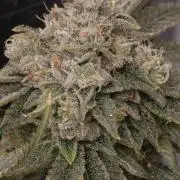
My first seed didn't make it due to technical difficulties, so I popped another to try to maximize the output from the mini machine. She is growing well at day 7. Seeing some leaf curling from her adjusting to the environment, but she is still showing steady growth. She is a week behind the 2 plants that were originally germinated. She will be topped around day 10 or 12 as soon as the third node comes up enough to pinch off.
I started this setup to compete in the solo cup challenge, but I needed something that will be minimal maintainence and doesn't require hand watering. So this is what I ended up with. I will not be entering since I know it will bring controversy, but I am going to follow the rules and treat this grow as if I am competing.
I didn't want to use regular solo cups because last time I had a lot of algae growing in the root zone when I harvested. I opted to use a black light proof cup. These cups were 27 oz originally so I filled them with 16 oz of water, marked the level, then cut them down to 16 oz. I set the drain pipes about an inch from the bottom so they have a little reserve if I have pump or power issues. I know people will see the drains as a way for roots to grow out of the cup but in reality I have to keep the entire pipe free of roots or it will clog and overflow. So I am actually losing a little volume due to this.
I filled the bottom inch or so of the cups with river gravel to stop the perlite from washing into the reservoir.
I am running a 5 gallon reservoir with a small air pump and the plants will be getting irrigated 24 hours a day from an aquarium power head pump. I set the system up to be totally self contained and easily portable. It was all built from things I had laying around other than 97¢ for the cups. I will be keeping the feed simple as always feeding maxigro and maxibloom with a couple flower boosters.


@420DeepGrow
Follow
📆 Semana 9
El engorde entra en una fase más marcada, con cogollos que ganan peso y compactación día a día, apretando bien las flores y definiendo aún más las colas principales. La estructura se mantiene estable, sosteniendo sin problema la carga que ya empieza a ser notable.
La producción de resina se dispara, formando una capa más densa y visible, mientras los aromas se intensifican y se vuelven más penetrantes, dejando entrever el perfil final de cada genética.
Dejo solo Master Grow y Bloom Booster para que se centre en la compactacion de los cogollos
Seguimos creciendo fuerte 💪!