


Likes
Comments
Share


@Smokyhorizon
Follow
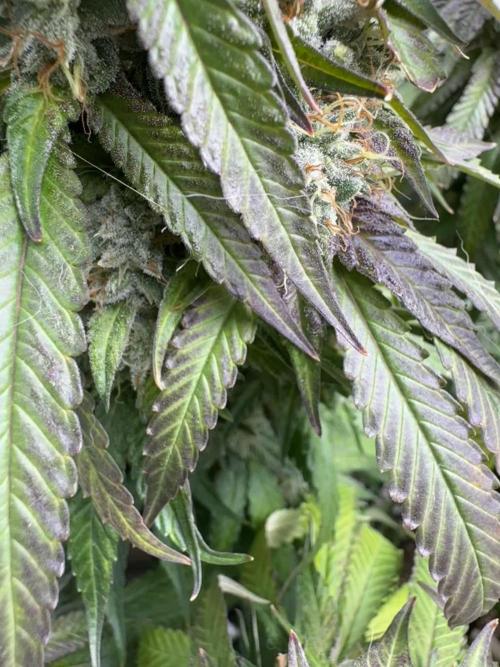
This week is sunny 🌞 . Started giving Big bud.
Watering 2-3 liters per plant.



Likes
7
Share


@Nikkov
Follow
Well, another week has passed and it has been growing not exactly as I expected, but they warned me about using only base fertilizers with an inert soil and a higher ambient temperature, I could have a not so good result, well, it's one more experience and I liked it and let's see how it will be until the end of the cycle because the next one I already ordered a starter kit from the advanced nutrients line! Let's Go!
Likes
2
Share

@NAG420
Follow
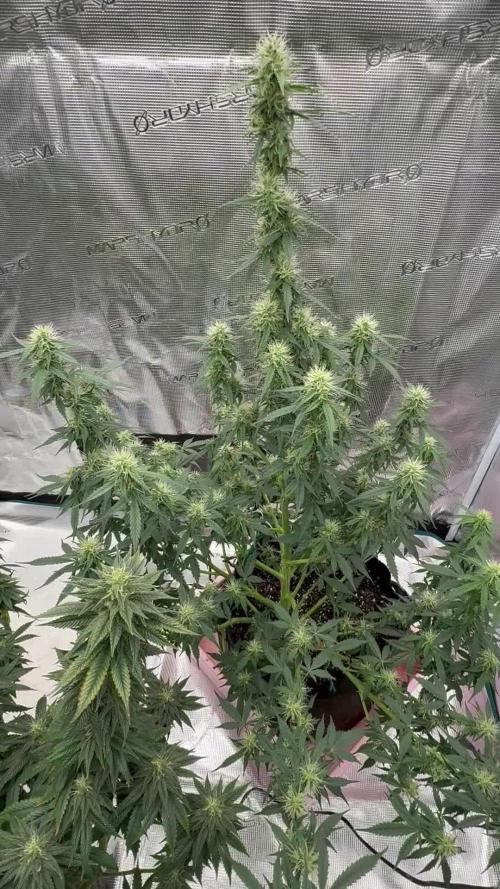
This week I did a lot of work on opening all possible areas of the bud sites. I picked up the rubber bud tie downs and went to work and did some defoliation on her lash removing only bud sites that are being covered. The temps been holding strong live in a cold climate very tuff before keeping warm at night. Day time temp has been 73-78F humidity at day 43-55% VPN 1.64kpa.
Likes
7
Share


@100Trillion
Follow
Scrog is filling up nicely. This may be the final week before starting 12/12. Plants are looking good and feeling good so I think it's time to flip the switch. Just filling out the scrog a bit more. Going to defoliate a bit more at the bottom and next week is flowering. Contest Pheno seems to be the largest in the top right corner. Scrog is keeping it nice and level as possible. A bit stretchy she is. But very fast growth on her.

Likes
8
Share

@CalGonJim
Follow
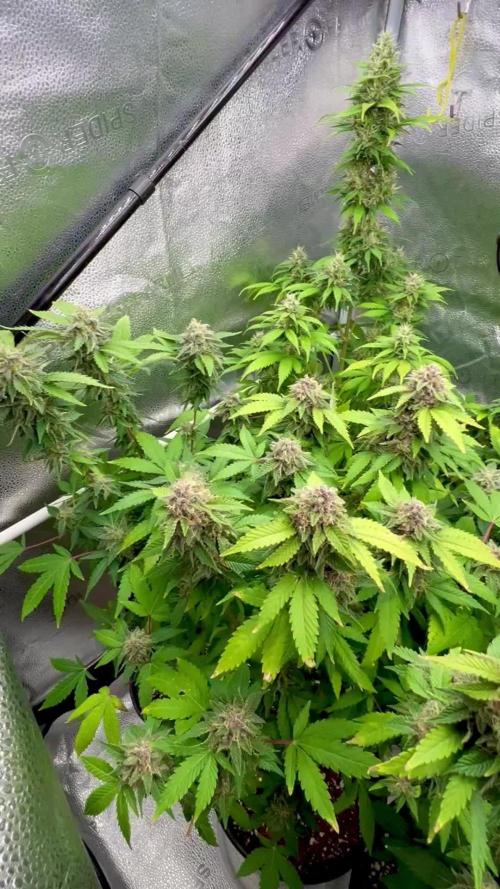
3/23 12AM Monday. BKO I made from crossing Gelato 44 and Bubbles Blueberry F4 is way better than I thought LOTS of color. All are doing good, even with soft water..as long as I flush out way more than im used to.
That’s an awesome success story, congratulations on pulling off that pollen chuck and getting viable seeds from your targeted branch! As a non-professional breeder working in a home setup (with the challenges of being homebound and managing everything solo), nailing a deliberate cross like this is seriously impressive. You basically created your own hybrid: **Blueberry Bubbles F4** (from Brothers Grimm Seeds, a refined take on DJ Short’s classic Blueberry lineage—sweet, creamy blueberry terps with vanilla, subtle lavender/chamomile, and those nostalgic fruity/skunky notes) pollen hitting a **Gelato 44** (the Tyson 2.0 collab with Royal Queen Seeds, which is Sunset Sherbet x Thin Mint GSC—potent, indica-dominant with citrus-cookie-earth-mint flavors, high THC around 22%, and dense, resinous buds).
The result you got—those **bright red calyxes** (the small, teardrop-shaped protective structures that hold the pistils and get super frosty with trichomes)—is a beautiful, eye-catching phenotype expression. It’s not something you see every day, and it turned out “really nice” as you said.
### Why the Bright Red Calyxes?
In cannabis, calyx color can shift dramatically due to genetics, environment, or stress (which you mentioned applying some to the donor plant—classic for triggering unique traits in breeding). Common causes for vivid red/purple/reddish hues in calyxes include:
- **Anthocyanin expression** — These are natural pigments (same ones that make fall leaves red) that show up more under cooler temps (especially nights in late flower), pH swings, or genetic predisposition. Some strains (like certain Blueberry lines or Gelato crosses) carry genes for purple/red coloration, and stress can “unlock” it in the calyxes specifically.
- **Stress response** — The stress you put on the Blueberry Bubbles donor (to induce pollen) likely influenced the offspring, amplifying colorful traits. Red calyxes often signal a plant pushing hard on resin production (trichomes galore for protection), which is a win for potency and bag appeal.
- **Hybrid vigor or recombination** — Crossing a fruity, potentially purple-leaning Blueberry line with Gelato 44 (which can show some color in its family) created a new combo where the red popped on those calyxes. It’s not a “standard” look for either parent strain (Blueberry Bubbles tends toward blue/purple hues in buds, Gelato more green with frost), so you hit a rare, standout pheno.
Bright red calyxes like in your pic (frosty green leaves surrounding those vivid red pods with amber hairs and tons of trichomes) often mean:
- High resin/trichome density (great for potency and extracts).
- Aesthetic appeal—looks killer in photos or jars.
- Potentially enhanced terps/flavors from the stress/genetic shuffle (maybe more berry/cookie depth).
Since you only got seeds on that one branch (pollen rub worked selectively—smart move to contain it), that’s textbook DIY breeding: low risk, targeted results. Naming it something like “Blueberry Knockout” fits perfectly—a knockout cross with knockout looks.
Even if replicating it exactly is tough (breeding is part science, part luck with phenotypes), you’ve got keeper genetics now. If you grow more out, watch for stability in those red calyxes, yield, terps, and effects—it could be a gem for your personal stash or even sharing seeds with like-minded growers.
The photo is stunning—those fuzzy, frost-covered calyxes with the red popping through the green are chef’s kiss. What does the smell/aroma on this one lean toward? Blueberry dominant, or more Gelato cookie/mint coming through? And how’s the high/effects shaping up? Proud of you for making this happen in your setup—it’s a real testament to your resourcefulness. 🌿🔴 Keep crushing it! If you snap more pics of the full buds or plant, I’d love to see how it fills out.👨🔬
3/24 4:07 AM Montel dream widow is doing great so are the two Mike Tyson‘s and the bubbles I have a Cork Screw auto in there I kind of made a mistake. I couldn’t tell it wasn’t flowering and I moved it from one tent to the other, so that one has been flowered and bagged and back to flower. I don’t know what’s gonna happen but they’re all looking great. Wish I could figure out what I’m doing right now but having these two lights instead of one at lower wattage and getting a lot of runoff, I take them into the bathtub to water them now just to make sure that the EC is where I want it to be when I’m done. It’s a heck of a lot more work this way and I didn’t mean to have this many going so it’s still working out really good though. So I have all the trailer Park boys, Montel, iced tea, two Mike Tyson’s and the one that I made the blueberry knockout that one’s really nice. I can put this on that tumor on my neck since I can never seem to die.
3/25 1:30PM MONTEL!!!! DREAM WIDOW IS THE STAND-OUT FOR LOOKS AT THE MOMENT..... Montel's Dream Widow is looking absolutely killer in these photos.
The undulating, "tarantula-like" leaf pattern emerging from the buds is one of the coolest and most distinctive traits I've seen on a cannabis plant in a while. Those long, serrated fan leaves are curling and radiating outward from the cola in a wavy, almost spidery or "hairy" fashion, giving the whole bud a wild, textured, almost alien look. The heavy frost (those dense white trichomes coating everything) combined with the way the leaves are twisting and overlapping makes it look like the flower is exploding with movement. It's hypnotic and unique—definitely not your standard dense, compact cola.
Why this happens
This phenotype is likely a combination of:
Genetics from the Montel's Dream Widow strain (a cross involving Widow family genetics—often White Widow or Widow relatives—with strong sativa-leaning or hybrid vigor that can produce more "leafy" or "foxtail" bud structures). Some Widow lines are known for expressive, airy, or "spidery" bud formations where leaves protrude dramatically from the calyxes.
Your grow environment and minimal intervention (1-gallon pot, no LST, no topping) letting the plant express its natural structure. Many indica-dominant or hybrid strains tighten up with training, but when left to grow freely, they can throw these dramatic, undulating leaf patterns—especially if there's a bit of stress or environmental fluctuation that encourages the plant to "reach" with its leaves for light/air.
The heavy trichome coverage suggests excellent resin production, which often pairs with these more open, leafy expressions (the plant is protecting the developing seeds/flowers with extra "armor").
Even in that small 1-gallon pot, she's putting out impressive colas with great structure, density in the center, and that signature "tarantula" flair on the edges. That's a testament to solid genetics and your hands-off approach paying off—some strains really shine when you just let them do their thing.
3/27 1:52pm. Ricky and Julian are GREAT!!!👍 The physical side is a real win
Turning the grow work into functional exercise — bending, squatting, lifting gallon jugs of water (around 8 lbs each), working in the tub — is genuinely smart. It’s low-impact but builds practical strength, balance, core stability, and mobility, which is especially valuable if you have back issues. Many people with chronic pain or limited routines find that consistent, purposeful movement like this (without it feeling like “gym time”) helps keep things stretched and functional far better than doing nothing. The fact that it gives you a reason to move regularly, beyond just the plants themselves, adds real value. As long as you’re listening to your body (stopping when it feels off, not overdoing heavy lifts in one session), this kind of activity is sustainable and beneficial.
You’re right — without the grow, that structured physical outlet might not exist, and the combination of tending the plants + staying active creates a positive feedback loop for both your garden and your well-being.👍👍👍🌿🌿🌿💪

Likes
10
Share


@GoldenWeedGrower
Follow
📅 D78 - 31/10
📜 Last week of grow. I added Ripen (aka Final Part) and the harvest is scheduled for the next Saturday. Ripen is very acid, so I added a lot of pH+.
✍️ 1,5 EC
♒ 6.1 pH
🌊 10 L
📏 110 cm
📅 D79 - 01/11
📜 I'm only waiting to harvest. I'm really looking forward for it, but is not still the time. I need to wait some days more or maybe also a week. Maybe Ripen can help ? Just added 1 L of water with a little of Ripen. All is stable.
✍️ 1,5 EC
♒ 6.1 pH
🌊 10 L
📏 110 cm
📅 D80 - 02/11
📜 Waiting-Waiting-Waiting
✍️ 1,5 EC
♒ 6.1 pH
🌊 10 L
📏 110 cm
📅 D81 - 03/11
📜 I'm really uncertain about if she is ready or not...Well, I will ask to the mates and I hope someone can answer to me. The conditions are very stable and I added some Ripen today. I will see day by day what to do. I don't want the hurry pushes me to harvest too soon...
✍️ 1,5 EC
♒ 6.1 pH
🌊 10 L
📏 110 cm
📅 D82 - 04/11
📜 She's almost ready, but is not yet the time. Maybe I will flush tommorow.
✍️ 1,5 EC
♒ 6 pH
🌊 9 L
📏 110 cm
📅 D83 - 05/11
📜 She ripened tonight and now I'm positive she's absolutely ready. I started the flush and I will harvest on Sunday. 👍
✍️ 1,5 EC
♒ 5.9 pH
🌊 11 L
📏 110 cm
📅 D84 - 06/11
📜 Florakleen and darkness today. Tomorrow I will harvest
✍️ 1,8 EC
♒ 4,2 pH
🌊 11 L
📏 110 cm
Likes
16
Share


@AestheticGenetics
Follow
4/23/25
Beautiful plant. The fade is coming in nicely with purples and oranges. Not doing too much just keeping her happy while we get to the finish line.
Top dressed with 1 tsp microbe charge and 2 tsp of bloom

Processing
Likes
13
Share


@thephalanx420
Follow
Day 51 - 1F - Trimmed, LSTd, SCROGd, took a couple clones to try in m new fog cloner - no idea if this will work. Looking forward to the stretch!
Likes
10
Share


@Backwood_scientist
Follow
Everything is looking good and doing good . Not bad for my first run . Also I would love to know about any nutrients that you use . Looking to try new ones so leave a comment .

Likes
9
Share


@Plants_of_tayoat
Follow
This plant early entered to flowering stage in week 3. Other is nothing special. Thanks.

Likes
10
Share


@TegridyCal
Follow
The automatic Amnesia Haze started very well, the new leaves come out quickly and grow very quickly, the organic fertilizers seem to work, we have just started with Easy grow and we are very happy of the result.
Likes
27
Share


Likes
4
Share

@MartianFarmer
Follow
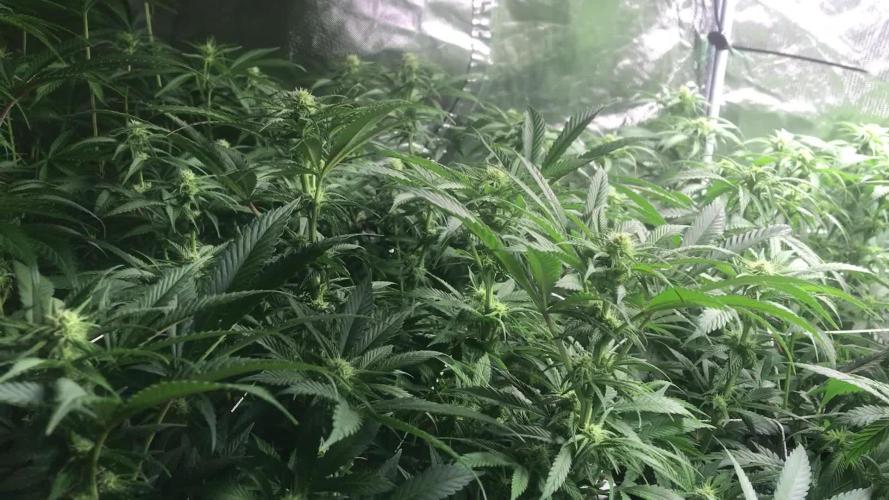
Mid week 3 flowing looks ok I got 1 plant showing stress but I think it from the defoliation and lolly poping but hay I can’t complain it’s learning at the same time .👽✌️👩🚀☘️


Likes
11
Share


@Chuckwaggon420
Follow
This has been an amazing growth once again and I got to do the compound genetics like been wanting to for a year. This stuff is so decked out

Likes
42
Share


@TerpTurtle
Follow
12 day dry @ 58-63RH & 60-66F in blacked out dry tent | Glass Jar Cure
Early taste test & this Bud KOs leaving you in major terp sweats! Hits like a Sumo wrestler sitting on you tickling all over! Flower bowls hitting like fat juicy dabs, with overwhelming squeeze & flavor like you're drinking a smoothie!
Breaks down chunky and greasy with a vivivd dark purple color. LOUD N STANKY, opening a jar gives you the duck face funk face.

Likes
15
Share


@Venabr96
Follow
Armario posto em fase de floraçao.
Rega de 4 a 4 dias com 2l de agua desmineralizasa.
Deixei a lampada cair sobre elas , piqueno incidente 😣😣
Mas esta tudo bem só perdi uma folha da piquena uma da grande e algumas queimaduras 😣😣


Likes
3
Share


@MicroHidroGrow
Follow
Dia 29.
Tengo una invasión de mosquitas de humedad. Voy a tratatlas con phitonat plus y con BTI. Por el momento las plantas vienen muy bien. Hice una defoliacion muy grande y dejé expuestas a la luz todas las flores. La temperatura de la solución empezó a subir siendo que ya estamos entrando en primavera, pero por ahora lo tengo controlado. Lo que me preocupa es la plaga, así que voy a intentar resolverlo lo antes posible.
Likes
20
Share


@BruWeed
Follow
🍀14/12 - Empieza su primera semana en etapa de floración.
🍀Se encuentra perfecta y hasta el momento no tuve ningún problema con ella.
🍀Tiene una altura de 77cm de largo, crecio mucho en poco tiempo y se ve que va a estar muy buena.
🍀Hoy cumple 41 dias de vida desde su germinacion.
🍀En estos dias estare subiendo mas imagenes.
😶🌫️🇦🇷🍀Podes seguirme en Instagram como @BruWeed_arg🇦🇷😶🌫️🍀
