The Grow Awards 2026 🏆
Likes
Comments
Share
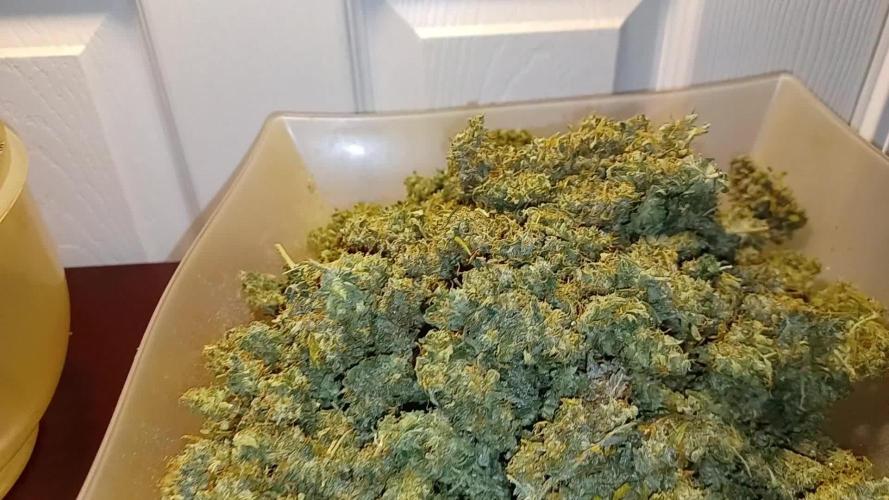
my dry and cure style is this: 4 days of hanging upside down to get water activity lower to around 0.6 in 50% humidity and 26 C temp (i know its a little high but we are in a hot summer right now and i cant get it lower even with air conditioner) and then after 4 days of drying i remove leaves and stalks, trim buds and move them to jar for the rest of their life :D . and in the first 4 days of curing i open the jar door and let hem get some fresh air in the jar for about 5 minutes and close the jar door again, after 4 days of curing like that buds are smokable but they will get better as they getting cured about 1 month. buds are one of the hardest as fucking rocks type of buds! very dense , compact , sticky , smelly , amazing at every aspect growing stage was 60 days and flowering stage was 70 days total (harvested tops at day 63th) the total weight of dry buds was : top buds 174 G + lower buds 55 G = 229 G my overview of strain with details: the seeds: unfortunately i only got 1 seed cracked out of 5 so i will not know how much this genetic can get different but at least i got the chance to grow once of this wonderful strain the plant : in every stage you can ensure that you are dealing with a high level plant , she will get big so you have to control her height LST and SCROG highly recommended , will grow very well with tick stalks and big fan leaves , has good resistance for stress and will respond very well to stress trainings , she really has gorilla power in herself , fresh buds on plant : buds are very compact and dense even from start , fresh blossoms smells like pineapple and mango , 2 different shades of sweet smells like you hold 2 junks of pineapple and mango in your hand and you smell them together, she is a trichome and resin factory , very very sticky , very oily , strong smell dried buds: very compact and dense , hard as rocks , has dark colors with purple hues inside it , it smells sweet smoke : very smooth and sweet like lollipop , pineapple , mango like , after 2 minutes it'll kick in and you'll get higher and higher with every breath , has a strange and especial high mind high mostly

Likes
56
Share
@nonick123
Follow
Día 22 (11/11) Las plantas muestran pequeños puntos / zonas marrones pero... Don't panic! It's Organic! Dejaré que el proceso del Super Soil de BioTabs siga su camino tal y como indica el manual de BioTabs! Ajusto LST a CBD Auto 20:1 #2 aplicando una nueva atadura a la punta, que ya se estiraba hacia arriba 24 horas después! 💥😍 La idea es NO aplicar más LST y dejarla que crezca de forma natural a partir de ahora Tal vez solo ir recolocando las ramas laterales para que no crezcan demasiado juntas, porque no quiero estresarla y que ralentice su crecimiento... Día 23 (12/11) Subo a DLI 40 Pequeños ajustes de LST en las ramas laterales a CBD Auto 20:1 #2 para crear una estructura homogenea No voy a volver a aplicar LST a la punta, voy a dejar que crezca de forma "natural" a partir de ahora El resto de plantas están creciendo muy bien! Riego con 750 ml H2O RO a CBD Auto 20:1 #2. El resto no necesitan riego Día 24 (13/11) Riego todas las plantas con 750 ml H2O RO CBD Auto 20:1 #2 se muestra sedienta y vuelve a necesitar 750 ml de H20 RO tras solo 24 horas desde el último riego! Día 25 (14/11) Pequeños ajustes de LST en CBD Auto 20:1 #2 Parece que los puntos / zonas marrones se aceleran en todas las plantas excepto en CBD Auto 20:1 #1... Día 26 (15/11) LSD-25 Auto & OG Kush Auto empiezan a mostrar muchas zonas marrones y las hojas inferiores se empiezan a retorcer... Día 27 (16/11) Riego con 1 litro de H2O RO El area técnica de BioTabs me confirma que lo que muestra las plantas es una quema de nutrientes... 😢 Su recomendación es regar SÓLO con agua la siguiente semana (hasta el día 35 por lo menos) Día 28 (17/11) LSD-25 Auto & OG Kush Auto se muestran muy afectadas por la quema de nutrientes... Una pena porque estaban creciendo muy bien hasta ahora... Después de hablar con BioTabs, parece que el error ha sido aplicar el Boom Boom Spray demasiado temprano (en día 21) cuando las plantas tenían suficiente nutrientes y acababa de añadir la 2ª (y ultima) Tab al sustrato... Tengo que seguir aprendiendo que con el SuperSoil: MENOS ES MÁS, MENOS ES MÁS! A seguir regando SOLO con agua los próximos días... CBD Auto 20:1 #2 todavia no muestra el sexo (pre-flores)... es algo extraño... 💦Nutrients by Bio Tabs - www.biotabs.nl/en/ 🌱Substrate PRO-MIX HP BACILLUS + MYCORRHIZAE - www.pthorticulture.com/en-us/products/pro-mix-hp-biofungicide-plus-mycorrhizae "GDBT420" 15% DISCOUNT code for the BIOTABS Webshop https://biotabs.nl/en/shop/
Likes
5
Share
Harvested after week 8. Very pleased with this strain easy to grow and oh boy did she turn out massive. Big huge soda can sized buds all over.
Likes
3
Share
the week went we'll they grow by the day. I fed them sillica , Alaska fertilizer and molasses. there not showing many hair yet one is a little. I topped one of the plants the larger one. the gentics are top notice .i think there vigger is amazing. lots of structure should yield well
Likes
8
Share
Trichomes terps & buds, getting better and better, watch the video I made for you guys...much love & stay blessed
Likes
28
Share
First of all, I’d like to give a HUGE THANK YOU to Fast Buds for allowing me the opportunity to grow their new strains! I'm starting out with CC this week and will start the CA in a couple of weeks. There is some data out there on the CC strain that seems very legit to me. If that info is correct one of the C's stands for Cookies. I really love the Girl Scout Cookies I grew from Fast Buds, if CC is related to GSC she should be amazing! 👍 Dropped the seed in the soil today, I'll update once she pops. She's front-center in the group pics. My Perpetual Harvest strategy…. Originally my plan was to start 2 seeds each month, but had some seeds from one breeder that did not germinate early in my rotation. Ultimately, this caused single seeds to pop and messed up my 2 at a time plans. But, that seemed to work out OK, because now I think starting one seed every 3 weeks is a better strategy. This should provide me with 4-5 plants at a time, instead of 6. However… Since Fast Buds has been kind enough to allow me to preview their new CC and CA strains I am now going to be starting a new seed every 2 weeks. This should allow me to get all of the plants I want to grow this season in the perpetual harvest rotation. I need to shut down over the summer because my tent is currently in the attic. Plants get fed once weekly on weekends. Seedlings get water only. Plants in vegetation get water and Recharge. Flowering plants get water, Recharge or Big Bloom (Fox Farm). Feeding is done using 2 gallon watering can. Any additional waterings during the week are given on an as needed basis per plant. I lift the plants to help determine which plants are more dry (lighter) and provide water any plants via water bottles and watering spikes. I give each pot a quarter turn every day in an effort to make sure the plants get equal lighting from all sides. I rotate the plant in place by turning the pot 90 degrees (I am not rearranging the layout of the plants in the tent on a daily basis). The soil is an ‘organic super soil’ I mixed myself using organic top soil, organic potting soil, organic compost, organic peat moss, organic perlite, organic vermiculite, lime, epsom salt, expanded clay pellets and Jobe’s organic fast start. I am also recycling my soil and water with Recharge when using recycled soil. For plant training I have tried a variety of things, but my plans now are to do LST bending only, no HST anymore. I may decide to go back to HST again in the future, but I’m curious to compare LST training only to see how that goes. Around 3 week I'll do a FIM cut/pinch once there are 4-5 nodes established. And some defoliation around the 3rd week of flowering. I have been doing HST bending and having good results, but think the HST may be causing the plants to take longer to harvest. I hope LST only will help increase harvests while getting me to harvest sooner. Setup: 1- Grow Tent 24”x48”x72” 2- Viparspectra 300W LED’s (1-V300 & 1-R300) 1- Hanging 100w CFL (26w actual) 1- Carbon Filter w/ 190cfm Fan & 4” ducts 1- 6” clip-on fan 1- 700w electric heater - oil filled radiator (in front of air intake behind tent)
Likes
22
Share
@Coopmc
Follow
Week 7 20% off Royal Seeds with code GROWERS20
Likes
21
Share
@w33dhawk
Follow
Moin ihr growmies, ich hatte diese Woche kaum Zeit was zu machen ausser ein wenig lst und Blätter entfernen Bilder hab ich auch kaum Zeit für gehabt bin aber zufrieden mit dem Fortschritt ich denke mal noch so 2 bis 3 Wochen dann stelle ich auf 12/12 um........
Likes
7
Share
@NewMan
Follow
Došel bud candy , další uz dávat nebudu a dojedu to bez něj. Vlhkost nahoře 55% ale vysoké VPD takže to bude chtít nejspíš další hračku zvlhčovačku.Jinak je to snad cajk..
Likes
32
Share
Engordando y quedándose muy pegajosa
Likes
55
Share
2nd net is up. Early bud formations are promising. holding up to the extremes pretty well, some leaves taking minor damage, but overall, she is holding up, gave her 1 night at 50F see how she would react, stressful. Not advised as it messes with her metabolism, but I want to see if it triggers any anthocyanin response. Love to see her purp up but no signs yet. Remember, For every molecule of glucose produced during photosynthesis, a plant needs to split six molecules of water. This process provides the hydrogen needed for synthesizing glucose and other organic compounds, while oxygen is released as a byproduct. Homework. If Rubisco activity is impaired and it cannot properly function or regenerate its substrate, the plant's leaves are likely to turn a pale green or lime green, a condition known as chlorosis. Essentially, Rubisco activity is highly regulated and susceptible to various environmental and metabolic factors that can cause it to become inhibited, leading to an apparent failure in RuBP regeneration due to a lack of consumption. Rubisco regeneration is intrinsically linked to nitrogen supply because Rubisco is a major sink for nitrogen in plants, typically accounting for 15% to over 25% of total leaf nitrogen. The regeneration phase itself consumes nitrogen through the synthesis of the Rubisco enzyme and associated proteins (like Rubisco activase), and overall nitrogen status heavily influences the efficiency of RuBP regeneration. RuBisCO is a very large enzyme that constitutes a significant proportion (up to 50%) of leaf soluble protein and requires large investments in nitrogen. Insufficient nitrogen supply limits the plant's ability to produce adequate amounts of RuBisCO, thereby limiting the overall capacity for photosynthesis and carbon fixation. Maintaining the optimal, slightly alkaline pH is crucial for the proper function and regeneration of Rubisco. Deviations in either direction (too high or too low) disrupt the enzyme's structure, activation state, and interaction with its substrates, leading to decreased activity and impaired RuBP regeneration. (Lime/yellowing) Structural Component: Nitrogen is an essential building block for all proteins, and the sheer abundance of the Rubisco protein makes it the single largest storage of nitrogen in the leaf. Synthesis and Activity: Adequate nitrogen supply is crucial for the synthesis and maintenance of sufficient Rubisco enzyme and Rubisco activase (Rca), the regulatory protein responsible for maintaining Rubisco's active state. Nitrogen deficiency leads to a decrease in the content and activity of both Rubisco and Rca, which in turn limits the maximum carboxylation rate, Vmax, and the rate of RuBP regeneration Jmax, thus reducing overall photosynthetic capacity. Nitrogen Storage and Remobilization: Rubisco can act as a temporary nitrogen storage protein, which is degraded to remobilize nitrogen to other growing parts of the plant, especially under conditions of nitrogen deficiency or senescence. Nitrogen Use Efficiency (NUE): The allocation of nitrogen to Rubisco is a key determinant of a plant's photosynthetic nitrogen use efficiency (PNUE). In high-nitrogen conditions, plants may accumulate a surplus of Rubisco, which may not be fully activated, leading to a lower PNUE. Optimizing the amount and activity of Rubisco relative to nitrogen availability is a target for improving crop NUE. Photorespiration and Nitrogen Metabolism: Nitrogen metabolism is also linked to the photorespiration pathway (which competes with carboxylation at the Rubisco active site), particularly in the reassimilation of ammonia released during the process. To increase RuBisCO regeneration, which refers to the process of forming the CO2 acceptor molecule Ribulose-1,5-bisphosphate (RuBP) during photosynthesis, the primary methods involve optimizing the levels and activity of Rubisco activase (Rca) and enhancing the performance of other Calvin-Benson-Bassham (CBB) cycle enzymes. Biochemical and Environmental Approaches: Optimize Rubisco Activase (Rca) activity: Rca is a crucial chaperone protein that removes inhibitory sugar phosphates, such as CA1P (2-carboxy-D-arabinitol 1-phosphate), from the Rubisco active site, thus maintaining its catalytic competence. •Ensure optimal light conditions: Rca is light-activated via the chloroplast's redox status. Adequate light intensity ensures Rca can effectively maintain Rubisco in its active, carbamylated state. •Maintain optimal temperature: Rca is highly temperature-sensitive and can become unstable at moderately high temperatures (e.g., above 35°C/95F° in many C3 plants), which decreases its ability to activate Rubisco. Maintaining temperatures within the optimal range for a specific plant species is important. •Optimize Mg2+ concentration: Mg2+ is a key cofactor for both Rubisco carbamylation and Rca activity. In the light, Mg2+ concentration in the chloroplast stroma increases, promoting activation. •Manage ATP/ADP ratio: Rca activity depends on ATP hydrolysis and is inhibited by ADP. Conditions that maintain a high ATP/ADP ratio in the chloroplast stroma favor Rca activity. Enhance Calvin-Benson-Bassham (CBB) cycle enzyme activity: The overall rate of RuBP regeneration can be limited by other enzymes in the cycle. •Increase SBPase activity: Sedoheptulose-1,7-bisphosphatase (SBPase) is a key regulatory enzyme in the regeneration pathway, and increasing its activity can enhance RuBP regeneration and overall photosynthesis. •Optimize other enzymes: Overexpression of other CBB cycle enzymes such as fructose-1,6-bisphosphate aldolase (FBA) and triose phosphate isomerase (TPI) can also help to balance the metabolic flux and improve RuBP regeneration capacity. Magnesium ions, Mg2+, are specifically required for Rubisco activation because the cation plays a critical structural and chemical role in forming the active site: A specific lysine residue in the active site must be carbamylated by a CO2 molecule to activate the enzyme. The resulting negatively charged carbamyl group then facilitates the binding of the positively charged Mg2+ion. While other divalent metal ions like Mn2+ can bind to Rubisco, they alter the enzyme's substrate specificity and lead to dramatically lower activity or a higher rate of the non-productive oxygenation reaction compared to Mg2+, making them biologically unfavorable in the context of efficient carbon fixation. The concentration of Mg2+ in the chloroplast stroma naturally increases in the light due to ion potential balancing during ATP synthesis, providing a physiological mechanism to ensure the enzyme is activated when photosynthesis is possible. At the center of the porphyrin ring, nestled within its nitrogen atoms, is a Magnesium ion (Mg2+). This magnesium ion is crucial for the function of chlorophyll, and without it, the pigment cannot effectively capture and transfer light energy. Mg acts as a cofactor: Mg2+ binds to Rubisco after an activator CO2 molecule, forming a catalytically competent complex (Enzyme-CO2-Mg2+). High light + CO2) increases demand: Under high light (60 DLI is a very high intensity, potentially saturating) and high CO2, the plant's capacity for photosynthesis is high, and thus the demand for activated Rubisco and the necessary Mg2+ cofactor increases. Mg deficiency becomes limiting: If Mg2+ is deficient under these conditions, the higher levels of Rubisco and Rubisco activase produced cannot be fully activated, leading to lower photosynthetic rates and potential photo-oxidative damage. Optimal range: Studies show that adequate Mg2+ application can enhance Rubisco activation and stabilize net photosynthetic rates under stress conditions, but the required concentration is specific to the experimental setup. Monitoring is key: The most effective approach in a controlled environment is to monitor the plant's physiological responses e.g., leaf Mg2+ concentration, photosynthetic rate, Rubisco activation state, and adjust the nutrient solution/fertilizer to maintain adequate levels, rather than supplementing a fixed "extra" amount. In practice, this means ensuring that Mg2+ is not a limiting factor in the plant's standard nutrient solution when pushing the limits with high light and CO2. Applying Mg2+ through foliar spray is beneficial to Rubisco regeneration, particularly in alleviating the negative effects of magnesium (Mg) deficiency and high-temperature stress (HTS). While Mg can be leached from soil, within the plant it is considered a mobile nutrient, particularly in the phloem. Foliar-applied Mg is quickly absorbed by the leaves and can be translocate to other plant parts, including new growth and sink organs. Foliar application of: NATURES VERY OWN MgSO4 @ 15.0g L-1 in a spray bottle. For those high-intensity workouts when 1 meal a day is just not enough! Foliar sprays are often recommended as a rapid rescue measure for existing deficiencies or as a supplement during critical growth stages, when demand for Mg is high. Application in the early morning or late evening can improve absorption and prevent leaf burn. The plant was getting a little limey yellow in the centre. Shortly thereafter, she was back in business, green mostly regenerated. The starting point [of creativity] is curiosity: pondering why the default exists in the first place. We’re driven to question defaults when we experience vuja de, the opposite of déjà vu. Déjà vu occurs when we encounter something new, but it feels as if we’ve seen it before. Vuja de is the reverse—we face something familiar, but we see it with a fresh perspective that enables us to gain new insights into old problems. Confidence is evidence... nothing more. You are confident because you have driven 10,000 times, you are confident because you have spoken 10,000 times. People think confidence is a feeling, but it's not. If you want more confidence, then you need to create evidence, take more shots, collect more data, build more experiences, take more risks; fail, confidence doesn't come first; it is the reward you get for doing the work. no one else wants to do.
Likes
55
Share
Constructive interference is the phenomenon where two waves combine to form a new wave with a larger amplitude. This occurs when the peaks of one wave align with the peaks of another, and troughs align with troughs, causing their amplitudes to add together. For example, if two identical waves meet, their amplitudes will combine to produce a resultant wave with double the original amplitude. Constructive interference is a fundamental phenomenon based on the universal laws of nature, specifically the principle of superposition. 👋Top is a clean cut, no confusion for the plant, road ahead is clear, by completely removing the main growth tip, the auxin source is eliminated. The plant permanently halts vertical growth from that main stem and immediately sends its energy and hormones to the two new, evenly spaced branches just below the cut. Fimming slightly different because a small tuft of the top growth is left behind, the auxin disruption is temporary and less severe. The plant recovers more quickly and sends its energy to multiple surrounding growth points, often creating four or more new shoots from the same spot. It will eventually regain some vertical dominance after a few weeks if left to its own devices, but with a little more LST, bending the apex to the same height as the rest of the internodes, this shatters dominance, hopefully creating around 8-9 main shoots growing at equal height once recovered and grown out. Reduced environmental intensity for now and let her focus on dealing with this new stress for a week or two. When H+ ions are added to soil, the first nutrient displaced from exchange sites is typically aluminum (Al3+), if it's present, followed by calcium (Ca2+), magnesium (Mg2+), and potassium (K+), because aluminum and these base cations have different binding strengths. The order of displacement depends on the lyotropic series, where ions with a higher positive charge and those with weaker binding strengths are displaced first. The specific order of nutrient displacement is determined by the lyotropic series, which ranks the strength with which cations are adsorbed by soil particles: Al3+: Most strongly adsorbed, so if present, it will be displaced by H+ ions, leading to increased solubility of aluminum and potential plant toxicity. Ca2+: Displaced next, as it is more strongly bound than Mg2+ or K+ but less than Al3+. Mg2+ and K+: Displaced after Ca2+. The displaced nutrients can be lost from the root zone through leaching, becoming unavailable to plants. As H+ ions increase, the proportion of acid cations (H+ and Al3+) on the exchange sites increases, while base cations (Ca2+, Mg2+, K+) decrease, resulting in a lower soil pH. The amount of photosynthesis (water splitting) directly determines the availability of H+ ions (protons) in a plant. 90% of water is for cooling of photosynthetic apparatus the other 10% is split for its H+ among others things. Carbon sugars, like glucose, do oxidize in soil through a process primarily driven by microorganisms, which break down these sugars for energy. This oxidation converts the sugars into carbon dioxide (CO2) through cellular respiration, a key part of the soil carbon cycle, though some carbon may also be incorporated into soil organic matter. The rate and extent of sugar oxidation depend on factors like oxygen availability, the presence of Fe oxides, and soil redox conditions, which can all influence the process. My understanding of why we flush. Just plain water, what does it do? Strips the medium of salts and nutrients making it empty. What does that do? Triggers nutrient recycling within the plant. What's nutrient recycling? It is a natural part of plant senescence, which can be triggered once you know the switches. A 24:1 carbon-to-nitrogen ratio will also trigger. Why won't it trigger autophagy for me? Nitrogen needs to be gone, gone, gone almost. Ammoniacal (organic) nitrogen takes 4-5 times more water to separate it from soil particles than nitrates so what happens is most people jist flush the nitrates, leave all the ammoniacal in there and this prevents autophagy initiating. Nitrogen decays differently depending on its form during the dry. Ammoniacal nitrogen will oxidize in the air, leaving no trace. But nitrates do no decay and turn volatile and smelly and remain trapped until smoked, no matter how long you cure it does not oxidize. This is why you need to trigger it and begin the denitrification process prior to harvest to get rid of all the nitrates. Otherwise, you will smoke it. Flush till autophagy begins, just make sure you add no nitrogen afterwards. Micronutrients for trichomes. Don't leave the medium empty for 2 weeks, that does nothing but reduce yield 10%ish. Trichomes are another thing. Trichomes themselves are not directly affected by flushing; rather, flushing affects the plant's nutrient uptake, which influences the development and final state of the trichomes. Trichomes are filled with antioxidants in the last weeks, which is what makes them cloudy. A lot of the processing of antioxidants requires energy and nutrients (mostly micronutrients ), so you don't want that soil empty for 2 weeks, you just want the carbon nitrogen ratio 24:1and no higher. She still wants what she needs to ripen. Processing antioxidants is energy-intensive; heat and light accelerate the rate at which THC converts to CBN. This is why you lower DLI, lower temps. By doing so, you reduce the oxidative workload caused by photosynthesis, which opens up the oxidative capacity for the production of antioxidants. THC is mostly processed at night when the plant's oxidative capacity is generally moreso "free and available" for work. Oxygen is the alchemist's "fire"
Likes
1
Share
Buenas a tod@s!!! Arrancamos con la primera semana de floración de estás red hot cookie gelato, con lo que respecta a la variedad va muy bien, la veo bien, excepto una que ah salido media golpeada o por algún estrés que sufrió y se estanco ahi. Estás de altura van bien menos una q se quedo, pero bueno lo q dije antes, será un fallo de novato y tanbm me duele pero yo se q de a poco se va mejorando, ya voy teniendo en cuenta varios puntos de riego y demás cositas... Bueno x el momento va la primer semana y vamos a ver q tal van las demás... Buen finde para tod@s y buenos humos... 🏻‍♂️👍🏻🇦🇷🤝🏻🇪🇦
Likes
10
Share
Well it's safe to say the foop will work with legit strong good bacteria! But the focus has to be on the root health when it comes to how much food you can add and still maintain healthy roots. But the game changer for me has been switching to a air stone, 1st and for most. The recirculation pump suggested by foop when running foop in dwc ran the solution temps into the high 70's around 77°F and anything over 75°F has been where root rot sets in for me. Even switched to way smaller recirculation pump with same results. So switching to running a air stone was big! But also found that running one Vivosun 317GPH Air Pump 15W split to 4 plants was not enough air for the roots to be happy in the foop plants. So I moved to a 2nd air pump, same size per tent. So now it's only split to 2 plants on the foop plants. And that made a big difference! But found after a few weeks that I had to bleed a slight amount of air off because there soo much extra air the humidity was sky rocketing in the tent to high 80%. So there's a sweet spot where they get extra air but not soo much that the humidity is affected. But the 2nd most beneficial thing I've done is start running Orca. It has made such a huge difference. I think I need to go up with how much I'm using or find something that works even better if possible. But the sweet spot now is 8 to 9ml total of each foop veg/bloom 1,2 and sweener. When I go to 12ml with foop 1,2 the roots take a noticeable hit. So idk how I would go to the recommended 20 to 50ml per gallon as suggested on the foop grow chart. Currently running around 6 to 10ml orca total per feeding. And adding 2 to 4ml when I add foop 1,2 mid week amd got happy roots! Also the Seaweed extract has made a difference in the smell the plant puts off. Last few grows have been really muted with smells and this grow I actually get hit in the face when entering grow room. So has made a difference forsure!! I'm soo excited!! I had skipped a feeding because I had been feeding a few tines mid week. And that's when all the yellow edges showed up I've been trying to get her back on track feeding mid week 4 to 6ml foop 1,2 and has made a difference forsure! I also added a Exhale C02 bag. So hoping that kicks her in high gear, but she already seems to be doing better! I also need to get back to trying to master the art of getting the ph to stabilize and not climb every 24hrs. Currently I have to ph daily 6/24 added 1L, 10ml Seaweed extract 6/25 added 2L 6/26 added 1.5L, 10ml Seaweed extract, 4ml orca, 4ml foop bloom 1&2, 4ml foop sweener, 3ml cal mag 6/28 added 2L 6/29 added 1.5L 6/30 added 1L, 20ml Seaweed extract 7/1 refreshed, gave 20ml hydroguard, 10ml orca, 25ml Seaweed extract, 9ml foop bloom 1&2. 10ml foop sweener, 5.5ml cal mag Records kept here: https://1drv.ms/x/c/fa218bbdbbfbd064/EYZwYiJbkHdKqKqmxBKBBEgBMfZ9Lh3BFPJZvpB3_52MaQ?e=v9Y0LL 👋👋👋 Hello, Thanks for checking out my grow!! Please like and follow I really appreciate it!🤟 Please feel free to leave questions and comments below!!👇 I really appreciate all advice!!! Check out my Instagram, you can message me there too! And check out my youtube for more content! Mistakes were made, but what better way then to live it and learn it yourself!!!!
Likes
19
Share
The plant realizes there is an overabundance of light and it seems to understand this and develops accordingly. I see a mass monster. Focused on rates of photosynthesis, instead of photomorphogenesis. Added a custom Lakhovsky ring around the base. It is positioned in such a way that it rotates on itself, as in the photo, and an energy field will develop all around. If we have only 1 ring, the opening goes true north and the 2 wires must not touch. With 2 rings of different diameters, I can alternate North / South openings. (4x10" Copper wire wrapped in aluminum sheathing then further coil wrapped with copper)
Processing
Likes
16
Share
@osmrducks
Follow
Day 8: Woke up and checked on the ladies, they were bone dry. Hit em with 70 ml of AN Coco Grow diluted in my mix. Day 9: Got the new lights in today and hooked up. Girls are looking pretty good I think. Still letting em dry out a little. Gonna add a shot of Great White on next water. No nutes will be in this shot. Day 10: Still looking good. Had to stack some loose Coco around a couple as they had a good stretch going and were leaning pretty good. Also noticed a couple of brown spots on the leaves. I am led to believe after asking questions and researching, it is more than likely nute burn? No more nutes for these girls for a while. I also got a humidifier to raise humidity as it was pretty low. Day 11: These girls almost double in size every day! They would probably be a little bigger if I hadn't of tried to give em a drink of nutes earlier on! Lesson learned!! Not bad for 6 days out of the ground regardless though, I think. Got a humidifier in the tent and it stays around 50% now. Other than last night it got up to 73%. I need to get that fixed. Day 12: Nothing new to update other than they look healthy. Think I am gonna let them dry out a touch more before watering. Day 13: Gave the girls 1 cup of ph 6.0 water this morning. Thermostat battery went out and lucky my girl caught it in time. Temp got to 86° for a couple of hours. Opened the tent for an hour to get the temp back down. Humidity has been hovering around 50% for the most part. Minor fluctuations here and there. Girls are looking good for 8 days out of the earth though!! 💪 Day 14: Looking like they need another drink, dry down to around 1" deep. Gave em 2.25 cups with super diluted Coco Grow and a touch of Great White. 😳 They are doing great! 👍 Looking forward to see what week 3 has in store! Going to build a support to add my 2 CREE lights back in along with the Mars lights.
Likes
4
Share
@IamCy
Follow
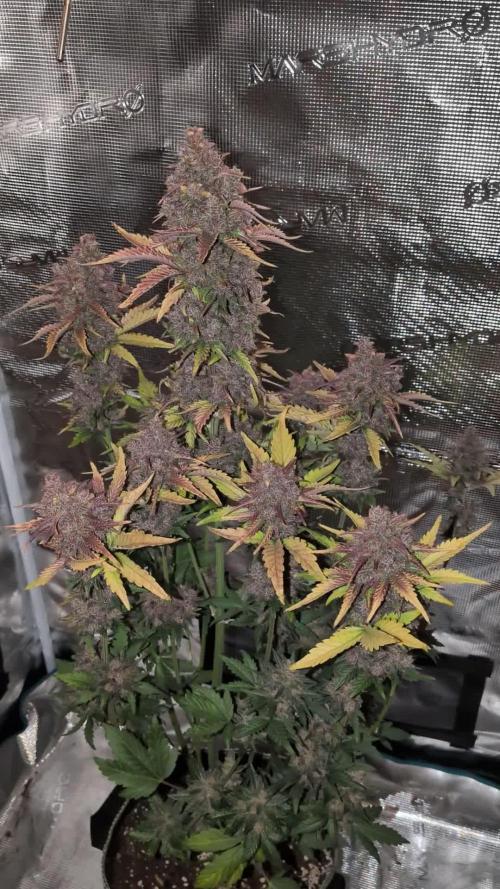
Here we go into flower. If what they say is true, we're in for a nice color show.
Likes
20
Share
@AsNoriu
Follow
After defoliation everything runs calm and fats up ;) Now i even hate that girl with leafs. Other girls i can put a lot tighter and under more intence light ... Her lower buds look like air and her leafs are in the way of everybody ;))) we shall see final weight... Think thats the last week of feed. Only ph water after for couple more ... Smells realy fantastic !! P.s. its just hard not to show that other fathers 9th sister ;))) Choco Lopez Auto - my new love ;) P.s.2 some night shots. Stoped CalMag already. I see some milky , so its time to plan flush soon. P.s. 3 have two dominant girls. Both will be fun to weight. Gave all girls first breeze of autumn. During one night only 15 cel. Only two girls will have last feeding and flush will start from day 50. Days will be shorted to 11 hours.
Likes
22
Share
@Chucky324
Follow
Hello. I'm starting my Dos Si Dos #33 diary here. These clones have been growing in the veg tent all summer. I had stuff growing in the greenhouse all summer and it gets really hot in that cement room in the middle of summer, so I shut down that grow room till now. I got it up and running last week but I was a little embarrassed to make a diary starting last week because I had treated the clones badly and they looked rather leafless. They look much better this week, so I'll start. I would like to start playing around with making feminized seeds. So, I need some extra clones to spray to make the feminized males. I've read about it, now it's time to try. Some of these clones I take will be turned to males next year. I gave some clones to my friend Jerry for his summer crop. I was over to his house the first week in October, to take pictures of his plants. Some of the lower plants that were not getting sun anymore were just starting to show some powdery mildew on some of the big fan leaves, so he decided to cut them down. He did a real good job on growing them this year. I think he said he was going to cut the big bud off the ends of the branches and let the smaller buds fatten up, under cover, in the sun, on the deck. This is the strongest plant I grow. It gets me pretty baked with 5 or 6 tokes. It grows on the taller side, so I'll make lots of tops to slow the growth down. And it tastes like fruity ice cream!!! Yummy!!! The other plants in the room are Amnesia Lemon by Barney, Pink Kush the original clone I found 27 years ago, Nova OG by Anesia Seeds, Sweet Sensations by Sweet Seeds, The White (Whitey) by Dr Greenthumb. I will put in next week more Fat Freddie's Cat cartoons and I have some more puzzles to finish off that puzzle book. Then when that's finished, I'll put in some Fabulous Furry Freak Brothers cartoons. Man, the spiders are getting big around here. We've had 1 mm of rain in 3 months and it's very warm for this time of year, so they are getting big!!! Keep Growing Straight. Chuck.
Processing
Likes
4
Share
Apresentou deficiência de magnésio em algumas ja corrigido com magnifical aguardando resultado