


Likes
Comments
Share


@Jacks_Pot
Follow
This week the buds have fatten up some more and the production of thc was clearly visible in the trichomes.
On the last day of this week I did a check and I saw a lot of them where turning cloudy, half cloudy with a few amber ones.
I guess another 2 weeks at max and I'll be harvesting.
The fungus gnats where a real pest during this run.
So I've placed a drosera capensis(carnivorious plant) in the growroom
and she hasn't eaten this much since I got here a year ago.
Should have done this weeks ago...
This weeks menu for the Pineapples:
Day 1 → Each 1250 ml (0.33 gallon) tapwater with Plagron nutrients (see above for which and how much)
Day 2 → Dry
Day 3 → Each 1250 ml (0.33 gallon) ph adjusted tapwater (ec 0.48– ph 6.6)
Day 4 → Dry
Day 5 → Each 1250 ml (0.33 gallon) tapwater with Plagron nutrients. 16 ml Terra Bloom, 4 ml Sugar Royal, 4ml Power Buds
and 4 ml Green Sensation was added to 5 liter (1.32 gallon) of tapwater (ec 1.77 – ph 6.6)
Day 6 → Dry
Day 7 → Each 1250 ml (0.33 gallon) ph adjusted tapwater (ec 0.46– ph 6.5)
The cobs are now at 45 cm (17.7 inch) with 320 watt → DLI 43/PPFD 995
This will be the maximum power for this run.
Temperatures fluctuated between 20.3 – 29.8 °C (68.5 – 85.6 °F) and humidity levels between 43 – 69%
Till next week!
Do you want to grow this strain?
👉 https://www.barneysfarm.us/pineapple-chunk-weed-strain-15 👈


Likes
61
Share

@Comfrey
Follow
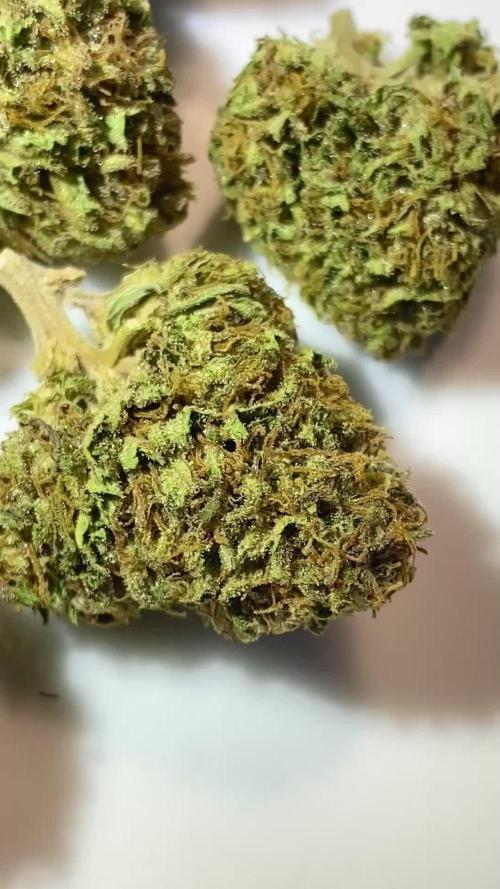
Die Blüten wurden zur Hälfte nass getrimmt. Die Trocknung erfolgte im Growzelt mit Ventilator und Abluft bei einer Temperatur von 22 Grad Celsius und einer Luftfeuchtigkeit von ca. 56 Prozent über 7-9 Tage. Bei der täglichen Kontrolle habe ich wenige Blüten gefunden, die ich entsorgen musste. Sie braucht schon etwas Aufmerksamkeit, die Shaman. Anschließend wurden die Blüten trocken weiter getrimmt und zum Aushärten mit Boveda 62% in Schnappdeckelgläsern bei 20 Grad in einem Eichenschrank gelagert. Das Endprodukt und ein abschließender Konsumreport folgen. Ich bin ziemlich happy! 💚

Likes
2
Share


@EtnoGrow
Follow
this is the beginning of the 4th week along with the publication of the end of the 3rd week, this is how the fourth week is received, another intensive pruning that has no choice but to do it due to the size of the indoor, which is working great for us and we believe that I will always work like this, I am happy, here then the pruning of its results a little before and after and how it is receiving this fourth week, with the threads I touch a little bit of hair I hope it does not affect much but all in favor of opening the field to all the branch buds alike.WE CHANGE THE MESH FOR A BETTER ONE AND OF THE IDEAL SIZE AND AGAIN WE USE THREADS THAT HELP US VERY WELL, WONDERFULLY
Likes
19
Share


@mi_auto_grower
Follow
Really big bud even tho my grow room is a little hotter than one may like it stilled the purple through really fantastic grow it was nice watching an auto grow how its supposed to without any problem thank you fastbuds

Likes
Comments
Share

@all_about_420
Follow
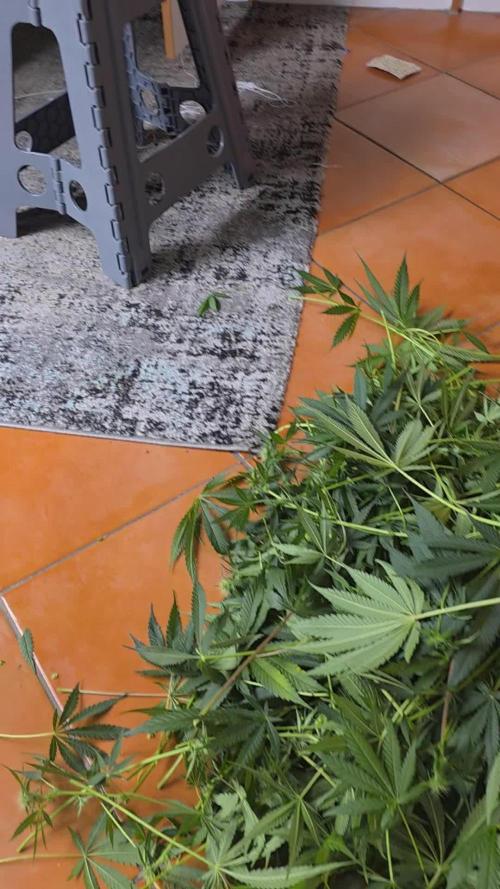
Ein regelrechter Höhenrausch prägt das Bild zum Start der vierten Blütewoche bei dem Junky 99 Projekt von Brothers Grimm Seeds. Der Stretch ist derart extrem ausgefallen, dass die beiden Damen kurz davor sind, die Decke des Setups endgültig zu sprengen – ein bisschen kompakter hätten sie im Nachhinein betrachtet gerne bleiben dürfen. Ob dieser massive Wachstumsschub nun rein an der Genetik liegt oder durch das für mich noch neue Advanced Nutrients System befeuert wurde, lässt sich schwer sagen, da ich die Feinjustierung des neuen Düngers für mich persönlich erst noch perfekt abstimmen muss. Eigentlich wurden die Pflanzen mit einer absolut soliden und normalen Höhe in die Blüte geschickt, doch die jetzige Dynamik war kaum vorhersehbar. Genau deshalb stand direkt zu Wochenbeginn das überfällige Lollipoping auf dem Programm, bei dem angesichts der enormen Gesamthöhe nicht zimperlich vorgegangen wurde: Untenherum wurde radikal aufgeräumt und kräftig weggeschnitten, was für die Durchlüftung und Lichtverteilung auch bitter nötig war. Trotz des extremen Höhenflugs stehen beide Pflanzen makellos im Saft; die Blütenbildung schreitet rasant voran und überall formieren sich vitale, vielversprechende Bud-Cluster, die schon jetzt einen exzellenten Eindruck hinterlassen.
Likes
4
Share

@Nordgrow
Follow
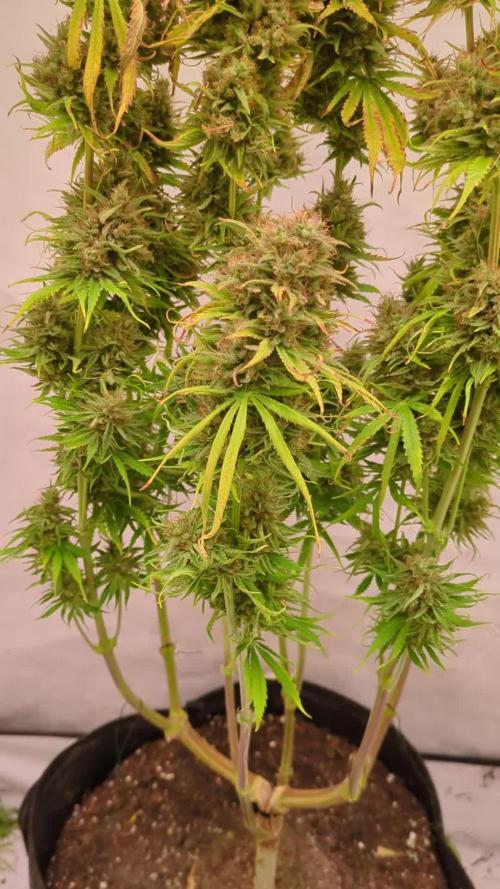
Die ersten 3 sind gefallen.
2 sind noch übrig.
Das Nassgewicht der 3 Pflanzen war sehr unterschiedlich, aber insgesamt wirklich sehr, sehr schwer.
Die Box wurde jetzt mit einem Raumteiler in Trockenkammer und Blühkammer geteilt.
Die kleine Pflanze wurde jetzt auch gespült und wird demnächst auch gefällt.
Die große bekommt jetzt erst ihre ersten braunen Härchen.

Likes
20
Share


@MrWolfe
Follow
The stretch is real, they are being fed every other day, 1gal/plant basically. Nice uniform stretch along both rows.


Likes
20
Share


@Basementganja
Follow
Plucked a few leaves that were looking at me funny ;) Not much to do!
Smells of sweet berries, after a fresh rainfall.. Smells amazing!
Watered with 2.5 gallons of the above listed nutrients, every 5-6 days. (when the soil becomes 95% dry)
10% of the solution watered runs out the bottom of the pot, and is removed with a wet-vacuum.

Likes
9
Share


@coucoulacreature
Follow
I had biggggg values of humidity around 80% and reached 86% lmao
2 days after watering it start to decrease to 65/70%
But I rewatered because I am going on a big weekend again...
It doesn't smell strong and it smells like green plant not really weed

Likes
19
Share


@Naujas
Follow
I'll wait until it's completely dry and then I'll cut it, only a few days left :) you know her difficult beginning in life, she coped with the stress perfectly :) the flowers look very resinous :
Likes
9
Share


@Bryankush
Follow
Bene ragazzi si inizia anche questa settimana. In teoria alla fine di questa settimana i pistilli inizieranno a diventare arancioni.
Giorno 6 ragazzi scusate se non sono stato attivo con le immagini ma ho avuto un problema comunque guardate quanto si sono ingrossate quelle cime.
Likes
75
Share


@MisterZ
Follow
En une semaine, l'odeur est devenue puissante, un mélange de cannabis, de pin et de bonbons, c'est vrai. Elle est quasiment mûre au microscope. Je pense la laisser faisander encore quelques jours.
Bonjour les amis, pour rester poli,
Maintenant que j'ai compris comment fonctionnent les shorts 😀, je vais mettre l'essentiel au début. J'avais arrosé copieusement avant de m'absenter une semaine mais comme c'est une petite plante elle n'a pas tout bu ! Le sac est encore lourd. Je suis surpris du mûrissement très rapide😳, j'ai tardé pour le rinçage. Encore quelques jours de patience pour la récolte ! Les photos de cette semaine ressemblent beaucoup à la précédente avec un peu plus de résine.
A très bientôt, M.

Likes
23
Share


@PersonalSmok3s
Follow
Finally got round to getting this diary finished. Sorry it took so long to update, I’ve been really busy 🤷♂️😸
I harvested these plants just shy of two weeks ago. I took some pictures just prior to harvest.
The buds came out extremely dense even though they both foxtailed.
The pictures of the dry buds don’t really do them justice. They look a bit rough trimmed, not quite as well manicured as to my usual standard, but it smokes smooth and that’s all that matters 😸
The taste is thick and lingers in the mouth, you can almost chew it!
It has a really strong OG Kush taste, not had much wedding cake in my time so can’t tell if that’s coming through at all 🤷♂️
Yielded pretty good this time round, got around 3oz per plant. All the buds were solid so not much trim to use for Rosin, but what little I did get gave me some 🔥 Rosin in return. I’ve uploaded a video of what I made.
I’d like to thank everyone who has had a look, commented or liked this diary. I hope it’s been helpful in some way 🤷♂️😸
Time to enjoy some nice smoke, until next time 🌱💚


Likes
30
Share


@dataTwiiix
Follow
05/08: seconde semaine de flo. Le premier filet se rempli tranquillement. Et un second est prêt pour aider à supporter le futur poids des buds 😀

Likes
2
Share

@Ninjabuds
Follow
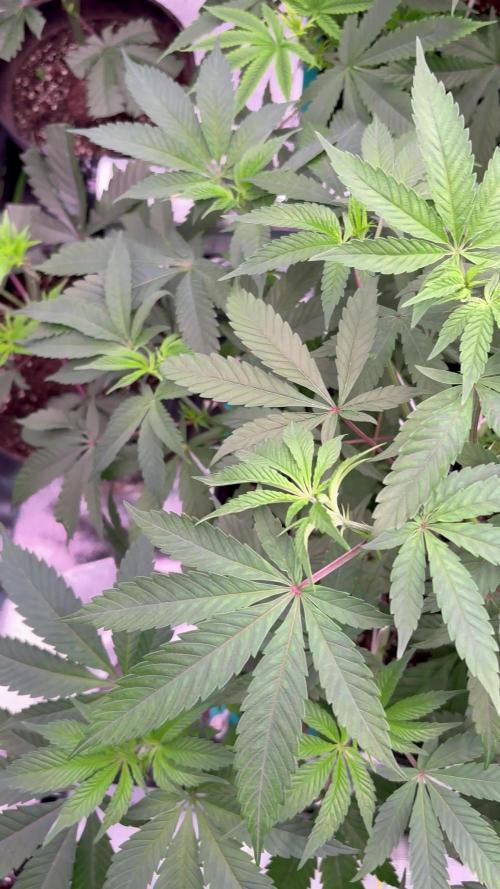
I like the structure of this plant it starting to look pretty healthy ima hook up the watering system soon and flip to flower soon aswell


Likes
31
Share


@buddha61
Follow
7/29 - Week 9 of veg is starting. At this point, it is just let them grow up a few inches, and also fill out the pots some more with roots before transplanting to 5 gallon fabric pots (their final homes). I also plan on mixing a 'flower blend' soil to fill up the 5g pot around the rootball that is transplanted. This recipe for the soil is taken from MaximumYield:
Enhanced fruit/flower potting soil recipe
This soil recipe is designed for plants that are ready to fruit or flower. In particular, this recipe works great for ornamentals that are already in bloom and for fast-growing annuals that are entering their fruiting or flowering stage. Parenthesis indicate small changes or products I'm using.
1/2 cu. ft. (60 cups) sphagnum peat moss (Promix BX)
1/4 cu. ft. (30 cups) coco coir (Mother Earth Coco Peat)
1/4 cu. ft. (30 cups) compost (either compost or manure)
1/4 cu. ft. (30 cups) perlite
10 cups pumice (likely to just use perlite here)
5 cups worm castings
3 cups bat guano (high phosphorus)
1 cup fish bone meal (using regular bone meal, got Jobe's Bone Meal)
1 cup oyster shell
1/2 cup seabird guano (likely to just add as the high phosporous guano)
1/4 cup alfalfa meal
1/4 cup fish meal (Down to Earth Fish Meal)
2 tbsp. langbeinite (Down to Earth Langeinite)
1 tbsp. glacier rock dust (Azomite ordered from Amazon)
7/30 - While technically the morning of 7/31, lights haven't gone out yet, so it is still the 30th ;) It almost hurts posting pictures today, because they were really thirsty, but I honestly hadn't looked at them for a couple days. Anywho, the plants were watered with ~1.25 liters of water each, about 90 minutes before lights out. Will be interesting to post the 7/31 photos after a couple hours of lights on, and see the difference in appearance. I also mixed the soil for flowering, and it will now have a couple weeks to 'cook' and become ready for the plants. I did make a mistake and accidentally added 1 cup of fish meal instead of 1/4 cup (oops), and the alfalfa meal just smelled too good, so I added 1/2 cup instead of 1/4. Hopefully those 2 'changes' don't add too much nitrogen for flower, but I imagine it won't. I also instead of adding perlite (didn't want to buy a 4 cu ft bag when I needed at most 2.5 gallons (1/3 cu ft), so I opted to add 1 gallon of pumice. Since the coco peat and promix both have perlite in them, I didn't want too much added. There were also some worms from the compost that made it into the tote that is now storing the mix, so life has already started in the soil.
7/31 - It wasn't just after lights on, as I didn't have time to photo earlier, but this is just about 24 hours after watering, and praying/looking good. I had noticed that it looked like the fan had slipped down the pole a bit, and was causing some wind burn/clawing of the leaves yesterday, which probably attributed to poor looks, but looking better today! While I am not that versed in checking preflowers, from what I can tell, if I had to guess, CH#1 could be either (maybe slightly leaning towards female, thought I might have saw a couple hairs), and the #2 actually looked male to me.
8/4 - After getting home from work, and realizing I hadn't checked on the plants in a couple days and I knew they were due for water either yesterday or today, I saw some THIRSTY plants. They each got ~1.2L of water, and also a quick trim back. After checking preflowers again, I am afraid that both Chinook plants may end up male :(

Processing
Likes
18
Share


