Likes
Comments
Share
@Roberts
Follow
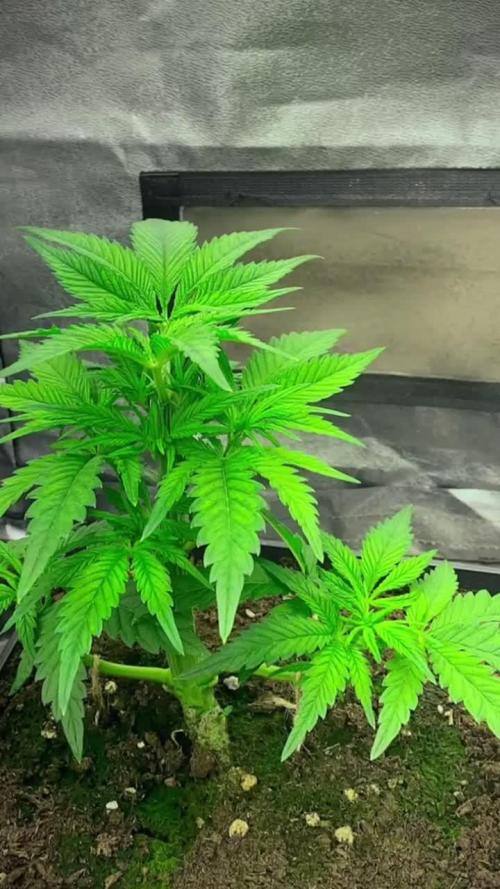
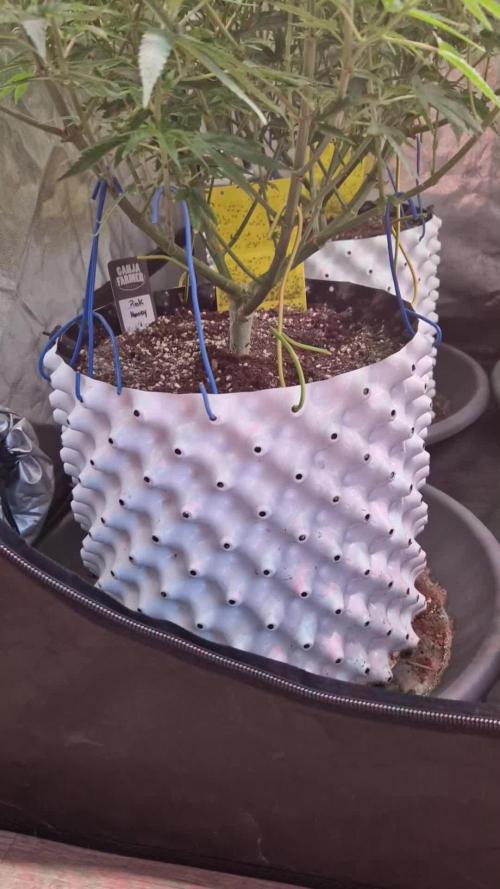
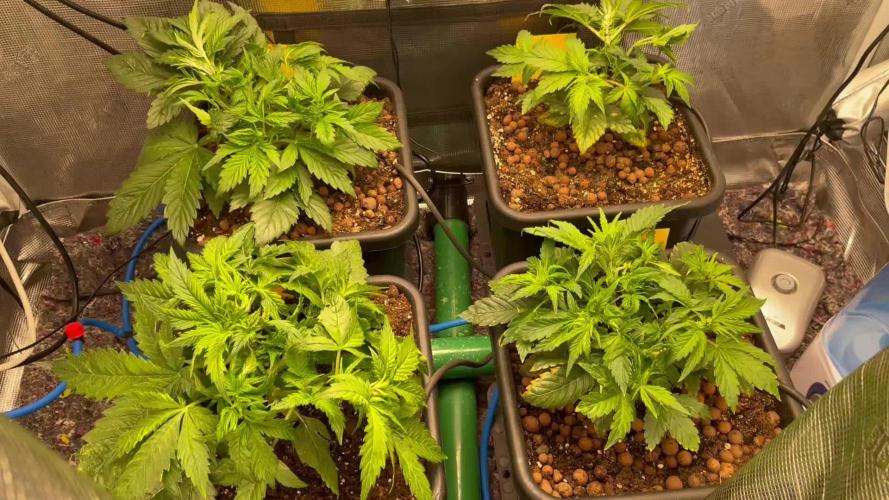
RSV11 has gotten huge. She has a lot of frosty colss on her. She has a few weeks left. Everything is going well beside she is eating more then I have provided. She is still getting enough though. Everything is looking good. Thank you Terpyz Mutant Genetics, and Spider Farmer. 🤜🏻🤛🏻🌱❄️ Thank you grow diaries community for the 👇likes👇, follows, comments, and subscriptions on my YouTube channel👇. Thank you Happy Growing 🌱🌱🌱 https://youtube.com/channel/UCAhN7yRzWLpcaRHhMIQ7X4g
Likes
15
Share
@Rinna
Follow
Added the scrog net and defoliated a bit to help spread out the canopy. They are looking healthy and happy and ready for the flip! That deep-topping really was a great way of creating a very even and clean canopy (you'll see that in the next week's update)
Likes
11
Share
@Dendegrow
Follow
Radical Juice is getting really close now – about 80% of the trichomes are already milky on the buds! 🔬🌼 I’d say she’ll be ready within the next week or so. The smell? Absolutely insane – fruity, complex, and just mouthwatering every time I check on her 🍊🍇 This strain probably won’t be the biggest yielder, but it absolutely makes up for it with its unique terpene profile and flavor. It’s one of those strains that make you forget about grams and focus on quality over quantity! ✨🔥 Don’t miss the harvest and final results – follow along, and in no more than two weeks, we’ll see the magic revealed! ⏳✂️ --- Radical Juice ist jetzt echt weit – bei den Buds sind schon ca. 80 % der Trichome milchig! 🔬🌼 Ich denke, sie wird in etwa einer Woche erntereif sein. Der Geruch? Unbeschreiblich – fruchtig, komplex und jedes Mal einfach zum Reinbeißen! 🍊🍇 Ertraglich wird sie wahrscheinlich keine Rekorde brechen, aber dafür entschädigt sie mit einem unfassbar leckeren Terpenprofil. Eine dieser Sorten, bei denen nicht die Menge, sondern der Geschmack zählt! ✨🔥 Folgt mir, um nichts vom Endspurt zu verpassen – spätestens in zwei Wochen sehen wir das Endergebnis! ⏳✂️
Likes
50
Share
@Igrowneil
Follow
Hey guys and girls this run is sponsored by some brand names , VIPARSPECTRA (LED) ZAMNESIA, GHE , VITALINK and LUMI BLACK (HPS) VIPARSPECTRA sent me out two budget lights which are on there Pro seriers , these lights to start off with put out mass amount of light for consumption of power draw only being 200watts each of the two lights . They are full spectrum Quantum boards emitting 2k , 5k , IR and deep red I'm a great fan of this light already and I have only run it to get the room climate stable before running anything after my last run. Was running at 20oc without any hps which is pretty good I don't know over winter will they still hold there temps when it's lights off so investment into another heater wouldn't go a miss . Total LED power draw 400watts The soil is canna terra Pro+ soil perlite and coco coir , this soil is very light and will provide massive amount of drainage and will provide plenty of oxygen and allow soil to dry daily allow me to tailor the GHE flora range slighly more to achieve beautiful fall colours towards harvest . This is my frist time using this soil and it seems like really good for autos alot better than there regular soil. There is also some added nutes to start the plants there frist couple of weeks . I'm using GHE BIO ROOTS from seed which I will place in a cup of water mixed with bio root , I'll transfer the popped seed directly into substrate in a jiffy pot until harvest this way we don't stunn the plant will transplant is taken place . Autos are very aggressive in nature so where gonna make that trait come to light. Started 14-11-21 Use code IGROWNEIL FOR 5% DISCOUNT ON viparspectra lights onto of other discounts Or become an allfiate https://www.viparspectra.com/?aff=jursrsaof8&utm_source=affiliate Use code growitGD for 10% of ZAMNESIA products Link to the strain grown https://www.zamnesia.com/uk/5408-zamnesia-seeds-girl-scout-cookies-Auto-feminized.html
Likes
31
Share
Gracias al equipo de AnesiaSeeds, Marshydro, XpertNutrients y Trolmaster sin ellos esto no sería posible. 💐🤯 39%Thc Wham Boom: Sube al ring con WHAM BOOM de Anesia Seeds, donde la energía electrizante de Wham choca con las vibraciones frías de RS54, creando una variedad que es todo equilibrio, potencia y sabor. Este peso pesado feminizado ofrece una mezcla perfecta de 50% Sativa y 50% Indica, proporcionando una experiencia que te hará flotar de euforia mientras tu cuerpo se sumerge en una serena relajación. WHAM BOOM es una productora prolífica, con rendimientos en interior de 600g/m² y en exterior que alcanzan la asombrosa cifra de 900 - 1200g por planta. Con una floración de entre 65 y 70 días, esta variedad está lista a principios de octubre, lo que la convierte en una competidora ideal para los cultivadores que aspiran a una cosecha de campeonato. Con una imponente presencia de 100-140 cm en interior y 160-220 cm en exterior, WHAM BOOM se alza como testimonio de su destreza genética. 🏠 : Marshydro 1.50 x 1.50 x 1.80, carpa 100% estanca con ventanas laterales para llegar a todos los lugares durante el grow https://marshydro.eu/products/diy-150x150x200cm-grow-tent-kit 🌬️💨 Marshydro 6inch + filtro carbon para evitar olores indeseables. https://marshydro.eu/products/ifresh-smart-6inch-filter-kits/ 💻 Trolmaster Tent-X TCS-1 como controlador de luz, optimiza tu cultivo con la última tecnología del mercado, desde donde puedes controlar todos los parametros. https://www.trolmaster.com/Products/Details/TCS-1 🍣🍦🌴 Xpert Nutrients es una empresa especializada en la producción y comercialización de fertilizantes líquidos y tierras, que garantizan excelentes cosechas y un crecimiento activo para sus plantas durante todas las fases de cultivo. Consigue aqui tus Nutrientes: https://xpertnutrients.com/es/shop/ 📆 Semana 1: Ha sido una buena semana, ella ha dado otro gran cambio en su lugar definitivo 😎. La carpa está ocupada al 75% y comienza una floracion explosiva gracias a @Marshydro y @Xpertnutrients y @Trolmaster con esta gran genética 💪. A partir de ahora se riega manualmente con las dosis recomendadas por el fabricante.
Likes
68
Share
Removed autoflower and put her in her own pot outside the tent. Foliars applied in strong blue 430nm with 4000Hz tone. 20-minute dose prior to application. In essence, you're seeing a combination of the infrared light reflected by the plant, which the camera perceives as red, and any residual visible blue light the plant reflects, which results in a purple hue. I was doing more stretching of the stems, adjusting weights, just a little too much, and it snapped almost clean. I got a little lucky in that it was still connected, wrapped her almost instantly while holding her in place with yoyo's. The core framework is now in place. If your soil has a high pH, it's not ideal; you want a pH of 6.4, 6.5, or 6.6, which is ideal. If you are over a pH of 7, you have no hydrogen on the clay colloid. If you want your pH down, add Carbon. If you keep the pH below 7, you will unlock hydrogen, a whole host of new microbes become active and begin working, the plant will now be able to make more sugar because she has microbes giving off carbon dioxide, and the carbon you added hangs onto water. Everything has electricity in it. When you get the microbes eating carbon, breathing oxygen, giving off CO2, those aerobic soil microbes will carry about 0.5V of electricity that makes up the EC. The microorganisms will take a metal-based mineral and a non-metal-based mineral with about 1000 different combinations, and they will create an organic salt! That doesn't kill them, that the plant loves, that the plant enjoys. This creates an environment that is conducive to growing its own food. Metal-based: Could include elements like iron, manganese, copper, or zinc, which are essential nutrients for plants but can exist in forms not readily accessible. Non-metal-based: Examples like calcium carbonate, phosphate, or sulfur are also important for plant growth and potentially serve as building blocks for the organic salt. Chelation in a plant medium is a chemical process where a chelating agent, a negatively charged organic compound, binds to positively charged metal ions, like iron, zinc, and manganese. This forms a stable, soluble complex that protects the micronutrient from becoming unavailable to the plant in the soil or solution. The chelate complex is then more easily absorbed by the plant's roots, preventing nutrient deficiency, improving nutrient uptake, and enhancing plant growth. Chelation is similar to how microorganisms create organic salts, as both involve using organic molecules to bind with metal ions, but chelation specifically forms ring-like structures, or chelates, while the "organic salts" of microorganisms primarily refer to metal-complexed low molecular weight organic acids like gluconic acid. Microorganisms use this process to solubilize soil phosphates by chelating cations such as iron (Fe) and calcium (Ca), increasing their availability. Added sugars stimulate soil microbial activity, but directly applying sugar, especially in viscous form, can be tricky to dilute. Adding to the soil is generally not a beneficial practice for the plant itself and is not a substitute for fertilizer. While beneficial microbes can be encouraged by the sugar, harmful ones may also be stimulated, and the added sugar is a poor source of essential plant nutrients. Sugar in soil acts as a food source for microbes, but its effects on plants vary significantly with the sugar's form and concentration: simple sugars like glucose can quickly boost microbial activity and nutrient release. But scavenge A LOT of oxygen in the process, precious oxygen. Overly high concentrations of any sugar can attract pests, cause root rot by disrupting osmotic balance, and lead to detrimental fungal growth. If you are one who likes warm tropical high rh, dead already. Beneficial, absolutely, but only to those who don't run out of oxygen. Blackstrap is mostly glucose, iirc regular molasses is mostly sucrose. Sugars, especially sucrose, act as signaling molecules that interact with plant hormones and regulate gene expression, which are critical for triggering the floral transition. When sucrose is added to the growth medium significantly influences its effect on floral transition. Probably wouldn't bother with blackstrap given its higher glucose content. Microbes in the soil consume the sugar and, in the process, draw nitrogen from the soil, which is the same nutrient the plant needs. Glucose is not an oxygen scavenger itself, but it acts as a substrate for the glucose oxidase (GOx) enzyme, effectively removing oxygen from a system. Regular molasses (powdered if you can), as soon as she flips to flower or a week before, the wrong form of sugar can delay flower, or worse. Wrong quantity, not great either. The timing of sucrose application is crucial. It was more complicated than I gave it credit for, that's for sure. When a medium's carbon-to-nitrogen (C:N) ratio reaches 24:1, it signifies an optimal balance for soil microbes to thrive, leading to efficient decomposition and nutrient cycling. At this ratio, soil microorganisms have enough nitrogen for their metabolic needs, allowing them to break down organic matter and release vital nutrients like phosphorus and zinc for plants. Exceeding this ratio results in slower decomposition and nitrogen immobilization, while a ratio below 24:1 leads to faster breakdown and excess nitrogen availability. Carbon and nitrogen are two elements in soils and are required by most biology for energy. Carbon and nitrogen occur in the soil as both organic and inorganic forms. The inorganic carbon in the soil has minimal effect on soil biochemical activity, whereas the organic forms of carbon are essential for biological activity. Inorganic carbon in the soil is primarily present as carbonates, whereas organic carbon is present in many forms, including live and dead plant materials and microorganisms; some are more labile and therefore can be easily decomposed, such as sugars, amino acids, and root exudates, while others are more recalcitrant, such as lignin, humin, and humic acids. Soil nitrogen is mostly present in organic forms (usually more than 95 % of the total soil nitrogen), but also in inorganic forms, such as nitrate and ammonium. Soil biology prefers a certain ratio of carbon to nitrogen (C:N). Amino acids make up proteins and are one of the nitrogen-containing compounds in the soil that are essential for biological energy. The C:N ratio of soil microbes is about 10:1, whereas the preferred C:N ratio of their food is 24:1 (USDA Natural Resource Conservation Service 2011). Soil bacteria (3-10:1 C:N ratio) generally have a lower C:N ratio than soil fungi (4-18:1 C:N ratio) (Hoorman & Islam 2010; Zhang and Elser 2017). It is also important to mention that the ratio of carbon to other nutrients, such as sulfur (S) and phosphorous (P) also are relevant to determine net mineralization/immobilization. For example, plant material with C:S ratio smaller than 200:1 will promote mineralization of sulfate, while C:S ratio higher than 400:1 will promote immobilization (Scherer 2001). In soil science and microbiology, the C:S ratio helps determine whether sulfur will be released (mineralized) or tied up (immobilized) by microorganisms. A carbon-to-sulfur (C:S) ratio smaller than 200:1 promotes the mineralization of sulfate, when the C:S ratio is low, it indicates that the organic matter decomposing in the soil is rich in sulfur relative to carbon. Microorganisms require both carbon and sulfur for their metabolic processes. With an excess of sulfur, microbes take what they need and release the surplus sulfur into the soil as plant-available sulfate A carbon-to-sulfur (C:S) ratio higher than 400:1 will promote the immobilization of sulfur from the soil. This occurs because when high-carbon, low-sulfur materials (like sawdust) are added to soil, microbes consume the carbon and pull sulfur from the soil to meet their nutritional needs, temporarily making it unavailable to plants. 200:1 C:S 400:1: In this range, both mineralization and immobilization can occur simultaneously, making the net availability of sulfur less predictable. This dynamic is similar to how the carbon-to-nitrogen (C:N) ratio regulates the availability of nitrogen in soil. Just as microbes need a certain amount of nitrogen to process carbon, they also require a balanced amount of sulfur. Both mineralization and immobilization are driven by the metabolic needs of the soil's microbial population. Sulfur is crucial for protein synthesis. A balanced ratio is particularly important in relation to nitrogen (N), as plants need adequate sulfur to efficiently use nitrogen. A severely imbalanced C:S ratio can hinder the efficient use of nitrogen, as seen in trials where adding nitrogen without balancing sulfur levels actually lowered crop yields. Maintaining a balanced carbon-to-sulfur (C:S) ratio is highly beneficial for plant growth, but this happens indirectly by regulating soil microbial activity. Unlike the C:N ratio, which is widely discussed for its direct effect on nutrient availability, the C:S ratio determines whether sulfur in the soil's organic matter is released (mineralized) or temporarily locked up (immobilized). Applied 3-day drought stress. Glucose will hinder oxygenation more than sucrose in a solution because glucose is consumed faster and has a higher oxygen demand, leading to a more rapid decrease in oxygen levels. When cells respire, they use oxygen to break down glucose, and this process requires more oxygen for glucose than for sucrose because sucrose must first be broken down into glucose and fructose before it can be metabolized. In a growth medium, glucose is a more immediate and universal signaling molecule for unicellular and multicellular organisms because it is directly used for energy and triggers a rapid gene expression response. In contrast, sucrose primarily acts as a signaling molecule in plants to regulate specific developmental processes by being transported or broken down, which can be a more complex and slower signaling process. Critical stuff. During wakefulness (DC electric current) life can not entangle electrons and protons. During the daytime, the light is sensed as multiple color frequencies in sunlight. Coherence requires monochromatic light. Therefore, at night, IR light dominates cell biology. This is another reason why the DC electric current disappears during the night. The coherence of water is maintained by using its density changes imparted by infrared light released from mitochondria in the absence of light. This density change can be examined by NMR analysis, and water is found to be in its icosahedral molecular form. This is the state that water should be in at night. This is when a light frequency is lowest and when the wave part of the photoelectric effect is in maximum use. 3600
Likes
17
Share
Die Woche war okay so wie immer eigentlich, sie ist stabil und blüht schön wie man auf den Bildern sieht :) Ich habe nun seit 2 Wochen kein Enhancer mehr benutzt … aber nächste Woche mache ich das wieder … Ja sonst gibt es nichts zu erzählen ^^
Likes
15
Share
We have hit day 35 and everything's looking great! Only 2 girls out of 8 have started flowering in the past day or two, the remaining six have shown sex and I'm anticipating flowering to begin sometime this week. I gave them a full feeding today. I'm using H&G Coco A+B, which is used from seed to harvest, unlike many other nutrient brands. I will start using H&G Bud-XL in the next few days, luckily I got a bottle before the shops close for Christmas. I didn't expect these autos to get so big so fast, but I'm definitely not complaining. Update day 37 - 26/12/20 I fed the girls their first dose of bud-xl today. 5/8 girls have started to flower now, hopefully, in the next few days the other 3 start up! Update: Day 40 - 29/12/20 6/8 girls are flowering now, the two that aren't are the 2 weird pheno runts.. I've submitted a grow question regarding the 2 weird girls. I'm hoping that they're simply late to flower and not a photoperiod.. I've been feeding the girls 1-2 litres each every day, with a plain PH'd water run every 7-14 days. Update day 41 - 30/12/20 All the girls have started to flower now :D I'm incredibly happy to see them so healthy at this point too I was almost going to put the 2 runts outside but I'm leaving them inside at this point. Thanks for stopping by! Merry Christmas/Happy holidays to all :)
Processing
Likes
19
Share
@Ferenc
Follow
Day 52: Light schedule 12/12, 200 ml water per plant per day, one-day bat guano the other day Epson salt as fertilization. Pre flowers out, except Blue Sherbet S1 but she is Sativa so slower than the others. I retrained them tried to separate the side branches. I also removed bigger fan leaves and at the bottom part to have better air flowing and the light can go through more efficiently, plus I changed their current positions so I placed to different corners. All good so far. Day 54: I uploaded video as well. They are so BEAUTIFUUUUUUL❤️ Day 55: Nice... So 24K Gold very bushy and nice lot flowers. Blue Sherbet S1 is slower due to Sativa dominance but it is coming. Fruit Tree the same very nice bushy a lot of flowers. Zkittlez remains small she is the smallest but pre-flowers are nice coming along. The smell is getting stronger. Day 56: They are developing nicely. I am waiting for harvest tho.....😂 Day 57: The smells getting stronger. My girlfriend noise is blocked 😂😂😂😂
Likes
7
Share
@DRO420
Follow
First week of Flowering . Looking great now that I switched to Advanced Nutrients 2 part Sensi products 🤘👽🤘
Likes
5
Share
@Splashy
Follow
Heute war Zeit für die Ernte, der Duft ist traumhaft süß und sehr sehr intensiv. Ich hätte sie gerne noch 1-2 Wochen stehen lassen aber ich musste das Zelt frei bekommen für die permanent Marker die schon drauf warten umgetopft zu werden. Jetzt kann der vcure von vivosun Mal zeigen ob er sein Geld wert ist. Es wird die erste Trocknung in dem gerät sein und ich bin sehr gespannt drauf. Es ist der 14 Tage Modus aktiviert, 7 Tage trocknen bei 20°c und 60%rlf,danach wird es 7 Tage curing bei 18°c und 55%rlf. 15.04.2026 heute habe ich die buds aus der vcure geholt und den schönschliff mit der Schere gemacht. mit dem Ergebnis bin ich Recht zufrieden von der Menge her, der Geruch ist sehr fruchtig, ich mag ihn.
Likes
8
Share
December 31 2018 day 99 from seed harvest tomorrow
Likes
80
Share
May 1st. breeders Information says, 10-12 Weeks of Flower iam very courious, how they go on Atm the 2 Phenos developing a lot of Flowermass The shorter/ denser Pheno has fistsized Buds, starting to get denser The other Pheno is still stacling up, and then budding around, very funny They smell fantastic,,, very courious how this Legend ary Strain goes on Stay tuneD!!!
Likes
28
Share
@SensiHank
Follow
Brachiale Buds, Intensiver Geruch, Vorfreude auf den geschmack ! so kann man die Woche in kürze beschreribe. DIe Buds werden immer dicker und die Ladys reifen immer mehr vor sich hin : bald muss ich wieder das Microscope raus suchen um die Trichome zu checken :slight_smile: ich bin wirklich gespannt ob die Ladys noch ihre Dunkle farbe bekommen oder ich es nächstes mal etwas kälter machen muss wärend der nachtphasen :slight_smile: mal schauen
Likes
7
Share
Semana de cosecha! Al fin el tan esperado momento momento se aproxima y no puede tener una mejor pinta! Realmente he quedado maravillado con la belleza de este fenotipo muy parecido al que promociona el banco en su portal, así que muy satisfecho por eso. Solo esperar a que se seque bien el sustrato y estaremos cosechando estos bellos frutos 🤩😍
Likes
12
Share
@Grey_Wolf
Follow
FastBuds FBT01 aka AK47 29th December 2019 Week 3 of Flowering Begins...................................... Well the first 2 weeks of flowering was all about the stretch and at 69cm high she is a bit stretchy . Only tester number 13 is taller at 73cm. I fed her a third of a cup of Mr B's Green Trees Bloom mix aswell as a qtr tspoon of Great white Mycorhizae. We have a fairly cool week forecast compared to the rest of the state but I'm sure it will be sunny enough for this girl to thrive 💪 I hope you all have a great New Years and I'll be back next week for another update on the AK47.