The Grow Awards 2026 🏆 









Likes
Comments
Share
@Naujas
Follow
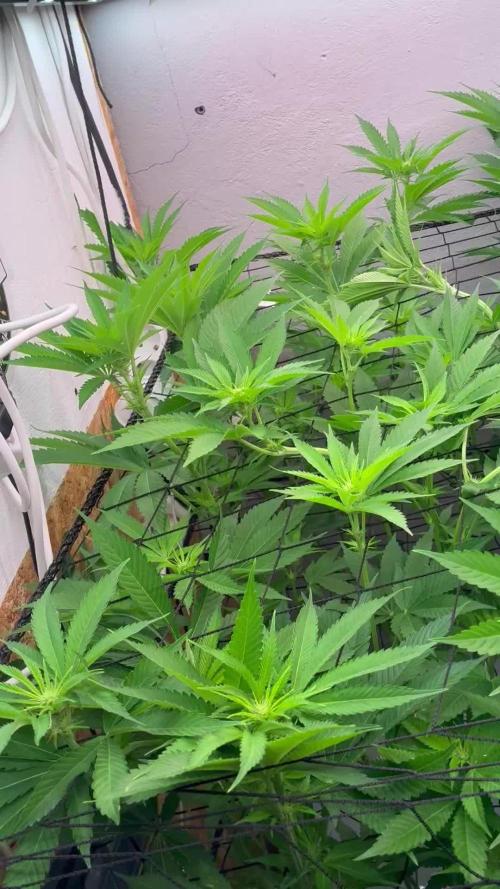
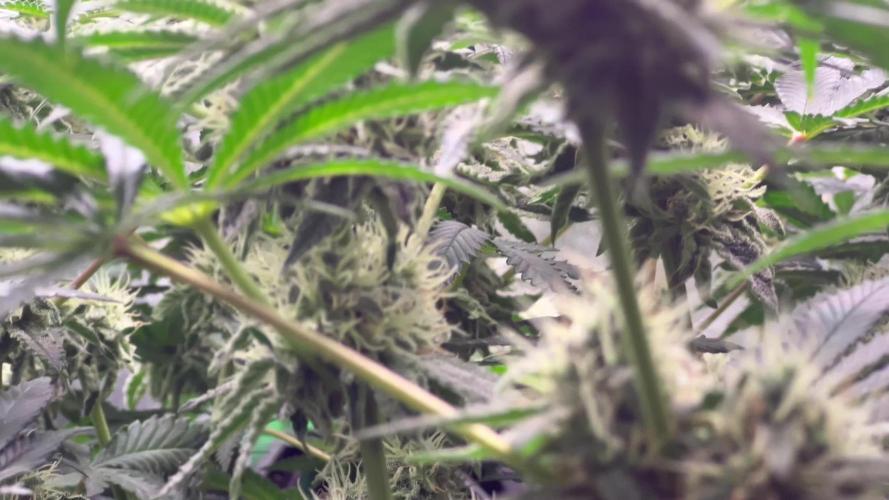
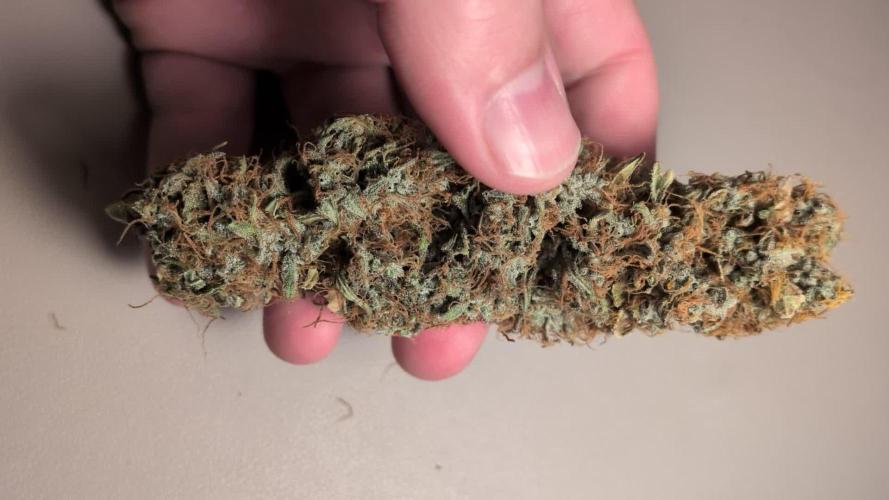
I came back after vacation, the girl is ready for cutting, the rainy weather has started, so there is a threat of rot, you can say I managed to find just a few small pits in time and removed them and threw them away, the big and stiff flowers look fantastic:) but after a long trip I was tired, so I didn't take quality photos :( no everything else, I am very satisfied with the result I got:) its smell already lets me know that it will be good:) a lot of sugar leaves from which I will make bubble hash:) I will update the weight when it dries.

Likes
6
Share
@HavelGrower
Follow
second week of flowering done. They were stretching like crazy. Installed a 3rd net to keep the stretch under control. Jumped from 35 cm to 83 cm in 2 weeks. They giving me some headache because of the hight. Should have send them 1 or 2 weeks earlier into flower. But it’s a lesson how to handle or not handle hybrids and sativas.
Over all in was quite relaxing just adding water/ nutrients and doing some defoliation.
So far so good. it’s quite easy to keep them on the same level with 3 nets.
Still learning how to handle certain situations and conditions. But so far I am happy. They have got a massive need of Kalium at the moment. Should have given them more TA -Grow nutrients. But that’s party of learning.
Really happy about the aeroponic setup. Really like the full control of the grow medium. (Compared to soil it’s easier for control freaks). Really water efficient compared to dwc/hydro/soil and changes made take effect pretty fast. Really nice oxygen supply at the roots and overall nice control possibilities regarding to roots and medium/solution.
A possible downside could be that u can only use mineral nutrients and no organic nutrients. (We want some bacteria and fungus but not these ones that break down organic nutrients. That is more a preference thing than anything else. Good made hydro can compete with soil easily but most ppl put to much in there and ruin it any way. (Don’t want to trigger its good that everyone got its own style and evolves it in his needs and conditions.)
The maintenance effort that is required for aero is a bit higher than soil and dwc but it pays off. (Personal opinion but numbers proof it)
Looking forward to the next weeks and flower build up. Really excited about.
Conditions of the Grow:
💡 PPFD: 900 umol/m2/s
☀️ DLI: 38.8 mol/day
🌓 Lightcycle: 12/12 h
💨 Humidity: 50-55 %
🌡️ 🌞Daytime Temp.: 22-24 *C
🌡️ 🌙Nighttime Temp.: 19-20 *C
🌡️🌱Leaf Temperature: 21 *C
🌡️💧Water Temperature: 19-20 *C
Water TDS: 1100ppm | EC: 2200us/cm
🚰Watersource: Rainwater (TDS: 15ppm | EC: 0.03 us/cm
Vegetation Equipment:
🔦 Lamp: Mars Hydro FC-E6500
📤Container: 3x DIY 63L Euro-Box with lid
Pot: Netpot 2 inch
💦Pump: M.R.S. Ultimate Whisper Powerpump 22 bar
🚿Nozzles: 12x 0.3mm
🫧Waterfilter: 150 microns
🌬️Fan: 3x Clipfan
🌪️Duct-Fan: AC Infinity 200 mm with Controller and Carbon Filter
🍶Nutrient Brand: Terra Aquatica
🔬Sensors: Waterstation (EC, TDS, Temp, PH, Salt), CO2, Air Temp. & Humidity (VPD), Temperature-Sensor Root Container


Likes
13
Share
@ohcibi
Follow
Due to issues with my ISP, I can't upload photos or videos right now. Like, I could upload slowly but then I always get errors from th website.
Grow is continueing to thrive. Both Ryu and Ken now have proper Buds growing at their tops and internodes are closing up as well. Kens biggest top bud is 3x4 centimeters. So I'm really looking forward to harvest within the next two weeks. I might be forced to harvest but more on that, when time arrives.
Update: I managed to upload my photos by some public WiFi. Enjoy friends!

Likes
3
Share
@Therapygrow
Follow
I’m letting this cherry cola literally do it’s own thing. I want everyone to see how little if done right it takes to grow an auto
Likes
33
Share
@FlavoursUk
Follow
Had great results, especially when i upgraded to RO water.. if theres one thing i could of changed it would of been using the reverse Osmosis water sooner.
The rest of the grow was pretty easy, didn't even plant train as this was suppose to be a hassle free run. It was just that. Some good genetics from seedstockers too.
Good stuff!

Likes
16
Share
@GelatoGandalf
Follow
This grow turned out to be quite a journey.
Originally, this run was meant to be a simple between-grow project, something to keep the season going outdoors, without too much effort. But plans changed, and the Orange Sherbet ended up in the tent, where it took a completely different direction than expected.
She grew big and strong early on, but the LST was tricky. she didn’t respond very well at first, and shaping her the way I wanted took a lot of time and patience. It was interesting to see how she stretched and filled out later, but overall, the structure stayed somewhat awkward to manage.
Throughout the grow I struggled with CalMag and potassium balance. I tried several adjustments, sometimes with high CalMag doses, but it never fully stabilized. It’s still unclear if that came from the strain itself or from the BioBizz line, but it made the mid-to-late phase more difficult than I had hoped.
The flowering time was also much longer than advertised. the breeder mentions around 9 weeks, but in reality this one took closer to 14–15 weeks total. What was supposed to be a quick side project turned into a long, demanding run.
On the bright side, she delivered a very solid yield. a bit over 160 g of trimmed buds plus another 50 g of popcorn, well above 1 g/W. The aroma is lovely after 10 days of curing: creamy, with vanilla and a subtle orange note returning.
However, the buds are airy, not as dense as I hoped. The effect and flavor are great, but visually it’s more on the average side.
Even so, this grow was one of the most instructive I’ve done.
I learned a lot about deficiency management, humidity control, watering and how far genetics and environment interact.
Going forward, I’ll take a break from autos and focus on photoperiod strains again. I just prefer the control and predictability they offer.
All in all: not my prettiest grow, but a very valuable one.
About drying in dry ferm/dry age and regular drying: the material in the bags took a few days longer to dry which is said to be good (regular dry was 7 days, bags was 9 or 10). initially I think the buds from bags look better but now in curing I can't really tell a difference, not visually and not in the nose. Let's see how everything evolves over time but honestly I am not expecting it to differ a lot from regular drying.
Likes
241
Share
@Tropicannibis_Todd
Follow
💩Holy Crap We Are Back At It And Loving It💩
Growmies we are at DAY 35 and she's just killing💀it👌
👉We are in the Preflower stretch 👈
OMG I LOVE THE PINK PISTOLS 👈
So Shit , I gave them just a tad to much nutes on the last feeding 👈 But I have since fixed it
So I'm starting to pull her over and do some low stress training 🙃 and some defolation 😳
Lights being readjusted and chart updated .........👍rain water to be used entire growth👈
👉I used NutriNPK for nutrients for my grows and welcome anyone to give them a try .👈
👉 www.nutrinpk.com 👈
NutriNPK Cal MAG 14-0-14
NutriNPK Grow 28-14-14
NutriNPK Bloom 8-20-30
NutriNPK Bloom Booster 0-52-34
I GOT MULTIPLE DIARIES ON THE GO 😱 please check them out 😎
👉THANKS FOR TAKING THE TIME TO GO OVER MY DIARIES 👈


Likes
13
Share
@HIAZ_urbanbudfarmer
Follow
These plants are starting to come back nicely .
Unfortunately due to me being extraordinary lazy this grow, not maintaining them properly & not on time & the watering issue they suffered they didn't meet their potential!
Because of this they didn't go through much of a flowering stretch!
Growers if you use the promo code GROWEED, you will receive a 15% discount on any Fast Buds purchase!
Likes
27
Share
@420DeepGrow
Follow
Gracias al equipo de Zamnesia Marshydro XpertNutrients y Trolmaster sin ellos esto no sería posible.
💐🍜 Cosmic Noodles:
Orgullosa descendiente de Alien OG y Rollercoaster Haze, la Cosmic Noodles ofrece cosechas excelentes y una experiencia de fumar fragante. Esta variedad es muy potente, tiene un 25% de THC y produce efectos intensos y duraderos. Edificante y relajante, fumar Cosmic Noodles catalizará un colocón cerebral energizante que luego disminuirá hasta convertirse en un relajante colocón corporal.
Aquí se pueden detectar las influencias de ambas cepas parentales y las flores son notablemente cítricas, con la lima en primer plano. También disfrutarás de notas especiadas y terrosas con delicados matices florales.
🌻🚀 Consigue aqui tus semillas:
https://www.zamnesia.com/10777-zamnesia-seeds-cosmic-noodles.html
Código Descuento 20%: ZAMMIGD2023
💡TS-3000 + TS-1000: se usaran dos de las lámparas de la serie TS de Marshydro, para cubrir todas las necesidades de las plantas durante el ciclo de cultivo, uso las dos lámparas en floracion para llegar a toda la carpa de 1.50 x 1.50 x 1.80.
https://marshydro.eu/products/mars-hydro-ts-3000-led-grow-light/
🏠 : Marshydro 1.50 x 1.50 x 1.80, carpa 100% estanca con ventanas laterales para llegar a todos los lugares durante el grow
https://marshydro.eu/products/diy-150x150x200cm-grow-tent-kit
🌬️💨 Marshydro 6inch + filtro carbon para evitar olores indeseables.
https://marshydro.eu/products/ifresh-smart-6inch-filter-kits/
💻 Trolmaster Tent-X TCS-1 como controlador de luz, optimiza tu cultivo con la última tecnología del mercado, desde donde puedes controlar todos los parametros.
https://www.trolmaster.com/Products/Details/TCS-1
🍣🍦🌴 Xpert Nutrients es una empresa especializada en la producción y comercialización de fertilizantes líquidos y tierras, que garantizan excelentes cosechas y un crecimiento activo para sus plantas durante todas las fases de cultivo.
Consigue aqui tus Nutrientes:
https://xpertnutrients.com/es/shop/
📆 Semana 1:
Ha sido una buena semana, ella ha dado otro gran cambio en su lugar definitivo 😎.
La carpa está ocupada al 75% y comienza una floracion explosiva gracias a @Marshydro y @Xpertnutrients y @Trolmaster con esta gran genética 💪.
A partir de ahora se riega manualmente con las dosis recomendadas por el fabricante.

Likes
8
Share
@legolas40
Follow
The plants are maturing extremly fast, the amber thricomes are apearing so fast and the flushing started to prevent to get much CBN. The BIG DAY is soon!

Likes
57
Share
@Todzilla
Follow
4 Purple Push Pops PPP (grew 2023 outside)2 Black Cherry Gelato BCG (love to smoke it, first time growing)
Clones- from my clone guy
1000w LED, 4G Autopots,, coco/perlite 65/35, GH 3-part+ flourolicious, calimagic, SI, chelated iron, and humic acid , RO water, AC pro Controller and T8, 5x5 GG Tent with extension
Garage grow SoCal
This week I was out of town and let my grow grow. The autopots did their thing at about .6g a day. I did battle multiple hot days in the garage.
We’re running just under 1000ppm with no issues. I ran out of bloom and used some powdered kool bloom and it worked well. Thinking of switching to jacks RO but it’s working so good now I don’t want to switch.
This weeks accomplishments:
install two more autopots - for the gelatos.
I put the gelatos in fabric autopots, one 5g xl and one 15g xxl.
Scrogging the gelatos to flatten the canpoy
Long term issues
Cooling and VPD targets during heat waves
Preventing pest and mold issues - my humidity crept up high when I was gone and I saw a few powder leaves which were promptly removed upon my return.
I had to take my fiancé to a swanky resort for a few days.
I hope you all are having as much fun as I am.
Best of luck gromies.
Check out my black cherry gelato grow.
Soon I’ll be posting my outdoor light dep grow - side by side with my indoor grow- same clone batch. This should be a great comparison of indoor versus outdoor grows side by side 👍
Likes
5
Share
@Cannaseur2k19
Follow
They dont really strech much its more like cruise control, still not sure if I need nutrients?

Likes
13
Share
@tresplantes
Follow
Everything looking Great so far
I transplanted in clean white 6l Plastic pots filled with 70 coco 30 perlite hydro mix from plagron
Since im Unding athena you can see the planst grow so fast from Day to Day


Likes
63
Share
@Kitties_and_Colas
Follow
~_~_~_~_~_~_~_~_~_~_~_~_~_~_~_~_~_~_~_~_~_~_~_~_~_~_~_~_~_~_~_~_~_~_~_~_~_~_~_~_~_~_~_~_~_~_~_~_~_~_~_~_~_~_~_~_~_~_~_~_~_~_~_~_~_~_~_~_~_~_~_~_~_~_~_~_~_~_~_~_~_~_~_
9/10/21
😿 Not a harvest, just an end to this sorry, sorry dairy lol...the seedlings absolutely will not grow..things we've tried: giving them mild nutrients, mycorrhizal cultures, we've tried LED, HID, some time in the sun and even our old T5s lol...both seedlings are identical, genetic misfits.. we really won't have the space either after our next shipment so we've decided to give 1 seedling away to a (much more patient) friend with the caveat that these may be pollen bombs come flower and I fed the other seedling to my kitty George 😺.. ah well, you can't win them all..thank you so much the support anyway grow family, you're the absolute best!! ❤️💡🌱😽💨
~_~_~_~_~_~_~_~_~_~_~_~_~_~_~_~_~_~_~_~_~_~_~_~_~_~_~_~_~_~_~_~_~_~_~_~_~_~_~_~_~_~_~_~_~_~_~_~_~_~_~_~_~_~_~_~_~_~_~_~_~_~_~_~_~_~_~_~_~_~_~_~_~_~_~_~_~_~_~_~_~_~_~_
Likes
32
Share
@PEAKYPLANTERS
Follow
Hi guys, What's up?
Welcome back to Queen Peaky's Flower Gardens
We meet together again to wrap up another diary on these magnificent autoflowers
We started working on the roots by rinsing them with only pH balanced water and a few little girls and Ready to be dried, preparing it for a perpetually dry trimming
Likes
14
Share
@Rock_n_Roll_Randy
Follow
COMING SOON!!!
FOR EVERYTHING MARS HYDRO VISIT:
www.mars-hydro.com
www.marshydroled.ca
PROMO CODE: rocknroll
VISIT THE ALIEXPRESS STORE:
@marshydro_aliexpress
Instagram: @marshydropenny
https://youtube.com/channel/UChU5ZWwNi-DvnO3oWVU3ceA
PROMO CODE: rocknroll
https://growdiaries.com/diaries/112437-grow-journal-by-rock-n-roll-randy/week/593118
Thanks for taking the time to read and check out my diary🤜🤛
FC-E6500 LED GROW LIGHT:
FC-E6500 grow light with 3978pcs OSRAM BridgeLux Diodes & Moso Driver, market-leading PPF 2.7 µmol/J, Max 2.5g yield/watt with 30% higher Average PPE, more cost-effective when compared to same style type lights. Only consumes 650W, perfectly cover 5x5ft (personal), 4x4ft (commercial) grow space. Innovative Precise Uniform Lighting-Built-in removable bars interval & dimmability enable the exact & dynamic PPFD control over each of the plant growing stages, FC-E6500 detachable bars deliverSuperior Heat Dissipation: Real Aluminum heatsink together with 6 slim profile passive cooled bars (THINNER & LARGER surface) and detachable Meanwell Driver, create less heat. save 50% hydro than other old grow lights! Driver can be mounted remotely on the side of a grow tent/rack or on an adjacent wall to remove heat from grow space. Full Spectrum UV IR LED: With Yield Max spectrum (660nm Osram enhanced Deep Red,2800k-5000k,730-740nm IR,380-410nm UV LEDs), Average PPFD the FC-E6500 LED grow lamp enables cultivators to produce BIG FAT Dense Buds, perfect for full-cycle hydroponic, soil, grow tent/grow room.
Dimmable Commercial Grow Light: Cost-efficient, easy dimming & daisy chain With a max up to 20 lights, IP65 Waterproof, master light easily controls the rest. Perfect for commercial & home horticulture.
FC4800 LED GROW LIGHT:
GET THE MAX FROM MARS👍: Welcome one of the newest members of the Mars Hydro family🤜🤛🤘. The Mars Hydro FC 4800 480W LED Grow Light can accommodate up to a 4' x 4' area for flowering. It has OVER 2000 LED chips consisting of the best selling Samsung LM301B diodes which has a Luminous Efficacy of: 220 lm/W
0.2 W, 3 V mid power,
Osram 660nm Diodes, Infrared light and UV LIGHT👍. It boasts the incredible efficiency of 2.8 µmol/J, maximum 2.5gram yield per watt with 30% higher Average PPFD. This High-intensity spectrum is beneficial for plants at all stages - from veg to bloom, and creates Big dense Buds👍. achieve 50% higher yields & quality compared with the old lights! Only consumes 480W for 4x4ft personal grows, and 3x3ft for commerical grow. It comes with a dimmer and daisy chain function with a maximum of up to 15 lights, the master light controls the rest👍. Wide 6-bar design offers even & wide canopy coverage and can maximizes your grow space. slim 180° FOLDABLE DESIGN... YES I SAID FOLDABLE🤘🤣 , making it compact and easy to install, it's IP65 WATERPROOF and will give you no worries while growing in a humid environment and makes it a flexible high performance commercial grow light for enormous SUPER FROSTY yields.😛😛😛. MARS GETS EM FROSTY BOYS👍
AWESOME HEAT DISSIPATION: The Low energy consumption FC4800 growing light has 6 passive-cooled bars and an aluminum heat-sink a removable driver you can upgrade later or have it outside your tent. with zero noise you can save up to 50% in your electricity bill compared to HID's or HPS lights!
It also has a removable driver so you can upgrade it in the future or have it outside your grow space for better heat control in your growroom👍
UPGRADED FULL SPECTRUM: Yield Max Spectrum with enhanced red (Top-Bin Samsung 3000k-5000knm, Osram 660nm Deep Red), speed up blooming & fruiting, perfectly suited for full-cycle growing. The FC4800 LED grow lamp was born for Big Buds, perfect for commercial, grow tent, grow room, hydroponics, and all soil grows.👍
THE BEST SAMSUNG DIODES: THE FC4800 has Top Bin genuine Samsung Osram Diodes, combined with remarkable 2.8 µmol/J Efficacy, 30% higher Average PPFD, 50% less energy consumption, to maximize your yields. They give you a TRUSTED 3 years warranty 100% Satisfactory guaranteed!!!
TSW2000 LED GROW LIGHT:
INCREASE YIELD AND CROP QUALITY WITH MARS HYDRO LED GROW LIGHTS: NEWEST SMD LED technology provides the highest PAR/LUMEN output (1122umol@18") and can make you get 30% higher yield compared to OLD blurple led lights. Max 2.5g yield per wattage and achieve maximum quality and quantity, much better than traditional HPS grow systems
LOW ENERGY CONSUMPTION LED GROW LIGHT: Consuming only 300W true output with 684 LEDS! It saves up to 50% energy than other led grow lights. Perfect for 3.5x3.5ft bloom stage, 4x4ft veg stage. Over 90% light energy can be absorbed by plants, it will have higher intensity in a MARS HYDRO grow tent with diamond design mylar, or by crossing over using multiple TSW2000
HIGH EFFICIENCY FULL SPECTRUM INDOOR GROW: 3000K 5000K and IR 660nm 760nm RED, makes it close to natural light, highly engineered to provide improved growing performance for plants at all stages of growing, rapid plant response from seed to flower; Uniform and wide-beam light distribution for your plant's optimal growth
8x8 1680D GROW TENT
The MARS HYDRO 8x8 Grow Tent interior is made of a unique diamond design mylar which is highly reflective. (Other companies mylar and reflective rate is as low as 50%, and it won't provide efficient light. They use thick 1680D oxford canvas, and being double stitched, it is tear proof and perfect for locking in the light. Their grow tent keeps 100% of the light inside the tent and helps your plants absorb more light. EXTRA-THICK material means No light leaks or rips at all.👍
Strong Stable metal corner adapters and poles are the trustful supporters of the tent. It's very sturdy, neither rusting or paint flaking off. quick and easy tool-free setup. They use heavy-duty metal zippers, with double layer black lining, by far the best on the market which creates a light-proof seal.
The Easy observation windows are made by double layers of cloth. Observe the growing conditions of your plants without opening the tent and avoid disturbing your plants. The observation windows also serves to dissipate heat and ventilate the air.
The tent includes 2 removable waterproof floor trays to hold soil and water. The removable tray can be taken out to wash easily.
They guarantee the grow tents are easy to install even if you've never done something like this before. Clear Instructions and no tools needed! They also offer 30-day unconditional refunds for quality problems. Just contact their friendly 24 hours customer service 👍


Likes
18
Share
@TomBombadil
Follow
Great buds with MarsHydro 300W, smell so good! I didnt weight but I think I got 1.5Oz, not a lot but When I started, I did not have enough lights until a month later I got the 300W leds. I´m happy so far!
I´m going to make some cbd oil (what i like) and see whats the results!0
