




Likes
20
Share


@Bakeryguy420
Follow
Slowly cutting back on feeding her probably just light feedings this week then 2 weeks straight with plain PH water. Bring down the ppms. I've heard people saying you dont need to flush. What I do people is I give them plain water for two weeks and sometimes I'll add and extra gallon of ice cold water to stress the plant to make more thhricomes. I used to do ice flushing all the time which is putting ice cubes around the base of the plant and then slamming it with ice cold water. I got this method from oldmanindica on Instagram and then notice many people doing it after me. Does it work who knows right? Just science But other then that beautiful fucking plant great outcome I'm sad it's coming to and end already. Dutch passion again with the great geneicts.

Likes
13
Share

@20SYL
Follow
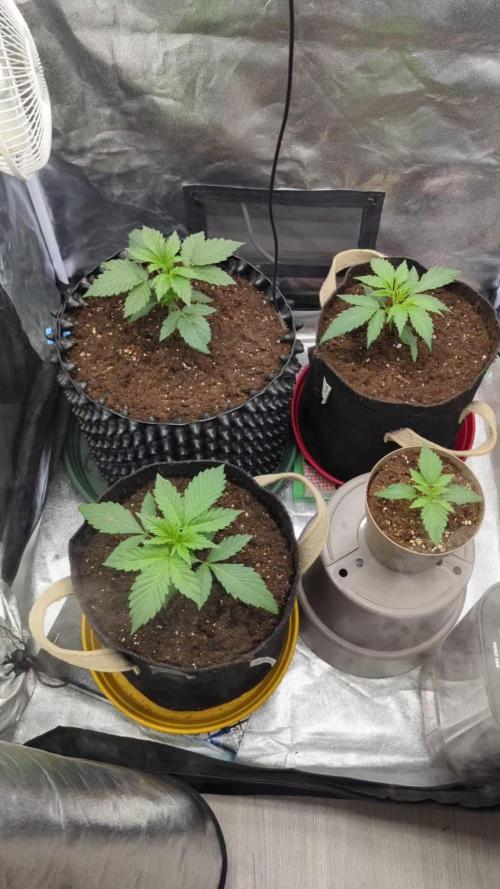
Rempotage des plantes dans du Bat Mix de Plagron dans des pots de 15L et 20L. J'ai utilisé des mycorhize de la marque Great White pour les aider un peu !
La tente se porte bien, j'espère ne pas trop manquer de place mais je sens qu'elle vont bien grandir 🌱🌳
Likes
Comments
Share


@spacetimeman
Follow
Mildew was detected in the beginning if the week, the plant sprayed with solution of hydro peroxide to kill spores and then solution of apple vinegar to stop prevent new mold. It worked.
I thenk the next eeek will be the last. I decreased 5he concentration of the watering solution, especially in Nitrogen part.


Likes
28
Share


@Ultraviolet
Follow
....Understanding Electrical Conductivity
Electrical conductivity measures a material’s ability to transmit electric current, which in the context of gardening, relates to the soil or nutrient solution’s ion content. In simpler terms, EC indicates how salty the environment is around the roots of a plant. This “saltiness” is crucial because it affects the plant’s osmotic pressure, which in turn influences nutrient uptake and overall plant health.
The Science Behind EC
At its core, EC measures the presence of soluble ions like potassium, calcium, magnesium, and nitrates – all vital nutrients for plant growth. These ions carry electrical charges, and their movement creates an electrical current, detectable as conductivity. High EC levels typically mean a high concentration of dissolved ions, whereas low EC levels indicate fewer nutrients are available.
The Impact of Electrical Conductivity on Plant Growth
The relationship between EC and plant growth is a delicate balance. Just the right EC level can enhance nutrient uptake, bolster plant health, and increase yields. However, when EC levels stray too far from the optimal range, they can lead to nutrient imbalances, osmotic stress, and even plant death.
Nutrient Uptake and EC Levels
Plants absorb nutrients from the soil or water through their roots, a process influenced by the surrounding EC levels. Ideal EC levels help create an optimal environment for this exchange, ensuring plants receive the nutrients they need without exerting excessive energy.
High EC Levels: A Double-Edged Sword
While a certain level of dissolved ions is beneficial, excessively high EC levels can harm plants. High salinity can draw water out of plant cells, leading to dehydration and nutrient lockout – a condition where plants cannot absorb essential nutrients despite their presence.
Low EC Levels: Undernourished Gardens
Conversely, low EC levels can starve plants of necessary nutrients, stunt growth, and lead to underdeveloped or diseased plants. Maintaining an optimal EC range is crucial for healthy plant development.
Measuring and Adjusting Electrical Conductivity
Understanding the importance of EC is one thing, but applying this knowledge in the garden or greenhouse requires practical steps. Regular monitoring and adjustment can ensure that plants remain in a conducive growth environment.
Tools for Measuring EC
Gardeners can use various tools to measure EC, from simple handheld meters to more sophisticated systems integrated into hydroponic setups. Regular monitoring allows for timely adjustments to soil or nutrient solutions, ensuring optimal EC levels.
Adjusting EC for Optimal Growth
Adjusting EC involves changing the concentration of nutrients in the soil or solution. In hydroponics, this might mean diluting or concentrating the nutrient solution. In soil, amendments may be added or flushed with water to correct EC levels.
Practical Applications: EC in Various Growing Environments
The application of EC knowledge varies across different growing environments, from traditional soil-based gardens to modern hydroponic systems.
Soil Gardening
In soil, EC measurements can help diagnose nutrient imbalances and guide fertilization practices. Amending soil with organic matter or flushing with water can adjust EC levels to better support plant growth.
Hydroponics and Aquaponics
In hydroponic and aquaponic systems, where plants are grown in water-based solutions, maintaining optimal EC levels is crucial for nutrient availability. These systems allow for precise control of EC, directly influencing plant health and yield.
Greenhouse Cultivation
In greenhouses, EC monitoring can help manage the nutritional status of various plants, ensuring that each receives the right nutrient mix for optimal growth. Automated systems can provide real-time EC adjustments based on plant needs.
Navigating Challenges: Overcoming EC-Related Issues
While maintaining optimal EC levels can significantly enhance plant growth, gardeners may encounter challenges such as fluctuating conditions, equipment malfunctions, or environmental stresses. Regular monitoring, combined with a solid understanding of each plant’s specific needs, can mitigate these issues.
Conclusion: The Conductive Path to Lush Gardens
Electrical conductivity, though an invisible factor, is a cornerstone of successful gardening and farming. By understanding and managing EC levels, gardeners and farmers can profoundly influence the health and productivity of their plants. As we continue to explore the nuances of plant growth, the role of EC stands out as a testament to the marriage of science and nature in cultivating life. Whether in soil, water, or air, mastering the art of electrical conductivity can unlock the full potential of our green companions, leading to bountiful harvests and vibrant gardens.

Likes
8
Share


@Gonjuk
Follow
GreenHouse seeds è sempre una garanzia, super lemon haze più volte vincitrice di premi non delude mai, una pianta fantastica

Likes
11
Share


@TheMadHasher
Follow
Whats up everybody! Since last week the ladies have been switched to a flowering light cycle. I eased them into the schedule over like three days just to give them a more natural transition. They all got most of their mature fan leaves removed from the bottom sections to open yo the bud sites to a little more light and airflow. After about the first day you could already see the new growth coming in and more bud sites starting to form. I also bent the dominant colas on all three plants to give them all more of an even canopy. Cant wait to see these babies start budding! I hope everyone has a Merry Christmas! 🎁🎄


Likes
7
Share

@adriano_dope
Follow
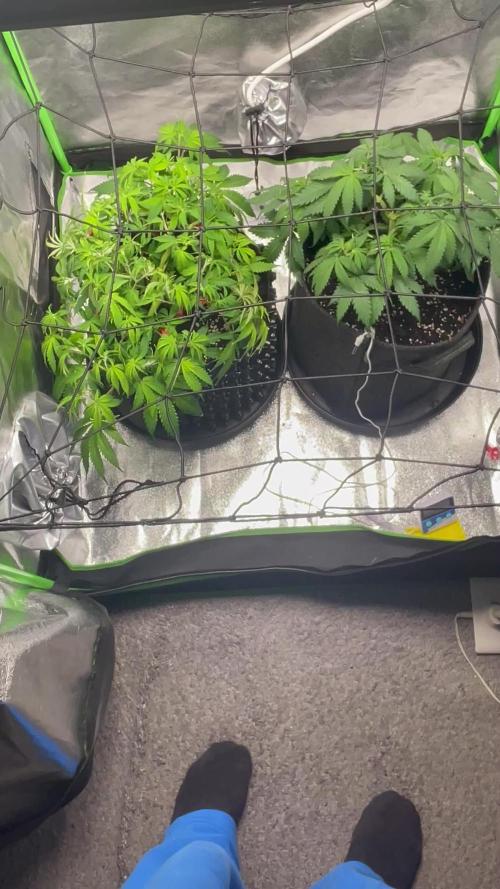
Ich lade jetzt einfach mal bisschen hoch was passiert ist ich habe nämlich davor bisschen die wochen vercheckt war eig noch garnicht woche 7 naja jetzt der rest von woche 8😂

Likes
62
Share

@RockoCalenberg
Follow
Blütetag 52 | Tag 112 gesamt
Klima – Frühling im Anmarsch
Draußen zeigt sich der Frühling deutlicher. Mehr Licht, mildere Tage, mehr Bewegung in der Luft.
Im Zelt ist dieser Umschwung spürbar. Die Pflanzen trinken mehr, der Dryback läuft zügiger durch, das Substrat trocknet gleichmäßiger ab. Der Rhythmus wirkt insgesamt ausgeglichener als noch vor einigen Wochen. Die Kurven verlaufen ruhiger, die VPD liegt häufiger im gewünschten Bereich.
Wir sind klar in der Endphase. Der Stoffwechsel arbeitet aktiv, kleine Schwankungen zeigen sich sofort – insgesamt aber ein ruhiger und stimmiger Verlauf.
🌿 Pflanzenstatus
White Gushers 33
Sie reagiert feiner auf Veränderungen, bleibt aber insgesamt stabil.
Die Blattverfärbungen nehmen weiter zu – deutliche Herbststimmung. Energie wird sichtbar aus dem Blattwerk gezogen und konsequent in die Blüten verlagert.
Das Stacking läuft weiter. Die Buds gewinnen an Volumen, wirken kompakter und schwerer. Die Oberfläche erscheint dichter, geschlossener, reifer.
Trichomstatus:
Überwiegend milchige Köpfe, nur noch vereinzelte klare. Kaum Amber. Sie bewegt sich klar in Richtung Erntefenster.
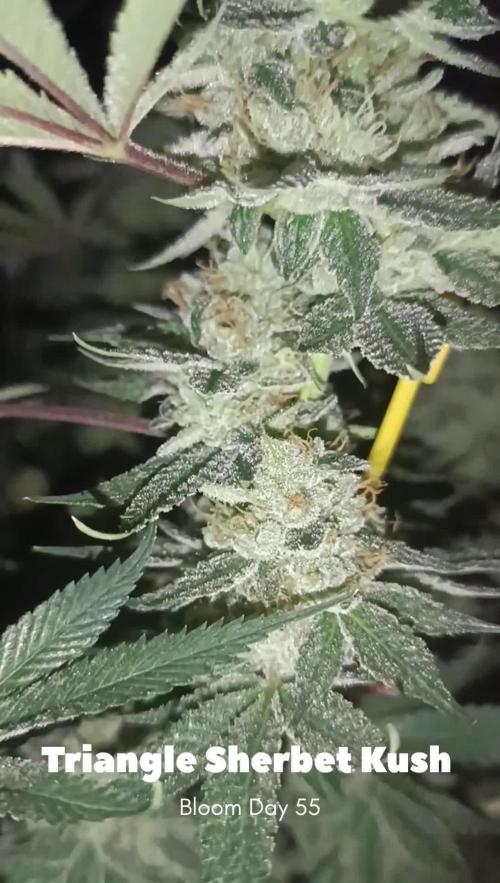
Triangle Sherbet Kush
Auch sie zeigt nun deutlichere Herbsttöne im Blattbild. Optisch etwas gelassener, aber klar in der Endphase angekommen.
Die Blütenstruktur wirkt sehr kompakt und sauber aufgebaut, extrem frostig. Minimal hinter der White im Reifegrad – jedoch im gleichen Zielkorridor.
Trichomstatus:
Milchig dominiert auch hier, mit leicht höherem Anteil klarer Köpfe als bei der WG 33. Eindeutig in der späten Reifephase.
🌸 Blüten & Duftbild
Die Buds gewinnen weiter an Struktur und Geschlossenheit.
Die Verdichtung ist sichtbar, die Form wirkt ausgereifter als noch vor einer Woche.
Aromatisch entwickelt sich das Profil weiter.
Die Frucht bleibt präsent, wird jedoch zunehmend von einer würzigeren Tiefe begleitet.
Die Komplexität nimmt zu, ebenso die Intensität.
Das Zusammenspiel der Noten wirkt runder, dichter und vielschichtiger.
Beim Öffnen des Zeltes steht der Duft klar im Raum – nicht lauter, sondern konzentrierter.
💧 Nährstoffe
Unverändert gefahren:
CalMag: 1,5 ml/L
Bloom: 1 ml/L
Keine Anpassungen.
Keine Experimente.
Konstanz bis zum Schluss.
🐞 IPM / Biologischer Pflanzenschutz
Keine neuen Maßnahmen.
Das bestehende System läuft weiter ohne zusätzliche Eingriffe.
Schimmel ist bislang kein Thema.
Aufmerksamkeit bleibt – Überreaktion nicht nötig.
🔎 Ausblick
Wir sind auf der Zielgeraden.
Noch wenige Tage – realistisch im Bereich von 7–10 Tagen, abhängig von der weiteren Trichomentwicklung.
Jetzt heißt es:
Klima stabil halten.
Nicht unnötig eingreifen.
Den Lauf sauber ins Finale führen.
🔎 Wochenfazit
Die Zeichen stehen klar auf Reife.
Herbstfarben im Blatt, milchige Trichome, fortschreitende Verdichtung.
Wir sind auf der Zielgeraden –
aber noch nicht an der Ziellinie.
Noch ein paar Tage Geduld.
Dann fällt der Vorhang.
— Rocko 🌿🔥💚
Flower Day 52 | Day 112 Overall
Climate – Spring Moving In
Outside, spring is becoming more noticeable. More light, milder days, more movement in the air.
That shift is clearly reflected inside the tent. The plants are drinking more, the dryback cycle moves faster, and the substrate dries more evenly. Overall, the rhythm feels more balanced compared to a few weeks ago. The curves look calmer, VPD stays in the target range more consistently.
We’re clearly in the final phase now. Metabolism is active, and even small fluctuations show up in the leaf expression — but overall the run feels steady and composed.
🌿 Plant Status
White Gushers 33
She reacts a bit more sensitively to changes, yet remains stable overall.
Leaf fade is progressing — clear autumn tones setting in. Energy is visibly being redirected from the foliage into the flowers.
Stacking continues. The buds are gaining volume, becoming denser and heavier. The surface looks tighter, more mature, more consolidated.
Trichome status:
Mostly cloudy heads with only a few remaining clear ones. Hardly any amber. She is clearly approaching the harvest window.
Triangle Sherbet Kush
She is now showing stronger autumn coloration as well. Slightly calmer in overall appearance, but unmistakably in late flower.
The bud structure is very compact and clean, extremely frosty. Slightly behind the White in maturity — yet within the same finishing corridor.
Trichome status:
Cloudy dominant here as well, with a slightly higher percentage of clear heads compared to WG33. Clearly in the late ripening phase.
🌸 Flowers & Aroma Profile
The buds continue gaining structure and density.
Their formation appears tighter and more developed than a week ago.
Aromatically, the profile keeps evolving.
The fruity notes remain present, but are increasingly supported by a deeper, warmer spice layer.
Complexity is increasing, and so is intensity.
The overall expression feels more layered, more concentrated, more mature.
When opening the tent, the aroma doesn’t feel louder — it feels fuller.
💧 Nutrients
Unchanged:
CalMag: 1.5 ml/L
Bloom: 1 ml/L
No adjustments.
No experiments.
Consistency through the finish.
🐞 IPM / Biological Pest Management
No new measures.
The existing system continues running without additional intervention.
No mold issues so far.
Awareness remains — overreaction does not.
🔎 Outlook
We are on the home stretch.
Likely within 7–10 days, depending on how trichome development continues.
Now it’s about:
Keeping the climate steady.
Avoiding unnecessary interference.
Guiding the run cleanly into the finale.
🔎 Weekly Conclusion
The signs are clear: ripening is advancing.
Autumn tones in the leaves, cloudy trichomes, increasing density.
We are on the home stretch —
but not at the finish line yet.
A few more days of patience.
Then the curtain falls.
— Rocko 🌿🔥💚
Likes
7
Share


@Pjm70
Follow
She seems to be budding nicely. However in the past few days all her lower leaves are turning yellow. I know this plant is a heavy feeder and I thought I was feeding enough. She is not growing anymore, but she looks like she has a nitrogen deficiency.
I do use the same water which has a low 6 ph. Today I gave her water with a 7.0 ph. Just to get her out the constant ph zone she has been in.
9/17 fed 15 MLS of foxfarm Tiger Bloom
9/19 fed 15 MLS of Tiger Bloom.
9/21 fed 4 tablespoons Foxfarm Big Bloom, 1/2 Teaspoon Foxfarm Beasti Bloom and 12 MLS of Foxfarm Grow Big. Per 2 gallons. Day 98
She has a lot of yellow lower leaves. So I hit her up with a little grow big. From what I read, she still needs some nitrogen.
Lower leaves turning yellow. Think it's a little too early for that. She is a big eater and it looks like she has not been getting enough base nutrients.
Her pot is very heavy, so now I'm going to hold back water until she drys a little.
Getting cold out at night. Every morning I go out and she was drenched in dew. This plant I'm counting on giving me bud until at least spring. So now I have been sneaking her in the garage at night with 47 percent humidity. She seems to be very happy about this. Right now 9 pm 60 degrees, humidity 71. Humidity is way too high for her to be sitting outside.
Her buds are fattening up. Some time last week I gave her a feeding of just Foxfarm Beasti Bloom. Beasti has no nitrogen and she was not happy about that. A lot of lower leaves turned yellow. So I gave her Foxfarm Tiger Bloom and that seemed to make her happy again. Will not make that mistake again.
Likes
92
Share


@DogDoctorOfficial
Follow
🌸 Week 4 Flower Report: Growth, Challenges & Big Changes! 🌸
Hey, Grow Diaries Fam! ✨
We’re here at Week 4 of Flower, and what a week it’s been—packed with challenges, adjustments, and exciting progress! Before diving into the details, let’s start with a note on my flowering timeline. While this is Week 4, I don’t start counting flower days the moment I flip to 12/12. Instead, I wait for the plants to show true signs of bloom. It’s a small but significant distinction that keeps things accurate and aligned with the plants’ development. 🌱
Defoliation: Timing is Everything!
Defoliation is a critical part of the flowering stage, and I typically wait until Day 21. However, this week, I tackled it earlier on Day 17 because:
1️⃣ The room was simply too full.
2️⃣ And most importantly—the Papaya Zoap had other plans!
She’s a fighter—determined, defiant, and constantly reaching for the moon. Despite intense training like super cropping, she’s still pushing upward, nearly outpacing the LED lights. Challenges like this remind us of a simple truth: gardening mirrors life. It’s about resilience, adaptation, and unwavering determination. 💪
This week, I added a second SCROG layer. While this net will support the flowering colas, it’s also there to strategically manage the Papaya Zoap. Why? Because experience has taught me that if she grows out of the LED’s range, she won’t finish properly—and that could disrupt the balance for every other plant in the tent. It’s all about teamwork, even in the garden. 🌟
Defoliation was intense, removing nearly all the leaves with stems to clear space and boost airflow. The tent now looks dramatically different! For the full before-and-after transformation, be sure to check out my YouTube channel—trust me, you’ll want to see this process up close! 🎥✨
Switching to Aptus Holland Minerals
A major milestone this week: I’ve transitioned entirely to Aptus Holland Minerals. 🌊 From now on, it’s just minerals—no more organic inputs. This marks the start of a new chapter, and I’m incredibly curious to see how the plants react to these changes. Here’s the current nutrient mix:
• System Clean: 0.5 ml/L
• Regulator: 0.15 ml/L
• RO Water Conditioner: 0.8 ml/L
• All-in-One Liquid: 2.1 ml/L
I’m keeping the pH at 6.1 and TDS at 556 ppm, and so far, the plants are thriving. This week also included a thorough system clean, ensuring everything runs smoothly as we enter the final flowering stages. 🌿
Bud Development: Pure Magic!
The bud formation across all the genetics is nothing short of incredible. Every plant is thriving, and the canopy is lush, vibrant, and full of potential. I’ve raised the PPFD to 750 for this stage, with temps steady at 25°C and RH at 63%—keeping the VPD dialed in at 1.11. The TrolMaster ecosystem, paired with the AutoPots, makes managing these precise conditions seamless. With more time to focus on the plants, I can give them the daily care they deserve. 💚
Shoutouts & Gratitude
A huge thank you to my sponsors and supporters: TrolMaster, Aptus Holland, Pro-Mix, Cannakan, and the amazing seed banks. Your incredible products and technology make this journey possible. 🌟
To the Grow Diaries community and all my followers—thank you for your energy, love, and even the challenges from the haters. It all fuels this incredible process, and I apprecilove every bit of it.
Special shoutout to Brother Daggadna—check him out on Instagram and show some love! 💚
The plants are heading into the next phase of bloom, and I can’t wait to share how this story unfolds. 🌸✨
As always, stay tuned, stay positive, and let’s keep growing strong together! 🙌
Growers’ love to all 💚
#TrolMaster #AptusHolland #GrowLife #CannabisCommunity #FlowerWeek4 #NeverGiveUp #GrowWithLove #IndoorHorticulture #Defoliation #PPFD #ControlledEnvironment #SCROGNet #DogDoctorOfficial
Discount Codes so you can save big on your next check out 💚💚💚
Kannabia - DOGDOCTOR 30% off
SeedsmanSeeds - DOGDOCTOR 10% off
CannaKan- DOGDOCTOR 15% off
terpyz.eu - DOCTOR 15% off
The Neutralizer - PORKIT5-DOG 15% off
As always thank you all for stopping by, for the love and for it all , this journey of mine wold just not be the same without you guys, the love and support is very much appreciated and i fell honored and so joyful with you all in my life 🙏
With true love comes happiness 💚🙏 Always believe in your self and always do things expecting nothing and with an open heart , be a giver and the universe will give back to you in ways you could not even imagine so 💚
Friendly reminder all you see here is pure research and for educational purposes only
Growers Love to you all 💚💚💚
P.S. – A Deep Dive into the ICL-300: Revolutionizing Under-Canopy Lighting
The ICL-300 isn’t just another LED—it’s a game-changer for under-canopy lighting. Unlike traditional LED systems that project light in a single direction, the ICL-300’s 300-degree design ensures even light distribution beneath the canopy. 🌟 This unique feature means that no part of your plant is left in shadow, creating a balanced environment for lower buds to thrive.
Key Tech Specs & Benefits:
• 300-Degree Light Distribution: This design fills the under-canopy space with optimal light, enhancing photosynthesis where it often gets neglected. 🌱
• Full Spectrum Output: Tailored to meet the specific needs of plants at every stage, ensuring quality growth from base to apex.
• Energy Efficiency: Advanced LED technology delivers maximum output with minimal energy usage, keeping costs down and sustainability up. 💡
• Durability & Heat Management: Built with high-quality materials, the ICL-300 stays cool and reliable, even in intense growing environments.
Why It Matters:
Under-canopy lighting is a game-changer for growers aiming to maximize yield and quality. Typically, lower buds receive less light, resulting in larfy or underdeveloped flowers. The ICL-300 changes that dynamic entirely by turning shadows into opportunity. 🌟 With light evenly dispersed across the entire plant, you’re not just growing; you’re sculpting a masterpiece.
For me, the ICL-300 is more than a tool—it’s a partner in innovation. It ensures that every plant in my grow room has equal opportunity to shine, from the top colas to the smallest buds at the base. When paired with a carefully managed ecosystem, like the one powered by TrolMaster, the potential for consistent, top-quality harvests reaches new heights.
This isn’t just about adding light—it’s about adding value, efficiency, and balance to the grow process. I’m beyond excited to see how the ICL-300 transforms the game in my tent, and I can’t wait to share the results with you all! 💚


Likes
8
Share


@Hawkbo
Follow
Sorry for the delay was in a wedding this weekend came home and been trimmin like a dog the past few days but I gotta feed everything in this tent tmm so I'm gunna get some pics. If your interested in the pics come back tmm night.
The only 3 autos in 1 gal bags are the mexican airlines, pineapple express and blue dreamatic. Theyll stay pretty small and dry out quick so they are tough to keep up with cuz I only feed when I'm feeding the big ones. I dont mix up separate batches for these I just dilute the big batch which is usually 10-13 gal at a time
Processing
Likes
9
Share


@HollowSource
Follow
This girl has been topped twice. She has responded really well. The plants look like they could take a feed so I'm going to start introducing nutrients again and a quarter the recommended dose and raise this gradually before flipping them all to flower in a weeks time.

Likes
58
Share


@Kynareth
Follow
Plant keep growing great.
As you can see at the leaves there are some of the tips of the leaves with bad color, thats because teh EC reached up to 1,8 so I added ph leveled plain water with 0,4 ec to lower the ec to 1,5 and the plant is responding really well, growing faster and with a healthy root system.
The temperature was high also (near 30 degrees celsius) so i moved the lamp upper and i will setup an 100mm fan for extraction. The led panel is really really hot


Likes
Comments
Share

@eldruida_lamota
Follow
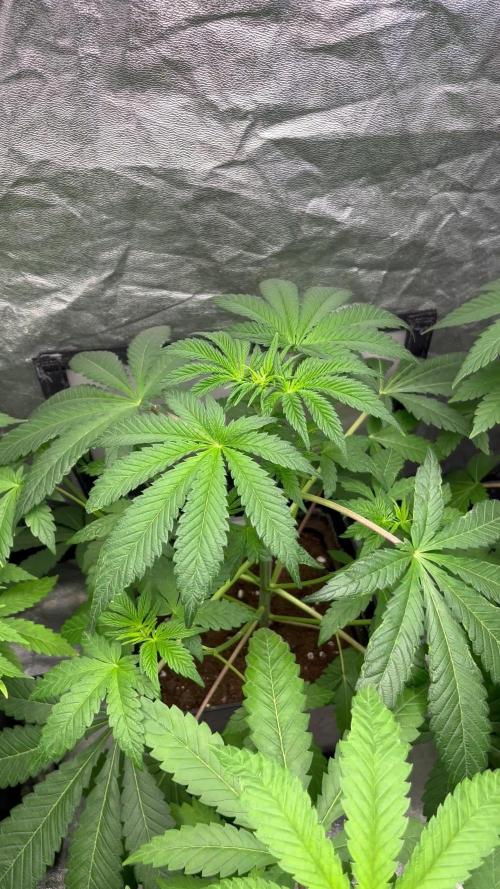
Que pasa familia, vamos con la primera semana de floración de estas Barcelona Puff feminizadas de Seedstockers.
Vamos al lío ,se trasplantaron en macetas de 7 litros definitivamente.
El ph se controla en 6.0 , la temperatura la tenemos entre 24/20 grados y la humedad ronda el 50%.
El ciclo de floración puse 12h de luz, el foco está al 50% de potencia.
De momento van creciendo a buen ritmo y tienen un buen color, estaban muy bien enraizadas al realizarle el trasplante se notaba la abundancia radicular.
Agradecer a Agrobeta por el envío del kit gold series para la temporada 🙏.
- os dejo por aquí un CÓDIGO: Eldruida
Descuento para la tienda de MARS HYDRO.
https://www.mars-hydro.com
Hasta aquí todo, Buenos humos 💨💨💨
Likes
6
Share


@Stevodidge
Follow
More defoliation and lst adjustments this week. Slows down growth, but doesn't seem to be causing any other problems.

Likes
30
Share


@TragicTerps
Follow
This week we haven't really experience anything too crazy, plant C had a little underwatering issue she got thirsty started to look pretty weak the 1st day of week 6 (for her only) she had recovered by the end of day 1 before going into the dark cycle. As the week progresses we should see some more tricome production and some more development of the bud sites. I'm hoping the underwatering that happened won't stunt or hurt the end yield too bad, that was a bad moment of laziness... whoops.
Overall I haven't had any problems yet with pests there's been a lot of gnats and spiders on the outside of the tent but nothing on the inside. For a cheap tent it's working awesome. It does have some light leakaround the zippers but this isn't a problem for me as I'm growing in a darker area already. But if this were in a bright room all the time this tent would be a bad choice.
Now as week 7 progresses we'll start seeing more rapid Bud development and see some increased tricome production. To think this girl (plant A) is just barely over halfway done is crazy. I have ended up removing the entire bottom 1/3 of the plant in the form of defoliation of the yellowed and dying leaves. People say don't defoliate Autos for shock reasons I hope it doesn't really matter.


Likes
12
Share


@GREENPHOENIX6262
Follow
Starting week 2 Veg - See below for specs
Nutrient feeds remain the system
Height - 2 inches (Not much progress in height) Width has definitely grown out
Water feeds continue to be everyday - Have a gallon+Nutes
Light Intensity - 100%
*Mid-week review - 8/18*
Introduced Cal-Mag (4 ml/Gal)
Plants grown approximately .5 inches in height - 2.5 -3.0 inches in width
Light Intensity 100%
*End of week recap* (08/20)
Both have grown about 1 - 1.5 inches in height and 2 - 2.5 inches in width.
Fan leafs deep lushes green
Bud sites topped
Thus far all is running smoothly.