


Likes
Comments
Share


@nefcxt
Follow
Except for them getting a bit elongated this week went quite well. They have already grown multiple pairs of leaves and despite being so thin feel relatively robust. For watering I've just used rain water and I also added some of those reflective blankets to the walls (which are black otherwise), they're not perfect but better than nothing.

Likes
117
Share


@PEAKYPLANTERS
Follow
Brothers and sisters farmers.
My job here is over!
the only one and only reason why I prolonged the late release of the end-growth report is just because this plant really deserves !!!!!
Strain super super super fantastic !!!
I was really struck by everything that is what these powerful super beans have.
From growth to smoked! 10/10
Beautiful frosty and rocky nuggets .... mmh just like Peaky
His odor is ..... amazing .... and the gems inside show purple nuances.
I will still update you on the smoke of these magnificent dolls.
Stay on the piece
Greetings to all of you, fantastic Weed friends
Happy and abundant harvesters

Likes
8
Share


@420cfm
Follow
week 6 and the smell is amazeballs. A ton of bulking happening this week. Will likely take this to 8 weeks and maybe a half week of flushing. Trichromes showing small amounts of cloudiness. Pumped!!


Likes
42
Share


@AsNoriu
Follow
Day 85. Girls looked ok till i saw budrot !!! Sunset Sherbet went to bin. Was biggest from all ... on last visit i saw bird poop on her, maybe its aftermath of nute burn ... ;)))))
Apples looks very long and stretchy by bud structure, in other words more bubble hash plant than for smoking.
Purple is going nice and steady, just no purple colours ;))))))
Overall girls can go without care, but results will be small, they needed better light , forest overtook surroundings, needs good clean up, but its not my land ;)))
Think 20-30 g each is around what i will get from rest.
Happy Growing !!!
Likes
Comments
Share


Likes
14
Share

@DogDoctorOfficial
Follow
🌌 Folder #2 — Cosmic Noodles
Week 3 Update — Technique, Response, Momentum
First of all — thank you to everyone following this diary.
This space exists to document real-time learning, real decisions, and real plant responses — and this week gave us a lot of material.
Cosmic Noodles continues to impress.
⸻
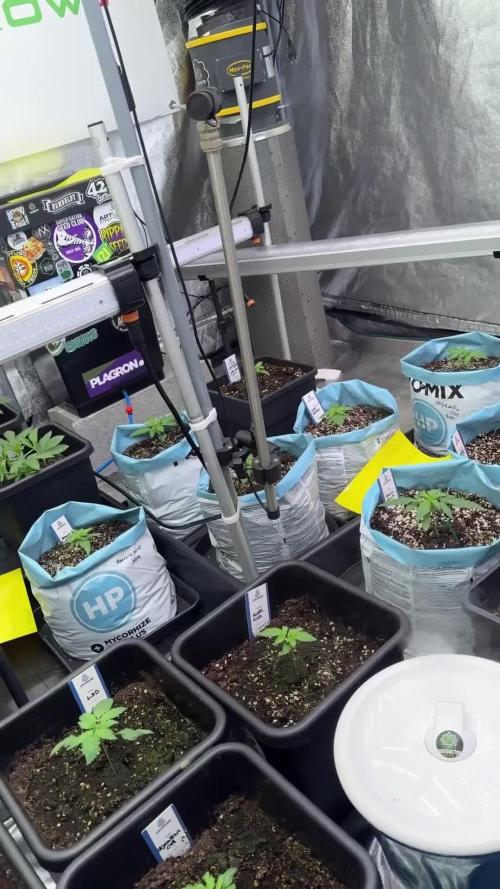
🌱 Plant B — 2 Weeks Veg → Guided Expansion still an autoflower
This plant is moving fast, confidently, and with intention. Her growth this week was so strong that I made the decision to begin structured low-stress training, not to restrict her, but to open her up.
🔧 Training Method (Accurately Explained)
This was a progressive process, not a single action:
1️⃣ Leaf Tucking (Start of the Week)
• Larger fan leaves gently tucked under
• Objective:
• expose inner growth
• encourage branch development
• allow light to reach lower nodes
This alone already triggered visible response.
⸻
2️⃣ Directional Bending (Mid-Week)
As growth accelerated, I moved from leaf work to branch positioning.
• Branches were gently pulled outward
• Secured using soft, green-coated wire
• Wire anchored directly into the soil and pot edge
• No rigid clips, no plastic clamps
The wire is:
• flexible
• forgiving
• adjustable
allowing the plant to move while still being guided.
⸻
3️⃣ Anchoring & Holding Space (End of Week)
As branches continued to push hard, I introduced U-shaped wire anchors, pinched into the soil.
Important clarification:
• These are wired anchors, not plastic clamps
• They hold branches down toward the soil
• Purpose: keep the canopy open and horizontal
• Result: light penetration everywhere
This is not about forcing shape —
it’s about creating room for expression.
⸻
🌿 Plant Response
Her reaction has been nothing short of outstanding.
• Branches: Already pushing into the 6th–7th branch
• Stress response: None observed
• Vigor: Extremely high
• Growth speed: Fast, confident, continuous
She didn’t slow down.
She leaned into it.
This plant is healthy, driven, and clearly enjoying the guidance.
Next week is going to be something special.
⸻
🌱 Plant A — 12/12 From Seed (Autoflower)
Running alongside her is Plant A, grown 12/12 from seed, and she continues to behave beautifully.
• Leaf stage:
• Third pair fully developed
• Fourth pair coming in
• Structure: Compact, balanced, composed
• Behavior: Calm, steady, almost photoperiod-like
Once again, it raises the question:
Are these autoflowers acting like photoperiods?
Or are photoperiods acting like autos?
No answers yet — just fascination and respect.
⸻
💡 Light Intensity & PPFD Response
This week, PPFD was increased, continuing the controlled progression already established in the room.
Key observations:
• Autoflowers are responding exceptionally well
• Leaf posture remains strong
• Color remains healthy
• No stress indicators present
This reinforces that progressive PPFD increases, when done patiently, can be extremely effective — even with autoflowers.
⸻
🔮 What to Expect (and What Not To)
Expect:
• Rapid structural development on Plant B
• Even canopy formation as wire training settles
• Continued confident growth across both timelines
Do NOT expect:
• Forced conclusions
• Rushed flowering assumptions
• Heavy-handed intervention
We observe.
We assist.
We let the plant lead.
⸻
🙏 Closing
This week was a reminder of why technique matters — and why precision in documentation matters just as much.
Thank you to everyone following along.
More to come — and next week, keep your eyes on Plant B.
FOR DISCOUNT CODES AND MORE JUST FOLLOW THE LINK https://website.beacons.ai/dogdoctorofficial
📲 Don’t forget to Subscribe and follow me on Instagram and YouTube @DogDoctorOfficial for exclusive content, real-time updates, and behind-the-scenes magic. We’ve got so much more coming, including transplanting and all the amazing techniques that go along with it. You won’t want to miss it.
GrowDiaries Journal: https://growdiaries.com/grower/dogdoctorofficial
Instagram: https://www.instagram.com/dogdoctorofficial/
YouTube: https://www.youtube.com/@dogdoctorofficial
⸻
Explore the Gear that Powers My Grow
If you’re curious about the tech I’m using, check out these links:
🔆 Lighting & Environmental Control
• Future of Grow — Advanced LED lighting technology
https://www.futureofgrow.com/
DISCOUNT CODE: DOG20
• Lumiflora — Under-canopy LED lighting
https://lumiflorade.com/
• TrollMaster — Environmental controllers and automation gear (past collaboration)
⸻
Genetics
• Zamnesia Seeds — Genetics used in this project
https://www.zamnesia.com/
⸻
🌱 Soil, Substrates, Boosters & Root Support
• Plagron — Substrates, bio mixes, and supportive products
https://plagron.com/en/
⸻
🎒 Storage, Curing & Preservation
• Grove Bags — Curing and storage solutions
https://grovebags.com/
⸻
📸 Photography Equipment & Tools
(Not sponsors, but part of my creative toolkit)
• Sony A6700
• Sony full-frame macro lens + few more
• Stacking photography workflow - learning
• iPhone (for behind-the-scenes shots)
We’ve got much more coming as we move through the grow cycles. Trust me, you won’t want to miss the next steps, let’s push the boundaries of indoor horticulture together!
As always, this is shared for educational purposes, aiming to spread understanding and appreciation for this plant. Let’s celebrate it responsibly and continue to learn and grow together.
With true love comes happiness. Always believe in yourself, and always do things expecting nothing and with an open heart. Be a giver, and the universe will give back in ways you could never imagine.
💚 Growers love to all 💚
📸 P.S. – The Eye Behind the Lens
All photos in this diary (for now — except for the ones showing the camera, which I took with an iPhone) are taken with a Sony A6700 paired with a Sony full-frame macro lens and a few more.
Photography is part of the story — it’s how we share the fine textures, the glow, and the quiet details that words can’t always capture.
I’ve also started experimenting with photo stacking — a technique where multiple images, each taken at a slightly different focus point, are layered together to create one perfectly sharp image from front to back.
It’s not digital enhancement or AI; it’s pure photography — a way to reveal the plant’s beauty in microscopic depth, from trichome to petal.
You’ll even see a few shots of "ghost me" capturing the shots — camera, lens, setup — because every grow deserves not just to be cultivated, but documented like art.
FOR DISCOUNT CODES AND MORE JUST FOLLOW THE LINK https://website.beacons.ai/dogdoctorofficial
NEW DISCORD - Official Server Invite Link : https://discord.gg/ksjAkA5T74
Likes
9
Share


@RolandRoss
Follow
This plant has too much growth that has never seen the light! Did a couple mild rounds of defoliating and some LST to pull the canopy wider. The first trained branches from ealier in the week look GREAT, so i'm hoping the whole plant springs up next week! Added a fresh layer of ammendment and a little TPS one in the water.
Likes
4
Share
@DogDoctorOfficial
Follow
🌸 Pink Rosay Auto by Zamnesia | Pheno A | Week 6 (Flowering)
🌱 Elegance Never Needs to Be Loud
Some plants impress with sheer size.
Others with explosive growth.
Pink Rosay has chosen a different path.
She impresses through elegance.
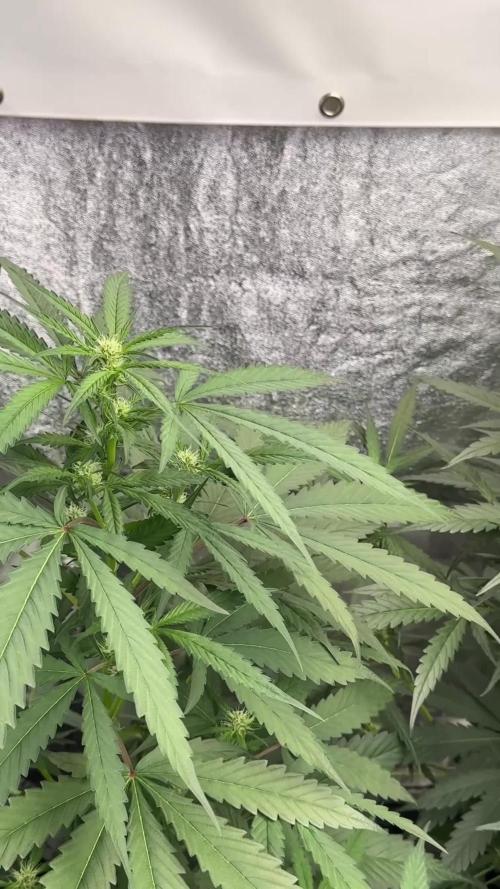
Growing under the same 12/12 From Seed experiment as the rest of the 8×8 Adventure, she continues to prove that a plant doesn't need to be the tallest or widest to command attention. Standing at 96 cm, she has developed into a beautifully proportioned autoflower with a naturally balanced structure, excellent symmetry, and a calm confidence that becomes more obvious every week.
There isn't a single branch that feels out of place.
Everything seems perfectly positioned, as though nature designed her with precision from the very beginning.
Sometimes beauty isn't about being dramatic.
Sometimes it's simply about getting everything right.
⸻
🌸 Week 6 – Flowers Taking the Lead
This week marks a noticeable change in the plant's priorities.
The vertical stretch has begun slowing, allowing more energy to be invested where it matters most—building flowers.
Every branch is now crowned with bright white pistils, and the individual flower sites that appeared last week have already started connecting together, giving each branch the first hints of what will eventually become full colas.
The canopy feels alive.
Every day brings a little more volume, a little more stacking, and a little more character.
This is the stage where the plant quietly shifts from growing upward to growing outward, filling every flowering site with new life.
And Pink Rosay seems perfectly comfortable making that transition.
⸻
🌿 Structure & Natural Balance
One of my favorite qualities about this phenotype is just how naturally balanced she has become.
The gentle Low Stress Training performed during the previous weeks continues paying dividends, creating an open canopy where every branch receives excellent light without feeling overcrowded.
Her internodal spacing remains ideal, allowing light and airflow to reach deep into the plant while giving each future cola plenty of room to develop.
The central leader remains dominant, but the secondary branches are doing an excellent job keeping pace, creating a wonderfully uniform canopy that should translate into a very satisfying harvest later on.
She doesn't need correcting.
She simply needs time.
⸻
? The Language of White Pistils
One of the most beautiful sights in any flowering room is the explosion of fresh white pistils.
They're delicate.
They're bright.
And they're the plant's first true declaration that flower production is fully underway.
This week, Pink Rosay is absolutely covered in them.
Every flowering site seems to wear its own little crown of brilliant white hairs, reaching outward as the calyxes slowly begin stacking beneath them.
It's one of those moments every grower enjoys because those tiny white pistils are much more than beautiful—they're the blueprint of the harvest to come.
Today they're soft, fresh, and full of energy.
Over the coming weeks they'll guide the formation of every cola as the flowers swell, mature, and gradually begin revealing the frosty character hidden inside these genetics.
Watching that transformation never gets old.
⸻
🍃 Plant Health
Health continues to be outstanding throughout the entire plant.
The foliage maintains a rich, healthy green without excess or deficiency, while the leaves display excellent posture and remain perfectly relaxed under the current environmental conditions.
The stems have thickened nicely during the stretch and now provide a solid framework for the flowers that continue developing across the canopy.
There are no signs of stress.
No unnecessary stretching.
No wasted energy.
Just a healthy autoflower confidently following her own schedule.
⸻
💧 Hand Watering & Nutrition
Pink Rosay continues to be hand-watered, allowing close observation of both substrate moisture and daily plant response.
Current feeding:
• Terra Grow — 1.9 ml/L
• Terra Bloom — 1.9 ml/L
• Pure Zym — 1 ml/L
• Sugar Royal — 1 ml/L
• Power Buds — 1 ml/L
• Green Sensation — 1 ml/L
Maintaining:
• EC: 1.78 mS/cm
• pH: 6.0
The nutrient balance remains right where the plant wants it, supporting the transition from vigorous growth into full flower production while keeping the foliage healthy and vibrant.
⸻
🌡️ Environment
The environment continues providing exactly the consistency these genetics deserve.
Current conditions:
• Day temperature: 29°C
• Night temperature: 25°C
• Relative humidity: 60%
• Solution temperature: 21°C
• Root zone temperature: 21°C
• CO₂: approximately 529 ppm
Maintaining a stable environment allows each phenotype to express its genetics naturally, and Pink Rosay is taking full advantage of those conditions.
Healthy roots.
Stable climate.
Happy plants.
⸻
👀 Looking Ahead
The coming week should be where the flowers truly begin to gain substance.
The framework has been built.
Now it's time for the calyxes to start swelling, for the pistils to multiply even further, and for each flowering site to slowly merge into the colas that have been quietly preparing since the stretch began.
If she continues on this path, I expect a canopy filled with beautifully shaped, evenly developed flowers from top to bottom.
Everything about her suggests she's only just beginning to reveal what she's capable of.
⸻
🙏 Final Thoughts
Pink Rosay continues to remind me that perfection isn't always measured in size.
Sometimes it's found in balance.
In symmetry.
In healthy growth.
In the quiet confidence of a plant that simply does everything well.
Week after week, she has developed without drama, without setbacks, and with a grace that's difficult to ignore.
Watching those brilliant white pistils multiply across such a beautifully structured canopy has easily been one of this week's highlights, and I'm incredibly excited to see how these early flowers transform over the coming weeks.
A huge thank you to Zamnesia for these fantastic genetics, Plagron for providing the nutrition that keeps this project thriving, Future of Grow for the incredible lighting, TrolMaster for maintaining such a stable environment, and to everyone following this journey here on GrowDiaries.
Your encouragement, questions, and shared passion for growing make this 8×8 Adventure even more rewarding.
Until next week...
Growers Love and happy growing! 🌱💚
Processing
Likes
8
Share


@Chronnoisseur
Follow
The tops on these girls are getting so heavy and the smell is crazy lemony and piney so strong it smells like your smoking a joint right at the window all the time even with my carbon filter. I'll be breeding with this lemon skunk strain in my next grow. Stay tuned for new genetics and making my own genetics going to be running chemo,blueberry,m39gdp,gg4 and will be crossing with the lemon skunk pollen fingers crossed 🤞🙏

Likes
8
Share


@Random80
Follow
She was left alone for 10 days but it turns out that I managed to leave just the right amount of water in autopot. She used all the water and dried out her root just at the same time when I was back. She recovered nicely from overwatering and went pretty high witch was expected for part of sativa genetics in her. She was already in flowering phase but I still I decided to apply some heavy LST to lower her down and spread around the grow tent since she is the only one in. She has now covered 70% of my 80x80cm grow tent. Also I used BOOM BOOM spray twice to save her from LST shock.
First added bactrex 1 gr, orgatrex 20ml in 1 lit (BIO TABS) . After that I was using combination of 2ml orgatrex and 2ml of BIO PK 5-8 in 1 lit water with each watering. And she really started to use loads of water, 1,5 lit per day.
No photos during week 5 so I added early week 6


Likes
53
Share


@SolitudeCorners
Follow
Last week of flowering (72days from the light switch) Gonna cut soon when the dirt is dry. A quite late harvest. Many buds denser more, and stem can’t longer resist.
This season so satisfy. Thank for all mentor and comment. You all are my inspiration for grows.
Feeding
23/1 Water 13.5L+Flawless 20ml ppm80 ph6.2
MDR 3L 2Lx5
Runoff
MDR 1400 /1155
Zkittle 1600/1300/1150
Pineapp 900/600
Purp 1300 /1200
Sapp 2000/1100
Dozdos 1100/1000
25/1 10.42 6L ppm9 ph6 1L per pot
3L+Flawless6ml ppm116 ph5.9 1.5/1.5 Purp, Zkittle
4.5L+ Flawless7ml ppm119 ph6 1.5/3 Sapp,MDR
Runoff
Purp 1300
Zkittle 1500/1200
Dozdos 1400
Sapp1300
Pineapp850
MDR950
27/1 runoff
Pineapp 500
Purp 900
MDR 600
Zkittle 400
Sapp 300
Dozdos 400

Likes
49
Share


@Targona
Follow
Targona 43 days since my little girl sprouted from seeds🌱
Sixth week of growth of my Apple Fritter Automatic 🍎🍏🍎
Nutrients:
I use Advanced Hydroponics Of Holland nutrients - three basic components, still according to the table for vegetative growth 💓 -
- Dutch fertilizer Formula 1 Grow - supplies the plant with substances necessary for the perfect development of roots, stem and leaves; intended for the growth phase 🌾
- Dutch fertilizer Formula 2 Bloom - contains a large amount of nutrients necessary for rapid growth and fruit development, supplies the plant with energy; intended for the flowering phase 🌸🌿
- Dutch fertilizer Formula 3 Micro - increases oxygen intake, improves plant immunity, ensures better absorption of nutrients; intended for the growth and flowering phase 🌴
-------------------------------------------------- -------------------------------------------------- ---------
BioBizz Calmag - The special Calmag supplement was designed for professional and hobby growers who need to supply their plants with calcium and magnesium in organic quality for a long time or immediately. 100% organic 💩💩 and certified BioBizz Calmag is made from calcium carbonate and magnesium sulfate supplemented with humic acid.
-------------------------------------------------- -------------------------------------------------- ------------
BioBizz Bio pH- is an organic pH regulator. An aqueous solution of citric acid, which occurs naturally in citrus fruits 🍋🍋
---------------------------------------------------------------- ----------------
During the flowering period, I add stimulants:
- JUNGLE X Environ is a highly effective complex preparation for stimulating flower formation. 🌸🏵️
- Bud Candy - carbohydrates for my girls 🍭🍭🍭
Anyway, this is the last watering that I mix like this. I will gently switch to mainly organic nutrients, with the addition of very gentle flower stimulants, which are only slightly or partially mineral.
In general:
Apple Fritter Automatic 🍎🍏🍎 - The girl still responds well to nutrients. Actually all the girls in the tent, except for their sister - Melonade Runtz, which I'm sorry about.
However, as I wrote above, I will be switching to a different fertilization system, so we'll see, girls, it shouldn't stress me out, because it will be much lower doses of organic nutrients.
I really like the main "bud", I can already see that it will be a thick and strong flower 💚🌺🌱🌿
Training:
During this period, I decided to try only a slight defoliation. In previous rounds, I did more defoliation every week, now I try to do the opposite and leave more space for flowers and nature. I wonder if this will affect the harvest 💚🌞🌞
Light: Mars Hydro TS1000 The plants respond effectively and the light is technically very well managed - I try to have 50 cm between the light and the plants, so I move it up regularly 💡💡💡
Thanks for the likes
See you soon 😍😍
Likes
13
Share

@GreenEldritchGardens
Follow
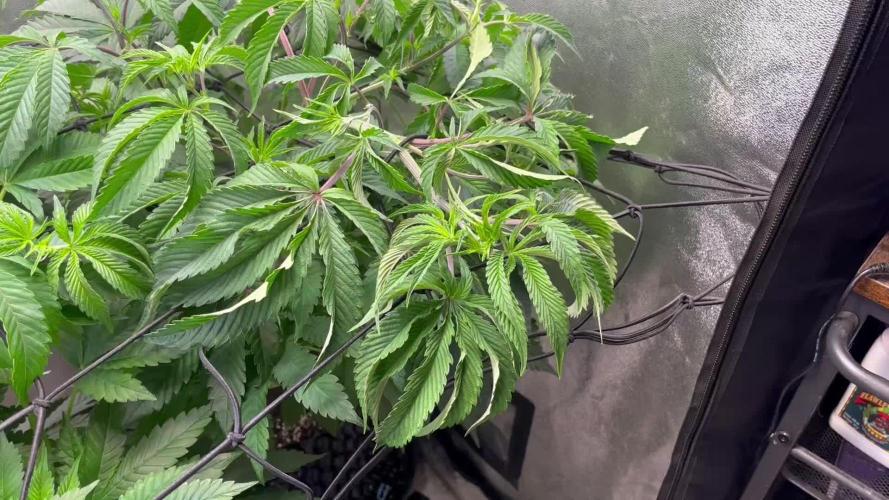
Scrog time! Finally the space on the tent was there and could lower this plant a bit that was getting too high.
So far I really like The Curse, big leaves very sativa like with big fingers, tall and vigorous plant.
Gonna flip her soon to 12/12 later unfortunately not much time lollipop before.

Processing
Likes
17
Share


@Ashbash
Follow
Lots of fattening this week lots of foxtailing too though. Plant smells strong of citrus and I can't wait to try her. Trichs not looking too amber yet but I hear some just dont, so I've pulled a small bit off to try. Watch this space!

Likes
3
Share


@Leonard_Lunte
Follow
Day 46 - Lollipopped all three pearls, I will now wait a week and then send them into flower. Everything is going pretty well with these Ladies.


Likes
2
Share

@Avengergreen
Follow
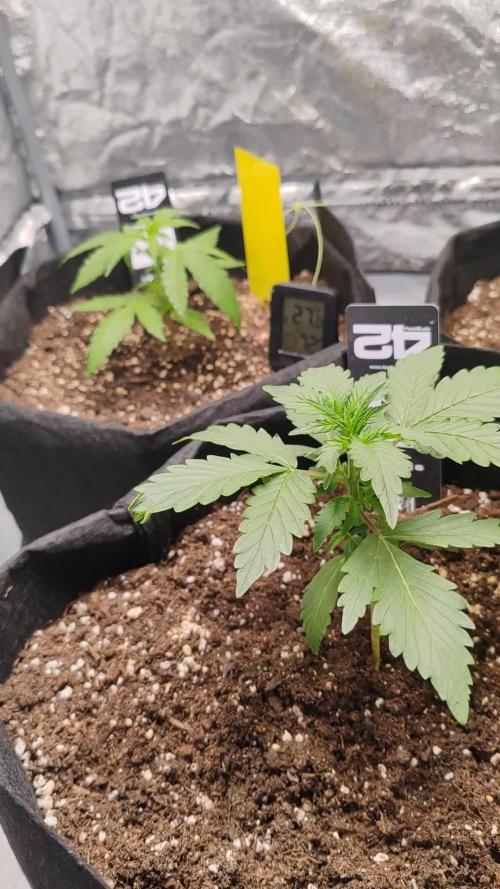
Začínam tretí týždeň vegetatívneho obdobia. Rozhodnite sa použiť aplikáciu Boom Boom od Biotabs. Ďalšia aplikácia o 14 dní.Today marks the end of my third week of vegetative growth. The plants are already starting to flower. Starting tomorrow, I will start applying fertilizers for the flowering phase.

Likes
4
Share


@Geili_Seili_fireinfireout
Follow
Super gesunde und sauber klone. Compound apples and bananas breeders cut. Gibts lagernt bei der besten stecklingsfirma österreichs roots_farms at.
Suchten sofort das licht und super viele weiße wurzeln. Genau wie man es sich wünscht.

Processing
Likes
10
Share


@Fibro_Witch
Follow
Critical Cure is filling out nicely. Picked most of the inchworms off and have some BT showing up on Monday. She got a ring of Coast of Maine 5-2-4 around her base. I'll have to put up the tomato roof in the next couple weeks!
Likes
4
Share
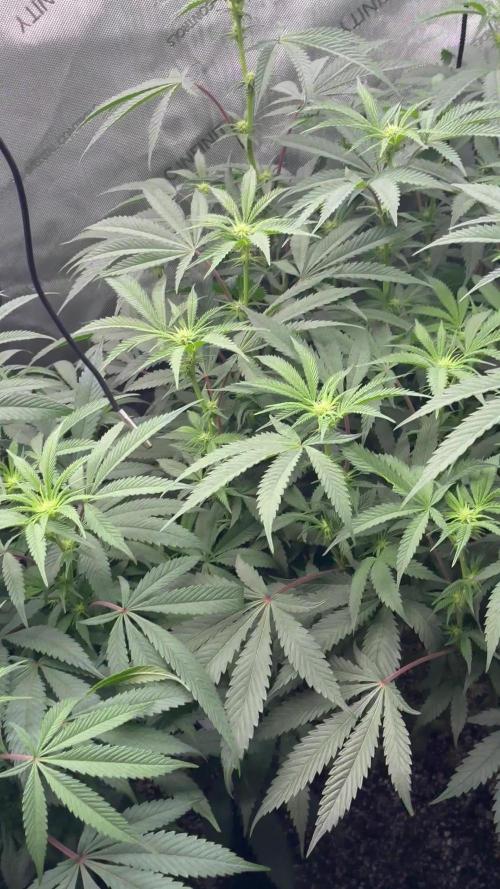

@NyBushDr
Follow
Good morning! Today is day 8 of flower, a couple weeks after light switch since I dont start counting until I see pistils! Im super happy with the way these ladies are looking, perfect green and praying to the gods! Last week they got a couple gallon waterings and as always rotate fish shit and silica! Not really too much else to report! See you all next week as the flowers progress! Thanks for reading