


Processing
Likes
Comments
Share


Likes
4
Share


@KhaVigga
Follow
now im start to using many kind of sugar till harvest, beer-fpj-molasses-coconut water...


Likes
5
Share


@AustinRon
Follow
TH 1Q2025 - Week 7 - Flower 4
(ON Haze X Original Haze) X Northern Lights #2
“Todd’s Haze”
Objective
- 8 Female Plants, Topped ONCE @ Flip, 12” when topped
- Modified Sea of Green
Seeds Wet: 1139PM, 28.2.2025
Germinated: 2.3.2025
Flip: 21.3.2025
Harvest: 77 Days, DATE: 6.6.2025
_________________________________________
Initiate Auto-Fertigation
LightDistance: [ 19.5, in] # We’re in STRETCH, ~1.5”/day!
11” Top Canopy
- [ ] TM-7: [ 0.125, g] # Prep
- [ ] Fertigation: [12, 12, 6] # [Primer A, Primer B, Silica Skin], Dilute to EC
- [ ] Photosynthesis Plus: [ 6, ml]
__
Fri Apr 18, 2025
TH 1Q25 29:F:4:1
__
Sat Apr 19, 2025
TH 1Q25 30:F:4:2
2000 Watering w/ PCAL 1660
Fertigation: [ 1, gal]
RLA: [ 8.5, 4.2, 3.4]
PCAL 1660: [ 2.5, ml] # Micronized Powder
__
Sun Apr 20, 2025
TH 1Q25 31:F:4:3
Light Distance[TOP]: [ 11, in] # Still Stretching
LightIntensity[TOP]: [ 925, µ], [ 40, mol/day]
LightIntensity[Main]: [ 801, µ], [ 34.6, mol/day]
We’ll Raise EC by 0.1 mS/cm/day till we’re comfortably ~ 2.4 (IFF They’re happy) …
Would like to see overall GREEN both darkening & evening out . . .
Defoliation
- [x] Remove Fan Leaves below Node 7 # Preparation for Understory Lighting
- [x] Remove Branches with TOPS bottom 25% of canopy
Auto-Fertigation Today
- [x] CLEAN Chiller
- [x] Vinegar
- [x] H202
- [x] High Throughput (Blast the interior AFTER Vinegar & H202)
Initial Reservoir Fill: EC: [ 2.0, mS/cm]
- [x] 4 Gallons (Dehu, RO, or Distilled)
- [x] Primer A & B: [ 54, ml]
- [x] Silica Skin GEN 3: [ 27, ml]
- [x] Photosynthesis Plus: [ 24, ml]
While configuring - Ran 2 Gallons of Feed Before UNPLUGGING. ;-}
__
Mon Apr 21, 2025
TH 1Q25 32:F:4:4
- [x] Light Distance[TOP]: [ 9, in] # Still Stretching 1.5 - 2”/Day
Reservoir Fill: EC: [ 2.1, mS/cm]
- [x] 4 Gallons (Dehu, RO, or Distilled)
- [x] Primer A & B: [ 54, ml]
- [x] Silica Skin GEN 3: [ 27, ml]
- [x] Photosynthesis Plus: [ 24, ml]
- [x] SLF-100: [ 20, ml]
We’ll take EC to 2.4 mS/cm (Relatively Heavy) IFF They’re all happy with the ‘upgrade’. ;-}
Picked up 8 gallons of Distilled from HEB. Used for to refresh tank after last nights flush.
Going for NO MORE than 2 Gal/Day.
We’ll feed MORE than necessary to get DOWN TO Optimal delivery.
Irrigation Timer is set to Every 3 Hours, 1 min flow, four times a light period.
__
Tue Apr 22, 2025
TH 1Q25 33:F:4:5
Observation
Vibrant, Uplifted, Rockin’ - 1250 runoff, Grew TWO MORE INCHES, Light Distance 6”
1900: Measure Runoff
- Amount: [ 1250 , ml]
- EC: [ 2.1, mS/cm]
- [x] Harvest Dehu
- [x] Refresh Reservoir - 2 Gallons
- [x] EC: 2.1
- [x] Primer A & B: [ 27, ml]
- [x] Silica Skin GEN 3: [ 14, ml]
- [x] Photosynthesis Plus: [ 12, ml]
- [x] SLF-100: [ 10, ml]
__
Wed Apr 23, 2025
TH 1Q25 34:F:4:6

Plants Look GREAT!
Plants stretched 2 - 3” last night. If we don’t stop, we’ll need to supercrop the Exceptions.
Cleaned MANIFOLD FILTER - Had GRANULAR feel, on top of a little slime. Will check Thursday.
Doubled IRRIGATION TIME from one to two minutes x 5 Irrigations. We had negligible runoff last night.
1900: Measure Runoff
- Amount: [ negligible, ml]
- EC: [ ? , mS/cm]
- [x] Harvest Dehu
__
Thu Apr 24, 2025
TH 1Q25 35:F:4:7
- [x] Harvest Dehu
- [x] Refresh Reservoir - 2 Gallons
- [x] EC: 2.3
- [x] Primer A & B: [ 31, ml]
- [x] Silica Skin GEN 3: [ 16, ml]
- [x] Photosynthesis Plus: [ 12, ml]
- [x] SLF-100: [ 10, ml]

Likes
5
Share

@FourTwenty_Plants
Follow
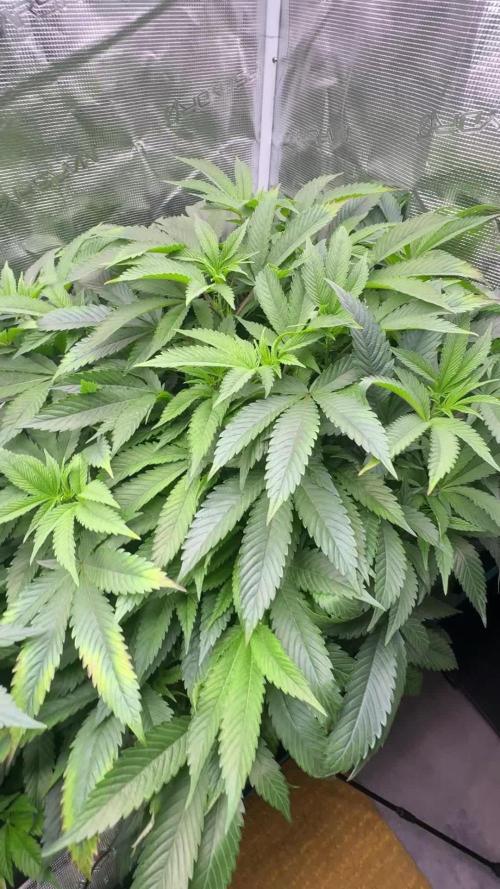
Permanent Marker received pretty much the same treatment as the Rainbow Melon and is responding just as well. Transition into flower was introduced gently with Bud Ignitor alongside the base Advanced Nutrients lineup.
She’s growing very compact and bushy with a super dense structure. The canopy filled out heavily through LST, creating a thick layer of tops all competing for the light. Internode spacing stays tight and the side branching is developing beautifully.
She’s also drinking a lot and handling the nutrients without any issues. Overall a very vigorous plant that reacts perfectly to training and keeps pushing strong growth every day.

Likes
31
Share


@XperencdGmanXG
Follow
Well ladies and gentlemen XG here! back with another week of the pot patch 2023. As you can see here these girls are now in full flower. Just setting up all the parameters for a great grow. Just feed the microbes and the microbes will take care of the plant.

Likes
19
Share


@Master_weeda
Follow
Bonjour à tous les padawans et maîtres jedis
Je ne me lasse pas des solocups car ils prennent peu de place offre un bon rendement et permettent de pouvoir goûter et testé plus de souches de breeders différents
Merci à tous

Likes
17
Share

@CannaArchive
Follow
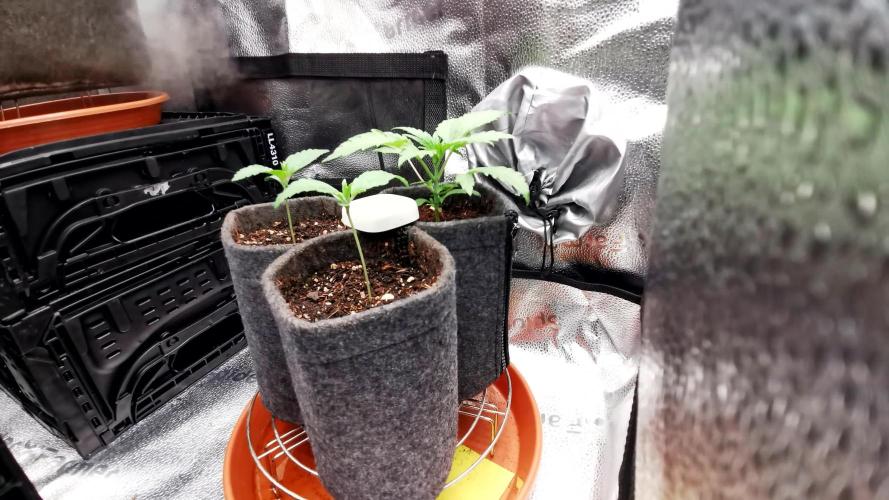
Growth Stage: Early Vegetative
Environment:
Temperature: ~23 °C
Humidity: ~65 % RH
Light cycle: 20/4
Light intensity: ~250–300 PPFD
Watering / Feeding:
The plant was grown in a 1 L pot and watered carefully with around 300 ml per watering, depending on pot weight.
Only water + CalMag (Advanced Nutrients) was used during this week. No base nutrients were added.
Observations:
During Week 2, the Jelly Donutz was moved into the grow tent, which helped the plant recover very well from the difficult seedling stage. Growth stabilized quickly, and the plant continued its development in a much more normal and healthy way.
Leaf color looks healthy, structure improved noticeably, and overall vigor increased throughout the week.
Even though temperatures were slightly cooler, the plant adapted well and showed no further signs of early stress.
Training / Work Done:
No training was applied. The focus was fully on recovery and establishing stable vegetative growth.
Notes:
Week 2 was an important recovery phase. With stable conditions and gentle feeding, the plant built a solid foundation for stronger vegetative growth in the following weeks.

Likes
35
Share


@Pot_Portraits
Follow
More cleaning and also starting to stretch the plant out more to make room for the tops.
I started adding Green Sensation as well.


Likes
24
Share


@Sleestacker
Follow
Started her (Betty) 1/3/22 when I was drinking and pissed that one of my double grapes 🍇 seeds didn’t pop. I’m trying to start 2 new autos every month so I can get a cache of bud stored up.
Betty shed her helmet on 1/7/22 and looks like a lil banana 🍌 she’s so cute


Likes
24
Share

@420SYL
Follow
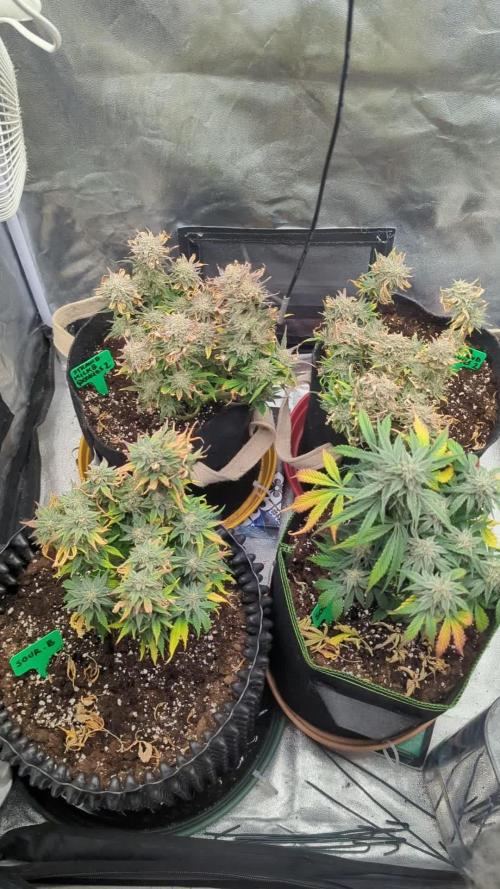
The plants recovered well, and the buds are swelling 💪🌳
I changed my pH pen and switched to AC Infinity 👌
The trichomes on both SM&Q2 are already nicely milky with quite a few amber ones, so I think today was their last watering. I’ll harvest them in 2–3 days!


Likes
4
Share
@Grow96
Follow
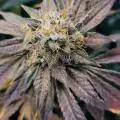
Woche 8 (Erntewoche)
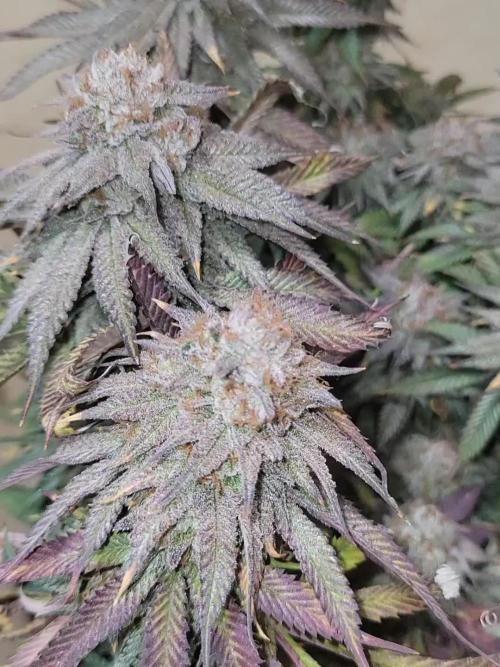
In Woche 8 war die White Truffle erntereif. Die Trichome waren überwiegend milchig mit einem guten Anteil an bernsteinfarbenen Köpfen – ideal für eine ausgewogene Wirkung zwischen körperlich entspannend und mental angenehm.
Die Buds sind maximal ausgereift: extrem harzig, fest und schwer. Der Geruch hat sich nochmals intensiviert und wirkt jetzt noch tiefer und „reifer“ – sehr kräftig und durchdringend.
Die großen Fächerblätter sind deutlich vergilbt, was zeigt, dass die Pflanze ihre Nährstoffe vollständig aufgebraucht hat. Insgesamt macht die Pflanze einen „fertigen“ Eindruck.
Ernte:
Ganze Äste geschnitten und zum Trocknen aufgehängt
Raumklima beim Trocknen: ca. 20 °C und ~55 % Luftfeuchtigkeit
Leichte Luftzirkulation vorhanden, aber kein direkter Luftstrom auf die Buds
Die Qualität der Blüten ist sehr hoch – kompakt, stark bereift und mit intensivem Aroma.
Likes
13
Share


@MG2009
Follow
Been rough last 3 weeks 3 storms 3 power failures lasted 3 days each time.
Figured, I do harvest before the 4th storm coming in tonite. 9 days lost..vegging 2 clones for out doors 8 weeks to train.... Patients, timing is critical hopeing to transplant mid to late may. (Unless I put up cold frame).
06/17/2018
smoked my last bud today.
Cutting clones soon,to grow,and trade might get Jack The Ripper (TGA) cutting,and LSD photperiod cutting as well.


Likes
34
Share


@Basementganja
Follow
1 gallon, of the above listed nutrients, every 3 days, for the past 2 weeks!
I've been selectively de-leafing every about 5-7 days.. I haven't needed to remove much at all, to maintain good light coverage to bud-sites!
Likes
59
Share


@GMSgrows
Follow
Cloudy here today. Girls are taking on some nice colors due to the colder nights now. Went down to 2 here a couple of nights ago. Buds are starting to bulk up now. Had to fight a little PM I seen, so I sprayed them down with 60 parts water and 40 parts homogenized milk. All gone now., have to keep my eyes open for any more to start. If so, another blast will do them and that will give them enough time to finish up, without worrying any further...Thanks for all the looks and likes. People here are the best in the world.
Thanks AMS for the opportunity to grow the best strains in the world...🙏
