


Likes
Comments
Share


@Djmkcity
Follow
Transplant to 5 gals. 1/2 gallon water in am. Light to 30”.
9-6 added 10ml/gal big bloom.
9-8 1/2 gallon to water. No nutrition
9-11 10ml/gal big bloom. 1/2 gal per plant
9-13 1/2 gall plant. No nutr

Likes
35
Share


@SmokingTiki
Follow
- I didn't weight wet buds.
- The trichomes photos have been taken just before the harvest on buds all over the plants.
- The hash balls were : a little less than 1cm diameter for the Mandarin Punch#1 and around 3mm diameter for the Mandarin Punch#2
- Drying was made at 20°C and around 50% of humidity.
- Humidity in jar around 50% on the first day, temperature around 20°C.
MANDARIN PUNCH #1
Veg time : 44 days.
Flowering time : 70 days.
Total time from seed to harvest : 114 days.
Height : 142cm
Pot size : 26l
Harvest : 61g
MANDARIN PUNCH #2
Veg time : 45 days.
Flowering time : 67 days.
Total time from seed to harvest : 112 days.
Height : 123cm
Pot size : 10l
Harvest : 41g


Likes
18
Share

@DevelGrow
Follow
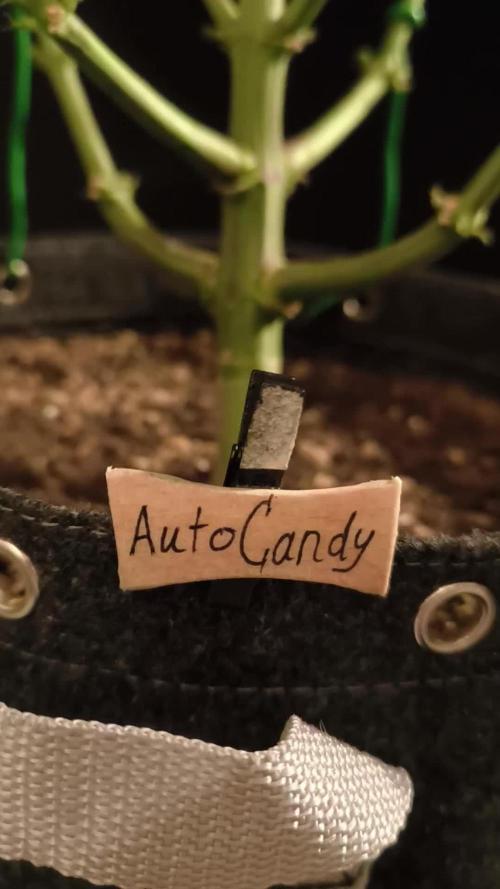
Hallo Freunde des grünen Daumens 😉✌️👋 Auto Candy von Divine Seeds ist 56 Tage Alt! Sie schnuppert wirklich fast wie Zuckerwatte! Streckt steil ihre Blätter nach oben und produziert tolle buds mit einer schönen Zuckerschicht! Kann nur noch Geiler werden

Likes
11
Share


@Sejnik
Follow
Holky vypadají naprosto úžasně. Nemají žádné nedostatky a už jsou trochu cítit. Mám z nich velikou radost ale ještě si na ně musím 2 měsíce počkat.
Tento týden jsem do svých děvčat zainvestoval trochu peněz. Pořídil jsem jim 2 dodatečná světla 2x42w a výkonný odvlhčovač vzduchu. Sbohem vysoká vlhkosti. Sbohem plísně. Mám velikou radost že vlhkost konečně klesla, protože jsem měl opravdu velké obavy z plísně.
Bohužel mě to stálo jednu rostlinu a tou byla Haze Berry 1. Byla to ale nevyhnutelná oběť, kterou jsem musel podstoupit, jinak by se mi odvlhčovač nevešel do stanu. Nebyla jiná možnost.
Zalévám jednou pouze s RQS tabletami easy bloom booster (jedna tableta na 8 litrů) EC 0.7-1.
Podruhé RQS tablety easy bloom booster (jedna tableta na 8 litrů) + hnojiva od Biobizz EC 1,4-1,6.
Zalévám každou z rostlin tak, aby měla dostatečný odtok vody ze spodku květináče.

Likes
61
Share


@Grey_Wolf
Follow
Sensi Seeds Jack Herer week 10 Update 18th Feb 2020
Finally She's flowering. Now that all of my Photoperiod
strains are flowering I can see the End is in sight.
I performed the last of the HST I'll be doing to this girl on a few branches that were taller than the rest. Now that
she's in flower mode I'll need to start introducing some of the Dr greenthumbs Bud and bloom mix. Ive already added about half a kilo of fresh worm castings to the soil and some Epsom salts to boost magnesium levels. As youll see
in the above pics the plant is looking lovely and lush and when I rub the stems she eminates a marvelous smell I simply cannot describe. Really looking forward to this one 💪
Well that is all I have to report this week
Thankyou for stopping by
Grey_Wolf 2/18/20
Processing
Likes
9
Share


@MG2009
Follow
04/11/2020
She is starting to smell, citrusy and earthy berries she is sticky as hell! Just defoiliating and fingers are stuck together😍

Likes
25
Share


@7THBEZ
Follow
PLEASE 🙏🙏🙏**** NEED SOME SPONSOR FOR LIGHTING ****🙏🙏🙏
Could i show you about what lighting i use?😭
it is a combination of 5 LED bulbs,,,,,😂👉😍
it should be the last week , maybe 👍😘
so , i only water6.5PH with no any nutrient😂
love that nice berry smell and nice purple 👉😍
thank you for watching 👊
hope all of you enjoy , see ya✋
Likes
9
Share


@Mr_nugs_lover_David
Follow
The phenotype number #3 looks really tiny and small for the days that she is I don't know why is that because she has the same conditions as her sisters.


Likes
8
Share


@sweetkaya
Follow
Everything's doing great, the ladies are healthy and growing faster and faster!
Likes
8
Share


@Staffedition
Follow
Привет друзья!
Из-за сильной влажности на улице, перенеслась в бокс.
Прихватил плесень. так бывает.
Пришлось срезать макушку и некоторые шишки.
Растение подходит к харву.
Через дня 3 буду резать.
Всем мира и добра!

Likes
5
Share


@Creatorknbsland
Follow
Semana de muito progresso !garotas estao como lokas!estou com.uma delas que esta mais diferentes!me parece que esta com alguma praga!ou deficiência de potássio!falta poucas semanas para eles ficarem belas e mais cheirosas!abraço


Likes
14
Share

@birdmountain
Follow
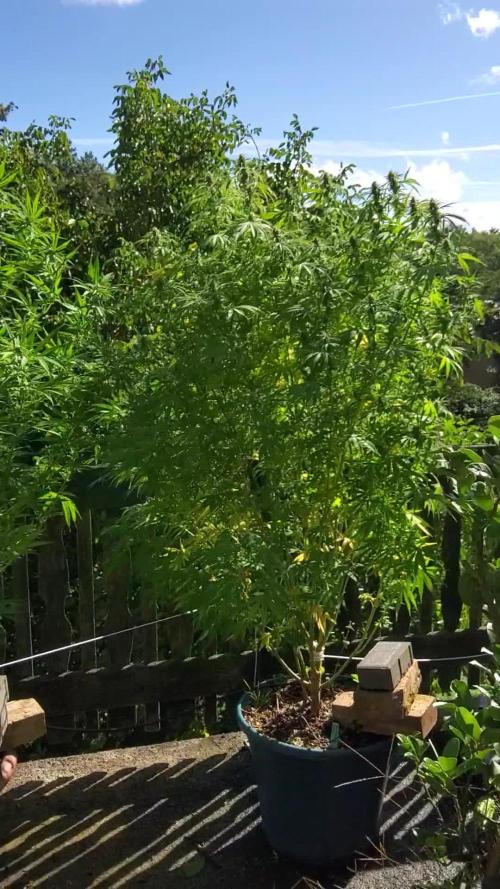
Hollands Hope macht gerade die auffälligste Entwicklung durch. Ihre Blüten haben sich seit letzter Woche sichtbar vergrößern und entwicklen sich en Masse entlang der Triebe. Sie spreizt sich in die Breite. Die regnerische, windige und manchmal sonnige Woche hat sie gut überstanden, so soll es bleiben.
Die Blüten beginnen sich etwas rötlichbraun zu verfärben, wahrscheinlich eine Reaktion auf die sinkende Temperaturen. Ein Duft ist bei ihr nicht weiter festzustellen, das Höhenwachstum ist nun eingestellt.
Vielen Dank für den Besuch und beste Wünsche für eine schimmelfrei Woche!😀

Likes
16
Share


@BlackForestGrower
Follow
Great Strain, I will definitely grow it again and can only recommend it to everyone
Nice fruity fuel smell, great color and dense buds

Likes
43
Share


@MadeInGermany
Follow
Hi everyone 🤗.
Today starts week two after the cutting of the cuttings.
Everyone started to take root 👍.
I will probably have this passage 4 again, but maybe 6 as well 😃.
I'll decide spontaneously this week.
Unfortunately, my water temperature is currently at 24 degrees, which is clearly too high for me.
I wanted to get the grow cooler from Growtool yesterday, but since I have the small 0.8 growtoll system, the cooler doesn't fit under the grow table from the height :-(.
I don't want to put it outside of the tent, for two reasons.
Reason 1:
The volume would be much louder if it was outside, the volume would theoretically not be bad, but after a while if I'm working on the other tents it would be annoying.
Reason 2:
It just looks damn unprofessional 😅.
I will now look for other water coolers, otherwise I have no choice but to buy the original one and still place it outside of the tent.
I will also spontaneously decide this week which training I will use eg topping etc.
I only know that when I am sure how many plants remain 😋.
I wish you all a nice week, stay healthy 🙏🏻 and let it grow 🌱
You can buy This Strain at :
www.Zamnesia.com
☝️🏼☝️🏼☝️🏼☝️🏼☝️🏼☝️🏼
Strain
Gelato clone from mother (Zamnesia )
☝️
Genetics: Wedding Cake x Gelato x Gelato 33
👍
Vega lamp: 2 x Todogrow LED CXB3590 COB 55 W
1 x Sanlight S2W 62 W
💡
Flower lamp : 2 x Todogrow LED CXB3590 COB 55 W
1 x Sanlight S2W 62 W
💡 ☝️
Grow Aero System : Growtool 0.8
☝️
Fertilizer:
Canna Aqua Vega A + B , Canna Aqua Flores A + B , Rizotonic, Cannazym, CANNA Boost, Pk 13/14, Canna Cal / Mag, Canna Ph - Grow, Canna Ph-Bloom
☝️🌱
Water:
Osmosis water mixed with normal water (24 hours stale that the chlorine evaporates) to 0.2 EG. Add Cal / Mag to 0.4 Ec Ph with ph- to 5.5 - 5.8
💦 💧

Likes
102
Share


@Mr_Di
Follow
Starts VIII week of veg!
During VII week:
1 ecrased amount of water to 400 ml per day - autowarering system open flow 3 times a day for totally 400 ml/day
2 during DAy 48 i defoliated some fan leaves and added 1 35w led on top on ayahuasca purple #1 canopy
——
During this week:
1 Start lollipop
2 Added potassium silicate (rhino skin)
3 Removed B vitamin complex (b52) for a lighten nut. Solution
4 Added phitobscillus (vodoo juice)
—
Soon I will see sprouts come up to net, when canopy will be 50-60 cm I finish lollipop under net and then start flipping, i’m Planning that for 10th week of veg.
_
Update
Day 50: some sprouts are over the net
day 51 : added 2 oscillating fan - Secret Jardin 20watt - 1 turned on with light, 1 tuned on h24
Likes
7
Share


@ReefsDad
Follow
So please don"t trip out on this. I know my conditions are not accurate or my nutrient amounts. Lost my notebook with all my notes on this grow. All I have are the pics which I'll post. The dates of the pics may not correspond with the weeks in the diary. Kids, make sure you keep up to date if you are going to keep a diary online and keep a written one. I definitely learned my lesson. Several weeks of notes on 5 different strains lost. Well enjoy the pics at least.


Processing
Likes
32
Share


@BB_US
Follow
This week she is getting sweet smelling and very frosty. She is very healthy in all ways. Switched lights to 12 on 12 off. Also thanks to my broski @budbanditUk I did some defoilage of the bigger fan leave es to bring the light to the bottom of my lady for full light penetration
Likes
1
Share

@Cannabinatek
Follow
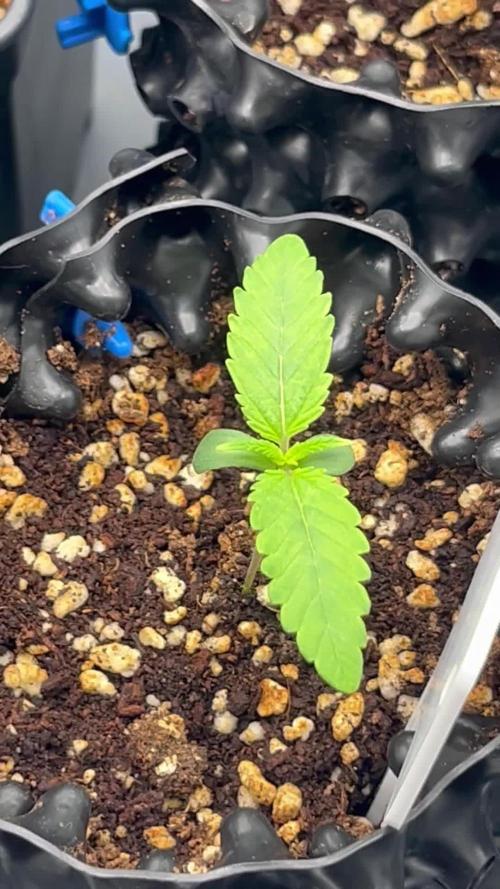
Uma das sementes atrofiou nos primeiros dias e já foi substituída por outra blue skunk… Aguardemos novos desenvolvimentos 💚💚💚. Tudo a andar

Likes
6
Share


@Kendoda
Follow
It’s day 1 of week 7 flower. She’s looking a little hungry today. Last week I reduced the feed as I had a little nute burn, the general appearance of the plant is looking slightly lighter in colour, so this week I’ll add back the extra 0.5 ml of each nute.
Three more feeds of 1.5 l then on to the plain water.
