


Likes
Comments
Share


@420DeepGrow
Follow
Gracias al equipo de Divine Seeds, Marshydro y XpertNutrients sin ellos esto no seria posible.
💐🍁Fractal:
La semilla de marihuana Fractal es una cepa especialmente psicodélica que Semillas Divinas desarrolló para experiencias esotéricas y místicas, meditación y creatividad. La potente y vívida Skunk#1 fue cruzada con una pegajosa Afghani Indica, y el resultado es ahora conocido como Fractal. Este exótico híbrido es resinoso, picante y productivo. La mejor opción para el cultivo comercial: un compromiso entre mayores rendimientos y maduración rápida.
En interiores se espera una altura de 1,70 m, en exteriores las plantas crecen hasta 2 m. Fractal se adapta a todo tipo de entorno de cultivo: cajas de cultivo, instalaciones hidropónicas o aeropónicas, plantaciones exteriores, balcones, terrazas e invernaderos. Para un mejor rendimiento se recomienda entrenar a las plantas de Fractal para ampliar su estructura y limitar su crecimiento vertical. Usar ScroG o SoG, LST, FIM o topping.
Fractal tiene una inmunidad inherente al moho y a las plagas de insectos, pero como sus colas son gruesas, proteja sus plantas del aire viciado. También durante las semanas de lluvia su plantación puede necesitar ser cubierta. Listo para la cosecha al aire libre en octubre. Grandes y densos cogollos.
Los cogollos de marihuana de la variedad Fractral huelen a hachís y algo a tierra, desprenden cedro y notas afrutadas al romperse. Mida su porción con cuidado: su potencia está por encima de la media. Con Fractal experimentas un apedreamiento general que te hace sentarte o frena tu movimiento. Perfecto para pasar una noche junto a una hoguera. Es mejor consumirlo por la noche.
🚀🌻 Consigue aquí tus semillas:
https://divineseeds.net/es/fractal-fem/
💡FC6500: Eficiencia líder en el mercado: la lámpara de cultivo LED FC-E6500, que ostenta un estatus líder en el mercado, es una solución rentable con un PPE de 2,8 µmol/J y un rendimiento máximo de 2,5 g/vatio. Ofrece un PPF alto de 2026 umol/S y es adecuada para una cobertura de vegetación de 1,50 m x 1,50 m y una cobertura de flores de 1,20 m x 1,20 m.
Iluminación versátil y uniforme.
https://marshydro.eu/products/mars-hydro-fc-e-6500-730w-commercial-led-grow-light/?gad_source=1&gclid=Cj0KCQjw1qO0BhDwARIsANfnkv9IIrYSbmJqz8PqpJOIyWwJfp5bc3SGJgUV68USLQ4tjmXDYwoBuAsaAue3EALw_wcB
🚥 MarsHydro ADLITE UV/IR/RED:
Para lograr un crecimiento óptimo de las plantas y maximizar los rendimientos es un arte simple que depende en gran medida de las condiciones ambientales adecuadas. Reconociendo las limitaciones de la iluminación natural y las soluciones de iluminación tradicionales para satisfacer estas necesidades únicas, lanzamos ADLITE. Estas luces especiales UV, IR y roja están diseñadas para llenar áreas del espectro, proporcionando las altas longitudes de onda que las plantas necesitan para un crecimiento y desarrollo óptimos.
Consigue aqui tu Adlite:
https://marshydro.eu/collections/adlite-supplemental-lights/
🏠 : Marshydro 1.50 x 1.50 x 1.80, carpa 100% estanca con ventanas laterales para llegar a todos los lugares durante el grow
https://marshydro.eu/products/diy-150x150x200cm-grow-tent-kit
🌬️💨 Marshydro 6inch + filtro carbon para evitar olores indeseables.
https://marshydro.eu/products/ifresh-smart-6inch-filter-kits/
🍣🍦🌴 Xpert Nutrients es una empresa especializada en la producción y comercialización de fertilizantes líquidos y tierras, que garantizan excelentes cosechas y un crecimiento activo para sus plantas durante todas las fases de cultivo.
Consigue aqui tus Nutrientes:
https://xpertnutrients.com/es/shop/
📆 Semana 5:
Una vez terminada la fase de estiramiento dedican todo su esfuerzo a crear nuevos pistilos y resina, es hora de engordar estos futuros cogollos.
La carpa esta totalmente cubierta gracias al FC-6500 y los Adlite de Marshydro, se nota la floración mas avanzada que otras veces y con una mayor densidad.
Continuo con las dosis de nutrientes recomendadas por XpertNutrients.

Likes
8
Share


@eldruida_lamota
Follow
Que pasa familia, vamos con la quinta semana de floración de estas FBA2506 de FastBuds.
De las 5 plantas, retiré una y me quede con 4 , preselección.
La tierra que utilizamos que está en la publicación anterior es top crop all mix,
Por supuesto el ph se mide en cada riego y se mantiene en 6.2, regando cada 48 horas e intentando mantener la humedad en torno al 50 %.
Las flores ya están progresando rápido y están cogiendo las 4 un tono morado bastante curioso.
Los aromas por el momento dulces con tonos afrutados, como a gominolas o chicles.
Un ejemplar sigue un poco sobrefertilizado, es la única con la que me corto para alimentar.
Las próximas semanas vamos viendo cómo florecen, avanzan y terminan de madurar.
Hasta aquí todo, Buenos humos 💨💨💨
Likes
89
Share


@Gunnen
Follow
End of week 3 currently. Will be updating end of the week for week 4. Plants are growing fast and strong. Started the low stress training by pulling the ladies over. Going to keep monitoring environment and watering when dry with decholrinated tap water at PH of 6.3-6.6.

Likes
20
Share


@Hawkbo
Follow
Everything is movin along some will be coming down this week a few need a little longer. I'll get some pics up a little later today

Likes
3
Share


@spacetimeman
Follow
Mildew was detected in the beginning if the week, the plant sprayed with solution of hydro peroxide to kill spores and then solution of apple vinegar to stop prevent new mold. It worked.
I decreased the concentration of the watering solution and reduced light. A couple of daye left before harvest.

Likes
8
Share


@Totogrowuk
Follow
I was a little disappointed with yield but do have about 60g of trim that was too fluffy to bother with trimming . I’m thinking of making bubble hash

Likes
111
Share


@Natrona
Follow
Welcome to Harvest week of my Sunset Sherbet journey sponsored by Zamnesia. Sunset Sherbet has been in the garage this week just chilling. Temperatures outside were 25-37f at night and in the garage 40-50s and flushed for 4 days with 2-3 liters each day. The cold weather did not do much for color change. Weeks of colder weather would have had an impact. I harvested her 12/5, day 101 from germination in the soil. I got some good trichome pics earlier this week.
Sunset Sherbet grew in my small 3x3. She demonstrated a strong resistance to mold, bud rot and pests. I switched to an organic nutrient feeding solution and kept trying to get my ppms in the range of synthetic fertilizers. This resulted in overfeeding which burned up her leaves. She would have been pretty based on the colors I see in the buds-pinks, purples and oranges.
Plant structure – Sunset Sherbet remained short at just 20 inches. This would make her very good for small closet grows. She had many branches off the main stalk and her nodes were tight. There were many, many small leaves, not much bigger than a quarter.
Data sheet advised of regular maintenance. Trimming will be a bit tedious as a result of not defoliating more.
Sunset Sherbet grew without difficulty or issues. Produced a nice outcome. Wet weight 384g.
Your likes and comments are appreciated. Thanks for stopping by.
Growers love 💚🌿
💫Natrona💫

Likes
16
Share


@BudsBanditUK
Follow
Maybe 2 weeks left on her. She is getting denser by the day. Smells so strong and sweet. Getting very nice fade now, will stop feeding next week and then just water.


Likes
3
Share

@Grower_Boris
Follow
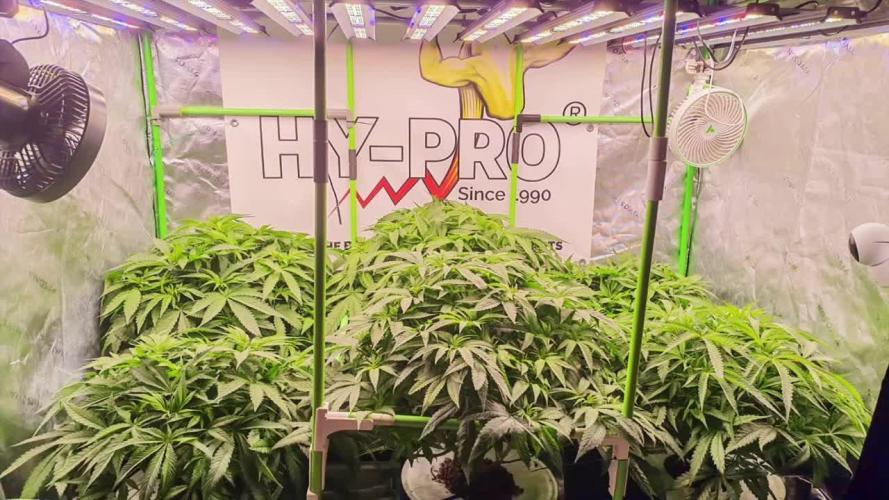
🌸 Tag 9 in der Blüte – 45 cm Höhe! 🌿
Ich find, die sehen richtig top aus 💪 – vor allem dafür, dass das mein erster DWC-Grow ist 💧🔥
Die Mädels schieben ordentlich und füllen schon richtig schön den Raum aus 😍
Was meint ihr, Grow-Freunde – läuft das stabil oder habt ihr noch Tipps für die Blütephase? 👀💬
#GrowFreunde #DWC #FirstGrow #Blütephase #HydroPower #GreenLove

Likes
8
Share


@biggreens420
Follow
herz is coming on well dosnt seem to stretch much but is a nice dense bush with bud sites popping up everywhere. stopped with the silicon and calmag gave her a flush and started with buddy at 0.5ml thanks for reading happy growing guys

Likes
12
Share


@pek710
Follow
Now is the time for beginning the lst.
Everybody looks great, there's only orange sherbet FF that is too small in my opinion to be bondaged.
I gave a bit too much of fishmix last week so it will be only water for this week.
Still 2 to 4 weeks under neons, got to keep them as low as possible so they can have light on each leave


Likes
26
Share


@Melloganja
Follow
We have reached the end of the second week of bloom, pistils are getting big, expecting good results. Everything is going well so far. I look forward to the end of bloom.

Likes
14
Share


@Ashbash
Follow
Taking a long time to see Amber on this one. Gonna cut down a branch and see how it smokes. Smell is nice, but not too strong. Think it may be done. We shall see.
Likes
6
Share


@Comfrey
Follow
She reacts quit good at defoliation last week and at the low stress training, too. I water my plants twice if it‘s sunny and hot. Actually I don‘t measure it. The weight of the pot before and after watering…
So I got more relaxed, try not to do too much and we‘ll see how they react. I don‘t have rainwater anymore. That‘s not so good.
Likes
3
Share

@pickonme2002
Follow
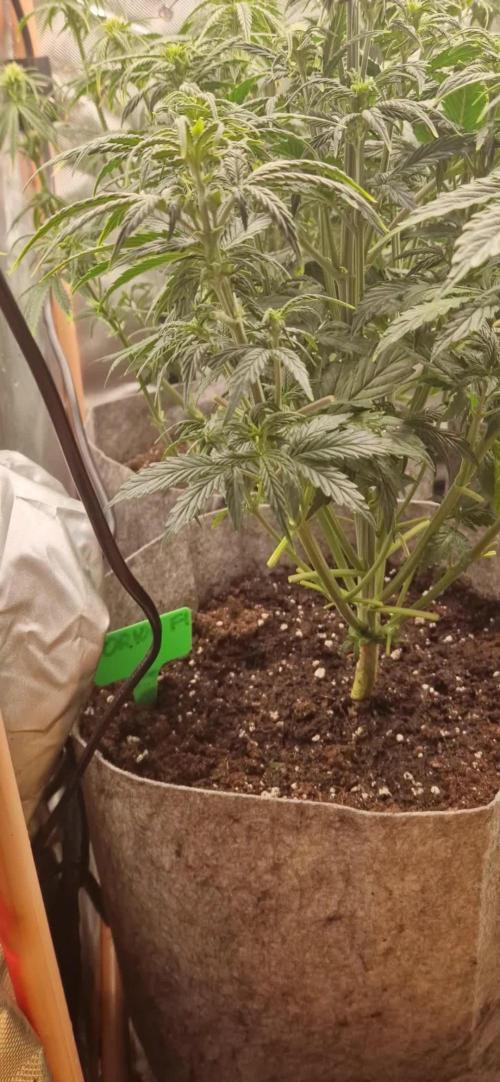
Good week, all in flower and getting bigger. The zombie is fully back to life and catching up. Defoliated the four plants and used RQS Bigger/Sweeter/Thicker.
Likes
12
Share


@GrowMyMeds
Follow
Welcome!
Week 7 flower!
I'm dying in anticipation.
Part of me just wants to stare at it forever, because I'm pretty sure the color will get darker when its dried
Pistols are turning orange top, so getting closer.
I took a few videos this time. One shows the Mars Hydro lights, and my tents I'm using.
The other is the best I could do to capture the beauty of this plant. I wish I had a tent full of only her.
I cut way back on nutes, I only plan to feed one more time and will be checking the trichome color next week.
Overall I'm super happy 😄
If you have some colorful grows going let me know and I will check it out
Thanks for checking out my med grow, see you on week 8. Follow and subscribe if you like my content and want more
Peace
Likes
13
Share


@Drawer
Follow
I still found a few places with bud rot and I keep removing every spot I see.
The plants have been doing fine beside that, they are looking and smelling great, they are super dense and I can't wait for them to be ready.
Most trichomes are still clear so I am awaiting for the first ambers to show up, aiming for around 5% amber and 95% milky.

Likes
11
Share


@SteffenX
Follow
18.10.2024
very humid and little sun on the west side
21.10.2024 day 187
Beautiful sunny day, then powdery mildew discovered and started the 3rd harvest.
Likes
9
Share


@I_Identify_As_A_Dan
Follow
Week 25 for Black lebanon by SSSC
Shes still bulking up in weight clearly because every time i come down to check on her her branches are falling more 😂
Found 2 caterpillars on her but couldn't find any bud rot... So lets stay positive on that
Also found a plant with PM about 5cm away from the plant so ripped that up... lets hope it didn't have time to jump over 😬
For now shes proving to be very resistant in general to whatever mother nature throws at her.

Likes
23
Share


@Kakui
Follow
Primera ves cultivando una cepa de esta calidad, algo ansioso por obtener los mejores resultados posibles con estás genéticas.
Básicamente elegí la Grandpa's Stach R2 y la Grandpa's Cookies #6 S1 solo por sus tiempos de floración, espero que sean buenas tanto de sabor y resina, cómo también de producción.
G1, brotaron las semillas, solo 1 semilla brotó chueca, por lo que tuve que ayudarla con un alambre y va un poco atrasada en comparación del resto.
G3, primer riego con pH 6.1 y EC 0.6, y micorrizas Great White.
G5, creciendo bien.
G11, riegos cada 2 o 3 días, a punto de pasar a etapa vegetativa.
