





Likes
5
Share


@PinonAraucano
Follow
The flowering started! I'm very excited to see those first little white "hairs" in my plants. Everything is going well, the stems are getting thicker and flowers are groing very fast. I'll keep you all updated with this, send me good vibes!


Likes
5
Share


@4Haut
Follow
Hi@all,
week five. Again, not much exciting happened here. It’s growing and growing. Small and bushy with thick branches. 💪🌿👌
It looks very healthy. Every week, I have to defoliate and tie down the branches, otherwise, it would look like a jungle 😄
greetings 😎👋
Grow.Hard.Go.Pro

Likes
17
Share


@Bobo_Zion
Follow
This is the second week of germination, from here I think she's about to start her veg. Hopefully by next week we will be able to top a few if not all the ladies in the garden. Yesterday was their first full watering, we only gave them 1 gallon of ph'd water.
Likes
48
Share


@AsNoriu
Follow
Day 117. Trim jail and heavy upload session for 24 hours at least. Don't like to keep photos, so ill upload each plant separately and will delete them. Phone camera is still cracked and off-focus, but they are all nice !
Day 121. Made even bubble hash, if Runtz was white and brownish when dried, Kalini Asias bubble went a bit redish/pinkish/brown after drying, you can easy see difference in colour between Kalini and Blue Dream in photo.
Kalini + Blue Dream ended up in 14 g of bubble. Runtz made about 5, smoked it too quick to weight even ;) nice buzz and taste !
Day 128. #3 85, #2 87, #3 68. Buds are nice and closer to dense side, but again result was far from my expectations. This strain is really good, have just find the way to make her bulk, better lolitoping maybe ? .... Lost, but this strain is really really nice by taste and how she grew.
Happy Growing !!!
Likes
16
Share


@LowzGrowz
Follow
Favorite N
Best Structure N Nug Stacking N Density
Tropical Aroma Strong Terps
Frosted
Colors Starting to pop

Likes
36
Share


@NAS_Garden
Follow
End of Week 2 of Flowering Report:
This week, the plants continued their rapid stretch, and I've been watering them daily with no runoff.
Day 11: I reset the rockwool with 50 liters to thoroughly re-soak the medium and maintain optimal conditions. The light intensity was also increased to 75%, giving the plants more energy as they settle into the flowering stage.
R.I.P.
The Runtz plant was removed from the tent this week as it was too small and wasn't keeping up with the others. The Oreoz is also lagging behind, and if it doesn’t show better development by next week, it will likely be removed as well.
The increased light and regular watering have kept them happy and vigorous as they continue to develop!


Processing
Likes
15
Share


@LongJohn420
Follow
Today 24.9 1st day of flowering
Last week was steady growth and I added some bacteria and microbes in a form of Voodoo Juice and some silica also. It's nice to see how fast it affects on your stems and they start thickening right away 👌
I have some heavy duty defoliating to do gonna do it in this and next week.
I'll add some more pics at the end of the week.
So let'see how these flower, can't wait 😋
Happy growing!

Likes
6
Share


@Genussmittel420
Follow
day 1 - shes getting her sugar on the leafs now clearly and you can start to really notice her smell after just a few minutes of the tent being open. not too strong of a smell yet but there is still much time to improve, really happy with the bud developement so far!!!
day 4 - trichome producktion is just kickin off since 1-2 days, love to smell her sweetness. stretch has come to a stop a few days also.
day 6 - when i opened the tent today she was showing me her flowers big. there was a big diffrence visible for my eye from last open yesterday to today and i like it! the pistils on the main bud start to get orange color and the others also seem to get a few pistols with color totay!

Likes
11
Share


@TooMedicatedToThinkOfOne
Follow
Well week 3 went by pretty good! I flushed my soil twice because i was starting to see what looked like nutrient burn and since flushing twice it seems to have amended the soil and issue. I waited until the soil was fairly dry and watered yesterday with a new set of nutrients and will be keeping it on a schedule of feeding nutes once a week until i know it can handle more and im not burning it again. I bought stuff to help me LST the branches and during doing so bent one too far and it started tearing off. I put some support under it to hold it in place and now im just hoping and praying it heals up and can resume growth instead of me having to get rid of the whole thing. We will see but im excited either way!

Likes
9
Share


@TiRobotProds
Follow
8e Semaine de floraison impeccable grossi bien chargé en résine irrigation a l'eau uniquement durant les 2 dernières semaines. J'ai vérifié les colas es celle-ci c'est fait polinisé par le male Sour tangie dawg mais rien de grave quelques graines, cela me permettra d'avoir une nouvelle génétique issue de ces deux plantes donc a voir ne pas ce précipiter. Elle dégage une plus douce odeur durant ces derniers jours.


Likes
69
Share


@Mimi420
Follow
Hi growers!
The girls growing great!They tall from 75-85 cm.I removed some lower yelowing leavs and lolipopet them a litle to get better air flow.Started to bud nice and the smel is geting steonger.Tnx for checking in 😉


Likes
20
Share

@MyLittleGarden
Follow
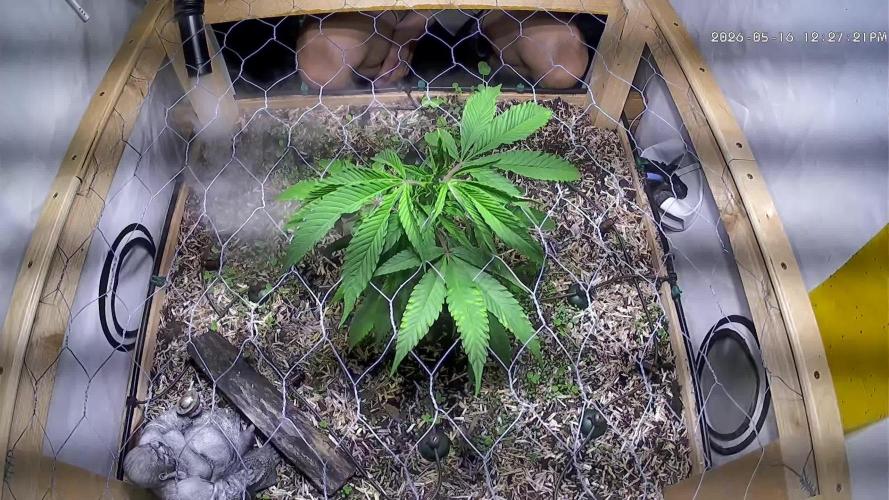
Vegetationswoche 6 - 16.05. - 22.05.26
Ich habe im Grunde nicht viel gemacht die Woche, außer die Pflanze wachsen zu lassen. Einmal wurde sie getoppt und leicht entlaubt, damit mehr Luft und Licht ins Innere kommt und sie sich langsam übers Beet ausbreiten kann.
Die Utopia macht mittlerweile einen richtig vitalen Eindruck. Satte grüne Blätter, schönes buschiges Wachstum.
Das Klee-Cover-Crop wächst ebenfalls ordentlich und hält die Oberfläche schön lebendig. Gegossen werden musste bisher kaum noch, die Feuchtigkeit hält sich überraschend gut im Beet.
Durch das wärmere Wetter draußen sind die Temperaturen im Zelt zwar etwas gestiegen, aber alles noch absolut im grünen Bereich. Insgesamt läuft die Woche richtig stabil und ich hoffe jetzt, dass sie in der nächsten Zeit nochmal ordentlich Schub macht, damit ich anfangen kann die Triebe langsam durchs Netz zu führen. 😋


Likes
11
Share


@Paradox_1ste1
Follow
Stardog room it is looking pretty good and is thriving. Hopefully get the results we asking for.
Aya room up to now is giving pretty impressive results and it looks like they like the enviroment even tho its not fully equiped.
After adding the c4 neet to celan the insides a little bit more and see how it will react.
Likes
6
Share


@Farmerbry71
Follow
Giving these girls some good flushing out they only have 5-7day till harvest

Likes
49
Share


@masterofsmeagol
Follow
7/18 Plants are looking great. I was able to rearrange the plants so they have a little bit more space and so I can get around every plant. I have small random pest damage (i.e. I caught a four lined plant bug while hunting jpn beetles) but not enough h to warrant treatment. I will probably spray before flower. Sun's out amd plants were praying. I rotated a couple and it only took a few hours for them to "straighten out." I went to look again rhis morning and made the final determination to expand the cage. I'm looking for the 2x4's and the wire in the next couple days. The work that ive done now will but me sometime. I wonder how this rain impacted my soil.
7/19 Plants are looking fantastic. The stretch is starting. One purple punch looks like it's beginning to flower. I think I'm entering the transition period. Jpn beetle damage is evident but not significant. I defoliated a leaf with a a leafminwr or something in it. It's so much easier to get around the plants now. I'm seeing some chunks missing sporadically though. Went to the roses out back and found TONS of jpn beetleson top of each other reproducing. They destroyed that rose bush. I'm going to keep it as a trap plant. My dad's girlfriend wanted to spray it but that doesn't make sense as theflowers are all gone. Dad's grabbing the materials to extend the cage today I think. Right now I can get around every plant but the two big ones in the back. I just cant get to the backs of them and they are huge. Almost reaching the top of the cage. A 4'-6' extension will do wonders in flower. Can't wait.
UPDATE: Dad got the 2x4's and we assembled the extension and attached it. He's grabbing the wire as I type this. This worked out beautifully. I had no idea how big the blueberry cheese in the 50 gallon was! This extension (4ft i think) is PERFECT! Then I can get a little extra wire and pull it out if I wanted to. I think I have another 2x4 that I'm going to use in the middle. Lots of great pics and a video I'll upload tomorrow. Hot af today and humidity still super high. Even the commercial dudes was surprised I don't have wpm l and that judging by some of my plants structure that I may do better than I think. I certainly hope so. I WATERED 3 GALLONS OVER THE WHOLE GARDEN. The blueberry cheese in smart pots were drooping. They drink far more water than tje others. I would've given more but we are supposed to have thunderstorms. I left my back tarp off for the night. It will increase airflow and wind is down. I feel like this is going to be my year.
7/20 I updated and loaded everything on the app but notjing would save. Did it again in the website hopfully this saves
i didnt put it all up. Didn't water the plants today. Bags seemed okay weight wise. Good thing I did the extension yesterday because those three plants were drooping they were so thirsty. I focused most of the water yesterday on those plants that needed it. The others were somewhat dry but still had some weight. Like i said the blc drinks much more water than any of the other plants. I'm impressed with the growth I'm seeing. Especially since I have been being very stingy with the water and I've only fed like twice and that was just the kelp me/you and big bloom in negligible amounts. I'm watching for deficiencies. I'm just not seeing them. I'm picking up the wire and finishing the extension and then rearranging things. I'll update.
UPDATE: WATERED 4 GALLONS CONCENTRATING ON THE PLANTS THAT WERE DROOPING THE MOST. FINISHED ENCLOSURE AND INCREASED PLANT SPACE. TRELLIS WILL GO UP THIS WEEK. VIDEOS WILL BE UPLOADED TOMORROW.
7/21 I should've watered more volume last night. I noticed two plants that seemed much lighter than the rest. After some deliberation I gave them each a half gallon of water. One was the purple punch in the 10 that's huge amd the other was that huge blueberry cheese. I think I'm going to swap places with them, take out a pallet and get some other way to elevate that ONE plant and I'll have even more room. Then I'll add my supports. It's a dream working in there now. I noticed some small interior leaves being used up and dieing. I defoliated them but it was only a couple. I'll need to start nutes at some point. Doesn't need it yet though. I'm going to add some kelp me/you for the heat stress. I need to get the watering down better but it's more difficult when they each have different needs. I kinda have to read the plant. I'd rather be overwatered than underwatered. I tried to upload what I could but some won't.
UPDATE: I went over to clip off some fencing that was doubled up AND just to check on tge girls. Found two caterpillars (small but hairy so they were older not the inch worms and possibly what has been contributing to damage on those plants. Things are spread out so it will be harder for insects to move from plant to plant and I have better air flow. I worry that leaving my tarp off might lead to high winds and plants not able to take it buf I digress. I'll add supports later. Plants are huge and drinking far more water than I've been giving them. When I got there several were drooped right over and dry as a bone. The bags are essentially all roots now. I mixed up 8 gallons of water and split it between the plants. I gave less to the two Co trainer plants that weren't drooping and the 10 I watered yesterday that wasn't drooping but for the most part the ones that needed if got at least a gallon or more. The others a little under a gallon. It might rain A LITTLE tonight too. Oh, and since it's been so hot I added 1/2 tsp per gallon of kelp me kelp you to help the plants deal with heat stress. I also noticed that some of the very bottom interior leaves are being used up. I have a feeling ill need to switch to nutes pretty soon. Plus I need to suppirt those plants if I'm going to leave that tarp off and Gove them air. Took a video. But it won't upload here. I'll have to wait till tomm.
7/22 Didn't have much timevthis morning bit I dod a video. Boy those plants loved that water and that kelp. This morning everyone was standing straight up at attention. Supposed to get rain last night but didn't. Good thing I watered. I think I'm going to up the water next watering and then again to the 10% mark if necessary. Especially with the Blueberry cheeses. I'm noticing that a FEW INTERIOR leaves are showing nute deficiencies so I'm probably going to have to start feeding soon. I'll update later.
UPDATE: Went back over and cut off the extra wire. I'm going to need to water more volume. Specifically on two plants. The two huge blueberry cheese in 20 gallon smart bags dries out much faster than the rest. I'll have to out that on a different schedule or increase the amount given. Next watering will be 1.5 or 2 gallons a plant and it might be tomorrow from what I was seeing. It's super hot and with the added airflow the bags dry out faster. I also went through EACH plant looking for pests and defoliating old leaves that needed it. Plants are still nice and green but a VERY few older interior leaves are showing deficiencies. I know this is Normal especially since they are trying n g to transition to flower. I also saw pest damage on a couple plants. Four lined plant bug. I already found the one on the other plant and killed it but I'm considering doing a spray before flower. I'm thinking either captain Jack as a "catch all", BT which works great but mostly just on pillars or the organocide bee safe 3 in one pesticide. I also have pyrethium and other things. Thus far picking things off manually has been good enough. At the very least they will get an application of BT very soon.
7/23 Held off on watering this morning. Supposed to get thunder storms I DID split a gallon with two blueberry cheese that were the lightest in the 20 gallon smart pots. Thet drink way more. My water volume is going to need to increase. We haven't had nearly enough rain. I'm going to bump it up to 1.5 to 2 gallons each plant which will be 10% for the 20s and a little less for the others. I'm still seeing various pest damage. Nothing bad but I found another couples leaves that were chomped on by a four lined plant bug so I'm debating applying something tonight when I water. I'm also noticing old leaves being used up and some interior leaves showing slight deficiencies. It will be time to start nutes soon. I'll update as I go.
UPDATE: GOT THE FEELING I NEEDED TO CHECK THE PLANTS. SOMETHING DODNT LOOK RIGHT ON THE CAMS. WENT OVER AND EVERY PLANT BUT THE TWO I SPLIT A GALLON WITH AND THE PLANT IN THE 50 WERE DROOPED RIGHT OVER. LIFELESS. I SHOULD'VE WATERED THIS MORNING BUT I DIDNT HAVE TIME. I FIGURED THEY COULD WAIT UNTIL NIGHT. EACH PLANT GOT 1.5 GALLONS AT LEAST. I USED SIXTEEN OR SEVENTEEN GALLONS ON THE GARDEN. I GAVE EACH CONTAINER PLANT ONE GALLON AND GOT RUN OFF FROM BOTH. IM NOTICING SKIGHT FADING IN LEAVES BUT IM NOT INTRODUCING NUTES TO UNDERWATERED PLANTS. I THINK 10% IS GONNA BE TGE MAGIC NUMBER. 2 GALLONS EACH. EVEN THE 10 GALLON SMART POT. ALMLST AS BIG AS THE 30S BUT DRIES OUT QUICKER.
7/24 Plants looked fantastic this morning. Defoliated a few leaves that needed it. Showed my commercial buddy and he said things looked fantastic. Since the soils still holding nutes and I'm not seeing many deficiencies I may hold off on feeding. I'm starting early flower now. I will be using nutes soon. I think ive got the watering schedule pretty much down.


Likes
299
Share


@Metatronix
Follow
Hallo to You all my familly and usual visitors. Thank you for stopping by and all the likes and comments....You make my day!
Everything runs smooth, the trichomes are mostly milky right now, normally i would wait a week or so to get some amber color trichomes at the winter is already here and the only heating source in my grow room is the Mars Hydro TS 1000 with is at 80% of power right now and 30 cm. from the top of the canopy.
That makes the temperature is most of the time 15 degrees Celsius. So I decided to start flushing on 7th of December. With all that going on I'm tempted to dark her on 15th...we will see.
The TS 1000 gives a full spectrum of light and is energy efficient (which is quite a big deal these days ;)) The plant grows many dense buds under this lamp as you can see, Mars Hydro did a very good job producing this lamp.
Thanks to Mars Hydro for supplying the necessary equipment for this grow.
That's it for this week folks, have a wonderful week and please come beck visit in a week we are almost at the finish line with this girl you don't want to miss the finale ;)
Likes
12
Share


@valiotoro
Follow
One with a topping the other one just LST both huge yield!🦖
For the smell its cookie dough,lemon & diesel🍪🍋⛽️
Super sticky buds 🤩