


Likes
Comments
Share


@OrganicChronic
Follow
This was a lot of fun to grow. Super vital and strong. Seems semi resistant to common stresses




Likes
6
Share


@DrShotzUK
Follow
Banana purple punch - 420 fast buds
Looking so healthy now, early stages she almost didn’t make it but now she’s covered in purple buds , shining with thricomes , frosted all over and smells like berries and tropical sort of profile with gassy earthy notes also.
I am excited to smoke her in 3/4 weeks time
DRSHOTZUK
@420fastbuds

Likes
4
Share


@KaliWeeD
Follow
Pues al final… algunas engordaron mas que otras, ya no las queda mucho tiempo…

Likes
18
Share


@Ultraviolet
Follow
Green light is radiation with wavelengths between 520 and 560 nm and it affects photosynthesis, plant height, and flowering. Plants reflect green light and this is why they appear green to our eyes. As a result, some growers think that plants don’t use green wavelengths, but they actually do!
In fact, only around 5 – 10% of green light is reflected from leaves and the rest (90 – 95 %) is absorbed or transmitted to lower leaves [1].
Green wavelengths get used in photosynthesis. Chlorophyll pigments absorb small amounts of green wavelengths. Light that doesn’t get absorbed is transmitted to leaves that are shaded out from direct light. This means that leaves at the bottom of the canopy get more green light than leaves at the top. A high proportion of green wavelengths compared to other colors tells lower leaves that they are being shaded out, so they are able to react accordingly. Lower leaves may react by opening or closing their stomata or growing longer stems that help the leaves reach brighter light [1, 2, 3].
When it comes to growing cannabis, many cultivators are interested in the quality of light used for the flowering stage. In many plants, flowering is regulated by two main photoreceptors: cryptochrome and phytochrome. Both photoreceptors primarily respond to blue light but can also respond to green, although to a lesser extent. Green can accelerate the start of flowering in several species (although cannabis has yet to be tested) [1, 4, 5]. However, once flowering has begun, it’s important to provide plants with a “full spectrum” light that has high amounts of blue and red light, and moderate amounts of green, in order for photosynthesis to be optimized.
Green light mediates seed germination in some species. Seeds use green wavelengths to decide whether the environment is good for germination. Shade environments are enriched in green relative to red and blue light, so a plant can tell if it is shady or sunny. A seed that senses a shaded environment may stay dormant to avoid poor growing conditions [1]. Some examples of plant species where researchers have documented this response are: ryegrass (a grass that grows in tufts) and Chondrilla (a plant related to dandelion) [1, 6].
Although green wavelengths generally tell plants NOT to germinate, there are some exceptions! Surprisingly, green wavelengths can stimulate seed germination in some species like Aeschynomene, Tephrosia, Solidago, Cyrtopodium, and Atriplex [1, 6, 7].
Of course, light is not the only factor affecting seed germination – it’s a combination of many factors, such as soil moisture, soil type, temperature, photoperiod, and light quality.
When combined with red and blue light, green can really enhance plant growth [1, 8]. However, too much green light (more than 50% of the total light) can actually reduce plant growth [8]. Based on the most current research, the ideal ratio of green, red, and blue light is thought to be around 1:2:1 for green:blue:red [9]. When choosing a horticultural light, choose one that has high amounts of blue and red light and moderate amounts of green and other colors of light.
Not many studies can be found about the effect of green light on cannabis growth or metabolism. However, if one reads carefully, there are clues and data available even from the very early papers.
Mahlberg and Hemphill (1983) used colored filters in their study to alter the sunlight spectrum and study green light among others. They concluded that the green filter, which makes the environment green by cutting other wavelengths out, reduced the THC concentration significantly compared to the daylight control treatment. It has been demonstrated that green color can reduce secondary metabolite activity with other species as well. For example, the addition of green to a light spectrum decreases anthocyanin concentration in lettuce (Zhang and Folta 2012).
If green light only reverses the biosynthesis of some secondary metabolites, then why put green light into a growth spectrum at all? Well, there are a couple of good reasons. One is that green penetrates leaf layers effectively. Conversely red and blue light is almost completely absorbed by the first leaf layer.
Green travels through the first, second, and even third layers effectively (Figure 2). Lower leaf layers can utilize green light in photosynthesis and therefore produce yields as well.
Even though a green light-specific photoreceptor has not yet been found, it is known that green light has effects independent from the cryptochrome but then again, also cryptochrome-dependent ones, just like blue light. It is known that green light in low light intensity conditions can enhance far red stimulating secondary metabolite production in microgreens and then again, counteracts the production of these compounds in high-intensity light conditions (Kim et al. 2004). In many cases, green light promoted physiological changes in plants that are opposite to the actions of blue light. In the study by Kim et al. blue light-induced anthocyanin accumulation was inhibited by green light. In another study it has been found that blue light promotes stomatal opening whereas green light promotes stomatal closure (Frechilla et al. 2000). Blue light inhibits the early stem elongation in the seedling stage whereas green light promotes it (Folta 2004). Also, blue light results in flowering induction, and green light inhibits it (Banerjee et al., 2007). As you can see, green light works very closely with blue light, and therefore not only the amount of these two wavelengths separately is important but also the ratio (Blue: Green) between these two in the designed spectrum. Furthermore, green light has been found to affect the elongation of petioles and upward leaf reorientation with the model plant Arabidopsis thaliana both of which are a sign of shade avoidance symptoms (Zhang et al. 2011) and also gene expression in the same plant (Dhingra et al. 2006).
As mentioned before, green light produces shade avoidance symptoms which are quite intuitive if you consider the natural conditions where the plants grow. Not all the green light is reflected from the highest canopy leaves in nature but a lot of it (50-90%) has been estimated to penetrate the upper leaves at the plant level ((Terashima et al., 2009; Nishio, 2000). For the plant growing in the understory of the forest green light is a signal for the plant of being in the shade of a bigger plant. Then again, the plants growing under unobstructed sunlight can take advantage of the green photons that can more easily penetrate the upper leaves than the red and blue photons. From the photosynthetic pigments in higher plants, chlorophyll is crucial for plant growth. Dissolved chlorophyll and absorb maximally in the red (λ600–700 nm) and blue (λ400–500 nm) regions of the spectrum and not as easily in the green (λ500–600 nm) regions. Up to 80% of all green light is thought to be transmitted through the chloroplast (Terashima et al., 2009) and this allows more green photons to pass deeper into the leaf mesophyll layer than red and blue photons. When the green light is scattered in the vertical leaf profile its journey is lengthened and therefore photons have a higher chance of hitting and being absorbed by chloroplasts on their passage through the leaf to the lower leaves of the plant.
Photons of PPFD (photosynthetic photon flux density) are captured by chlorophyll causing an excitation of an electron to enter a higher energy state in which the energy is immediately passed on to the neighboring chlorophyll molecule by resonance transfer or released to the electron transport chain (PSII and PSI). Despite the low extinction coefficient of chlorophyll in the green 500–600 nm region it needs to be noted that the absorbance can be significant if the pigment (chlorophyll) concentration in the leaf is high enough.
The research available clearly shows that plants use green wavelengths to promote higher biomass and yield (photosynthetic activity), and that it is a crucial signal for long-term developmental and short-term dynamic acclimation (Blue:Green ratio) to the environment. It should not be dismissed but studied more because it brings more opportunities to control plant gene expression and physiology in plant production.
REFERENCES
Banerjee R., Schleicher E., Meier S. Viana R. M., Pokorny R., Ahmad M., Bittl R., Batschauer. 2007. The signaling state of Arabidopsis cryptochrome 2 contains flavin semiquinone. The Journal of Biological Chemistry 282, 14916–14922.
Dhingra, A., Bies, D. H., Lehner, K. R., and Folta, K. M. 2006. Green light adjusts the plastic transcriptome during early photomorphogenic development. Plant Physiol. 142, 1256-1266.
Folta, K. M. 2004. Green light stimulates early stem elongation, antagonizing light-mediated growth inhibition. Plant Physiol. 135, 1407-1416.
Frechilla, S., Talbott, L. D., Bogomolmi, R. A., and Zeiger, E. 2000. Reversal of blue light -stimulated stomatal opening by green light. Plant Cell Physiol. 41, 171-176.
Kim, H.H., Goins, G. D., Wheeler, R. M., and Sager, J. C. 2004.Green-light supplementation for enhanced lettuce growth under red- and blue-light emitting diodes. HortScience 39, 1617-1622.
Nishio, J.N. 2000. Why are higher plants green? Evolution of the higher plant photosynthetic pigment complement. Plant Cell and Environment 23, 539–548.
Terashima I., Fujita T., Inoue T., Chow W.S., Oguchi R. 2009. Green light drives leaf photosynthesis more efficiently than red light in strong white light: revisiting the enigmatic question of why leaves are green. Plant & Cell Physiology 50, 684–697.
Zhang, T., Maruhnich, S. A., and Folta, K. M. 2011. Green light induces shade avoidance symptoms. Plant Physiol. 157, 1528-156.
Wang, Y. & Folta, K. M. Contributions of green light to plant growth and development. Am. J. Bot. 100, 70–78 (2013).
Zhang, T. & Folta, K. M. Green light signaling and adaptive response. Plant Signal. Behav. 7, 75–78 (2012).
Johkan, M. et al. Blue light-emitting diode light irradiation of seedlings improves seedling quality and growth after transplanting in red leaf lettuce. HortScience 45, 1809–1814 (2010).
Kasajima, S., et al. Effect of Light Quality on Developmental Rate of Wheat under Continuous Light at a Constant Temperature. Plant Prod. Sci. 10, 286–291 (2007).
Banerjee, R. et al. The signaling state of Arabidopsis cryptochrome 2 contains flavin semiquinone. J. Biol. Chem. 282, 14916–14922 (2007).
Goggin, D. E. & Steadman, K. J. Blue and green are frequently seen: responses of seeds to short- and mid-wavelength light. Seed Sci. Res. 22, 27–35 (2012).
Mandák, B. & Pyšek, P. The effects of light quality, nitrate concentration and presence of bracteoles on germination of different fruit types in the heterocarpous Atriplex sagittata. J. Ecol. 89, 149–158 (2001).
Darko, E. et al. Photosynthesis under artificial light: the shift in primary and secondary metabolism. Philos. Trans. R. Soc. B Biol. Sci. 369 (2014).
Lu, N. et al. Effects of Supplemental Lighting with Light-Emitting Diodes (LEDs) on Tomato Yield and Quality of Single-Truss Tomato Plants Grown at High Planting Density. Environ. Control Biol. 50, 63–74 (2012).

Likes
5
Share


I wish I could figure out why I don't have more trichomes this is supposed to be Gorilla Glue supposed to be covered by now as far as I know anybody got any thoughts on this
Likes
14
Share

@BlaKX
Follow
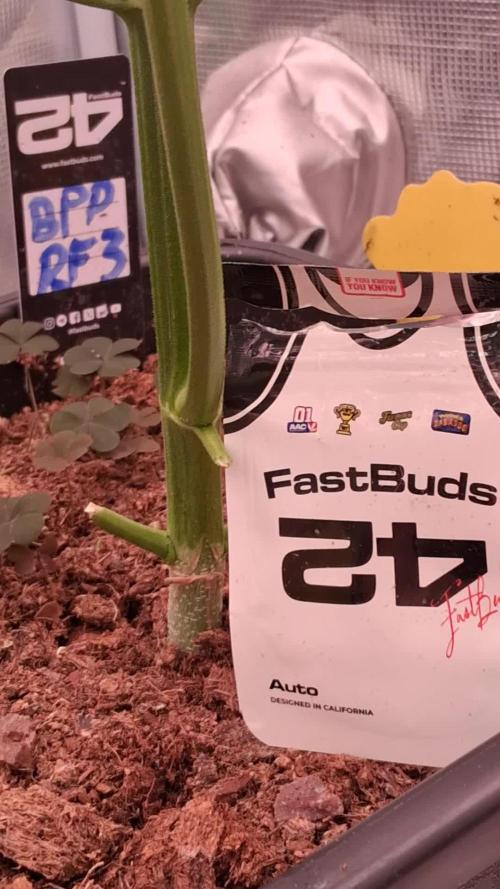
High Growmies das RF3 hält bis jetzt was es verspricht!
Es ist erstaunlich wie gut sich diese Pflanze entwickelt hat sie hat ihre Größe in diesen 7 Tagen exakt fast verdoppelt hat schon angefangen Haare zu entwickeln genau wie auch Blütenkelche die sogar schon Lila sind!!! Sie wird definitiv die 1m Marke knacken.
UV:40min IR:30min Deep Red:20std. 17% statt 10% Anteil.


Likes
72
Share


@MiyaguiOkPolilla
Follow
Hola amigos!
Les damos la bienvenida a una nueva actualización, para ser exactos, trece días.
Hubo un error en el smartphone y perdí las fotografías que tenía de los primeros siete días información etc. 💩
De todas maneras, esto está genial! Los primeros siete días fueron realmente lentos, yo fui paciente y ella lo agradece.
En las fotos se detalla las fechas desde el primer brote el día 13 de Febrero, los cotiledones se asoman por primera vez en el mismo momento, la ultima foto subida es del 25, el video del dia 26 de Febrero. Estas chicas son rápidas!
Días totales desde brote hasta el video: 13.
Riego: 200ml cada 3 días, alejados del brote.
Ph: 6.3-6.4
EC: 440 020+/020-
HR: 80% 5+5-.
Manta térmica 24x7 con plato.
. !! .19 horas de luz: 2 x TS600, 90 Watts 5+/5- LATERALES. !! .11 horas de luz: 1 x 100Watts CENTRAL. !! .
La idea es tener un pico de luz asimilando la naturaleza pero sin dejar de lado los soportes laterales, la luz central se enciende 5 horas después de los laterales y se apaga 3 horas antes de que estos se apaguen.
Iremos intensificando a medida que las plantas se desarrollen. es momento de comenzar un lindo proyecto y aquí estamos 🙌 😏
!!
Un gran saludo y mucho animo en sus proyectos, no dejemos de crear!
🙌🙌

Likes
12
Share


@brosef_b_baggin
Follow
Week 4: Started adding Humboldt Secret Golden Tree at 600 ppm. The plant started bushing out from the LST so I defoliated whatever green wasn't getting any light and to expose light to smaller nodes. I was planning on topping this week but to my surprise the plant had created a third axil/node and axillary branch.
Likes
6
Share


@Yeyup
Follow
First week so far so good 🌱
Planted and lighty watered for first 2 days when soil was dry
27/11 the 5th day since being planted I fed her 1.5 ml of canna terra vega following the food chart that came with the food
28/11 all still seems good didn’t need to water
29/11 lightly watered
30/11 gave her a bit more water she’s getting bigger and looking good
Likes
57
Share


@SmokieMcPot
Follow
what do they say about different strains on the same RES, in the same pot??? welp, here goes nothing...
Last time I saw this waterfarm I was still a teenager. Ran it in a closet with two 4ft flouro shop lights either side going vertically upward like the letter "A". Had two BIG ASS plants roughly 4ft tall in it side by side going STRONG! Healthy asf, huge ass healthy leaves, some 13 fingered. Flipped em and turned out BOTH were male... Been toying with the idea of doing it again... So what the hell... Here goes, 2 Girls 1 Cup or "pot"... One Herbies Godzilla Cookies Auto and one Fastbuds Wedding Glue Auto.
Current setup:
-36x36x60 tent
-"1000w" led light (130w from the wall)
-4in extraction fan/scrubber
-20+ yr old GHE Waterfarm fitted with ice probe w/ controller and PLENTY of insulation around RES.
-Multiple circulation fans
-Taotronics humidifier
Stay tuned to watch me fuck this up too 🤣
*Sow'd em both in organic peat pellets after a 24hr soak. Getting them acclimated to their new home early. Doing environment tests and dialing it in with the new to me ice probe, and the change to hydro versus soil plants that were in there. Will be more moisture in the air until a canopy covers my balls with the evaporation from the light.
**lookey lookey, BOTH have come to life and are making way to the surface. Not long and they'll be in their new "cup". Last update on germination week as once they pop we start counting I suppose.
Processing
Likes
Comments
Share


@Smokingwheedle
Follow
Loved testing this batch, was a easier to grow and such gassy dense buds

Likes
16
Share


@GYOweed
Follow
I got one Amnesia Lemon Haze seed cross fem pollen for now and looking for more. would make a killer sativa.
I messed up with PK Boost but the plant was pretty lanky weak stems will need support. I think the cross will be a bit better like my pev ALH grow.
100G is not bad. Mostly mids though not hard Ill upload a video. 😬
I used 100w led total (200w shared w/ another big plant) on the sour diesel it wont let me copy from veg and save it :(
I notice its much easier to wait and do this shit on a computer.
2021 and still can't multi select pics on mobile.
You should see the rates growdiaries charges the breeders and only huge companies can afford.
Someday I will make my own platform then. 😆
@growdiaries
Likes
101
Share


@DogDoctorOfficial
Follow
so waiting for the final streach so that i can mass defoliate hehehe
i think around day 23/24 F i will do it lets see hehehehe
Appart from that they are streaching and growing as they should 😜😍😁
Day 23 F defoliation day done 😝 let’s see how they react 🙏
The smells are amazing in all of them, SG is finally waiking up for life 🤦🤨😈
Day 24 F and they seems Happy with yesterday’s haircut 😄
Loving this LED Tec 😍
Girls:
1-BlueBerry
2-Alaskan Purple
3-Poyote Gorilla
4-Hindu Kush
5-Whitw Mango
6-Super Glue
7-Badazz Cookies
8-S.A.D.
tent -8x8 / 2.4x2.4 but i'm only using 1/2 so 4x4 / 1.2x1.2
Led - Lumatek 465w Compact Pro at 100%
All i Grow is medicine for myself,
Stay safe, stay tuned and B Happy
Peace out
D


Likes
14
Share


@Dunk_Junk
Follow
Wow she's doing great this week. Grew another 20cm. Totally out of headroom now.
She's going to yield a lot in a few weeks 😎

Likes
6
Share


@JohnnyBarrel
Follow
Week 1
Crucial week: plantlet are vulnerable. Vertical stretching; I add some soil on the base of the plants.
No ventilation just air humidifier and heat mat. Light ts 1000 - 25% - 15h
No really watering, just water spraying


Likes
11
Share


@Krissci
Follow
Day 1 - add soil....light watering and topped both plants
Day 3 - 2nd topping of both plants
Likes
14
Share


@CampaCavallo
Follow
7ª Settimana di Fioritura 💐💐💐💐💐💐💐
La ragazza cresce bene e diventa sempre più bella 🌼🎇🤩
... Peccato aver avuto una perdita di foto / dati di questa settimana di fioritura.... Ma ci siamo rifatti con qualche screenshot dal video😘👍🏻
