


Likes
Comments
Share


Likes
2
Share


@Ninjabuds
Follow
It's a nice change of pace to have these warmer temperatures, even if it's not quite spring yet. Low 40s during the day is a lot more comfortable than what we've been dealing with lately. Hopefully, this is a sign that spring's around
Those Bubble OG's are looking fantastic! It's awesome how two of them are starting to get that purple color – they look so cool. The third one might look a little different, but that just adds to the fun of growing them.

Likes
8
Share


@Gardens_of_Of
Follow
8th week of Flowering is over. Buds almost doubled in size except Lemon Orange. Smell is pretty heavy and frosting continues. Mimosa Evo and Runtz can not carry their buds anymore. I had to tie them up.
Trichomes almost fully milky for all ladies but waiting another week to get 20% Amber.
Target VPD is still set to 1,5 with 23 Celcius Target Temp.
Top Left: Wonder Pie (GHSC)
Top Right: Lemon Orange (GHSC)
Middle: Mimosa Evo (Barney’s - Clone)
Bottom Left: Runtz (Barney’s - Clone)
Bottom Right: Exotic Runtz (Exotic Seed)


Likes
7
Share


@DogDoctorOfficial
Follow
Super Silver Haze (Zamnesia Seeds) — Flower Week 7 (Recovery)
Grower: Dog Doctor
Strain: Super Silver Haze
Breeder: Zamnesia Seeds
Stage: Flower — Week 7 (recovery after localized bud rot)
Pots/Medium: 11 L fabric pots — living super soil with Aptus pellets and Plagron support
Watering: Hand watering; currently water only (see science below)
Lights: F.O.G. Black Series 600W + ThinkGrow ICL-300 (inner canopy) + Lumatek Zeus Compact Pro 465W
Control & Monitoring: TrolMaster Hydro-X/Tent-X + WCS substrate sensors
Air exchange: Dual 6” filtered exhausts + filtered intake; oscillating fans moving canopy air
Current environment (example): day ~29–31 °C, night ~24–26 °C, RH mid 50s–60s, CO₂ ~700 ppm
⸻
Quick recap — seed to the present moment
• Germination & early veg: 3/3 germinated via Cannakan; strong, even starts.
• Transplant: Into 11 L fabric pots with a super soil base inoculated with Aptus Mycor/Micro mixes and buffered for pH stability.
• Veg: Compact, steady growth; conservative feeding with Aptus starter lineup.
• Early flower: Fast flower transition, pistils and bud sites stacking quickly. Plagron trio (Power Buds, Sugar Royal, Green Sensation) + Aptus boosters used to enhance bloom development.
• Bud rot event: Localized Botrytis found inside one cola; removed quickly and thoroughly. Loss minimal. Immediate steps taken (see below).
• Recovery week (this report): Plants responding strongly — dense colas, heavy frosting, explosive aroma. We moved temporarily to water-only feed to stabilize the root zone and let the soil biology drive nutrition.
⸻
What happened and how we dealt with it
1. Detection: Small dark spot discovered deep inside a dense cola. Because rot often starts inside dense clusters, early detection is key.
2. Immediate action: Removed the affected flowers and any suspicious material. Cut generously around infected tissue to avoid leaving spores. Placed waste in sealed bags and removed from the growroom.
3. Sanitation: Cleaned tools, wiped surfaces, checked fans and filters for dust pockets, and increased canopy airflow.
4. Environment adjustments: Increased air movement across and through the canopy; checked extraction; planned AC installation to lower day temps and stabilize RH.
5. Observation & patience: Kept strict daily inspections for any new spots; let plants recover without additional heavy nutrient pushes.
Result: the loss was minimal, the rest of the canopy stayed healthy, and the plants rebounded quickly. Dense, frosty colas and an incredibly strong smell are the signs they are back on track.
⸻
Why “water only” right now — the science, explained simply
We moved to water-only feeds for a short, strategic period. That decision is conservative and backed by three practical goals:
1. Reduce salt and nutrient spikes: After stress and after tissue removal, roots can be sensitive. Water-only flushes prevent sudden EC spikes that can further stress roots. Salt buildup can inhibit water uptake (osmotic stress); clean water restores osmotic balance.
2. Let the soil biology work: You’re growing in a living super soil with Aptus pellets and biological inoculants. Microbes mineralize nutrients slowly and steadily. When plants are stressed, microbial mineralization becomes more important than high-concentration liquid feeds. Water-only gives beneficial microbes a stable environment to supply what the plant needs.
3. Avoid overstimulating lush growth: At late flower, you want carbohydrate partitioning to favor flower filling and resin production, not new vegetative pushes. Limiting NPK pulses prevents a late vegetative response and encourages the plant to allocate sugars to trichome and calyx growth.
Practical note: “Water only” does not mean nutrient-starvation. Your living soil still releases NPK and trace elements. Monitor substrate EC (WCS) and plant appearance; if deficiency signs persist for more than a week, reintroduce a light, balanced feed.
⸻
The gear doing the heavy lifting — why the ICL-300 inner canopy lights matter
• ThinkGrow ICL-300 (inner canopy lights): These deliver targeted, diffuse light deeper into the canopy. For dense sativas or hybrids that set flowers lower on the plant, inner-canopy LEDs reduce shading and encourage even bud set on lower nodes. They also reduce the need to strip leaves to reach light—so you can preserve biology and microclimate.
• F.O.G. Black Series & Lumatek: Provide high PPFD to the top canopy for strong photosynthesis and sugar production. The combination of powerful top light + targeted inner lights = even canopy carbon distribution and more uniformly fat colas.
• TrolMaster + WCS: Real-time data on substrate moisture and EC lets you water by need (you’re already using ~19–25% dryness triggers), which prevents both saturation pockets that encourage rot and drought that stresses plants.
• Airflow & filtration: Dual exhausts and oscillating fans keep air moving; carbon filters keep air clean. This is essential to lower local humidity around flowers and prevent new rot pockets.
All gear together creates a system: light for sugar, airflow for dryness, monitoring for precision, and soil biology for nutrition.
⸻
Observations this week
• Colas: Thickening, dense, frosty. Trichome production visible even with the naked eye.
• Aroma: Extremely potent — strong typical Super Silver Haze profile developing (citrus/citrus-haze + spicy/earthy back-notes), likely driven by terpene expression and warm room temps.
• Leaves: Minor spotting in places earlier; after CalMag adjustments and water-only period, new growth is healthy and vibrant.
• Root zone: Very active — roots visible through fabric, good white root color where checked.
⸻
Risks to watch and mitigation steps (practical, daily checklist)
• Risk: Secondary rot pockets — Mitigation: daily inspection, move a small headlamp into canopy to view internals, keep oscillating fans moving air between bud layers.
• Risk: High night humidity with cooler temps — Mitigation: install AC / run dehumidifier at night, maintain extraction during lights-off.
• Risk: Support failure from heavy colas — Mitigation: pre-position soft ties / netting to support colas now before they get heavy.
• Risk: Late-flower nutrient imbalance — Mitigation: watch leaf tips/edges for burn or deficiency. If signs appear, use small, dilute corrective feeds rather than heavy dosages.
⸻
What to expect in the next 1–3 weeks
• Short term (next 7 days): Continued fattening of calyxes, sustained trichome increase, aroma intensifies. Plants will drink more as flowers bulk. Keep water-only until the canopy is stable and substrate EC is within your target range.
• Mid term (weeks 2–3 from now): Major bulk phase — colas will gain weight and density. Trichomes will move from clear → cloudy (start of potency peak). Expect more resin and heavier terpene bouquet.
• Near harvest planning: Start planning drying/curing space and harvest timeline once trichome clouding reaches your target (we’ll plan this together when the time approaches). Also plan to stagger harvests if colas mature at different rates.
⸻
Short educational sidebar — why trichomes explode now (brief)
Late flower is all about sugar allocation and secondary metabolism. With high light, steady CO₂, and stable root nutrition, plants convert energy into:
• Calyx growth (mass) — the physical body of the bud
• Trichome production (resin glands) — metabolically expensive, but essential for protection and reproduction; trichomes store terpenes and cannabinoids which act as plant defense and pollinator signals in nature
The combination of your lighting, living soil biology, and current conservative feeding strategy drives both mass and resin production.
⸻
Final practical tips for the diary entry
• Post a short video walk-through of the canopy with commentary pointing to the saved areas vs. new growth — that tells the recovery story visually.
• Photograph a closeup of a supported, heavy cola to show density and resin.
• Note the date of the rot removal and actions taken in the GrowDiaries log — that makes the journal useful for other growers and for troubleshooting later runs.
• Keep a small “harvest box” ready: sanitized scissors, nets, gloves, labeled trays — you’ll want them when the time comes.
⸻
Gratitude and perspective
we acted fast, used sound horticultural judgment, and let biology and environment do their work. That combination saved the run. Super Silver Haze is responding like a champion — dense, frosty, and unapologetically aromatic. This week shows the essence of growing: attentive care + good systems = comeback.
📲 Don’t forget to Subscribe and follow me on Instagram and YouTube @DogDoctorOfficial for exclusive content, real-time updates, and behind-the-scenes magic. We’ve got so much more coming, including transplanting and all the amazing techniques that go along with it. You won’t want to miss it.
• GrowDiaries Journal: https://growdiaries.com/grower/dogdoctorofficial
• Instagram: https://www.instagram.com/dogdoctorofficial/
• YouTube: https://www.youtube.com/@dogdoctorofficial
There’s a new series blooming and it’s more than just plants. It’s about process, patience, and paying attention.
⸻
Explore the Gear that Powers My Grow
If you’re curious about the tech I’m using, check out these links:
• Genetics, gear, nutrients, and more – Zamnesia: https://www.zamnesia.com/
• Environmental control & automation – TrolMaster: https://www.trolmaster.eu/
• Advanced LED lighting – Future of Grow: https://www.futureofgrow.com/
• Root and growth nutrition – Aptus Holland: https://aptus-holland.com/
• Nutrient systems & boosters – Plagron: https://plagron.com/en/
• Soil & substrate excellence – PRO-MIX BX: https://www.pthorticulture.com/en-us/products/pro-mix-bx-mycorrhizae
• Curing and storage – Grove Bags: https://grovebags.com/
⸻
We’ve got much more coming as we move through the grow cycles. Trust me, you won’t want to miss the next steps, let’s push the boundaries of indoor horticulture together!
As always, this is shared for educational purposes, aiming to spread understanding and appreciation for this plant. Let’s celebrate it responsibly and continue to learn and grow together.
With true love comes happiness. Always believe in yourself, and always do things expecting nothing and with an open heart. Be a giver, and the universe will give back in ways you could never imagine.
💚 Growers love to all 💚

Likes
6
Share


@weedelicious
Follow
Hey growmies,
It's been four days since the last short. Today, the Pink Gelato finally started drinking water again. Looks like the cinnamon and light watering actually helped. The other plants are doing okay, but the heat’s getting to them too. I think harvest time is coming up soon – just gotta find the right moment to start drying. All three plants got two liters with Cal-Mag today. Fingers crossed they all pull through!

Likes
19
Share


@GoldenWeedGrower
Follow
Legend
Timestamp: 📅
Measures: 🛠️
Water: 🌊
Actions: 💼
Thoughts:: 🧠
Events: 🚀
________________________________
📅 D08/V06 - 31/08/23
🛠️
🌊
💼
🧠 She's very fast 🚀
🚀
________________________________
📅 D09/V07 - 01/09/23
🛠️
🌊
💼
🧠 She's growing fast and short and it's just perfect
🚀
________________________________
📅 D10/V08 - 02/09/23
🛠️
🌊
💼
🧠 I'm thinking to change her home
🚀
________________________________
📅 D11/V09 - 03/09/23
🛠️
🌊 RES Changed 💦💦💦
💼 Home changed. Posed another RUNTZ auto
🧠
🚀
________________________________
📅 D12/V10 - 04/09/23
🛠️ EC 0.8 - pH 5.5
🌊
💼
🧠
🚀
________________________________
📅 D13/V11 - 05/09/23
🛠️
🌊 Added pure water
💼
🧠 Now she's growing better
🚀
________________________________
📅 D14/V12 - 06/09/23
🛠️
🌊
💼
🧠 The distance between th two girls is about 2 weeks, I need to keep in mind this difference alongside the grow cycle
🚀 Head of the little one is out, welcome😍
Likes
8
Share


@trichomhunter
Follow
After 48 hours of darkness, the time had come and the Purple Lemonade were ready for harvest. Since she reacted very well to the training and grew with enough space between the buds, I decided to dry upside down.
Dry weight and smoke report follow after curing. Stay tuned...

Likes
11
Share


@SpaceGorilla_01
Follow
Here we go lil update in here not gina day much as the vid says it all I hope you like wot you see next updates will be more informative 💚✌️
Keep growing growmies
Likes
19
Share

@BlaKX
Follow
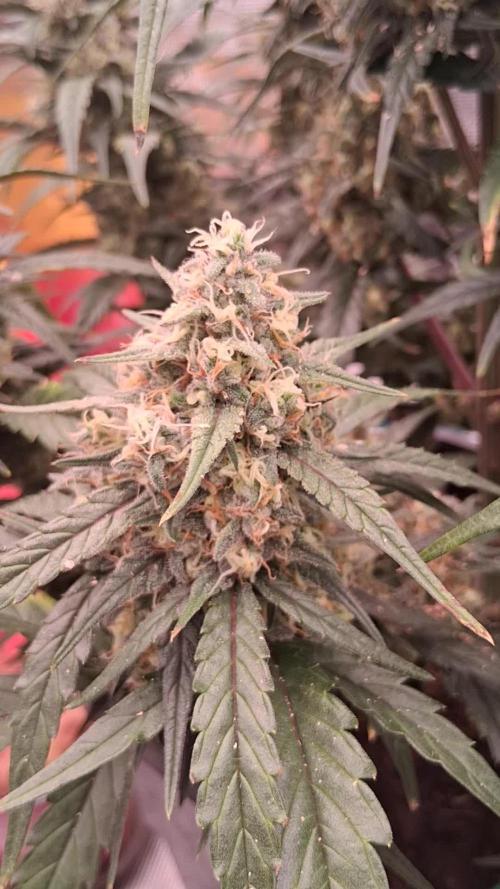
Möge die Macht mit euch sein Growmies!,
Der Main Bud der Alderaan Cookies Automatic in 56 Tagen seit der Keimung kann sich schon sehen lassen und in nur 35 Tagen Blütezeit!
Die Buds allgemein legen an Volumen und Harz bessatz zu ebenso sieht man das sie anfängt zu Reifen und nicht mehr lange braucht aber 1 woche ist sicher vermutlich eher 2 Wochen da sie bis jetzt ihren Wasser Verbrauch noch nicht verringert hat.
Die Terpene sind durchweg fruchtig sauer mit kraftvoller Kush/Cookie Note am ende die dominant ist.


Likes
16
Share


@SeshHouseCannabis
Follow
First started with only four plants, which are Future #1, Lilac Diesel, and Vice city.


Likes
29
Share


@Rounder
Follow
Everything going great Auto daiquiri got healthier and they are climbing good. Made smooth defoliation, trying to keep schedule and humidity and temperature right. I AM happy and they look too.

Likes
5
Share


@Pumbaa77
Follow
Settimana dal 23-29/08/2021:
Innaffiatura/Nebulizzato.
Eliminazione di foglie in esubero.
Aggiunta di 1 lombrico per mantenere un terreno adeguato, da ora in poi le dosi di fertilizzazione sarà minore.
Tecniche LS/HST/Topping.

Likes
1
Share


@Ferenc
Follow
Day 29: LST is done. 600W LED, 20 hours on 4 hours off the same with ventilation. Insetvrhe lamp approx 36 cm away. Water intake: 75 ml per plant plus triggering, humidity around 60 percent. Fertilization is on Monday, Wednesday, and Friday with BioBizz family, Tuesday, Thursday, Saturday bat guano and Epsom salt. Critical Orange Punch started flowering se grows very quick. Rest of them are OK as well they are on the way...
Day 30: I did LST again. I didn't have enough elastic band yesterday so I bought today and bent them better. I also set the lamp closer approx 32 cm.Day 31: I did LST yesterday and bent them. They already "lifted up" their heads toward the lamp. As they grow I will keep bending the main stalk and the side ones. I will try to create a spiral form and spread the plants with time.
Day 32: Almost all of them started flowering except Sour Stomper.
Day 35: Auto Critical Orange is the monster here. She is the most developed and tallestbwoth approx 28cm. (Hard to.measure property because of LST). Pre flowers developing nicely along the plants. I changed the lamp as it needed to my other tent because my other lamp is shit. So I will swap them one week here other week there... End of the week the tallest is Critical Orange Punch with approx 28 cm and the shortest Sour Stomper with 14 cm.


Likes
10
Share


@Kali_DC
Follow
calmag deficiency second week of flowering. Foliar sprayed for a couple days, flushed reservoir and add new nutrients with calmag


Likes
22
Share


@EhJay
Follow
D23 Looks like the calcium deficiency affected the growth on #2 a bit as it is a little behind #1
D24 I cut off the infected fan leaves on #2 also it's looking really yellow
D28 #1 really thriving compared to #2. Going forward I will be posting pictures of #1 only
Made a newbie mistake and fed my girls without checking the ph level.... hopefully no major side effects pop up

Likes
4
Share


@SimtechBen
Follow
The two plants in the back of the tent are definitely taller because they got left outside for an additional week. The two plants in the front are flowering nicely and the back plants are making signs that they are flowering too. I did some major defoliation and the plants looked pretty lollipopped now.

Likes
1
Share


@Ninjabuds
Follow
My Soaptini plant is finally starting to take off! It's been one of the smaller plants in the tent, but it's definitely showing signs of vigorous growth. The leaves are a deep, rich green, the most vibrant of all my plants. I'm excited to see how it develops!
Okay, This past week has been absolutely fantastic! The weather has been incredible, and I've been able to keep the windows open almost the entire time. My plants are thriving in the humidity, and the VPD has been perfect. Everything just feels so balanced and in check.
Likes
1
Share

@Yamamoto420
Follow
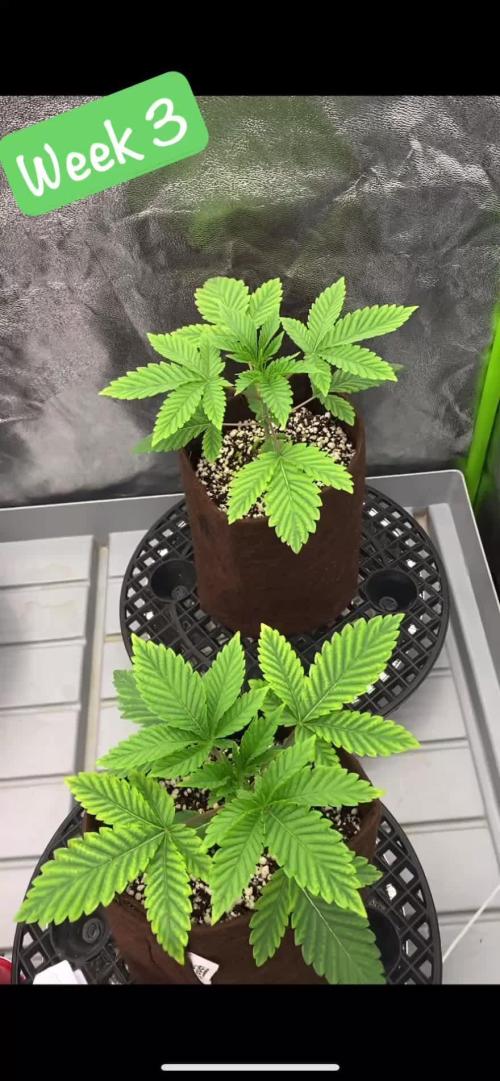
I transplanted the 6 coco plastic seedling cups to 1 gallon fabric pots and fed them 400ml each plant, i noticed some magnesium deficiency so i added more cal-mag to the small bucket water tank , that becuse im using RO water and coco cior it needs more calcium and magnesium.
Likes
3
Share


@TherealNICOGREEN
Follow
Er virkelig sket ekstremt meget på de 3uger her ! Jeg har ikke en i NOGEN PLANER OM DEN SKAL PLANTES UD! Eller jeg plantet hende om , er hun virkelig begyndt at blive en voksen kvinde! Med gode former💚☮️😉

Likes
24
Share


@MadeInGermany
Follow
Flowering day 42
since time change
to 12/12 h .
Hey guys :-)
A lot happened this week :-).
The buds develop really nicely .
The scent wafts through the whole room when I open the tent 💚.
This week was poured 3 times with 1 l each (nutrients see table above) This week there was the maximum amount of fertilizer, which will be slowly reduced from next week :-) .
Have fun with the update and stay healthy 🙏🏻
👇🏼👇🏼👇🏼👇🏼👇🏼👇🏼👇🏼👇🏼👇🏼👇🏼👇🏼👇🏼
You can buy this Nutrients at :
https://greenbuzzliquids.com/en/shop/
With the discount code: Made_in_Germany you get a discount of 15% on all products from an order value of 100 euros.
👇🏼👇🏼👇🏼👇🏼👇🏼👇🏼👇🏼👇🏼👇🏼👇🏼👇🏼👇🏼
You can buy this strain at :
Clearwater Seeds
Water 💧 💧💧
Osmosis water mixed with normal water (24 hours stale that the chlorine evaporates) to 0.2 EC. Add Cal / Mag to 0.4 Ec Ph with Organic Ph - to 5.8 - 6.5
MadeInGermany
