


Likes
Comments
Share


@Terpyboyz
Follow
So this grow came to a finshed but I had a. Few issues that’s held me up from finishing up the diary, but in due time I will reupload it all in order soon. But over all I will also update with a final weigh in of each strain produced so stay tuned 🤙🏻🔥


Likes
21
Share


@darb35
Follow
Day 36 - the girls seem to be happy, and are growing a bit different
One of them is flowring a bit faster and also starting to turn purple, the other is a bit slower but looks much more healthy.

Likes
18
Share

@LueRootsGrowGermany
Follow
Hallo Liebe Community!
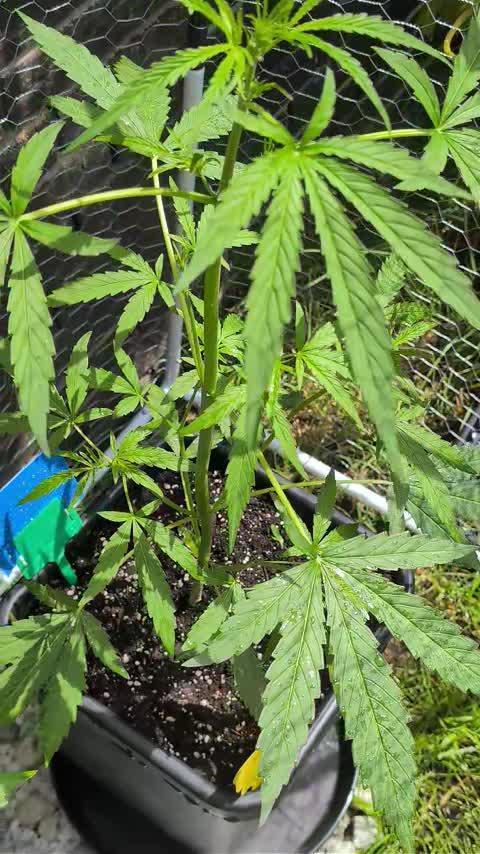
Leider gab es einen Nacktschneckenbefall den ich feststellte als ich am Samstag von meinen unvermeidbaren Terminen wieder kam.
Zum Glück wurde Sie bisher verschont.
Seitdem bin ich jeden Tag auf der Hut und habe den Untergrund der Untersetzer ein wenig Schneckenuntauglich gemacht.
Ehrlich gesagt wollte ich los und was gegen Schnecken besorgen aber bisher scheint es gut zu funktionieren.
Aber nu so ist es halt mit der Natur :-)
Zum Wachstum
Stamm und Blattwuchs machen sich gerade echt super, Seitentriebe entwickeln sich ebenfalls. Sie hat einen ordentlichen Sprung in die Höhe gemacht.
Dünger
Da Sie etwas empfindlicher ist auf der Düngeebene, hab ich sie vorsichtiger gedüngt.
Sie befindet sich auch gerade in der Vorblüte. Ab dieser Woche geht es dann langsam mit Kalium und Phosphor los.
Ich freue mich auf die Kommende Woche!
Das Wetter ist aktuell eher grau und es regnet wirklich nicht wenig. Die Zugabe von Additiven im Outdoor Bereich sind durch das Wetter aktuell nur schwer umsetzbar. Ich hoffe sehr, dass jetzt bald mal wieder mehr Sonne kommt!
Somit, euch noch eine angenehme und Erfolgreiche Woche gewünscht!
Viele Grüße an die Community und Kollegen!
LueRootsGrowGermany!


Likes
5
Share


@Growjardin
Follow
6 days left and I couldn’t ask for more. She got her last feed 10 days to harvest date. Will keep on watering only and will be giving her a final pluck today.

Likes
120
Share


@TheBudWhisperer
Follow
Week 27 - 4 weeks into the new flower cycle and bud development is a lot more advanced, much earlier post-transition too. It’d be great if these finished out early as we’ve got some extra cuts on the white widow that may need a home in a few weeks. Couldn’t resist - it’s such a vigorous plant that we’re gonna keep it for the next pollen chuck if the schedule aligns.
Chopped out a massive amount of larf from the undercarriage and we were ruthless here due to super high humidity and ideal conditions for botrytis. Still hoping on some useable seed and/or bud but this whole thing has been touch and go since the partial reveg. Alls good for now. Thanks for take’n a look.
As for the outdoor… meh. Like everyone around here we’ve fallen victim to far too much sustained rain recently and the WPM on the strawberry has really set in. The harvest window has cracked open slightly with about 2 weeks to peak. Still waiting on chop day though so it’s 50/50 if there’ll be anything usable on this plant. In a last ditch effort to get er to the end we’re gonna strip most of her fan leaves now. That’ll alleviate the WPM somewhat (in combo with a daily peroxide spray). We’ll likely chop early too. The bud wash should greatly assist with and offset any lingering small amounts but she’s gotta get there first and this strain is not known for mold resistance. Time will tell. The Lost Coast OG - an absolute champ. Lush and green, came through the rains just fine and should be a great smoke when it’s all said and done. Not long for either now - should be better part of 2 weeks for the strawberry and then whenever the og says fini👍.
Background/Repetitive Nonsense
These plants will be the two mothers this growing season that will be utilized for stage 2 of the pollen chucking project. We’ll be taking clones and stressing the genetics for some fem. pollen using colloidal silver.
Instead of trying to reinvent the wheel with landrace genetics, we’re effectively skipping initial hybrid crossing and stabilization, going straight to the polyhybrid mix. I call it the shotgun approach to selective, unvetted and amateur breeding on a micro scale😉.
These 2 parent strains will form the basis for 8-10 different F1 polyhybrid combinations and a further S1 back cross of each of the mothers. Not only should we be able to preserve the genetics for both mothers in feminized form but we’ll also be running an entire family of new hybrids after seeding out clones from each on the initial lineup of this summers photoperiods.
Method is pretty simple here; once we’ve got our pollen off the two mothers we’ll be clipp’n clones on 4 select strains that have proven results from various respected breeders. We’ll be using those for pollination purposes in what is expected to be a 10 plant recirculating Dutch bucket hydro system.
***Update***
The feminization process didn’t take at all with the strawberry or the Skywalker so it’ll be reg. Seed crosses with only Skywalker and some other 707 Headband that we have in the vault.
*********
Strain details:
Parent strains for self pollination
- Skywalker Kush by Reserva Privada
Classic kush effects and earthy aroma. The strong kush element of this cultivar will compliment any cross.
- Spliffs Strawberry by Spliff Seeds
Incredible mix of flavourful terpenes and hard hitting high THC. She’s got some Herer as well as some Diesel in ‘er so an obvious choice for any cross as well.
***UPDATE***
The strawberry had to come out of this breeding run to wait for a better mother that hasn’t been attacked by aphids. It’s been a tough battle this season and we’ve had to make a couple of heartbreaking sacrifices already.
Parent Strains for cross pollination
***UPDATE***
We added another 2 strains to the mix just in case we need to spot swap for some more variety.
- Ghost Train by AMS Seeds
A cross of Alien OG x Ghost Train Haze. Never tried the strain but I’ve heard only good things. This one might be worth mixing with the Strawberry so we’ll see how it goes.
***UPDATE***
Sadly - the ghost train turned out to be an auto so cloning her out as part of the breeding project is a no-go. Really disappointed about this but at least we still have a ready backup strain on the lost coast og to take her place.
- Boogie Nights by AMS Seeds
A cross of Kalijah, aka afghani/skunk/diesel/blue heaven X Juanita, aka NYC Diesel/Reina Madre). No idea here so naturally I’m interested😉.
**************
- Lost Coast OG by Emerald Triangle
Pakistani Kush x Lemon Thai x Chemdawg #4. Essentially a classic, west coast combo of landrace kush genetics that Cali is famous for, mixed with hard hitting Chemdawg #4.
***UPDATE***
The Lost Coast is a winner of a plant. Still outdoors and in veg. Looks like it’s recovered from the aphid attack. Might consider trying to take another cut of this and just rooting it in a pot for pollination. At this point, what the hell and if we could salvage anything it would be a positive.
*****update: got lazy and taking a cut never happened… so dumb - this plant is amazingly resilient and thicka than a snicka!******
- Spliffs Blueberry by Spliff Seeds
(Chocolate Thai x Afghani #1 x Highland Oaxaca) x Northern Lighhts Special. Only 1 bean of this left and the whole purpose is to blend the best of Spliffs Berry strains as a tribute. Awesome breeder and they’ve been very kind to us over the years.
- Northern Light by Royal Queen Seeds
NL means nuff said. A combo of 11 unknown strains believed to originate from the west coast of North America. This cultivar is a great take on these classic genetics and a perfect compliment to just about any cross. A biased fave of ours.👍
- White Widow by Seedsman
Brazilian Sativa x South Indian Indica. This classic strain has been unluckily elusive for us the last couple years. We know the quality of seedsmans version of this cultivar having grown it in the past. Sadly, a very strong performer that never made it to harvest due to an uncontrollable aphid infestation.
And we’re only at step 1.... still gonna need an assist with pheno hunting all of the crosses so if anyone’s interested in running the testers (when we finally get to that point) just let me know👍😎.
*****Update - plagues by issue after issue and having this project go an extra 6 weeks at least has been frustrating as fuck. Still on the way to chop as I write and really unlikely we’ll be pulling seed off this run. Big time bummer but it is what it is. Lessons learned, move on👍.****
Gonna be a Dope ass summer project and can’t wait to see it in full swing🤟. Thanks for stopp’n in y’all👊


Likes
2
Share


@Manchu
Follow
Mi experiencia con esta variedad, fue realmente buena. una semilla con mucho vigor, muy resistente a plagas, y con sabores y olores exquisitos

Likes
6
Share


@Shotter
Follow
Sorry it's been three weeks since my last update between work and looking after my son it a bit hectic but quick update I'm in to my second week of flower I'm in day 10 of flower
Likes
13
Share


@einamio
Follow
Day 36 I guess I can call it bloom. Nice strong pistils shooting all over. She is the tallest so far making me raise my lights a little more.
Day 38 Now Californian Snow is the tallest :) Ztrawberry stopped at a perfect height, it looks like she's gonna develop into a beautiful lady. Fat white pistils all over 😻
Day 39 Happy girl got 2500ml cm bg bb bh 6.3ph ~1EC She is perfect, symmetrical, stopped stretching at about 50cm, flowers are mostly leveled, branches are strong, leaves point up unless I water. I think she's also turning purple. Beaut 😻
Day 42 I think I saw some burnt tips but she still looks super happy and healthy. The most vigorous plant I've had.
Likes
6
Share

@Gram_Solo
Follow
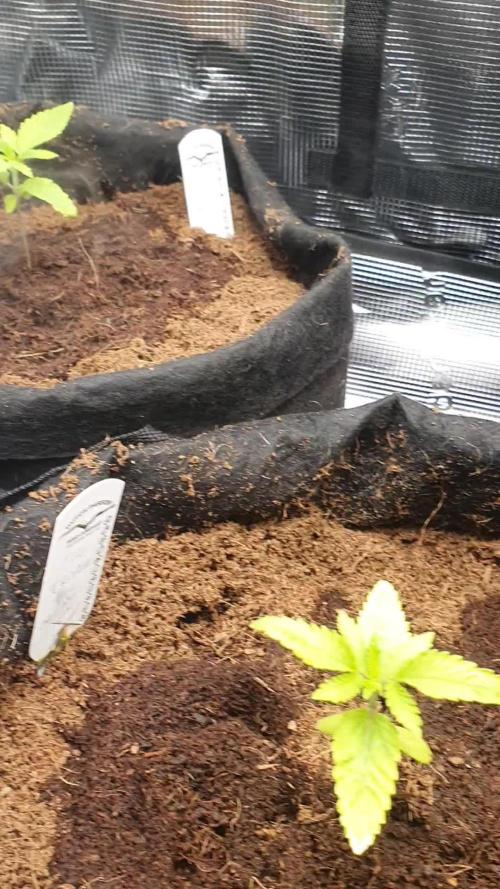
I forgot to soak the coco with nutrients before planting the seed, didn't realise coco doesn't have as many nutes to start off so that's why we're looking abit pale, had no idea about his haha
But it's all good! We can sort it. they looking like there improving past few days. Watered every day 1 litre around the outside in a circle and the stem. Added calmag grow nutes and voodoo juice. Colour is coming back to the leaves
Will keep doing this for next few days while there recovering. 🚑🏥


Likes
24
Share


@Alpha_Green
Follow
In the video you can see quite well how much work the defoliation of Mrs. Jealousy has been. I had to graze so many nodes and internodes, really gigantic, these genetics.
We'll see how it goes. I can already imagine it.
What do you mean?!
So, I'm going to call it a day for today. Food is waiting.
Take care & bee 🐝 positive!
Yours
Alpha_Green
Hello dear garden friends,
I hope you are doing well and everyone is high in the sky.
Finally, the American election campaign has come to an end. I can't hear all this anymore. So let's start right away with new photos from this morning and of course a few suggestions from me.
The profile of my beloved Sour Jealousy now resembles that of a closed tulip.
It will soon reach its full potential and bloom as if there were no tomorrow.
Last night I personalized the conditions a little more precisely and adapted them to the respective growth. Since Lady Jealousy is still withering a bit, I keep the humidity just about at the reasonable limit of tolerability for both fully flowering Sweet Seeds ladies. I think temperature and humidity is a good but necessary compromise here.
Different strains require different conditions.
Especially when growth is so different.
I also find the tribes of the three protagonists interesting... In my opinion, it tells us a lot about the selection of phenotypes in breeding.
So my dears, the day takes its toll. Time to sleep.
Thank you all for being out there.
Like-minded and motivated to share our efforts around the cultivation of these enchanting plants. Thank you for this wonderful gift of being able to grow. Nothing can be taken for granted in this world.
Not even happiness and peace.
Take care and bee 🐝 positive!
Yours Alpha_Green
Hello again…. 👋
This morning the buds of the Dark Devil lady, which was harvested a little too early, came out to dry.
I tried a little in the vaporizer. And I would like to take this opportunity to express great praise. The effect and taste are really very pleasant, although it was not quite there yet. And a berry-scented taste - very pleasant. I'm already looking forward to the perfectly matured lady then even more... 🤩
Yes, everything is going great at the moment. I'm really happy and satisfied with all the girls.
Tomorrow my Sweed Seeds Jealousy package will be delivered from Spain.
Despite the circumstances there with so much suffering due to storm disasters, super punctual. I'm already mega excited about it. Sweed Seed also presents a brand new hybrid strain. It hides or unfolds 55% indica and 45% sativa parts. Can't wait:
Jealousy Z XL Auto
Sweed Seeds
I think this will be my first run of the Homebox! Yes!!!
Oh, I almost forgot to mention that from today on the 8 side radiators are active for 12 hours each during a daily cycle.
Predominantly
640 – 780 nm.
Dark Devil is definitely really poisonous, wow - awesome turn...
I had a 3-month break, that's noticeable...
;-))
A little mental excursion at the end of week 7: "Freedom"...
We cause ourselves the most stress, because we have a completely distorted conception of freedom.
Freedom does not mean being able to do everything you feel like doing.
The assumption of having to do something all the time, is the main reason for stress.
Only, when we have internalized, that we don't have to do, what we don't want to do:
Only then, we are free.

Processing
Likes
12
Share


@BloodBath
Follow
Didn’t get too many pictures this time but they’re really starting to pack on resin now. They smell so good. Everything is going smoothly. Just gave them a flush with some SLF and Herculean Harvest. Runoff is already pretty significantly low. They’ll be getting the same flush again in a few days and then plain PH balanced water until they get chopped down. Planning on them fading super hard from this point on. All the buds are super dense. Can’t wait to try some sooner than later.
Likes
17
Share


@KonstantinUKR
Follow
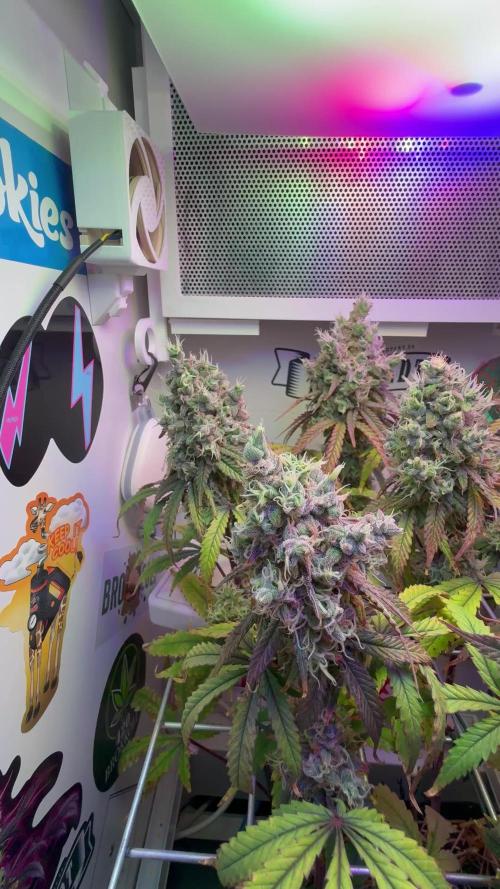
Последний раз полил компотом. Далее, раз вода, и начинаю РИПЕНить, дней 10-12.
Проба снята, с подшишников :) Оочень даже и очень, потенциал хороший.



Likes
6
Share

@bkickstand
Follow
The Oasis Project | Week 11: Veg
Strain: Durban Poison Quartet (DP1, DP4, DP5, and DP6)
Container: 25-Gallon Fabric Bags (Elevated on wheeled dollies)
Method: Organic Soil / DIY Automated Halo Irrigation
Overview & Environment
We have officially crossed into Week 11 of vegetative growth, and the backyard deck is officially looking like a botanical engineering lab. The High Plains weather is starting to test the environment, but the quartet is locked in, vibrant green, and praying hard to the Colorado sun.
Key Milestones This Week
1. The Automated Manifold is Live 🛠️
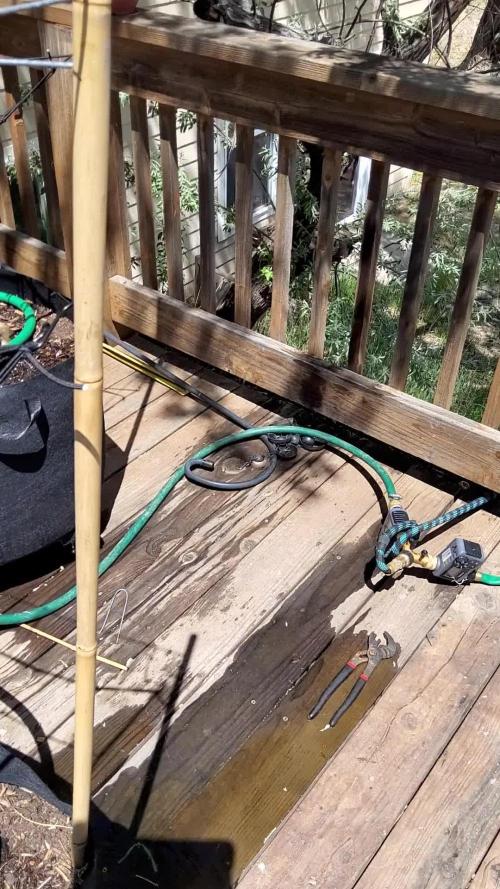
The biggest victory of the week was getting the DIY irrigation manifold completely hooked up, pressure-balanced, and dialed in.
The Setup: Custom green hose "halos" are wrapped around the base of each individual plant inside the rims of the 25-gallon fabric bags.
The Run: Clocked our first official initial run this week. The manifold pushed an excellent, steady volume of water, completely saturating all four massive containers in just **15 minutes**.
The Baseline: This uniform edge-to-edge moisture spread is exactly what we need to ensure the organic soil mix stays perfectly charged without leaving dry pockets. No more manual water lugging for my back!
2. Air Gaps & Root Pruning 💨
With the 25-gallon bags lifted entirely up off the deck floor on mobile furniture dollies, we have a perfect air gap underneath.
The Impact: Thanks to the low humidity and steady wind on the Eastern Plains, these elevated pots are acting as massive evaporative cooling systems. The 360-degree airflow is drying the bags out from the outside-in and bottom-up.
The Strategy: This is triggers natural air-pruning at the bottom, forcing the plants to stop circling their roots and instead blast out a massive web of lateral feeder roots higher up in the rich organic mix. We're keeping a close eye on the bag weights over the next 48 to 72 hours to map out our new watering frequency.
3. Plant Training & Structural Breakdown (Featuring DP5) 📏
The quartet is responding beautifully to the first topping session and ongoing structural training.
Current Height: Took the tape measure out to the deck today—**DP5** is sitting stout and muscular right at the 12.5 to 13-inch mark.
Canopy Architecture: By pulling the lower branches outward with precise tie-downs secured to the bag rims and supporting them with bamboo stakes, the core of the plants is completely open.
Sun & Wind Defense: Node spacing is incredibly tight, building thick, rugged main stalks that split beautifully at the topping nodes. This low, wide profile is exactly what we want to withstand the heavy plains winds. Every single lower growth tip now has direct access to high-altitude UV light, transforming them into future dominant vertical colas.
Next Steps
The bamboo frameworks are built, and the trellis netting is already waiting in the wings directly behind the deck setup. We’re letting the quartet digest their big drink from the manifold for the next 2 to 3 days to see how they explode horizontally. Once they stack a few more inches and fill out the width of the bags, we'll start weaving them into the screen!
-Keep growing and stay mindful! ✌️
Update 5.26.26: The quartet recieved their first full strength nutrients since making the move to the 25 gallon bags. 3 gallons per plant with full nutrients is a hell of a task, but the girls will be happy. PH corrected level of 6.0. 1215 PPM


Likes
4
Share


@Ryno1990
Follow
Snow Panda from Atlas seeds is doing very good has started getting some good growth after being topped an has been growing happy an healthy under this medic grow fold 6 an she has been loving the cultured biologix nutrients
Ending week 4 the Snow Panda has started shooting up with growth under this medic grow fold 6 she has been loving her nutrients from cultured biologix as shes been flourishing an looking great
Likes
85
Share


@Tropicannibis_Todd
Follow
Start of day 98 ...... January 15 2022 Start of week 14 ........ 72 DAYS INTO FLOWERING
😕 LOOKS LIKE THERE GONNA GO A LITTLE LONGER THEN EXPECTED ? 😕 Gonna be honest , I didn't expect it to go over 85 days but here we are ........
( I BELEIVE IT HAS ALOT TO DO WITH THE SIZE OF MY GROW MEDIUM , AND THERE HEALTH AS I AM RUNNING 45 LITERS OF SOIL MEDIUM) .... SHE SEEMS TO WANNA RIPEN ON HER TERMS
( OMG THEY SMELLING GREAT ) !!!!!!!
Check out the full grow video on latest weekly update
Super Exceptional Growth Daily
Still adjusting LST when needed and leaf tucking.......
Water Only when needed but its drinking more every otherday and adjusting lights when needed......
Rain Water Only .......
( DAY 26 AND BOTH NL 1 & NL 2 SHOWED PREFLOWERS )
( DAY 49 AND RESIN PRODUCTION HAS STARTED )
( DAY 57 , EQUIPMENT FAILURE , main FAN , over heated😡 tripped breaker , reset light timers , lost a DAY, REPLACED new Main Fan 😁 back up running 👌)
( DAY 70 DID ITS FINAL FLUSHING TODAY TO GET RID OF ANY BUILDUP )
( DAY 77 AND IT SHOWS A SLIGHT DEFICIENCIE MAYBE A CAL/MAG GETTING CLOSE TO END OF LIFE ) IM ALSO DOING VERY LITTLE, SLIGHT DEFOLIATION
( DAY 101 AND ALL IS GOOD , THERE FATTING UP )
DAY 101 .....NL 1
SHOWS SOME CLEAR TO MOSTLY CLOUDY RESIN HEADS , LOOKS LIKE THERES STILL AWAY TO GO😩😩 .......
DAY 101 .....NL 2
SHOWS MOSTLY CLOUDY TO MILKY RESIN HEADS ( 💀 PROBABLY PEAK THC LEVEL 💀 ) , AMBER IS JUST GETTING STARTED , GETTING CLOSE BUT SEEMS MORE TIME NEEDED...... VERY CLOSE ( AS I WANT SOME % OF AMBER 😁 )
I hope you enjoy my growlog...
(Who the hell is TropiCannibis Todd😎 Well This is not only my FIRST AUTOFLOWER but my FIRST GROW in over 11-12 Years😳 I Grew from 2002-03 TO 2010-11 , I'm back nahnahnahnahnah , Been a fun grow , learned alot , and it looks like I am gonna have a great harvest with some great smoke....... who new 😁 )
