


Likes
Comments
Share


@MarighellaGrower21
Follow
Sexta semana, fiz um flush nos vasos mais queimados, as outras plantas apresentam deficiência de magnésio também, segue sexta semana de flora e apesar dos problemas as flores tão bem resinadas, vou aplicar flowermind essa semana e ver se melhora. Obrigado por

Likes
4
Share


@Ieiogrow94
Follow
Eccoci qui...
Ormai manca davvero poco ci siamo quasi.... Ora niente più fertilizzanti solo acqua ed attendiamo la maturazione..
Ma quanta resina ha!!!!!
Seguiranno aggiornamenti, grazie a tutti per il supporto🔥🌲❤️

Likes
10
Share


@hholmesgrows
Follow
We're now at week 10 and about a week or so left until I decide to chop this bush down and begin drying and curing. I haven't really been doing much this week besides trimming one or two leaves off, the week prior I have removed only 4 during the whole week and the plant in whole has still been developing rapidly. This is supposedly the last week from the breeders description that the plant should be mature enough but with the transplant in the beginning stunting it for a week has probably been enough reason why growth was unstable during the whole time, I sort of felt it as well when it started flowering at such a small size. I've learn my mistake have redeemed myself with the care i gave it after the stunting. The lower bud sites are still deep green as if they haven't received enough light and I tried to fix that by lowering the light but the taller colas were getting too close (at least 5-8" close) so I decided to leave it at around 10-13" away so I don't disrupt the growing environment too much. I don't want to open the tent too much too now that it stinks up my small room in seconds and sometimes creeps through the doors out to the other rooms and outside the house if my window is open so I'll be looking into the tent when i need to water, fix something with the irrigation system, fix the height of the light, or get ready to harvest. I don't think I will be defoliating anymore since all bud sites are exposed to an extent and I just overall don't want to bother her and watch her naturally do the rest. I will be giving it another week or so to catch up making it around 75-80 days in total. I will be flushing it by now since i've looked at the trichomes on the most and least developed to find that it's starting to amber already with about a quarter turning white so purging the nutes now will be essential towards the end, i'm pretty excited and hope you guys are too.

Likes
Comments
Share

@frigo_camelo
Follow
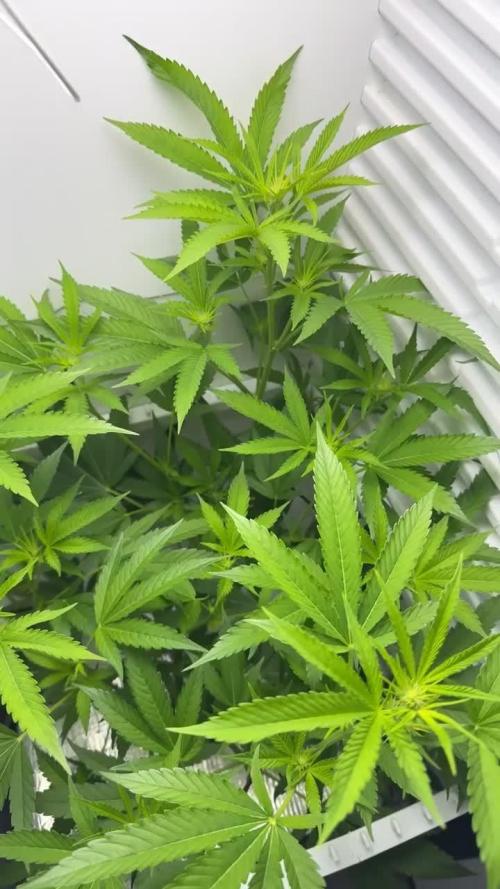
mid week 2 flower 🏻 running welll | insane smell already pics are from 28.06

Likes
3
Share


@bigsmoke42069
Follow
Week 7 of flower 9/20/24
Changed the nutrients on 9/23/24 to fit the ripening stage.
Using FinalPart with ProBloom EC 1.3, PH 6-6.2.
Checking runoff PH and EC daily (EC 1.25, PH 5.2).
Using H2O2 with every watering (to help the PH stabilize at 5.5-6.5 range if there is a root problem).
Plant seems happy and not showing necrosis/nutrient burn problems.
Hand watering ones a day at the beginning of the light schedule.

Processing
Likes
16
Share


@420chris
Follow
15.1Aus den Anzucht Schuhen in die ersten richtigen mit biobizz all mix!
18.1 das Licht wurde von 20/4 auf auf 18/6 gesenkt stark genug um länger alleine zu schlafen sind alle Kinder inzwischen.
22.1 die beiden unteren auf dem letzten Bild hab ich heute schon einen sehr frühen FIM unternommen.. Wir schauen mal gemeinsam wie sie sich schlagen im Gegensatz zum der Familie
23.1 morgen beginnt die Woche drei Freunde.. 💚
Likes
11
Share


Likes
224
Share


@Hellishjam
Follow
So I’m updating a day early only because it’s looking like a lot of rain tomorrow so here it is:
Pp 1- 36 inches
Pp2- 34 inches
Pp3- 36 inches
Os1- 35 inches
Os2- 32 inches
Os3- 36 inches
Been dealing with a lot of wind so there is some damages on them but it is what it is I’m not sure how you prep them for 50kmh winds 🤷♂️ I’m thinkin the tent would be in a pile in the grow room 😂 but anyways other then that there looking good. I’ve seen roughly 5-6 lady bugs laying eggs on the girls so that’s a good start!! No sign of pest yet but nature is prepin em. I’ve gotta get some more straw to lay down as the wind blew a lot of it away, it’s coming everything is just a waiting game.. leaving on Wednesday for work so it’s going to be exciting to see em two weeks later! Was a little nervous they were going to flip to flower but everything seems good so far haven’t noticed any major stretch or anything like that so I think we’re in the clear. The weather is taking a swing back to normal here it’s been outa wack the last little bit, anywhere from 25-30c highest with humidity was 39c I’ve never seen this in May in my lifetime up in Canada but wow if that’s a taste of what summer is going to be like I want out now lol well time to go for now see ya again on June 17th!


Likes
102
Share


@Roberts
Follow
Ztrawberriez auto is growing good. Just a littkec1 gal perlite grow. I am curious to see how well she will do. 🤞🏻 for good things. Thank you Fast Buds. 🤜🏻🤛🏻🌱🌱🌱
Thank you grow diaries community for the 👇likes👇, follows, comments, and subscriptions on my YouTube channel👇. ❄️🌱🍻
Happy Growing 🌱🌱🌱
https://youtube.com/channel/UCAhN7yRzWLpcaRHhMIQ7X4g
If anyone needs to purchase fastbuds here is a link for my affiliate program
https://myfastbuds.com/?a_aid=60910eaff2419


Likes
44
Share


@Cogollo_eu
Follow
**Encontrarás la traducción a español al final de la descripción**
From/Desde: 22/02/19 || To/Hasta: 28/02/19
From day/Desde día: 1 || To day/Hasta día: 7
-----INTRO-----
Hi Buds!!, this is my new diary, the first i made while growing, as the other diaries i have were made close or after harvest.
This is my second indoor grow, you can check my first indoor grow here (Auto BlueBerry Mazar x4):
- https://growdiaries.com/diaries/24700-auto-bbmazar-x-4-1rst-indoor-60-to-90
Also i have a couple of diaries of an outdoor grow series (my first grow experience) that i made this summer, there you will find Lemon Zkittle, Think Big, Auto GlueBerry, Critical + 2.0 Auto, Auto Girl Scout Cookies & Auto Mazar (some are in progress and some are to come), check my user page if you are interested: https://growdiaries.com/grower/abducted.
This time i'm going to grow 2 different Feminized Strains, 2 x Gorilla Glue @Dinafem & 2 x Money Maker @StrainHunters, i will make separate diaries as suggested by @GrowDiaries. You can find the Money Maker Diary here: https://growdiaries.com/diaries/25667-gorillamakingmoney-gorilla-vs-money-m
My expectations inspired by @TOTEM awesome Man-Linning Dr. Grinspoon plant (https://growdiaries.com/diaries/18090-dr-grinspoon-by-totem) are to try to perform a small Man-lining in both plants or in one of them, i'm still guessing. I'n not trying to reach the kind of monster TOTEM has, as i don't have equipment nor even place. Also i want a max 3,5 months grow, so i'm planning 4 or 5 weeks of growing, and my pots are just 8l, but i want to see where i reach with a feminized strain and with the equipment i have, trying to apply technics for first time. I just LST'ed a Lemon Zkittle, but i wasn't a really LST.
-----IMAGES & VIDEOS-----
Photo 1: Seeds stocked from summer
Video 5: Timelapsed planting non germinated seeds
Photo 9: Somangos at back, they've grown almost wild outdoors, tomorrow (02/03/19) i will harvest them. You can see the first weeks of that Somangos in this diary (weeks 1 to 7): https://growdiaries.com/diaries/24700-auto-bbmazar-x-4-1rst-indoor-60-to-90
Video 16: Timelapsed transplantation
-----WEEK SUMMARY-----
This week is the setting up medium week, the day 21 (22 already as were 4:40 a.m.) i prepared small pots with soil as seen on images and videos and buried the seeds at about 1 cm deep, in this case 2 Gorillas and 2 Money Makers. After buried i irrigated the pots with 2 syringes of 60 ml on each. And put them under a 50W Led (pink/purple light), you can see the process in video 5.
The first gorilla (A.Gorilla) showed itself few minutes past day 23, the day 24 at about 00:00, the second Gorilla (B.Gorilla) emerged the same day 24 at 15:44, the first Money Maker (B. Money) appeared the day 24 between 23:30 & 00:00 and the last money (A.Money) appeared the day 25 at 13:50.
The day 28 i transplanted the babies to 8 l pots (Root Poch), you can see the process in video 16.
-----WATERING CALENDAR-----
22/02/19 - 120 ml with all week nutrients @ 0.4~0.5 E.C. PH5.5
24/02/19 - 10 ml with all week nutrients @ 0.4~0.5 E.C. PH5.5 (over buried seed)
28/02/19 - 1.500 ml with all week nutrients @ 0.4~0.5 E.C. PH5.5 (Setting up the 8l pot)
*****ESPAÑOL*****
**Encontrarás la traducción a español al final de la descripción**
From/Desde: 22/02/19 || To/Hasta: 28/02/19
From day/Desde día: 1 || To day/Hasta día: 7
-----INTRO-----
¡Muy buenas compañeros!, este es nuevo diario, el primero que seguiré mientras se desarrolla la plantación, ya que los demás que he escrito lo he hecho con la cosecha a punto o ya realizada. Esta es mi segunda experiencia indoor, podéis ver la primera en este diario (Auto BlueBerry Mazar x4):
- https://growdiaries.com/diaries/24700-auto-bbmazar-x-4-1rst-indoor-60-to-90
También tengo unos cuantos diarios que forman una serie de cultivos correspondientes a lo que he plantado este verano, que ha sido mi primera experiencia. En ellos encontrarás las genéticas Lemon Zkittle, Think Big, Auto GlueBerry, Critical + 2.0 Auto, Auto Girl Scout Cookies y Auto Mazar (unos los estoy desarrollando ahora mismo y otros están por venir), si están interesado visita mi página de GrowDiaries: https://growdiaries.com/grower/abducted.
Esta vez voy a crecer 2 genéticas feminizadas diferentes, 2 Gorilla Glue de @Dinafem y 2 Money Maker de @StrainHunters, haré diarios separados como recomienda @GrowDiaries. Podéis encontrar el diario de las Money Maker aquí: https://growdiaries.com/diaries/25667-gorillamakingmoney-gorilla-vs-money-m
Mis expectativas para este cultivo son introducirme en alguna técnicas de cultivo, inspirado por la increíble Dr.Grinspoon de @TOTEM alineada desde el principio (https://growdiaries.com/diaries/18090-dr-grinspoon-by-totem). Voy a intentar hacer una alineación principal pequeña en una de las plantas o en ambas, aún estoy decidiéndome. Por supuesto no voy a intentar crear un monstruo como el de TOTEM, pues no tengo ni el espacio ni el equipo adecuados, además de que quiero que el cultivo no me sobrepase los 3 meses y medio, por lo que planeo hacer 4 o 5 semanas de crecimiento únicamente, también está el hecho de que mis tiestos son de 8 litros que no es demasiado, por lo que quiero ver hasta donde llego con una genética feminizada y el equipo que tengo, intentando aplicar las técnicas de cultivo principales por primera vez. Este verano le hice LST a una Lemon Zkittle, pero no fue un LST verdadero.
-----IMAGENES & VÍDEOS-----
Foto 1: Mi stock de semillas desde verano
Vídeo 5: Plantando las semillas en TimeLapse
Foto 9: En el fondo unas Somangos, han crecido medio salvajes en exteriores, mañana (02/03/19) haré la cosecha. Podéis ver las primeras semanas de estas Somangos en las 7 primeras semanas de este diario: https://growdiaries.com/diaries/24700-auto-bbmazar-x-4-1rst-indoor-60-to-90
Vídeo 16: Transplante en TimeLapse
-----SUMARIO SEMANAL-----
Esta semana es la de configuración del entorno de cultivo, el día 21 (22 ya pues eran las 4:40 a.m.), preparé unos tiestos pequeños con tierra como se ve en las imágenes y vídeos, y planté las semillas a aproximadamente 1 cm de profundidad, en este caso 2 semillas Gorilla y 2 Money Makers. Después de plantar las semillas regué los tiestos echando 2 jeringas de 60 ml en cada uno. Después dejé los tiestos bajo un foco led de 50W (rosa/morado), podéis ver este proceso en el vídeo 5.
la primera Gorilla (A.Gorilla) apareció unos minutos pasado el día 23, el 24 a las 00:00 +/-, la segunda Gorilla (B.Gorilla), salió el mismo día a las 15:44, la primera Money Maker en aparecer (B.Money) apareció también el día 24 entre las 23:30 y las 00:00 y la última que pareció fue la otra money (A.Money) el día 25 a las 13:50
El día 28 transplanté a lso tiestos definitivos de 8l de la marca (Root Poch), podéis ver el proceso en el vídeo 16.
-----CALENDARIO DE RIEGO-----
22/02/19 - 120 ml con todos los nutrientes semanales @ 0.4~0.5 E.C. PH5.5
24/02/19 - 10 ml con todos los nutrientes semanales @ 0.4~0.5 E.C. PH5.5 (sobre las semillas)
28/02/19 - 1.500 ml con todos los nutrientes semanales @ 0.4~0.5 E.C. PH5.5 (regado inicial del tiesto de 8l)

Likes
9
Share


Likes
228
Share


@StarLorr
Follow
Welcome to my Pablø Ęscøbar diary.
In this diary:
Seeds: sponsored by Ðivine Șeeds
Media: Promix HP
Nutrients: Advanced Nutrients, Diablo Nutrients, Gaia Green Power Bloom.
Light and Weather: Şun☀️and Mother Earth.🌎
___________________________
Feeding:
Wed 14Aug: 8L water not pH'd
Thu 15Aug: 9L water not pH'd
Fri 16Aug: 8L water not pH'd
Sat 17Aug: 8L water not pH'd
Sun 18Aug: 6L water not pH'd
Mon 19th - Tue 20th rain
___________________________
*please note that most watering are from top now since topping with Gaia Green Power Bloom*
______________________________
Pablo got more defoliation treatment last Friday Aug16th mostly fan leaves and tiny branches without hopes😅
_______________________________
Top dressing her with Gaia Green Power Bloom was a Sage move she seems to like it, haven't fed her with liquid nutrients this past week, was kinda concerned about over feeding her😬but will do later on this week.
______________________________
Thanks for stopping by, likes and comments are appreciated!👊🏻😎
Keep on growin!
Keep on tokin!!!
😙💨💨💨💨💨

Likes
3
Share


@timbarin
Follow
9 Dec - 15 Dec
she looks good after the haircut and LST.
I've pinned her down and will let her spread

Likes
3
Share

@DE_BW
Follow
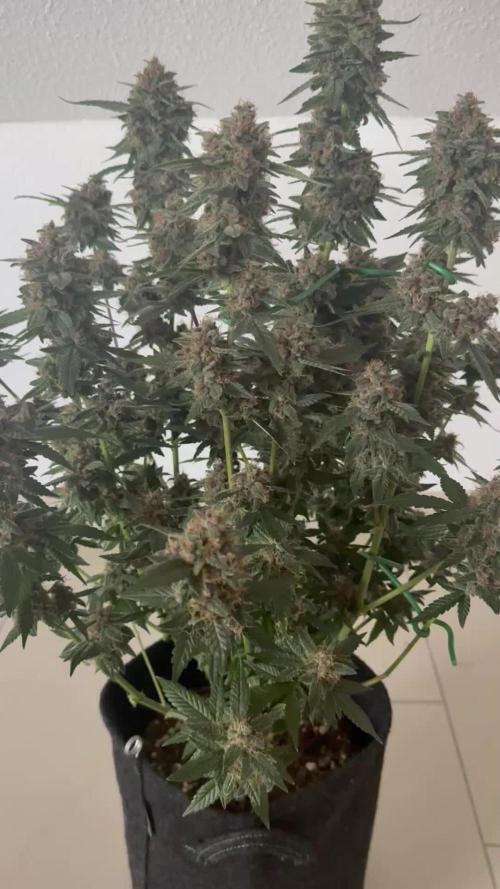
Last week. She is an absolute beast! Can‘t wait to harvest her.
D79: 2l with Flawless Finish. Harvest is in two days
D81: Harvest. Will update in a week
Likes
11
Share


@Silverback_Guerilla
Follow
SUNDAY 4/21:
I fed them about 1/3 gallon each today. Switched to Beastie Bloomz and increased terpinator.
I inspected them for nanners and found one.. Will take some photos tomorrow-
MONDAY:
Life got in the way and I didn't have much time for the garden.
TUESDAY:
I rearranged and took some photos today.
I've still got Candy Canes in both tents. One big one and one small one in the big tent, and 2 small ones in the little tent.
WEDNESDAY:
Took some photos and a video. WIll water tomorrow-
THURSDAY:
I watered with about 1/3 gallon and included some terpinator, calimagic, and beastie bloomz.
The biggest one is finally starting to put on the pistils. She'll be the slowest CC I've grown to date, but also possibly the biggest yielder.
The other 3 didn't do much stretching, but I did a bunch of training on them to get some separation and better light penetration into the lower flowers
FRIDAY:
I did some more training on them today and I made some improvements to my fresh air a/c intake in the tent that dropped the temp a couple of degrees, and the new dehumidifier is keeping the RH right where I want it..45-50%.👌 This allows the evap cooler to be more effective at cooling as well...above 50% RH and it's basically just a fan..

Likes
34
Share


@Robbaus
Follow
Siamo quasi alla fine! Durante la settimana dovremmo essere arrivati al massimo gonfiore dei fiori, i tricomi sono praticamente per metà color latte e per metà leggermente trasparenti, penso che quella di oggi sia stata l'ultima bagnata. Ho tagliato due apicali a campione della pianta che avevo il dubbio fosse ermafrodita, ma da questi due apicali non è uscito nemmeno un seme e l'effetto è stato quello desiderato, tenendo presente che le ho tagliate in anticipo rispetto a quando sarebbero da consumare quindi direi che dovrei aver scampato il pericolo, me ne sono accorto in tempo. Non vedo l'ora di toglierle e vedere l'effettiva resa del raccolto, dovrei essere sui 400g 😁😁🍀🍀💪🏼💪🏼
Likes
18
Share


@Diips
Follow
Its starting to look more like a forest from each day that goes on. frost also starting to appear already and we are still early in flower ;)
d.66 all good in the hood, ill will try to pull those 2 who are very close to the light more back to the wall, so the lower stalks can get light and space
d.66 a little bit of bamboo and lst done without problems 🌞
Likes
2
Share


@TTerpz
Follow
Buds starting to form!!!!
Day 2 of week 8
4/3/25 UPDATE:
Flushed with Fox farm sledgehammer ph’d at 6.8
Soils were low at 5.8
4/5/25 update: fed with nutes
4/7/25: watered with plain water ph’d at 6.5
4/8/25: did a slight heavy defoliation to get ready for week 9!
Likes
2
Share


@CannaIGrow
Follow
Topped this girl this week, she’s growing pretty good. Very nice looking plant to my eye.