The Grow Awards 2026 🏆
Likes
Comments
Share
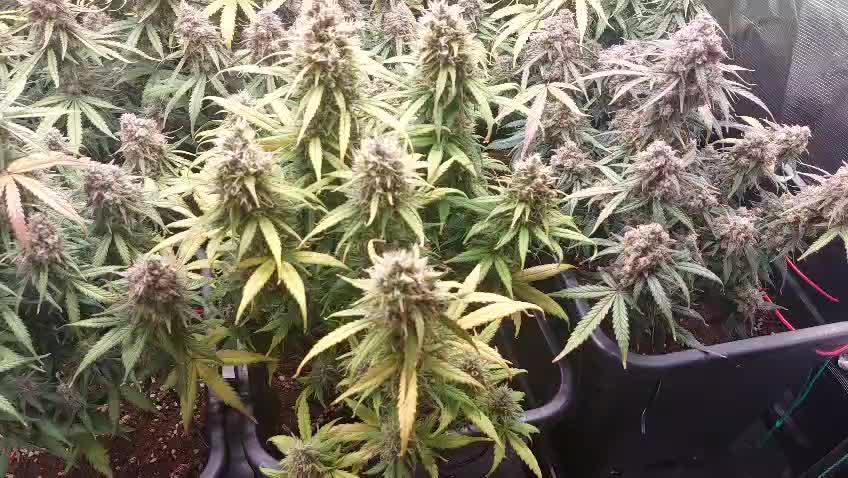
Some huge colas on two of them. I need to run them again. This strain is a true champion. Yield, looks, resin, terps everything on point. I don’t really mind that she needs some extra time. 9 weeks minimum. 29.09 Cleared runoff. Full tanks ec 1.6 ph 6.2 Removed one top bud of vf2 and g3 due to botrytis. But addition of particulate filters and uvc lamp seems to have helped a lot. It’s been very humid this time around. Even now in the late stage of flower it’s high 60%
Likes
9
Share
@NanoLeaf
Follow
End of Week 5 Brewed a nice veg-specific compost tea and the ladies loved it. Trying to make sure the soil stays nice and moist to keep the microbes happy and letting the top 3 cm of the topsoil dry before each watering. The ladies have gained some momentum and they're growing at a rapid pace . I also performed some HST by defoliating a few fan leaves and softly pinching and bending some of the stems to open up the canopy whilst keeping the stress at a minimal. Pest Report: Didn't have much issues up until now... I noticed about 5-10 tiny little thrips on some of the leaves and I applied an organic microbial insecticide (Agro Organics Bio-Insek, Google it!) that seems to have taken care of the problem. Now I will apply it weekly to make sure those buggers are ELIMINATED.
Likes
6
Share
Que hay familia, volvemos por aquí y actualizamos la sexta semana de floración de las Original de GrowBarato. Jodo, que aroma más rico que desprenden, cómo están progresando y cómo se están poniendo repletas de polen, ya con los dientes largos. Estoy bastante contento aún siendo los ejemplares de granel, orgulloso del resultado hasta ahora. Agrobeta: https://www.agrobeta.com/agrobetatiendaonline/36-abonos-canamo Mars hydro: Code discount: EL420 https://www.mars-hydro.com/ Las maximas de temperatura no superan los 26 grados y las mínimas no bajan 20, así que no me puedo quejar. Los niveles de humedad también son los correctos van entre 45%/55% de humedad relativa. Por supuesto el Ph lo estamos dejando alrededor de 6. Hasta aquí es todo, buenos humos 💨💨💨.
Likes
11
Share
In questa settimana la crescita é stata veloce anche grazie ai fertilizzanti. LST ho dovuto sistemarlo ogni giorno perché continuavano a crescere nuove gemme e l’apicale tornava sempre su. Il tronco si é irrobustito tanto.
Likes
4
Share
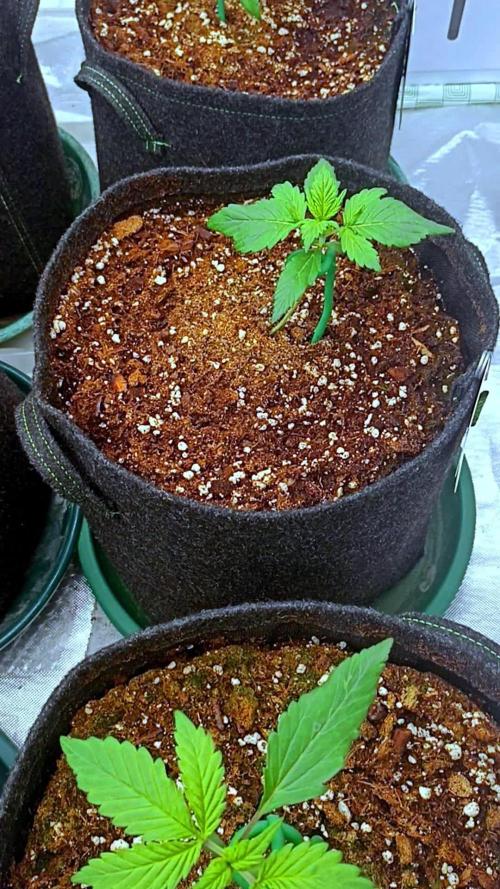
Holaa, segunda semana de la Negra 44. Primer transplante para esta pequeña, se le aplico Great White en contacto directo con sus raíces. Los riegos son 1/1, uno con fertilizantes y otro con solo agua. Por el momento va todo bien, no se ven carencias ni ningún posible problema. La temperatura con el led apagado aumento un poco con la manta que compre pero aun no es suficiente, no puedo hacer nada más así que se mantendrá en esos rangos durante el cultivo. Cualquier recomendación sera bien recibida!! *Great White se mide en gramos
Likes
1
Share
Eccoci di nuovo qui!!! Super eccitato per questa nuova collab con Divine Seeds, team davvero al top, che mi ha dato l’opportunità di testare questa nuova genetica e di condividere i progressi con tutti voi!!! Come sempre partiamo nei bicchieri per poi travasare.. Questa volta verrà svolto tutto sotto la Lumatek Zeus 465 ProC, mi aspetto molto da questo ciclo!! Purtroppo ho perso i file delle scorse settimane e dovrò reiniziare il report da ora scusate per il disagio Grazie a tutti per il supporto ❤️🍀🔥
Likes
47
Share
The cannabis strain Grape Guava can be a purple strain, depending on its specific phenotype and genetic makeup. While not all phenotypes of Grape Guava are purple, some variations, such as the Zatix Grape Guava, are noted for their striking purple appearance due to the genetic expression of anthocyanin pigments. https://www.youtube.com/watch?v=cKdVmdoKJ5k In a garden of green, Grape Guava gleams, With its fruity aroma, enchanting dreams. Clusters of grapes, guava's sweetness ignite, A strain so divine, in purple and white. Euphoria whispers, a lush fruity haze, Grape Guava's embrace, a tranquil daze. Off and away.@1400ppm. The increased CO2 allows plants to thrive at higher temperatures, which in turn necessitates higher humidity to maintain the ideal VPD for healthy growth and transpiration. 80F -5F = 75F LST with 70% RH = 0.72 kPa. Higher temperatures and humidity promote rapid growth, nutrient uptake, and photosynthesis while maintaining a lower stress level. Temperature influences the rate of enzymatic reactions involved in aerobic respiration. Enzymes, such as those involved in glycolysis, the Krebs cycle, and the electron transport chain, work most efficiently at an optimal temperature range. In low temperatures, enzymatic activity will slow down, thus reducing the rate of aerobic respiration. In high temperatures, enzymes can become denatured, thus impairing their function and stopping the process of aerobic respiration. Glucose is the primary fuel for aerobic respiration. The rate of aerobic respiration increases with the availability of glucose, as it is the starting point for glycolysis. If glucose levels are low, cells may rely on alternative energy sources such as fatty acids or amino acids , but these processes may yield less ATP or be less efficient. To determine this effect, carbon dioxide volume was measured (as carbon dioxide is an output of aerobic respiration) 18/6 with the 6 being IR. The near infrared (IR-a) borders around 700nm up to 1400nm @ photon par flux density of 1.8 instead of darkness, keeping temps overnight a neat 77F-80F. Think of my tent as a lung. What goes in must come out. When the rate of air going out exceeds the amount of air coming in, it creates a negative pressure. Tent concaves (bends in). If set up correctly, your RH will begin to drop slowly to the desired level you set, and the extraction turns off when it reaches desired% RH. The plant, as it performs cellular respiration, will always be releasing more water into the air, so the RH% of the tent overnight will always increase, so long as oxidative phosphorylation is occurring. As soon as the RH% creeps back up to 55%, the extraction turns back on, over and over. This creates a strong pressure differential which will work wonders on your grow. Replicating high and low-pressure fronts in nature. Critical for oxygen diffusion at the critical time of peak cellular respiratory function.. Moisture will not transfer from a saturated atmosphere to another if that air is already at or above its saturation point, meaning the air can't hold any more water vapor. Once I understood that water is produced as a by product during cellular respiration, specifically at the very end of the electron transport chain (ETC) where electrons are finally transferred to molecular oxygen, the higher the RH of the air, the more resistance there is for more moisture to be added to that environment, and effects the ease with which it does so. But none of that water comes from the pot; it's pulled from the air. If you run high daytime RH, your medium/pot is 100% reliant on transpirational root pull to move water. ZERO evaporation happens across the atmosphere if the tent air has high RH%, the medium cannot release its water through evaporation. Once a canopy develops, light no longer slowly wicks and evaporates from the topsoil. The Soil-Plant-Atmosphere Continuum (SPAC) describes the continuous pathway and process of water movement, driven by a gradient in water potential, from the soil, through the plant's roots, stem, and leaves, and finally evaporating into the atmosphere through transpiration. There is evaporation, there is transpiration, and then there is evapotranspiration; Evapotranspiration (ET) is the combined total of two processes: evaporation (water lost directly from soil and surface water into the atmosphere) and transpiration (water released from plants to the atmosphere through their leaves). Evapotranspiration represents the total amount of water that moves from the medium into the air. There is no such thing as a medium with too much water, only a medium that retains too much for too long. The water must always flow efficiently from one atmosphere(Medium) to another(Air) in a timely manner. Moisture is a critical factor for bacterial growth and decay. Dictating how long it's allowed to sit in any one location for any given period is a key preferred control. To ensure a net reduction in a bacterial population, the rate of removal (ET) must exceed the rate of bacterial growth (decay rate), which is often modeled as a growth rate for the specific bacterium under the given conditions. By optimizing daytime VPD, we also optimize conditions for bacterial growth to explode exponentially above 77°F.. If water is allowed to sit in a medium without an escape within a timeframe, nothing good will happen. IF High RH is maintained overnight as well as during the day, placing 100% of water movement at the behest of daytime transpiration, roots can only pull where they can reach, and if soil is compressed above a certain point, moisture will become trapped in a medium with no way of moving day or night. This will begin the countdown for decay to take hold. When water stagnates in a medium, it loses oxygen, creating anaerobic conditions that foster the growth of harmful microorganisms like bacteria and fungi, which can produce toxins and disease vectors. Thigmomorphogenesis, the process by which plants respond to mechanical stimuli like touch by altering their growth and development, results in significant morphological changes to improve survival against mechanical perturbations. This complex response involves sensing touch and initiating physiological and genetic responses, leading to changes in form and structure over days or weeks. The process is triggered by physical forces such as wind, rain, or touch. Plants adapt to these stimuli by changing their shape and structure, which may include slower growth, thickened stems, or altered leaf development. Plants possess sophisticated mechanisms to detect even subtle mechanical stimuli and initiate responses. A variety of molecules, including calcium ions, jasmonates, ethylene, and nitric oxide, are involved in signaling these mechanical inputs. Touch can induce the expression of genes that encode proteins for calcium sensing, cell wall modification, and defense mechanisms. A plant exposed to constant wind may become shorter and sturdier. A plant that is touched frequently might grow more slowly to conserve energy and develop thicker cell walls. These changes increase a plant's resilience and ability to survive in harsh environments. Let's get Thiggy with it.
Likes
17
Share
She is bulking up now :) some leaves show some brown discolouration but nothing too serious. Just removed 2-3 Leaves that were not looking too good. Just let the plant do its thing. Light hits with about 850 PPFD
Likes
14
Share
@BudXs
Follow
3 for 3 on the bean pops. Now just gotta weed out the males. This grow is for Shawn, the breeders son
Likes
2
Share
This week felt like the run really started cruising into flower mode. The smaller, darker pheno – the one that got transplanted from the 11L into the 35L pot – finally bounced back. Especially after that little defoliation session, she’s been pushing steady growth and stacking some nice biomass. She’s compact, chill, and now showing she’s got some solid drive. The bigger, lighter pheno on the other hand feels like she hit the brakes a bit. Growth slowed down, biomass stacking isn’t as intense, and she looks a little lazier compared to her sister. But that’s kinda intentional – I took off a bit more foliage on her to keep the stretch in check and slow her roll. So, nothing to stress about, just part of the plan. Hope that It works out and she'll start to be a little more on the energetic side of things next week. Funny enough, the darker pheno seems to be catching up and maybe even overtaking the lighter one now. That contrast is rad to see – like two boards riding the same wave but in different styles. Curious how it’ll play out in the next couple of weeks. I also pushed the PPFD to about 1000–1050 depending on the spot in the canopy. Bud sites are soaking it up, and the canopy looks nicely balanced. From here on out, I wanna keep it chill – minimal interference, let the plants ride it out, and bring this run to the finish line. Main focus is to wrap it clean so I can flip the space for the other photoperiod girls waiting in the small tent.
Likes
21
Share
It all started out even under the scrog when something came up I tucked it under but for some reason I have a little uneven canopy I'm not complaining it's the first time I've ever tried it I just wish I could figure out why I have that uneven now on the side that's growing a lot I have reflective material on that side and I'm thinking maybe that's the only thing it could be I see a little nuke burn at the tips of the leaves but he's okay I went with pure RO water this time she should be flushed pretty good now
Likes
Comments
Share
@ORION1_1
Follow
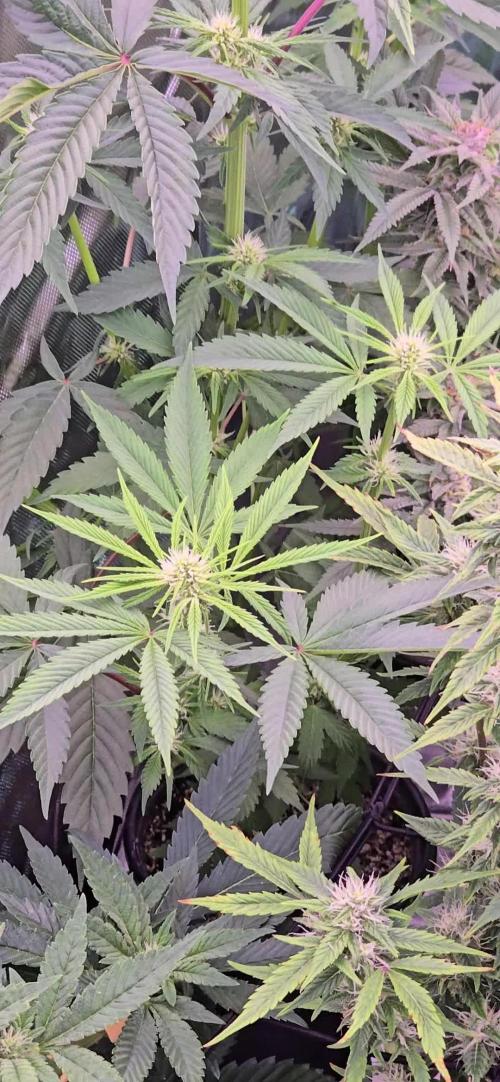
All good and looking happy. Started some LST. I was undecided if I was going to train these girls but decided to do it. I gave a 1/4 feeding of Advanced Nutrients Sensi Cal Mag extra. Now that I've had a good watering schedule down with slight dry back they have been surging with growth! One starting to flower fast and the other is right behind it.
Likes
62
Share
So this is how things are looking for the ladies at the end of Week 4 of Flower, not much to update, I have uploaded a video for you guys with all the information you need. Any questions just ask away guys 👍🏾🌱💚
Likes
9
Share
@Grileon
Follow
Started giving nutrients, up to 300-350 ppm. Having temperature problems, it's too hot outside 34-36 degrees Celsius. This causes problems inside the box, mostly for water inside hydroponics. Have to use frozen bottles of water two times per day.
Processing
Likes
4
Share
Likes
60
Share
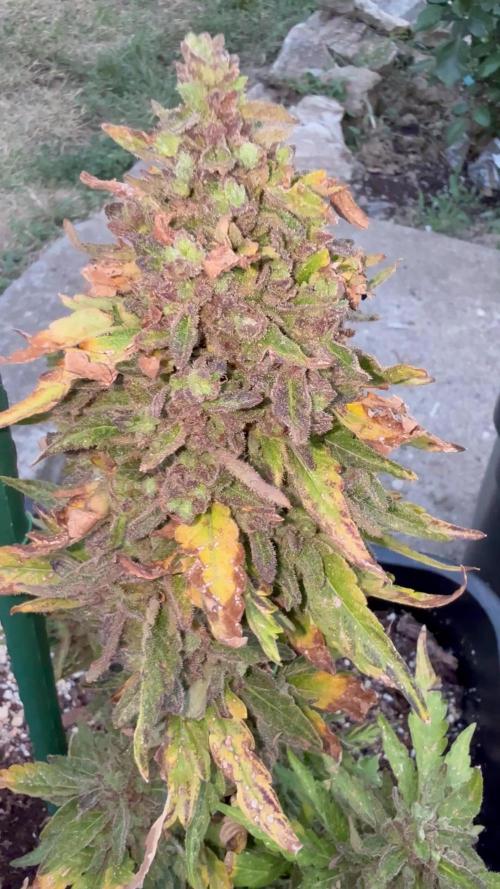
She has been amazing to grow super smell, good amount of crystals and very sticky.The humdity has been killing me i had to move her outside , this barely helped and had to cover her outside for light cycle. Ive decided to start the flush process now with flora-kleen and to harvest in the near future. Truly have loved this plant ,my first grow and it feels great to be ready to harvest and enjoy my labour oh and enter a contest too..cheers brothers and sisters
Likes
Comments
Share
6th week feel like buds are slowly fattening but not much. Shorter plant I did LST buds look better than on my taller plant which I topped HST plus trained.
Likes
34
Share
@Roberts
Follow
Starting blue Dream Auto for the seedsman contest.grow diaries is not working right. It really doesn't want to upload pictures. It was a struggle getting this far. I will gather pictures and hopefully it gets fixed soon. Thanks again Seedsman, and Medic Grow. 🤜🏻🤛🏻🌱🌱🌱 Thank you grow diaries community for the 👇likes👇, follows, comments, and subscriptions on my YouTube channel👇. ❄️🌱🍻 Happy Growing 🌱🌱🌱 https://youtube.com/channel/UCAhN7yRzWLpcaRHhMIQ7X4g
Likes
2
Share
@Alepower
Follow
Iniziamo ad abbassare temperatura nella stanza. Distanziato tutte le cime e legate per un ottima circolazione e prevenzione muffe.
Likes
11
Share
@KennyC
Follow
I will update after drying and curing about 12 days, peace Jah!
Likes
15
Share
@Lontra
Follow
Tag 22: 🌱: LST wurde etwas nachjustiert, um die Verschattung zu minimieren. Leider habe ich dabei eines der größeren Fächerblätter eines der Haupttriebe beschädigt (Stiel gebrochen) und musste dieses nun doch entfernen. 💧: Die Erde war trocken, daher wurde gegossen. Den Angaben meines Wasserversorgers und meinen Berechnungen zur Folge, habe ich das CalMag weggelassen und nur 0,25g/l Bittersalz hinzugefügt. Auch das Bio Grow wurde wieder auf die ursprünglichen 50% des Düngeplans reduziert. Insgesamt gab es ca. 2,5l bis zu einem ersten kleinen Drain. 💡: Die Beleuchtung wurde hochgeregelt, auf einen DLI von ca. 40 bei ca. 40cm Abstand zur Pflanze. Update: Abstand auf 35cm und Leistung etwas verringert (weiterhin DLI ~40), da sonst Temperatur zu hoch steigt. Tag 24: 🌱: Heute wurde erneut die Schere angesetzt (leider etwas verspätet, aber ging nicht anders). Entfernt wurden die unteren und somit innersten und äußersten neuen Triebe an den 4 größeren "Haupttrieben" und deren Fächerblätter. Um den Schock nicht zu groß zu machen, dürfen die nach innen wachsenden Fächerblätter noch 2-3 Tage dran bleiben. Zusätzlich wurde das LST noch etwas angepasst. 💧: Die Erde ist noch nass. 💡: Die Beleuchtung ist unverändert. Tag 26: 🌱: Heute wurde erneut die Schere angesetzt und die nach innen wachsenden Fächerblätter entfernt. Zusätzlich wurde das LST noch etwas angepasst. 💧: Die Erde ist noch nass. 💡: Die Beleuchtung ist unverändert. Tag 27: 🌱: Es ist der Beginn von Tag 27. Es wurden nur kleinere LST Anpassungen vorgenommen und das Blattwerk etwas sortiert um die Ausleuchtung zu verbessern. Die kleine Lady denkt anscheinend bereits daran in die Blütephase zu wechseln, zumindest zeigen sich die ersten zarten Pistillen. 💧: Die Erde ist noch immer feucht. 💡: Die Beleuchtung ist unverändert. Tag 28: 🌱: Das LST wurde für ein einheitlich hohes Blätterdach erneut leicht angepasst. Ich überlege in den kommenden Tagen auch noch einige der unteren Fächerblätter, die mittlerweile ziemlich im Schatten liegen, zu entfernen. Zunächst jedoch schaue ich, was der Stretch die nächsten Tage so bringt. So langsam macht sich auch ein leichter Duft bemerkbar. 💧: Die Erde war trocken, daher wurde gegossen. Heute gab es insgesamt 3 Liter der gleichen Wachstumsmischung wie letzte Woche. Das Bittersalz scheint auf jeden Fall zu helfen. 💡: Die Beleuchtung ist unverändert.