


Likes
Comments
Share


@Terpyboyz
Follow
Final product is been absolutely amazing on these clones - the jungle came out about average but the clones definitely exceeded expectations there absolute fire in comparison but still just as good hopefully I can just improve a few issues we had on this run and dial right in 100% will be so much better, next few run is going to be special I’ve got a few things lined up. From tester packs to breeders packs I can hunt from. So lots to choose from but what to keep to run will be interesting


Likes
62
Share


@DudeGrowsWeed
Follow
Well, the photo period plants are looking great now, but the 2 older BlackBerry's still look like they are struggling. The newer BlackBerry seedling looks fine. We'll see what happens over the next few weeks. The Seedsman Cream & Cheese CBD and DinaFem Critical+ are looking the best overall IMO. I'll be topping and cutting clones in another week or two. I plan on getting the 2nd of 3 tents set up this weekend.👍


Likes
7
Share


@Pistil_Whipped
Follow
Flipped it to 12 12 schedule. now I am seeing more pistil hair on the bud sites. Noticing stems are getting more rigid and wood like.

Likes
290
Share


@Ferenc
Follow
Did she start flowering ? Usually I see the same with pheno ants when I switch off the light for 36 hours to start flowering and after the top is light green. This is how flowering starts. I am not sure about her ?
Weather is shit anyways....

Likes
4
Share

@Anon73
Follow
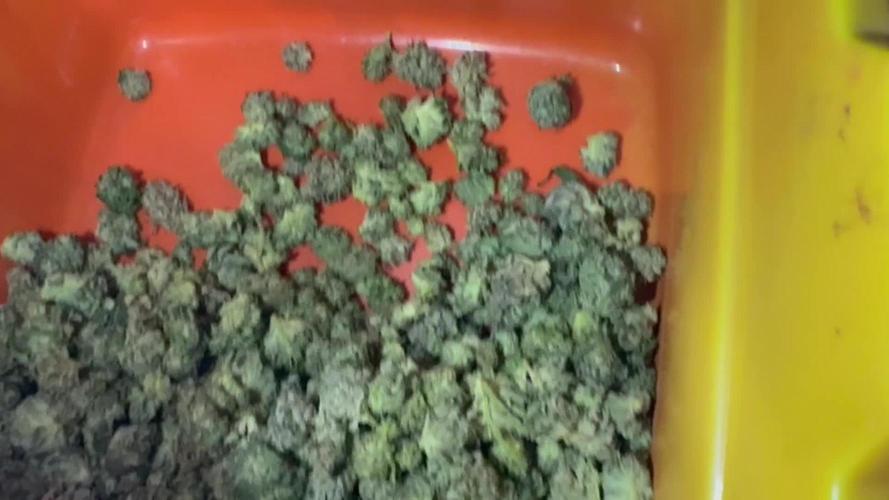
Had a massive rainstorm, hadn’t supported the plants as I had planned due to spraying for moth larvae. The storm damaged several plants.
I strapped most of them back together with Zip ties and stakes. They recovered nicely.
Some branches were not recoverable so they were trimmed and dried.
No more nutrients, just water to finish off.

Likes
24
Share


@Finniegrow
Follow
NOTES:
I've flowered my babies for 42 days at the beginning of this week. Keeping EC at 1,4-1,5 / pH at 6,0-6,2 and nutrients as before. I'm propably starting to flush after this week.
Day92 (16.1.)
Took some pictures/videos for the diary and refilled the tanks with 40l of fresh nutrient solution.
Day93 (17.1.)
Day94 (18.1.)
Day95 (19.1.)
Day96 (20.1.)
Day97 (21.1.)
Day98 (22.1.)


Likes
198
Share


@DevilsBud
Follow
New week for the 2nd grow
In the new marshydro set-up
Enjoy the video be warned it can get LOUD 😉
there all looking amazing in there own way for separate details per plant go to there diaries 🤘🏻
I believe the new FC-4800 wel i KNOW
This lamp is out of this world for sure it will get your so frosty so quick i was afraid i did something wrong lol nah she is just a absolute BEAST .
AND THE 120X120X200 TENT
Is great for the grow that have going on now there snug like bug in there no netting needed 🤘🏻 the control of heat and humidity is easy as can be winter is my time to grow no problem what so ever
visit www.marshydro.eu
for your best gear and use the PROMO CODE: DEVILSBUD
Some info about the Marshydro FC-4800
Superb Quality LED Chips: The whole light is composed of 1206 pcs Samsung lm301b and Osram 660nm chips. More than two times as many LEDs are used to drive the grow lights at low currents and to avoid overdrive. Quality is guaranteed and efficiency is up to 2.8 μmol/j.
Even PAR Distribution and High PPFD Output: The multi-light bar design and the densely distributed light chips enable the LED grow lights to achieve the optimum PPFD required for plant growth over the entire effective coverage area.
Specifically Designed Spectrum: To ensure even plant growth, blue and red light are enhanced on the basis of a full spectrum combination. Not only does this accelerate plant growth, but it also improves the yield and quality of the plants at the same time.
Dimming Daisy Chain Function: The dimming function saves on electricity costs and enables brightness from 10% to 100% for the different stages of plant growth. A single master light can connect up to 30 lights in a daisy-chain system.
Business LED Grow Light: The light's wavy heat sink dissipates heat quickly and the IP65 waterproof allows the light to operate in humid conditions. 180° collapsible feature for easier installation. All these features provide favorable assistance for commercial cultivation.
And some tent info
●【Lock All Light Insid】MARS HYDRO Grow Tent Interior is made of diamond mylar. Non-toxic to the environment, no harm to plants. High-quality 1680D canvas being double stitched, (ALL OTHERS BRAND grow tent is 601D canvas) which is tear-proof for perfect light locking, No light leaks or rips at all.
●【Durability Grow Tent】Stable Metal corner adapters and poles are the trustful supporters of the tent. No rusting nor paint-falling. Quick easy tool-free installation. Carries strong heavy-duty SBS zippers, double layer lining to create a light-proof seal.
●【Easy Observation of your Plants】Special peeks window made by double layers of cloths. Observe the growing conditions of your plants without opening the tent and avoid disturbing plants. The peek window also serves to dissipate heat and ventilate air.
●【Removable Tray Keep Clean】The package includes a removable waterproof floor tray to hold soil and fallen leaves. The tray can be taken out easily to wash. Removable and water-proof makes cleaning easy.
●【Good Ventilation&Fast Assembly】 Circular double-sleeved vent holes with adjustable nylon strap for air circulation by exhaust fan, ducting, carbon filter, or reflector. Better allows proper light, heat, and airflow. Quick tool-free installation. Reinforced by a sturdy metal frame to ensure security and stability, supports up to 140lb. Perfectly safeguard your plants to thrive even in winter


Likes
7
Share
@Only_Dankzz_Terps420
Follow
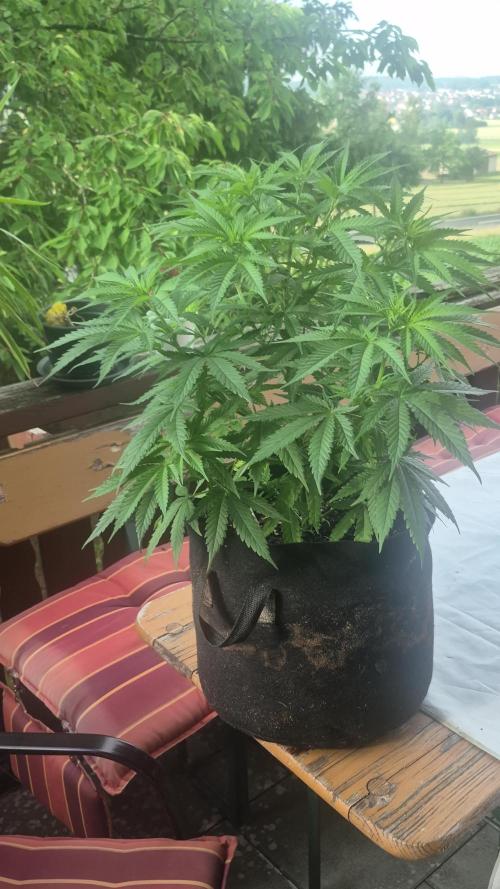
Day 1 flower under 4500w vivosun barstyle light June 21st
She will be ginormous!!!!
Likes
27
Share


@Hydronaut
Follow
Big healthy plant for the most part, but the flowering just won’t kick in! This is the week that says she’s running behind or that she’s going to be on a cocaine diet till the end? Need some bulk, it’s week 8 already. I don’t like my girls fast anyways, so I’ll be a patient gent.
Day 51: Early AM: It seems that the flowers are starting to fatten up at a familiar rate now. Stretch is definitely over to boot. Feels like a week or so behind my other Auto grows, but I am gathering from the peeps on GD that grow times can be all over the place with Autos; even with seeds front the same plant. I won't be a Debbie-downer, but I cant help but think what this thing would have done in a bigger space. I left her alone a couple days ago as her stretch slowed noticeably. A pluck here and there moving forward, but that's about it for the sadistic stuff.
Day 51: Late Afternoon: She's about to take off in the flower it feels. 6 hours passed, and I was like "oh, hello there!" If nothing goes too crazy, I'm hoping she'll be a good one regardless of her 3.8 sf living quarters. I never did move the top shelf, so the light is less than 8 inches from the canopy. I'll keep an eye on the "crispy effect" out of complete laziness and fear of dropping the light on the plant! Tallest branches are around the perimeter and still hitting their DLI. The center/down the plant is getting blasted by the light, so I suspect about 6 or so runners to hit the canopy and hang out with the FIM family in the next week or so?
Day 51: Evening: Bigger bucket = bigger plant in hydro? One heck of a root mass going on in her trough. I tried pushing the roots to the back of the bucket so I could ph without getting roots directly. Nope! That bucket is filled with roots, and its an 8 gallon bucket. I would have never thought an auto would have enough time to grow into an 8 gallon bucket. I was banking on some extra nutrient volume, so I could go out of town for 4-5 days. Hard to say on bucket size though, I have grown 10 foot tomato monsters in 3 gallon Ebb/Flow pots so maybe she would have grown the same in a 5 gallon bucket? I don't think that much root volume could grown in an 5 gallon bucket, so bigger bucket = bigger plant here? Things that make you go "hmmm..."
Day 53: A lot of undesirable undergrowth that blew up during stretch. Like a ton of it, but I’m done messing with her.
Took out the top shelf and reconfigured exhaust. What a pain. I didn’t drop the light but the IP cam took a nose dive on a branch. Now the light is about 12-14” from canary instead of 6-8'. She started to get some light burn so I had to do the deed. Wider IP camera view with added distance so that's a plus! Plant is very happy at 550-575ppm. 600ppm seems to be the number without burning plants? Humidity, temp, and ppm AND light distance in check. Raising the light opened the focal point of this light quite a bit; especially in the center where the PPFD was over 2500 at the center and light less than 8 inches from the canopy. Feeling good. All is in check with some room to grow. She will gain another 2" in height I presume through flower.
Day 54: The jury is out of this light. I hits my dli from veg to harvest with it's fixed position design, but wondering if 50watts more would have been the number. I'm going to keep the light in there to keep the data flow congruent to its original design. I hit my DLI right now from the top of the canopy to about 10-12" down the plant. Lighter specs from my last grow, but its hard to tell what is getting what once you leave top of the canopy. Hopefully it will suffice!
I moved the light a few inches closer as my DLI was getting light in some of the corners/perimeter. She right 10-11" and is about as good as she is going to get given150watts. I am realizing that 200 watt is probably the optimized wattage here if some canopy penetration is desired, but light these dimensions are not plentiful[. 250 watt and that would be max with managing heat and exhaust sound levels. 250 watt would accommodate a fix state design no problem. I hate to change the light variable but I only have the luxury of one-at-a-time grows, so everything counts on some levels.
Been using the PAR meter on and off throughout the day. Penetration needs to be about 25% stronger. Its a perfect light for your average auto grow, but if these results repeat themselves a 250 watt is probably in order. I am making the executive decision to install a 250 watt bar light. I found one with a small footprint at 240watts. Hard find, specs are more than adequate for 4 sf.
Will maybe get down a bit deeper but things are looking really crammed with the bottom half. It is PACKED with bud sites and likely not enough light. Questioning the light change, but will definitly thin some lower stuff and "officially" let her be.
Since in bumped up the CalMag to about 1.5 ml/gal the reservoir has been running ph equilibrium for 6 days now at 600ppm. I’m guessing this deficiency was driving down ph instead of the usual up/equilibrium in week 7. My first auto to eat at 600ppm for a week with no tip burn. She looks fit, I’ll keep her diet here as the max.
I have never cut MicroGro out completely in a grow before. I have been faithful to GH 7 part series since for long time. This grow I took the GH feeding chart and worked backwards to a ppm level I found on the web to be an acceptable range for Autos. These ratios have traditionally been acceptable and without issue. Beautiful plants every time. On the last two runs with this concocted feeding schedule Cal/Magic was very light until week 7, and exactly when I started to see rust spots, etc. in this grow. After a 2ml/gal dose of CaliMagic plus addbacks on watering, that issue disappeared overnight. I mean zero issues with any new or progressing growth. Here's the take away with this. Although CalMag issues are easy to spot and resolve, I did learn is that in both runs they HAD A PERSISTANT DROP IN PH IN MY RESERVOIR in late veg/tranistion. Another wards, if you PH is dropping and your ppm are not doing anything, it very well could be a CalMag deficiency. An indication know before the leaves start getting spotted, etc. I guess if one were perceptive enough, you could resolve this issue as it happens, and never see the effect on the leaves?
On this current run, as soon as I dosed the bucket good with Cal/Mag and kept my add/backs a 1.5/ml/gal the PH locked in big. Going on 7 days at 600ppm, 6.0 and the ph is steadily rising. Maybe another bump in ppm. No sign of tip burn yet, why the heck not!:)
Not really the expected progress this week but she may just need time. I don’t think she’ll really bulk up until the end of week 9 / week 10. New light to arrive Tuesday but not sure a stronger light will get much further down. It’s almost a roadblock to get beyond the main tops and they are getting well more than they can handle light wise. Bigger light may only mean more heat.


Likes
6
Share


@pzwags420
Follow
On week 7 she is still putting out a lot of new pistils. Colas are fattening up but still have a few more weeks to go. The smell is sweet and fruity so far but its still early as trichs are still developing. Her top colas got a little too close to the lights and may be fox tailing or shes just more sativa of a pheno either way shes making some long colas and Im happy about that :)


Likes
2
Share


@LoganatorDude
Follow
Day 44-
I need to back off on the water nutes, I am forgetting the soil is strong enough.
I will flush with plain water next time. Maybe I should do a plain water foliar feed? I’m still learning. But I think those B vitamins are keeping their metabolism high! Then I feel the need to spoon feed. After giving them much needed calcium, I start adding other things. Those Epsom Salts plus the amino acids on a plant with high metabolism receiving more B1, all while having lots of amended neem cake in the media, is going to be processing a sh*t load of nitrogen! Back to plain water.
Another idea, maybe I will flush a little bit, and feed just CalMag.
Day 48
I realized I haven’t gotten any pictures in for this week! Not that big of a mistake compared to the one I just corrected!
The video is taken when they are back inside for the night as it a cold windy night, and they could use more light. I am not talking because I am sick and can’t talk to well. But it’s just quickly showing how they look after the whole ordeal I am about to mention.
So I woke up this morning, and noticed all of the plants were showing subtle signs of a deficiency. Different deficiencies too! Some are going on the calcium deficiency, others potassium, some manganese even maybe a few others to be honest. Sometimes I could only see signs in the old leaves, and other times I would see signs in new leaves. Either way “most” of them were looking pretty good. But something about all this variability with different plants was oddly unsettling to me. I figured I had better stick the soil pH meter in there and make sure it’s not a pH issue. And to my horror, pH of barely 4.5!! More like 4.20! But honestly it was that low!!!! A miracle these plants haven’t locked out yet! But how did this happen?
Yes it is all coming together for me. Every water I have been giving feed-water. I have been watering with a little runoff, but not enough runoff to manage what I was putting in!
I’ve been “feed-watering” a lot more than usual because the pots are tiny and it’s super hot and mega dry during the days. Like 75-80 degrees (F) and 10-25% relative humidity lately. So no wonder they are drying out fast. All those salts left behind from last feed. So they built up, apparently pretty high. I didn’t think I was feeding too much, especially because I would get a descent amount to drain out the bottoms every time. Either way, I fed too heavy and flushed too little! So I brought out the foxfarm SLEDGEHAMMER!!!!! Did a quick flush, flushed with plain water to get the sledgehammer out, then a recheck on the soil pH meter. Comes out 6.8! So I gave feed-water at ph of 7 afterwords. They were dry enough before all of this, I conveniently avoided damping issues. Now they will dry out and receive plain pH 7 RO water on next watering.
I still have lots of doubt as if I have any clue what I am doing! But so far so good. I try to support the microbes as much as possible, i definitely could use their support. And it might be because of the microbes, CalMag and fulvic acid, that has prevented lockout. But yeah the fact the pH in the soil was corrected with a flush, gives me a peace of mind. The other three from “The Hondo Titan” diary had high levels of sulfur to lime, the flush did not fix, so I repotted them in new soil with pH 7. Also those hydroton expanded clay pebbles become rich with acidic salts, because the water leaves and all the nutes and minerals are captured and stored with the pebbles. Good in small levels. But if the pot dries out every day, those pebbles will eventually make the pH meter smack the end suggesting less than pH of 3.5!!!!!!!! But no pebbles were used on these girls thankfully!!


Likes
27
Share


@Oetelando
Follow
We have day1 of Week 7 and i think in 2 Week is Harvest Day.
They look all very good and perform strong.
Only disapointment is that the Gorilla Fast need 8-9Weeks and not 6. but the Quality is strong.
Wir haben Tag 1 von Woche 7 der Blüte.
Alles läuft wie es soll schade das die Gorilla fast nicht in 6 Wochen fertig wird aber die Qualität passt und ist perfekt.
In 1-2 Werden alle geerntet.
Letzte Woche in der gedüngt wird und die allerletzte Woche wird mit Ph reguliertem Wasser gegossen aber wenig und 1 Tag später als normal.
Likes
12
Share


@eldruida_lamota
Follow
Que hay familia, nuestras única variedad con predominancia sativa, bastante vigorosa, flores bastante compactas vemos como van formándose y engordando, desprenden un aroma bastante dulce me recuerda al regaliz rojo.
Humedad y temperatura controladas dentro de los parámetros.

Likes
19
Share


@DrLaggis
Follow
HELLO GROWING FRIENDS - Please look at my Aftermovie Growvideo, which cost me about 4 hours to create. hope you like it!
Day 72: The Finale 🌿🌟
It’s finally time. My very first grow is coming to an end—at least the cultivation phase. The plant is now ready for harvest, and I can’t believe how incredible this journey has been. I never expected to enjoy the whole process so much—from nurturing the plants to watching them grow and evolve. I’m absolutely hooked and can’t wait to dive into the next steps: harvesting, drying, curing, and of course, starting a new grow soon with fresh ideas and experiments!
While it may not be the largest yield, the quality of the buds speaks for itself. The time, love, and care I’ve put into this grow is visible, and I’m pretty proud of the results. I’ll admit, I was a bit impatient at times (which I think every first-timer can relate to 😅), but the experience was priceless.
Here are a few interesting highlights from my trimming and harvest process:
1️⃣ Dark Phase Before Harvest
Two days before harvest, I put the plant in complete darkness to encourage resin production. I'm not sure if it really made a difference, but it was worth trying!
2️⃣ Wet Trim vs. Dry Trim
I decided to go for a wet trim because the buds were really dense, and I wanted to avoid any risk of mold. I’ve read that wet trimming can speed up drying and may slightly impact the quality, but this is part of the learning experience. Next time, I’ll try a dry trim for comparison!
3️⃣ Yield Update
Wet, the total came in at 209 grams from my plant. Trimming took around three hours, and it was actually a lot of fun, despite the time commitment.
4️⃣ Curing Plan
The buds are now hanging in the tent for about 8 days. Once dried, they’ll go into jars with Boveda Packs (62% humidity) for another 3 weeks of curing. I'll update the smoke report once they’re fully cured, but I’ve already had a sample of the same strain from a friend, and I can say it’s pretty amazing.
Final Thoughts on My Grow 🌱✨
As mentioned earlier, this grow has been an absolutely incredible experience, and it has definitely set me on a path to jump right into my next grow. There were ups and downs along the way, such as over-pruning, which I believe stressed the plants a bit. Additionally, I think they could have benefited from an extra week to mature. We also faced many temperature fluctuations this summer, which impacted the plants due to external weather conditions.
I’m really pleased with the quality of the buds. The quantity is okay—I can’t fully gauge it yet—but I’m sure there’s more potential to unlock. I’ve gained valuable experience in what worked well and what didn’t. Overall, the countless lessons learned during this grow far outweigh the few mistakes made. I’m incredibly proud of my first results!
As this long journey comes to an end, I want to thank everyone who followed along. I hope you enjoyed all the content. In that spirit, happy growing, and see you next time! 🌟
Likes
17
Share


@MasterKush714
Follow
SO UPDATE GANG!!!!
Everything is going well so far, i stocked up on water for the girls
nutrients are doing well but im going to upgrade them to the FOOP line of OMRI nutes
other then that will keep everyone updated so far thanks!


