


Likes
Comments
Share


@nonick123
Follow
Día 115 (23/09) Riego con 250 / 500 ml H2O
Día 116 (24/09) Riego con 500 / 1.000 ml H2O - Hace mucho calor! (31 ºC)
LemonPaya empieza a formar nuevos pistilos a velocidad decente!
Día 117 (25/09) Riego con 500 / 1.000 ml H2O - Hace mucho calor! (31 ºC)
OnionOG #1 empieza a oler a tierra húmeda y champiñón 😍
Purple Punsh S1 está empezando a llenar los bordes de las hojas de abanico de una espesa capa de tricomas. Increíble! 💥
Día 118 (26/09) Riego con 500 / 1.000 ml H2O - Sigue haciendo muchísimo calor! Hoy hemos tenido un día con 37 ºC de máxima!
Increíble la cantidad de tricomas que están formando Purple Punsh S1 & KS1! Las hojas está completamente perladas! 😍💥
Día 119 (27/09) Riego con 500 / 1.000 ml H2O
Que calor! Seguimos con 32 ºC de máxima!
Día 120 (28/09) Riego con 500 / 1.000 ml H2O
OnionOG #1 muestra unos cogollos brutalmente densos y gruesos! I'm in love!
Día 121 (29/09) Riego con 1 litro H2O pH 6,5 + Kelp Hidrolizado 0,3 g/L
💦Nutrients by Lurpe Solutions - www.lurpenaturalsolutions.com
🌱Substrate PRO-MIX HP BACILLUS + MYCORRHIZAE - www.pthorticulture.com/en/products/pro-mix-hp-biostimulant-plus-mycorrhizae


Likes
15
Share


@GermanGrow182
Follow
Sehr gute Woche. Wetter 20-29 °C gut Sonne, die Autos sind im Stretch und explodieren.. die Photos nach dem topping und z.T. Training sind schön am verzweigen 😁
Freu mich auf die Autos. Herrliche düfte von Apple und banana.es läuft gut 👍bis nächste Woche ✌️

Likes
114
Share


@Natrona
Follow
Lemon Cake & Lemon Drizzle
Week 9 6/2-6/8 Now at the start of week 9, my outside gals, except L. Cake are now in flower.
This is the first week I’ve had to add nutrients to her feeding. Some lower leaves were yellow. Since I’ve been using amended soil, this indicates Opium is a heavy feeder. Nutrients in soils are used up and she is starting to use her own food sources
5 gallons well water
TPS1 60ml used 1 gallon per plant =12ml
Cal-Mag 25ml used 1 gallon per plant =5ml
Recharge 5ml used 1 gallon per plant =1ml
Signal 1.25ml
PPM 1414, PH 6.93, Temp 82.5
Note I do not have to PH adjust my well water. However, our city water comes out of the tap at 8.2 ph so I must PH down using the hose or my inside grows,
============
Germination April 6.
Vegetation
Week 1 water only
Week 2 water only
Week 3 added recharge and TPS1 increased ppm to 570.
Week 4 continues with recharge and TPS1. I added Fox Cal mag increasing ppm to 685 - 805.
Week 5
TPS1 9ml/gal
Recharge 5 ml/gal
Fox Cal-mag 5 ml/gal
Week 6 5/12-19 Moved outside in 5 gal air pots receiving rain and well water.
Week 7 5/19-25 The Lemons received rain water for the last 2 weeks. They love the natural rain and sunshine evidenced by vigorous growth.
Week 8 5/26-6/1
Drizzle is in flower, stacking buds along the stalk that reaches 38 inches.
Cake is still vegging at 28 inches. Her new growth is starting to show the pistils at the bud sites.
============
Thanks for the visits, likes and comment, I appreciate all the plant love💚.
Have fun & love what you grow 💚
Sending you good vibes of love, light, and healing 💫
💫Natrona 💫
BARNEYS FARM- LEMON DRIZZLE
Lemon Drizzle Cannabis Seeds
Type: Feminized Weed Strain
Lemon Drizzle Strain by Barneys Farm
Indulge yourself in the tantalizing aroma of our Lemon Drizzle strain, a sensually crafted cannabis strain that is sure to tantalize your senses and leave you in a state of blissful euphoria. Bred from a seductive blend of Super Lemon Haze and OG Kush, this sativa-dominant weed strain will transport you to another plane of existence.
With a flowering time of 60-65 days, Lemon Drizzle's exquisite buds are bursting with a potent THC percentage of 20-25%, ensuring an unparalleled and satisfying high. The complex terpene profile of this alluring strain is sure to captivate your senses with notes of zesty lemon and a hint of earthy Kush undertones, providing a flavor explosion that you won't forget.
This tempting beauty grows to a height of 1m - 1.2m indoors and 1.5m - 2m outdoors. You'll be impressed by the generous indoor yield of 550g/m2, while the outdoor yield of up to 1.5 - 2kg is beyond substantial. Experience the ultimate in relaxation with Lemon Drizzle's outdoor flowering time, which begins in early October, allowing you to bask in the sweet sunshine and savor the heady effects of this tantalizing strain. Succumb to the charms of our Lemon Drizzle strain and discover a world of unadulterated pleasure that will leave you in awe.
Is Lemon Drizzle Indica or Sativa?
The Lemon Drizzle strain by Barneys Farm is 85% Sativa 15% Indica.
What is the best way to store my Lemon Drizzle strain seeds?
To properly store Lemon Drizzle seeds, it is recommended to keep them cool and dark in an airtight container ideally in a refrigerator with proper labeling and dating, avoiding freezing.
Lemon Drizzle Cannabis Seeds Strain Specifications
Type: Feminised
Genetics: Super Lemon Haze Strain x OG Kush Strain
Photoperiod: Normal
Sativa %: 85%
Indica %: 15%
Flowering Time (days): 60 - 65
Feminised Outdoor Harvest Month Week: 1st-2nd week - October
Indoor Height (cm): 100-120cm
Indoor Yield (g): up to 550-650 gr/m²
Outdoor Height (cm): up to 150-200cm
Outdoor Yield (g): up to 1500 gr/plant
Taste: Sour, Lemon, Sweet, Citrus Fruits
Aroma: Sweet, Sour, Citrus, Pine, Earthy
Effect: Energizing, Uplifting, Focused, Motivated
PREMIUN CULTIVARS LEMON CAKE
Lemon Cake Seeds
Lemon Cake strain seeds generate typical Sativa buds known for their heavy trichome covering against a bright green background. Let's look at this great strain and learn about its genetics, growing information, and how to obtain it.
Cultivar Profile
Terpenes Caryophyllene, Myrcene, Terpinolene
Strain Type Sativa
Difficulty Moderate
Height 30 in – 78 in
Yield (oz/ft2) 1 – 3
Flowering Time 9 – 10 weeks
Harvest Month October
Pack Size 3, 6, 12, 24
Seed Type Feminized
Brand Premium Cultivars




Likes
11
Share


@Listening2thestatic
Follow
Welcome to Week 8 of flower......
The plants have developed a more sour lemon scent. Which is pretty lovely to the nose. Both plants have really nice dense thick buds.
Plant 1 is starting to show signs of fall colours. She has always had are lime green colour to her upper leaves. Now a beautiful red colour is appearing on the edges of leaves.
Plant 2 the main colas have become so heavy that they are all leaning over.
I've started introducing a bit of drought stress. Holding back between waterings. I'm hoping by doing this it will help to kick the girls into overdrive and start using stored sugars. It's seems to be working on plant 1 as the leaves are starting to yellow.

Likes
3
Share


Likes
16
Share


@Virgosmokes
Follow
Went away for a week but no massive problems and she's oretty resilient so happy days! Few more weeks hoping for a bit more bulk in the buds.!

Likes
Comments
Share


Likes
18
Share


@plant
Follow
Out of the 4 girls I’ve transplanted two today, both white widows, I’ll do the other two Santa Marta haze’s in a weeks time when they have developed better roots, looking good, starting to flower. Bit of a slow start as seedlings due to being in hot soil, but we are well past that and cruising nicely now. 🤙🐞🙌



Likes
84
Share


@Terp1
Follow
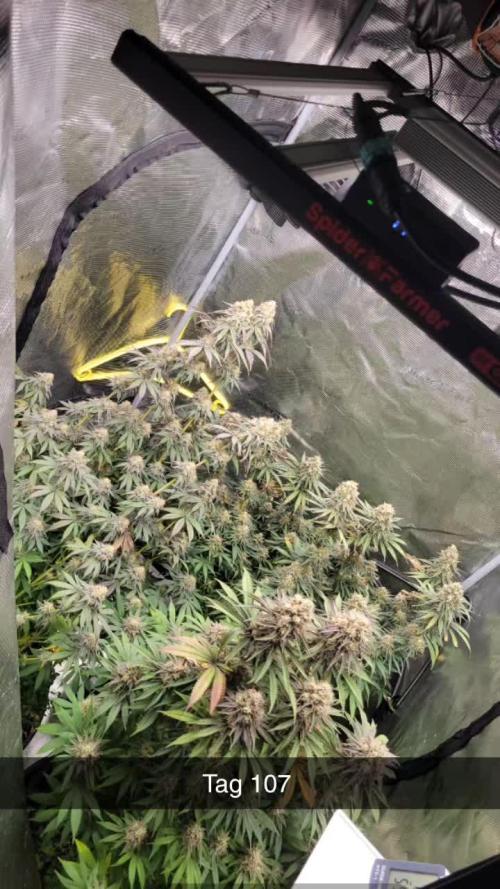
01.07.2023
Tag 57
Was soll ich sagen? Schaut sie eucht an.
Ich bin bisher sehr zufrieden mit den Zkittlez und Beide haben sehr gut auf die Entlaubung reagiert.
Weil das Licht bis zum Boden kommt, habe ich weitesgehend auf Lollipopping verzichtet.
Die Triebe haben sich ziemlich schnell gestreckt und sind deshalb noch recht dünn.
Aber je dicker die Knospen werden, desto dicker werden auch die Triebe.
Ich füttere sie jetzt gut und werde auch ein wenig Grow beibehalten
Jetzt kann ich nichts weiter tun, als auf die beiden Damen aufzupassen, sie hegen und pflegen und ihnen Liebe schenken.
Wieviel Bud dabei wohl rauskommt?


Likes
19
Share


@cherokee
Follow
Привет 🖖
С новым годом 🎅
2022 самый ужасный год в моей жизни! Он был сложным во всем, экономический кризис, война.......
Я добавил видео, это 2 ракеты 31 декабря упали рядом с моим домом, русские нацисты обстреляли жилой район, умерла девушка 22 года ей было..... 4 человека получили ранения..... Так страшно ещё не было! Мы встречали новый год под обстрелы ракет и звук сирен тревоги в полной темноте...... Россия государство террорист убийца 😣
Это мой блог и я хочу здесь делится своими чувствами и эмоциями, что бы больше людей знали что происходит.
А теперь дневник.
На этой неделе растения стабильно получали 20 часов света, это очень помогло им стать больше и сильнее.
Я продолжаю тренировки LST.
На этой неделе была обрезка веерных листьев, я часто практикую дефолиацию автоцветов. Надеюсь проблем со светом не будет, растения уже показали "усы" свой пол, значит стадия предцвета будет примерно через неделю, хочу что бы они стали ещё больше и набрали "мяса" массу.
Ещё раз поздравляю всех с новым годом. Мира вам и вашим семьям, и мирного неба, что бы в ваш дом не прилетали ракеты.
🇺🇦 🇺🇦 🇺🇦
Likes
Comments
Share


@Comfrey
Follow
Beim LST habe ich den Spitzentrieb versehentlich angebrochen. Sie wird es überstehen, hatte durch den Knacks allerdings ziemlich Stress.

Likes
19
Share


@Jokerdab13
Follow
Muy contento con los resultados unas flores con un aroma sorprendente y una genetics bastante productiva


Likes
5
Share


@Drtomb
Follow
Plants looking very green and perky. Responding to the Hydro Bio very nicely. Hoping for excellent things and beautiful white roots at the end when i harvest.

Likes
Comments
Share


@Santaclaus
Follow
Bueno empiezo la 3 semanas día 15, con un unos LEDs rojos que me regalaron marshydro al comprar el fc800 evo , creo que se llama así 😝 es una auténtica bestia, ya no me imagino que pueden hacer los leds rojos, en teoría la luz roja aparte de hacer madurar los frutos, engordar y dar sabor, también ayuda a hacer crecer a los nuevos tallos que están más abajo y reciben menos luz, la luz roja profunda les da energía a esos brotes para que crezcan y busquen la luz blanca... Total.. quiero ver si crecen las ramas que están escondidas... También he añadido CO2 , cada segundo dos burbujas.. no quiero pasarme, porque tanto echar magnesio, me a dado un poco de exceso, lo he corregido echando más agua al depósito, y con la ayuda de CO2 hará que coman más las plantas, y corregiré antes el exceso de magnesio, en teoría jejeejje😅😅 todo en teoría

Likes
5
Share


@Ozgrow
Follow
just about finished up this week. Choc mint 1 is about ready for chop. Chopped couple of main colas as i seen couple of signs of budrot. Dropped lights down to 400w each as temps are starting to rise above 30c.
Choc mint 2 is looking unreal. Heaps of huge colas,think i will pull the most of this one. Will probably give till day 65.