




Likes
16
Share


@AestheticGenetics
Follow
4/9/25
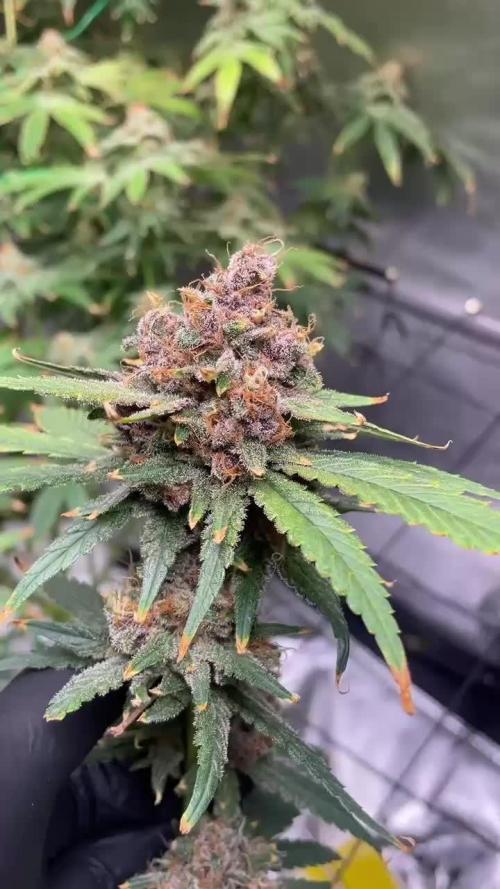
This plant is beyond frosty. Stacking up super nicely. Seems like she will yeild quite a bit.
My only gripe is that she has like no smell at all.
Using the foil as a soil cover is working quite nicely. the top soil is getting filled with roots quite well.
Top dressed 1tsp of Bloom
1tsp microbe charge
1tsp bloom

Likes
15
Share


@AustinRon
Follow
LJ4Q23 Flower 9
SOP LJ4Q23 - 8-Plant SOG from Cuts
Harvest Window
- Earliest: 2024.02.01
- Latest:
2024.02.10
Objective:
- 8 Plants - Single Colas - No Branches
- Harvest Lemon Jeffery (Narrow Leaf Phenos): 70±5 days
- Light Intensity - Ramp up from 200
- 40 DLI, at 13 hour ScotoPeriod, will need MAX Light to Achieve
______________________________________
Start of Week: [ 2023-01-24, LJ4Q 57:F:8:1]
End of Week:
[ 2024-01-30, LJ4Q 63:F:8:7]
Plant Height: [ 21, in]
Temp: [ 78, °F]
RH: [ 61, %]
VPD: [ 1.2, kPa]
Light Intensity Peak: [ 850 , µMol/m2/s]
Light Distance: [ 11, in]
Environment Targets (Flower 7 - 9):
- Scotoperiod: [ 13, h] # Contiguous dark hours daily
- TemperatureMax: [ 78, °F]
- RH: [60, %]
- VPD: [ 1.1, mS]
- LightIntensityMax: [ 1000, µMol/m2/s]
- LightDistance: [ 8, “]
Fertigation Plan:
- RLA Hydro Chart, EC 2.0 - 1.1
- Primer A: [ 6, ml, gal]
- Primer B: [ 6, ml, gal]
- Silica Skin: [ 2, ml, gal]
- Resin Bloom: [ 2, ml, gal]
Penultimate 3 Days (before Harvest)
- RLA Resin Bloom, EC: 0.8
__
Wed Jan 24, 2024
LJ4Q 57:F:8:1
- [x] EC: [ 3.3, mS]
- [x] Runoff: [ 500, ml], [ 62.5, plant], [ 15, %]
Estimate 440 ml/plant/day (10% of Container Volume)
Confirmed 1 min increase in event duration yields Runoff 200 ml/day
@ 5 Minutes, we’re delivering 1 Liter per event, 6 Liters per day TOTAL, .75 Liter/Day/Plant
Refresh Reservoir
- [x] EC: 1.8, 2 Gal
- [x] PrimerA: [ 9, ml, gal], [ 18, ml]
- [x] PrimerB: [ 9, ml, gal], [ 18, ml]
- [x] Silica Skin: [ 4.5, ml, gal], [ 9, ml]
- [x] Resin Bloom: [ 4.5, ml, gal], [ 9, ml]
- [x] Photosynthesis Plus: [ 6, ml, gal], [12, ml]
- [x] Quillaja20 Powder: [ 0.5, tsp, gal], [ 1, tsp]
- [x] SLF-100: [ 5, ml, gal], [10, ml]
__
Thu Jan 25, 2024
LJ4Q 58:F:8:2
- [x] EC: [ 3.4, mS]
- [x] Runoff: [ 600, ml], [ 62.5, plant], [ 15, %]
- Reduce Fertigation Duration :30 per event
Runoff Estimations
- RunOff Total/Day: [ 500, ml]
- RunOff per Container/Day: [62.5, ml]
- Estimate 10% Irrigation/Day: [ 440, ml, plant]
- Runoff %/Day: 62.5/440: 15%
Estimated Deliver/Plant/Irrigation
- Irrigation: [ 440, plant, day]
- Runoff: [ 62.5, plant, day]
- RunoffPCT: [ 15, %]
- Total Irrigation/Day: 3.6, liters, Day (Just Shy of 1 Gal/Day)
TempAvg: [ 79, °F ]
RHAvg: [ 59, % ]
VPD: [ 1.12, kPa ]
PPFDAvg: [ , ]
LightDistance:
__
Fri Jan 26, 2024
LJ4Q 59:F:8:3
- [x] ECReservoir: [ , mS]
- [x] Runoff: [ 600l+, ml], [ , plant], [ , %]
- [x] ECRunoff: [ 3.4, mS]
__
Sat Jan 27, 2024
LJ4Q 60:F:8:4
- [x] Back off Light 1” (3 Clicks)
- [x] Runoff: [ 600, ml], [ , plant], [ , %]
- [x] ECRunoff: [ 3.5, mS]
__
Sun Jan 28, 2024
LJ4Q 61:4:F:8:5
- [x] Runoff: [ 500, ml]
- [x] ECRunoff: [ 3.3, mS]
- [x] Med (2.7) chart for EC: 1.5
- [x] Primer A:
[ 8, ml, gal], [ 16, ml]
- [x] Primer B:
[ 8, ml, gal], [ 16, ml]
- [x] Silica Skin: [ 5, ml, gal], [ 10, ml]
- [x] Resin Bloom: [ 6, ml, gal], [ 12, ml]
EC: [ 1.6, mS]
__
Mon Jan 29, 2024
LJ4Q 62:F:8:6
- [x] Runoff: [ 500 , ml]
- [x] ECRunoff: [ 3.3, mS]
__
Tue Jan 30, 2024
LJ4Q 63:F:8:7
Refill Res: ~2 gal
- Primer A
- Primer B
- Silica Skin
- Resin Bloom
EC: [ 1.3, mS]
- [x] Runoff: [ 475 , ml]
- [x] ECRunoff: [ 3.3, mS]

Processing
Likes
Comments
Share


@mojogrow
Follow
It was my first grow and I really screwed it up a lot, but it resisted all my beginner mistakes, pests, stress, being without irrigation, irrigation without measuring PH, revegetation, etc.
I love her, really, in love with this strain.
It is a genetics with a very relaxing effect, recommended for those who cannot sleep at night.
shoutout for trimix, very good prices for begginers> https://www.trimix-pro.com/

Likes
2
Share


@Mytrichomedgarden
Follow
cortar o no cortar estas dos ! la parte alta ya casi estan en un 5% los tricomas ambar
Processing
Likes
29
Share


@growsmoke420
Follow
Start of Week 10 and DAMN She Grows Tall. I don't have Room in My Taller Tent so I had to try LST'ing Her. She seems to be Responding Fine but Boy does this Girl get Tall. She was over 2ft n still Growing even after the Manifold. Node Spacing is pretty Tight though so Bud Sites all over. I've tried Counting Sites n always Lose Count around 50. Still no Budding though. If She Produces Dense Buds She should be a Good Yielder.

Processing
Likes
55
Share


@Max1973
Follow
Day 29 - Things going along nicely .... i trimmed down some of the bigger bottom leaves, i didn't have enough soil to fill the pots, and the plants are short, bushy, weird little things, that filled out the inside of the pots..... they are only 15cm tall, but the leaves are 10+ cm .... really weird little plants.... haha....
i decided to trim the fk out of one of the ones in the double pot, and practiced topping on her.... i'll cut her down maybe trimmer her of the pot, and focus on just the 2........ they seem to be still growing upwards, so i'm not in a hurry to put em into flower mode......... on the main one i noticed some neut deficiencies ... so i upped the neuts.... should be ok, i put a good heavy neut and it stopped the spots etc..... i think some bug or something got in the double pot and is livin in there, but he doesn't eat much, haha....... the main stalks are as big as my thumb and under each canopy is all the branches..... it's really strange, to go in under all the growth and see it all .... they look kinda small, but the entire under canopy of leaves is all full .... i'm moving the huge sized leaves out and pulling each branch up over them as they grow..... this is 21 THC and 19 CBD, so it's all the good stuff for medicine ... the smell is getting abit noticable and i'm hoping the exhaust fan arrives from china soon.... just got positive ventilation into a carbon fil. ... and daily air out........ i think i had the led lights too low..... so i'll raise em abit more and see if i can get em to stretch ....
Day 30 -- added some video's...... daylight vids... worth watchin for a laugh ...... first grow, so idk what i'm doin, ... any help/comments appreciated
Day 32 -- added some pics of the late night trim and LST,... idk looks ok....
Day 34 -- added a video...
Likes
37
Share


@Regenwurm
Follow
Leistung der HPS Lampe von 400 Watt Blühtewoche 1 auf 450 Watt Blühtewoche 2 erhöht. Stärke der Umluft etwas erhöht. Bei allen 4 Ladies an Tag 11 nach Einleiten der Blüte Superscropping und entlaubt im unteren Drittel der Pflanzen. Schwankung im PH Wert zwischen 5,7 und 5,9. Schwankungen im EC Wert zwischen 0,7 und 1,0. Temperaturunterschied Tag zu Nacht ca. 4-5 Grad Celsius. Luftfeuchtigkeit Max in dieser Woche bei 60 % , dieser wird jetzt gesenkt. Keine Mangelerscheinungen, Wachstum gut. 3 von 4 Pflanzen wachsen gleichmäßig, 1 Stk ca. 10 cm kleiner. In Woche 3 wird der Spreader nun auf weit gestellt und die Leistung auf 500 Watt erhöht. In Woche 2 wurde der Befeuchter aus dem Zelt raus genommen und durch einen Entfeuchter für die Nachtphasen ersetzt. Angabe CO2 mit Mittelwert aus Frischluft , da in der Tagphase (Nachts) eine dauerhafte Versorgung mit aktiver Zuluft erfolgt um co2 zuzuführen und den Raum zu kühlen

Likes
13
Share

@cdxxbuds
Follow
Second Plant down. They rock hard and iced out.
Hella impressed with this strain


Likes
20
Share


@BudXs
Follow
Solo cup challenge continues to press along. Not much change, plants are in veg, growing and healthy. Still a few weeks before the flowers start so I hope to get a bit of size going before it does. Having fun and really like looking at the other entries in this contest.
Check out WildeWeed, Butterstotch and BeanswithPork, silky, larimar, fireman

Likes
26
Share


@Dunk_Junk
Follow
For me this grow was a complete failure. The amount of buds I threw away was amazing.😭
The buds are very airy, not dense at all. Looking at the trichome sites they are spread quite far apart. Not much THC on this plant at all.
If nothing else I've learned to use 24H light on only trusted genetics.
I will give this away (if they even want it 😂) to a few mates.

Likes
38
Share


@LittleBigTrees
Follow
I've been pulling fan leaves steadily , nice little buds have started to form now along with a few trichomes , the angel is starting to build now as well

Processing
Likes
37
Share


@MG2009
Follow
GTH SEED #1 in training, just super cropped on one side to even conopy.
The first site im recording will be a clone,it is on back side of plant and will not produce. #2,#3,#4 pics,#2 is stripped of leaves at about 12 inches.
06/16/18
#4 is showing
pre-flowers,#2,#3, no sign yet. #1 check in the morning.
06/19/2018
Still no pre -flowers on #1,#2,#3, #4 however is female so I Fimmed her to encourage side shoots to grow biggest of wider canopy. #1 reacting well to supercropping 20 tops as of today. Praying she is female🙏🙏. She is a stretchy girl in flower 2 to 3 x her vegged height so trying to be low profile as possible.👍
Processing
Likes
15
Share

@MG2009
Follow
LED is back, and the girls doing great..👍, will do more photos mid week.✌️✌️
Likes
10
Share


Likes
82
Share


@BigBadLion
Follow
Heeey guys! Me again!
This week was full of surprises and one major mistake! Hahaha.
First of all, the 4th baby is now at a decent size! This was a huge surprise! She's all grown up and looks gorgeous! I'm probably going to move her to a proper pot size so she won't feel trapped! I also need to trim her again!
The other 3 are advancing at a proper speed.
Max is the one who has responded the best to the main-lining and LST as she seems to have barely gone thru any kind of physical damage
With Roko I made a huge mistake when I tried to bend her branches 😰 I broke her stem in the middle but managed to fix it on time I hope (first with tape and then with some soft wire). It seems one of her parts are getting more nutrients compared to the other one... but there's not a lot I can do if that's the case.
The 3rd baby is the one who had not suffered any kind of mayor "nutritional" problem if you compare her to her sisters (leaf colors, and some browning at the tips. The other tho has gone thru those issues but her? Nothing!) So I'm expecting a lot from this one!
I also made 4 timelapses!
Right now I'm also debating if I want to mainline for 8 colas or just stay at 4. My tent isn't big (80x80cm or 2.6~x2.6~) so I need to choose quickly if I want to risk it with so many plants in such small space!
Anyway, that's all for now! I hope you enjoy the photos and videos!
Any kind of tip would be great!
Thanks everyone!
Processing
Likes
14
Share


@SunshineBud
Follow
OMG too, I have been keeping my go pro doing time lapse photos in the tent, I made a video with first 26days in 3 minutes Check it out!
Wow, growth is beginning to light a fire in my gut, feels good man! Although, I'm starting to get curious about plant #3.
For the past few days, this girl (3), has been not growing in girth or height. Although she seems fuller and healthier.. Gonna wait her out!
OH Another thing, A great big SHOUT OUT to Sacred Geometry and Astarte for giving me great advice on my stem issue with plant 2.
I went ahead and chose SG's for my answer simply because I felt topping the pot was the right call. Oh but be aware, that my plant
heights all went down due to topping off the pots with more soil... But I feel more comfortable about that plant now. Also I heeded
SG's advice on Fox Farm Nutrients and halved the recommendations this week.
All right, on to my daily log entries. These can all be found in the pics above, but I feel like it makes my comments more beefy....
12/17 Humidifier ran out of H2O, trimmed first leaves & suckers off Plant 3. I know she's little but I hate her having to work harder for those terrible nutrient suckin leaves
12/18 Rinsed all plants w/ PH Balanced H2O & watered lightly around stem. Sat Back and enjoyed growth. Man, 4 is kick ass! Put in CO2 cannisteter @6:07P
12/19 Trimmed last two weird leaves off plant 3, only left 2 pairs up top hopefully enough... just wanted to get it focused. Topped $4 too, left 3 nodes
12/20 Fed w/ 1.5 tsp/ga Big Bloom / Big Grow, 1/8 tsp/ ga Clean Kelp topped pots w/Dirt (SO SG!) so heights went down Did not top #3's pot too short. Rinsed plants w/ PH Balanced H2O TDS @ 1154 PPM PH out 4.35.
12/21 Topped plant 1, removed bad leaves, P2 pinched baby suckers.
(I realize now I'm not really topping, I'm more just trimming suckers)
12/22 CO2 juices on P1 leaves caused almost holes thru it Dropped light to 19 1/2" f/ #3
12/23 Measured plants, shook up CO2 cannister #4 Power Growth! #3 seems to be fuller but no measurement changes!
Well there ya have it folks, thanks for stopping by and saying hey I do appreciate it!!
Cya Next Wednesday!
edit: I just watched video again and realized the two little dots on screen everyday are power lights on plugs breaking out electrical tape now!


Likes
43
Share

@Regenwurm
Follow
Diese erste Woche ist für mich nicht zufrieden stellend. Farbe aller Ladies zu hell, Wachstum in meinen Augen gehemmt da für 7 Tage zu klein. Problem ist noch nicht erkannt, da ich zum ersten mal Advanced Nutrients und das erste mal Autoflowering Seeds nutze. Die Energiesparlampe die ich schon seit Jahren verwende (bei kleinen Töpfen 1 l) war jetzt nicht gut da die Seeds direkt in die großen Töpfe gesetzt wurden und somit der Abstand und Ausleuchtung schlecht waren. Das war bei photoperiodischen Pflanzen kein Problem da immer 2 mal umtopfen. Daher heute der Umstieg auf eine Metal Halogen Lampe 250 Watt. Mal sehen was die nächste Woche bringt. Da ich nur mit Regenwasser gieße habe ich zu dem Advanced Nutrients Sortiment heute noch cal mag gekauft, da auch dies ein Thema sein könnte. Gestartet bin ich mit dem Dünger an Tag 5 mit der hälfte des Düngeplans… ist das so okay?
Temperatur und Luftfeuchtigkeit kann ich als Problem ausschließen da die Werte gut waren

Likes
12
Share


@Bread_n_Buds
Follow
Our Purple Urkle is a great strain, you can see it from the beginning, it is super voracious of fertilizers, always large sun leaves and I have three specimens all super in the photos, for now, see only the one worked with the topping x16 brunches.
It is one of those plants that is doing well, I would already promote it but to avoid the risk of speaking too soon, let's see what grass it will give us.
We have done our best, Zamnesia has put superb genetics and at B&B we are working to show you the plants in all their possible meanings.
This plant like all the other photoperiodic ones has been worked with a topping x16 buds, simply repeating the topping technique without doing anything else than cleaning the leaves from time to time and now the branches that I believe do not give me good flowers at the bottom.
The 16 buds are perfectly aligned and it is very regular in growth.
The flowering fertilizers have helped us get back into a good balance in a very short time, now we go straight to making big buds.
We are still using soil, fertilizers and all the additives recommended by Plagron 100% organic.
The plant has been flowering for 3 days, in the diary I leave it indicated as the last week of vegetative growth but let's move on to the flowering fertilizers.
We have now moved on to the flowering start program which maintains the same additives Power Roots, Sugar Royal, Pure Zym and adds the flowering stimulant Power Buds. Now the basic fertilizer is now Alga Bloom with which I find myself very very well even more than Alga Grow which sometimes I have to understand well how to dose in some particular cases (topping). Probably will try to prepare the soil with Plagron Super Mix or with the Zamnesia Pellet.
The Green Sensation will arrive as an end-of-flowering hero and at the same time it will be time to remove power roots and a week later the Pure Zym enzymes.
---- Decide on the right soil and calculate your fertilizer card based on the soil on the official website.
-- www.plagron.com
Try a seed of this strain that drives us crazy..
---- https://www.zamnesia.io/en/11168-zamnesia-seeds-purple-urkle.html
Zamnesia Description // A direct descendant of a Mendocino Purps phenotype, Purple Urkle is a high-performance cultivar from Zamnesia Seeds. This feminized, indica-dominant strain is sure to win over any cannabis grower. With a THC content of 20%, Purple Urkle has a lot to offer from seed to harvest and beyond. A grape-flavored adventure, Suitable for indoors, outdoors or in the greenhouse, Purple Urkle is a very resilient strain. Growers will be impressed by how easy this cultivar can be managed. Purple Urkle can reach 120cm indoors and 160cm outdoors, but if you want more control over the height you can use the LST technique.
Purple Urkle has fantastic flavors and aromas that intensify during the flowering phase. Regardless of the method of consumption, Purple Urkle offers tangy, fruity flavors that lean towards notes of grapes, berries and plums. The effects of this strain are soothing and relaxing, with uplifting sensations that make the experience suitable for any occasion, whether in a social setting or alone.
All the best that mother nature can offer is on ---- www.zamnesia.com
Likes
34
Share
@DarbGrowDiaries
Follow
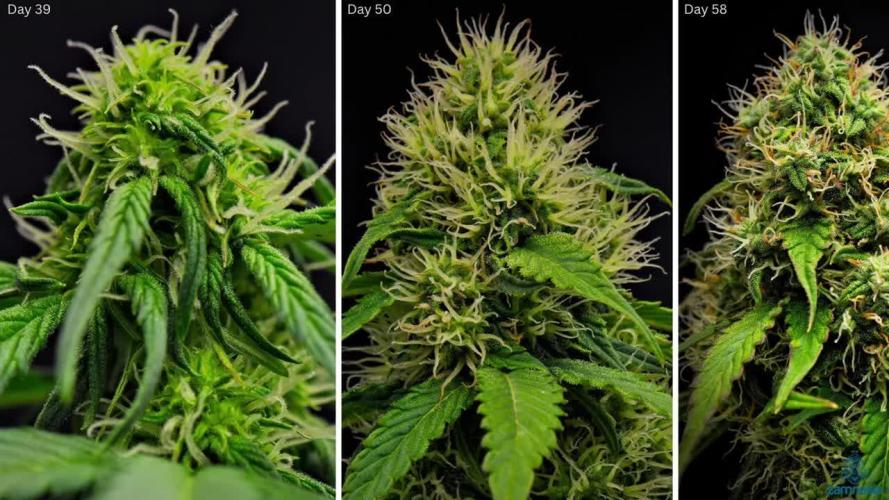
Such crazy plants, the buds are hard as rocks and already feel dry and cured while still flowering.
It has a very sweet smell and some beautiful crazy shaped buds.
Very happy to try out this genetic as well as growing Zamnesia for the first time.