


Likes
Comments
Share


@FatnastyzBudz
Follow
Day 44
10-8
Tea and slight defol. Shes got a tall branch!
Look at it go! 😱😁🤘
10-9
Water, leaf removal.
10-11
Water yucca cal/mag. Tea soon.
10-12
Day 48
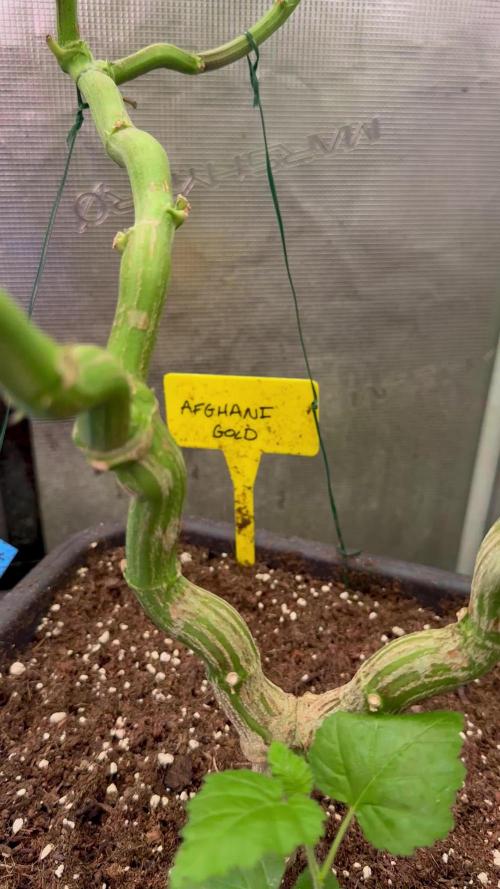
Well her head was way above the rest, so she got bent down.
Personalsmokes talked me into. He said, go for it! So I did! 😂
Hopefully i didn't F her up. No clue how she got away from me, but this is something new for me. 😁🤘 Light is amazing on everything now!
.


Likes
8
Share

@Sobreruedas
Follow
This week I didn’t make any structural changes to the plant.
Unfortunately, I noticed the presence of some thrips. As soon as I detected them, I treated the plant with SPRUZIT to stop the infestation early.
Now I need to stay very alert and act quickly to fully eliminate the pests before the flowers start developing. Early control is key at this stage 🌿⚠️

Processing
Likes
20
Share


@DrGanj
Follow
Mild defoliation throughout this week. Flush imminent so will leave the remaining fans as nute banks.
Next run with these genetics I'll be running a monstercropped clone under this scrog and will go heavier with the defoliation earlier on. I was advised this on here this grow and did a bit but have learned I need more!
Forever learning. Looks like it's gonna be an epic harvest. These girls smell absolutely dank.
Testament to the quality of these Madame Grow Fertilisers. Harvest just get better every time!
Also big shout out to my bro at NatureDelight.co.uk providing some awesome organics to add into the grow schedule. Used The Active Sugar Boost all through flower at 3ml per litre this run and I think the results speak for themselves. I cannot implore you guys enough to go check this stuff out. It's unique and you wont find better customer service.
Lots of vids and content this week as we all love bud shots <3

Likes
17
Share


@The_Projexx
Follow
Welcome to week 6 of flower! Things are starting to shape up quite nicely and some of the plants are starting to get colourful! Its hard to capture on the current camera I'm using but my new one that's on its way should be much much better! Overall really excited to see what this week will bring!
I will be checking some of the ladies trichomes to see how far along we are either this week or next week to give me an approximate harvest window!
Huge shout outs to @MarsHydroLED for all their outstanding work on lighting and grow spaces that make it fun and easy to grow! Huge shout outs go to @Seedsman , @PyramidSeeds and @GreenHouseSeedCo for all their outstanding work developing genetics that give us that fine medicine!
HUGE HUGE shout outs to all my followers and to the people who stop into the diary alike! Keep inspiring to grow!
-The Projexx
Day#36F Pictures N/A. Ladies are starting to fade but they're still putting on mass daily!
Day#37F Pictures N/A. The terpenes an nose coming off the plants its INSANE we got lots of nice and unique smells going hard here!
Day#38F Removed some of the leaves blocking nodes, cleaned up the bottoms abit more.
Day#39F The ladies continue to put on mass and some of the leaves are really starting to turn purple!
Day#40F The ladies continue to cruise along. Fuel D.og#2 is starting to come back to a nice green
Day#41F Kings Juice#1 is really starting to show her fade now! Ladies continue to put mass on.
Day#42F Water increased to 5L each at 550PPM. Stalks are getting massive!
Recap: Things went really well this week, the ladies continue to put on mass on their rock solid flowers! With some of the plants starting to show signs of an open window for harvest Im going to break out the microscope next week to see exactly how far along we are! Over all really really pump about the plants , looking like its going to be a great harvest!


Likes
67
Share


@Ageddd
Follow
Whats up GD !!!
------------- GROWTH-------------
They keep growing without problems, but added more micro vita and microbes are eating nutrients too fast, but does not matter as tomorrow im transplanting both plants. I hope taller cheese can eat more, as you can see, lower leaves are yellowing a bit.
Wether is not good... cloudy days..
Started the training season !!! :)
Used threads to bend the plants.
You have to check the roots !! This combination works flawless..
They are more stinky this week, when you touch a plant smells like lemon skunky notes ...
------------- IRRIGATION-------------
Watered both ladies, around 0.2-0.3l each one with nutrients.
------------- NUTRIENTS-------------
Deeper underground (2ml/l) + Bio-Grow (2ml/l) + Micro Vita.
New soil, mixed with Micro Vita + 1 ml/l Green Explosion + 1 ml/l Biogrow + 1ml/l Deep Underground
7l aprox pot
---------------------------------------
Good vibes !!
_24/04/2018_

Likes
24
Share


@DeepRootsGrowTrees
Follow
COLOMBIAN JACK by KANNABIA
Week #12 overall
Week #1 Flower
This week is her first week of flower she's been topped a few times during
veg and the smaller under branches have been pruned away so she can focus her energy on the tops. Stay Growing!!
Kannabia.com COLOMBIAN JACK

Likes
36
Share


@nonick123
Follow
Día 87 (26/08) Aplicación foliar de Bacillus thuringiensis a 1 g / litro para evitar a las temidas orugas de los cogollos!
Hace un día nublado (29 ºC de maxima) y NO es necesario regar
Elimino la malla de sombreado de la cara sur, ya que las temperaturas son más suaves después de la canicula
Día 88 (27/08) Riego con 500 ml H2O pH 6,5
Empiezan a bajar las temperaturas a 29 ºC de máxima, y se nota en la demanda de agua por parte de las plantas!
OnionOG Se empiezan formar los erizos y se pueden apreciar los primeros tricomas sobre las futuras hojas de azucar 😍💥
Día 89 (28/08) Riego con 500 ml H2O pH 6,5
Cada planta empieza a ir un poco a su marcha en la demanda de riego dependiendo de su tamaño y estado de floración
Día 90 (29/08) Riego con 250 / 500 ml H2O pH 6,5
He detectado un gusano de los cogollos muerto sobre una hoja! 💥 Parece que los Bacillus thuringiensis funcionan estupendamente! 😁
Día 91 (30/08) Riego con 250 / 500 ml H2O pH 6,5
Día 92 (31/08) Riego con 1 litro H2O pH 6,5 + 25 ml de Humus de Lombriz Liquido
Día 93 (01/09) Aplicación foliar Bacillus Thuringiensis
No es necesario regar tras el litro de ayer y dia nublado con pequeños chubascos!
💦Nutrients by Lurpe Solutions - www.lurpenaturalsolutions.com
🌱Substrate PRO-MIX HP BACILLUS + MYCORRHIZAE - www.pthorticulture.com/en/products/pro-mix-hp-biostimulant-plus-mycorrhizae

Likes
10
Share


@MadeInGermany
Follow
Flowering day 34
since time change
to 12/12 h.
Hey guys :-)
The buds have developed incredibly nicely this week.
The smell is getting more and more extreme :-) .
The growth has slowly stopped as the full energy goes into the production of the buds.
Watering was done twice this week, each time with 1.2 l (nutrients see table above)
They were individually inspected and checked for their health.
Osmosis water for the coming week was refilled in a 100 l tank 👍.
Have fun reading the diary and stay healthy 💚🙏🏻
👇🏼👇🏼👇🏼👇🏼👇🏼👇🏼👇🏼👇🏼👇🏼👇🏼👇🏼👇🏼
You can buy this Nutrients at :
https://greenbuzzliquids.com/en/shop/
With the discount code: Made_in_Germany you get a discount of 15% on all products from an order value of 100 euros.
👇🏼👇🏼👇🏼👇🏼👇🏼👇🏼👇🏼👇🏼👇🏼👇🏼👇🏼👇🏼
You can buy this strain at :
https://www.exoticseed.eu/
Water 💧 💧💧
Osmosis water mixed with normal water (24 hours stale that the chlorine evaporates) to 0.2 EC. Add Cal / Mag to 0.4 Ec Ph with Organic Ph - to 5.8 - 6.5
MadeInGermany

Likes
24
Share


@Nicoweed10
Follow
Esta semana realizamos transplante a maceta de 3L, también pasamos a darles las dosis máximas recomendadas de la línea de fertilizantes, estoy regando cada 2 o 3 días con 300cc. Espero se adapten bien y las raíces sigan explotando.
En estos días haré las podas, se vienen para el prox seguimiento.
#sweet mango; Royal Life
#dark; Royal Life
#gelato; Benditatuseed
#zkittle; Benditatuseed
Buenos humos.
Likes
6
Share

@GERGrowDesigns
Follow
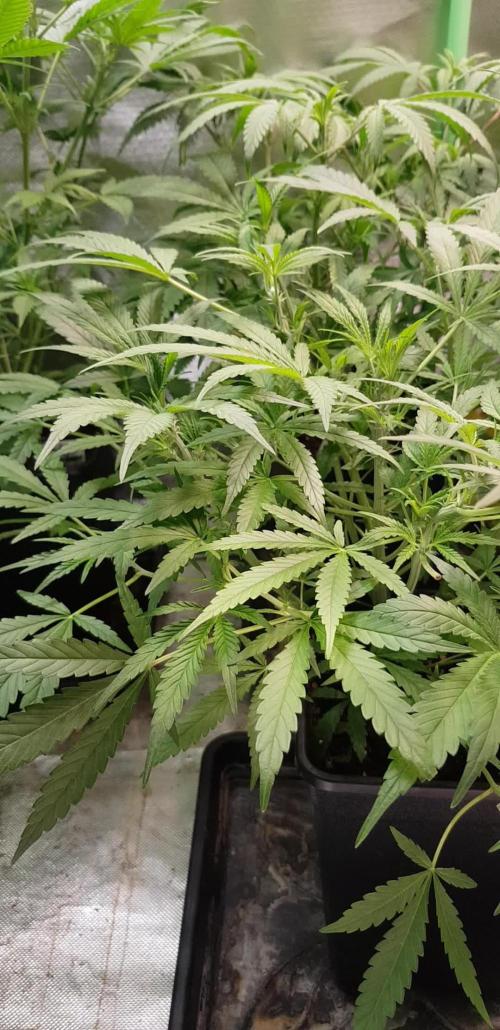
Welcome to Veg Week 4-5 of Divine Seeds Auto Fractal
I'm excited to share my grow journey with you all as part of the Divine Seeds Autoflowering Competition 2025. It's going to be an incredible ride, full of learning, growing, and connecting with fellow growers from all around the world!
For this competition, I’ve chosen the Feminized Automatic strain: Auto Fractal
Here’s what I’m working with:
• 🌱 Tent: 120x60x80
• 🧑🌾 Breeder Company: Divine Seeds
• 💧 Humidity Range: 50
• ⏳ Flowering Time: 60 Days
• Strain Info: 23%THC
• 🌡️ Temperature: 26
• 🍵 Pot Size: 0.5l
• Nutrient Brand: Narcos
• ⚡ Lights : 200W x 2
A huge thank you to Divine Seeds for allowing me to be a part of this amazing competition and Sponsoring the Strains. Big thanks for supporting the grower community worldwide! Your genetics and passion speak for themselves!
I would truly appreciate every bit of feedback, help, questions, or discussions – and of course, your likes and interactions mean the world to me as I try to stand out in this exciting competition!
Let’s grow together – and don’t forget to stop by again to see the latest updates!
Happy growing!
Stay lifted and stay curious!
Peace & Buds!

Likes
5
Share

@RelaeX
Follow
Grow Diary – Week 15
Catching Up & Plant Training
Last week was super busy due to the Mary Jane expo, so I barely had any time for the garden and could only keep an eye on things via the camera feed. Because of that, there was quite a bit of work waiting for me this week.
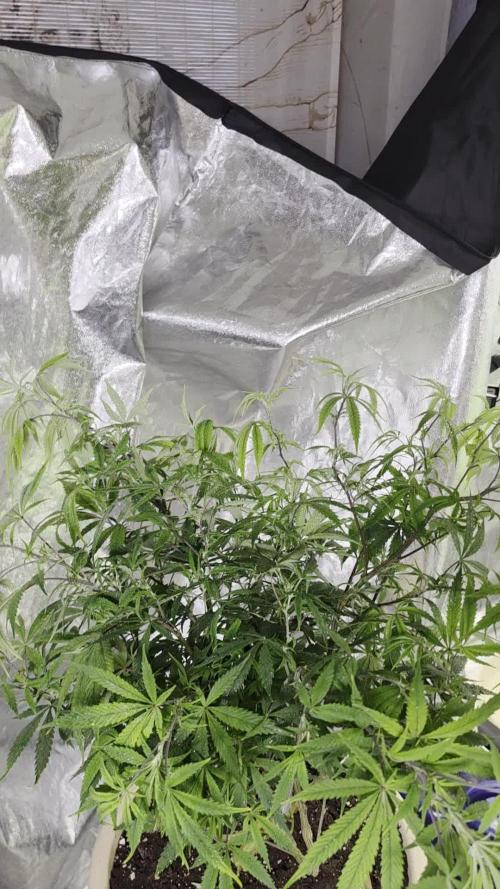
I focused heavily on the High Society and the Zupernova. I started by transplanting just one High Society and one Zupernova into big 30-liter pots, while the rest of the plants will follow later this week. Checking the root ball during the process, the transplant came at the absolute perfect time. The roots were incredibly dense, fully binding the substrate, and showed a beautifully healthy, bright white-to-beige color with no signs of root rot. In their new 30L homes, they have all the space they need to explode.
To shape a great canopy, I put these plants through a round of Super Cropping by snapping the branches. They feature thick, well-established main stalks that provide excellent structural stability for this kind of high-stress training. I followed this up with some thorough defoliation to clear out the lower growth, improve airflow, and get the light right where it needs to be. The foliage looks highly vibrant and bushy with a rich green color, showing great overall vitality, though I noticed some genetic purple/reddish tinting on the stems which is typical for these genetics.
**Current Environment & Setup**
The climate in the tent is looking very solid and stable right now.
The air temperature is sitting comfortably at 26.4 °C with a relative humidity of 64.7%. This puts the VPD at a perfect 1.21 kPa, which is an absolute sweet spot for this stage of growth. Down in the medium, the soil temperature is at 24.4 °C with a moisture level of 40.3%.
The main ventilation fan is working away at level 10 to manage the temperature and humidity, keeping everything perfectly on track after a busy week of maintenance!
Thanks for tuning in and following along with this week's update. Let's see how the girls bounce back from the heavy training and stretch into their new pots over the coming days. Happy growing to you all, and see you next week!

Likes
5
Share


@Pichicata
Follow
El Spot de cultivo es un ambiente muy seco con una temperatura diurna que ronda los 23 °C, sumado a la maceta geotextil y la subida de la tasa de evapotranspiración, da como resultado un incremento en la demanda hidrica. El sustrato contiene mucha materia orgánica por lo que en vege se le aplico una sola pichicata de top vege para levantar el verde y promover brotes.
En flora, durante la semana 3 cuando la planta marcó la estructura de la florescencia, se aplico otra pichicata mineral de Top Bloom. Esta maniobra a dado como resultado que el clon, en este estadio, no refleje problemas en sus hojas, como me está pasando en el manejo mineral/coco.

Processing
Likes
18
Share


@eldruida_lamota
Follow
La primera semana de floración les sentó bien la echaron su sexo, hembras, ahora ya queda ir viendo cómo se forman las flores.
La temperatura no pasa a los 30 nunca.

Likes
29
Share


@Ga4rd2en0er
Follow
2/8 Preflowers appeared on the GG and BC. The only one not on the Preflowers train is the GSC but she is 10 days behind the others. Branches on all plants are solid and sturdy, humidity has been an issue and I am working on it.
2/9 raised lights another inch and GSC now has Preflowers
2/10 TB and BC must of took their roids last night cause each grew 3.5 to 4" over night. More Preflowers and budding sites appearing on all plantd. Stretch is coming the stretch is coming. Raise lights 4" and lifted up GG 2 inches. All plants avg 40k on lux meter. Rotating plants everyday now.
2/13 everybody is exploding upwards. I was focusing a lot of time on my other grow and I am pretty sure I missed my LST window with these ladies. My 4x4 tent is filling up rapidly. Had to raise my lights up another 3 inches with distance ranging from 12 to 18" from all tops. Just going to take group shots until pistols start appearing. Probably going to switch over to HPS over the weekend


Likes
2
Share


@BushDoctor740
Follow
Final days as a big storm is coming I will harvest a bit early but most of the trichomes are cloudy smells absolutely amazing.
Likes
30
Share


@Silverback_Guerilla
Follow
11/9:
I fed them today. Started tapering off the One. Stopped giving Beastie Bloomz and started them on Cha Ching, plus the normal doses of silica, signal, and sweet & sticky.

Likes
84
Share


@Coopmc
Follow
So much Pollen about to fly!!
Looks like a few seeds starting to develop
Daddy Dust Everywhere!!
Likes
25
Share


@AlexanderBeeswax
Follow
Overwatered the two in the back earlier this week on day 12, not paying attention like an idiot 😫. Will resume watering as normal tomorrow, day 16.
Plan on starting LST this week, depending on size. Plant in the front on the right is almost ready now.
The mutant plant in the front on the left has some really weird growth, but I’m gonna see where it goes... why not?!
________________________________________
Started LST for 2 of the plants on day 17. The other 2 are still a little short but will probably be ready for LST within 3-4 days.
I have now (day 19) started LST on all 4 plants. First I plant started LST on, now has the lower sites starting to fill in.
Wrapping up week 3. There is one plant clearly straggling behind the others. The other 3 (including the mutant!) are responding well to LST. For now I’m sticking to leaf tucking, and have only defoliated the couple leaves sagging into the soil. Over-watering from early in the week definitely slowed growth down temporarily, but seems to be back on track now!
Likes
52
Share


@Rangaku
Follow
Cherry cola are done growing up and are fattening up nicely and producing a nice frosting of trichomes .