


Likes
Comments
Share


@420DeepGrow
Follow
Ha sido un grow muy divertido, me ha gustado como ha quedado finalmente, una planta bajita, con muchas colas, algo finas pero bien prensadas y con mucha resina.
Ha sido una de las plantas que mejor ha consumido los nutrientes durante todas las fases de cultivo.
El aroma es bestial, tonos cítricos y a hachis .
Pronto actualizo con notas de humo.

Likes
2
Share


@CanOli95
Follow
So, die Bestäubung hat nun stattgefunden.
Zur Bestäubung habe ich jeweils einen kleinen Trieb mit Pollensäcken, in Luftstillen Bedingungen, vorsichtig in eine Plastiktüte fallen lassen. Von dort habe ich jeweils mit einem neuen Pinsel etwas Pollen entnommen, und wie im Video zu sehen auf die Stempel aufgebracht.
Natürlich kann man nie zu 100% sagen, dass nicht doch etwas Pollen dort landet, wo er nicht hinkommen soll, aber mehr ist nicht möglich bei der kleinen Pflanze. Ich gehe auch nicht davon aus, dass sie noch wirklich weiter in die Höhe wachsen wird.
Ich freue mich schon sehr auf die F1. Vor allem weil die kleine jetzt schon so riecht, wie ich es gewohnt bin. Ich bin sehr gespannt, was am Ende dabei herauskommt. Die Blueberry's werden nun auch entsorgt, weil ich die nicht mehr brauche. Ein wenig Pollen wird aber trotzdem noch eingefroren.

Likes
66
Share


@Prof_Weed
Follow
Ich hätte noch locker 2 Wochen dranhängen können..
Aber ich habe bewusst jetzt schon geerntet da ich die kleinen Buds und Sugar Leafs zu Bubble Hash verarbeiten werde, das sind satte 479g,ich habe keine Ahnung was das dann an Bubble Hash ergibt.
Falls das jemand weiß schreibt es mir in die Kommentare..
Ich habe ein wet trimming gemacht, hat mich 4 Stunden gekostet, aber:
857g Nass Gewicht !!
Wandert jetzt für 8 Tage in den Cannatrol Cool Cure.
Edit: 186g Trocken Gewicht nach Curing, alle Stängel sind zudem entfernt.
Riecht sehr frisch.
Der Smoke ist sehr mild, aber die Wirkung haut mächtig rein, eher Sativa Effekte, hatte nen mega Laber Flash..
Auf jeden Fall viel THC.
Das war ein Hochsommer Grow, die Sour Jealousy von FastBuds hat die hohen Temperaturen problemlos weggesteckt.
Man muss dazu sagen, dass mein Zelt prinzipiell immer offen steht, so kann auch kein Schimmel entstehen denke ich.
Nur muss ich eben mit 2 Luftentfeuchtern arbeiten..
Ich bin mega happy und auch stolz, das ist erst meine 4. Ernte, ich habe erst Mai 2023 angefangen mit dem Anbau.
Vielen Dank lieber Grow Gott für die reiche Ernte!!

Likes
59
Share

@RockoCalenberg
Follow
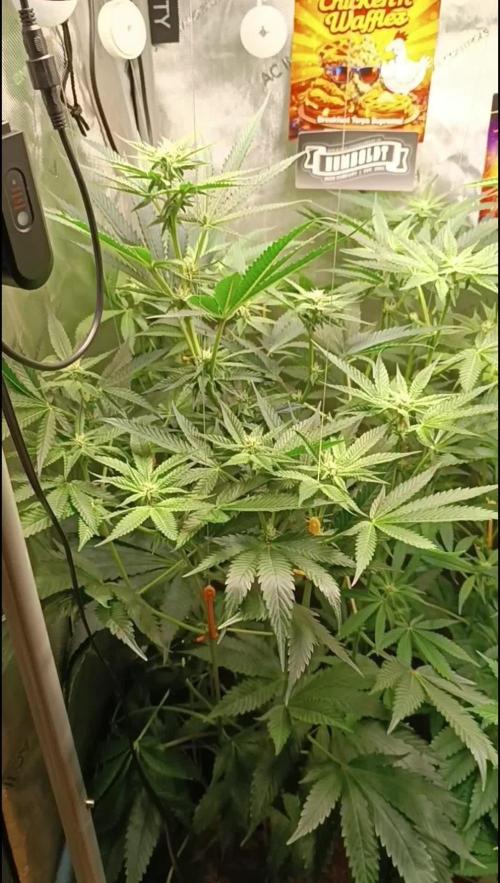
🌸 Blütetag 22 | Tag 66 gesamt 🌸
Gestern wurde ordentlich gelollipopt – und da kam schon einiges runter. Der Stretch trudelt jetzt langsam aus… zumindest fühlt es sich endlich so an. 😄
Jetzt dürfen die Damen langsam anfangen, richtig Gewicht und Masse aufzubauen.
Und besonders die letzten 7–10 Tage waren komplett verrückt.
Vor allem die Fruit Bomb Punch hat nochmal völlig den Turbo gezündet. Ehrlich gesagt habe ich selten erlebt, dass eine Pflanze innerhalb so kurzer Zeit nochmal so eskaliert. Die war am Anfang nach heißem Soil, Spruzit-Stress und dem Topping sogar die empfindlichste Kandidatin im Feld – und inzwischen thront sie mitten über allem. Komplett wild. 🚀
Die Chicken & Waffles und die Fruit Bomb Punch liegen jetzt beide ungefähr bei 1,10–1,12 m, wobei die Fruit Bomb mittlerweile leicht die Führung übernommen hat und mitten im Zelt über allem steht. Und das auch nur, weil sie inzwischen schon drei Clips bekommen hat, um sie seitlich runterzuziehen – quasi Supercropping ohne richtiges Supercroppen. Ohne diese Clips wäre sie wahrscheinlich inzwischen irgendwo bei 1,25 m, 1,30 m oder vielleicht noch höher angekommen. Absolut wahnsinnig, wie die abgegangen ist.
Man merkt einfach, dass sie trotz Topping am Ende komplett Richtung Triebmonster tendiert. Einer der beiden Haupttriebe hat sich deutlich dominanter entwickelt als der andere und zieht jetzt brutal nach oben.
Dazu kommt dieser Geruch… die Fruit Bomb Punch heißt wirklich nicht ohne Grund so. 🍓💥
Das ist inzwischen eine legitime Fruchtbombe. Extrem laut, extrem intensiv und komplett raumfüllend. Wahrscheinlich das stärkste und aggressivste Terpenprofil im ganzen Run bisher.
Die Strawberry AK bleibt dagegen weiterhin die absolute Bilderbuchpflanze im Feld. Kompakt, buschig, brutal gesund und voller Budsites. Von der reinen Höhe hat sie gegen die beiden Monster zwar keine Chance, aber genau das macht sie spannend: Sie hat unglaublich viele kräftige Seitentriebe und Budsites aufgebaut – ehrlich gesagt deutlich mehr als die Fruit Bomb Punch. Deshalb könnte sie am Ende sogar heimlich das eigentliche Ertragsmonster werden. Nicht über Höhe, sondern über pure Masse und Struktur. 😄
Nach dem Lollipoppen habe ich sie deshalb auch etwas auf einen Topf hochgebockt, damit sie besser mit ins Canopy kommt und die vielen Tops ordentlich Licht bekommen. Ihre Struktur ist einfach wahnsinnig sauber. Eigentlich musste man an der Pflanze bisher kaum etwas machen.
Auch die Chicken & Waffles entwickelt sich inzwischen zum absoluten Monster. Trotz untoppter Struktur hat sie extrem viele schöne Seitentriebe hochgezogen und steht überraschend eben im Canopy. Dafür, dass sie nie getoppt wurde, ist das schon ziemlich beeindruckend. Diese riesigen Internodienabstände, die anfangs fast schon zu wild wirkten, sorgen jetzt dafür, dass überall Licht tief in die Pflanze fällt und die Seitentriebe brutal mitziehen.
Terpentechnisch entwickeln sich die drei Damen mittlerweile ebenfalls komplett unterschiedlich:
Die Fruit Bomb Punch ist einfach pure Frucht und komplett laut.
Die Strawberry AK geht eher in eine cremigere, weichere Candy-Fruchtrichtung.
Und die Chicken & Waffles bleibt bisher eher würzig unterwegs.
Auch technisch läuft der Run aktuell erstaunlich entspannt. Die Dripper laufen konstant morgens, mittags und abends – besser geht’s eigentlich kaum. Die Pflanzen wirken super stabil versorgt und gerade in dieser explosiven Phase scheint ihnen das richtig gutzutun. Temperaturtechnisch ist ebenfalls noch alles im Rahmen, auch wenn die Luftfeuchtigkeit inzwischen langsam etwas anzieht. Aber bei der Blattmasse und dem Wachstum wundert das mittlerweile auch nicht mehr. 😄
Gesundheitlich sieht der Run aktuell wirklich top aus. Eigentlich gibt es nichts Auffälliges außer der ganz normalen Aufhellung im Verlauf der Blüte. Keine echten Probleme, keine größeren Mängel – genau so darf’s weitergehen. 🙏
Jetzt heißt es: Budstacking, Gewicht und hoffentlich nicht komplett ans Zeltdach wachsen. 😅
Am Ende entscheidet das Glas. 🍯
Grow on 🌱
Flower Day 22 | Day 66 overall 🌸
Yesterday was lollipopping day — and quite a lot came off. The stretch finally seems to be slowing down now… at least it feels like it. 😄
From here on, the ladies can hopefully start focusing more on proper bud stacking, weight and mass.
And honestly, the last 7–10 days have been completely insane.
Especially the Fruit Bomb Punch absolutely hit the turbo again. I rarely see a plant explode that hard within such a short time. Early on she was actually the most sensitive plant in the tent after the hot soil mix, the Spruzit stress and the topping — and now she completely dominates the middle of the canopy. Absolute madness. 🚀
The Chicken & Waffles and the Fruit Bomb Punch are now both sitting around 1.10–1.12 m tall, although the Fruit Bomb has slightly taken the lead and now towers above everything else in the center of the tent. And that’s only because she already got three clips to pull her sideways — basically supercropping without actually supercropping. Without those clips she would probably be somewhere around 1.25 m, 1.30 m or maybe even higher by now. Just crazy how hard she stretched.
You can really tell that despite the topping she still wants to become one giant dominant shoot monster. One of the two main tops clearly became much stronger than the other and is now absolutely blasting upwards.
And then there’s the smell… the Fruit Bomb Punch truly deserves her name. 🍓💥
This thing is a legitimate fruit bomb. Extremely loud, extremely intense and completely fills the room. Probably the strongest and most aggressive terp profile in the entire run so far.
The Strawberry AK, on the other hand, remains the absolute textbook plant of the run. Compact, bushy, incredibly healthy and completely packed with budsites. Height-wise she can’t compete with the two monsters, but that’s exactly what makes her so interesting: she built an insane amount of strong side branches and budsites — honestly way more than the Fruit Bomb Punch. So she might secretly become the true yield monster in the end. Not through height, but through pure mass and structure. 😄
After lollipopping I even raised her slightly on top of a pot so she can stay better within the canopy and get more light to all those tops. Her structure is just ridiculously clean. Honestly, she barely needed any work during the whole grow.
The Chicken & Waffles is also turning into a complete monster by now. Despite being completely untopped she developed tons of beautiful side branches and created a surprisingly even canopy. For an untopped plant, that’s seriously impressive. Those huge internodal gaps that initially looked almost too wild are now allowing light to penetrate deep into the plant and all the side branches are exploding as well.
Terp-wise the three ladies are also separating more and more now:
The Fruit Bomb Punch is just pure loud fruit.
The Strawberry AK leans into a creamier, softer candy-fruit direction.
And the Chicken & Waffles currently stays more on the spicy side.
Technically the run is also going surprisingly smooth right now. The drippers are running consistently morning, noon and evening — honestly couldn’t ask for much better. The plants seem extremely stable and happy with it, especially during this explosive phase of growth. Temperature-wise things are still under control too, although humidity is slowly starting to creep up. But with this amount of leaf mass and growth, that’s hardly surprising anymore. 😄
Health-wise the run currently looks really great overall. Basically nothing concerning besides the normal lightening during flower progression. No real deficiencies, no major problems — exactly how you want things to go. 🙏
Now it’s time for bud stacking, weight gain and hopefully not completely growing into the tent roof. 😅
In the end, the jar decides. 🍯
Grow on 🌱


Likes
346
Share


@Canna96
Follow
This week went pretty well, other than she stretched like crazy and I am now getting worried about running out of vertical space. I also had a few of my bottom leaves get a few brown and yellow spots on them. I did post some pics and asked a question, thank you for the responses, much appreciated! I am thinking about adding my Spyder Farmer LED 100 Watt light into the tent for the nebula auto because it is about 23 inches shorter than the sour diesel. I believe it would only raise my temp about 2 degrees, and possibly lower the humidity by one or two percent. I must say my dehumidifier has been a freaking stud, running 24X7 and not complaining. I should look into adding another unit, it has been in the mid 90's and muggy for about a week. So far I have to say I am super impressed and excited with this setup, the genetics, and with growing this wonderful plant in general. Already planning ahead to my next grow, and what I can do better. I have been enjoying myself and I really appreciate everyone who has taken the time to answer my questions! I am having a blast and am excited to see what this lady will give up in a few weeks!

Likes
6
Share


@Kanbal
Follow
Still doing foliar: Cal-Mag Terra Aquatica, Pro Bloom, and silicate from T.A.
some plants are removed because of root root. naw left with 19/24 plants.
I also use a mobile app to set the light intensity, and I burned the leaves later. Which gave me the knowledge that the application is not very accurate.
Likes
3
Share


@Happydays58
Follow
09/06 - DAY 43
- Slight yellowing and spotting on a few of Mo’s older fan leaves, thinking Mag deficiency. Everyday more and more trichomes coming in.
- Forcing Jane to open up by pulling her out.
09/08 - DAY 45
- Top dressed Mo w/ Worm Castings & Kashi Blend. Can see feeder roots everywhere under the cover, worms are active, and she’s sucking dry her reservoir every 1.5 days.
- Lowered light to 500-560PPFD at canopy. Humidity ~58%.
- Jane is starting to share her strawberry aromas. Mo smells like a sweet sugary treat
09/11 - DAY 48
- Switched over to only blooming/fruiting inoculants & top watered w/ compost tea.
Hopefully get ahead of any deficiencies.
- Mo is starting to drink 2 Gal in less than a day, along with the weekly top waterings. Thirsty girl 😃

Likes
28
Share


@Ultraviolet
Follow
....Understanding Electrical Conductivity
Electrical conductivity measures a material’s ability to transmit electric current, which in the context of gardening, relates to the soil or nutrient solution’s ion content. In simpler terms, EC indicates how salty the environment is around the roots of a plant. This “saltiness” is crucial because it affects the plant’s osmotic pressure, which in turn influences nutrient uptake and overall plant health.
The Science Behind EC
At its core, EC measures the presence of soluble ions like potassium, calcium, magnesium, and nitrates – all vital nutrients for plant growth. These ions carry electrical charges, and their movement creates an electrical current, detectable as conductivity. High EC levels typically mean a high concentration of dissolved ions, whereas low EC levels indicate fewer nutrients are available.
The Impact of Electrical Conductivity on Plant Growth
The relationship between EC and plant growth is a delicate balance. Just the right EC level can enhance nutrient uptake, bolster plant health, and increase yields. However, when EC levels stray too far from the optimal range, they can lead to nutrient imbalances, osmotic stress, and even plant death.
Nutrient Uptake and EC Levels
Plants absorb nutrients from the soil or water through their roots, a process influenced by the surrounding EC levels. Ideal EC levels help create an optimal environment for this exchange, ensuring plants receive the nutrients they need without exerting excessive energy.
High EC Levels: A Double-Edged Sword
While a certain level of dissolved ions is beneficial, excessively high EC levels can harm plants. High salinity can draw water out of plant cells, leading to dehydration and nutrient lockout – a condition where plants cannot absorb essential nutrients despite their presence.
Low EC Levels: Undernourished Gardens
Conversely, low EC levels can starve plants of necessary nutrients, stunt growth, and lead to underdeveloped or diseased plants. Maintaining an optimal EC range is crucial for healthy plant development.
Measuring and Adjusting Electrical Conductivity
Understanding the importance of EC is one thing, but applying this knowledge in the garden or greenhouse requires practical steps. Regular monitoring and adjustment can ensure that plants remain in a conducive growth environment.
Tools for Measuring EC
Gardeners can use various tools to measure EC, from simple handheld meters to more sophisticated systems integrated into hydroponic setups. Regular monitoring allows for timely adjustments to soil or nutrient solutions, ensuring optimal EC levels.
Adjusting EC for Optimal Growth
Adjusting EC involves changing the concentration of nutrients in the soil or solution. In hydroponics, this might mean diluting or concentrating the nutrient solution. In soil, amendments may be added or flushed with water to correct EC levels.
Practical Applications: EC in Various Growing Environments
The application of EC knowledge varies across different growing environments, from traditional soil-based gardens to modern hydroponic systems.
Soil Gardening
In soil, EC measurements can help diagnose nutrient imbalances and guide fertilization practices. Amending soil with organic matter or flushing with water can adjust EC levels to better support plant growth.
Hydroponics and Aquaponics
In hydroponic and aquaponic systems, where plants are grown in water-based solutions, maintaining optimal EC levels is crucial for nutrient availability. These systems allow for precise control of EC, directly influencing plant health and yield.
Greenhouse Cultivation
In greenhouses, EC monitoring can help manage the nutritional status of various plants, ensuring that each receives the right nutrient mix for optimal growth. Automated systems can provide real-time EC adjustments based on plant needs.
Navigating Challenges: Overcoming EC-Related Issues
While maintaining optimal EC levels can significantly enhance plant growth, gardeners may encounter challenges such as fluctuating conditions, equipment malfunctions, or environmental stresses. Regular monitoring, combined with a solid understanding of each plant’s specific needs, can mitigate these issues.
Conclusion: The Conductive Path to Lush Gardens
Electrical conductivity, though an invisible factor, is a cornerstone of successful gardening and farming. By understanding and managing EC levels, gardeners and farmers can profoundly influence the health and productivity of their plants. As we continue to explore the nuances of plant growth, the role of EC stands out as a testament to the marriage of science and nature in cultivating life. Whether in soil, water, or air, mastering the art of electrical conductivity can unlock the full potential of our green companions, leading to bountiful harvests and vibrant gardens.

Likes
14
Share


@Mr_BFL
Follow
Salute comrade !
According to the passport, it would be time to harvest, and they look very appetizing.
Not all trichomes are still amber, it will stand for 1 week in a solution with honey and molasses.
5 days of flush, 2 days of the night👌

Likes
1
Share


@Dabcik
Follow
Aumentato distanza lampada e ph dell’acqua di irrigazione. Le piante stanno bene hanno un bello stretch che sto cercando di tenere sotto la rete. Ora i fiori iniziano a formarsi


Likes
Comments
Share


Likes
8
Share

@Sobreruedas
Follow
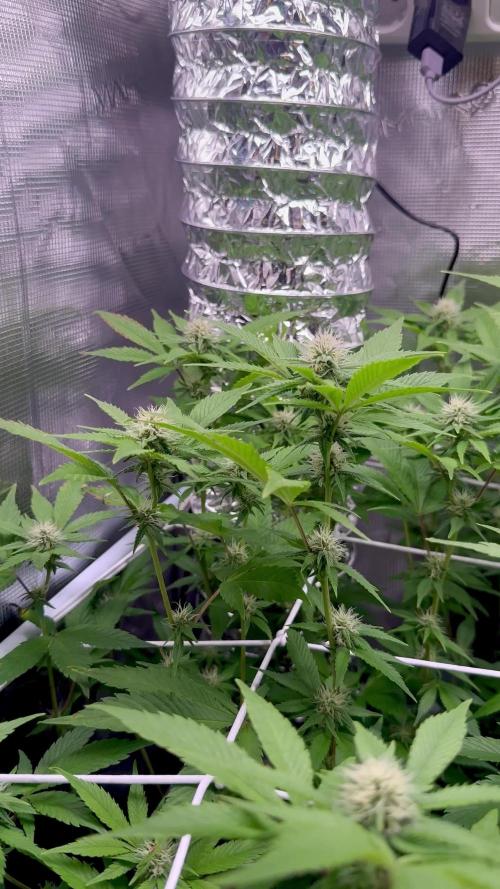
This week I didn’t make any structural changes and just let the plant develop naturally.
I’ve now introduced Green Sensation and removed Power Buds from the feeding schedule.
Also, I forgot to mention that last week I set the LED to 100%, and it’s currently running at around 800 PPFD.
Everything is progressing well so far, now it’s just about maintaining stability and letting the plant focus on flower development 🌸💪

Likes
Comments
Share

@UDUDUDUDU
Follow
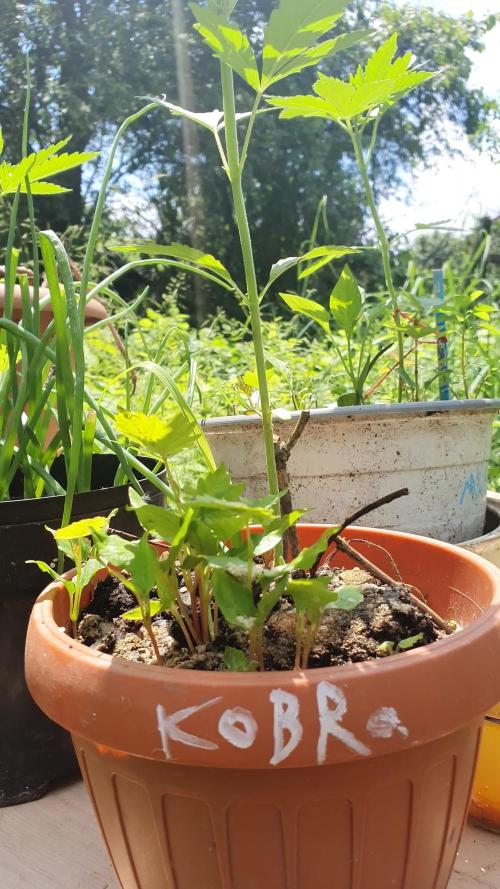
we have moved up to 1 cup of water a day and watching I dream of Jeeny


Likes
28
Share


@LoccoMotive
Follow
🌱 Growtagebuch – Woche 11 🌱
"Woche 11 und die Ernte der Apple Strudel Auto stehen an. 🏁
Aufgrund von 5-Liter-Töpfen und Fimming-Experimenten in einem 60x60x140 cm Zelt fiel der Ertrag mit knapp 24 Gramm eher gering aus. 📉
Die Ernte hätte bereits in Woche 9 oder 10 stattfinden können, wurde jedoch bewusst hinausgezögert, um eine bernsteinfarbene Trichomentwicklung zu erreichen. ⏳
Dafür überzeugt die Qualität der Buds auf ganzer Linie. ✨ Sie duften intensiv nach Apfel und die Wirkung ist relativ ausgewogen. leicht Indica-dominant. 🍎😴
Qualitativ ein sehr gutes, quantitativ jedoch eher bescheidenes Ergebnis. ⚖️" Ähnlich der anderen bieden Pflanzen...
Likes
8
Share


@zombikush81
Follow
11/05/19 # Friends, 50 day of flowering. So far I have not encountered any problems, fantastic genetics .... and I am really excited to see the final result. Thanks to all the friends who follow me .... peace & love

Likes
2
Share


@Little
Follow
Hola a todos!
Hace unos dias que puse la malla, y he guiado las ramas que iban creciendo, un par de veces. lo dejare 1 semana más en crecimiento y luego a floración.
Espero que la malla no se quede pequeña. ¿Qué tal lo veis?
Gracias!
Un saludo cultivador@s!


Likes
63
Share


@TheBudWhisperer
Follow
Medium: 🥥🥥🥥🥥
Coco remains as the most manageable medium in our arsenal. It’s simplistic, similar to conventional soil but as a nutrient neutral medium, it’s also much more tailored to the growers preferences in terms of feeding. It’s best attribute is excellent drainage and consistency - a lot fluffier than soil which definitely translates to faster growth rates. It’s a damn shame that this particular grower forgot the cardinal f$&@king rule when it comes to any grow - always water to run off and pay attention to the strength of the feed in relation to the plants growth stage. If we had followed these basic principles we wouldn’t have run into the serious late stage burn that almost toasted the whole plant. On the flip side of that, coco flushes out incredibly well and if not for this attribute, the whole grow would’ve been an unmitigated disaster.
Method 🎚️🎚️🎚️🎚️
Uggghhh - hindsight f$&@‘n sucks sometimes. Best descriptor for how we grew this girl - imagine having the dinner table set with your finest china, a bottle of the most expensive red wine you can find, a brand new top-o-the-line BBQ, and then burning the absolute f$&k out of a $40 prime rib. That’s exactly how this grow feels...
We were looking to scrog it the whole time and this went perfectly. The plant helped quite a bit with longer than expected internodal spacing. This allowed for a really even canopy/bed of buds. Again though, the vipar 450w (truly a 200w~) shit the bed mid veg. And we needed a replacement. Went with a 100w SpiderFarmer QB. While I truly am pleased with the purchase I do believe that we should’ve upp’d to the 200w model (or 2, 100w models) to achieve a similar output and result - @silverback_guerilla was right on point with the lighting advice (*again). Given the reduced yield it just feels like the nodal spacing and overall bud quality may have suffered with the reduced power. This, despite the better light spectrum and overall coverage in general. As an aside - an additional Fixture is now on the way😉👍. Worst part about this is we’ll never really know what the true limiting factor actually was due to the nute burning. Probably the single most stupid, rook mistake I could’ve made was not watering to runoff.... just too much shit going down in the world (and in life) these days and I started to treat the grow like it was on auto pilot🤬🤬🤬. The whole worlds a cluster f$&k right now so why should the grow be any different right? 4/5 for the method, losing1 point because the grower is a lazy moron.
Yield/Harvest🌴
The final numbers are better than expected, 2.26oz of usable bud. Not overly fluffy and not overly dense. Not glazed in frost but not without a little shimmer. All around mediocre unfortunately. What it coulda? Shoulda? Woulda been??? Note sure 🤔 but we’ll take it👍.
On a more positive note - There was still another new addition to our grow cycle. This time on the back end. Everyone knows that trimming just plain sucks. When we’re spitt’n out 3-4 plants every few months, the exercise is a dreaded necessity if were gonna maintain the vast array of choice that we’re used to🤙👌. The whole process just for one plant can take hours unless you have help. We prefer to wet trim too so for those that don’t require a commercial size trimmer, the only option to save some time is a trim bowl. We bit the bullet, dropped the cash on one - have NOT been disappointed at all! Not only did it cut the chop process from 2-3 hours down to a mere 45 minutes, the buds literally came out rack ready. There was no need to do any touch up trimming and the bud photos you see are as-is, right out the bowl🤩. Really coulda used this last fall and I would recommend this to anyone who chops more than a handful of plants per year. Just awesome and worth every penny!👌🤙👍
At times like these, we should all just be thankful that we still have both the opportunity and ability to grow our own✌️. Best be to all of you and stay safe out there.👊
Background
For those not in the know, SSSC has been around for 40 years. Out of Amsterdam, they are the 2nd such breeder to market their genetics worldwide and can lay claim to the origins of their beans better than most (if not all) others.
They’ve produced here an indica hybrid cross of M33/Friesland Indica with an elite clone of Lava Cake. We’re hoping to encounter one of the purple phenos but only time will tell. She’s supposed to be super strong too and not for the faint of heart 👍.
We’ve been wait’n on this one awhile and she’ll be getting individual treatment in the small cab - 5gal. Coco w/perlite and the typical nute regimen. Advance props for the best packaging I’ve ever seen (although you may need to be an 80’s baby or older to truly appreciate it😉). See week 1 photos.
