The Grow Awards 2026 🏆
Likes
Comments
Share
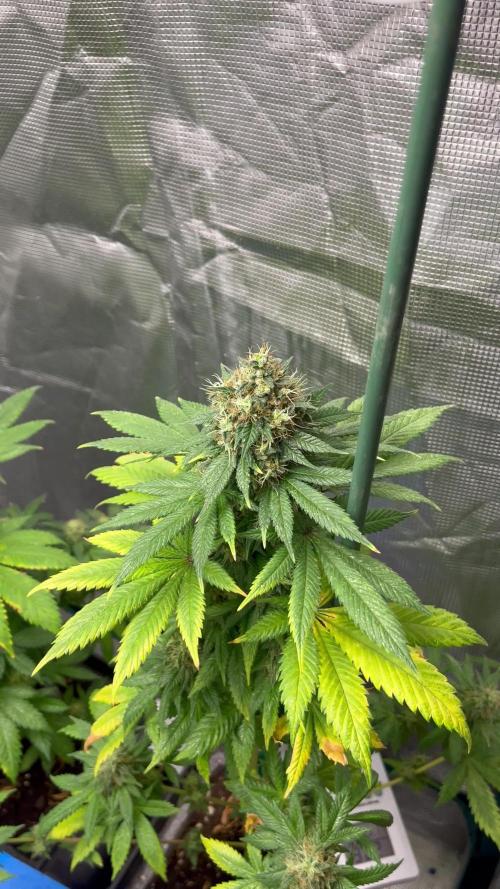
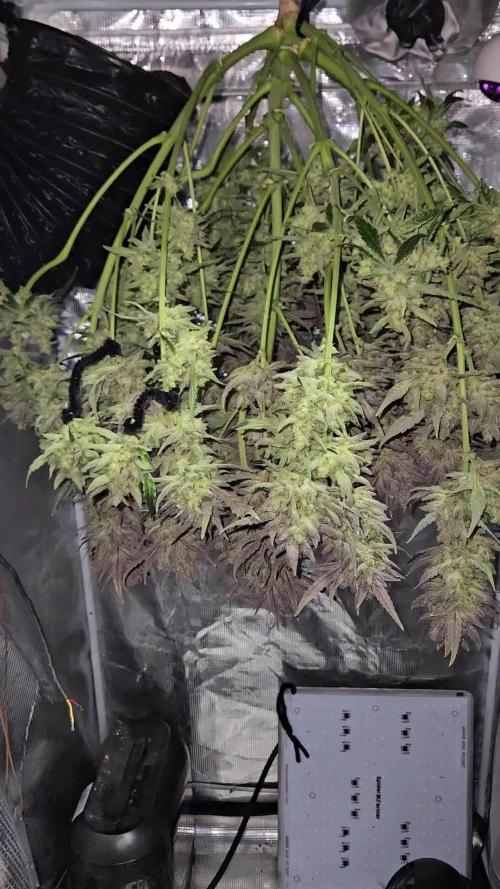
Our Zamnesia autoflowers have been on their journey through the magical flowering period for a while now, this is the second week of flowering considering that autoflowers still flower spontaneously some sooner than others but all around the 3rd-4th week. . ---- The general environmental conditions are good, the heat has increased a bit more but for the first weeks of flowering it is not a big problem, let's remember to never exceed 27 degrees centigrade in the last 4 weeks to avoid compromising the quality of the flowers. If necessary open the growbox but never let it exceed 27-30 degrees where 30 is already a lot. The positive thing is that as soon as the lights go out the change is already somewhat visible and as autumn progresses we will also improve. The humidity is fluctuating but we try to control it with two dehumidifiers when necessary, pushing both of them possibly not into the growbox but directly into the room. (I dehumidify the room and the air in the growbox should also be dehumidified) --- I'll start by giving you some information about the Sticky Beast, it's a monster, a real beast in fact, right now in an 11-liter pot it's drinking 2 liters of mush a day and I find the soil very dry, if I give 1.5 dehydrated, incredible, I don't dare to think what's about to happen to these buds, very fast to grow and with a full-bodied plant. We've already noticed that it's a beast, now we're waiting for the other typical characteristic of the finale: Sticky. --- Fertilization program - The fertilizers are always Plagron and I'm following the table that I generated on the site depending on the chosen substrate. Create your own card and follow it, never be presumptuous my friend as I have been in the past, follow the card and look at the plants, not all need the same amount of fertilizer. We have reached the moment to give a good dose of iron in the first weeks of flowering, already of race life not sprayed but mixed with fertilizers. We have then added the power buds to stimulate the birth and development of flowers. ---- https://plagron.com/it - Power Roots - 1ml/l - Alga Bloom - 4 ml/l - Pure Zym - 1 ml/l - Sugar Royal - 1ml/l - Vita Race - 5 ml/l - Power Buds 1ml/l is now added i have to tribute more than something to this bad guy! --- The 100% Organic pack by Plagron can be found on Zamnesia at the link: https://www.zamnesia.io/it/11457-pla gron-easy-pack-natural.html --- Now dehumidifier running keeping the range from 45 to 55% / / Strain Description // What happens when three famous strains come together? Sticky Beast Automatic by Zamnesia Seeds is a pure autoflowering composed of some of the best strains. From this combination, where the delicious flavors of Bubble Gum meet the famous OG Kush and the productivity of Critical Auto, a real autoflowering is born that is extremely easy to grow! // AWARD WINNING STRAIN // First Prize at Autoflowering Highlife CUP 2018 --- Get a seed of this amazing strain --- https://www.zamnesia.io/it/3331-zamnesia-seeds-sticky-beast-automatic-femminizzato.html - Soil and Fertilizers entirely organic --- https://plagron.com/en buy on www.zamnesia.com - Growbox and air system --- https://www.secret jardin. com/ - Light — P2000 - https://www.viparspectra.com - Music and sound --- I made my girls listen to 432hz frequencies and music from www.radionula.com - Z --- You can find these seeds, much more from the world of cannabis, mushrooms and an incredible series of accessories and gadgets on the reference site not only mine but of many growers ---- https://www.zamnesia.io
Likes
Comments
Share
Likes
11
Share
23.09.23-85 дней этому растению . Она немного растянулась и я решил убрать пару больших листьев и немного подвязать , чтобы свет лучше проникал . На этой неделе я поднял ппм раствора до 1000 . Все девочки активно пьют и выглядят здоровыми . 26.09.23-88 день ) За эти 3 дня растение продолжило растяжку и прибавило около 8 см 😎😎 Шишки красиво формируются и на листьях уже виден Сахар . В планах на ближайшие дни провести легкую дефолиацию и добавить света . Всем мир 28.09.23- 60 дней вегетации и 30 дней цветения ! Растение продолжает медленную растяжку и прибавило 5 см за 2 дня , в остальном изменений нет . Завтра добавлю ей 120 w .
Likes
11
Share
@BudBeezy
Follow
Welcome to week 22 of my grow diary. It rained at the beginning of the week. On Monday and Tuesday I only left the plant outside for half a day and when it rained I put it in the garage so that the buds wouldn't get wet. Unfortunately, in this weather there is a high risk that the flowers will start to mould. Most of the trichomes are now milky. See you next week ✌️
Likes
45
Share
2nd net is up. Early bud formations are promising. holding up to the extremes pretty well, some leaves taking minor damage, but overall, she is holding up, gave her 1 night at 50F see how she would react, stressful. Not advised as it messes with her metabolism, but I want to see if it triggers any anthocyanin response. Love to see her purp up but no signs yet. Remember, For every molecule of glucose produced during photosynthesis, a plant needs to split six molecules of water. This process provides the hydrogen needed for synthesizing glucose and other organic compounds, while oxygen is released as a byproduct. Homework. If Rubisco activity is impaired and it cannot properly function or regenerate its substrate, the plant's leaves are likely to turn a pale green or lime green, a condition known as chlorosis. Essentially, Rubisco activity is highly regulated and susceptible to various environmental and metabolic factors that can cause it to become inhibited, leading to an apparent failure in RuBP regeneration due to a lack of consumption. Rubisco regeneration is intrinsically linked to nitrogen supply because Rubisco is a major sink for nitrogen in plants, typically accounting for 15% to over 25% of total leaf nitrogen. The regeneration phase itself consumes nitrogen through the synthesis of the Rubisco enzyme and associated proteins (like Rubisco activase), and overall nitrogen status heavily influences the efficiency of RuBP regeneration. RuBisCO is a very large enzyme that constitutes a significant proportion (up to 50%) of leaf soluble protein and requires large investments in nitrogen. Insufficient nitrogen supply limits the plant's ability to produce adequate amounts of RuBisCO, thereby limiting the overall capacity for photosynthesis and carbon fixation. Maintaining the optimal, slightly alkaline pH is crucial for the proper function and regeneration of Rubisco. Deviations in either direction (too high or too low) disrupt the enzyme's structure, activation state, and interaction with its substrates, leading to decreased activity and impaired RuBP regeneration. (Lime/yellowing) Structural Component: Nitrogen is an essential building block for all proteins, and the sheer abundance of the Rubisco protein makes it the single largest storage of nitrogen in the leaf. Synthesis and Activity: Adequate nitrogen supply is crucial for the synthesis and maintenance of sufficient Rubisco enzyme and Rubisco activase (Rca), the regulatory protein responsible for maintaining Rubisco's active state. Nitrogen deficiency leads to a decrease in the content and activity of both Rubisco and Rca, which in turn limits the maximum carboxylation rate, Vmax, and the rate of RuBP regeneration Jmax, thus reducing overall photosynthetic capacity. Nitrogen Storage and Remobilization: Rubisco can act as a temporary nitrogen storage protein, which is degraded to remobilize nitrogen to other growing parts of the plant, especially under conditions of nitrogen deficiency or senescence. Nitrogen Use Efficiency (NUE): The allocation of nitrogen to Rubisco is a key determinant of a plant's photosynthetic nitrogen use efficiency (PNUE). In high-nitrogen conditions, plants may accumulate a surplus of Rubisco, which may not be fully activated, leading to a lower PNUE. Optimizing the amount and activity of Rubisco relative to nitrogen availability is a target for improving crop NUE. Photorespiration and Nitrogen Metabolism: Nitrogen metabolism is also linked to the photorespiration pathway (which competes with carboxylation at the Rubisco active site), particularly in the reassimilation of ammonia released during the process. To increase RuBisCO regeneration, which refers to the process of forming the CO2 acceptor molecule Ribulose-1,5-bisphosphate (RuBP) during photosynthesis, the primary methods involve optimizing the levels and activity of Rubisco activase (Rca) and enhancing the performance of other Calvin-Benson-Bassham (CBB) cycle enzymes. Biochemical and Environmental Approaches: Optimize Rubisco Activase (Rca) activity: Rca is a crucial chaperone protein that removes inhibitory sugar phosphates, such as CA1P (2-carboxy-D-arabinitol 1-phosphate), from the Rubisco active site, thus maintaining its catalytic competence. •Ensure optimal light conditions: Rca is light-activated via the chloroplast's redox status. Adequate light intensity ensures Rca can effectively maintain Rubisco in its active, carbamylated state. •Maintain optimal temperature: Rca is highly temperature-sensitive and can become unstable at moderately high temperatures (e.g., above 35°C/95F° in many C3 plants), which decreases its ability to activate Rubisco. Maintaining temperatures within the optimal range for a specific plant species is important. •Optimize Mg2+ concentration: Mg2+ is a key cofactor for both Rubisco carbamylation and Rca activity. In the light, Mg2+ concentration in the chloroplast stroma increases, promoting activation. •Manage ATP/ADP ratio: Rca activity depends on ATP hydrolysis and is inhibited by ADP. Conditions that maintain a high ATP/ADP ratio in the chloroplast stroma favor Rca activity. Enhance Calvin-Benson-Bassham (CBB) cycle enzyme activity: The overall rate of RuBP regeneration can be limited by other enzymes in the cycle. •Increase SBPase activity: Sedoheptulose-1,7-bisphosphatase (SBPase) is a key regulatory enzyme in the regeneration pathway, and increasing its activity can enhance RuBP regeneration and overall photosynthesis. •Optimize other enzymes: Overexpression of other CBB cycle enzymes such as fructose-1,6-bisphosphate aldolase (FBA) and triose phosphate isomerase (TPI) can also help to balance the metabolic flux and improve RuBP regeneration capacity. Magnesium ions, Mg2+, are specifically required for Rubisco activation because the cation plays a critical structural and chemical role in forming the active site: A specific lysine residue in the active site must be carbamylated by a CO2 molecule to activate the enzyme. The resulting negatively charged carbamyl group then facilitates the binding of the positively charged Mg2+ion. While other divalent metal ions like Mn2+ can bind to Rubisco, they alter the enzyme's substrate specificity and lead to dramatically lower activity or a higher rate of the non-productive oxygenation reaction compared to Mg2+, making them biologically unfavorable in the context of efficient carbon fixation. The concentration of Mg2+ in the chloroplast stroma naturally increases in the light due to ion potential balancing during ATP synthesis, providing a physiological mechanism to ensure the enzyme is activated when photosynthesis is possible. At the center of the porphyrin ring, nestled within its nitrogen atoms, is a Magnesium ion (Mg2+). This magnesium ion is crucial for the function of chlorophyll, and without it, the pigment cannot effectively capture and transfer light energy. Mg acts as a cofactor: Mg2+ binds to Rubisco after an activator CO2 molecule, forming a catalytically competent complex (Enzyme-CO2-Mg2+). High light + CO2) increases demand: Under high light (60 DLI is a very high intensity, potentially saturating) and high CO2, the plant's capacity for photosynthesis is high, and thus the demand for activated Rubisco and the necessary Mg2+ cofactor increases. Mg deficiency becomes limiting: If Mg2+ is deficient under these conditions, the higher levels of Rubisco and Rubisco activase produced cannot be fully activated, leading to lower photosynthetic rates and potential photo-oxidative damage. Optimal range: Studies show that adequate Mg2+ application can enhance Rubisco activation and stabilize net photosynthetic rates under stress conditions, but the required concentration is specific to the experimental setup. Monitoring is key: The most effective approach in a controlled environment is to monitor the plant's physiological responses e.g., leaf Mg2+ concentration, photosynthetic rate, Rubisco activation state, and adjust the nutrient solution/fertilizer to maintain adequate levels, rather than supplementing a fixed "extra" amount. In practice, this means ensuring that Mg2+ is not a limiting factor in the plant's standard nutrient solution when pushing the limits with high light and CO2. Applying Mg2+ through foliar spray is beneficial to Rubisco regeneration, particularly in alleviating the negative effects of magnesium (Mg) deficiency and high-temperature stress (HTS). While Mg can be leached from soil, within the plant it is considered a mobile nutrient, particularly in the phloem. Foliar-applied Mg is quickly absorbed by the leaves and can be translocate to other plant parts, including new growth and sink organs. Foliar application of: NATURES VERY OWN MgSO4 @ 15.0g L-1 in a spray bottle. For those high-intensity workouts when 1 meal a day is just not enough! Foliar sprays are often recommended as a rapid rescue measure for existing deficiencies or as a supplement during critical growth stages, when demand for Mg is high. Application in the early morning or late evening can improve absorption and prevent leaf burn. The plant was getting a little limey yellow in the centre. Shortly thereafter, she was back in business, green mostly regenerated. The starting point [of creativity] is curiosity: pondering why the default exists in the first place. We’re driven to question defaults when we experience vuja de, the opposite of déjà vu. Déjà vu occurs when we encounter something new, but it feels as if we’ve seen it before. Vuja de is the reverse—we face something familiar, but we see it with a fresh perspective that enables us to gain new insights into old problems. Confidence is evidence... nothing more. You are confident because you have driven 10,000 times, you are confident because you have spoken 10,000 times. People think confidence is a feeling, but it's not. If you want more confidence, then you need to create evidence, take more shots, collect more data, build more experiences, take more risks; fail, confidence doesn't come first; it is the reward you get for doing the work. no one else wants to do.
Likes
2
Share
Think this is gonna be my new FB favorite, smelling strong looking stronger 💪, hope that gorilla punches hard.. Ill tell you guy's more in the final report after everything is dry n cured.. Unfortunately i have not taken any post harvest pictures eather 😞 you can imagine all that lack of information resumes down to just one thing, lack of time.. sorry for that!
Processing
Likes
14
Share
Week 5 and the plants love the balcony. I will be buying some things to protect from wind tunnels on my balcony as the plant gets taller. These plants i have to be quite vigilant with lst because i cant let them get to big. The stems are thick and leaves are nice and lush.
Likes
7
Share
@Zuppler
Follow
Week 7 - Second Week of Flower The Donutz squad is deep into the stretch phase, and the tent is buzzing with energy. The plants are loving the Greenhouse Feeding Bloom nutrients, responding with healthy, vibrant growth and an impressive stretch. The SOG canopy is coming together beautifully, and adjustments are being made to keep everything dialed in for maximum light penetration and efficiency. Key Updates: Stretch in Full Swing: The plants are stretching aggressively, shooting upwards and making their presence known. The increased height is filling out the tent and setting the stage for a dense canopy of colas. Strategic Defoliation: Early in the week, I took a close look at the plants and spotted plenty of leaves and lower growth around the net level that would never get sufficient light. Those unnecessary leaves and weak shoots were removed, allowing for significantly better light penetration and airflow. The difference was immediate — the canopy now looks cleaner, and light is reaching the lower sections more effectively. Nutrients & Care: Flowering Nutrients: The Greenhouse Feeding Bloom continues to work its magic. The plants are showing no signs of deficiencies or stress, and their growth is vigorous and healthy. Watering: Still keeping it chill with reverse osmosis (RO) water, ensuring clean and balanced hydration. Observations: The canopy is filling out evenly, with strong, uniform growth across all plants. The lollipopping and defoliation have paid off, creating a clean and efficient canopy where every bud site is getting its share of light. Looking Ahead: As the stretch continues, I’ll keep monitoring the plants closely for any additional defoliation needs. The second net is on standby for when the nugs start stacking to provide support and maintain an even canopy. With the light intensity gradually increasing, the plants are poised for explosive bud production in the coming weeks. The Florida Gang vibes are strong — this tent is on its way to producing some serious heat!
Likes
17
Share
The buds are really starting to form now, I’m getting a lot of purple and some black sugar leaf this is gonna be a wicket show. Oh my freaking sticky icky and I thought growing weed was tricky
Likes
135
Share
@FoTwenny
Follow
•••••••••••••••••••••••••• Oct. 24 - Oct. 30 •••••••••••••••••••••••••• 👩‍🌾 SOWED: Aug. 9th 🕛 12/12 START : Oct.1st 🗓️ WEEK 5 of FLOWERING 🏁 ESTIMATED FINISH: Dec. 3rd •••••••••••••••••••••••••••••••••••••••••••••••••••••••••••••• WEEKLY SUMMARY: •••••••••••••••••••••••••••••••••••••••••••••••••••••••••••••• 🙋‍♀️Fo' Twenny here!🙋‍♀️ Back with this week's update on our mostly Indica 🔵🔵 BLUEBERRY cultivar bred by DUTCH PASSION SEEDS! I am trying a new format for the weekly summary portion of my diary. Let me know what ya'll think! 👃 AROMA: Her aroma is fairly strong for this stage of flower. Blueberry dankness all the way! I look forward to experiencing the evolution of her terpine profile. One of my favorite aspects of growing cannabis is how much these plants change from start to finish and how much variation is possible with this plant. ❇️ BUD STRUCTURE: She is stacking on big round mounds of calyxes and looks like she is going to have large dense buds! 🎨 Color: She is a lighter almost an olive shade of green, right now. Her bright white pistils have a distinctive yellow hue to them. 🌿 STEM, STRETCH, & INTERNODES: She stretched more than I had expected. She has thick stems and relatively tight internodal growth. She definitely looks Indica in her bud structure. ✂️ TRAINING/PRUNING: I have continued selective defoliation as needed to avoid crowding herself and her neighbors. I remove no more than 25% of foliage at any one time, and usually closer 10-15%. I space out defoliation with a minimum of 3 days between sessions, in most instances. There will be exceptions to that, but this is a good rule of thumb I try to adhere to. She has been trained to have 6 main shoots and I am using LST techniques to gently bend her stems to evenly fill her space without overcrowding. ❄️TRICHOMES/RESIN PRODUCTION: Her buds are already starting to sparkle amd glisten. It looks like she will be a good resin producer! 🚿 WATER/FEED: I have continued with a light bidiurnal misting of White Dutch Clover cover crop . This in conjunction with running lower temps (New AC) has seemed to have drastically increased feeding intervals. My plants are needing much less water than in previous runs. I typically give the whole SOG one feed per week with light watering of select individual cultivars as needed between feeds. I try my best to "read" my garden. The amount of water between feeds depends on how soon the next feed will be. I feed the garden as a whole and this run I have been generally spacing feeds out 5-7 days or until the the first plant shows beginning signs of wilt (slight droop of lower fan leaves). 📝 OBSERVATION/NOTES: She doesnt appear to have any signs of deficiency or toxicity. No indications of stress, disease, or pests. Any advice, suggestions, or constructive criticisms are always welcome. Now, for the weekly break down! •••••••••••••••••••••••••••••••••••••••••••••••••••••••••••••• THIS WEEK'S BREAK DOWN •••••••••••••••••••••••••••••••••••••••••••••••••••••••••••••• 10/29 - Day 81/Day 29 of Bloom °°°°°°°°°°°°°°°°°°°°°°°°°°°°°°°°°°°°°°°°°°°°° 🎥 FILMING DAY 🎥 🚿 FEED DAY 🚿 The cultivar received approximately 1 gallon of solution. I mixed 17 gallons of solution for 17 plants. The solution is applied via wand sprayer powered by a submersible pump attached to a garden hose. Nutrients and additives are added to the reservoir in the order listed below and thoroughly mixed using a large plastic stir spoon. The reservoir is oxygenated by four 4 inch air stones. 👩‍🔬NUTRIENT SOLUTION👩‍🔬 ⬇️Mixing Rundown⬇️ The solution starts with 17 gal tap H2O through two KDF filters mixed in a 36 gallon reservoir. Start pH: 7.8 Start EC: 1.1 TEMP: 74°F 2 tsp/gal - The Guano Company Budswel Liquid 2 tsp/gal - Earth Juice Hi-Brix Molasses 1 tsp/gal - Fox Farm Kelp Me Kelp You pH: 6.0 EC: 1.1 Add 2 tbsp GH pH UP pH: 6.1 3 ml/gal - Plant Revolution Orca .6 ml/gal - Mammoth P .12 tsp/gal - Plant Revolution Great White Premium Mycorrhizae®️ - with Beneficial Bacteria and Trichoderma 1 tsp/gal - Extreme Gardening Mykos WP pH: 6.4 ec: 1.2 Brewed 20 hours pH 7.0 Added 1 tsp/gal of Fox Farm Bembé pH: 6.4 EC: 1.2 •••••••••••••••••••••••••••••••••••••••••••••••••••••••••••••• 10/30 - Day 82/Day 30 of Bloom °°°°°°°°°°°°°°°°°°°°°°°°°°°°°°°°°°°°°°°°°°°°° 📸 PHOTOSHOOT 📸 • My apologies! I only got full garden pictures this week. I have little ones to celebrate Halloween with. I hope y'all enjoy! •••••••••••••••••••••••••••••••••••••••••••••••••••••••••••••• •••••••••••••••••••••••••••••••••••••••••••••••••••••••••••••• SUPPLIES & EQUIPMENT CURRENTLY IN USE: •••••••••••••••••••••••••••••••••••••••••••••••••••••••••••••• • A/C: Whynter ARC-14S 14,000 BTU Dual Hose Portable Air Conditioner • TENT: VIVOSUN 48"x24"x60" Mylar Hydroponic Grow Tent with Observation Window & Floor Tray • POTS: Black 8" tall Active Aqua brand 6" x 6" one gallon square pots/Black 12" tall Active Aqua brand 12" x 12" 3.4 gallon square pots • VEG/AUTOFLOWER INTAKE FAN: None (PASSIVE) VEG/AUTOFLOWER EXHAUST FAN : VIVOSUN 6 Inch 390 CFM Inline Duct Fan with Variable Speed Controller • BLOOM INTAKE FAN: VIVOSUN 6 Inch 390 CFM Inline Duct Fan with Variable Speed Controller • VEG/AUTOFLOWER EXHAUST FAN : VIVOSUN 6 Inch 390 CFM Inline Duct Fan with Variable Speed Controller • BLOOM EXHAUST FAN: AC Infinity CLOUDLINE T8, Quiet 8” Inline Duct Fan with Temperature Humidity Controller - Ventilation Exhaust Fan • VEG/AUTOFLOWER AIR MOVEMENT: 6-Inch Lasko FBA 2004W 2-Speed Clip Fan • BLOOM AIR MOVEMENT: One Honeywell TurboForce Air Circulator Fan Black, HT-900 and Three 6-Inch Lasko FBA 2004W 2-Speed Clip Fans • Bluelab PENPH pH Pen Fully Waterproof Pocket Tester • Bluelab PENCON Conductivity Pen Fully Waterproof Pocket Tester • Kolder Multi-Purpose Liquid and Dry Measuring Cup, 16-Ounce • Fox Farm Measuring Spoons • WATER TREATMENT: Tap H2O run through two AQUACREST Garden Hose Water Filters to remove chlorine and chloramine. – COMING SOON: Hydro-Logic 31023 1000-GPD Evolution RO1000 High Flow RO System, White (HL31023). • WATER APPLICATION: I use 2 different watering systems. The pump sprayer is typically used in early veg, between feeds, or for lighter feeds. Most feeds are usually run through the pump and reservoir because it's faster and easier when dealing with larger volume feeds. – 2 GALLON LAWN & GARDEN PUMP PRESURE SPRAYER. * I removed the spray head due to clogs and it's just faster. – Superior Pump 91250 Utility Pump, 1/4 HP in a heavy duty 27 gallon Tote attatched to a 10 foot garden hose to an Orbit Underground 56246 Green Thumb 9-Pattern Telescoping Wand. – Aeration of the reservoir is accomplished using a General Hydroponics HGC728040 Dual Diaphragm Air Pump 320 GPH 4 Outlet attached with standard aquarium air hose to four 4-Inch Air Stone Disc Bubble Diffusers. • VEG/AUTOFLOWER LIGHTING: 320w MosterBoard V4-PLUS powered by a MEANWELL 320H-48AB DRIVER. There are three V4-PLUS boards prewired and mounted on a 935x195x10mm black heatsink. Dimmer, UV Switch, and IR Switch included. Each board contains two hundred fifty two 3000k lm301h diodes + twelve Osram 660nm diodes plus 4 separately switchable LG UV 395nm diodes and 4 separately switchable Osram IR 730nm diodes. • BLOOM LIGHTING: Two custom mounted lighting units: Each mount has one 480w MEANWELL 480H-48B driver and one 240w MEANWELL 240H-48AB powering 6 KingBright Quantum Boards. Each board contains two hundred fifty two 3500k lm301h diodes + twelve CREE XP-E2 660nm diodes plus four separately switchable CREE XP-E2 730nm diodes and four LG UV 395nm diodes. Hanging between the two mounts are two additional quantum boards with two hundred fifty two 3000k lm301h diodes + twelve 660nm diodes plus four constant power 730nm IR diodes and four 395nm UV diodes. That's a total of 1680 watts of quantum board power in our 96" x 48" bloom tent. ⚠️ ALL DRIVERS MOUNTED REMOTELY IN AN AIR COOLED BOX INSTALLED BETWEEN THE FILTER AND EXHAUST FAN ⚠️ • SLMOTO Universal Oil Drain Pan, 2 Gallon (8 Liter) Capacity ABS Low Profile Oil Drain Pan w/Spout Fit for Motorcycles • Modified Botanicare Low Tide LT Black Tray - 4' x 4' - Modification: Cutaway at corners and used flex-seal tape to create a new edge that will be soft to fit between tent supports. She is supported by 6 Standard Cored Concrete Blocks (Common: 4-in x 8-in x 16-in; Actual: 3.625-in x 7.625-in x 15.625-in). ⚠️THIS TRAY WILL NOT FIT BETWEEN SUPPORTS IN A 48" x 48" or 48" x 96" TENT WITHOUT MAKING MODIFICATIONS TO THE TRAY!⚠️ • Blue Sticky Pads • Yellow Sticky Pads •••••••••••••••••••••••••••••••••••••••••••••••••••••••••••••• SOIL MIX DETAILS: •••••••••••••••••••••••••••••••••••••••••••••••••••••••••••••• All components were mixed into a 50 gallon tote that is kept in a warm environment to help innocculate to promote a vast and diverse microbial life in the rhizosphere. Once mixed, add 32-64oz water once every 7-14 days as needed. The goal is to keep the soil moisten without oversaturating. 2 Part - Royal Gold Tupur INGREDIENTS: Coco fiber, aged forest materials, perlite, and basalt 1 Part - Fox Farms Ocean Forest INGREDIENTS: Aged forest products, sphagnum peat moss, earthworm castings, bat guano, fish emulsion, and crab meal. 1 Part - Roots Organics INGREDIENTS: Perlite, Coco Fiber, Peat Moss, Composted Forest Material, Pumice, Worm Castings, Bat Guano, Soybean Meal, Alfalfa Meal, Fishbone Meal, Kelp Meal, and Greensand. Also contains beneficial mycorrhizal fungi: Funneliformis mosseae, Rhizophagus intraradices, Septoglomus desertícola .5 Part - Wiggle Worm Soil Builder Pure Earthworm Castings .5 Part - Ancient Forest Humus .5 Part - Coarse Grade Perlite Inocculated by mixing 1 cup of Extreme Gardening Mycos Watered with pH 6.5 h2O 1 Tsp/gal Real Grower's Recharge 1 tsp/gal Hi-Brix Molasses 2 tsp/gal Fox Farms Kangaroots •••••••••••••••••••••••••••••••••••••••••••••••••••••••••••••• Want to see more cultivars I have growing❓ Please, be sure to check out my other diaries & give me a follow! 👍👍 🙏Thank you for stopping by my garden!🙏 Peace, ☮️✌️ Love, 💚🤟 & Frosty Nugs! ❄️🌲 Happy farmin' friends! ☺️🌱 - Fo' Twenny 👩‍🌾🏻
Likes
16
Share
@Mrg7667
Follow
Day 74 and there getting chopped today! I thought the harvest was going to be broken into two separate weeks considering the times on the Choco was listed about 7-10 days sooner then the DD (wich was listed at 70 days for flowering) However looking at the tricombs on the Chocolate Marshmallow most pheno didnt start getting amber untill the DDs did as well! A couple DD pheno could have maybe gone a couple more days but we will see! Going for reveg on all the pheno, since i didnt get to take any clones. We will see how it goes!
Likes
7
Share
I went for a little defoliation on this couple of ladies, taking off some fan big leafs, I think this ladies are going to produce some really god flowrs, I'm always amazed by this genetic, the aroma it's extremely pleasant, very fruity stinky and tropical, I have harvested a haze berry a few weeks ago which you can check on my page, really excited to have this couple of haze berry by royal queen seeds, let's see how they perform! Stay tuned everybody! 💚❤️👨‍🌾
Likes
77
Share
Flowering Week 25: Structural Support & Purple Progress Update: 29.08.2025 | Day 17 Hey Growmies, Week 25 brought some clarity – and a little intervention. Remember those yellow leaves up top I mentioned last week? Lower leaves were totally fine, so I knew it wasn’t nitrogen. I posted pics and you guys came through – most of you called it: lack of potassium and phosphorus. So, I did something I rarely do: gave the ladies a mild dose of mineral fertilizer. Mixed a 2L bottle with normal dosage into a 10L watering can filled with rainwater, then split it evenly between both plants. It felt like a small gamble, but sometimes you gotta trust the process – and the community. I didn't want to spend money on organic fertilizers as long as the Tripart bottles are still full from last year. Biggest lesson this year? My compost needs more power. Next season, I’m amping it up with extra horse or pigeon manure to keep those nutrients steady deeper into flower. Strain Check Durban Poison: This girl’s gettin’ heavy. I’m constantly tying branches to my support structure to keep ‘em from snapping. She’s bulking up nicely, and the colors keep deepening into that gorgeous purple she’s becoming known for. The smell? Still pretty moderate – not overpowering yet, which is kinda surprising. Still not seeing much resin on the sugar leaves, but she’s a beauty through and through. Blueberry: She’s still reaching for the sky – definitely wants to be the tallest girl in the garden. Bud sites are becoming more defined now, and she’s slowly starting to form proper buds. Her colors are even more striking than Durban’s, deep and vibrant. Still no real smell to speak of, though. I’m thinking she’ll need until at least the first week of October to fully finish up. Next Steps - Keep a close eye on how they respond to the mild dose of mineral fertilizer - Stay vigilant for pests – especially as buds develop further - Check daily for branches that need extra support and tie them up as needed That’s it for this week, folks. Catch y’all next time. – Smoking_Joe_Frazier
Likes
4
Share
Hallo zusammen 🤙. Sie wächst sehr schön und macht keine Umstände.
Likes
5
Share
She is getting so big now - photos just do her justice. Been watering 2l per 24hr and limited nutrients to once a week - not sure if that's right 🤔 It seems to be taking quite a while to complete not sure if this is because of the lights or under watering- any advice is welcome
Likes
17
Share
@wolfvb
Follow
Our girl is doing really nice, the training was successful and now part of her is under ground and she is growing nice. I have increased the water intake a bit more 6.01.26 Yesterday I have toped her and she took it well, and finished all training for her, she is late looking really nice and compact now.
Likes
5
Share
Que pasa familia, vamos con la segunda semana de vida de estas Papaya zoap F1 de Sweetseeds. Vamos al lío , las 4 semillas que germinaron con éxito se colocaron en macetas de 0.6 litros y asomaron 4, 100% ratio germinado. Solo voy a necesitar 3 ejemplares, así que retiraré el más pocho antes de trasplantar. El ph se controla en 6.2 , la temperatura la tenemos entre 20/22 grados y la humedad ronda el 50%. El ciclo de crecimiento puse 18h de luz, el foco está al 75% de potencia. Hasta aquí todo, Buenos humos 💨💨💨