


Likes
Comments
Share


@NoProbation4Weed
Follow
dry weight of buds after trimming = 93 gram and about 5 gram of Trim so 98g Total.
Actual plan was to leave the plant some more days but after seeing some Nanas developing inside the buds i decided to cut it at day 65 of flower.
great smell and cant wait to smoke the final product. All in all definetly a good strain for living soil.



Likes
15
Share


@38PLAN
Follow
Stiamo ancora raccogliendo,ancora nessuna pianta é morta,sto rimuovendo piano piano le cime più mature,così facendo evitiamo le cime popcorn e diamo il tempo alla pianta di riempire anche le cime inferiori,per adesso levando quella fumata e venduta siamo all'incirca sui 780g,però aspettiamo anche il nuovo stendino,alla fine del raccolto dovremmo arrivare a quasi 2 Kili con 7 piante e 6 vasi,con una media di 333g a pianta,ho pubblicato tutto quello che potevo,ogni procedimento,spero vi piaccia e mi seguiate

Likes
45
Share


@masterofsmeagol
Follow
7/3 Hot as fuck today. Japanese beetles were around. I killed a few. I'm going to have to go over and keep an eye on things. It reached 90° today for the majority of the day. I watered around 1pm as I noticed most of the bags were very light. I'm glad I held off on the BT. I've dealt with jpn beetles before so hopfully that won't be an issue. Things are getting big. It won't let me upload any pictures or the video I did. I may upload it to past week. Went back over at night and and plants looked dropy but it was after 7pm and they were just going to sleep.
7/4 Didn't take photos this morning. Found some jpn beetles. That's the damage I've been seeing. I went back over last night to hunt them but I only got two. There weren't any others. No biggie. I'll put some pics up from today after I get back
7/5 Didn't get a chance to check the plants out today. My intuition tingled around 1pm and I had just gotten home and I ran over to check them. They displayed minor signs of heat stress as seen in the pics (due to the super high humidity and 90° weather) and the bags were light. A few were REALLY light. I could see they needed water. I WATERED 4 1/2 GALLONS TO THE GARDEN. DO TO THE HIGH TENPS AND WINDS IVE HAD TO WATER THE LAST THREE DAYS IN A ROW. IVE SLOWLY STRARTED INCREASING VOLUME. I don't want to water until I get a shit ton of run off because I want to keep the nutes in my soil as long as possible. As you can see things are going great. Minor pests but notjing major. They're growing at a very rapid pace. I'll need to add another layer of supports soon and begin to LST some of these girls. I've got one seedling in a 10 gal and I'm pretty sure it's a feminized red runtz but it's in preflower and looks and SHOULD be a female but I haven't seen the white hair yet. Looks like a female preflower though. I do have one auto though in a 5 gallon tjats doing good too. I have a bunch of pics but the internet is too slow. I'll upload tomorrow. Started pouring around 6.
7/6 Poured sheet rain all night. After it had Bern super fucking hot and I watered my plants with 4 1/2 gallons. Oh well. If I didn't water we wouldn't have gotten the rain. The fabric bags makes watering easier. The wind will dry out the medium. We do have some rain in the forecast. A pallet fell over and knocked my 5 gal bucket with tje auto into a 10 gal seedling but it held the pallet up and didn't damage anything. Out of all the ways it coyldve landed it landed just right to not hurt anything. Everything is super healthy. I do have some random pest damage but it's minimal. I'll decide whether to use a spray or not. Didn't take pictures this morning. Was pressed for time.
7/7 Super hot even at 8a.m. Rained the majority of the day yesterday. Plants are getting HUGE. I'm going to have to build a second round of supports and should probably start some LSTing. They seem to like growing natural how they are (besides the original topping and FIMed. You can tell these are ALL very high % indicas. I'm seeing pistols spitting out everywhere. Event horizon and sherb cake seem to be in the lead. The seedlings have realky taken off. The one I put in the 50 has fan leaves the size of my hands.
7/8 Wow it has been extremely hot. It's going to be in the 90's again today. Checked my plants and it seems the GMOs seem to be using more water. Those bags were a little lighter. Seeing how there is no rain in for a few days I had to water. WATERED 3 1/2 GALLONS. LAST SEEDLING FINALLY SHOWED AS A FEMALE.
7/9 Bags are still heavy. Found ONE jpn beetle this morning. Plants seem to be bigger everytime I look.starying the stretch and spitting out some pistols. I took some pics of the pistles. I'll update
7/10 should've started a new week but I didn't. I'll make next week six days. Plants are starting ro stretch. Minor random pest damage but woth the heat they need lots of water. Noticed a couple dead interior leaves so I should probably go through everything and defoliate. I need to add another layer of supports as well.

Likes
Comments
Share


@Weedwithwes
Follow
Day 84 from seed
Each auto is in different flowering weeks
So post is sorta confusing as my first diary
Sorry!
Everything seems to be doing good.
Just been feeding water since last update.
I will have new lights soon 4800 evo from mars hydro 2024 version planning to harvest the GDP before switching the lights out.
Day 87 swapped the light to the mars hydro 4800 evo 2024 model running 40-50 percent 12-20 inch from cannopies adjusting them slowly to new light and much higher pffd than before

Likes
13
Share


@OutdoorRebelGenetics
Follow
Well she need s bulb swapping but due to funds unavailable to do so but she is producing some very nice small nugs covered in tricomes can't wait to see the final results was a free seed from discreet seeds.com


Likes
33
Share


@Hawkbo
Follow
Had to toss one of these but have a clone still. Going to post pics of #2 in its place.
Aight so the other day I found another hermie in the very early stages. So I emptied the tent and sat in there in the pitch black for 15 minutes to let my eyes adjust looking for anywhere light could get in. Because I have 2 veg tents in the same room on 19 hr schedules it's impossible for me to have the room the tent is in be pitch black. There was no leaks in the fabric but the air vents at the bottom, even tho I only have 3 open a little bit, let in the slightest amount of light. I had to toss out a mandarin cookies R1V2, a bwiz x Rocberry and a gushers. I found a male flower on a Hawaiian snow x wc x g33 on a lower but instead of tossing it I removed all the lowers and am going to check daily to see if its aight or not. I ordered a ac infinity 4 inch fan, some light proof ducting and a intake carbon filter to be able to set up a intake and close the vents. Very little pollen may have dropped which could seed everything but I might have found it just in time we will see. I almost retired on the spot but I'll give the intake fan a shot as a last ditch effort. Otherwise I would have to remove the veg tents or have intake fans and no open vents for all tents.
Use the code bangdang for 10% the following sponsors..
@greenbuzzliquids
@rainscience_growbags
@gorilla_grow_tent
@growlightscience.led

Likes
41
Share


@JacareGrows
Follow
Hi guys, some surprises this week.
We are now on transition to Flowering period, i have already seen some pre flowers, really smalll.
Everything is doing really great , just one plant is with some signals of high fertilization, but nothing critic, its the most small of them.
I m watering the plant almost every day, yesterday ( 19/04) i watered with 500ml of water mixed with Bio nova autoflower supermix, and RQS bloom tablets, like 1/8 of tablet per liter.
They are drinking a lot now. I will keep every day watering with around 350 - 500 ml per plant, i will vary that according to the plant size and the conditions of the soil.
In terms of heat, its doing ok, i added now one more ventilation inside the tent to keep more air moving around the plants.
This week, i have also done more LST trainings, really small adjustments, i will do more LST when i start to see big flowers.
My plant on the balcony suffered a lot because of my cats ahaha, she is now inside on a window , is recovering but slow growing, she stretched because of lack of light.
Today i also decided to switch my main LED 600 W to only red light, only bloom, i was on full spectrum but i will keep for some days on red to give more height to the plant , i also improved the light distance to 70 cm, before was 60 cm.
Now the height is around 15 - 20 cm, i want to improve a little the most small ones.
Next week, flowering week 😜
I have one doubt , should i defoliate some fan leaves? or that procedure is only on advanced bloom phase ? And should i Keep the Full spectrum, Veg and Bloom LED on, Blue and red. ?
Likes
33
Share


@FlavoursUk
Follow
Day 78 - pheno 1 was cut down, id normally hang dry the whole plant but decided to do it in branches instead. Second pheno has been left in darkness as i haven't had the time to cut.
Pheno one is hung up and drying.. Room Humidity 60/60. As soon as she's dry enough I'll finish trimming her up. Then put them into jars. Might use boveda 60% packs but I'll see. Smells strong! Will post a harvest when both plants have been dried fully an in jars. Hope you enjoy the videos and pictures.
Stay tuned.


Likes
49
Share


@smzzz
Follow
Got carencies cause of a bad pH. I've just received my pH down so i'll can fix the problem next week.
Hope everything will be ok, they going good otherwise, they wear perfectly their name : it smell a concentrate of lemon all over the room. Theses girls are also realy realy sticky.
see ya next week !

Likes
6
Share


@Organicgrowing
Follow
i havested both plants on Day 67 because of a birthday, coming up and didnt wanna Risk anybody finding out because of noise.
It took 9-12 days to dry, i know i can trim and jar them by smelling to it, it needs to have dank smell and you can easily snap the bud off the branch.
After 10 days cure it does'nt hurt my throat, and from the the start the smell was good and only gets better from every time i open my jars, im really looking forward to the flavors to come out.
You should definitely do some lst crossing branches etc.
After i had trimmed i got 150 g and got 4.3 g of nice drysift hash 90 ug, i accediently dropped some keif about 3 grams
Likes
9
Share


@Kirsten
Follow
13.4.25:
This week has been so busy in the garden!
I forgot to take any notes, so I'll see what I can do from memory! 😅
I watered several times this week, and I used Ecothrive Biosys with dechlorinated water PH'd to 6.4.
I watered about 2 litres to each plant.
Throughout the week, I've been defoliating all the fan leaves 🍃
The trichomes are looking all milky to me. I stopped watering a couple of days ago, and the pots are totally dry.
14.4.25:
Today is Harvest Day!
I finally put together my clothes rail, which I'm using to hang my plants on.
I purchased a hanging mosquito net for a bed from Amazon.
It's black, which will hopefully block out what little light there is in my drying room. Also, to prevent debris from sticking to the buds whilst drying.
It hangs from the ceiling so it will just hang over the clothes rail. Additionally, the net will allow good airflow.
I put a bit of thought into this method, so I look forward to seeing it in action! 😅
So let's wait a while and find out how much we yielded here! 😃💚✌️🌱👌
Likes
128
Share


@Tropicannibis_Todd
Follow
💩Holy Crap We Are Back At It And Loving It💩
Growmies we are at DAY 35 and she's just killing💀it👌
👉Added straws within the Tiny pot to help watering in week 4 👈
So I'm starting to see she needs watering every single day and now need nutrients 🙃
Lights being readjusted and chart updated .........👍rain water to be used entire growth👈
👉I used NutriNPK for nutrients for my grows and welcome anyone to give them a try .👈
👉 www.nutrinpk.com 👈
NutriNPK Cal MAG 14-0-14
NutriNPK Grow 28-14-14
NutriNPK Bloom 8-20-30
NutriNPK Bloom Booster 0-52-34
I GOT MULTIPLE DIARIES ON THE GO 😱 please check them out 😎
👉THANKS FOR TAKING THE TIME TO GO OVER MY DIARIES 👈
Likes
2
Share


@The_Doctor_Green
Follow
Hola a todos, esta semana hicimos una buena deformación, en las partes bajas de la planta.
Regamos con oro negro de namaste 2ml x litro, en total regamos con 5 litros de fertilizantes y el resto de la semana, solo agua.
No se midió ph ni ec .La planta soporto bastante bien el stress por la defoliacion, esperemos siga así.
Hasta la próxima amigos!.
Likes
5
Share


@Deebow
Follow
One of the gorilla glues was seriously slacking behind just removed it from the bunch
The rest seem to be OK
day 16 from bean splitting open
Likes
44
Share


@ILoVeThiSpLaNt
Follow
Day 35 bloom
Non so più quale pianta è in cima alle mie preferenze. Sono spaziali tutte. Forse quella con una marcia in meno è la Baker Delight ma ovviamente me lo aspettavo 😀
Rainbow Belts 🌈
lime/zkittlez/uva/og
Pink Gasoline #1 crema/zkittlez/pesca
Pink Gasoline #2 crema/gas
Barbara'Pie #1-#2 /frutta(ancora da capire)/gomma da masticare
Barbara'Pie #3 menta/spezie
Baker Delight frutta(ancora da capire) /crema
A settimana prossima e grazie dei commenti e dei Like 🙏 😊


Likes
8
Share

@Bncgrower
Follow
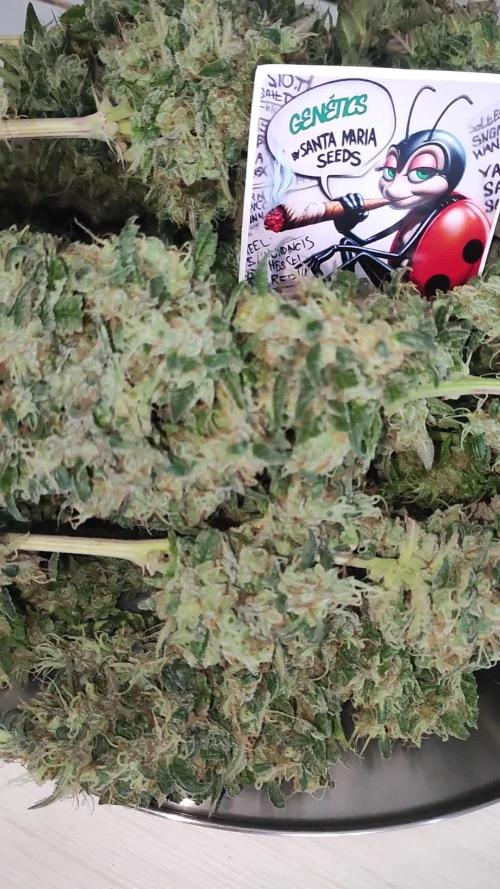
Harvested today, truly strong smell, cultivation was absolutely perfect from start to finish. Very happy with the result, anxious for the drying and curing process! Thank you for following along.. 🤜🤛🌱🌿🌲


Likes
2
Share


@zeux_dar
Follow
This are slowly but the color and the leaves seen to be sativa and nice size of the leave. This time i put some top crop veg to estimulate the growing, i hope you enjoy the little videos.
