


Likes
Comments
Share


@Algar
Follow
Wanted to keep her growing until the end of the month but, mother nature had other plans. Woke up this morning and the buds where almost touching the ground. Still have 1/2 the plant left, will cut fown later today if more rain. Don’t have room to cure all at one time. Normally I cure outside, for now they’re in my bathroom and dressing room.😬Don’t know the wet weight for now since only cut 1/2 of the plant, but probably a good 4 or more kilos!😳
Finally, the sun has returned. Not hot though, but nice and sunny. Moved curing to outside for now. Last night we stayed high just from the aroma in the house. More to come when she dries.😍 Last plant totalled 2,005grams. 3 plant total 3,340 grams 😎

Likes
1
Share


@GregGrowsBlue
Follow
Second week of flushing. Took accurate measurements today. Tallest blueberry headband over 50 inches tall! The rest are coming in around 3 feet.
Took microscopic photos of the tricomes today. Some appear to be milky, while others seem to be transitioning to amber while some are still clear and transitioning to milky.
Thoughts?
Likes
27
Share

@Cyrusdavirus
Follow
Hello y'all 👋
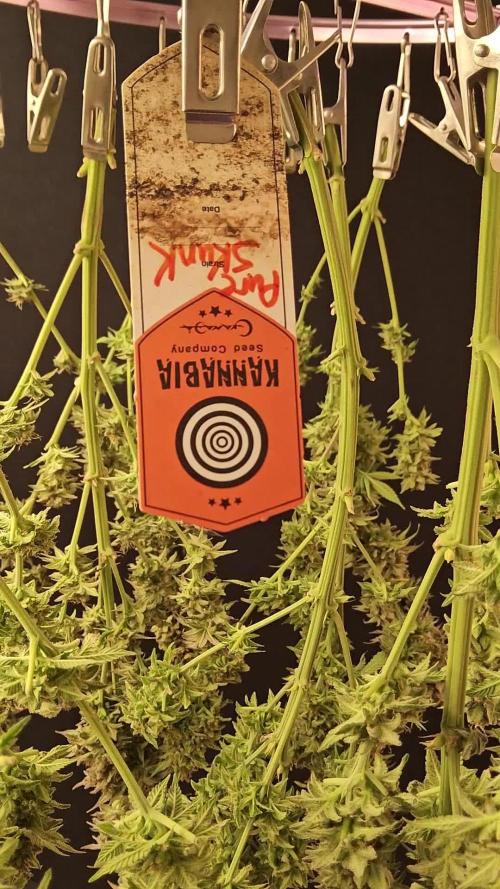
Obviously this one is chopped and hanging out by her toes 😎🔥❄️ she is a beauty even upside down
There are only a few left to harvest. I am working on them as they get ripe and I will continue to do the defoliation on them to prepare them for the chop ?🌴
Thanks so much for visiting the growroom...Cyrus
PS: again I apologize for missing last week's update and now being late this week. I'm starting to feel a bit better but need surgery in hopes to fix the problem

Likes
7
Share


@Cultivatorcarlos
Follow
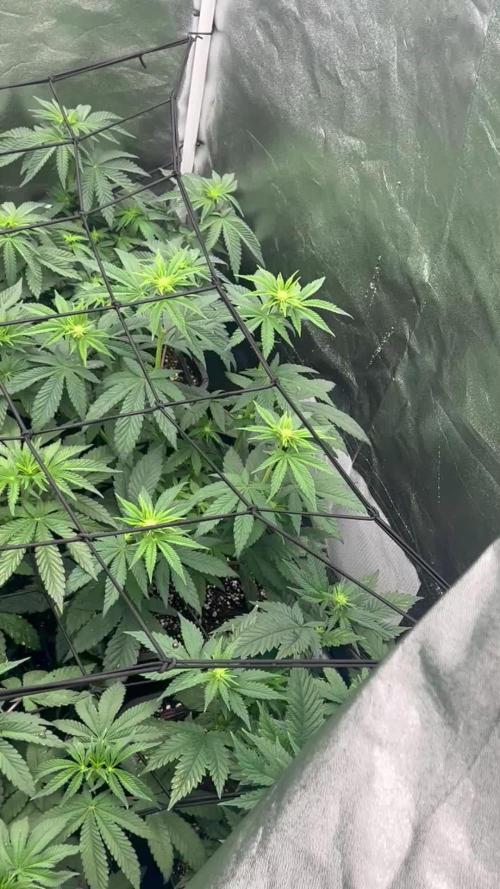
december 14th gave her a feed of about 6 cups of dechlorinated tap water phd to 6.4 with 1/2 tsp of veg nutes to 3 gallons and 4 2 tsps of calmag to 3 gallons of water. I thought she was initially getting a calmag deficiency but it was just her switching to flower and needing diff nutes ig? I also tested runoff for the first time which i should've done from the beginning but it came out at 6.3 ph
december 17th 2021: gave her half a gallon of dechlorinated tap water phd to 6.4 with 1/2 tsp of veg nutes to each 3 gallons of water and 2 tsps of calmag to 3 gallons of water.




Likes
Comments
Share


Likes
6
Share


@GrowerGaz
Follow
Day 52 today
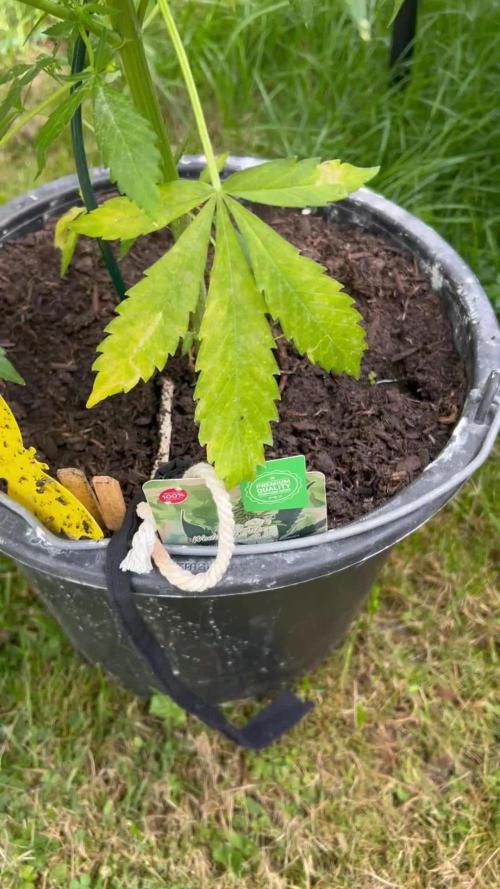
Been a rough week , as was extremely hot 30+ in the tent for two days and the big SNS really dried out. I have given it some BAC organic PK boost to help it recover. The other SNS was fine as this did not dry out as much and the blackberry gum, was also fine. This has grown into a decent size plant resin has been developing nicely. The two sns smell quite different one sweet grape, the taller one and one really sour the short one.
Cheesy is 10 days behind and is an odd shape. At the first internode site , it put one stem out on one side and two stem out directly opposite.
I am happy enough the big greedy sns which is the ripest will get some extra iguana juice and another dose of pk booster this week.


Processing
Likes
10
Share


@LoveBud90
Follow
So first week of flower or pre flower maybe?? But whatever it is they are now outside and getting direct sunlight from about 10am to 4pm and loving it. They started off this week looking a little yellow on the new growth but by Wednesday all the leaves are nice and green. Got the day off tomorrow so think I'll do a light defol and have another look at the lst wires.
The mother of this clone is about a week away from harvest (my first ever harvest!!) And she smells great, everytime I walk outside. Looking forward to a comparison, my first soil harvest and my first hempy 1 after another.
So I just got 2 feeds in this week, had some rain which kept the coco moist for longer so now we wait.
Thanks for stopping in 👍


Likes
8
Share

@Greybeardbud
Follow
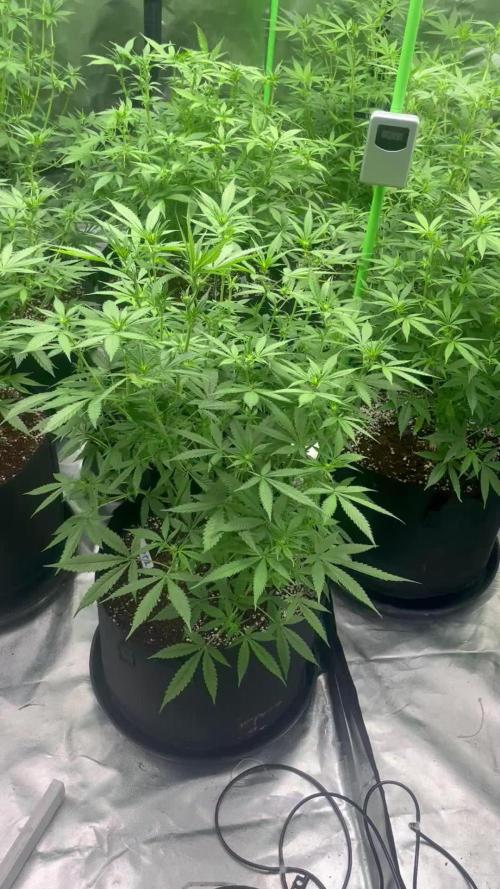
Start of week 10 am amazed at their transition, gave them a light trim last night to allow some light through. All 8 have pistils but we have 1 that is developing slower with only a few on it, the rest are covered in pre flowers.
Have increased feeding to 3L per day and barely getting any runoff. Gradually increasing the volume to achieve 10-20%. It appears that once everything is dialled in they get hungry!
Increased feeding to 4 litres daily 6 out of 8 plants had less than 50ml runoff, next feed will increase to 5L, the other 2 I will keep at 4L as they had good runoff. PH was on the higher side on the smaller ones so will do a drip clean mix to flush out the salts
May have a male or hermie in there not sure yet I thought I’d seen pistils but not so sure now… while the others are covered in pre flowers this one just isn’t the same.. who knows maybe a late bloomer?
Confirmed 24 hrs later definitely a rooster in the hen house. Chopped his neck! Started with 10.. now 7 remain. Silver linings is the girls have more breathing room now
Likes
11
Share


@Inceptionist
Follow
Soo, I think I can start to call it the first week of flower. #2 definitely is showing a few white pistols, #1 is just starting her first set and I'm pretty sure #3 will shoot them out any day!
Also seems that removing the lowest two side branches of #1 was a huge success! She basically is the same hight as the others BUT I LST her a bit to expose the smallest side branches out of the three to more light! Also, I put a little elevation for her, so they stay the same high.
#3 is doing #3 things and continues to grow rapidly. Topping her was the right move I think.
I'm quite new to autoflowers (I mean pretty much in general but I had one random regular seed run before this but that's it) so I hope, I didn't call it too early but I'm positive:)
Also my new microscope and the Blumat drip irrigation system finally arrived. I heard it can be a bit tricky to get it running but once it runs, it should run like a charm. Very very excited for this since I'm planning on going living soil in the future, which should fit very well together.
Before installing the system, I removed the first set of true leaves of #1 and buried the wounds in soil. I hope she will build roots there.
With #2 I took scissors and scratched up the main stem and filled it up with soil. As well I hope for more root growth. #3 just got a little bit more soil without any extras because of the topping.
After doing all that, I watered with the BioEnhancer. I took 0,5g/l and around 1,5l in total.
Quite a lot of update for just one day haha. Flowerpower baby!
Didn't really have the time for further updates besides pictures. I did defoliate all 3 a little bit and keep fine tuning the Blumat. I think it's working quite well so far.
#3 has some little spots looking different but nothing major I feel. I'm more worried about #2. Her tips start to yellow up a little. I hope it's because she grew too fast into the lights and now where I pulled lights back up to 35cm, she will be fine again
Likes
36
Share

@valiotoro
Follow
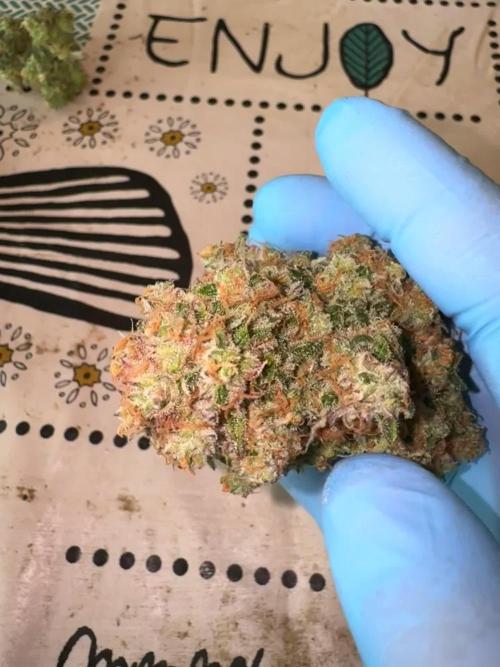
Super frosty & rock hard buds💥
Delicious terps🤤
Perfect buds leaf ratio
Likes
19
Share


@adam_pawloski87
Follow
This week went real well! All 5 of the Twenty20 Ogreberry Autos and the 1 Fastbuds Bruce Banner have successfully germinated and sprouted up from the soil!! This upcoming week we will start giving these girls a heavy feeding of nutrients PH d at 6.5 an see how they react , most likely will love it!! Temperature an humidity has been on point, through out the day we reach 70-75 degrees an a nice humidity of 65%which is always nice ! Hope you all enjoy an keep them eyes peeled for next week !! Peace, love, an positive vibes to all you Growmies out there! If any questions please feel free to ask , more then happy to help! Cheers everybody to another great grow!!!

Likes
34
Share


@PapaNugs
Follow
This was a quiet week. The girls were recovering from their topping but were also flipping into flower. They have been getting water every two days and that seems to be an issue so I bought an auto watering drip system to install next week.
The one I was most excited for this run has done very poorly since getting topped. That's depressing since the girls buds are already purple. Wanted to see how she grows but really might have stunted this one. Only time will tell.
Dimmed to 60%
Here are the lights details:
Medic Grow Mini Sun-2 150W LED
Model: MN150-022
Spectrum mode: V1
Efficacy: 2.8 umol/J
Thanks for stopping by!
You can find the light on Grow Diaries:
https://growdiaries.com/grow-lights/medic-grow/mini-sun-2-150-watts
You can find the light on Medic Grow's website:
https://medicgrow.com/
Likes
31
Share


@Dirty_Hippy
Follow
Sherbert Creamsicle is down!!!
Small buds, but lots of them.
BMX is just BEASTING away with arms of power. The resin is insane on these ladies.
She's beginning to slow and ripen now. No more nutrients, just a weekly worm casting/molasses tea to keep my soil healthy.
Processing
Likes
11
Share


@MRTHC
Follow
The ladies are doing well. Cant complain really but the hard work is yet to come. The different strains are getting bushy and the Blue Gelato #2 has the biggest canopy thus far. They all have been transplanted into 3gall pots. No strong smell even from stem rubbing but the orange Sherbet has a distinctive smell that's so citrusy. feeding has gone well this week. I may run into a pending issue when i bring out the 4x4 tent as I have been using a 2x2 for most of the veg period.Lets see what challenges week 8 brings to this run. The Vanilla Kush is taking training so well. So short and stumpy.

Likes
20
Share


@JohnnyBlaz3
Follow
This was a great experience and something I have looked forward to for 19 YEARS!!!!!! Thats right, my very first attempt was a summer when I was 14 in a backyard with mediocre results and no flower but that was my very first grow ever. 19 years later its fully legal and here I am getting 36 grams of decent bud grown by the sun in a very questionable cannabis climate!!! NO COMPLAINTS HERE!!!!!!!😋 This diary was never about getting giant buds or the best flowers but more about I'm growing ORGANIC PINEAPPLE EXPRESS IN MY BACKYARD literally a dream come true, to do this worry free, 100% legal. As far as the grow goes I will certainly have some new strategies next year, I think a plastic pot would have been better to keep the heat in at night time with the cool temps earlier on in summer. Maybe even some minor insulation would be a good idea?!?! I'll invent the canadian outdoor cannabis pot hahahah I did not scrog the lady but I did use some yoyos to pull down the outer branches to help the flowers get even light. Will try folair feeding as well next time. I also dried her outside! and trimmed her outside to, she got the full outdoor experience. I just cut the plant and hung her under the deck, worked out good as it was a fairly dry week and she dried out fairly slowly, a little quicker than the tent plants. Now in about a week or 2, maybe a small cure at least first I will be doing the end game goal, smoking endless doobies of pineapple express while watching pineapple express!!!!!!!!! Thanks everyone for following along, next year I hope to double this number!! Just for the challenge 😎
Likes
12
Share


@Tanjalope
Follow
Flushed all the girls this week seen to be getting close to harvest time now 😁😁 starting to notice more of a lovely smell this week 👌 all frosting over nicely and bulking up not sure if in going to make my target weight this time but should be some tasty smoke.
Got my missile 33 plant looking nice n bushy waiting for a space in the tent think she will be a lovely plant from what I've seen so far.
Roll on harvest time 🍁 peace


Likes
34
Share


@Mz876
Follow
This is week one of flower. It’s been one week since switching to a 12/12 light cycle and I’m seeing signs of flowering and a slight smell .
Likes
5
Share

@Sundancers
Follow
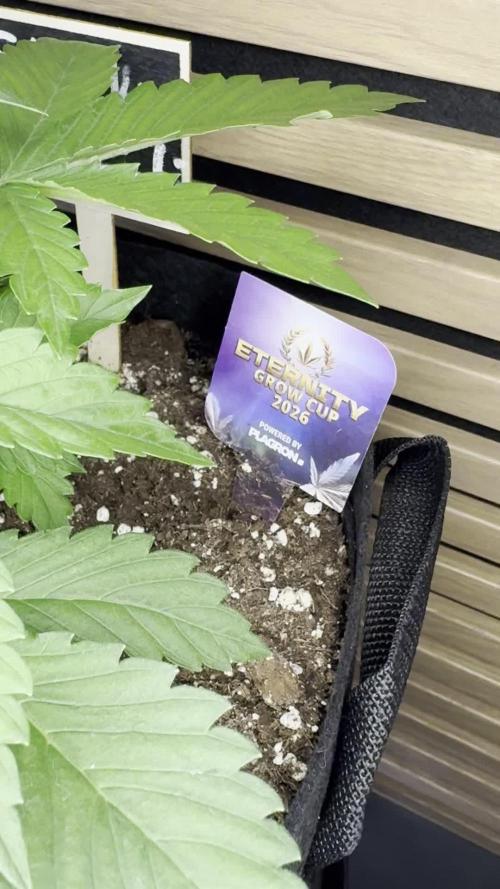
In Woche 3 hat die Sticky Broccoli ordentlich an Blattwerk und Biomasse zugelegt und zeigt sich insgesamt sehr vital. Die gesunde Blattfarbe bestätigt, dass sie sich rundum wohlfühlt und das Indica-typische Wachstum klar durchkommt. Getoppt wurde sie etwas später als üblich, was dem kräftigen Wuchs aber keinen Abbruch getan hat. Zusätzlich haben wir Cropping angewendet, um die starken Triebe kontrolliert nach unten zu biegen. Ganz ohne Drama ging es dabei nicht, ein kleiner Knacks war leider dabei, aber nichts, was die Pflanze ernsthaft beeindrucken sollte. Die Triebe sind inzwischen weit genug entwickelt, um mit dem Mainlining zu starten. Aktuell bleiben drei Nodien mit insgesamt sechs Trieben stehen. Insgesamt ein sehr solider Stand in Woche 3 mit viel Potenzial für eine saubere Struktur in den kommenden Wochen.