Likes
Comments
Share
@Algar
Follow
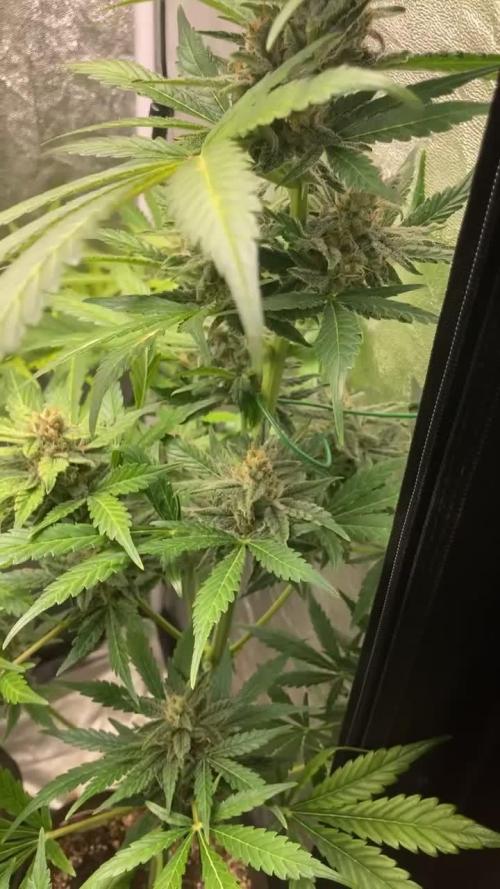
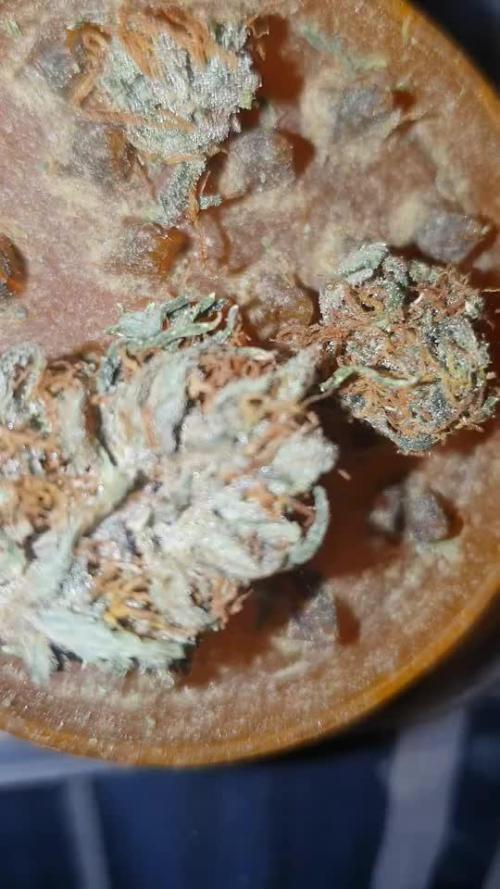
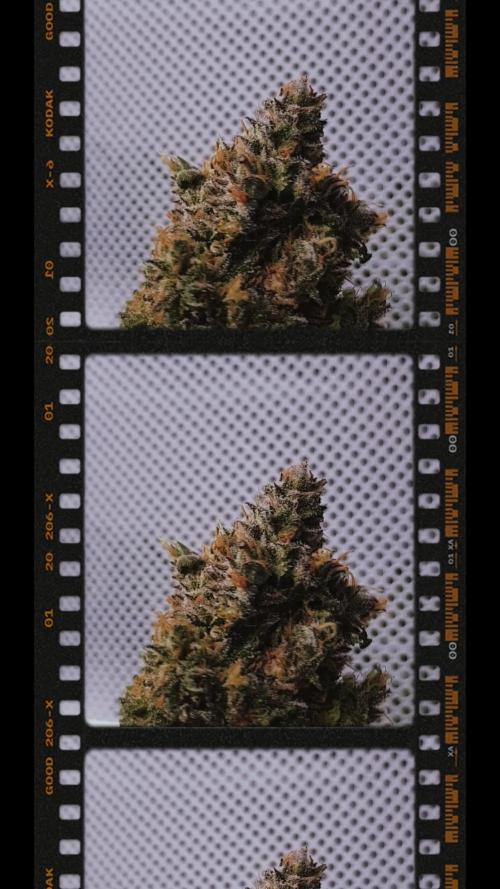
Wanted to keep her growing until the end of the month but, mother nature had other plans. Woke up this morning and the buds where almost touching the ground. Still have 1/2 the plant left, will cut fown later today if more rain. Don’t have room to cure all at one time. Normally I cure outside, for now they’re in my bathroom and dressing room.😬Don’t know the wet weight for now since only cut 1/2 of the plant, but probably a good 4 or more kilos!😳 Finally, the sun has returned. Not hot though, but nice and sunny. Moved curing to outside for now. Last night we stayed high just from the aroma in the house. More to come when she dries.😍 Last plant totalled 2,005grams. 3 plant total 3,340 grams 😎
Likes
20
Share
In 1995, scientists placed human DNA inside a sealed, air tight tube with photons. Without the DNA, the photons arranged themselves in a random scattered patter, but when the DNA was inserted, the photons formed an alignment. Reflect On: Are there metaphysical, multidimensional aspects to our DNA? Have we just begun to understand what DNA is and what it represents? Vladimir Poponin is a well known Russian scientist who in 1995, with his colleagues, including biophysicist Peter Gariaev, conducted a very interesting experiment during their time at the Russian Academy of Sciences. In their paper (P.P. Gariaev and V.P. Poponin. Vacuum DNA phantom effect in vitro and its possible rational explanation. Nanobiology 1995 (in press)), Poponin states, in the introduction of the report, that, “We believe this discovery has tremendous significance for the explanation and deeper understanding of the mechanisms underlying subtle energy phenomena including many of the observed alternative healing phenomena.” Why did he feel this way? We will get to that. Poponin and Gariaev tested the behaviour of DNA on photons, little tiny bits of matter, in the “quantum” that our world is made up of. They put photons into a tube specially designed to simulate a vacuum, just like the vacuum of space. With no air inside, they inserted the photons as they wanted to see what they did and how they behaved. The photons were distributed in a way that was completely unordered and random, scattered all over the container. This of course was what the team of researchers expected. Next, samples of human DNA were placed inside the tube with the photons, and what happened next is what’s truly mysterious. The photons reacted to the DNA, and changed their pattern and formed a specific alignment. In the presence of living material, the human DNA, the photons organized! This signified that the DNA was clearly having a direct influence over the photons. It’s one of many examples hypothesizing that something within us has a direct affect on the physical material matter outside of us. This experiment was repeated and confirmed, and it was further observed that human DNA has a direct affect on the quantum ‘stuff’ that our world is made up of. Fascinating to say the least. The Next Big Surprise The next big surprise was observed when the researchers removed the DNA from the container. The scientists assumed that the photons would simply return to their original scattered state, but this didn’t happen. Instead, the photons remained ordered as if the DNA were still in the tube. Poponin described the light as behaving “surprisingly and counter-intuitively.” The researchers hypothesized and were “forced to accept the working hypothesis that some new field structure is being excited.” Is there something being left behind? Something in non-physical form? This experiment tells us that DNA is communicating with the ‘stuff’ our world is made of, and that there is some sort of invisible field that exists. Perhaps DNA represents a place of storage and communications to the past? To the future? To others in the universe who have left their mark, so to speak. Who knows. Quantum Physics and Consciousness Nobel laureate of the twentieth century Richard Feynman once said, with regards to quantum mechanics, “we choose to examine a phenomenon which is impossible, absolutely impossible, to explain in any classical way, and which has in it the heart of quantum mechanics. In reality, it contains the only mystery.” Another great quote that comes to mind anytime the world of science dives deep into the mysterious world of quantum physics: There seems to be a deep concern that the whole field will be tarnished by studying a phenomenon that is tainted by its association with superstition, spiritualism and magic. Protecting against this possibility sometimes seems more important than encouraging scientific exploration or protecting academic freedom. But this may be changing.” – Cassandra Vieten, PhD and President/CEO at the Institute of Noetic Sciences. The reason why the association with superstition, spiritualism and magic mentioned in the quote above exists when it comes to examining certain phenomenon is simply because the observed phenomenon is unexplainable. But it’s important to remember, just because something is unexplainable does not mean that it’s not real, it simply means we don’t fully understand it yet. Academia has a long history of rejecting phenomenon, that’s clearly real, yet simply unexplainable. Quantum physics clearly has a strong connection to consciousness, and metaphysical phenomenon. Max Planck, a physicist who originated quantum theory, regarded consciousness as “fundamental,” and matter as “derivative from consciousness.” He said that “we cannot get behind consciousness. Everything that we talk about, everything that we regard as existing, postulates consciousness.” This has been demonstrated quite clearly by multiple experiments, like the quantum double slit experiment. A paper published in the peer-reviewed journal Physics Essays by Dean Radin, PhD, explains how this experiment has been used multiple times to explore the role of consciousness in shaping the nature of physical reality. (source) In this experiment, a double-slit optical system was used to test the possible role of consciousness in the collapse of the quantum wave-function. Photons were shot through two slits, in multiple different ways. The study found that factors associated with consciousness “significantly” correlated in predicted ways with perturbations in the double slit interference pattern. In this experiment, tiny bits of matter (photons, electrons, or any atomic-sized object) are shot towards a screen that has two slits in it. On the other side of the screen, a high tech video camera records where each photon lands. When scientists close one slit, the camera will show us an expected pattern, as seen in the video below. But when both slits are opened, an “interference pattern” emerges — they begin to act like waves. You can refer to the actual study to find out more about that. If you want to see a visual demonstration of the quantum double slit experiment. The point is, consciousness changes the behaviour of the particles. “Observation not only disturbs what has to be measured, they produce it. We compel the electron to assume a definite position. We ourselves produce the results of the measurement.” The study sourced above points out that “factors associated with consciousness, such as meditation experience, electrocortical markers of focused attention, and psychological factors including openness and absorption, significantly correlated in predicted ways with perturbations in the double-slit interference pattern. The results appear to be consistent with a consciousness-related interpretation of the quantum measurement problem.” The Takeaway DNA is fascinating, and it’s probably the least understood part of our biology. There are definitely interesting metaphysical non-material aspects to our DNA, and changes to our DNA can come as a result of our thoughts, feelings and emotions alone. HeartMath researchers have shown that physical aspects of DNA strands could be influenced by human intention. The article, Modulation of DNA Conformation by Heart-Focused Intention – McCraty, Atkinson, Tomasino, 2003 – describes experiments that achieved such results.
Likes
13
Share
@Drawer
Follow
Its been pretty smooth this week, only mistake was that the light was to close so I got lightburn and bleaching on 2 tops, lesson learned. The SF4000 is still put at 85% and im still slowly cutting down the nitrogen, im currently feeding 2:1:1 ratio of (4-18-38/magnesium sulphate/calcium nitrate)
Processing
Likes
44
Share
@I_and_I
Follow
First grow completed, turned out far better than I could ever have hoped, the plants totally bossed it for all the winging it and improvising I put them through, but we got there in the end haha, Looking forward to next grow, can't wait to enjoy using all good genetics, already have some Bruce banner #3 seeds ready to roll out :) Thanks for reading
Likes
223
Share
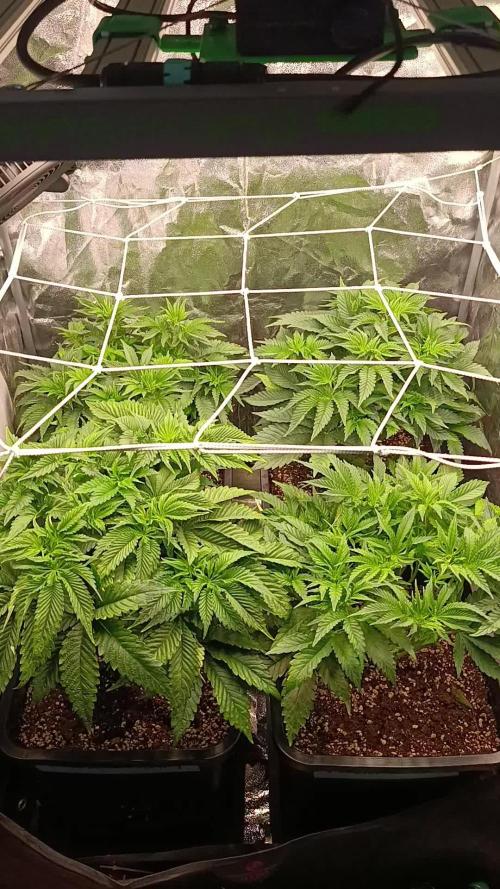
First pistils started showing on the canopy so the flowering period timer started this week. Tops are looking good, forming shape across the net. Stretched branches are being tucked one square across every 3-4 days or tied down. Pulled down most lateral branches applying LST where they weren't long enough to nicely go under the next square across of the net. The net is filling up nicely, with more pruning below the canopy of growth tips. Only pruning a few fan leaves which are stacking - the back and sides are piled up with huge fan leaves. Fertigating with an inflow EC of >1.35 seems to be moving the run-off EC higher - will maintain higher inflow EC until run-off is within acceptable range. Run-off EC Should be within 300 Points of Inflow EC. Run-off EC is now approaching my target since I've increased the inflow EC. Tracking run-off volume/EC/pH at every fertigation event as I manage the feed EC to monitor what the plant is doing/feeding. Fertigation is maintained now to once a day (at lights on) to maintain the target EC. Light period is during the night time to better maintain heat/humidity conditions during light off period (which happens during daytime). ----------------------------------------------------------------------------------------------------------------------------------------------------------------------------------------------------------------------- The grow setup includes ; - Secret Jardin DS120W tent (120cm x 60cm x 180cm) placed inside the bedroom - Mars Hydro SP250 LED light - extraction fan - AC Infinity Cloudline T6 (gives me great control over the environment) - ventilation fans - aquarium heater for nutrients solution (for winter use only) - small oil heater (for winter use only) - small dehumidifier - 20L Airpots (as final pots) and 3.5L general plastic pots (for seedling stage) - Canna Coco substrate mixed with 40% perlite - GHE Flora Trio as base nutrients and various additives - pH and EC/TDS meters - 2x Govee Thermo/Hygro meters (one at canopy, the other at the roots level - these allow for external monitoring and recording) ----------------------------------------------------------------------------------------------------------------------------------------------------------------------------------------------------------------------- Some strain info from Royal Queen Seeds ; An amazing mix of genetics background - Its true genetics are unknown. Some say OG Kush is a mix of ChemDawg with a Lemon Thai and Pakistani Kush. Others say that it’s just a special cutting of ChemDawg from the early 90s. The most obvious trait of OG Kush is its strong, unique, very dank, slightly citrus aroma, almost like fuel or strong detergent. The flavour of OG Kush is equally as strong and dank, with a long-lasting aftertaste. Strong mental and physical high - OG Kush is an extremely strong cannabis strain, with most experienced smokers listing it as one of their favourites. The effect is as strong physically as it is mentally. Though its effect is like an Sativa, the strain's genetics are mostly Indica. The effect is as strong and complex as the flavour. OG Kush takes around 8 weeks to flower and on average the yield is 500 grams per plant.
Likes
19
Share
@Budha420
Follow
GOOD MORNING VIETNAM😈💚 Week 6 Day 35: Pics from this noon. Mutants main cola is strecthing like crazy😁 like 30 cm in a week. Not as many white pistils as the other 2 girls. Tb; i topped the 2 other ones. I'm lil worried mutant cola will continue streching till it hits light😁 they continue drinking lots of nute water and no complaints yet😎 One love 💚 Day 37: no nute burn!! I was fully expectin bad nute burn when i fed them on 1600ppm😁 but they seemed to be ok with it ä, although i gave them ph water the next day (36). I might be dumb but seeing the girls are not showing any sings of slowing down or nute burning and all checks out, i gave 900ppm feeding. ( All cal w 0.5 ). Colas have starting to see first snow💚 Day 38: Morning fellow greenthumbs💚 Today i defoliated #3 mutant, did some lst aswell. Gave feeding of 1.9 ec ph 5.7. checked runoff and came as 6.3 and ec 1.9 (might be high from 1600ppm feed😂) no signs of lockout or burns👌👌snapped brach yesterday cos forgot not to train after watering🙁 but got it taped up really quickly and seems like it has maked a recovery😇 Day 39: Had quite busy day as i germinated 2 other strains so no pics. Gave girls ph water of 5.9, 1.8L per gal. No news, mutant is streching but 1 and 2 are full flower and fattening sites😎💚 Day 40: gave #3 and #1 feeding and ph 6.3. skipped plant 2 cos pot was heavy and had still lil bit of runoff. Amazing budsite and frostness development! Even the fan leaves are getting real frosty❄️😎 Day 43: All good , giving 5.9ph 900ppm feedings and check runoff. Beatiful snowy tops😍
Likes
31
Share
@Alex8o
Follow
Plants are growing well. Actually,i'm watering with bottled water only for best supersoil activation (6.8ph). I mixed 450grams of gurumix Bloom,100gr. Of a custom supersoil for grow made with guanokalong products ,50gr.of Bat guano ,4tbs mycos,2tbs azos. Used soft soap for prevention. Sorry for my english 😉
Likes
5
Share
@Ninefold
Follow
I'm afraid the Raspberry Pi's time got reset somehow resulting in the timelapse being taken mostly at night rather than during the day, which means there aren't a lot of usable photo's :(.
Likes
14
Share
@MG2009
Follow
05/27/2021 Its been a while but all is well, the red light only seems to have encouraged lots of new growth. But I think I'm going to stick with 25-50% blue spectrum and 100% red for the finish. I'm kind of disappointed that she has no distinguishing smell, but she was bred for resistance to PM specifically. All the good stuff will come once i have stabilized consistent PM resistance. (Work in progress) Then the good stuff will be worked in..... If needed. Ps. I do believe it will likely be 12+ weeks of flowering to finish (Hope she has a racy/trippy sativa side) fingers crossed🙏
Processing
Likes
1
Share
@clstr8
Follow
Pretty easy week all around for all my plants. Bud sites are getting bigger and actually getting a little frosty. Gonna be exciting to watch the next few weeks.
Likes
13
Share
Last final defoliation done, now buds are fully exposed to the lights and the best part, harvest trim will be easier. Still it took me around 8 h altogether to defoliate all of them. Tones of buds and frost , amazing smells. Won't rush will give it a bit more to swell.
Likes
13
Share
@Leanback
Follow
Still waiting… the flowers are growing and some tricomes getting cloudy.
Likes
8
Share
Likes
13
Share
@Guillhemp
Follow
Han estado creciendo 4 semanas (1Mes) con tan solo 260w full spectrum LED. Hoy las paso a floración y aumento hasta 611W añadiendo los COB.💪
Likes
7
Share
Hey guys :-) It's about time that space in the flowering tent becomes available because the ladies are getting extremely bushy and big 👍😂. was poured this week 2 times with 1 l. Have fun and stay healthy 🙏🏻💚 👇🏼👇🏼👇🏼👇🏼👇🏼👇🏼👇🏼👇🏼👇🏼👇🏼👇🏼👇🏼 ‘Powered by GreenHouse Feeding’ Copy the link for 10% off all Nutrients 👇🏼 http://shop.greenhousefeeding.com/ affiliate/madelngermany_passiongrower/ 👇🏼👇🏼👇🏼👇🏼👇🏼👇🏼👇🏼👇🏼👇🏼👇🏼👇🏼👇🏼 You can buy this strain at : https://www.thegratefulseeds.com/shop/feminized-seeds/one-shot-edition/zhead/ Water 💧 💧💧 Osmosis water mixed with normal water (24 hours stale that the chlorine evaporates) to 0.2 EC. Add Cal / Mag to 0.4 Ec Ph with Organic Ph - to 5.8 - 6.4 MadeInGermany
Likes
60
Share
@squalino
Follow
​Journal de Culture : Frost 1 – "Dora" (Plein Boom de Floraison) ​Génétique : Frostbanger (F2 Perso) | Système : Autopot 20L ​📣 Remerciements Un immense merci à toutes les personnes qui suivent ce journal depuis le début ! Un merci tout particulier à @MIA_BIOTABS et à Mrs_Larimar pour leurs précieux conseils et leur accompagnement. Merci à tous pour votre soutien ! ​🛠️ Configuration Technique & Ajustements Climat ​Éclairage : Lumatek ATS 300W Pro (réglé à 75%) ​Distance lampe/canopée : 55 cm (rapprochée pour maximiser la pénétration lumineuse sur les buds) ​Climat : Jour : 25°C / Nuit : 21°C ​Humidité (HR) : 60% 📈 (Légère hausse de l'humidité ambiante, très probablement liée à l'évaporation constante du système Autopot et du réservoir). ​Action Climat : Allumage du déshumidificateur pour sécuriser la zone et garder le contrôle sur cette fin de floraison. ​Tente : 1m80 de hauteur ​📅 Évolution & Entretien : Ça gonfle sévère pour Dora ! ​État de la plante & Structure : La Frost 1 a encaissé un stretch impressionnant par rapport aux semaines précédentes (+40cm.)La tête principale culminait à 93 cm, mais après un gros travail de LST pour harmoniser la canopée, la plante se stabilise à 80 cm. ​Observation morphologique : On constate qu'elle a développé moins de branches secondaires que sa sœur jumelle (qui est accompagnée de Babouche). La raison est simple : Dora est placée plus près de la MAC 1, qui a pris pas mal de lumière et d'espace, limitant légèrement ses ramifications latérales. La structure reste néanmoins très longiligne et prometteuse. ​Repère visuel : Pour ne plus me perdre dans les photos entre les deux plantes, j'ai installé une figurine de Dora ( mon gnome) à son pied ! ​Gestion du système & Prochaine nutrition : ​Action du matin : J'ai coupé l'arrivée d'eau de l'Autopot. ​Stratégie : Comme pour les étapes précédentes, j'attends que le pot sèche bien et s'allège. C'est l'étape cruciale pour préparer le terrain avant de lui envoyer le combo de choc : le Bio PK 5-8 de Biotabs. le 21/05 Apport de 0,75 cl d'eau avec 4 ml de PK 5-8 biotabs PH 6,3 ​ État des fleurs : Les têtes ont déjà bien gonflé, les pistils sont bien blancs et la structure des buds est compacte. on distingue une diference de couleur au niveau des bourgeons. sa sœur devient violette et elle reste verte Les photos montrent une belle promesse de résine ("Frost") à venir. ​On laisse le substrat respirer un bon coup et on passe aux choses sérieuses avec le PK dès que Dora a soif !
Processing
Likes
13
Share
@Hawkbo
Follow
Sorry for the delay was in a wedding this weekend came home and been trimmin like a dog the past few days but I gotta feed everything in this tent tmm so I'm gunna get some pics. If your interested in the pics come back tmm night. The only 3 autos in 1 gal bags are the mexican airlines, pineapple express and blue dreamatic. Theyll stay pretty small and dry out quick so they are tough to keep up with cuz I only feed when I'm feeding the big ones. I dont mix up separate batches for these I just dilute the big batch which is usually 10-13 gal at a time
Likes
10
Share
Este año vamos a cultivar unas semillas test por cortesia de Paradise seeds Estos son los datos que tengo de las variedades #1051: Indica strain which stays small. #3951: Hybrid strain. #4251: Higher plant which is more Sativa than Indica. #3551: Hybrid plant with skunk, which grows rather quick and is purple colored El proyecto A va a estar en un tipo de condiciones diferentes al proyecto B
Likes
25
Share
ANTHOCYANIN production is primarily controlled by the Cryptochrome (CR1) Photoreceptor ( !! UV and Blue Spectrums are primary drivers in the production of the pigment that replaces chlorophyll, isn't that awesome! 1. Diverse photoreceptors in plants Many civilizations, including the sun god of ancient Egypt, thought that the blessings of sunlight were the source of life. In fact, the survival of all life, including humans, is supported by the photosynthesis of plants that capture solar energy. Plants that perform photosynthesis have no means of transportation except for some algae. Therefore, it is necessary to monitor various changes in the external environment and respond appropriately to the place to survive. Among various environmental information, light is especially important information for plants that perform photosynthesis. In the process of evolution, plants acquired phytochrome, which mainly receives light in the red light region, and multiple blue light receptors, including his hytropin and phototropin, in order to sense the light environment. .. In addition to these, an ultraviolet light receptor named UVR8 was recently discovered. The latest image of the molecular structure and function of these various plant photoreceptors (Fig. 1), focusing on phytochrome and phototropin. Figure 1 Ultraviolet-visible absorption spectra of phytochrome, cryptochrome, phototropin, and UVR8. The dashed line represents each bioactive absorption spectrum. 2. Phytochrome; red-far red photoreversible molecular switch What is phytochrome? Phytochrome is a photochromic photoreceptor, and has two absorption types, a red light absorption type Pr (absorption maximum wavelength of about 665 nm) and a far-red light absorption type Pfr (730 nm). Reversible light conversion between the two by red light and far-red light, respectively(Fig. 1A, solid line and broken line). In general, Pfr is the active form that causes a physiological response. With some exceptions, phytochrome can be said to function as a photoreversible molecular switch. The background of the discovery is as follows. There are some types of plants that require light for germination (light seed germination). From that study, it was found that germination was induced by red light, the effect was inhibited by subsequent far-red light irradiation, and this could be repeated, and the existence of photoreceptors that reversibly photoconvert was predicted. In 1959, its existence was confirmed by the absorption spectrum measurement of the yellow sprout tissue, and it was named phytochrome. Why does the plant have a sensor to distinguish between such red light and far-red light? There is no big difference between the red and far-red light regions in the open-field spectrum of sunlight, but the proportion of red light is greatly reduced due to the absorption of chloroplasts in the shade of plants. Similar changes in light quality occur in the evening sunlight. Plants perceive this difference in light quality as the ratio of Pr and Pfr, recognize the light environment, and respond to it. Subsequent studies have revealed that it is responsible for various photomorphogenic reactions such as photoperiodic flowering induction, shade repellent, and deyellowing (greening). Furthermore, with the introduction of the model plant Arabidopsis thaliana (At) and the development of molecular biological analysis methods, research has progressed dramatically, and his five types of phytochromes (phyA-E) are present in Arabidopsis thaliana. all right. With the progress of the genome project, Fi’s tochrome-like photoreceptors were found in cyanobacteria, a photosynthetic prokaryotes other than plants. Furthermore, in non-photosynthetic bacteria, a homologue molecule called bacteriophytochrome photoreceptor (BphP) was found in Pseudomonas aeruginosa (Pa) and radiation-resistant bacteria (Deinococcus radiodurans, Dr). Domain structure of phytochrome molecule Phytochrome molecule can be roughly divided into N-terminal side and C-terminal side region. PAS (Per / Arndt / Sim: blue), GAF (cGMP phosphodiesterase / adenylyl cyclase / FhlA: green), PHY (phyto-chrome: purple) 3 in the N-terminal region of plant phytochrome (Fig. 2A) There are two domains and an N-terminal extension region (NTE: dark blue), and phytochromobilin (PΦB), which is one of the ring-opening tetrapyrroles, is thioether-bonded to the system stored in GAF as a chromophore. ing. PAS is a domain involved in the interaction between signal transduction-related proteins, and PHY is a phytochrome-specific domain. There are two PASs and her histidine kinase-related (HKR) domain (red) in the C-terminal region, but the histidine essential for kinase activity is not conserved. 3. Phototropin; photosynthetic efficiency optimized blue light receptor What is phototropin? Charles Darwin, who is famous for his theory of evolution, wrote in his book “The power of move-ment in plants” published in 1882 that plants bend toward blue light. Approximately 100 years later, the protein nph1 (nonphoto-tropic hypocotyl 1) encoded by one of the causative genes of Arabidopsis mutants causing phototropic abnormalities was identified as a blue photoreceptor. Later, another isotype npl1 was found and renamed phototropin 1 (phot1) and 2 (phot2), respectively. In addition to phototropism, phototropin is damaged by chloroplast photolocalization (chloroplasts move through the epidermal cells of the leaves and gather on the cell surface under appropriate light intensity for photosynthesis. As a photoreceptor for reactions such as escaping to the side of cells under dangerous strong light) and stomata (reactions that open stomata to optimize the uptake of carbon dioxide, which is the rate-determining process of photosynthetic reactions). It became clear that it worked. In this way, phototropin can be said to be a blue light receptor responsible for optimizing photosynthetic efficiency. Domain structure and LOV photoreaction of phototropin molecule Phototropin molecule has two photoreceptive domains (LOV1 and LOV2) called LOV (Light-Oxygen-Voltage sensing) on the N-terminal side, and serine / on the C-terminal side. It is a protein kinase that forms threonine kinase (STK) (Fig. 4Aa) and whose activity is regulated by light. LOV is one molecule as a chromophore, he binds FMN (flavin mononucleotide) non-covalently. The LOV forms an α/βfold, and the FMN is located on a β-sheet consisting of five antiparallel β-strands (Fig. 4B). The FMN in the ground state LOV shows the absorption spectrum of a typical oxidized flavin protein with a triplet oscillation structure and an absorption maximum wavelength of 450 nm, and is called D450 (Fig. 1C and Fig. 4E). After being excited to the singlet excited state by blue light, the FMN shifts to the triplet excited state (L660t *) due to intersystem crossing, and then the C4 (Fig. 4C) of the isoaroxazine ring of the FMN is conserved in the vicinity. It forms a transient accretionary prism with the tain (red part in Fig. 4B Eα) (S390I). When this cysteine is replaced with alanine (C / A substitution), the addition reaction does not occur. The effect of adduct formation propagates to the protein moiety, causing kinase activation (S390II). After that, the formed cysteine-flavin adduct spontaneously dissociates and returns to the original D450 (Fig. 4E, dark regression reaction). Phototropin kinase activity control mechanism by LOV2 Why does phototropin have two LOVs? Atphot1 was found as a protein that is rapidly autophosphorylated when irradiated with blue light. The effect of the above C / A substitution on this self-phosphorylation reaction and phototropism was investigated, and LOV2 is the main photomolecular switch in both self-phosphorylation and phototropism. It turns out that it functions as. After that, from experiments using artificial substrates, STK has a constitutive activity, LOV2 functions as an inhibitory domain of this activity, and the inhibition is eliminated by photoreaction, while LOV1 is kinase light. It was shown to modify the photosensitivity of the activation reaction. In addition to this, LOV1 was found to act as a dimerization site from the crystal structure and his SAXS. What kind of molecular mechanism does LOV2 use to photoregulate kinase activity? The following two modules play important roles in this intramolecular signal transduction. Figure 4 (A) Domain structure of LOV photoreceptors. a: Phototropin b: Neochrome c: FKF1 family protein d: Aureochrome (B) Crystal structure of auto barley phot1 LOV2. (C) Structure of FMN isoaroxazine ring. (D) Schematic diagram of the functional domain and module of Arabidopsis thaliana phot1. L, A’α, and Jα represent linker, A’α helix, and Jα helix, respectively. (E) LOV photoreaction. (F) Molecular structure model (mesh) of the LOV2-STK sample (black line) containing A’α of phot2 obtained based on SAXS under dark (top) and under bright (bottom). The yellow, red, and green space-filled models represent the crystal structures of LOV2-Jα, protein kinase A N-lobe, and C-robe, respectively, and black represents FMN. See the text for details. 1) Jα. LOV2 C of oat phot1-to α immediately after the terminus Rix (Jα) is present (Fig. 4D), which interacts with the β-sheet (Fig. 4B) that forms the FMN-bound scaffold of LOV2 in the dark, but unfolds and dissociates from the β-sheet with photoreaction. It was shown by NMR that it does. According to the crystal structure of LOV2-Jα, this Jα is located on the back surface of the β sheet and mainly has a hydrophobic interaction. The formation of S390II causes twisting of the isoaroxazine ring and protonation of N5 (Fig. 4C). As a result, the glutamine side chain present on his Iβ strand (Fig. 4B) in the β-sheet rotates to form a hydrogen bond with this protonated N5. Jα interacts with this his Iβ strand, and these changes are thought to cause the unfold-ing of Jα and dissociation from the β-sheet described above. Experiments such as amino acid substitution of Iβ strands revealed that kinases exhibit constitutive activity when this interaction is eliminated, and that Jα plays an important role in photoactivation of kinases. 2) A’α / Aβ gap. Recently, several results have been reported showing the involvement of amino acids near the A’α helix (Fig. 4D) located upstream of the N-terminal of LOV2 in kinase photoactivation. Therefore, he investigated the role of this A’α and its neighboring amino acids in kinase photoactivation, photoreaction, and Jα structural change for Atphot1. The LOV2-STK polypeptide (Fig. 4D, underlined in black) was used as a photocontrollable kinase for kinase activity analysis. As a result, it was found that the photoactivation of the kinase was abolished when amino acid substitution was introduced into the A’α / Aβ gap between A’α and Aβ of the LOV2 core. Interestingly, he had no effect on the structural changes in Jα examined on the peptide map due to the photoreaction of LOV2 or trypsin degradation. Therefore, the A’α / Aβ gap is considered to play an important role in intramolecular signal transduction after Jα. Structural changes detected by SAXS Structural changes of Jα have been detected by various biophysical methods other than NMR, but structural information on samples including up to STK is reported only by his results to his SAXS. Not. The SAXS measurement of the Atphot2 LOV2-STK polypeptide showed that the radius of inertia increased from 32.4 Å to 34.8 Å, and the molecular model (Fig. 4F) obtained by the ab initio modeling software GASBOR is that of LOV2 and STK. It was shown that the N lobes and C lobes lined up in tandem, and the relative position of LOV2 with respect to STK shifted by about 13 Å under light irradiation. The difference in the molecular model between the two is considered to reflect the structural changes that occur in the Jα and A’α / Aβ gaps mentioned above. Two phototropins with different photosensitivity In the phototropic reaction of Arabidopsis Arabidopsis, Arabidopsis responds to a very wide range of light intensities from 10–4 to 102 μmol photon / sec / m2. At that time, phot1 functions as an optical sensor in a wide range from low light to strong light, while phot2 reacts with light stronger than 1 μmol photon / sec / m2. What is the origin of these differences? As is well known, animal photoreceptors have a high photosensitivity due to the abundance of rhodopsin and the presence of biochemical amplification mechanisms. The exact abundance of phot1 and phot2 in vivo is unknown, but interesting results have been obtained in terms of amplification. The light intensity dependence of the photoactivation of the LOV2-STK polypeptide used in the above kinase analysis was investigated. It was found that phot1 was about 10 times more photosensitive than phot2. On the other hand, when the photochemical reactions of both were examined, it was found that the rate of the dark return reaction of phot1 was about 10 times slower than that of phot2. This result indicates that the longer the lifetime of S390II, which is in the kinase-activated state, the higher the photosensitivity of kinase activation. This correlation was further confirmed by extending the lifespan of her S390II with amino acid substitutions. This alone cannot explain the widespread differences in photosensitivity between phot1 and phot2, but it may explain some of them. Furthermore, it is necessary to investigate in detail protein modifications such as phosphorylation and the effects of phot interacting factors on photosensitivity. Other LOV photoreceptors Among fern plants and green algae, phytochrome ɾphotosensory module (PSM) on the N-terminal side and chimera photoreceptor with full-length phototropin on the C-terminal side, neochrome (Fig. There are types with 4Ab). It has been reported that some neochromes play a role in chloroplast photolocalization as a red light receiver. It is considered that fern plants have such a chimera photoreceptor in order to survive in a habitat such as undergrowth in a jungle where only red light reaches. In addition to this, plants have only one LOV domain, and three proteins involved in the degradation of photomorphogenesis-related proteins, FKF1 (Flavin-binding, Kelch repeat, F-box 1, ZTL (ZEITLUPE)), LKP2 ( There are LOV Kelch Protein2) (Fig. 4Ac) and aureochrome (Fig. 4Ad), which has a bZip domain on the N-terminal side of LOV and functions as a gene transcription factor. 4. Cryptochrome and UVR8 Cryptochrome is one of the blue photoreceptors and forms a superfamily with the DNA photoreceptor photolyase. It has FAD (flavin adenine dinucle-otide) as a chromophore and tetrahydrofolic acid, which is a condensing pigment. The ground state of FAD is considered to be the oxidized type, and the radical type (broken line in Fig. 1B) generated by blue light irradiation is considered to be the signaling state. The radical type also absorbs in the green to orange light region, and may widen the wavelength region of the plant morphogenesis reaction spectrum. Cryptochrome uses blue light to control physiological functions similar to phytochrome. It was identified as a photoreceptor from one of the causative genes of UVR8 Arabidopsis thaliana, and the chromophore is absorbed in the UVB region by a Trp triad consisting of three tryptophans (Fig. 1D). It is involved in the biosynthesis of flavonoids and anthocyanins that function as UV scavengers in plants. Conclusion It is thought that plants have acquired various photoreceptors necessary for their survival during a long evolutionary process. The photoreceptors that cover the existing far-red light to UVB mentioned here are considered to be some of them. More and more diverse photoreceptor genes are conserved in cyanobacteria and marine plankton. By examining these, it is thought that the understanding of plant photoreceptors will be further deepened.
Likes
2
Share
Well some information needs to be updated! But in the mean time I’ll leave this here to indicate false heights, temps and nutes are entered, basically copied from last upload. Anyways my dumbass didn’t have all my branches supported properly. So probably back on the night of 140 we had a violent wind storm. I got back on day 142 to make repairs and wash off the plants.