The Grow Awards 2026 🏆
Likes
Comments
Share
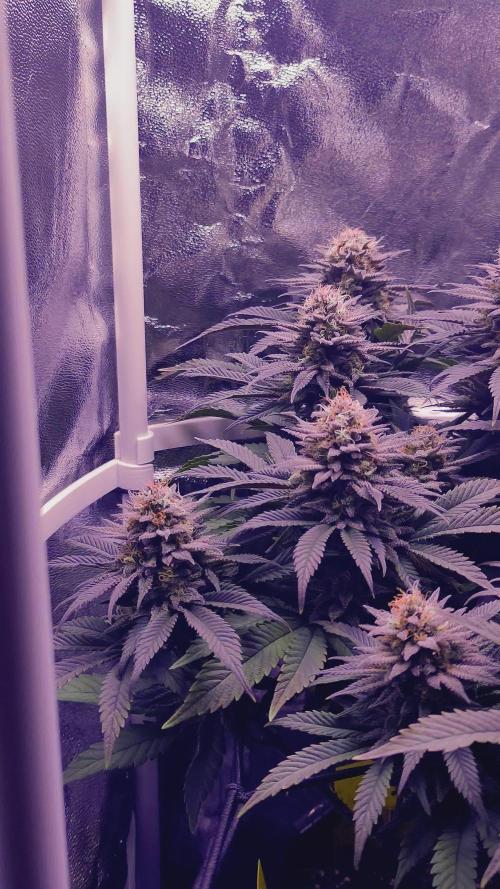
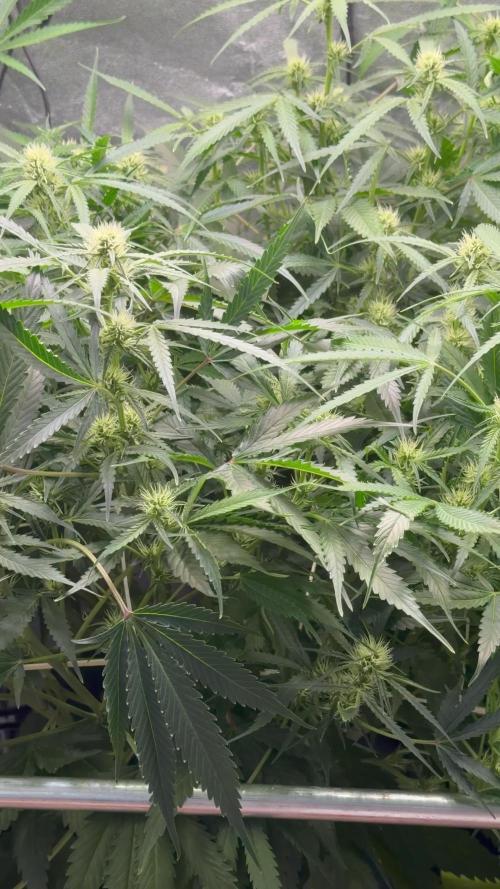
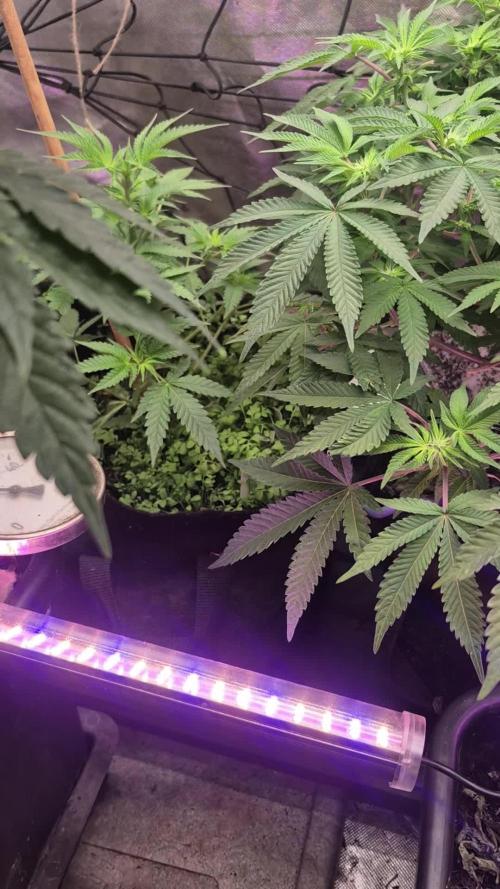
hello after 4 weeks of growth we have just changed the soil and put in new pots in 11 liters. the red tea I will make them myself in our mixture we have 60l of perlit 70l of coco 50l of soil and to finish 10l of hummus worms. i changed the lamp too we are now under the zeus at 25% to start I will increase in the days coming . to talk about the plants first of all thank you very much to sweet seed for collaborating with me I am very happy with the variety and their way of doing things. the plants they behave well except the three in the middle which remain very small despite all the attention that I pay them we will see better in the weeks to come what it will give here thank you very much to you good continuation kisses
Likes
25
Share
its been a hot dry week but the girls have fared it well. mound design and soil content have helped keep moisture in the root ball of the plants. Hopefully we get some rain this week otherwise im going to be spending a day just watering them. fingers crossed for rain. We need a rain dance here.
Likes
52
Share
Its time to prepare for war. *Blows bagpipe* FISH SH!T THE ORGANIC SOIL CONDITIONER (used twice before and always noticed instantly) Fish Shit is a living product! It provides a complex Microbial profile that includes thousands of different species of bacteria, fungi, and protozoa. This profile is closer to a natural ecosystem than anything you will find on the market. Fish Shit helps release essential oils and terpenes which contribute to the building of a myriad of flavonoids. Flavanoids play a key role in the development of the most potent aromas and tasteful flavors of a plant and its fruit. Fish Shit contains beneficial microorganisms that help plants maximize nutrient uptake. It does this by transforming nutrients into more usable forms and keeping these nutrients in the soil longer. During photosynthesis plants naturally produce exudates (chemicals that are secreted through their roots). Through these exudates, plants can attract the types of good bacteria that are beneficial to them at different points in their growing cycle. These good bacteria cover the roots and act as a barrier to the invasion of disease-causing organisms that may harm the plant. What Are Enzymes? Before we dive headfirst into how, exactly, enzymes can benefit cannabis plants, it helps to understand a little about what these microscopic proteins do. Essentially, enzymes facilitate chemical reactions. They do so by binding with a substrate and forming or breaking molecular bonds. In this context, the substrate is the molecule upon which an enzyme acts to boost the efficiency of a reaction. •substrate /sŭb′strāt″/ •noun •The material or substance on which an enzyme acts. A surface on which an organism grows or is attached. An underlying layer; a substratum. Enzymes are proteins with complex 3D shapes that feature regions called active sites. When the substrate binds to these active sites, it forms an enzyme-substrate complex that causes a chemical reaction to take place, temporarily changing the structure of the enzyme and ultimately causing molecules to either come together or break apart. As a result, molecular products are released, and the enzyme returns to its original shape. Specific enzymes are capable of binding with certain substrates, as the substrate fits into the active site more or less via a lock-and-key principle. Although, new research suggests a more accurate theory of "induced fit", in which enzymes and substrates undergo structural changes to facilitate the reaction. If you take the human body as an example, we have an abundance of enzymes in our saliva and digestive system. These molecules bind with substrates in these regions (food particles), working to break down the food we eat into usable parts before converting them to energy. Enzymes in cannabis work in a similar way to the example highlighted above. Typically, enzymes occur in soil naturally, but if your soil mix is lacking organic material, or you're growing hydroponically, then adding enzymes directly to the substrate is crucial. By using them in cannabis growing, enzymes not only help break down essential nutrients into smaller, more readily available pieces, but they also support the digestion of dead root cells, clearing a direct path for nutrients. Overall, enzymes make it easier for your cannabis plants to absorb all the elements they need to reach their full potential. For growers, a plant that reaches its full potential means a bucketload of juicy buds come harvest. This is essential if you want to reuse a pot with old systems left over like mine. Common plant enzymes include: •Cellulase •Xylanase •Beta-glucosidase •Hemicellulase •Amidase Amino acids are a crucial, yet basic unit of protein, and they contain an amino group and a carboxylic group. They play an extensive role in the gene expression process, which includes an adjustment of protein functions that facilitate messenger RNA Nitrogen, phosphorus, and potassium are the three main pillars of nutrient solutions and fertilizers, but there are countless other nutrients that your cannabis plants need to produce the best possible harvest. Amino acids are one of them. You may have noticed that amino acids get a lot of attention from bodybuilders and other athletes. That’s because they play a key role in the synthesis of protein, which, as you probably know, is super important for sports recovery and muscle growth. Amino acids are the building blocks of protein and the foundation of both plant and animal life. But what do amino acids do for cannabis? WHY IS PROTEIN IMPORTANT FOR CANNABIS? Just like proteins are important for the human body, they are equally important for the growth and development of plants. For example, proteins help plants: •Facilitate the growth of intracellular plant structures •Promote energy generation •Stimulate metabolic processes •Facilitate the absorption and transportation of nutrients So, where do plants get these vital proteins from? Well, unlike humans, plants can’t source proteins or amino acids from other organisms. Instead, they need to create their own amino acids, and then use these to build protein. That's why gardeners, much like athletes, go wild for amino acid supplements. Amino acids help plants by… • Increasing their production of chlorophyll, which ultimately improves their ability to photosynthesize • Serving as an easily absorbable form of nitrogen • Stimulating the synthesis of key vitamins • Improving their resistance to pests and diseases • Boosting the strength of their cells Amino acids also serve as the precursors to auxins, a group of plant hormones produced in the meristems—the apex of the stems where new leaves and stems are born. Auxins play a key role in the plant, activating genes for plant growth and development by triggering a multitude of vital plant functions. In other words, they determine what its size and architecture will look like. Auxins influence the development of branches, flowers, and roots, and even help to regulate the photoperiod response of the plant. Some amino acids, like cysteine, also work together with antioxidants like glutathione to help cannabis plants deal with oxidative stress, which can be caused by high-intensity lighting, some nutrient solutions, and high levels of CO₂. Unlike humans, plants can synthesize all the amino acids they need to survive and develop properly. Unfortunately, however, amino acid synthesis is a really high-energy process, and plants may struggle to produce enough amino acids when exposed to stress. WHAT FACTORS AFFECT A PLANT’S ABILITY TO SYNTHESISE AMINO ACIDS? Any kind of stress can affect a plant’s ability to produce enough amino acids. This includes: • Drought • Temperature extremes • Poor soil health • Pests • Diseases • Poor lighting • Lack of space • Poor root health WHAT DOES ALL OF THIS MEAN FOR WEED PLANTS? If you want to push your plants to their extreme in terms of floral growth and resin production, you should look into amino acid fertilizers. By making amino acids readily available to your plants, they’ll be able to use crucial energy to grow and bloom, rather than focusing on synthesizing amino acids themselves. Game of Inches, this is another Plants can absorb amino acids via their roots and leaves. They can also benefit from amino acids during both their vegetative and flowering phases. The fastest way for plants to absorb amino acids is via their leaves. The foliar application of amino acids is believed to improve the transportation of nutrients, increase transpiration, and boost photosynthesis. Hence, I recommend feeding your plants with foliar amino acid fertilizers. When doing so, however, carefully measure the amount of fertilizer you use, as—like with any nutrient—overfeeding can damage your plants. FOLIAR FEED AND SOIL SOAK • 1 crushed queen anne carrot • Add 2 tbsp of NPK Raw powdered water-soluble cane molasses • 20ml h2o2 • 1 crushed radish • 0.25 tsp NPK Enzymes • 0.25 tsp NPK Amino Acids • 50ml coconut water ( nature's own amniotic fluid packed with amino, enzymes ) + The sound of songbirds. Onto the predators 1250 -Green Lacewings Lacewings are extremely voracious predatory insects that feed on several pests. In adulthood, it feeds on pollen and nectar. In the larval stage, it feeds on aphids, thrips, and mealybugs at all stages of growth. It can also attack spider mites in moderate quantities. It is initially an aphid predator, but very effectively controls thrips and mealybugs infestations. It is so voracious that in the absence of prey, it will feed on its congeners. Lacewings are cannibalistic if there is no food available for them. It is therefore important to introduce them into an infestation situation, and not just preventively. •congener /kŏn′jə-nər/ •noun •A member of the same kind, class, or group. •An organism belonging to the same taxonomic genus as another organism. •A thing of the same kind as. or nearly allied to, another; specifically, in botany and zoology, a plant or an animal belonging to the same genus as another or to one nearly allied. Ideal temperature 20°C – 26°C Ideal humidity 60% – 70% Predatory stage life cycle 21 days Introduction rate 4 weeks Storage Refrigerator Use Immediately Are there any specific instructions on how to use this predator? Lacewings are available on small paper cards that you can hang to plant stems. On the cards are dozens of eggs ready to hatch. There are also sterile eggs they can feed on once they have hatched before they are ready to disperse in the foliage. It is important to use them quickly upon receipt to avoid cannibalism. If you don't use them right away, you can store the cards in the refrigerator for 24 to 48 hours to prevent the eggs from hatching too quickly. Avoid storing them for longer than this or you risk losing eggs. 1250 eggs are divided into 7.5 cards, 2500 eggs on 15 cards, and 5000 on 30 cards. The application rate is one card per square meter of growing surface. Is this predator best used for preventive or curative treatments? Lacewings are used as a curative solution. Anything else I should know? Lacewing eggs hatch approximately 24-72 hours after the cards are exposed to room temperature. When they emerge, the lacewings are just 1.5-2 mm long. They are very small so they are difficult to see. Once hatched, they will stay on the cards for a few hours and then disperse in the foliage. You quickly lose sight of them if you have not witnessed the hatching. They then live in the foliage for about 3 weeks. Often, you will see them towards the end of their larval cycle. After feeding for 3 weeks, they will triple and even quadruple in size. At that point, they are easier to see. But they remain very discreet insects, it is not abnormal not to see them. Egg carcasses left behind on the cards do not disappear after the hatching has happened. It's normal to see eggs still on the cards. Visually it is very similar before and after hatching. Also, on the boxes, there are sterile ephestia eggs which are used to feed the lacewings once hatched. Not all lacewing eggs are viable either. Only a certain percentage of lacewing eggs will hatch. Once hatched, the eggs are white. You can observe this using a magnifying glass. With, 5000 Stratiolaelaps Scimitus It is used to prevent or control thrips pupae, fungus gnats larvae, and root mealybugs in the soil. It can also be used for red mites in bird farms or hen houses. The adult is about 1 mm long and is medium brown with a beige triangle on its back. Another fun fact about them is they can survive without prey. They can eat algae and plant debris. This is why they can reproduce and stay in plants for long periods. Ideal temperature 15°C – 23°C Predatory stage life cycle 18 days Introduction rate 2 weeks Storage Room temperature Use Within one week Are there any specific instructions on how to use this predator? Sprinkle directly on the growing media. They can live in all types of substrates like potting soil, coconut fiber, rock wool, cedar mulch, etc. Stratiolaelaps establish easily so they are permanently fighting pests. One introduction is generally enough unless you have an infestation. In this case, introduce them at least twice at a 2-week interval for best results. If you grow your plants in a 100% mineral substrate, it will have to be released more often since there is less organic matter than in traditional soil. Do I need to take any specific precautions? Stratiolaelaps breed in the top layer of the soil. So it is important not to disturb them in the first days following their introduction. They don't like temperatures below 8 ° C. So be sure not to introduce them in a water-saturated or cold environment. Release them 24-48 hours after your last watering. They are very sensitive to chemical acaricides and diatomaceous earth. These methods are incompatible with their use.
Likes
26
Share
@Sickone
Follow
Ab geht es in die nächste Woche alle Ladys machen hervorragende vortschritte in die breite. Zudem sind die Abstände der neuen Abzweigungen relativ gering und gleichmäßig. Aktuelles setting: 18/6 Zyklus 60-75% Luftfeuchtigkeit Temperaturen liegen zwischen 20 und 25 Grad regelmäßig. Der Ventilator kommt täglich für 10 Std zum Einsatz allerdings noch gegen die Wand gerichtet damit die Luft Abprallen kann und frühstens 2 Std nachdem das Licht eingeschaltet wurde da die Ladys meiner Meinung nach den Tag nicht direkt mit Stress beginnen sollen :) Zudem entwickelt sich bei einer Pflanze (Welche vermutlich eine andere Sorte ist vom aussehen her) einen stark bekannten Haze Geruch der mich direkt zum lächeln bringt wenn ich sie besuche! :) PPFD: 470 DLI: 30,5 LUX: 18.000 Kelvin: 5100 Dünger bisher nicht verwendet da sie noch frisch umgetopft sind und der Biobizz Light mix laut angaben und Infos von anderern Growern für 2-3 genug Nährstoffe besitzt. Edit: 27.04.24 Eine Lady sieht krank aus :(
Likes
30
Share
BIG BIG apologies to Heather from fast buds & to Growdiaries & anyone who follows. The past few months have been a massive struggle, not just with temperatures & growing weed but on a personal level. My wife has been very poorly & with covid and everything going on, it's put a massive strain on us all!! I've tries to maintain an active presence on Instagram but that's about all I've physically had time for. I've put this update together today, so far into the grow now it almost seems pointless. I lost my original Mimosa due to high temps & high RH. Moving into the attic at that time of year was a mistake. It has cost me a small fortune to keep things alive. I've had to purchase an air con unit, more fans & just more of everything to be honest. My purple punch is almost ready to harvest, any time within the next couple of days, followed shortly by Bruce Banner & Kosher cake. I wont be winning any awards for this Diary & I feel bad as I was supposed to be show casing what 420 Fast buds has to offer & I've failed...miserably. I hope you can make sense of all the pictures I've included....just a mass photo frenzy over the past few weeks. Thanks to everyone & all your comments. Wishing you all the best. One Love ❤️
Processing
Likes
2
Share
@MG2009
Follow
07/21/2018 Week 4 starts on a cold night, 48° brrr!. Will update further in couple days. 07/24/2018 Should be showing sex soon. Looking very Indica like leaves, long internodal spacing hope she is more sativa dominated. Hopeing for cake or cookies density but big sativa stretch but we'll see.
Likes
12
Share
@Naujas
Follow
The girl suffers a lot due to lack of potassium :( there were guesses about her, because there were reasons that needed attention :( well, now I know what was wrong with them :) and I hope the results will only get better in the future :) the rings are already covered with resin: ) and the smell is simply wonderful:) it is not fancy, but it has really big flowers :) today she will get 3 liters of water with ph 6.3. and you already got what she needs :) CANNA kalium :) even though it won't help her much :) but it will be useful for other girls :)
Likes
16
Share
@boomgt
Follow
Day 1 - I geminated those in the glass of water for 20 hrs. first and then put in the box with paper towel. Day 3 I take them to the rockwool cube to seedling Day 6 - OG Kush look unhealthy. Growers told me to let her grow and the *rockwool too wet*. Gorilla Cookie and Gelato looking good Day 8 - OG Kush still look weird but she grow up Gorilla Cookie and Gelato are fine What I have learned : 1. The strains are different 2. Don't soak rockwool too wet 3. Choose good quality of rockwool
Likes
6
Share
Sup y'all, Another week with the bubblegun grow, we start to see the first signs of flowering which makes us very happy. I did a lot of defoliation just before i shot the pictures so that a lot of the precious light can penetrate deep into the canopy so that the lower leaves get some light to. Overall untill this point the grow is going great you can still see which one of the plants had a minor defect but they came along very nice that makes me happy. No changes in the nutrients are made and the light is still hanging pretty high i strart lowering it somehere this week That is pretty much what i can say right now I hope you are all having an awesome week Cheers, Nibameca
Processing
Likes
Comments
Share
the week went well, the cola is developing perfectly, you need to remove the large fan sheets for uniform exposure to light and air
Likes
43
Share
@Sabac
Follow
Última semana de mis plantitas Hoy corto 12 de 16 Fue un cultivo sin problemas. Y creo que viene buena producción Recomiendo 100% los fertilizantes hesi buenísimos. 5 cultivos con ellos y 0 problemas. El sustrato Biobizz light mix excelente Las semillas de barneys farm uff pura crema. Eva seeds recomendables y las sweed seeds buenisimas semillas para seguir cultivando. Los Led yxo para ser de un perfil bajo qué no a toda la gente les gusta cumplen la. Función 480w de pura potencia en un espacio de 120x120 los recomiendo para gente que tenga un presupuesto bajo. Ahora voy por unos sobre 600w aunque los reforzaría estos con unos led de 100w . Bueno feliz con los resultados. Esta semana mostraré los resultados de las plantas cortadas. Se vienen más cultivos Salu2
Likes
1
Share
What a week. First off these girls are way to damn small to be 8 f'n weeks in. But I've delt with about 2 weeks of very hot weather eary on. The water temp got up to 85 that I know of. So it fried the roots. I discovered hydrogen peroxide little to late but it has helped. I really thought I was gonna lose a couple this week but they are doing much better. I got my new grow tent lights in. Using them on the main grow room until I get the other new light built but thatbwont be for some time. The other light is almost done. I've got the new pvc pipe frame made. Yaya I know cheap. But hey that's why I did it. I just ordered to more light setups. That puts me at $300 for this light alone. But damn it is so Brite. Right now with just 6 lights on high its at 283watts. I'm adding 2 more that should put me around 376 Watts for a 5x5. These are the large cog legs. I have 3500 wave length ones. I also built a cloner. Shout out to @icanthc for one of his videos that gave me the inspiration to build my own with improvements. I've had bad luck with clones so far so I hope this will help. I'm going to cut down CDG#2. She so damn far behind. I will get 3 cloned out of her. Fingers crossed.
Likes
19
Share
@Mo_Powers
Follow
she is doing really well. we are at the beginning of week 5. she is currently getting a lot of rain. but also enough sun and daylight. you can clearly see that she is preparing for the flowering phase. i have not used any growing techniques on her. just sunlight and fertiliser.
Likes
3
Share
@Elemental
Follow
0.1) Observação Geral Todo o cultivo foi conduzido com monitoramento constante e ajustes precisos de intensidade luminosa (DLI e PPFD), temperatura e umidade, garantindo condições ideais em cada estágio do desenvolvimento. 1) Substrato e Nutrientes O cultivo foi realizado utilizando água mineral com pH balanceado durante todo o ciclo. Fase vegetativa: fertilização com BioGrow. Floração: alimentação com Flowermind. A mistura do solo foi composta por 50% de substrato reutilizado, rico em nutrientes do cultivo anterior, e 50% de novo solo (proporção 70/15/15), resultando em uma base equilibrada e fértil. 2) Germinação – 19 de agosto As sementes foram germinadas utilizando água mineral + peróxido de hidrogênio em copinhos de gelatina individuais. Permaneceram por 24 horas na solução líquida, seguidas de 24 horas no escuro total sobre papel toalha umedecido com a mesma água, dentro do mesmo recipiente. Os copos foram abertos apenas a cada 12 horas, em ambiente de baixa luminosidade. Todas as sementes germinaram com sucesso. As sementes com raízes de aproximadamente 2 cm foram transferidas para vasos de 1 litro, com adição gradual de substrato conforme o crescimento das plântulas, prevenindo o tombamento dos caules. 3) Fase de Plântula a) Conduzida sob lâmpadas de 35W e 50W dentro de uma caixa de papelão personalizada, equipada com coolers e exaustor para controle de temperatura. b) Aplicação de FORT (enraizador) em uma rega, após o aparecimento do primeiro conjunto de folhas com cinco pontas. 4) Topping – 10 de setembro Foi realizado o primeiro corte apical para incentivar maior ramificação e uma distribuição mais equilibrada de energia. 5) LST (Low Stress Training) – iniciado em 13 de setembro O treinamento começou três dias após o topping, com amarrações graduais dos ramos para promover a abertura do dossel e melhor penetração de luz. 6) Transplante – 27 de setembro Transplante realizado para vasos de 4 litros, com rega leve e adaptação gradual à nova base de substrato. 7) Início da Floração (Troca para 12/12) – 6 de outubro O fotoperíodo foi ajustado para 12 horas de luz e 12 horas de escuridão, marcando o início oficial da fase de floração. 8) Defoliação – 10 de outubro Remoção estratégica das folhas grandes de ventilador (fan leaves) para melhorar a circulação de ar, otimizar a distribuição de luz e estimular o desenvolvimento dos buds.
Likes
9
Share
@ironf1st
Follow
Another week is over. Got an upgrade on my ventilation. Bought a scrog net, decided to scrog for the first time. Noticed deficiencies starting to show up. Gave all the the ladies 2L distilled water Mixed 10L distilled water with 20ml connoisseur grow 10 ml calmag 7 grams of great white powder 20ml of tarantula PPM 748 PH 5.6 They got the distilled water first 2 hours later they got 0.8L of tapwater. The white haze only got 2L of the distilled water with the nutrient mix. With the next watering I will give them 4ml/L fertiliser, I think they are starting to get hungry, because they have now used up all the fertiliser in the soil, I used plagron lightmix.
Likes
15
Share
Now we've reached day 41 The situation here is starting to get really very interesting, the flowers are starting to swell and well too, the plant is taking a full flower shape and there is also a super scent. The plant is growing, we have started giving fertilizers for flowering again to avoid going into shortage. We wait to see the flowers and you will see... Site Description ZAMNESIA SEEDS - WURLZ F1 HYBRID AUTOMATIC: EFFECTS TO LEAVE YOUR HEAD IN A WHIRL! As the end product of combining Runtz with Watermelon Candy, Wurlz F1 hybrid Automatic showcases a reliable, uniform, and, above all, easy growing experience. The resulting buds offer mind-blowing flavors and soothing effects, making Wurlz F1 Automatic more than worthy of being on your radar. GROWING WURLZ F1 HYBRID AUTOMATIC As an autoflowering strain, it takes just 9–10 weeks for Wurlz F1 Automatic to move from germination to harvest. Fortunately, there's very little required other than a bit of maintenance along the way. This is partly due to the F1 genetics that make this strain robust and uniform, resulting in plants that reach a similar height and provide a similar (large) yield. Moreover, Wurlz F1 Automatic is highly resistant to disease, pests, and other ailments. Reaching heights of about 65–80cm, Wurlz F1 Automatic is not an overbearing plant and can fit into smaller spaces with zero fuss. Once ready to yield, growers have the potential to see a return in the region of 450–500g/m² indoors and 50–150g/plant outdoors. AROMAS, FLAVORS, AND EFFECTS OF WURLZ F1 HYBRID AUTOMATIC After Wurlz F1 Hybrid Automatic wows you with its easygoing growing experience, the best is yet to come: the smoke test. Teeming with terpenes, this cultivar offers a fruity and candy-like flavor tinged with just a little bit of pine for good measure. In terms of effects, Wurlz F1 Automatic is bolstered by 24% THC and a finely tuned array of cannabinoids, making for a soothing, physically relaxing, and, in larger amounts, couch-locking high. So settle in with some of your favorite friends, snacks, and movies; this is relaxation at its finest. www.zamnesia.io
Likes
2
Share
@Lazuli
Follow
Almost finished 😮 , i guess 1 feeding week left now before the flush begins