


Likes
Comments
Share


@Roberts
Follow
Strawberry Amnesia is growing well. She is showing some big fat indica leaves. I did top her, and removed the first node branches which was the 3 way mutation early on. She is doing great. Thank you Herbies seeds, Athena, and Spider Farmer. 🤜🏻🤛🏻🌱🌱🌱
Thank you grow diaries community for the 👇likes👇, follows, comments, and subscriptions on my YouTube channel👇.
❄️🌱🍻 Happy Growing 🌱🌱🌱
https://youtube.com/channel/UCAhN7yRzWLpcaRHhMIQ7X4g.

Likes
37
Share


@DogDoctorOfficial
Follow
🌱 Germination Journey with Terpyz Mutant Mentha de Croco 🌱
Hey Grow Fam! Today kicks off an exciting adventure with Terpyz Mutant Mentha de Croco genetics. I’ve got 10 regular seeds ready to sprout, and I’m looking forward to discovering some beautiful female phenotypes—and maybe even a standout male for potential future breeding. It’s been a while since I’ve worked with regular seeds, so I’m thrilled to dive in!
Germination Process Overview:
Here’s a step-by-step rundown of the germination setup and process, with a special focus on the equipment and nutrients that are helping these seeds thrive right from the start.
Step 1: TheCannaKan Germination Pod 🌱
For germination, I rely on TheCannaKan—a device I’ve come to love and trust. It’s designed to create the perfect microclimate for seed germination, and within just 24 hours, the seeds started showing signs of life. By the 32-hour mark, they were all ready to be transferred to the next stage! I can’t recommend this gadget enough for anyone serious about getting strong, early growth from their seeds.
• Why TheCannaKan?
• Humidity Control: Ensures seeds stay hydrated without oversaturation.
• Stable Temperature: Maintains an even temperature around the seeds, so there’s no shock or stalling.
• Enhanced Oxygenation: Keeps fresh air circulating, helping prevent mold and ensuring seeds don’t suffocate.
Step 2: Transfer to Root Riots & Aptus Holland Supplements 💧
Once the seeds were sprouted, I transferred them into Root Riots, known for their excellent water retention and structure that encourages strong root growth. Root Riots also have a pH-balanced, spongy texture that makes it easy for roots to penetrate, promoting sturdy, healthy root systems.
At this stage, I started using Aptus Holland’s Regulator and Startbooster at 1ml/L each. Here’s why I chose these products for early growth:
• Aptus Regulator (1ml/L): Helps strengthen the plants against environmental stresses by supporting cell wall structure. It’s a fantastic choice for giving young seedlings an early boost in resilience.
• Aptus Startbooster (1ml/L): This product provides essential microbes and nutrients that stimulate root growth and early plant vigor. Especially for regular seeds, the early root development makes a noticeable difference in later growth stages.
Step 3: Lighting with Future of Grow (FOG) LED at 200 PPFD 💡
For lighting, I’m using a Future of Grow (FOG) 600W LED. For the germination stage, I’ve dimmed it to around 200 PPFD (photosynthetic photon flux density), which provides just enough light for healthy, strong seedling growth without overwhelming them.
• Why Low Intensity?
• 200 PPFD ensures that young plants aren’t exposed to too much light, which could cause stress or stunting. This level of intensity is perfect for encouraging healthy development without risking “stretching.”
• The FOG LED provides a balanced spectrum tailored to plant growth, setting up these young sprouts for success as they grow.
Step 4: Environmental Control with TrolMaster Tent X Controller 📲
For monitoring and control, I’m using the TrolMaster Tent X Controller, which lets me dial in every aspect of the environment to make sure these little ones have the perfect conditions for germination and early growth.
• TrolMaster Benefits:
• Precision Control: Adjust temperature, humidity, and lighting all in one place.
• Notifications: Sends updates in real-time to my device, so I can make adjustments as needed without being physically present.
• Consistency: Maintains stable conditions around the clock, reducing stress on seedlings and ensuring they’re thriving.
Grow Tips & Reflections:
Germination is one of the most crucial stages in a plant’s lifecycle. Starting with strong genetics like Terpyz Mutant Mentha de Croco, combined with a solid germination setup and the right nutrients, creates the foundation for a successful grow.
💡 Quick Tips for Fellow Growers:
• Hydration Balance: Don’t oversaturate! Moisture levels should be high enough for the seeds to sprout but not so wet that they drown.
• Light Management: A low PPFD for young seedlings prevents stretch and keeps nodes tight, preparing them for a healthy vegetative phase.
• Environment Consistency: Use a reliable controller like the TrolMaster Tent X to manage your settings, and consider monitoring tools for real-time adjustments.
Shout Outs to the Community:
Big thanks to Terpyz Genetics for these incredible seeds, Aptus Holland for their top-notch nutrients, Future of Grow for the stellar LED lights, and TrolMaster for the amazing controller. Also, shout out to all of you in the growing community—you make this journey exciting and filled with endless learning. Let’s keep growing and sharing together!
That’s it for the germination update! Next up, I’ll be monitoring growth closely to identify strong females (and maybe a standout male for breeding). Stay tuned for updates on our Mutant Mentha de Croco adventure—this is just the beginning!
Genetics - Mentha De Croco
https://terpyz.eu/products/menta-de-croco-fern-type?_pos=1&_sid=e9237cbcb&_ss=r
DogDoctorOfficial Discount Codes @ terpyz.eu - DOCTOR 15% off
Nutrition - @aptusholland
https://aptus-holland.com/
Led Power @ F.O.G. Future Of Grow
https://www.thefuturofgrow.com/en/online-store/BLACK-SERIES-600-p489093171
Controls @ TrolMaster
https://www.trolmaster.eu/tent-x
As always thank you all for stopping by, for the love and for it all , this journey of mine wold just not be the same without you guys, the love and support is very much appreciloved and i fell honored with you all in my life
With true love comes happiness Always believe in your self and always do things expecting nothing and with an open heart , be a giver and the universe will give back to you in ways you could not even imagine so
Growers Love To you All 💚

Likes
92
Share


@DeepWaterGrower
Follow
🗓️ 10° WEEK FLO // DAY 64-70 (from switch) // DAY 148-154 (from the sprout) - [HARVEST WEEK]
⚡ Light: 40 cm / 150 watt. Removed the TS600, we're looking for colder temperature before harvesting and now the TS1000 alone is enough;
⌛ Schedule: 12/12;
🌡️ 28° C - 65% RH average;
📑 PH 6 - EC 0.4;
💧 DWC change: 5 days flush with Flawless Finish by Advanced Nutrients. It's the first time I've used a specific flush product and it actually seems to work!
🌱 According to trichomes and pistills, she's ready on day 68 flo;
🌸 Buds are heavy!
⚙️ Fans, extractor and pump ON 24/0. No dehumidifier.
✅ HARVEST
- Day 68 from switch;
- Wet trim, removed fan leaves.


Likes
77
Share

@DogDoctorOfficial
Follow
Week 10 Flower — The Beauty Before the Finish
This week marks a very special chapter in the Eternity Grow Cup. As we approach harvest, the garden is simply glowing with beauty. Every corner, every canopy, every branch tells a story — and this week, I’ve taken the time to slow down and capture that story as best I can through the lens of my camera.
All the photos you’ll see in this update were taken with care and intention. I use my Sony camera in full manual focus mode, and I don’t just snap and go — I spend time with each plant, each angle, waiting for that perfect moment when everything aligns. These are not just photos to document — they’re my attempt to reflect the feeling of the room, the energy of the grow, and the soul of each plant.
Just like with the videos, I don’t shoot randomly and decide later. I record what matters, and what I record, I use. It keeps me focused, organized, and deeply connected to the process — and I believe it helps me tell the story more clearly, whether through stills or moving pictures.
All five Runtz phenos are finishing beautifully. Each one expressing unique traits, but all carrying the same stunning quality — dense, clean, colorful, resin-rich flowers that fill the room with pride. This garden is finishing spotless, and I couldn’t be happier.
This week’s YouTube episode will reflect that beauty. If you’re seeing this here on GrowDiaries, I highly recommend checking it out in full 4K once it’s live — there are moments that simply can’t be translated in photos alone, even though I try my best. But for those who love the details, the full spread of pictures is right here, as always.
t this point in flower, the girls are not eating — they’re just drinking clean water with nothing but System Clean in the reservoir, at a rate of 0.25 ml per liter. This is part of a gentle, prolonged flush phase I like to implement, giving the plants a chance to metabolize and fade naturally. The goal is to promote clean, vibrant flowers that finish with optimal expression, without rushing the process. No forced flush, just time and care.
Lighting-wise, the spectrum has been tuned with precision — we’re currently running 40% on the whites, with reds and UVs at 100% to drive trichome development, resin production, and color expression in these final days. The plants are loving it — they’re soaking in the deeper wavelengths that signal the end of their life cycle and responding with a final push of energy.
And yes — we’ve been running 11 hours of light and 13 hours of darkness from the very start of flower. It’s not the usual 12/12, and it comes with its pros and cons. On the upside, it helps speed up ripening slightly, encourages more compact flower formation, and mimics the natural seasonal decline in daylight. On the flip side, it slightly reduces the overall DLI (daily light integral), so you need to ensure your PPFD and spectrum are dialed in just right to avoid sacrificing yield. For me, the trade-off is worth it — the plants are expressing themselves beautifully, finishing strong, and packing on the final magic.
Now it’s your turn — I’d love to hear from you. Which phenotype is standing out the most to you in this garden? Which one is catching your eye with its colors, its fade, its structure, or just that vibe that speaks to your soul? Is it the frost? The density? The posture? Each of these girls has her own personality, and I know many of you have been following closely — so drop a comment, let me know: which one is your favorite? Which one would you take home?
This run has officially earned the Dog Doctor Official Wax-Sealed Stamp of Approval. These genetics are beautiful — expressive, vibrant, clean. It’s been a joy to grow them, and an even greater joy to share this journey with all of you. Of course, we still have the final word coming after harvest, drying, and curing — that’s when the full picture reveals itself. But until then, based on everything we’ve seen and lived in this grow… this is the real deal.
To everyone following the journey — thank you. To the sponsors, the community, the silent observers, the passionate growers, the haters, the lovers — I see you all, and I appreciate every bit of energy you send.
This cup has been about more than just growing. It’s been about sharing. Connecting. Creating something beautiful together. And we’re almost there.
Next stop: harvest? provably yes lets see !
Growers love always 🌿❤️
DD
Genetics - Runtz https://www.zamnesia.com/6000-zamnesia-seeds-runtz-feminized.html
Nutrients - Plagron https://plagron.com/en/hobby
- Aptus Holland https://aptus-holland.com/
Controls - Trol Master https://www.trolmaster.eu/
LED - https://www.futureofgrow.com/en
LED - https://www.thinkgrowled.com
Soil - https://www.promixgardening.com/en
Germination - Cannakan https://cannakan.com/?srsltid=AfmBOopXr-inLXajXu3QFgKXCXXos4F1oEvScjMKIB5MR5dk8-GJ-F49
DOGDOCTOR 15% off
Smoking Papers - https://ziggioriginal.com/
Terpene saver - https://grovebags.com/
As always thank you all for stopping by, for the love and for it all , this journey of mine wold just not be the same without you guys, the love and support is very much appreciloved and i fell honored with you all in my life
With true love comes happiness Always believe in your self and always do things expecting nothing and with an open heart , be a giver and the universe will give back to you in ways you could not even imagine so
As always, this is shared for educational purposes, aiming to spread understanding and appreciation for this plant. The journey with nature is one of discovery, creativity, and respect. Let’s celebrate it responsibly and continue to learn and grow together!
Growers Love To you All 💚
#EternityGrowCup #RuntzHunt #GrowersLove #CannabisCommunity #AptusHolland #ProMixSoil #TrolMaster #Zamnesia #Plagron #ZiggiPapers #Grovebags

Likes
25
Share


@cheetah844
Follow
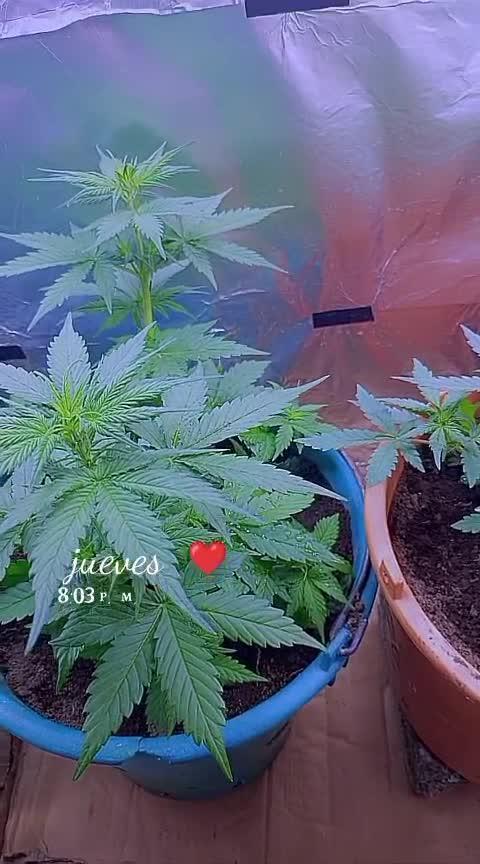
She seems to be starting to stretch for the sky. I can't wait to get her outside to train her and hopefully watch her become big and beautiful.




Likes
75
Share

@DogDoctorOfficial
Follow
Epic Harvest Chronicle: The Journey of Panty Punch Auto
In the annals of our cultivation journey, there exists a tale of unparalleled growth, resilience, and triumph. Join me as we embark on an epic chronicle, tracing the extraordinary journey of Panty Punch Auto from a humble seed to a majestic harvest, overcoming obstacles and defying expectations at every turn.
Our saga begins with the planting of a single seed, filled with the promise of potential and the whisper of destiny. From the moment she emerged from the soil, Panty Punch exuded an aura of vitality and vigor, her roots delving deep into the earth as if driven by an ancient force.
As Panty Punch grew, so too did the challenges that beset her path. With each passing day, she stretched towards the heavens with an insatiable thirst for light and life, threatening to outgrow her confines. It was then that we intervened, bending and securing her with sticks and glue, a testament to our determination and ingenuity in the face of adversity.
Rooted in organic soil enriched with Aptus nutrients, Panty Punch flourished under the gentle care of nature-inspired solutions. From seedling to harvest, she received a balanced diet of essential minerals and organic compounds, fueling her growth and vitality. It's a testament to the power of soil and nutrients in cultivating robust and vibrant plants, and Aptus has undoubtedly played a pivotal role in our success.
In all my years of cultivation, I've never beheld anything quite like Panty Punch Auto. She stands as a towering testament to the potential of autoflowering genetics, defying convention and surpassing all expectations. From her towering height to her abundant foliage, she is by far the largest auto I've ever had the pleasure of growing. It's a testament to the marvels of modern breeding and the boundless possibilities that lie within the realm of autoflowering cannabis.
Guided by the radiant glow of the Lumatek Zeus LED, Panty Punch thrived under the sun-like spectrum of light that bathed her in brilliance. From vegetative growth to flowering, the results spoke for themselves, with dense buds and resinous trichomes adorning her branches like jewels in a crown. The Lumatek Zeus proved to be the cornerstone of our success, providing the perfect balance of intensity and efficiency to fuel Panty Punch's journey to harvest.
Throughout her growth cycle, Panty Punch was under the watchful gaze of the TrolMaster Tent-X, a marvel of modern cultivation technology. With precision control over every aspect of her environment, from temperature and humidity to lighting schedules, the Tent-X ensured that Panty Punch had everything she needed to thrive. It's not just a controller; it's the key to unlocking the full potential of our cultivation endeavors.
Rooted in the rich genetic lineage of her parents, Panty Punch Auto is a testament to the breeding prowess of Seedstockers. According to the breeders, she is the progeny of select auto-flowering genetics, carefully bred to exhibit exceptional vigor, potency, and yield. With each generation, her lineage has been refined and perfected, resulting in the awe-inspiring specimen that stands before us today.
As we bid farewell to Panty Punch Auto, we do so with a sense of awe and reverence for the journey we've shared. From seed to harvest, she has been a beacon of resilience and vitality, a testament to the power of nature and human ingenuity. And as we savor the fruits of our labor, we extend heartfelt thanks to Aptus Holland for their unwavering support, to TrolMaster for their innovative technology, to Grow Diaries for the platform that connects us all, and to the vibrant community of growers for their endless inspiration and camaraderie.
In the end, Panty Punch Auto stands not just as a plant, but as a symbol of what is possible when we dare to dream and nurture those dreams into reality. May her legacy endure for generations to come.
#PantyPunchAutoAdventure #RootsAndFruits #TrolMasterControl #GrowDiariesCommunity #CultivationExcellence
Genetics - Panty Punch Auto - https://seedstockers.com/
Plant nutrition - Aptus Holland - https://aptus-holland.com
LED Photons - Lumatek - https://lumatek-lighting.com
Controls - Trol Master - https://www.trolmaster.eu/
Watering - myself
Love and attention - Me, myself and i
As always thank you all for stopping by, for the love and for it all , this journey of mine wold just not be the same without you guys, the love and support is very much appreciated and i fell honored and blessed with you all in my life, With true love comes happiness. Always believe in your self and always do things expecting nothing and with an open heart , be a giver and the universe will give back to you in ways you could not even imagine so
More info, the ocasional give-away and exclusive updates from all my adventures can be found - links in the profile description
Friendly reminder all you see here is pure research and for educational purposes only
Growers Love To you All 💚 💚 💚

Likes
26
Share


@donutgrower
Follow
The plants have taken to their Earthboxes, especially #1 with the BuildASoil Light. The Earthbox with my Coots mix was the runt, plus I damaged the roots during transplant so it has an uphill battle, but I wouldn't count it out yet. It was looking droopy and with slight discoloration, but after a drench of Kashi Blend Tea (1/3 cup Kashi Blend, 1 teaspoon blackstrap molasses in 1 gallon of water for 24 hours) it perked right up.
As for preventative pest management, I've kept doing foliar applications every 4 days of EM-FPE -> EM-1, next week I will incorporate the just-finished EM-5. I made a JADAM wetting agent (JWA) but I have realized even local bottled water is too mineral-heavy for it, so I will need to find a source of distilled water if I want to use it in my foliar regime.
Next week I will begin doing LST to get some more tops going. At some point I plan to add a trellis, I have been busy with work but I will find the time to set up something, preferably a trellis that can move with the Earthbox to facilitate maintenance and not have them fixed in place for the entire training and flowering cycles.


Likes
2
Share


@Joint_Ventures
Follow
Plants are looking amazing! Zero watering issues this run. Monitoring plants daily for any ambering of trichomes. Began flushing plants with straight pH water @ 6.5. Ran 5 gallons water thru each 5 gallon plant container to strip away nutrients from growing medium to allow plants to use any existing nutrients stored. According to flowering time from breeder, these autos should be at harvest time nearing 75 days, currently on day 70. there are slight ambering of trichomes beginning on bud matter, currently close to 5% amber. Will flush plants 1 more time with pH water to ensure good flush prior to entering dark period for 48 hrs.
Currently these plants are the stickiest and most coated plants I have grown to date. Very pleased with genetics!! Terp profiles of kiwi, melon and pine all exhausting from these fat azz nugz!! Entering final week of grow. At this point, patience is key, and a good proper slow dry is in order following dark period.
6/14 All 5 plants moved to dark room for 48 hrs to boost trichome production final hrs
6/16 Removed plants from dark room and hung up in dry tent. De-foliated fan leaves prior to hanging to dry.

Likes
13
Share


@Optico45
Follow
I defoliated bottom leaves, the tent has really gone jungle style now. Kicked on the extra LEDs for bloom only and the center LED is running both VEG and BLOOM lights.
The two auto dark purple plants show a few leaves canoeing. Maybe too much nitrogen from trying to keep the PPM levels up. Flushed with sledgehammer.
Likes
10
Share


@hholmesgrows
Follow
We're now at week 10 and about a week or so left until I decide to chop this bush down and begin drying and curing. I haven't really been doing much this week besides trimming one or two leaves off, the week prior I have removed only 4 during the whole week and the plant in whole has still been developing rapidly. This is supposedly the last week from the breeders description that the plant should be mature enough but with the transplant in the beginning stunting it for a week has probably been enough reason why growth was unstable during the whole time, I sort of felt it as well when it started flowering at such a small size. I've learn my mistake have redeemed myself with the care i gave it after the stunting. The lower bud sites are still deep green as if they haven't received enough light and I tried to fix that by lowering the light but the taller colas were getting too close (at least 5-8" close) so I decided to leave it at around 10-13" away so I don't disrupt the growing environment too much. I don't want to open the tent too much too now that it stinks up my small room in seconds and sometimes creeps through the doors out to the other rooms and outside the house if my window is open so I'll be looking into the tent when i need to water, fix something with the irrigation system, fix the height of the light, or get ready to harvest. I don't think I will be defoliating anymore since all bud sites are exposed to an extent and I just overall don't want to bother her and watch her naturally do the rest. I will be giving it another week or so to catch up making it around 75-80 days in total. I will be flushing it by now since i've looked at the trichomes on the most and least developed to find that it's starting to amber already with about a quarter turning white so purging the nutes now will be essential towards the end, i'm pretty excited and hope you guys are too.
Likes
29
Share


@Spliffing_Around
Follow
I fudged up one pot , when lifting it the down part popped and root parts went away. The plant already had his main branch broken and is still hanging.
Please advice on the deficiencies of the biggest plant.
What other nutrients can I add here ? I have humic acid in little pallets.
Dutch pro bloom is coming on it’s way, I’m still watering with hand distributed nutes that could have the emblems “A”+”B” mixed up. To everyone telling that it brings a big issues to the company - no - it’s just a dude most of the time buying bulk amounts and selling per liter, having the original packaging on the bottle glued up.
Anyway, any advice is appreciated.

Likes
3
Share

@CheeRz
Follow
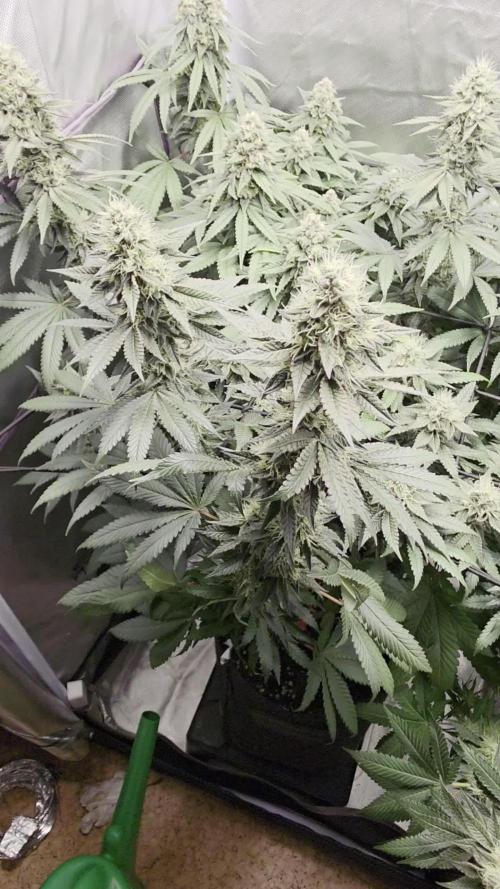
We are nearing the finish line! Both ladies look great, and the delicious aroma wafting from the tent brings a smile to my face every time. I think we should finish the run in about two weeks. 🍋🍋🍋🍒🍒🍒


Likes
14
Share


@Growin_Ish
Follow
Day 56
Pulled about 10 leaves that were showing some deficiency. It's an 86 day strain so it's not fade. Top dress is supposed to last 2 weeks, it's been 11 days so she is hungry 3 days early. She was hungry earlier than expected on the last top dressing as well. I will top dress tomorrow. All flower nutes, no castings.
Day 57 From Seed
Top dressed with 5Tbls of Flower Girl and 1Tbls of Tomato & Vegetable nutes. Watered in between 6.0 & 6.5 PH. Water had a heavy dose of Fish Sh!t.
Day 60
Top dressed 2Tbls of Garden Lime with 5.5PH water. The Garden Lime raises soil PH by .5, hence the lower PH water. At least I hope that's the way it works. Trichomes are developing, still no smell.
Day 61
Watered with organic coconut water and spring water 50/50 PH between 6.0 and 6.5. Preparing Roots Organic Bloom tea for Day 65.
Likes
11
Share


@GREENPHOENIX6262
Follow
*Week 3 Flower - 09/10*
Blimburn Apple Fritter - Seedsman Genetics Critical+2.0
Healthy - 0 signs on of deficiencies
Most fan leaves have been stripped; - Lighter defoliation - Aggressive LST on main colas
*Week 3 Flower Mid-week update 09/13*
Approximately 3 inch increase in Height on both plants - Critical+2.0 - Seedsman Genetics - Blumburn Apple Fritter
1 Gallon increase on water feed (Nutes included)
Budsite density has increased.
Light defoliation
*End of week recap 09/16* (Week 3 Flower)
BlimBurn - Apple Fritter - 47 Inches - Flowering processing accordingly - 0 deficiencies
Seedsman Genetics - Critical+2.0 - 46 Inches - Flowering processing accordingly - 0 deficiencies
Increased water feed (2.5 gallons every day +Nutes)
*SEE UPDATE END OF WEEK VIDEO RECAP*

Likes
11
Share


@VividGreen
Follow
Lowered bloom nutrient to 16 mL per gallon and hydroplex to 4 mL per gallon.
EC now 2.3

Likes
49
Share


@Wastent91
Follow
Ehi ragazzi come va?? La settimana della ragazza è trascorsa bene, si vede che la genetica e pregiata xké nonostante il poco spazio si sta sviluppando e acquistando spazio dalle altre piante ,quindi vuol dire che sta davvero bene, le foglie sono grandi a ventaglio corpose tipiche dei fenotipi principalmente indica , anche il fusto è davvero in espansione ,ad ogni internodo il volume aumenta esponenzialmente! Mi aspetto una weeda spaziale da questa ragazza vincitrice degli ultimissimi premi come migliore hibrido indica! Complimenti a Fastbuds! Tutto questo non sarebbe possibile se non ci fosse la luce Mars hydro che mi dà la possibilità di avere la stessa intensità di luce, e si vede con la crescita uniforme della ragazza ,nonostante la pianta sia relegata in un piccolo spazio di lato! Impressionante FC E3000 non smette mai di stupirmi!! Spero continui così! Buon 420 a tutti! 🐱😼😽❤️❤️🧙♂️✨🌿🌲💨💪