


Likes
Comments
Share


@Hisec
Follow
Today we have the last day of flower at day 70.
Aromas are getting real loud.
Most Trichomes are milky on all strains, French Toast and AllGas could’ve been harvested earlier as they are leaning very far to the amber color.
Flushed them for 1 week with tapwater at around 0,3 ec and 5,8 ph.
Some samples have been cut on day 63, which already smell amazing.



Likes
23
Share


@SonomaSungrown
Follow
Skipped a week in my journal due to travels.
Had my neighbor water my plants.
Having some minor early deficiencies with my photoperiod plants (particularly the chem brulee)... so I decided to go ahead and give everything a solid feeding of Foop Bloom 1, 2 and Sweetener. This is their first ever bottled feeding. Have been running on supersoil and a prayer.
Also top dressed everything and mulched with rice straw to help with the soil drying out a bit too quickly.
Leaves have been yellowing on all three. Mostly relegated to the interior of the plants.
Chem Brulee is looking a bit too yellow overall, as well.
French Macaron is a 66in. Chem Brulee is 56in. Pineapple Meatball is 45in.
I have a sneaking suspicion that my neighbor didn't water them quite enough while I was gone.
Will probably continue with the Foop feedings... probably at least once per week. Don't want to overdo it.
Also top dressed with my flowering top dress mix and mulched all plants with a thin layer of rice straw.
8/4 Sprayed with Neem Oil and Castile Soap
8/5 Sprayed with Gravenstein Apple FFJ and OHN
8/6 Sprayed with Neem Oil and Castile Soap (this will likely be the last time I spray with Neem Oil, as I don't want residual oils as buds start swelling. Also fed 1/4 strength FOOP to ensure we head off any deficiencies.


Processing
Likes
38
Share


@Wicked_Stix
Follow
Not going to go into much detail on the individual plants this week since there is nothing exciting to report. Only note this week is something we all pretty much know already. Organics and hydroponics dont play well together! I was using gringo Rasta calmag and it clogged all my feed lines. I ordered some calimagic so this wont be an issue anymore. Everyone is growing well and stretching quite a bit. I started them on some maxibloom. I will increase it as I lower the maxigro over the next couple weeks. Pretty boring right now, but stick around a few weeks and that might change.
Likes
6
Share


@thenotillwizard
Follow
The Red Hot Cookies are looking beautiful. Very nice looking buds with fantastic colors. Very promising in terms of bag appeal :)
The pheno 1 shares many traits with the GSC. The effect is amazing despite of the quite boring terpene profile which is unidimensional (very sweet base notes along with creamy peach head notes that reminds me of the peach flavored campino hard candys). The high has the soothing and calming effect of the GSC while being more uplifting and energizing.
The pheno 2 is more on the Tangie side for both the effects and the terp profile. The high is energetic but a little bit racy. The limonene content seems far higher than the myrcene, and it translates itself in both the taste and the effect. I will be looking for a Tangie-dom pheno that is richer in myrcene, in hope of getting more of the tangerine taste/aroma and the relaxing effect that we can find in the Tangie and Tangerine Dream strains.
As for the Amherst Sour D, they all share the same woody and tropical aromas with subtle specific nuances (pepper, fuel, skunk/sulfur, lavender). The effects go from slightly sedating to highly energizing and euphoric. A great afterwork hard hitting sativa that tastes awesome, without being the terp bomb of the year.
The Dinamed CBD plus is a very short, bushy and stalky plant. The Pheno 1 smells like straight pine/fir on sweet and fruity base notes. The structure is nice with lots of lateral branching and the buds are looking very good too. I could have got a way better yield be giving her an extra 10 days of veg.
The pheno 2 is more one the fruity/fuely/tart side. Definitely not the best pheno. Very slow growth...


Processing
Likes
19
Share


@Fire_Farmer
Follow
I'm like 5 days late with this update so I have had to pin videos that I took the same week while I was communicating with TRYHARD so ignore any dialogue that's out of context they aren't diary logs they are simply correspondence between myself And TRY, oh and sorry about my language I'm common as muck me.
The pictures are just random pics I took that week as oppose to my usual more organised method but hey ho I'll do a more tidy job next week.
The week went swimmingly barring some nitrogen deff on the lowers which I initially put down to the hot weather drying the pots too quickly and causing nute lockout with the salt buildup so I flushed then gave them a nice feed after they dried the pot at which point I noticed the most heavily afflicted by the N deff were also the quickest drinkers and had lower EC on the runoff so I have been giving them a slightly stronger feed than the others and it seems to have solved everything so I'm happy with that.
Bud development is nice, frost is nice, terps are through the roof right now.....
Zkittlez ones are really stinking of lime and candy bubblegum
Punch ones are stinking berry berry nice!
Grandpas Crush is smelling kinda hazey right now but I'm hoping the berries comes out of her too.
Little else to report really.
Thanks for reading
One Love 💚
Fire Farmer🔥👨🌾
Likes
40
Share


@Ukfarmer420
Follow
Hi guys,
So this week im expecting rapid growth on all the plants, my plant still has orange spots i call it plant aids 🤣. There on 18/6 light cycle. I will be doing some lst on them to try and fill my grow space out abit.
I been soaking them and turning lights down for 2 hours then turning light back up for a few hours then soaking again so on so on. My misses plant is doing better than mine thats for sure tho.
Happy growing canna family 💚🍁

Likes
19
Share


@pifflestikkz
Follow
Day 57
26/08/24 Monday
Feed today using de-chlorinated tap water pH 6. No plagron products as noticed burning again.
(I think I'll do a run using advanced. And Plagron. Just to see what's different. )
Showing great progress!!
I did a little defoliation of lower two fans that started to turn in colour.
Apart from that left them to it ✌️💚
Day 59
28/08/24 Wednesday
De-chlorinated tap water pH 6 only today, 400ml with little to no run off.
Day. 61
30/08/24 Friday
Another feed today using de-chlorinated tap water pH 6 with Plagron products.
Picture and videos coming tonight 🤯👀✌️💚
Day 63
01/09/24 Sunday
(End of week)
De-chlorinated tap water pH 6 today with calmag.

Likes
1
Share

@psychonaut420
Follow
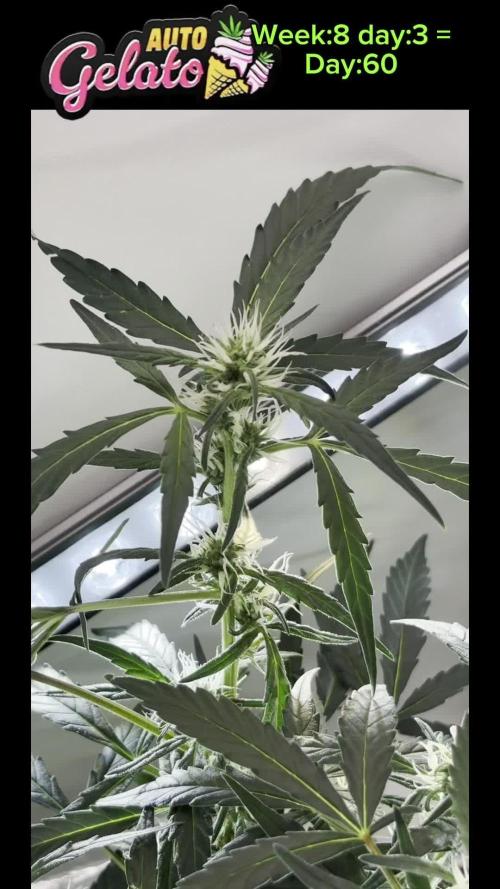
Amazing bud development with thick stretching pistols and getting fatter and taller each day and the thrichomes are starting to appear with the side branches are streatching and flowering props to the additional lighting strips
Likes
Comments
Share
@Wierie
Follow
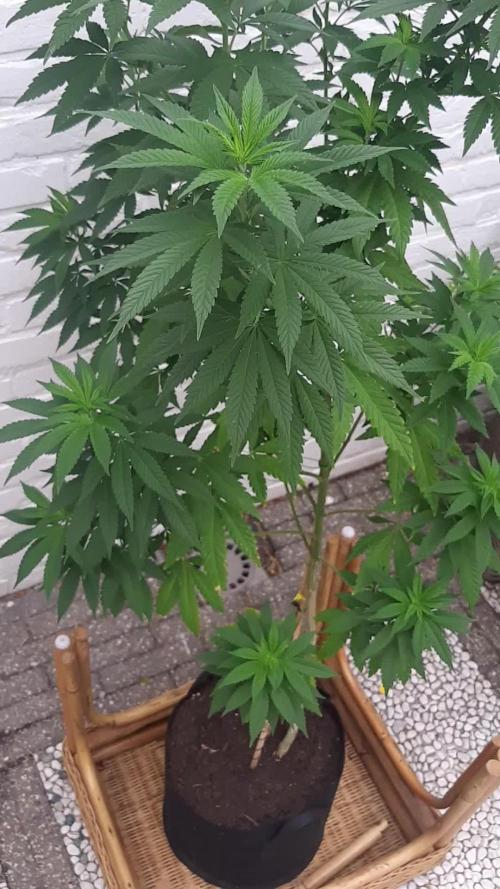
Day 80 of flowering ..
She is gettin old, trichomes turning milky and on the top buds i see some brown ones aswel..
She is just gettin water 6.5ph
Maybe this was the last time we see her alive..
Will keep u all updated..
Outdoor plant..
she is starting to flower i see some white hairs here and there..
Gave her a table spoon of used coffee grounds and rubbed it in the top of the soil...
There is also supermix of plagron in the soil and she gets 1 liter of mineral water with pokon fertiliser evry 2 days npk ratio 3-2-5
I think she likes it ..
(1.40 meters now)
See u next week friends 🌴

Likes
4
Share


@Mr_nugs_lover_David
Follow
Esta Do-si-Dos cookies de 00 seeds es excelente,súper rico aroma,cogollos tremendamente compactos y duros como piedras,pegajosos y resinosos,amo esta genetica la volvería a cultivar 100 veces mas 🤩 esta es la última semana que riego con bio bloom y top max,a partiré de hoy los riegos son de agua con el ph regulado como siempre pero sin añadir ningún nutriente por supuesto para poder hacer un correcto lavado de raíces para eliminar sales. En definitiva y desde mi punto de vista,gran genetica,vale la pena cultivar esta maravilla! 🇺🇸🍪

Likes
1
Share


@Bwright_315
Follow
Two plant same strain being feed the same and I have two total different out come.
The first one is nice and frost growing with no issue even smell great.
The second one I don't know🤦🏿🤷♂️🏿. I not doing anything different from the other on but it's growing but struggling at the same time. Where the first one is super frosty and smell strong the second has no smell is growing buds but is not frost at all and the leave have been dropping. So what I did was flush the second one and will just feed it ph water and no nukes for about a week or two to see if it get any better.


Likes
20
Share


@Ciore
Follow
La nena cresce muy muy bien y sana en Salud, Los cogollo se estan poniendo Gordo al Pasar con Las Semana. Es una maravilla esta Jack47XLauto de SWEETSEEDS❤️


Likes
29
Share


@CannbellFarms
Follow
Monday 12/12
- week 3 bloom begins, light height is 14” from canopy but only 6” from main colas
- small plants is far far behind in height now sadly don’t think it will catch up now
Tuesday 13/12
- heavy defoliation on the 3 large plants
- light defoliation on the small one
- raised the SCRoG and moved sites around to space them out
- cleared some small and stringy sites from the bushy back right plant
Likes
29
Share


@Jjthejetplane79
Follow
Looking happy and healthy, fastbuds autoflowers in a living soil bed 8th run in same old soil.
Likes
Comments
Share
@Dr_Zauberer
Follow
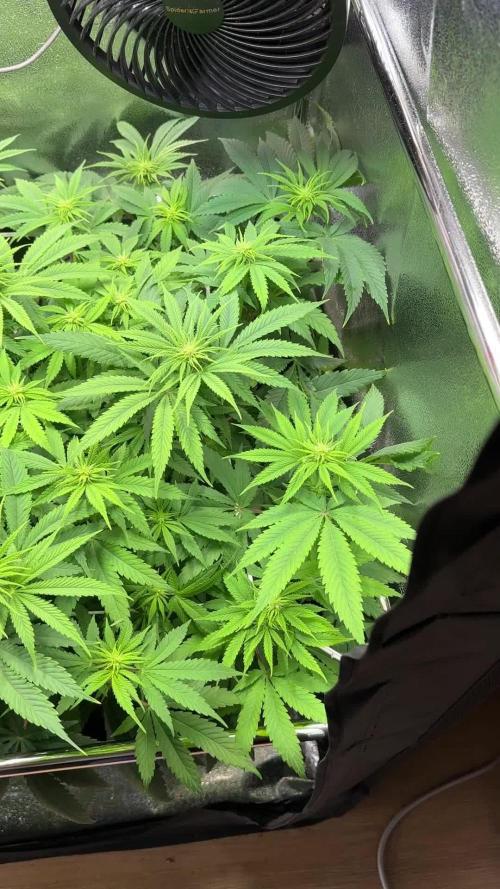
Day 50-56
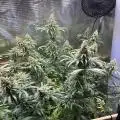
A lot of flowers, the screen is filled with it :) we like to see

Likes
16
Share


@Reddgrower
Follow
Got everything hung up. Stripped the fan leaves and broke down into sections. Run 60/60 or as close as i can get until the stems snap.