


Likes
Comments
Share


@FatnastyzBudz
Follow
Cut her on day 74
She grew amazingly! She even handled my over feeding like a pro! Her buds and some of the beat to sit and stare at! Her colors are vibrant which sparkle more off her resinous gleam!
She has a very pleasant sweet smell.
Thank you so very much Clarissa and Weedseedsexpress for these awesome beans!
I am very grateful for the opportunity! 😁💚
They have quite the selection for any needs!
Go get ya some beans, always got a deal!
www.weedseedsexpress.com
Happy growing and ty for the support! 💚😻🤘

Processing
Likes
9
Share


@BudXs
Follow
Check it. FB autos being run in the preseason like the Jays in Dunedin
BudXs
Fuck yer CBD


Likes
544
Share

@yan402
Follow
🌸🍏✨🍭🌸🍏✨🍭🌸🍏✨🍭🌸
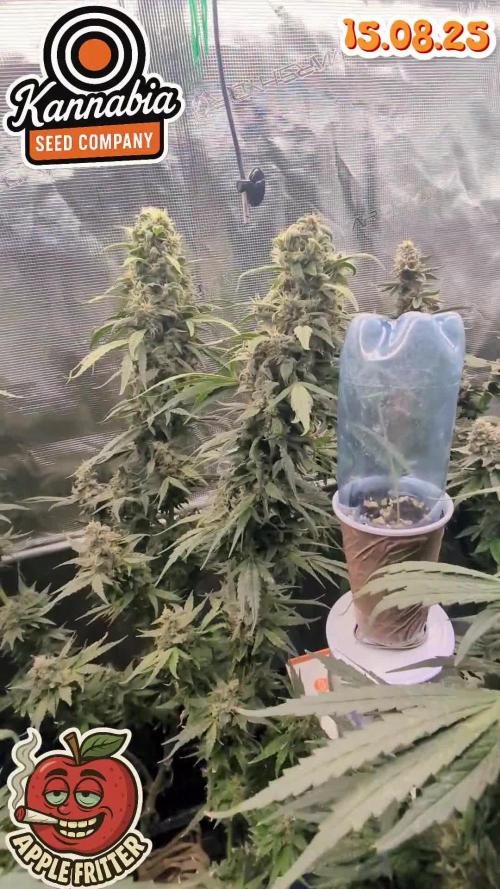
Hi and welcome to another Kannabia grow!
This time I’m running their Apple Fritter (feminized photoperiod). She’s going to veg under 24hr light and be manifolded.
Still cleaning the rest of my Candy Cream GF (11.04.25) — going to sow the seed tomorrow (12.04.25)
*been lazy, sowed on 14.04.25
🌸🍏✨🍭🌸🍏✨🍭🌸🍏✨🍭🌸
---
💭❗💭❗💭❗💭❗💭❗💭❗💭
❗Events & thoughts worth noting❗
💭❗💭❗💭❗💭❗💭❗💭❗💭
12.04.25 (GW1) – Cleaning + flushing the old coco coir. Might need to add another brick. *No new brick needed ✅
This is how I recycle my coco coir — fast, cheap, no BS.
🌿 Harvest plant
✂️ Chop roots small — they stay in for structure (organic perlite)
💦 Hot water rinse — remove salts & dust
🍶 Pre-soak with light feed:
Micro 10ml
Bloom 0ml
GreenBuzz 10ml
Cal-Mag 60ml
FFJ/FPJ 10ml (new disgusting batch)
pH down (citric acid)
♻️ Media stays — Roots stay — Back in service.
14.04.25 (GW1) – Planted seed in final pot ✅
16.04.25 (GW1) – Did last tent clean up + setup ✅📸
17.04.25 (GW1) – Seed germinated 🎉📸 — roughly 48hrs in final pot. Solid start👌♥️
23.04.25 (VW1) – Minimal burnt tips 📸 — not progressing, not a concern.
26.04.25 (VW1) – Started using the new batch of FPJ/FFJ
https://growdiaries.com/diaries/266849-grow-journal-by-yan402
30.04.25 (VW2) – Increased TriPartMicro & GreenBuzzBloom 10ml → 15ml
03.05.25 (VW2) – Increased TriPartMicro again 15ml → 20ml, topped the plant, and added final layer of clay pebbles around the base, trimmed side branches and did LST in preparation for "manifold" 📸
08.05.25 VW3 finished manifold📸
13.05.25 VW4 Increased TriPartMicro to 30ml and GreenBuzzBloom to 20ml.
15.05.25 VW4 Done defoliation and LST 📸
18-19.05.25 VW5 pruned all the shoots bellow my "mains" and did a full defoliation📸
24.05.25 VW6 increased GreenBuzzBloom to 30ml
04.06.25 VW7 did a cleanup📸
11.06.25 VW8 increase TriPartMicro to 40ml
17.06.25 (VW9) – Final structure pass 💈🌿
Did a clean perimeter prune + removed weak shoots. Ended up with 12 tops, was aiming for less, but she made the call
Didn’t fight it, just shaped it the best I could
Airflow’s good, structure’s stable
🛑 No more cuts until post-stretch
Pics coming shortly 😘
Flip coming soon — we’ll see how she handles it.
20.06.25 VW9 Switched lighting to 12 hours, may the stretch begin 🤞
22.06.25 VW10 Did a good LST session,made some pics, and came to some conclusions and a small change of plans:
Originally planned for 8 mains — long, spaced colas and maybe a couple stronger “titans” if she wanted to go that way.
But she’s showing me something else, and I’m not here to fight her — just guide her.
Now after stretch, I’m keeping side shoots only if they: Fill real canopy gaps
Don’t crowd neighboring tops (minimum 15cm spacing)
Aren’t growing into walls or toward the next plant
Anything too close, too low, or heading into shade gets removed. No point forcing it.
Looks like I’ll finish with 14–16 solid tops, depending on how she settles.
I’m just trying to give each one enough light and space to stack properly.
No overcrowding, no larf — just letting her do her thing with a bit of structure.
Increased Tri Part Micro to 50ml as well.
28.06.25 VW11 one week since I flipped to 12/12 and she is stretching nicely, a bit shy in showing pistils compared to the Fantasy Feast regulars I have in the same tent.
29.06.25 VW11 increased GreenBuzzBloom 30→ 60ml
06.07.25 FW1 TriPart Micro: 50→ 30ml
TriPart Bloom: 0 → 20ml
Home-made FFJ/FPJ (Watermelon + Pumpkin): 10 → 30ml
12.07.25 FW1 GreenBuzzBloom 60 →40ml, TriPart Bloom: 20 → 60ml, fpj 30→60ml
19.07.25 FW3 Got some bleached tops, been out and about at job interviews and didn't notice a last minute stretch spurt 😭, should recover fine though plenty of time left 😁
22.07.25 FW3 TriPartMicro 30→20ml , TriPartBloom 60→80ml , GreenBuzzBloom 40→50ml
24.07.25 FW3 Cal-Mag 60→40ml
26.07.25 got thrips but handled them with extra airflow and defoliation.
29.07.25 FW4 GreenBuzzBloom 50→20ml, Home-made FFJ/FPJ (new batch) 60→120ml
31.07.25 FW4 Home-made FFJ/FPJ (new batch) 120→200ml
13.08.25 FW6 CalMag 40 →30ml, GreenBuzzBloom 20→0ml
20.08.25 FW7 TriPartMicro 20→10ml, TriPartBloom 80→0ml, GreenBuzzBloom 0→60ml, CalMag 30→20ml
🌱💦🌱💦🌱💦🌱💦🌱💦🌱
🌿 Day to day tasks & actions 🌿
🌱💦🌱💦🌱💦🌱💦🌱💦🌱
16.08.25 FW6 – Fed 5l of #1 → 2l runoff
17.08.25 FW7 – Fed 5l of #1 → 2l runoff
18.08.25 FW7 – Fed 5l of #1 → 2l runoff
19.08.25 FW7 – Fed 5l of #1 → 2l runoff
20.08.25 FW7 – Fed 2l of #1 → 0.5l runoff
21.08.25 FW7 – Fed 3l of #1 → 1l runoff
22.08.25 FW7 – Fed 3l of #1 → 1l runoff
23.08.25 FW7 – Fed 2l of #1 → 0.5l runoff
(*RUNOFF reused for tomato plants)
🍶💧🍶💧🍶💧🍶💧🍶
💧 Nutrients in 30L #1
🍶💧🍶💧🍶💧🍶💧🍶
TriPart Micro: 10 → 15 → 20 → 30 → 40 → 50 → 30 → 20 → 10ml
= 0.33 ml/L
TriPart Grow: 0 ml
= 0.00 ml/L
TriPart Bloom: 0 → 20 → 60 → 80 → 0ml
= 0.00 ml/L
GreenBuzz Bloom: 10 → 15 → 20 → 30 → 60 → 40 → 50 → 20 → 0 → 60ml
= 2.00 ml/L
Cal-Mag: 60 → 40 → 30 → 20ml
= 0.67 ml/L
Home-made FFJ/FPJ: 10 → 30 → 60 → 120 → 200ml
= 6.67 ml/L
pH Down: Citric acid (BuxXtrade) — adjust to ~pH 6.0
📦 TOTAL: 290 ml per 30 L
🔬 9.67 ml/L
🍶💧🍶💧🍶💧🍶💧🍶
⚙️✂️⚙️✂️⚙️✂️⚙️✂️⚙️
✂️ Tools & equipment ✂️
⚙️✂️⚙️✂️⚙️✂️⚙️✂️⚙️
✂️ 2× MarsHydro SP3000
⚙️ MarsHydro 150mm ACF Ventilator
✂️ Trotec dehumidifier (big unit)
⚙️ Mini no-name dehumidifier
✂️ Kebab skewers (LST – stainless)
⚙️ Wire + roast skewers (LST assist)
✂️ Scissors (HST)
⚙️ Vacuum (for spills & cleanup)
✂️⚙️✂️⚙️✂️⚙️⚙️✂️⚙️✂️⚙️✂️⚙️
---
🍏🍪🌬️🍬🍏🍪🌬️🍬🍏🍪🌬️🍬
Apple Fritter (Kannabia Seeds)
🍏🍪🌬️🍬🍏🍪🌬️🍬🍏🍪🌬️🍬
Species: 50% Indica / 50% Sativa
Genetics: Sour Apple × Animal Cookies
THC: Up to 25%
Effect: Euphoric, relaxing, creative
Flavor: Sweet, fruity, pastry notes
Flowering: 56–63 days
Resistance: High
Indoor yield: 450–500g/m²
Outdoor yield: 600g/plant
Structure: Strong, bushy, dense buds

Likes
31
Share


@GermanGrow182
Follow
Had to cut the Moby down. More and more mold developed so I saved, what I could. 20 % (lower, smaller flowers) I left to see, if they can grow some more. Honey cream stacking up fast. Really fast flowering. But still has at least 2 weeks to go. Hope to get her to finish. Extreme good smell. Sweet, spicy, rich earthy aroma. Extraordinary creamy. Huge colas

Likes
31
Share


@JeyGanesha
Follow
🦍 cookies ancora pochi giorni ed è cotta anche lei.. buonissima,!! Ha un profumo delizioso super.
I'attesa si fa lunga 🤣😉🤣😉


Likes
20
Share


@DeepRootGrows
Follow
Let’s just say for what I got out of this plant, I’m extremely pleased. This plant was put through a lot of stress and never really skipped a beat. I stunted the growth early on in the seedling stage, I then decided mid veg state that I wanted to do coco coir instead of DWC bucket, which then slowed it down a few days, then during my first time doin any training to a plant I snapped the main node off slowing it down again. My cat then one day got into my tent when it was down while I went to use the restroom, and ended up digging out an entire side of the pots and roots. I truly thought this was the end of this plants life, I decided to just let it go and hopefully I could maybe get some small stuff to make some butter with or something. She bounced back from even the cat attack and produced something very great.
All in all this was really fun to grow, she was resilient as hell and would love to try this strain again with no hiccups down the road in the near future.
Lastly, thank you to everyone who has liked or commented on this journal. I hope to see and hear from you on my other diaries. I look forward to the feedback y’all leave me. 🤙🏼


Likes
52
Share


@Santica_Garden
Follow
This is how things are looking for the King's Juice at the end of Week 8 of Flower, I have uploaded a video where I am checking out the Trichomes using my USB jewelers loop. Any questions just ask away guys. 👍🏾🌱💚....... Also a guy I know that has finished their King's Juice before me, has finished the cure, had a smoke and told it that I will absolutely love the smoke 🤤🤤 by the way she smells I can only imagine the flavour!
Likes
14
Share


@MG2009
Follow
04/23/2022
I think lemon OG is done
Give her a few days more, Biscotti Skunk, grape skunk about 2 -3 weeks out, the Biscotti Skunk has very strong camphor mothballs smell. Not quite sure what to think of her hope buds fill out well. Grape Skunk is doing a bit better but lemon og has performed best in my specific micro climate, others have more flowering to.
If I'm going 63 days in flower it might as well be a Sativa variety.

Likes
Comments
Share

@4hundert20
Follow
Alle Samen haben gekeimt, jedoch sind zwei der drei Keimlinge auf unerklärliche Weise gespargelt.. während der Übrige normal, wie aus dem Bilderbuch heranwuchs.
Das ungute Bauchgefühl ließ mich zwei weitere Samen (als Backup) zum Keimen bringen.. kurz darauf knickte mir der erste Spargel ab.
Seltsamerweise hielt sich der andere mithilfe einer Wäscheklammer (universell nutzbar im grow, für mich unverzichtbar).
So habe ich nun 4 mal Sour Diesel in unterschiedlichsten Stadien, Größen und Formen 😂 solche Voraussetzungen sind zwar weniger gut, aber ich werde mein Bestes geben, um die Ladys durch Vegi+Blüte zu begleiten.
Dünger, Boden, ph, ec, könnt ihr dem Protokoll entnehmen, jedoch ändert sich diesbezüglich nichts zu den vorherigen Grows.
Heute bekamen alle einen neuen Topf (1,5L) und sollen nochmal schön wurzeln, sodass sie dann in ihren finalen 27L Topf umziehen können. Das sollte in 10 Tagen soweit sein.. Aber wer weiß das schon, bei so einem Start 😂😂
Wünscht mir Glück!
Likes
2
Share


@SolitudeCorners
Follow
Blue Banana Cream by Mademen Genetics - Week 5 Update
VPD aim 1-1.2kPa
Continuing from the last update, this week has shown even more trichome development.
Pheno #1: Bud structure remains airy, but trichomes are steadily increasing
Pheno #2: Medium-density compact buds, showing traits reminiscent of the Banana lineage
The grow room is starting to fill with a stronger aroma as the plants enter the bud-building phase. Exciting progress ahead—thank you for following along!
Likes
2
Share


@BigGGrows
Follow
she is pushing through the initial HST fimming very well. Nothing seems to slow her down. I am starting 1/4 strength nutes now to help her push through the stress. I also initiated some LST and tied her up, pulling down the branching. The fim job has produced a tripple top crown cola, top new side tops, and 2 new internodal branches, that will be tops down the line. Things are getting interesting folks! Stay tuned!

Processing
Likes
48
Share


@Miss_Greenthumbs_Garden
Follow
All defolated and flipped today into flower 💚😊🌱


Likes
Comments
Share

@DogDoctorOfficial
Follow
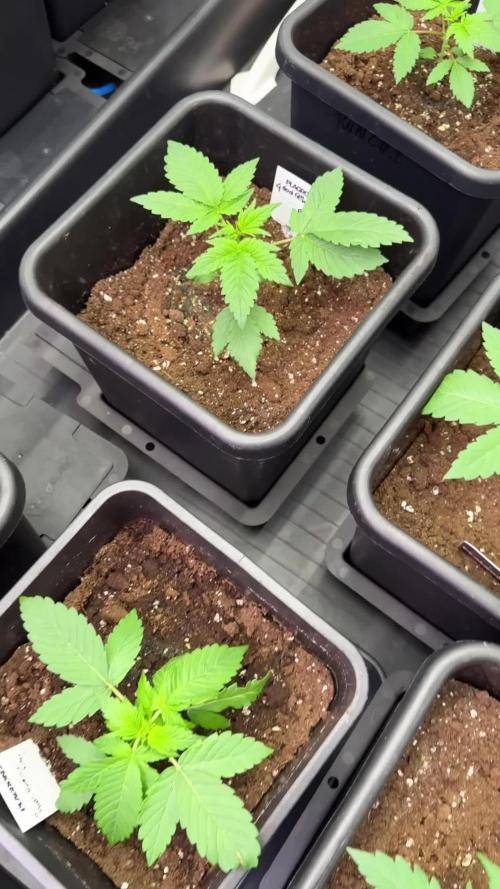
Folder 03 – Chem Brulee – Pheno B | Week 2
If Pheno A is expressing elegance through spacing and structure, then Pheno B is taking a different route.
Compact. Purposeful. Focused.
This phenotype is developing into a beautiful little powerhouse.
From the very beginning, Chem Brulee Pheno B has carried a slightly different personality, and that contrast is becoming even more apparent during Week 2. The internodal spacing remains noticeably tighter, creating a denser canopy and giving the entire plant a compact, sturdy appearance. Every new set of leaves seems determined to stack directly on top of the last, building a structure that feels efficient and well organized.
The first thing that catches my attention is the vigor of the new growth. The apical growth tip is expanding rapidly, producing healthy, vibrant foliage with excellent color and leaf development. The newest leaves display beautiful symmetry and texture, suggesting that the plant is completely comfortable in her environment and actively pushing forward.
The stem is thickening nicely and already provides a strong foundation for future development. Combined with the tighter node spacing, it creates the impression of a plant that is investing heavily in structural strength before committing to vertical expansion.
Looking down from above, the canopy appears remarkably balanced. The side branches are beginning to establish themselves while remaining neatly tucked beneath the upper growth. This compact architecture often becomes particularly interesting once flowering begins, as closely stacked nodes can develop into dense flowering sites throughout the stretch phase.
One characteristic I especially enjoy in this phenotype is the way the foliage naturally frames the center growth. The plant seems to be building upward while simultaneously maintaining a clean and organized structure, making every stage of development easy to observe and document.
Environmental conditions remain consistent across the Project Blue garden:
* 12/12 from seed
* RH: 60–65%
* Day temperature: ~26°C
* Night temperature: ~18°C
* Root zone temperature: ~21°C
* Watering pH: 6.0
* EC: 1.0
* Nutrients:
* Plagron Terra Grow
* Power Roots
* Pure Zym
* Sugar Royal
* Foliar: Vita Race
* PPFD approximately 600–700
One of the most enjoyable parts of running multiple phenotypes is seeing how different expressions emerge despite identical environmental conditions. Chem Brulee Pheno B is a perfect example. While sharing the same genetics and receiving the same care as her sister, she is already revealing a more compact and tightly structured growth pattern.
Neither approach is better.
Just different.
And that difference is exactly what makes phenotype hunting so fascinating.
Mr. Baggy has naturally approved the progress report and continues his highly specialized role as Director of Leaf Inspection and General Garden Supervision.
As Week 2 comes to a close, Chem Brulee Pheno B stands healthy, vigorous, beautifully compact, and fully on track. The foundation is now in place, the structure is forming nicely, and the coming weeks should reveal even more of the unique personality hidden within this phenotype.
The adventure continues. 🌱💚
Thank you to everyone following our Project and supporting these diaries. Whether you’re growing alongside us, learning, teaching, or simply enjoying the journey, your presence helps make this project something truly special.
Growers Love and see you in Week 3. 🚀🌿

Likes
2
Share

@psychonaut420
Follow
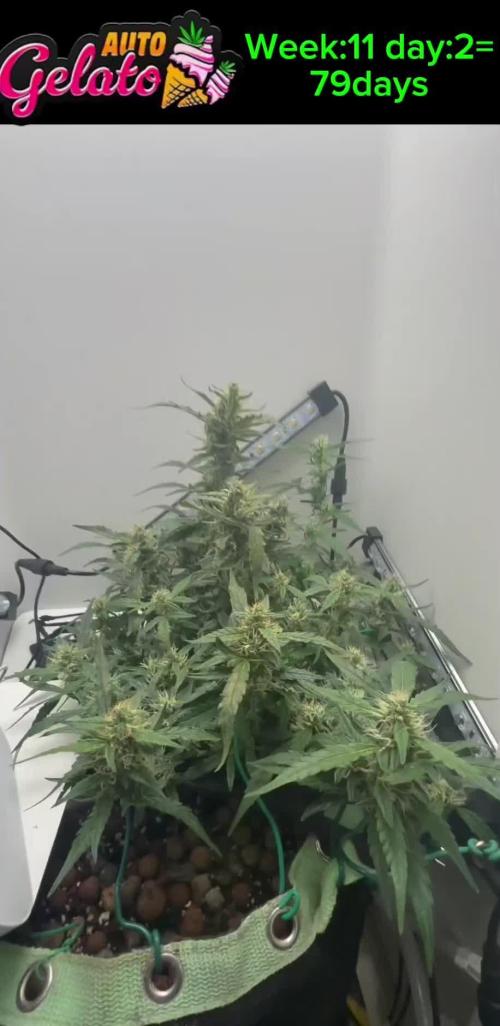
For fweek 11 she’s looking great with more and more ripening of the buds getting fatter every day and insane thrichome production she’s quite small build size because of the lowerlevel of scrog bit her width makes up for in height with the thriches and pistols starting to change colour getting fatter and fatter getting closer to flushing date
Likes
12
Share


@2Stones1Bird
Follow
Checkout my Instagram @smallbudz to see the Small budget grow setup for indoor use, low watt, low heat, low noise, step by step.
She started germination Monday 14/10/2019 straight into the soil, after 3 days she turned into a little sprout.
23/10/2019 - Struggling a bit to maintain good veg RH (55-65), currently between 45-50, humidifier on the way. PH was also to high about 7.5-8.0, already fix it to 6.5, with a drop of lemon juice.
24/10/2019 - Noticed little flies on the tent, going to add sticky trap.

Likes
1
Share
@psychonaut420
Follow
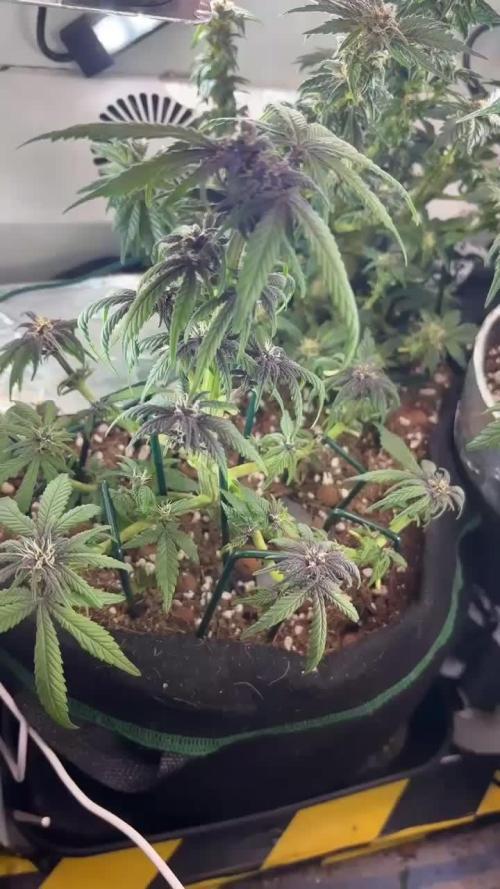
Each autoflower haves been developing nicely and the thrichomes are starting to spread out nicely as well as the buds fatening up with pistols streaching with the side branches on each auto looking forward to the next few weeks of flower then flush
