Likes
Comments
Share
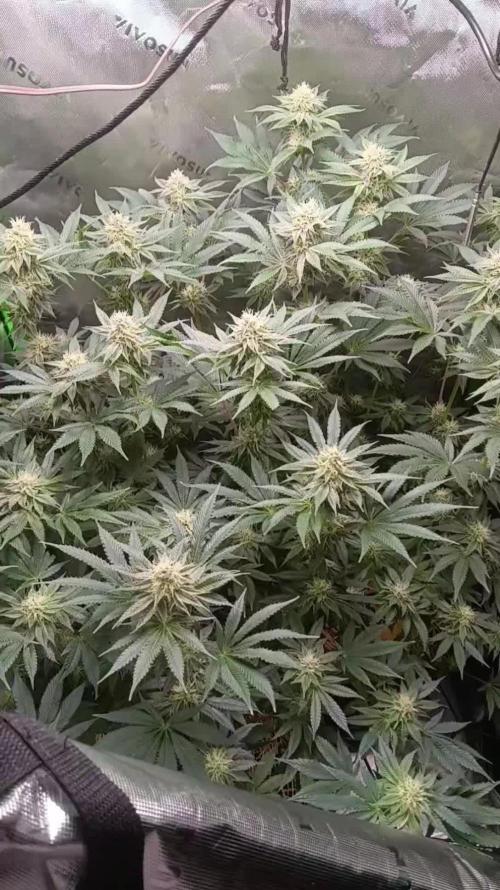
Jetzt war für mich der optimale Zeitpunkt zum toppen. Sie hat es gut verkraftet, was man auf folgenden Fotos sehen wird. Ich habe versucht so gut wie möglich im 45 Grad Winkel zu schneiden. Aus allen Cuts mache ich aktuell Clones. Ich liebe Clones aus den Main Cuts. Daraus mache ich dann Mutterpflanzen. Die Mutterpflanzen von den besten Phenos bleiben.
Likes
76
Share
@Natrona
Follow
First attempt LST tie down stems on Gelato 41. I decided to try lst on Gelato 41 since she charged out of the gate full force and was taller than the other sprouts. From the side view, the node structure is very close. I thought since she was shooting up so quickly, there would be more space between them. Week4 I was using thin wire pins for the last. I had to switch to 1/2 garden pins to hold down the stems. As you can see she is very short and bushy. The tight node Structive is indicative of indica dominance. Lots of leaves. Looks like an afro hair do. Pic 5/24, 5/27, 6/2. Put mirrors under the canopy to add more light 6/5. Start week 5 water feed. Check pins as her stems are strong and push the pins up. 6/7 water & feed 6/9 water & feed 6/11 water & feed 6/13 water & feed light deformation 6/16 1 gal flush Gelato 41 She's the last gal in the tent to start flower. Nothing yet. 6/25 pics 6/26 took her out of the tent today and put her outside. She is one of my Afro girls. I See flowers today. 2 months after the seed popped the soil. I thought she was an auto but maybe fast photo. I will say that she is very bushy. Because of the LST, she has an even canopy with at least 20 or more tops. 7/9 pics. She has acclimated to outside very well. It's hot and humid and we have had lots of rain. Her colas have shot up in bud formation. This plant has thin leaves.much different from most other strains I've grown 7/12 more pics showing LST tie down and bud development 7/22 more pics 7/30 outside girls.
Likes
20
Share
She's an octopus full of very stinky sweet nuggets man!. I'm in love with this black cherry punch #1 she's in a 30l pot and her performance has been amazing. Very happy with this lady. The aroma of the flowers is suuper sweet very like cherry and like strawberries. Such a pleasure to grow this Cherry pie 🥧🍒 cross 🔝💎👨‍🌾 PD: I had to tie some of the colas cause they were just Fallin cause of the weight of the nugs. A set of 2 branches broke because of the weight of the nuggets so I chopped it down the 2 colas and put them in the drying room.
Likes
19
Share
Yellow butterfly came to see me the other day; that was nice. Starting to show signs of stress on the odd leaf, localized isolated blips, blemishes, who said growing up was going to be easy! Smaller leaves have less surface area for stomata to occupy, so the stomata are packed more densely to maintain adequate gas exchange. Smaller leaves might have higher stomatal density to compensate for their smaller size, potentially maximizing carbon uptake and minimizing water loss. Environmental conditions like light intensity and water availability can influence stomatal density, and these factors can affect leaf size as well. Leaf development involves cell division and expansion, and stomatal differentiation is sensitive to these processes. In essence, the smaller leaf size can lead to a higher stomatal density due to the constraints of available space and the need to optimize gas exchange for photosynthesis and transpiration. In the long term, UV-B radiation can lead to more complex changes in stomatal morphology, including effects on both stomatal density and size, potentially impacting carbon sequestration and water use. In essence, UV-B can be a double-edged sword for stomata: It can induce stomatal closure and potentially reduce stomatal size, but it may also trigger an increase in stomatal density as a compensatory mechanism. It is generally more efficient for gas exchange to have smaller leaves with a higher stomatal density, rather than large leaves with lower stomatal density. This is because smaller stomata can facilitate faster gas exchange due to shorter diffusion pathways, even though they may have the same total pore area as fewer, larger stomata. Leaf size tends to decrease in colder climates to reduce heat loss, while larger leaves are more common in warmer, humid environments. Plants in arid regions often develop smaller leaves with a thicker cuticle and/or hairs to minimize water loss through transpiration. Conversely, plants in wet environments may have larger leaves and drip tips to facilitate water runoff. Leaf size and shape can vary based on light availability. For example, leaves in shaded areas may be larger and thinner to maximize light absorption. Leaf mass per area (LMA) can be higher in stressful environments with limited nutrients, indicating a greater investment in structural components for protection and critical resource conservation. Wind speed, humidity, and soil conditions can also influence leaf morphology, leading to variations in leaf shape, size, and surface characteristics. Small leaves: Reduce water loss in arid or cold climates. Environmental conditions significantly affect gene expression in plants. Plants are sessile organisms, meaning they cannot move to escape unfavorable conditions, so they rely on gene expression to adapt to their surroundings. Environmental factors like light, temperature, water, and nutrient availability can trigger changes in gene expression, allowing plants to respond to and survive in diverse environments. Depending on the environment a young seedling encounters, the developmental program following seed germination could be skotomorphogenesis in the dark or photomorphogenesis in the light. Light signals are interpreted by a repertoire of photoreceptors followed by sophisticated gene expression networks, eventually resulting in developmental changes. The expression and functions of photoreceptors and key signaling molecules are highly coordinated and regulated at multiple levels of the central dogma in molecular biology. Light activates gene expression through the actions of positive transcriptional regulators and the relaxation of chromatin by histone acetylation. Small regulatory RNAs help attenuate the expression of light-responsive genes. Alternative splicing, protein phosphorylation/dephosphorylation, the formation of diverse transcriptional complexes, and selective protein degradation all contribute to proteome diversity and change the functions of individual proteins. Photomorphogenesis, the light-driven developmental changes in plants, significantly impacts gene expression. It involves a cascade of events where light signals, perceived by photoreceptors, trigger changes in gene expression patterns, ultimately leading to the development of a plant in response to its light environment. Genes are expressed, not dictated! While having the potential to encode proteins, genes are not automatically and constantly active. Instead, their expression (the process of turning them into proteins) is carefully regulated by the cell, responding to internal and external signals. This means that genes can be "turned on" or "turned off," and the level of expression can be adjusted, depending on the cell's needs and the surrounding environment. In plants, genes are not simply "on" or "off" but rather their expression is carefully regulated based on various factors, including the cell type, developmental stage, and environmental conditions. This means that while all cells in a plant contain the same genetic information (the same genes), different cells will express different subsets of those genes at different times. This regulation is crucial for the proper functioning and development of the plant. When a green plant is exposed to red light, much of the red light is absorbed, but some is also reflected back. The reflected red light, along with any blue light reflected from other parts of the plant, can be perceived by our eyes as purple. Carotenoids absorb light in blue-green region of the visible spectrum, complementing chlorophyll's absorption in the red region. They safeguard the photosynthetic machinery from excessive light by activating singlet oxygen, an oxidant formed during photosynthesis. Carotenoids also quench triplet chlorophyll, which can negatively affect photosynthesis, and scavenge reactive oxygen species (ROS) that can damage cellular proteins. Additionally, carotenoid derivatives signal plant development and responses to environmental cues. They serve as precursors for the biosynthesis of phytohormones such as abscisic acid () and strigolactones (SLs). These pigments are responsible for the orange, red, and yellow hues of fruits and vegetables, while acting as free scavengers to protect plants during photosynthesis. Singlet oxygen (¹O₂) is an electronically excited state of molecular oxygen (O₂). Singlet oxygen is produced as a byproduct during photosynthesis, primarily within the photosystem II (PSII) reaction center and light-harvesting antenna complex. This occurs when excess energy from excited chlorophyll molecules is transferred to molecular oxygen. While singlet oxygen can cause oxidative damage, plants have mechanisms to manage its production and mitigate its harmful effects. Singlet oxygen (¹O₂) is considered a reactive oxygen species (ROS). It's a form of oxygen with higher energy and reactivity compared to the more common triplet oxygen found in its ground state. Singlet oxygen is generated both in biological systems, such as during photosynthesis in plants, and in cellular processes, and through chemical and photochemical reactions. While singlet oxygen is a ROS, it's important to note that it differs from other ROS like superoxide (O₂⁻), hydrogen peroxide (H₂O₂), and hydroxyl radicals (OH) in its formation, reactivity, and specific biological roles. Non-photochemical quenching (NPQ) protects plants from damage caused by reactive oxygen species (ROS) by dissipating excess light energy as heat. This process reduces the overexcitation of photosynthetic pigments, which can lead to the production of ROS, thus mitigating the potential for photodamage. Zeaxanthin, a carotenoid pigment, plays a crucial role in photoprotection in plants by both enhancing non-photochemical quenching (NPQ) and scavenging reactive oxygen species (ROS). In high-light conditions, zeaxanthin is synthesized from violaxanthin through the xanthophyll cycle, and this zeaxanthin then facilitates heat dissipation of excess light energy (NPQ) and quenches harmful ROS. The Issue of Singlet Oxygen!! ROS Formation: Blue light, with its higher energy photons, can promote the formation of reactive oxygen species (ROS), including singlet oxygen, within the plant. Potential Damage: High levels of ROS can damage cellular components, including proteins, lipids, and DNA, potentially impacting plant health and productivity. Balancing Act: A balanced spectrum of light, including both blue and red light, is crucial for mitigating the harmful effects of excessive blue light and promoting optimal plant growth and stress tolerance. The Importance of Red Light: Red light (especially far-red) can help to mitigate the negative effects of excessive blue light by: Balancing the Photoreceptor Response: Red light can influence the activity of photoreceptors like phytochrome, which are involved in regulating plant responses to different light wavelengths. Enhancing Antioxidant Production: Red and blue light can stimulate the production of antioxidants, which help to neutralize ROS and protect the plant from oxidative damage. Optimizing Photosynthesis: Red light is efficiently used in photosynthesis, and its combination with blue light can lead to increased photosynthetic efficiency and biomass production. In controlled environments like greenhouses and vertical farms, optimizing the ratio of blue and red light is a key strategy for promoting healthy plant growth and yield. Understanding the interplay between blue light signaling, ROS production, and antioxidant defense mechanisms can inform breeding programs and biotechnological interventions aimed at improving plant stress resistance. In summary, while blue light is essential for plant development and photosynthesis, it's crucial to balance it with other light wavelengths, particularly red light, to prevent excessive ROS formation and promote overall plant health. Oxidative damage in plants occurs when there's an imbalance between the production of reactive oxygen species (ROS) and the plant's ability to neutralize them, leading to cellular damage. This imbalance, known as oxidative stress, can result from various environmental stressors, affecting plant growth, development, and overall productivity. Causes of Oxidative Damage: Abiotic stresses: These include extreme temperatures (heat and cold), drought, salinity, heavy metal toxicity, and excessive light. Biotic stresses: Pathogen attacks and insect infestations can also trigger oxidative stress. Metabolic processes: Normal cellular activities, particularly in chloroplasts, mitochondria, and peroxisomes, can generate ROS as byproducts. Certain chlorophyll biosynthesis intermediates can produce singlet oxygen (1O2), a potent ROS, leading to oxidative damage. ROS can damage lipids (lipid peroxidation), proteins, carbohydrates, and nucleic acids (DNA). Oxidative stress can compromise the integrity of cell membranes, affecting their function and permeability. Oxidative damage can interfere with essential cellular functions, including photosynthesis, respiration, and signal transduction. In severe cases, oxidative stress can trigger programmed cell death (apoptosis). Oxidative damage can lead to stunted growth, reduced biomass, and lower crop yields. Plants have evolved intricate antioxidant defense systems to counteract oxidative stress. These include: Enzymes like superoxide dismutase (SOD), catalase (CAT), and various peroxidases scavenge ROS and neutralize their damaging effects. Antioxidant molecules like glutathione, ascorbic acid (vitamin C), C60 fullerene, and carotenoids directly neutralize ROS. Developing plant varieties with gene expression focused on enhanced antioxidant capacity and stress tolerance is crucial. Optimizing irrigation, fertilization, and other management practices can help minimize stress and oxidative damage. Applying antioxidant compounds or elicitors can help plants cope with oxidative stress. Introducing genes for enhanced antioxidant enzymes or stress-related proteins over generations. Phytohormones, also known as plant hormones, are a group of naturally occurring organic compounds that regulate plant growth, development, and various physiological processes. The five major classes of phytohormones are: auxins, gibberellins, cytokinins, ethylene, and abscisic acid. In addition to these, other phytohormones like brassinosteroids, jasmonates, and salicylates also play significant roles. Here's a breakdown of the key phytohormones: Auxins: Primarily involved in cell elongation, root initiation, and apical dominance. Gibberellins: Promote stem elongation, seed germination, and flowering. Cytokinins: Stimulate cell division and differentiation, and delay leaf senescence. Ethylene: Regulates fruit ripening, leaf abscission, and senescence. Abscisic acid (ABA): Plays a role in seed dormancy, stomatal closure, and stress responses. Brassinosteroids: Involved in cell elongation, division, and stress responses. Jasmonates: Regulate plant defense against pathogens and herbivores, as well as other processes. Salicylic acid: Plays a role in plant defense against pathogens. 1. Red and Far-Red Light (Phytochromes): Red light: Primarily activates the phytochrome system, converting it to its active form (Pfr), which promotes processes like stem elongation and flowering. Far-red light: Inhibits the phytochrome system by converting the active Pfr form back to the inactive Pr form. This can trigger shade avoidance responses and inhibit germination. Phytohormones: Red and far-red light regulate phytohormones like auxin and gibberellins, which are involved in stem elongation and other growth processes. 2. Blue Light (Cryptochromes and Phototropins): Blue light: Activates cryptochromes and phototropins, which are involved in various processes like stomatal opening, seedling de-etiolation, and phototropism (growth towards light). Phytohormones: Blue light affects auxin levels, influencing stem growth, and also impacts other phytohormones involved in these processes. Example: Blue light can promote vegetative growth and can interact with red light to promote flowering. 3. UV-B Light (UV-B Receptors): UV-B light: Perceived by UVR8 receptors, it can affect plant growth and development and has roles in stress responses, like UV protection. Phytohormones: UV-B light can influence phytohormones involved in stress responses, potentially affecting growth and development. 4. Other Colors: Green light: Plants are generally less sensitive to green light, as chlorophyll reflects it. Other wavelengths: While less studied, other wavelengths can also influence plant growth and development through interactions with different photoreceptors and phytohormones. Key Points: Cross-Signaling: Plants often experience a mix of light wavelengths, leading to complex interactions between different photoreceptors and phytohormones. Species Variability: The precise effects of light color on phytohormones can vary between different plant species. Hormonal Interactions: Phytohormones don't act in isolation; their interactions and interplay with other phytohormones and environmental signals are critical for plant responses. The spectral ratio of light (the composition of different colors of light) significantly influences a plant's hormonal balance. Different wavelengths of light are perceived by specific photoreceptors in plants, which in turn regulate the production and activity of various plant hormones (phytohormones). These hormones then control a wide range of developmental processes.
Likes
10
Share
In the beginning of the week she was standing a bit crooked. I will be mainlining soon and I want her central stem to be strong. So I tied her stem to a chop-stick to do a bit of low stress training prior to topping her. Also hit the hydro store and picked up some Fishsh!t and Recharge. Added that, worm castings and some Down to Earth dry amendments to brew up a compost tea. Gave her a big sip on 3/4.
Likes
3
Share
@Philhsy
Follow
🍌 Guava Banana Auto – Week 3 Update Week 3 and Guava Banana Auto is moving along beautifully! 🌱💚 Growth has been steady with strong branching, healthy leaf development, and a nice compact structure. The canopy is beginning to fill out, and the plant is showing excellent vigor as it heads toward the next stage of growth. -light feeding athalf strength -little defoliation done Conditions have remained stable, and the plant has responded well with lush green foliage and plenty of new growth emerging every day. So far everything is running smoothly with no major issues to report. Really excited to see how this one develops over the coming weeks. If the early growth is anything to go by, this should turn into a fantastic producer with some seriously tasty flowers. 🍌 Looking forward to the stretch and the first signs of flower soon. Until then, it’s all about keeping things dialed in and letting the genetics do their thing!
Likes
209
Share
@BioBuds
Follow
Great to see you and I missed you, I had some time so I created a video to thank our lovely foster company, who were so kind to let us try their light in return for a review. Now, most of you don't know I'm also into making music, mostly Techno but I also love HipHop and Gangster rap, mainly 90's Westcoast, although I'm fond of East Coast and a little dirty South, so this was an excellent time to showcase one of my tracks. So please check my Autumn-themed, not commissioned, or approved by Mars Hydro, visualization video in thanks for @MarsHydroLED. The grow has been going great! If you don't count the about a thousand fungus gnats I have been fighting. I'm manually manifolding and training the girls, into the desired shape, which is a bit hands-on but I see it as a collaboration more than a 50 shades approach to training. You can't just bust out a rope and domination on girls like that. We ease it in there, going to the limit every time, making them stretch and curl underneath the touch of our tender but firm hands. And when they are used to a little groping and fixation, we might bring out a few ropes here and there to spice it up a little. Anywaaaays.... I'm getting carried away here, back to the grow. I had bought some coco-peat, after leaving none for the top layer as I suggested to all of you in the previous weeks of my grow (if you missed it, click one week back for a full recipe (the yellow image) for everyone in Europe) left me with enormous amounts of fungus gnats. Its seems to alleviate the problem already. As it did with my previous grow the Gelato 33 Golden Canopy from Heaven. In the meantime I notice my temperatures going down so Im trying to fix that too. All in all it had been a good week and this Orange Hill Special is promising to become something special! Thanks for visiting again, see you soon!
Likes
78
Share
@Wastent91
Follow
Questa settimana è andato tutto a puttane... Mi dispiace un sacco per l altra pianta .. gli ho dato il famoso tea di compost! È davvero eccezionale secondo me! Ora darò solo acqua fino alla 7 o 8 settimana e poi penso di integrare con un il bio pk 5 8 .. alla prossima settimana! E che l entità della cannabis me la mandi buona!! Buon 420 a tutti ragazzi!
Likes
19
Share
This was Chop week for Chemdawg 1. Day 77 above ground and down she comes. Next up is the Northern Lights who probably has a week then flush and keep an eye on Trichomes. The Foxtailing Chemdawg won't be far behind she's a genetic mutant Foxtailing from her head to her toes. Should be pretty potent. Chemdawg 3 is flying since being topped but her and the strawberry pie are another story. Just thrown a Tangie Auto in too. Happy Growing Gang Everyday Growing is a Day Learning We would love to see you in the Forums on our website. Sign up and share your ladies today and help build our Growmunity. 💚😈
Likes
1
Share
@CxHxAxNxT
Follow
10/27 end of week 2. hopefully smaller one doesnt wobble off the bricks.
Likes
57
Share
@Kmikaz420
Follow
Voilà la fin d un grow super (super de part la recolte , super de par l odeur et le goût, super car ma plante n' à demander aucun entretien ou lst etc j adore cette strain et je pense la refaire très, très vite ;) La plante m'a donné 542g (humide mais déjà trimer en très grande partie ;) Et voilà après 2 semaine de séchage est venu le temp de la pesé qui m'a donné = 122gramme sec /d une plante je l attendait à plys que sa au vue de la taille de la plante (mais les bourgeons typé sativa ne sont généralement pas trop dense ) Mais la ou elle se rattrape c est au niveau de l odeur/du goût = sorbet à l orange/citron/citron vert très sucrée j adore vraiment !!! Et l effet est quand à lui vraiment à mis chemin entre sativa et indica se qui en fais une herbe pour toute heure et toute situation (comme toute les herbes :) Voilà on se revoit quand les 122g auront eu le temp de se bonifié 8 semaine à très vite les amis
Processing
Likes
23
Share
Další týden za námi. Už nehnojim Magnifical. Začíná to řádně smrdet. Ale není nic lepšího než když po probuzení cítíte tento model. Už se moc těším . Sklizeň bych viděl tak 10.2. No uvidíme. Nechci to zakriknout. :) Have nice day. 💚🍀
Likes
3
Share
@Lilith81
Follow
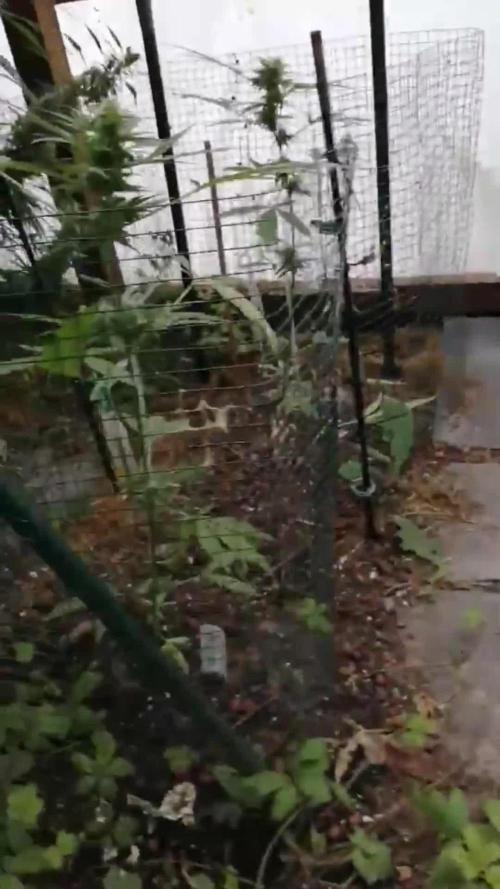
Cómo está cambiando el clima mi planta está floreciendo a buen ritmo,espero que no empeore con el invierno ya que no tiene ningún tipo de cubierta ni protección contra las inclemencias del tiempo
Likes
10
Share
@Prilyfe13
Follow
12/09/2025 Last week of nutes and last week of real flowering. Both ladies look just about done. Papaya Cookies is nearly there. Lemon Cherry Cookies isn't too far behind either. But she definitely has the whole week plus a couple days to go. Papaya Cookies might be done by the end of the week, if not sooner. I might have to push her a little more so I can harvest them at the same time. I won't be changing out the water until after lights out as I always do. So today will just be a plain water top off. Well, that's been everyday for like 2 weeks. Lol. But, I noticed both ladies definitely didn't drink as much as usual last night. Another sign that they are almost done. Normally it's close to a gallon a day. This was about a half gallon. Anyway, I won't be recording the morning readings as the water will be changed out today. If it were under the normal night and day schedule, it would be easier to do this, but the AI suggested this time of day for lights out. It's warmer now than at night. Obviously. Lol. So now I have to wait for lights on after the plants have had their rest to change the water out. Then we can take readings. Next week, which will only be 3 or 4 days, I'll be doing a slow wet trim. Or I guess the defoliation I should have done 2 months ago. Anyway, I'll be pulling anything with a reachable stem. I won't be cutting the sugar leaves. That's after drying with my new cannabrush. We'll see how well this baby works. On a final note before lights out, Papaya Cookies has a few buds that are nearly done on the bottom and they are super hard. Really nice smalls. There's a bit of larf, and I can't really reach the buds in the middle, but they seem to be the ones taking the longest. So I think we'll be waiting for those ones to finish. Lemon Cherry Cookies is kind of the same. Lots of bud in the middle that I can't reach. They aren't done and still have loads while pistils. But the buds on top are still swelling, so that's a good thing. We'll definitely see some bigger buds from this little lady. Good afternoon everyone. It's 6:41pm. New water new nutes cut in half. Readings: Papaya Cookies: pH: 5.8 EC: 824 TDS: 409 Lemon Cherry Cookies: pH: 5.8 EC: 874 TDS: 439 So it's 10 pm and I decided to check the pH and whatnot. It spiked to 6.8. What is happening? I cannot get it to stay in range. I don't know what to do here. It has to be something in the roots. I wonder if it's my tap water. It seems to have worsened since I started using it, but I can't afford distilled bottles. I will be ordering distilled for the 3 day flush. But that's only 3 days and I'm saving up for it. Back to the matter at hand. pH spiking. Both plants. The EC and TDS also increased. Not by much, but still increased. The goal is to decrease. Hopefully, with the lower nutes, the roots or whatever gets diluted enough to slow everything down. They're already not drinking as much. So there's very little time. I wanted to get it corrected by today. But nope. Nothin doin. Well, I guess I'll be checking the pH tomorrow morning and changing the water out. I might have to change it in the morning and after lights out. We shall see. If it drops, I'm going to pH it back to 5.8 and leave the water alone. That's the plan. 12/10/2025 So today I checked the readings like everyday. BUT today my back is killing me and I can't lift the shit. It's really annoying. So frustrating. Anyway, Lemon Cherry Cookies didn't change one bit overnight. pH is still at 6.8. the EC and TDS are also in roughly the same spot. But she did drink about a half a gallon and there was no change, so that's good. No increase in nutrient concentration. But the pH man, the pH is brutal. Papaya Cookies dropped her pH down to 6.6, so that's good. Not in range, but still good. Her EC and TDS are also about the same. So same situation but a lower pH. So I popped 3 ml of pH down in and mixed it up. Half gallon went into each container. It did nothing to Lemon Cherry Cookies. The pH stayed the same. But the EC and TDS dropped a little. Papaya Cookies with the gallon, dropped down to 6.2 and the EC and TDS dropped a little bit as well. Readings: Lemon Cherry Cookies: pH: 6.74 EC: 922 TDS: 465 Papaya Cookies: pH: 6.5 EC: 867 TDS: 430 Forget everything you just read. LMAO. The numbers increased. I guess it's just a waiting game now. I'm gonna pH the water for both ladies after lights out. This morning I just added the plain pHed water. And not much happened. It's the roots. Gotta be. There's nothing left to look at. Well there's the tiny dose of nutes, but I don't think that's the problem. It could also be from the water itself. It's pretty hard. But I have no idea what to do about that. Is there a water softener that can be used in a bucket? Or would that be a really bad idea? Also, I just thought about this yesterday when I was removing Lemon Cherry Cookies from her bucket into the reserve for the water swap. As we all know, the tail of the roots is super long. So I have to lift it with my hands out of the water. My question is why didn't it ball up like Papaya Cookies? I think they have the same amount of roots, but Papaya Cookies has an actual ball where Lemon Cherry Cookies has a tail and smaller root ball. What gives? Anyway, that was my weekly WTF question. Next week it's gonna be something like why won't this carboflush work? Should I add more? Should I swap out the water... Again?... You know. I'm implementing Murphy's Law here. What can go wrong will go wrong. LMAO. It's all good. I'm preparing for that exact question. I bet it's gonna be increasing EC and TDS levels. That's gonna be the problem. And no idea how to solve it. Swap out the water every few hours? That's crazy. Maybe one or two swaps every day, but not every few hours. A waste of carboflush and water. So I'm super concerned with who will finish first. Papaya Cookies looks like she could be done by the end of the week. Lemon Cherry Cookies looks like she could use the whole week and then some. I know I said this last week, but it is a real concern. And I still have nowhere to put the other tent. But it's only for a few days and not an entire week. Well, hopefully not an entire week. I have to trim in the tent so I can kinda keep the smell concealed. The fan on level 10 with just a side door open should be fine. Plus, I'm only taking off the sugar leaves at that point. So it should be a little faster with this brush thing and less smell will escape. Oh, I'll be using Grove Bags for the curing process. I really do like them. But I still need to add a Bovida pack because of the dry winter air. 12/11/2025 Morning readings after correction. Papaya Cookies: pH: 5.95 EC: 763 TDS: 381 Lemon Cherry Cookies: pH: 6.2 EC: 946 TDS: 473 I got a couple trichome videos posted for everyone to see. I actually haven't watched them yet, so I'll update shortly. But in bigger news. I found a full fledged flower on Lemon Cherry Cookies this morning. Complete with 1 seed. Then I found a bud with 3 seeds. Not developed yet, but there nonetheless. So that explains why she's taking longer to finish up. I'm hoping it was isolated and those are the only ones. I looked all through the bottom where I found the 2 sites. I think I found one more, but I left it alone. My question is, if I clear out the seeded sites, will the plant mature faster? Good question right?! Because what I read was that seeded cannabis plants will take longer to mature because of seed production, as seeds take 6 to 8 weeks to mature.i had a gorilla cookies that went for like 21 weeks because it got seeded everywhere. No clue how, I never found the pollen sacks. But that plant was super healthy and HUGE. Well huge for an Autoflower in a 3x3 tent with 3 more plants in there. Anyway, I'll definitely have to bring out the 2x2 now. As I said, I have trichome videos and I haven't seen them yet. But I have a feeling that Papaya Cookies is just about finished. As in I could probably start the flush this weeks as I suspected. We'll see though. Oh speaking of healthy plants. Lemon Cherry Cookies is also still unhealthy. I spoke too soon. Still locked out and now more leaves are turning yellow. The weird thing is, I added a very small amount of nutrients. How there's still an issue I don't know. I guess just wait longer? 🤔 Ok, so I just watched both videos. Lemon Cherry Cookies definitely has more time to go. The trichomes are mostly clear toward the middle of the plant. So she definitely has more time to go. Hopefully with any luck, she'll mature by the end of the week. Papaya Cookies has almost all cloudy trichomes. I like a bit of amber in the mix and there is none. So I'm going to wait for Sunday I think then start flushing her. I'll flush for 3 days. So that will be finished on Tuesday. And that's when I should be able to start flushing Lemon Cherry Cookies. Then I chop Papaya Cookies and hang her up. At the same time, I do a 3 day dark period for Lemon Cherry Cookies while she finishes up. In the meantime, Papaya Cookies is happily drying right above her. I'm still trying to figure out the best way to work the environment. I'm thinking I can just keep the temp at around 66° and bring the humidity up to 50% I think that's good. I have to look into it. But it's only for a few days and there's still plenty of airflow. I will be turning 1 fan off though. As to not disturb Papaya Cookies while she dries. Plus I don't need 2 fans for 1 plant this size. So yah, that's my plan. And as long as it works I'm good to go. If it doesn't work, I'll have to bring out the 2x2 and hook it up to the 3x3 and use that exhaust to pull from the tent. I have an extra fan so I can run that as well. For air circulation. Not too sure how I'm gonna keep the humidity up in there. Hmmmm. That's not good. I can definitely keep the temp low, but the humidity is super dry here right now. Well, it'll be 3 days in the 3x3 drying so if the 3x3 isn't ready for both plants to dry, the 2x2 will only be used for like 7 days. With a 10 day dry, that is. I'd rather not rush the drying time. Although, if I can't figure out the humidity, I may be rushing it quite a bit. Like in a very bad way. So I hurt my back and am having trouble even checking the readings. Hopefully it's not all messed up. Also, I've been thinking. Both plants have nutrient lockout. Would it make sense to start flushing Papaya Cookies like tomorrow? She only has about a week left. 12/12/2025 Readings: Papaya Cookies: pH: 5.5 EC: 731 TDS: 364 Lemon Cherry Cookies: pH: 6.2 EC: 877 TDS: 438 So I think Papaya Cookies is just about done. Tons of cloudy pistils. But a lot of clear as well on certain parts. I was gonna wait to flush in 4 days, but I think she needs it now. I'll start the flush later this afternoon I think. Or tomorrow. It all depends on how I'm feeling. My back is still out for torture lunch. Fuck, it hurts. Lol. Anyway, I think she's really close to harvest. Lemon Cherry Cookies on the other hand definitely needs more time. The tops look fine, but the middle of the plant is loaded with unfinished larf. Larf I can press into concentrate. And frankly, I don't want to harvest just the top of the plant. However, when I pull Papaya Cookies out, I'm going to center Lemon Cherry Cookies in the tent. I'm thinking about tossing the trellis net on there and pull the top branches outward to open up the canopy. That should help with the lowers in finishing a little faster. We shall see how I feel about it. Maybe I'll ask around. Update: I moved a couple things around and setup my dry tent. It's going to be exhausted through the 3x3. I'm thinking about putting the exhaust fan up to help with air exchange. Like very low. Anyone think this is a bad idea? Another Update: So I decided to start the flush with Papaya Cookies. She's got plenty of cloudy trichomes. Some buds have some clear on them. The only buds that aren't ready are the ones in the center of the plant. Way in there. I expect they will be ready on the next week. Or 3 days. Lol. I figure if they have too much nutes, then Papaya Cookies should have enough to last a week or so. If that's how it works. We'll find out.
Likes
20
Share
Dia 76 desde la germinación y 48 dias después del trasplante se empieza a notar la robustez de las plantas ya miden bastante alto casi 2 M , y estan bastante ensanchadas, lo único que se puede notar la 1051 , sus ramas crecen muy rectas hacia arriba ,la white noise crece con las hojas un poco onduladas aunque no afecta a la planta. Pronto las amarraremos y ataremos con una estructura para que esten más cogidas y distribuidas las ramas y mas seguras contra viento y lluvias que empiezarán en septiembre
Processing
Likes
14
Share
Der Stretch zeigt sich und die ersten Haare sind auch schon da. In dieser Woche nochmal entlauben und in der nächsten Woche ein kleines Lollypopping. Soweit bin ich zufrieden.