The Grow Awards 2026 🏆 






Likes
Comments
Share
@Nachtjasmin
Follow
(TNC MycorMax scheint einen Stickstoffüberschuss zu erzeugen. Hatte im Sommer auch je einen halben Teelöffel unter den Samen gegeben bei drei Pflanzen und alle hatten massive Probleme mit Stickstoffüberschuss. So auch hier die Banana Purple Punch. Bei der Gelato habe ich testweise das Zeug weggelassen und sie krallt die Blätter nicht ein.)
Zum Größenvergleich Bilder mit einem Feuerzeug. Beide FastBuds Pflanzen bisher sind ziemlich enttäuschend. Triebe, höchstens (!) zweimal so lang wie mein Daumennagel und schon steif mit ersten Anzeichen der Vorblüte.
Vergleicht das einfach mal mit der Sunshine LSD Auto, die ich im Sommer in 20l angebaut und so ziemlich alles falsch gemacht habe. Das Teil war ein Monstrum. Selbst jemand, der seit vielen Jahren mit Photoperiodischen zu tun hat und mir von Autoflowers abriet, war sehr sehr positiv überrascht, was das Teil unter widrigsten Umständen geliefert hat. Die Buds waren so schwer, dass ich alles abstützen musste, damit nicht alles umkippt. Alleine die Hauptcola über 30cm. Wirkung hat auch gepasst. Unglaubliches Teil.
Und was haben wir hier hier? Was wird das? Ein Zwergenwunderland?
Ich bin ziemlich enttäuscht aber vielleicht geschieht ja noch ein Wunder. Verstehe jetzt, warum von Autoflowers Indoor wegen Stromkosten/-verschwendung abgeraten wird. Das hier wäre was für meinen Balkonkasten im Sommer aber nicht für nen 14l Topf unter 240 Watt. Hatte nach der billigen aber bombastischen Sunshine LSD Auto von 66seeds echt mehr erwartet von Breedern, die sich speziell auf Autoflowers spezialisiert haben. Wenn der Ertrag so winzig ausfällt, wie das, was ich hier in den Kübeln habe, war es das mit FastBuds. Habe noch eine Blackberry Auto und einen Mix Pack mit fünf Samen da. Aber alleine dafür sind es mir die teuren Strompreise nicht wert. Ein Miniaturwunderland kann ich auch woanders bestaunen gehen.
Falls jemand einen Tipp hat, wo man ähnliche Autostrains wie die Sunshine LSD findet, bitte her damit ;) Die ist gut aber immer nur Skunk Geschmack wird auf Dauer langweilig.
Noch eine Geschäftsidee für FastBuds: Verkauft doch mal Mikrowerkzeuge für's LST. Einen 2,5mm Draht kann ich da nicht dran machen.

Likes
14
Share
@ThatoneAKguy
Follow
It’s hard to believe this amnesia haze is only in week two of flower! She is kicking butt and LOVING the HLG 550v2 as are her neighbors. I got a little stretch out of her but it appears that’s about it. The colas look like they’ll be about 8-10”. I moved the light down for a day and gave them 85,000 lux and while they are still reaching I don’t think they liked it as much as 65k so I brought it back up. I did take a few of her pie plate sized leaves of just to let a little extra light to the lower sites as well.
Thanks for looking and happy growing!

Likes
5
Share
@TerpNoobster
Follow
Starting to fatten up, some yellowing leaves, I top dressed a little over a week ago. So I'm hoping just a little nute burn. One plant is getting alot of purple not sure if it's genetics or deficiency. Front middle is quite a bit smaller nug wise. Front left is cresendo 1, Front middle- trainwr3ck × pistachio, Front right- is cresendo 2, back left- white runtz, back middle- cresendo 3, back right- grampas cookies× lilac diesel.

Likes
118
Share
@Njanne
Follow
This was my first time growing outdoors, and this variety did well in Eastern Ontario region. I started seeds indoors and put the mainlined plants in the garden in early May. They were done flowering September 27th. The plants were beautiful and purple. The flavour is sweet and earthy. This is remains my favourite variety. One thing I learned from this outdoor grow is that I need to allow more space between plants. One of these Purple Kush plants was choked out and didn't grow as well as she could have. Next year I'll do a better job.

Likes
14
Share
@TOMI08
Follow
142.nap
A trainwreck szépséges😁😁a héten megfogom ajándékozni őket egy kis vitaminnal💚💚💚
Mit gondolsz adjak nekik lő port?

Likes
88
Share
@Wastent91
Follow
Bene bene scusate il ritardo 😌 di un giorno come nell' altro diario.. purtroppo ho problemi in famiglia con mia nonna che nn sta molto bene e non ci sto molto con la testa e nn riesco a stare dietro come meriterebbero l attenzione massima tutti i progetti. Anche nelle descrizioni , considerazioni, opinioni , mi piacerebbe avere più tempo x farlo x descrivere davvero bene come le ragazze stanno esplodendo di vita ! Apparte questo velocemnte posso dire che la ragazza che sta crescendo con un soil dinamico sinergico creato con micorizia e funghi benefici, melassa e comunque tutto completamento organico, della linea di Bio Tabs , sta crescendo davvero bene , un verde intenso sintomo di prosperità, ho solo aggiunto 3 ml di pk bio , ma 😅 potevo anche evitarlo dato che stava già benone!! E si vede nelle foto non c'è nulla che posso dire di negativo su di lei per ora !
Mentre la secondo ragazza , io nn avendo mai usato il nutrimento della linea RQS, probabilmente sono stato un po' leggero con i nutrienti e si vede che è andata in carenza di calcio e magnesio
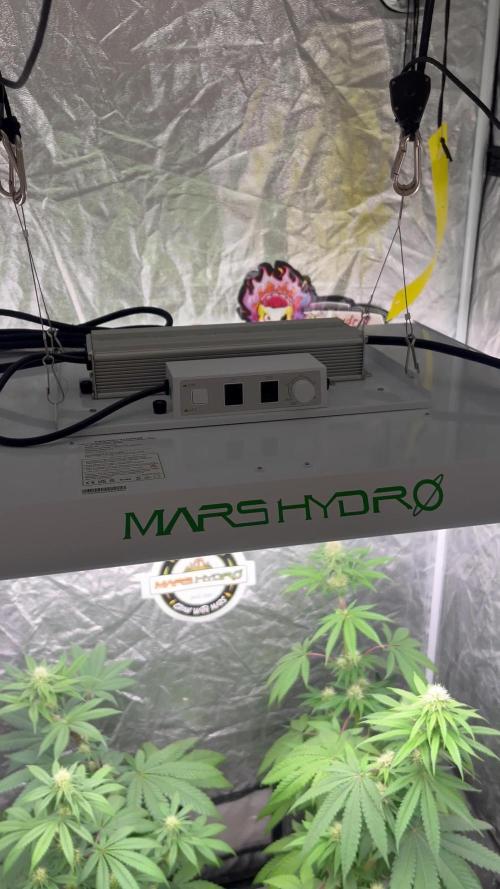
. Ora ho provveduto ad aggiungere al nutrimento solito che gli do, quindi vediamo come va!! 🙏 Ringrazio come al solito la luce fantastica che fa prosperare le mie piante come fosse un ☀️ in miniatura!!! Mars hydro la migliore luce che posso consigliare a tutti se avete un grow box piccolo come il mio o cmq anche più grande da un metro x metro e altro 180 cm o 200 cm sarebbe l ideale.. ma 😄 purtroppo ora nn posso permetermela quindi va bene così ! Ringrazio RQS dei semi spettacolari che consiglio a tutti! Buon 420 a tutti! 🐱😽💪👊🧙♂️🌱🌿🌲💨

Likes
22
Share
@GrowAndSmoke
Follow
Both plants are showing severe calmag problems, damn it's too late to do anything at all when you see it to this extent. (Day 50)
calmag problems are getting worse. Watered 1.5l ph 6.5 (Day 51)
Watered with nutrients.
I measured the light intensity again today with a diffuser.all popcorn buds were separated (Day 53)
Likes
154
Share
@CBD_Sweden
Follow
@FAST_BUDS,
Hi all the happy people here in GrowDiaries.
This is the new release of Fastbuds first CBD strain.
https://2fast4buds.com/seeds/cbd-crack
CBD Crack is a superchill euphoric hazer and medical marvel, rapidly becoming our anytime favorite.
Perfect for wake & bakes, this autoflower strain guarantees a mellow, positive and focused high.
Crack CBD is FastBuds' latest medicinal wonderbreed, delivering a rock-solid 6% CBD index. These distinguished, colorful plants autoflower beautifully in pine tree style. Lovely purpling and abundant frost adorn quality buds from top to bottom, with harvests of up to 250g per plant within 75 days of seeding.
TASTE & AROMA
Its distinctive flavor combines rustic and pungent tones with hints of citrus and cinnamon.
THE HIGH EFFECT
Contrasting robust CBD with lower THC, this bud induces a delightfully soothing, uplifting, low-anxiety effect which allows brain and body to function, while instantly easing symptoms and struggles.
HOW IT GROWS
CBD Crack boasts vigorous early growth, with full blooming around week 5-6, good frosting with a nice scent by week 8, and flowering in week 10 or 11. Ponytail her to get the side branches out & up and form some nice colas. Try 500ml of feed every other day, from day 14-17 up to week 4, and increasing as required thereafter. 70cm is a good height to reach, resulting in around 120 grams of bud weight. We recommend a bit of Low Stress Training to improve light penetration, and experimentation with light defoliation.
-----------------------------------------------------------------------------
2017-10-16. Week 9 and 62 days from germination. They are stacking up in the budsites and im have max of nutrients now. Added picks and video.
Girl Nr 1 is 62 cm tall and Nr2 is 41 cm.
The smell is sweet, lemon, berry, nettels, coffey and mint. They have som nuteburn in the tips and the second one i burnt the top on the hps lamp when i was replacing it in the room. They drink about 3 liters every day and are frosty and sticky.
Likes
216
Share
@CRiSPrGrow
Follow
Week 5 : Auto Colorado in Vertafort
Great week of growth, filling out the canopy nicely by now ! seeing some promising side shoots, not seeing any excess or lack of nutrients - yet ! sprayed with micro and kelp twice a week , keeping VPD in the green zone to great effect. got watered with co2 twice and got watered once with beneficials and micro. I might have messed uo a bit on the pH watering the last time, but only time will tell. Hopefully the soil microbes etc will buffer it out without any significant pH fluctuations. just trying to follow their growth with some LST and raising the light every day or couple of days this week, keeping the distance constant and hopefully keeping the correct distance. I'm not planning a feed for a couple of weeks at least. Let's see how the buds develop first ! Any comments or constructive suggestions, fire away ! 🚀

Likes
52
Share
@TheFoxFarmer
Follow
Week 6 Flower
Up until flush, she was only given PK, sugars and sweeteners, and the microbes (listed above). Everything else has been stopped to ensure a proper flush. She started her flush on Day 40 as I want to get a nice fade on her after a long flush.
My girls are in coco and perlite, in fabric pots sat on benches so they dry out within 2 days. Because of this I can flush a lot of water through them without overwatering. Infact, the amount of water I put through them doesn't make a difference to how quickly they dry. Good air movement around the pots also helps them dry, and stops any stagnant air within the lower half of the tent and within the plants, preventing any moulds. When flushing, I first feed just enough water to create a run off into the tray so I can read the ppm and pH value. Doing this lets you know how your plant has been performing; whether she's been way off in pH and locked out by having a high/low pH and high ppm, or if she's been doing just fine with a pH range within tolerance and around the same ppm value or less than you've been feeding. This girl was in perfect health, with a good pH and ppm. After that, I flush up to 30ltr and then take a second reading from the last bit of run off. The ppm is the main thing I look at this time, to see how low I've taken it from the flush. Personally, I find the girls fade much sooner, and more overall by doing a bigger flush as it takes almost all of the nutrients out of the coco within a few days. That leaves the plant with nothing but her own stored nutrients to feed on for the next 2+ weeks. A better flush means a better, cleaner smoke.
She's stacked up and swelling by the day with huge buds. Not the frostiest strain I've ran, but still covered in trichomes and extremely strong scented. She smells of mixed berries and grapes 🍇 I can't wait to try!
Thanks for following and happy growing! 🐺
Likes
422
Share
@Crashoverite
Follow
Hi everyone 😁
Welcome to my second diary.
Strain of choice 🍌💜👊 Auto from Fast Buds 420.
Normally I would use paper towel method but this time decided to try germination in propagator directly to substrate. 100% success. First girl showed in about 48h after planting and second maybe 12h after.
07/10
Seeds planted. Propagator at 22 degrees and 90% humidity.
09/10 Day 1
Girls popped through the soil.
13/10 Day 5
Xena and Athena comfortably transported to new 5 star spa resort and they do like new 14l queen beds
15/10 Day 7
End of germination week. Girls are growing very fast. Have a very good feeling about these 2
Stay tunned for daily updates.
Have a great week coming everyone.
Peace and love brothers and sisters
🍌💜👊
Likes
22
Share
@valiotoro
Follow
The buds shine like a shooting star mad sticky too⭐️
First thing that hits me with the smell straight up like canned pineapples in syrup🤤🍍


Likes
6
Share
@Mr_nugs_lover_David
Follow
I have topped one of the 5 phenos because this plants looks like they had a few more days of growth before flowering and wanted to get more colas, they are developing awesome one pheno ended up too small but it will definitely give something, let's see how this beautiful ladies keep developing


Likes
27
Share
@adam_pawloski87
Follow
Let’s Go day 29!! This week went real nice ! Girls are staying very healthy and building up nicely and even started showing signs of female sex which is super great ! We started doing a little bit of leaf tuck training method on em , nothing to big as like I said I want these girls just to do there thang an grow more on naturally side! My Air temp and Humidity have been on point all week, staying from 70-75 degrees throughout the day and humidity staying around 58-61% humidity , my girls are loving that summer an 75 feeling !! Can’t wait to see what we do this week ! Hopefully you all enjoy, and are ready for another great productive week ! Peace love an positive vibes to y’all Cheers 😶🌫️💨💨💨💨🤙🏻Happy Grows✌️🏻Week 4 let’s get it !
Likes
25
Share
@pifflestikkz
Follow
Day 51
20/08/24 Tuesday
Feed today using de-chlorinated tap water pH 6. With Plagron PK13-14 and power buds.
Noticing the stretch stop, and now packing out there bud sites 💪💚
Day 54
23/08/24 Friday
Watering only today using de-chlorinated tap water pH 6,
I'm watering in 350ml no run off. 400ml I'm seeing tiny run off.
Day 56
25/08/24 Sunday
Water today using de-chlorinated tap water pH 6. Added bud candy and rhino skin 1ml per litre.


Likes
2
Share
@eldruida_lamota
Follow
Vamos familia, actualizamos la tercera semana de floración de estas Runtz Punch de Herbies.
La temperatura que estuvo entre los 24-26 grados y humedad dentro de los rangos correctos.
En cuanto a las plantas las veo verde sano, estiraron bien y ensancharon bastante también.
Se nota que los nutrientes de la marca Agrobeta hacen sus funciones.
Las flores empezaron a formarse, por el momento todo correcto, os dejé también alguna novedad y un cambio en la sala, agradecer al equipo de Mars hydro por el nuevo TSW2000. (los últimos 5 años cultive solo con los leds de esta marca).
- os dejo por aquí un CÓDIGO: Eldruida
Descuento para la tienda de MARS HYDRO.
https://www.mars-hydro.com
Hasta aquí todo, Buenos humos 💨💨💨

Likes
8
Share
@SherbGrows
Follow
Fast Buds
Wedding Glue
Day 49
Light viparspectra XS2000 dialed in at 75% light intensity
Watering every other day to every two days
Buds are taking off on this girl! wow! growing in nice and frosty! super excited how she looks this time next week!
See you all next week! Happy growing