





Likes
46
Share


@Ju_Bps
Follow
Hello happy friendly growers,
All was fine this week,
I've started bloom fertilizer and plagron sugar royal this sunday.
She look nice and buds are biggest each day
Have a nice week :D

Likes
20
Share


@NONSENSE
Follow
Week2:
The plants looks very nice. x 3 are ROYAL Cookies
And the two babies are Afghan regular and Diesel fem.
The middle Cookies plant is bigger= 2 days older then other ones. You can see the difference.
From tomorrow I will start to train the plants. I will LST two small plants.
The bigger one will be topped also.
The genetic is very good. There are a lot of colas and they are located close.
I hope to have time to develop about 8 colas for each plant.
Less than three months are left until the end of the RQS cup.
So from January 1, I plan to start flowering.
The plants eat and drink good. i see small iron deficiency( the leaves are a little bit yellow.) i will Flush the plant with pure 6.0pH water and microelements only. Flushing should remove nutrient salt build-up
Likes
6
Share

@Chef_LA
Follow
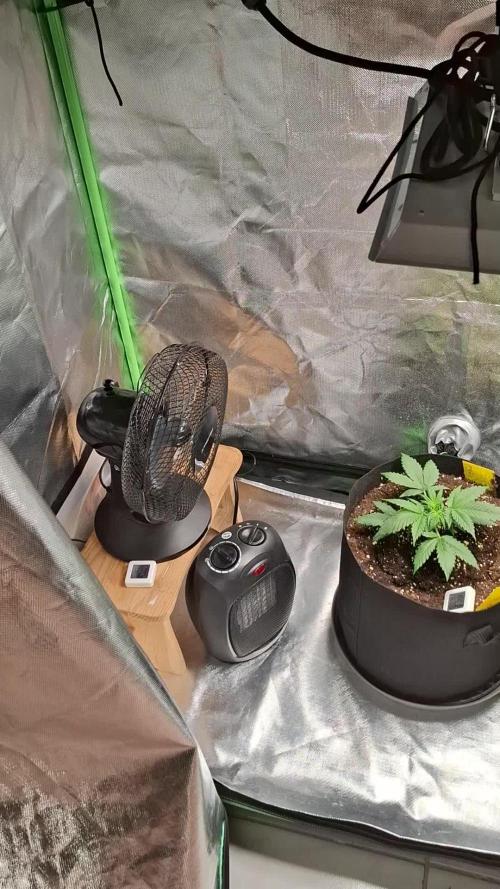
Die Pflanzen sehen zwar gesund aus aber sie haben fast kein Wachstum 🤔. Ich weiß wirklich nicht was da schief läuft. Habe schon mit der Lichtstärke experimentiert aber weder etwas mehr noch etwas weniger brachte eine Veränderung.
Für Anregungen oder Tipps bin ich offen und würde mich freuen von euch zu lesen.
Am Gießen, Dünger oder der Temperatur kann es nicht liegen. Hatte schon öfter Automatics mit dem Setup.

Likes
6
Share


@artems
Follow
Bad Guy is thriving, but some lower leaves are yellowing. I've boosted feeding and will keep a close eye. Despite that, its upward growth is impressive, and I'm excited to see how it progresses. 😊🌿

Likes
62
Share


@OwlGang_Uk
Follow
Time Is Winding Down On The Girls Scout Cookies In The 3 Gal Pot It’s Starting To Show A Nice Purple Color On The Buds. All The Girls Are Highly Scented And Frosty. The Lemon OG Looks Like It’s Going To Be The Frostiest Of Them All. . .The Purple Power Is Still Drying But It Shrink Up Pretty Bad I’ll have An Update For You Next Grow.
Height Chart:
Girls Scout Cookies: 31 inches (3gal)
Stardawg: 35 inches
Girls Scout Cookies: 40 1/4 inches (5gal)
Gorilla Glue: 33 1/4
Lemon OG: 42 inches


Processing
Likes
8
Share


@GrownwithLED
Follow
After defoliating both Barbarian (=AK-47 x Barbara Bud) plants after week 11 they now develop more and amore flower clusters, since the light can penetrate deeper int the canopy now. The plants are producing trichomes like crazy, even the bigger sugar leaves are covered in them! VERY FROSTY PLANTS! The flower clusters clearly form colas now along all side branches and both plants fill up nicely. The smell is now strong and sweet with a clear peach aroma to it, it makes me smile every time I look into the tent. The plants love the Advanced Nutrients feeding schedule and are getting the recommended dose every watering.
Likes
3
Share

@Nofeckingclue79
Follow
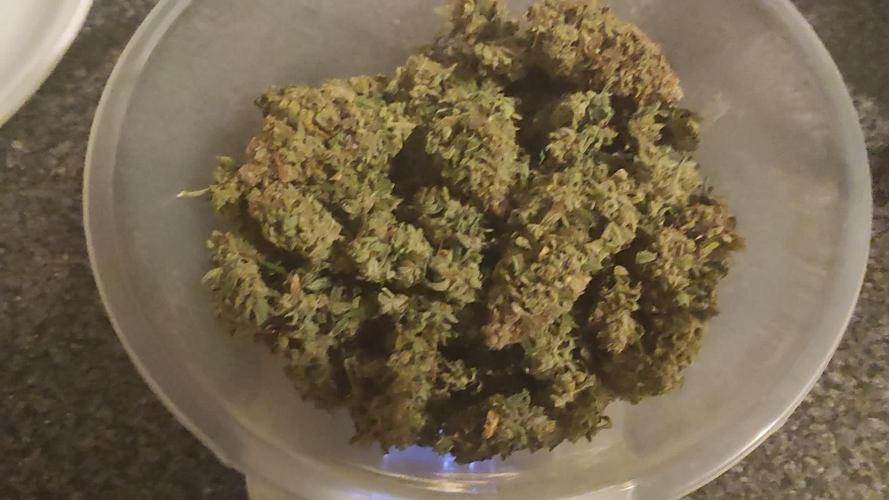
Again I haven't taken any pictures of this plant was on the side of the fan that didn't go down I've inspected her all over and I've found no evidence of mold or bud rot. This plant is now drying separately to the offer plant I just didn't want to take photos for it all to end up in the bin but this should be a nice harvest

Likes
15
Share


@I_Identify_As_A_Dan
Follow
Week 27 for Gelato 41 by seedstockers,
Shes survived the caterpillar attack 😂 Have found a few spots from bud rot from high humidity cant really help that as weather has been terrible just storms after storms of heavy rain 😐 dark clouds not much sun, we still have more rain coming with highest of 21 degrees...😒
Shes coming very close to her harvest window maybe 2 weeks time. Shes probably ready to come down but i want to push it a little longer because of those sativa traits.

Likes
4
Share


@weed_gastro
Follow
day 42: LOTTA leaves, had to defoliate 2-3 times.
they started to show their first pistils a couple days before the Ayahuascas, hope I can do a harvest before May,(the Peyotes) but it seems really tricky..unfortunately I need to leave them for a week in April. I'm pretty scared to leave them alone at the end of flowering...
Day 43: do you think the leaves on 2 plants might be too dark green? Thanks!
day 46: defoliating

Processing
Likes
8
Share


@eldruida_lamota
Follow
Esa familia, estoy de nuevo por aquí, os traigo la última semana de crecimiento de estas candy caramelo de Zambezaseeds.
Estoy bastante contento las 3 son simétricas están creciendo en un tanque de 7 litros en los cuales aportamos el primer riego con nutrientes para solventar alguna carencia leve, sobre todo de nitrógeno pero nada como echarles de comer.
El ph está controlado, la temperatura no aumenta de 26 grados y la humedad la mantenemos por encima de 50%.
Cómo apreciáis, todo va sobre ruedas, veremos que tal se comportan de ahora en adelante, saludos fumetillas y buenos humos.

Likes
48
Share


@AsNoriu
Follow
Day 36. Big week .
New light was added and rhythm changed to 12/12.
Pot was top uped with 3 handfulls of BioBizz Worm Castings. 1.5 g of Biosys and 1.5 g of Great White were added too.
After training she got 2l of water, slowest drinker at the moment.
Girl got small defoliation, when you bent main top, one fan leaf is always staying in everyone's way, so he had to go. Think to do big clearing on day 14-18 of flower.
Got first wave of LST, main top was lowered, couple leaves and one shoot were repositioned and secured too..
Genererally stem is thick, needed two places to tie, to make any movement, side shoots are developing evenly too, all thanks to :
TS1000 by Mars Hydro, great light, did perfect job during veg period, now i added one more for better coverage of long tent. Think in tent 1x1m i could manage to flower all 3 without any ad ons ....
Great small light for amazing price.
Day 40. Girl develops nice and even, good colour and i am happy with her.
Day 42. New training day, first time took so many away, girl lost 10-15 leaves, most were huge, no bottom clearing still.
2.5 liters of 6.3 water went in.
Happy Growing !!!

Likes
10
Share


@CaptainHook
Follow
Nothing interesting to say...
I just added some Humic Acid Plus and Growzyme to my More Roots from Green Buzz in my Terra Soil Mix with every watering.
🎼 The plants just woke up into this world, so to celebrate their birth and welcoming them as the princesses they tend to become, I decided to play some Prokofiev's Peter and the Wolf & Tchaikovsky's Swan Lake on a Bluetooth speaker during each watering or simple courtesy visit I made. Yet notice that Rossini's Barber of Seville & Vivaldi's Four Seasons was used as a booster during the second part of the week.
Likes
3
Share


@Dr1delaplante
Follow
Jai tuer Liberty haze pour laisser la place au gros demon
Elle est flexible et résistante pour le scrog
Likes
9
Share


@Headies
Follow
So this week after I gave it under nutrients I apparently gave it too much nitrogen while having a potassium deficiency. Shiney dark leaves, So i fixed that, but some didn't bounce back, and I tried nitrogen. I think they are doing pretty good considering everything I've put them through SO FAR. lol. Nutrients are NPK Raw's total lineup, follow their instructions at first, Fastbuds adjustments as of this week.
Likes
12
Share


@GizaWRZ
Follow
It's almost Christmas time, I would like to wish you a happy Christmas , a big harvest and all the best for you ✌️ Peace ✌️ fck corona ✌️we have our medicine to survive 😁
Likes
20
Share


@BurningTreezz
Follow
this week our evo's arrived! they have quite a bit of power, much better than the Q-series.
today is day 28 and the ladies look great!
they are already starting to smell nice


Likes
20
Share


@GrowinHome
Follow
Exciting first few days setting up everything in and around the propagator.
I think I'll start counting the vegging days when the seedlings are 7-10 days old.

Likes
45
Share


@Dirty_Hippy
Follow
They are looking strong and healthy with decent branching before LST. I expect them to be some nice little bushes. I am thoroughly impressed at the rate of growth and maturing on these. I really hope they don't finish in 7 weeks. They are already clearly into their stretch and beginning to make bud sites on day 26.
Likes
39
Share


@Proto420
Follow
Even though they were all born on the same day starting with 10 seeds (6/23/21), 4 out of the 9 (because 1 hermed) matured and finished much quicker than the others.
I would say a couple of them have at least another 2 weeks to go. Slowly but surely.
My fiancé and myself wet trimmed most. Never trimmed before. Shitload of larf unfortunately. I doubt I have any nugs that weigh heavier than 3.5. Should’ve done a few things differently but do it goes.
I made sure to maintain “low and slow” as best I possibly could. 9 plants all at the same age was a ton of work! Used my original tent to dry in. Conditions were about 70 Fahrenheit, and 55%RH. Bought one of them tiered mesh drying racks, and hung it in my 2x2. Few fans at the bottom, and my intake fan at the top of it, exhausting into my 4x8.
I’d reckon I got about 3 ounces out of the 4 I took down earlier this week. Amazing feeling smoking your own weed that YOU grew. Seeing it in your jars. It was definitely all worth it.
I almost bought another 2 ounces off my weed supplier. Then I realized I didn’t need him anymore. Saved me three hundred bucks right there.
Idk If im just unlucky or what, but only a couple of mine had a slight purplish tint. Sorta disappointing. It smokes great tho, even still being in the beginning portion of its cure.
I fucked up in multiple aspects, chalk those up to learning. Definitely going to defoliate around day 30, and also make sure my lights aren’t too close like they were here.
My greatest mistake was the PH, it was improper for about 3 weeks. Took that long for it to get sorted out. Thus more than 1/4 of the plants life was spent in not perfect conditions. I was putting in water at 10.7, and getting 6 out as runoff….
With that being said, I’ve now got 4 plants to completion under my belt, soon to be 9 so I’m moving away from soil and closer to hydro. Bought an automatic drip feeding system I plan to use for coco.
I’m done with fox farms ocean forest. It may be alright, but I’m spending way too much time watering/feeding.
Thank you to everyone who commented, I appreciate it. Gonna keep doing what I’m doing and try to do it better than this time. Shooting for fatter nugs no doubt.

Likes
11
Share


@Papastroumf
Follow
Day 43 : Watering with co2 tab / 5L. Also added food again because i think they need it. Increased ppm to 850. Maybe the next one will be pure water. Ventilation works all the time when lights are on. Temp and humi are stable and this is good for the girls. 5 cm in 3 days. Patience is the key always. Also removed some burned leaves from all ladies.
Edit (Day 47) : Watering with co2 tab every 5L. I watered with juices again at 850ppm because i felt that they need it. Only DsD drank pure water because of burns. Also 4cm in 4 days. She will be low yielder with good stuff. It smells sickkkk.