


Processing
Likes
Comments
Share


Likes
13
Share


@Chubbs
Follow
420Fastbuds
FBT2311/Week 4
What up everyone. Hope all are well. Weekly update on these two gorgeous girls. This past week has been fun doing a major defoliation taking off most the bigger fan leafs. Hard to tell a few days later I took anything off. Which is amazing they never skipped a beat. No big issue's and since sprouted have grown phenomenal being relatively easy. All in all Happy Growing.


Likes
37
Share


@The_Bearded_Grower
Follow
welcome to Day 15 1/1/20 she is growing very fast and healthy and the auto pot sys seems to be working properly. from here on out i should not need to water manually and can relax a bit feel free to drop a like or comment. as always happy growing and keep your stick on the ice

Likes
36
Share


@Lordshiva83
Follow
Olá companheiros de cultivo, está semana notei evolução em todas as plantas, a ajuda do Mars hydro ts1000 fez toda a diferença, as minhas plantas adoraram, estou muito contente estão a desenvolver muito bem e a tropicanna já mostra a sua essência roxa 🤩🤩🍇🍇🍇☮️ Boas festas peace and love ☮️☮️


Processing
Likes
19
Share


@Freedonia
Follow
Day 43. Change the dose of nutes to medium flowering, I consider that the stretch period is no longer so remarkable. I also add 10 ml of Plagron's Green Sensation. I raise the ppm to 700, I think I will keep this level until the flush. pH at 5.9
She is full of trichomes, is very sticky and every day increases her smell.
Not much to say about this week. I realized that using Green Sensation and increasing the water level of the reservoir maintains a more stable pH, I only dedicate myself to pouring 0.75 liters with water pH 7 each time it drops from 5.8
You can see that the buds start to get fatter little by little ... I hope that it forms some tight ones 😁
Likes
126
Share


@ScotlandDrGreen420
Follow
The little Dawg is coming on great , res change and some more nutes and it's started to open up.
The difference in only 48 hours has really surprised me :)
Day 3: seems like the little Dawg loves the res haha. .. doubled in width and grew 2cm in 48 hours , drank roughly 4 litres of water , poms were 350 then then dropped to 315 so it's definitely loving them nutes :)
Day 4 : decided to do top my dawg and defoliate last night/this morning, came back in tonight and it's drank 2L of fluid and exploded with roots and perked right up.... I know it's it's classed as sin to top autos but i love to experiment and I've assumed if it it can grow this much in less than 21 days then then it should have enough time to heal and stretch some more before flower - well well that's my theory haha. .. All a learning curve for me :)
Day 5: perked up since topping it yesterday and I'm positive i can see new leafs trying to poke through the top already so , I've applied some cablr ties to begin training it.
Day 6: the little dawg seems to have took took the topping and training in its stride haha.... can see 2 new sets of leaves poking through the top, the plant stands roughly 12cm as it's topped and being trained , spans 20cm
Likes
6
Share


@Growingbythemasses
Follow
3 week flush. Keep in mind this my first grow so I’m open to criticism. Can anyone predict the yield?

Processing
Likes
29
Share


@UKLEEDSGROWER
Follow
So the girls are 4.5 weeks old there abouts. Happy with 4 of them (ish) seem to be transitioning to flower now so hopefully they get a nice stretch as there really short making me panic a little. Can see purple straight away.
Likes
35
Share

@Miketama
Follow
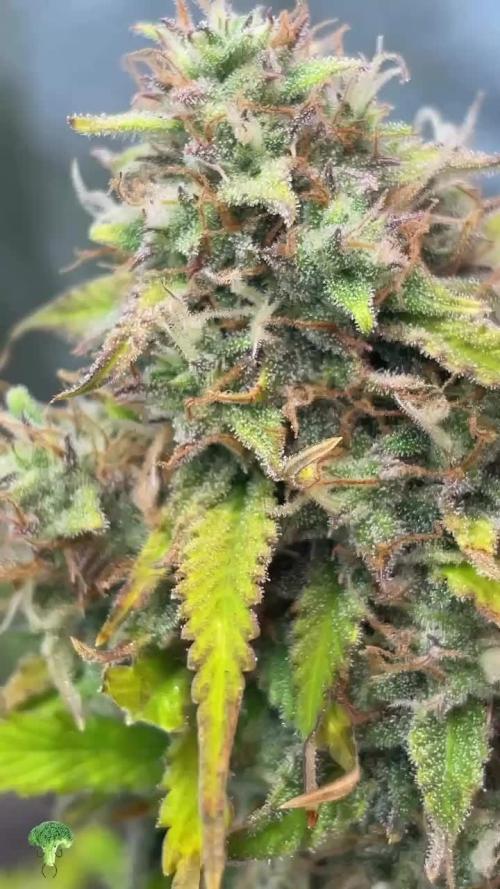
Everything’s looking great, buds are stacking up nicely and getting frosty 🔥 Running Plagron Green Sensation and the results are showing 💪
Flush phase coming up real soon, stay tuned! 🚿✂️

Likes
12
Share


@JiggiLotus
Follow
She prefers the purple bulb over the white spectrum.
I love growing plants, they can't cheat on you. Lol

Likes
19
Share


@LittleBigTrees
Follow
They've stretched through the net a fair bit , all different heights.
Defoliated reasonably hard on day 20 .
Started sugar royal at half dose this week.
Will start green sensation also from plagron from week 4 as recommended.


Likes
2
Share


@Saintvicious
Follow
She's unstoppable. Looks like we are about to be in pre flower. It's show time.
Likes
4
Share


@Sense63
Follow
🍋 Z-Up Auto (FastBuds), „Z-Up" 🍋
📋 Steckbrief
🏷️ Breeder: FastBuds, feminisiert, autoflowering
Typ: sativadominant
🏆 Auszeichnung: Best New Strain beim Autoflower World Cup 2025
⏱️ Dauer: 8 bis 9 Wochen von Keimung bis Ernte, teils werden 8 bis 10 Wochen angegeben
📏 Höhe: 70–120 cm
💪 THC: bis 29 %
🍋 Aroma: Limettenlimonade mit starker Zitrusnote
⚖️ Ertrag indoor: 450–600 g/m²
👑 Anbau: anspruchsvoller als andere Autos, mag es warm und verträgt nur leichte Düngung
🌱 Erde und Nährstoffe
? Topf: 7 Liter
? Substrat: Biobizz Light-Mix mit Biobizz Wurmhumus
💊 Zusätze: BioTabs (Düngetabletten), Startrex, Mykorrhiza, Bactrex, Orgatrex
📅 Aktueller Stand (18.10.2026)
🎂 Alter: ca. 7–8 Wochen ab Keimung
🌿 Vegi-Dauer: ca. 2–3 Wochen, danach selbstständig in die Blüte gegangen
🌸 Blüte: etwa Blütewoche 6
🌲 Training: keines, natürlicher Wuchs in Tannenbaumform
💎 Blüten: Hauptcola zu einem langen, gestapelten Zapfen zusammengewachsen, Seitentriebe mit deutlich dickeren Buds, Stempel noch überwiegend weiß, erstes Harz auf den Zuckerblättern
🍿 Unterer Bereich: im unteren Drittel keine Fächerblätter mehr, nur noch Stiele mit kleinen Popcorn-Buds
🍃 Blattfarbe: dunkles Grün, obere Fächerblätter mit gelben Spitzen und Rändern, vereinzelt kleine rostbraune Punkte
✅ Gesundheit: keine Schädlinge, kein Schimmel
👍 Bewertung: gut, die Blüte legt sichtbar zu
🔮 Ausblick: grob noch 2–3 Wochen bis zur Ernte, also Anfang bis Mitte November
✍️ Wochentext
🚀 Seit dem 05.10. hat die Z-Up richtig Gas gegeben! Rund sieben bis acht Wochen ist sie jetzt alt und steckt etwa in Blütewoche sechs.
🌲 Vor knapp zwei Wochen saßen an den Spitzen noch kleine Knubbel mit weißen Stempeln. Heute ist die Hauptcola ein langer, gestapelter Zapfen, Kelch auf Kelch. Auch die Seitentriebe haben ordentlich zugelegt, jeder trägt seinen eigenen kleinen Turm. Die Tannenbaumform ist geblieben, nur hängt jetzt der Schmuck dran 🎄✨ Auf den Zuckerblättern glitzert schon das erste Harz. Wenn die Zitrus-Limonade hält, was FastBuds verspricht, wird das eine frische Sache 🍋😋
🍿 Unten herum ist sie frei geworden: Im unteren Drittel stehen nur noch Stiele mit kleinen Popcorn-Buds. Oben hat sie immer noch die gelben Blattspitzen, und an einigen Fächerblättern ziehen sie sich inzwischen auch an den Rändern entlang, vereinzelt mit kleinen rostbraunen Pünktchen 🍂 Die Z-Up gilt als Diva, die nur leichte Kost verträgt, und genau so benimmt sie sich auch 👑😅 Der Plan bis zur Ernte: nur noch Wasser 💧
🏁 Fazit der Woche: gut 👍 Die Blüte legt sichtbar zu, Schädlinge und Schimmel sind kein Thema ✅ Die Stempel sind noch fast alle weiß, also heißt es Geduld ⏳ Grob zwei bis drei Wochen noch, dann entscheidet die Lupe 🔍
Aktueller Stand (23.10.2026)
Wochentext
🎄 Die Z-Up ist jetzt ein richtiger Weihnachtsbaum, und zwar einer, bei dem der Schmuck immer schwerer wird! Rund acht bis neun Wochen ist sie alt und steht an der Schwelle von Blütewoche sechs zu sieben.
💎 Seit dem 18.10. hat sie nochmal kräftig zugelegt. Die Hauptcola ist ein langer, dicker Zapfen geworden, oben spitz wie ein Kirchturm, und die Seitentriebe stehen drumherum wie eine Leibgarde, jeder mit eigenem dicken Bud. Die Zuckerblätter glitzern inzwischen deutlich, das Harz kommt 🍋✨
🌞 Ganz oben an der Spitze zeigt die Diva wieder ihre Launen: Die obersten Blätter haben gelbe Spitzen und rollen sich leicht ein. Das sieht eher nach zu viel Licht als nach Hunger aus, sie sitzt eben ganz vorne in der ersten Reihe 😅 Etwas mehr Abstand nach oben und sie ist wieder zufrieden. Ansonsten keine Schädlinge, kein Schimmel ✅
🏁 Fazit der Woche: sehr gut 👍 Die Stempel sind noch überwiegend weiß, also heißt es weiter Geduld ⏳ Eher Richtung Mitte November als Anfang, ab jetzt kommt regelmäßig die Lupe zum Einsatz 🔍 Wenn die Zitrus-Limonade hält, was sie verspricht, wird das ein Sommergetränk im November 🥤
Likes
6
Share


@Lowbabymedz
Follow
Heading to harvest in about 2 weeks boutta full send on overdrive + bud candy for the last week prior to flush with flawless finish. The smell is definitely crazy. Worth noting that i’ve switched from biobizz to AN and their nutes definitely worth the price
Likes
16
Share


@eldruida_lamota
Follow
Venga familia que ya viene la cosecha de esta Panty Punch de Seedstockers, que ganas que tenia ya de darles machetazo.
No veas que pinta que tienen estas plantas.
Las flores aparte se ven bien resinosas, y son bien prietas, aparte son súper aromáticas huelen mucho.
(COLOQUEN UN BUEN FILTRO PARA EL OLOR).
a sido una genética con la que disfruté mucho cultivarla, la genética es perfecta para SOG y es bien vigorosa, es muy fácil cultivarla y muy resistente merece la pena si eres cultivador principiante.
Hasta aquí es todo, espero que lo disfrutéis, buenos humos 💨💨.

Likes
60
Share


@BOMbolenath
Follow
The plant is ready to flower. I covered the soil with inputs and did a little defoliation. It is developing well.

Likes
23
Share

@TrickzGrowz
Follow
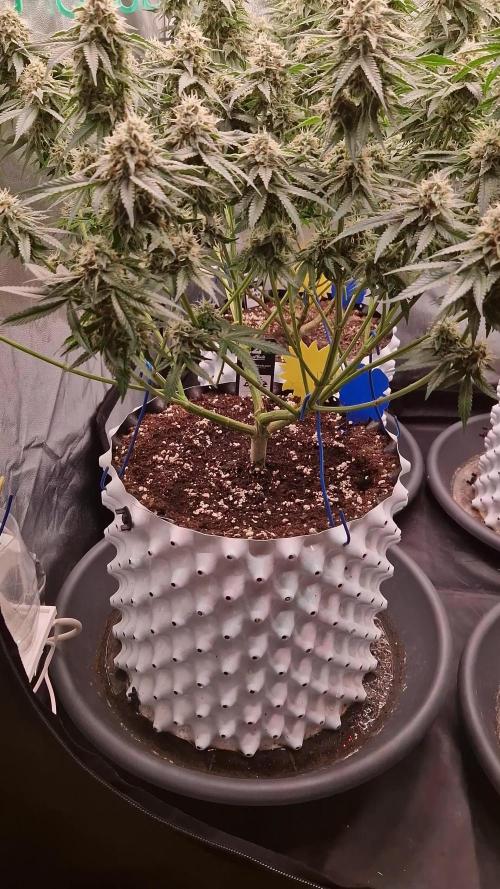
Die Kleinste Dame macht immer die dicksten Buds bei mir. Bin echt mega zufrieden, sie ist nicht so frostig wie die anderen Damen im Zelt. Dafür aber macht sie richtig dicke Knospen.

Likes
7
Share


@Eddjack
Follow
Ci siamo !!! No vedo l ora di farmi il regalo di natale. Odora di dolce, fragola e zucchero. Il terreno e carico di nutrienti infatti credo che questa settimana andrà ad acqua . Piena di gemme appiccicose e profumate sarà pronta prima di natale speriamo bene.
Dajeforte growers!
Likes
11
Share


@Bread_n_Buds
Follow
For our Zamnesia girls It's time to work some magic, since October 1st we are in flowering, the plants have vegetated for exactly 4 weeks, a single top was done on some, others are growing straight, some clones here and there still in veg.
This is a very good test nice color nice all is going very good. There was a moment of difficulties but now is going very good, this is the last week of veg, going in bloom!
--- Technique chosen (depending on the characteristics of the plant) - The plants are not doing very well when it's like this I decide to search for the miracle; on one I did a topping and cleaned a lot and left it in veg, the other went just a little cleaned straight into flowering.
--- Feeding Program - The fertilizers are always Plagron and I am following the table that I generated on the site depending on the substrate chosen. Create your card and follow it, never be presumptuous my friend as I have been in the past, follow the card and look at the plants, not all need the same amount of fertilizer. We have arrived at the moment to give a good hit of iron in the first weeks of flowering, already of life race not sprayed but mixed with fertilizers.
---- https://plagron.com/en - Power Roots - 1ml/l - Alga Grow - 4 ml/l - Pure Zym - 1 ml/l - Sugar Royal - 1ml/l - Vita Race - 3 ml/l --- The 100% Organic pack by Plagron can be found on Zamnesia at the link: https://www.zamnesia.io/it/11457-pla gron-easy-pack-natural.html --- We have removed the deumi dehumidifier and now the values range from 45 to 60% we will put the dehumidifiers into operation at the 3/4 week of bloom // Strain Description //cross of Alien OG and Rollercoaster Haze, Cosmic Noodles offers excellent yields and extraordinary aromas. This variety is very powerful, contains 25% THC and produces intense and long-lasting effects. Stimulating and relaxing at the same time, Cosmic Noodles causes an energizing cerebral effect that fades over time becoming soothing at a physical level.
- Get a seed of this fantastic strain --- new strain coming soon
- Soil and Fertilizers entirely organic
--- https://plagron.com/en buy on www.zamnesia.io
- air system --- https://www.secretjardin.com/
- Growbox & Light —— www.Marshydro.eu
- Music and sound --- I made my girls listen to 432hz frequencies and music from www.radionula.com
- Z --- You can find these seeds, much more from the world of cannabis, mushrooms and an incredible series of accessories and gadgets on the reference site not only mine but of many growers —— https://www.zamnesia.io
Likes
29
Share


@Northerngrowers
Follow
Finales de la semana 8 en cultivo ecológico.
El proceso ha sido relativamente fácil y sin problemas de no ser por el exceso de nutrientes en la mezcla del supersoil casero, culpa mia por probar cosas nuevas, aunque me ha valido para aprender y he conseguido rectificar a tiempo sacando una gran cosecha.
La calidad de las flores se puede apreciar en las fotos, la pena es que no se pueda apreciar el olor, afrutado y muy potente, huele a pura vida.
La cantidad de tricomas es considerable como para hacer buenas extracciones.
En resumen una gran productora de flores de muy alta calidad, Totalmente recomendable.