


@DeepRootsGrowTrees
Follow
DIVINE OG KUSH / DIVINE SEEDS
WEEK #23 OVERALL
WEEK #10 FLOWER
This was her last week she gave her all producing some dense frosty buds that have a slight purple hue to them. She smells of sweet goodness and gas!!
Stay Growing!!
Thank you for stopping by and taking a look it's much appreciated!!!
THANK YOU DIVINE SEEDS!!!
DIVINE OG KUSH / DIVINE SEEDS

shorts_status_processing


@Reaper
Follow
week 7 flower:
big fanleaves start to die off and the purple/yellow colors appear on the plant. one more week before harvest


@ELPITODELPANGO
Follow
Me parece que está sana, no sé, tengo dudas, a veces creo que está faltando alguno micronutriente.


@cubansoldier
Follow
The beginning of the flowering stage with some LST..🌱 #CultivationsTheMotivation


@CecilioJardinero
Follow
Segunda semana de floración para nuestras #kriticalbilbo de @genehtik_seeds 🐷🌱🌺🍒.
En esta semana aplicamos solo base de floración así preparamos nuestras plantas para la segunda dosis de #bigone de @topcrop 🕶️🤠.
En las fotos se puede apreciar un ejemplar especial de la Kriticalbilbo, tenía un brazo creciendo al mismo tiempo del central sufrió un ataque gatuno y la dejó gravemente herida, gracias a la habilidad del jardinero se logró amarrar y salvar, ahora es la más hermosa de las #kriticalbilbo con más de 8 brazos engordando a full 🕶️🤠😁
Comentarios y sugerencias les leo siempre... 😇
Recuerden seguirme en instagram como @Cecilioeljardinero.


@GanjaReaper
Follow
Day 40:
They got recoverd from overwatering.
Leafs got darker because I gave them more nutrients, but gained early signs of slightly overfeeding ( Burnt tips on leafs).
I had to boost them to fix it because there isn't much time with autoflowers. Now i only have to adjust my nutrient feeding with just 10 to 15% and its all good.
They did stretch again, some growers love it but i think it is ugly and you will gain weak stems.
I have to do something about the heat soon, because i want my buds compact and not fluffy. This will happen due lots of heat.
I also have to start give them cal/mag, i saw first stages of deficiency. Not a problem when you are early with spotting it.
Nice lovely buds so far
Thats all for now
Day 42:
I have been defoliating alot to get the air between the plants. There are still some leafs and branches i want to get rid off, but i don't want them to stress out to much.
Also i have killed of 23 smaller plants to make more space for the others. This is always painfull but stupid if you don't do this.
If the plants didn't stretch that far due heat and low placed lights, this would not have been the case. I would still have alot of small nice plants.
This was more the case for the gorilla's but it had to be said here as well since the Cherry Cola's will profit from it as well.
See you guys next week!

@Dennisgrow03
Follow
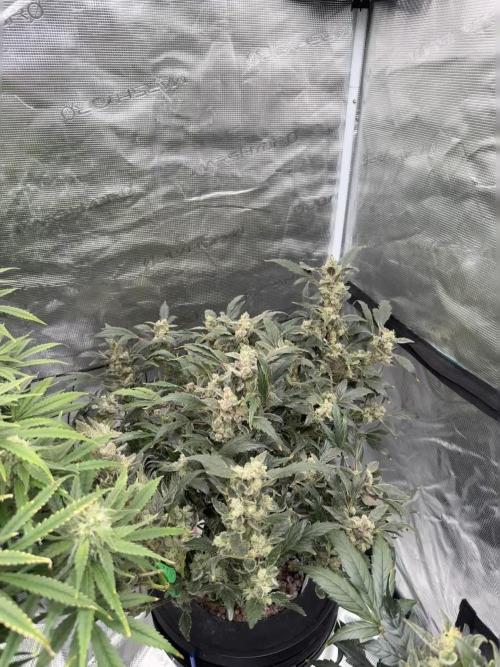
Es geht in die nächste Runde, jetzt kommt die beste Zeit für den indoor Grow.
Der letzte Grow war mein bisher erfolgreichster in Sachen Ertrag, durch die hohen Temperaturen ist das Material leider teilweise recht fluffig geworden. Dies versuche ich diesmal zu optimieren. Ich werde diesmal peinlichst genau auf den PH wert achten und starte jetzt mit 6,0 .
Sobald ich die ersten richtigen Blätter sehe beginne ich mit 420flow Wurzbooster. Beim nächsten gießen werde ich bereits mit Hesi Super Vit arbeiten. Die Erde ist der Floragard grow mix und bereits stark angereichert mit Nährstoffen und trichoderma (kann man bei der Papaya Zoap das Myzel sehen auf der Oberfläche). Ich werde keinen Wachstumsdünger verwenden und kurz vor dem strecht aufhören mit den Wurzelbooster. Danach geht es weiter mit einer Kombination von 420 flow bloom und bloom booster sowie hesi super Vit (über gesamten grow). Circa 2. Blütewoche wird das undercanopy licht eingeschalten auf 75%. Diese Kombination aus Maßnahmen haben beim letzten mal schon richtige Erfolge erzielt. Ich werde diesmal das erste mal im unteren Drittel stark lolipoppen. Es handelt sich diesmal um Mango cherry runtz auto (fast Buds) und Papaya zoap Auto (sweet seeds) welche auf der MJ 2026 erworben wurden.



@Antarctic
Follow
Week 14 (Apr 1 – Apr 7)
April 1–3 → buds heavy, pistils turning darker.
April 6–7 → macro shots of trichomes: mostly cloudy, still some clear.
Aroma increasing strongly.


@DreamIT
Follow
💜🤜 Purple Punch OG by Sweet Seed 🤛💜
🤜22.8 new fertilizer tomorrow, I hope it will recover quickly
🤜23.8 Very clear, the flush has done its job, today we start with the new line of fertilizers 🤘🤘
🤜24.8 🤘🤘
🤜25.8 all great, it's getting longer, yeah!
🤜26.8 now ready to bloom 🤘🦄
🤜27.8 It shouldn't be long before it blooms. She seems to have recovered well from the flush and fertilizer change, I hope she starts soon
🤜28.8
__________________________________________
❓ Are you new to the world of the cultivation and don't know where to safely buy your seeds?
😮From SweetSeeds you can find award-winning, sweet, fast, fragrant, beautiful, and delicious genetics !!!
✅http: //bit.ly/SweetSeeds_
__________________________________________
👀 Are you looking for a good lamp to start with? 👀
🌞Viparspectra has something more than the others, take a look at their site.
⏩ Use "GDVIP" for an extra discount or "ViparDreamIT" for an extra 5 %% discount
👀 Search for it on Amazon
✅Amazon US: https://amzn.to/30xSTVq
✅Amazon Canada: https://amzn.to/38udUVe
✅Viparspectra UE: bit.ly/ViparspectraUE
👀 Watch my ViparSpectra XS1000 unboxing on YouTube, leave a like and write to the channel 🦄
✅http://bit.ly/UnboxingViparSpectraDreamIT
__________________________________________
📷🥇 Follow the best photos on Instagram 🥇📷
https://www.instagram.com/dreamit420/
🔻🔻Leave a comment with your opinion if you pass by here🔻🔻
🤟🦄💚 Thank you and enjoy the growth 💚🦄🤟


@HighnerDank
Follow
She is expanding and drinking more and more water. The smell is getting stronger as well.
At the end of next week she gets a lollipopping which is good because I cant reach the soil anymore without making some leaves wet.

shorts_status_processing


@Eyeduno
Follow
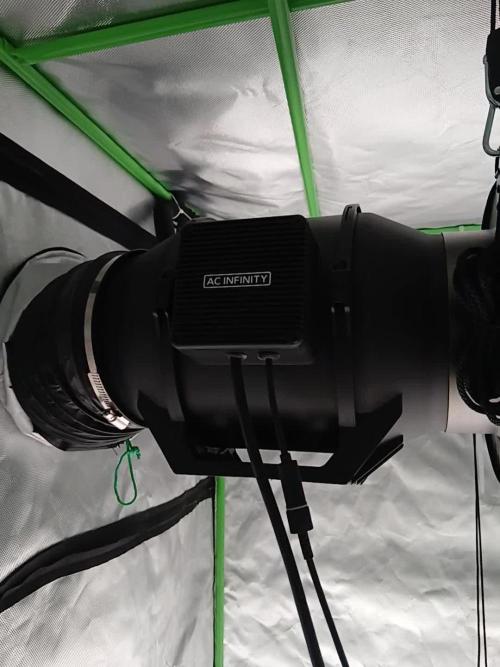
the one at the back looks abit sad hopefully it perks up otherwise I’ll be using 4 cuttings instead of 3 think I need a new fan aswell you heard the creak onit
@Organic710
Follow
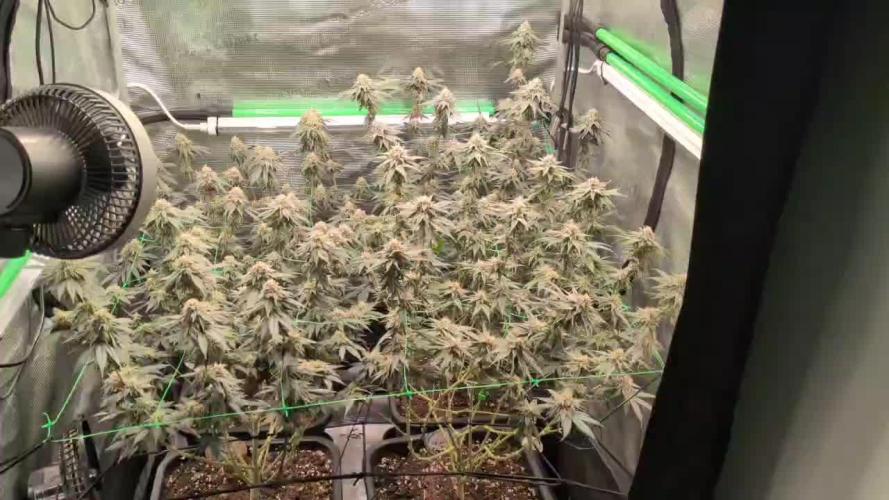
I've added another scrog net to the plants because they are already starting to pack on some weight from being so dense. Small but dense 😂 Day 42 of flower is today although I like to take 3-5days off to allow for the transition. I think I added a double dose of Microben or Flourish because some of the plants in here have tip burn but they are still bulking up so I'm just feeding water for another week in here 😁 Some of the strains what can be in this Fastbuds Photoperiod mix pack are done in around 9weeks some upto 11 so its just a case of keeping a eye on the trichs in 2-3weeks and chop when my desired Clear/Cloudy/Amber 😸


@MrJones
Follow
I am very happy with the harvest @21% wet to dry that pretty strong for me, the buds were in the tent for 10 days, the long slow drying process has really paid off. The buds were solid and frosty, this strain was very easy to grow, and like I said Original Sensible Seeds do not disappoint, I have a few more strains by them and cant wait to get them started!


@Firepharmer
Follow
She’s getting frosty and dank
👃🍪🍊🍓🍰🍌🍒🍇🍭👃
Day 29 almost half way , happy with all the phenos so far all frosty so many terps
.. started feed the canna nutrients plants canna pk1314 ..
2 flush’s Got the remo plants all most on the proper Ec again


@Ultraviolet
Follow
Green light is radiation with wavelengths between 520 and 560 nm and it affects photosynthesis, plant height, and flowering. Plants reflect green light and this is why they appear green to our eyes. As a result, some growers think that plants don’t use green wavelengths, but they actually do!
In fact, only around 5 – 10% of green light is reflected from leaves and the rest (90 – 95 %) is absorbed or transmitted to lower leaves [1].
Green wavelengths get used in photosynthesis. Chlorophyll pigments absorb small amounts of green wavelengths. Light that doesn’t get absorbed is transmitted to leaves that are shaded out from direct light. This means that leaves at the bottom of the canopy get more green light than leaves at the top. A high proportion of green wavelengths compared to other colors tells lower leaves that they are being shaded out, so they are able to react accordingly. Lower leaves may react by opening or closing their stomata or growing longer stems that help the leaves reach brighter light [1, 2, 3].
When it comes to growing cannabis, many cultivators are interested in the quality of light used for the flowering stage. In many plants, flowering is regulated by two main photoreceptors: cryptochrome and phytochrome. Both photoreceptors primarily respond to blue light but can also respond to green, although to a lesser extent. Green can accelerate the start of flowering in several species (although cannabis has yet to be tested) [1, 4, 5]. However, once flowering has begun, it’s important to provide plants with a “full spectrum” light that has high amounts of blue and red light, and moderate amounts of green, in order for photosynthesis to be optimized.
Green light mediates seed germination in some species. Seeds use green wavelengths to decide whether the environment is good for germination. Shade environments are enriched in green relative to red and blue light, so a plant can tell if it is shady or sunny. A seed that senses a shaded environment may stay dormant to avoid poor growing conditions [1]. Some examples of plant species where researchers have documented this response are: ryegrass (a grass that grows in tufts) and Chondrilla (a plant related to dandelion) [1, 6].
Although green wavelengths generally tell plants NOT to germinate, there are some exceptions! Surprisingly, green wavelengths can stimulate seed germination in some species like Aeschynomene, Tephrosia, Solidago, Cyrtopodium, and Atriplex [1, 6, 7].
Of course, light is not the only factor affecting seed germination – it’s a combination of many factors, such as soil moisture, soil type, temperature, photoperiod, and light quality.
When combined with red and blue light, green can really enhance plant growth [1, 8]. However, too much green light (more than 50% of the total light) can actually reduce plant growth [8]. Based on the most current research, the ideal ratio of green, red, and blue light is thought to be around 1:2:1 for green:blue:red [9]. When choosing a horticultural light, choose one that has high amounts of blue and red light and moderate amounts of green and other colors of light.
Not many studies can be found about the effect of green light on cannabis growth or metabolism. However, if one reads carefully, there are clues and data available even from the very early papers.
Mahlberg and Hemphill (1983) used colored filters in their study to alter the sunlight spectrum and study green light among others. They concluded that the green filter, which makes the environment green by cutting other wavelengths out, reduced the THC concentration significantly compared to the daylight control treatment. It has been demonstrated that green color can reduce secondary metabolite activity with other species as well. For example, the addition of green to a light spectrum decreases anthocyanin concentration in lettuce (Zhang and Folta 2012).
If green light only reverses the biosynthesis of some secondary metabolites, then why put green light into a growth spectrum at all? Well, there are a couple of good reasons. One is that green penetrates leaf layers effectively. Conversely red and blue light is almost completely absorbed by the first leaf layer.
Green travels through the first, second, and even third layers effectively (Figure 2). Lower leaf layers can utilize green light in photosynthesis and therefore produce yields as well.
Even though a green light-specific photoreceptor has not yet been found, it is known that green light has effects independent from the cryptochrome but then again, also cryptochrome-dependent ones, just like blue light. It is known that green light in low light intensity conditions can enhance far red stimulating secondary metabolite production in microgreens and then again, counteracts the production of these compounds in high-intensity light conditions (Kim et al. 2004). In many cases, green light promoted physiological changes in plants that are opposite to the actions of blue light. In the study by Kim et al. blue light-induced anthocyanin accumulation was inhibited by green light. In another study it has been found that blue light promotes stomatal opening whereas green light promotes stomatal closure (Frechilla et al. 2000). Blue light inhibits the early stem elongation in the seedling stage whereas green light promotes it (Folta 2004). Also, blue light results in flowering induction, and green light inhibits it (Banerjee et al., 2007). As you can see, green light works very closely with blue light, and therefore not only the amount of these two wavelengths separately is important but also the ratio (Blue: Green) between these two in the designed spectrum. Furthermore, green light has been found to affect the elongation of petioles and upward leaf reorientation with the model plant Arabidopsis thaliana both of which are a sign of shade avoidance symptoms (Zhang et al. 2011) and also gene expression in the same plant (Dhingra et al. 2006).
As mentioned before, green light produces shade avoidance symptoms which are quite intuitive if you consider the natural conditions where the plants grow. Not all the green light is reflected from the highest canopy leaves in nature but a lot of it (50-90%) has been estimated to penetrate the upper leaves at the plant level ((Terashima et al., 2009; Nishio, 2000). For the plant growing in the understory of the forest green light is a signal for the plant of being in the shade of a bigger plant. Then again, the plants growing under unobstructed sunlight can take advantage of the green photons that can more easily penetrate the upper leaves than the red and blue photons. From the photosynthetic pigments in higher plants, chlorophyll is crucial for plant growth. Dissolved chlorophyll and absorb maximally in the red (λ600–700 nm) and blue (λ400–500 nm) regions of the spectrum and not as easily in the green (λ500–600 nm) regions. Up to 80% of all green light is thought to be transmitted through the chloroplast (Terashima et al., 2009) and this allows more green photons to pass deeper into the leaf mesophyll layer than red and blue photons. When the green light is scattered in the vertical leaf profile its journey is lengthened and therefore photons have a higher chance of hitting and being absorbed by chloroplasts on their passage through the leaf to the lower leaves of the plant.
Photons of PPFD (photosynthetic photon flux density) are captured by chlorophyll causing an excitation of an electron to enter a higher energy state in which the energy is immediately passed on to the neighboring chlorophyll molecule by resonance transfer or released to the electron transport chain (PSII and PSI). Despite the low extinction coefficient of chlorophyll in the green 500–600 nm region it needs to be noted that the absorbance can be significant if the pigment (chlorophyll) concentration in the leaf is high enough.
The research available clearly shows that plants use green wavelengths to promote higher biomass and yield (photosynthetic activity), and that it is a crucial signal for long-term developmental and short-term dynamic acclimation (Blue:Green ratio) to the environment. It should not be dismissed but studied more because it brings more opportunities to control plant gene expression and physiology in plant production.
REFERENCES
Banerjee R., Schleicher E., Meier S. Viana R. M., Pokorny R., Ahmad M., Bittl R., Batschauer. 2007. The signaling state of Arabidopsis cryptochrome 2 contains flavin semiquinone. The Journal of Biological Chemistry 282, 14916–14922.
Dhingra, A., Bies, D. H., Lehner, K. R., and Folta, K. M. 2006. Green light adjusts the plastic transcriptome during early photomorphogenic development. Plant Physiol. 142, 1256-1266.
Folta, K. M. 2004. Green light stimulates early stem elongation, antagonizing light-mediated growth inhibition. Plant Physiol. 135, 1407-1416.
Frechilla, S., Talbott, L. D., Bogomolmi, R. A., and Zeiger, E. 2000. Reversal of blue light -stimulated stomatal opening by green light. Plant Cell Physiol. 41, 171-176.
Kim, H.H., Goins, G. D., Wheeler, R. M., and Sager, J. C. 2004.Green-light supplementation for enhanced lettuce growth under red- and blue-light emitting diodes. HortScience 39, 1617-1622.
Nishio, J.N. 2000. Why are higher plants green? Evolution of the higher plant photosynthetic pigment complement. Plant Cell and Environment 23, 539–548.
Terashima I., Fujita T., Inoue T., Chow W.S., Oguchi R. 2009. Green light drives leaf photosynthesis more efficiently than red light in strong white light: revisiting the enigmatic question of why leaves are green. Plant & Cell Physiology 50, 684–697.
Zhang, T., Maruhnich, S. A., and Folta, K. M. 2011. Green light induces shade avoidance symptoms. Plant Physiol. 157, 1528-156.
Wang, Y. & Folta, K. M. Contributions of green light to plant growth and development. Am. J. Bot. 100, 70–78 (2013).
Zhang, T. & Folta, K. M. Green light signaling and adaptive response. Plant Signal. Behav. 7, 75–78 (2012).
Johkan, M. et al. Blue light-emitting diode light irradiation of seedlings improves seedling quality and growth after transplanting in red leaf lettuce. HortScience 45, 1809–1814 (2010).
Kasajima, S., et al. Effect of Light Quality on Developmental Rate of Wheat under Continuous Light at a Constant Temperature. Plant Prod. Sci. 10, 286–291 (2007).
Banerjee, R. et al. The signaling state of Arabidopsis cryptochrome 2 contains flavin semiquinone. J. Biol. Chem. 282, 14916–14922 (2007).
Goggin, D. E. & Steadman, K. J. Blue and green are frequently seen: responses of seeds to short- and mid-wavelength light. Seed Sci. Res. 22, 27–35 (2012).
Mandák, B. & Pyšek, P. The effects of light quality, nitrate concentration and presence of bracteoles on germination of different fruit types in the heterocarpous Atriplex sagittata. J. Ecol. 89, 149–158 (2001).
Darko, E. et al. Photosynthesis under artificial light: the shift in primary and secondary metabolism. Philos. Trans. R. Soc. B Biol. Sci. 369 (2014).
Lu, N. et al. Effects of Supplemental Lighting with Light-Emitting Diodes (LEDs) on Tomato Yield and Quality of Single-Truss Tomato Plants Grown at High Planting Density. Environ. Control Biol. 50, 63–74 (2012).








@Dunk_Junk
Follow
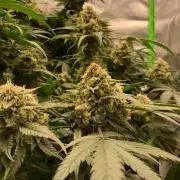
This girl sure is taking her time. I hope that's because of the high Sativa content 😍
Because of this the buds are starting to grow long and pointed, I'm going to try the backbuilding technique to see if I can get these to fatten up. I snipped half a dozen places and left the rest.
Also I've noticed her leaves are very dark green and very very shiny, glossy. I cannot remember growing another plant with leaves like this!


@Northern_Ent
Follow
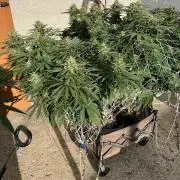
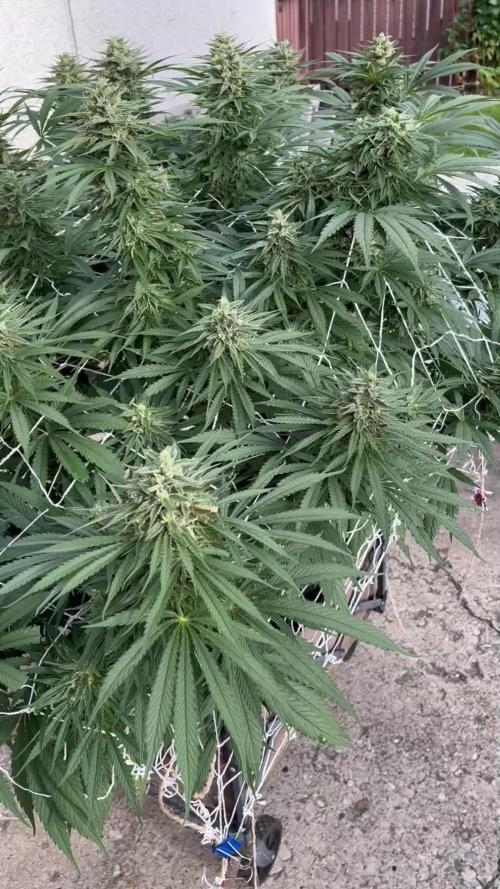
Sep 12: getting close to the end but not quite ready yet. Unfortunately there has been five or six nice colas hit by bud rot. I check it daily for any brown and shrivelled sugar leaves and I found a disturbing number today. Was only 4 C but with 90% humidity last night which explains the bud rot outbreak. Will try harder to keep it drier.
With that, I decided to do the Final Flush today. Started using this last year and I quite like what it did. A few years ago I had buds that didn't burn properly and that was due to too much P fertilizer. This flush uses citric acid to chelate the salts and remove them from the soil. Good stuff.


